Sea Freight from China to Netherlands: The Complete 2026 Guide for Importers (FCL, LCL & DDP)
Sea freight from China to Netherlands remains the backbone of Europe-bound supply chains — but most "Shipping From China to Europe" guides treat the Netherlands as a footnote. That lack of focus costs importers time, money, and peace of mind. If you are sourcing from Chinese suppliers and need your cargo to reach Rotterdam, Amsterdam, or an Amazon.nl fulfillment center, you need route-specific answers, not generic advice written from a desk 8,000 miles away.
At AllBestShipping, we are a Shenzhen-based freight forwarder that handles this exact lane every week. We gate containers at Yantian, book direct sailings with Ocean Alliance carriers, and pre-clear Dutch customs before vessels ever berth at Rotterdam. This guide shares what actually happens on the water and at the border — no generic fluff, no outdated transit times, and no surprise fees.
By the end, you will know which container strategy fits your cargo, what 2026 transit times and costs really look like, how Dutch customs and VAT work, whether DDP or FOB is right for you, how to ship Amazon FBA inventory to the Netherlands, and the mistakes that delay or overcharge first-time importers most often.
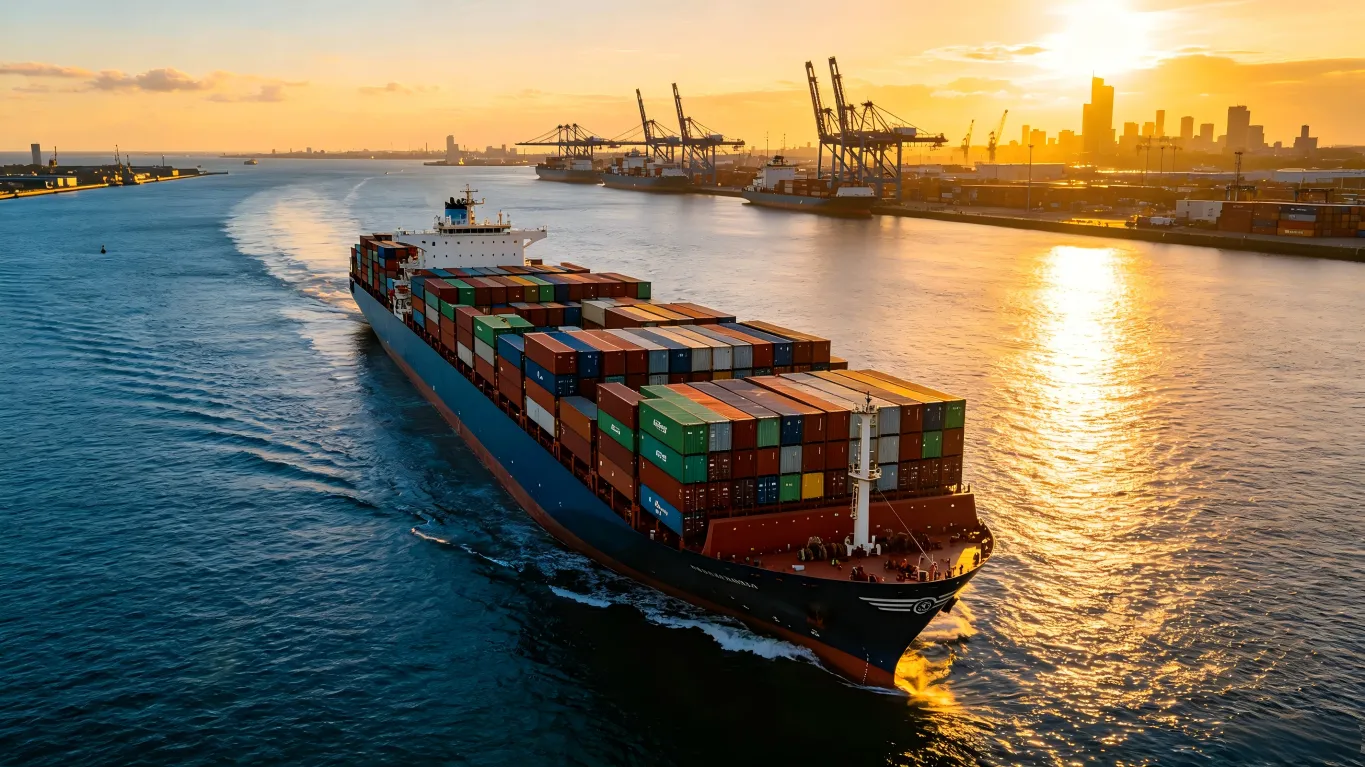
FCL vs. LCL: Choosing the Right Container Strategy for Netherlands-Bound Cargo
Before you book space on a vessel, you need to decide whether your cargo justifies its own container or can share one. That choice — FCL (Full Container Load) versus LCL (Less than Container Load) — determines your per-unit cost, transit time, and damage risk.
What Is FCL (Full Container Load)?
With FCL Shipping from China to Netherlands, you reserve an entire container exclusively for your goods. The most common options are:
- 20ft container (~28 CBM internal capacity) — ideal for heavy, dense cargo.
- 40ft container (~58 CBM) — the standard workhorse for general cargo and the same standard used in Container Shipping from China to USA lanes.
- 40ft High Cube (40HQ) (~68 CBM) — adds one foot of height, perfect for bulky but lightweight goods like furniture or sporting equipment.
Once your supplier loads and seals the container at the factory, it remains sealed until it reaches your warehouse in the Netherlands (or until customs requests an inspection). That seal minimizes handling, theft, and moisture damage. In our experience, FCL becomes cost-competitive once your cargo reaches approximately 15 CBM. Below that threshold, you are often paying for empty air.
What Is LCL (Less than Container Load)?
With LCL shipping from China to Netherlands — a method detailed in our LCL Shipping Guide — your cargo shares container space with other shippers. You pay only for the volume you use — typically calculated per CBM or per 1,000 kg, whichever is greater. LCL is the practical choice for shipments between 1 and 15 CBM.
Your freight forwarder consolidates your goods with others at a Container Freight Station (CFS) in China. The container sails to Rotterdam, where a deconsolidation warehouse separates the cargo for individual delivery. That extra handling adds time and a small degree of risk, but for smaller volumes the cost savings are substantial.
FCL vs. LCL Decision Framework
| Factor | FCL (Full Container Load) | LCL (Less than Container Load) |
|---|---|---|
| Typical Volume | 15 CBM or more | 1 – 15 CBM |
| Cost Basis | Flat rate per container | Per CBM (or per ton if dense) |
| Transit Time (Door-to-Door) | ~35–42 days | ~40–50 days |
| Handling Risk | Low (sealed at origin) | Moderate (CFS consolidation + deconsolidation) |
| Best For | Large, bulky, or high-value shipments | Smaller, flexible, cost-conscious shipments |
| Netherlands Note | Cleared directly at Rotterdam port | May transfer to inland customs depot for clearance |
A Netherlands-Specific LCL Note
Here is a detail generic guides miss: in Rotterdam, LCL cargo is not always cleared inside the port itself. Depending on the forwarder’s deconsolidation arrangement, your goods may be trucked to an inland customs warehouse near Rotterdam or even across the border into Belgium or Germany for clearance. That handoff can add 2–4 days to your total timeline. At AllBestShipping, we deconsolidate at a Rotterdam-adjacent bonded facility and pre-clear with Dutch Customs so our LCL clients rarely face that inland delay.
AllBestShipping Insight: In our experience, e-commerce sellers replenishing Amazon.nl inventory in the 5–12 CBM range find LCL the sweet spot. Manufacturers shipping 20+ CBM of industrial components almost always benefit from FCL, both on price and cargo security.
Major Ports & Shipping Routes: From Shenzhen, Shanghai, and Ningbo to Rotterdam and Amsterdam
China Origin Ports
Your choice of Port of Loading (POL) should be driven by where your suppliers are located — not by habit.
- Shanghai (CNSHA) — The world’s largest container port by throughput. It offers the most direct sailings to Rotterdam and is the natural choice for suppliers in East China: Zhejiang, Jiangsu, Anhui, and Shanghai itself.
- Shenzhen (CNTSN / CNYTN / CNSHK) — Yantian, Shekou, and Chiwan serve the Pearl River Delta, the planet’s densest manufacturing cluster. If your suppliers are in Guangdong, Fujian, or Guangxi, this is your home court. We also coordinate Shipping from Guangzhou to USA for clients with trans-Pacific distribution needs. AllBestShipping is based here for a reason: we can collect cargo from Dongguan or Guangzhou factories and gate-in at Yantian within 24 hours.
- Ningbo (CNNGB) — A strong alternative to Shanghai when berth congestion spikes. Ningbo has added direct Rotterdam services in 2025–2026 and is ideal for suppliers in Zhejiang province.
- Qingdao, Tianjin, Xiamen — Mentioned for completeness. Use these for suppliers in Shandong, Northern China, or Fujian when inland trucking to Shanghai or Shenzhen is uneconomical.
Netherlands Destination Ports
- Rotterdam (NLRTM) — Europe’s largest seaport and the undisputed gateway for Chinese cargo. Rotterdam handled over 14.2 million TEU in 2025 (+3.1% year-over-year). Its advantage is not just volume; it is connectivity. Rotterdam links to an unmatched inland network of barges, rail lines, and highways that reach Germany, Belgium, France, and beyond within 1–3 days. Many importers use Rotterdam as the entry point for Shipping from Shenzhen to Germany, leveraging the Rhine corridor for fast inland distribution. Over 80% of China-to-Netherlands sea freight lands here for good reason.
- Amsterdam (NLAMS) — A secondary port useful for specific regional distribution within North Holland, certain project cargo, or smaller vessels that do not need Rotterdam’s deep-water infrastructure. For most general cargo, Rotterdam is the smarter choice.
Ocean Routes in 2026: Suez vs. Cape of Good Hope
The standard route from China to the Netherlands runs through the Suez Canal: sail from Shanghai or Shenzhen, cross the Indian Ocean, transit Suez, enter the Mediterranean, and call Rotterdam. On a direct service, that base ocean voyage takes roughly 25–32 days from Shanghai.
However, Red Sea disruptions since late 2023 have forced carriers to rotate vessels around the Cape of Good Hope when security conditions deteriorate. That diversion adds 10–14 days and increases fuel consumption — a cost now amplified by the EU Emissions Trading System (EU ETS), which reached 100% phase-in for maritime in 2026. Most major carriers now maintain dynamic routing: some sailings go Suez, others Cape, depending on real-time risk assessments. When you book, ask your forwarder which routing is scheduled — it affects both transit time and the BAF (Bunker Adjustment Factor) on your invoice.
Carrier Alliances on This Lane
Three major alliances dominate the Asia–Europe trade lane:
- Ocean Alliance — COSCO, CMA CGM, Evergreen, OOCL. Strong presence on the China–Rotterdam direct route.
- 2M Alliance — Maersk and MSC. Reliable schedules with extensive European feeder networks.
- THE Alliance — Hapag-Lloyd, ONE, Yang Ming, HMM. Competitive on North China origins.
In 2025, the alliance landscape shifted with the formation of the Gemini Cooperation (Maersk + Hapag-Lloyd) and the Premier Alliance. While schedule reliability is still stabilizing, direct sailings from Yantian and Shanghai to Rotterdam remain frequent — typically 2–3 per week across alliances.
AllBestShipping Insight: From our Shenzhen warehouse, we typically gate-in at Yantian two days before CY cut-off. Direct Ocean Alliance sailings to Rotterdam have averaged 26–30 days port-to-port in Q2 2026. When a client needs predictability above all else, we book Ocean Alliance direct rather than transshipment services through Singapore or Tanjung Pelepas.
How Long Does Sea Freight Take from China to Netherlands? (2026 Transit Times)
If you have read generic "China to Europe" guides, you have probably seen estimates ranging from "3 months" to vague "30–45 days." Both are misleading. Here is what direct sailings actually look like in 2026.
Port-to-Port Transit Times (Direct Sailings)
| Route | Port-to-Port (Days) | Notes |
|---|---|---|
| Shanghai → Rotterdam | 24–28 | Most frequent direct sailings; fastest lane |
| Shenzhen / Yantian → Rotterdam | 26–30 | AllBestShipping’s primary lane; strong Ocean Alliance presence |
| Ningbo → Rotterdam | 25–29 | Good alternative when Shanghai is congested |
| Qingdao → Rotterdam | 28–34 | Northern China origin; fewer direct options |
| Guangzhou → Rotterdam | 26–30 | Via Shekou or Nansha terminals |
Door-to-Door Estimates
| Service Type | Total Door-to-Door (Days) | What Is Included |
|---|---|---|
| FCL Door-to-Door | 35–42 | Pickup, export clearance, ocean transit, Rotterdam discharge, Dutch customs, last-mile delivery |
| LCL Door-to-Door | 40–50 | Adds CFS consolidation in China and deconsolidation in Rotterdam / EU hub |
The Milestone Breakdown
Understanding where time is actually spent helps you set realistic inventory plans:
- Origin handling + booking — 3 to 7 days. Includes factory pickup, warehouse consolidation (if needed), and customs export declaration in China.
- CY cut-off + consolidation — 2 to 5 days. The container must gate-in before the terminal’s CY cut-off. LCL adds consolidation time at the CFS.
- Ocean transit — 25 to 32 days for direct sailings. Transshipment via Singapore or the Middle East can add 5–10 days.
- Rotterdam discharge + customs — 3 to 6 days. Vessel berthing, unloading, and customs clearance. Pre-cleared cargo often releases within 24 hours of discharge.
- Inland distribution — 1 to 4 days. Trucking or rail from Rotterdam to Amsterdam, Utrecht, or onward into Germany or Belgium. For comparison, Sea Freight from China to USA shipments often rely on similar inland rail networks after West Coast port entry.
2026 Delay Risks to Plan Around
- Red Sea rerouting — When carriers divert around the Cape of Good Hope, add 10–14 days.
- EU ETS paperwork checks — New carbon-documentation requirements can trigger additional inspections.
- Rotterdam Q3 congestion — Peak retail stocking (August–October) strains berth and yard capacity.
- Chinese New Year factory closures — January–February. Book 4–5 weeks ahead or face space shortages.
- Golden Week — Early October. Reduced factory output leads to pre-holiday booking surges.
Rail Alternative for Comparison
If sea is too slow but air is too expensive, the China–Europe Railway Express offers a middle ground. A similar speed-versus-cost trade-off exists on the Sea Freight from China to UK lane, where rail via the Channel Tunnel is an increasingly popular option. Cargo travels by rail from Xi’an, Chengdu, or Yiwu to Malaszewicze (Poland) or Duisburg (Germany), then by truck to the Netherlands. Total door-to-door time: 18–22 days. Cost is roughly 50–70% higher than sea freight but 60–70% lower than air. We recommend rail for mid-urgency inventory replenishment, especially during peak ocean season.
AllBestShipping Insight: We always advise clients to pad inventory plans by 7–10 days beyond theoretical transit. In August 2025, a labor strike at Hamburg diverted three of our Rotterdam-bound vessels to alternate berths, adding four days to discharge. Planning for the unexpected is what separates smooth supply chains from stockout emergencies.
Sea Freight Cost from China to Netherlands: A Complete 2026 Breakdown
Let us be direct: the ocean freight rate you see on a carrier’s website is never the total cost. To budget accurately, you need to understand every component that makes up your landed cost — from the factory floor in China to your warehouse door in the Netherlands.
FCL Indicative Rates (Q2 2026 Market Conditions)
| Container Type | Typical Rate Range (USD) | Notes |
|---|---|---|
| 20ft GP | $1,800 – $3,500 | Season-dependent; higher in Aug–Oct and pre-CNY |
| 40ft GP | $2,800 – $5,000 | Most common choice for medium-volume importers |
| 40ft HQ | $3,000 – $5,500 | Extra height for bulky cargo; only ~$200–$500 premium over 40GP |
Note: These are base ocean freight ranges. The market has normalized since the 2021–2022 pandemic spike but remains volatile due to Red Sea disruptions and the EU ETS surcharge (~$80–$150 per TEU in 2026).
LCL Indicative Rates
| Metric | Typical Range | Notes |
|---|---|---|
| Per CBM | $35 – $75 | Freight only; origin and destination charges are additional |
| Minimum Charge | 1 CBM | Even if your cargo is 0.5 CBM, you usually pay for 1 |
| Heavy Cargo | Charged per 1,000 kg | If density exceeds 1:1 (1 ton per CBM), weight-based pricing applies |
Complete Cost Component Breakdown
| Cost Item | What It Covers | Typical Range | Paid By |
|---|---|---|---|
| Ocean Freight (Base) | Port-to-port carriage | Varies by FCL/LCL | Seller or Buyer (per Incoterm) |
| BAF | Bunker Adjustment Factor — fuel surcharge | Fluctuates weekly with oil prices | Usually passed through by carrier |
| CAF | Currency Adjustment Factor — exchange rate hedge | 1–3% of base freight | Carrier |
| Origin THC | Terminal Handling Charges in China | $150 – $400 | Seller or Buyer |
| Export Customs | China customs declaration and documentation | $50 – $150 | Seller or Buyer |
| Destination THC | Rotterdam terminal handling (unloading, yard) | €200 – €400 | Buyer |
| Dutch Customs Clearance | Broker fees + declaration filing | €150 – €350 | Buyer |
| Import Duties | Based on EU TARIC / HS code | 0% – 17%+ | Buyer |
| Dutch VAT (BTW) | 21% on (CIF value + duty + excise) | 21% | Buyer (deferrable with Article 23 permit) |
| Inland Delivery | Rotterdam → final destination address | €200 – €800 | Buyer |
Hidden Fees to Watch
Beyond the quote, these charges catch importers off guard:
- Demurrage — Daily fees when your container sits at the port beyond the free days (typically 3–7 days for imports).
- Detention — Daily fees when you hold the carrier’s container outside the port beyond the agreed free time.
- Port storage — Separate from demurrage; charged by the terminal for yard space.
- Customs examination fees — If Dutch Customs selects your container for physical inspection.
- Chassis fees — For trucking containers from the terminal.
Peak Season Surcharges
Ocean rates follow a seasonal rhythm. August through October (pre-holiday stocking) and the weeks before Chinese New Year (January–February) can push base rates up by 20–50%. Our advice: book space 3–4 weeks ahead during these windows. If your inventory plan is flexible, shipping in March–April or November often yields the lowest rates of the year.
AllBestShipping Insight: We provide all-inclusive DDP quotes so clients never face surprise destination charges. When we quote a Shenzhen-to-Rotterdam 40HQ shipment, the price includes origin pickup, ocean freight, BAF, Rotterdam THC, Dutch customs clearance, VAT/duty advance, and last-mile delivery. What you see is what you pay.
DDP Sea Freight from China to Netherlands: Is Door-to-Door Right for You?
DDP (Delivered Duty Paid) is the most searched — and most misunderstood — Incoterm for Netherlands-bound importers. Let us unpack it properly and see if Door-to-Door Shipping fits your supply chain.
What DDP Actually Means
Under DDP sea freight from China to Netherlands, the seller (or your freight forwarder acting on their behalf) handles everything:
- Factory pickup in China
- Export customs clearance
- Ocean freight to Rotterdam
- Dutch import customs clearance
- Payment of import duties and Dutch VAT (BTW)
- Last-mile delivery to your warehouse, office, or Amazon fulfillment center
For the buyer, DDP is simplicity itself: one quote, one point of contact, and cargo arrives at your door with all formalities complete.
Why DDP Is Especially Popular for the Netherlands
Three types of importers gravitate toward DDP on this lane:
- SMEs without in-house logistics teams — They do not have staff to manage Dutch customs brokers or VAT filings.
- Amazon FBA sellers — Amazon will not act as the importer of record. DDP allows inventory to arrive at Amazon.nl or Pan-EU FCs without the seller ever touching customs paperwork.
- First-time importers — A single trusted partner eliminates the learning curve of EU import regulations.
The Legal Reality: Can a Non-EU Forwarder Really Offer DDP?
Here is where it gets technical — and where unqualified forwarders cut corners.
Under EU VAT rules, a non-EU entity cannot legally act as the importer of record for VAT purposes unless they hold a valid EU VAT registration or partner with a licensed EU customs broker who assumes that role. Some forwarders advertise "DDP" without this structure. The result? Your cargo clears customs under a questionable arrangement, and if Dutch Customs audits the shipment, you face fines, back-duties, or seizure.
How legitimate forwarders structure DDP:
- The forwarder (or their EU subsidiary/partner) registers for VAT in the Netherlands.
- They act as the importer of record on the customs declaration.
- They pay VAT and duties upfront and embed those costs in your all-inclusive quote.
- They reclaim VAT through their own EU tax filings (if eligible), keeping your involvement minimal.
At AllBestShipping, our Rotterdam customs partner operates under this compliant structure. When we quote DDP, the customs clearance is legal, auditable, and worry-free.
DDP vs. DAP vs. DDU: A Side-by-Side Comparison
| Term | What the Forwarder Handles | What You Handle | Best For |
|---|---|---|---|
| DDP | Everything including duties and VAT | Nothing | SMEs, FBA sellers, first-time importers wanting simplicity |
| DAP | Transport to your door in the Netherlands | Import customs, duties, and VAT | VAT-registered Dutch businesses with their own broker |
| DDU (legacy term) | Transport to your door | Import customs, duties, and VAT | Similar to DAP; DDU was formally replaced by DAP under Incoterms 2020 but still used colloquially |
| CIF | Freight + insurance to Rotterdam port | Rotterdam unloading, import clearance, inland delivery, VAT/duty | Buyers who want to control customs but not ocean freight |
| FOB | Factory to Chinese port loading | Ocean freight, insurance, and everything in the EU | Experienced importers who negotiate directly with carriers |
Warning: Beware of "Fake DDP" Offers
If a forwarder quotes DDP at a price that seems too good to be true, verify three things:
- Do they have a valid EU VAT number or a licensed EU customs partner?
- Will they provide the Dutch customs declaration (Aangifte) with their EU EORI listed as the importer?
- Can they explain how VAT is being paid and accounted for?
If the answer to any of these is evasive, walk away. Fake DDP is one of the fastest ways to get cargo stuck at Rotterdam for weeks.
AllBestShipping DDP Service: From our Shenzhen warehouse to your Amsterdam warehouse — or directly to Amazon.nl — we handle every milestone. Our Rotterdam customs partner ensures compliant clearance under our EU-registered structure, and you receive one all-inclusive invoice with zero surprise charges at destination. We offer the same all-inclusive approach with Door to Door Shipping from China to UK and Door to Door Shipping from China to France.
Netherlands Customs Clearance: EORI, VAT (BTW), ICS2, and Required Documents
This is where most generic guides wave their hands and say "check EU customs rules." That is not good enough when you are Shipping From China to Germany or the Netherlands, because each member state interprets those rules differently. Dutch customs — Douane — has specific procedures, systems, and pitfalls that directly affect how quickly your container leaves Rotterdam.
EORI Number: Your Passport to EU Imports
An EORI number (Economic Operators Registration and Identification) is mandatory for every business importing into the Netherlands or any EU member state. The Dutch format is NL followed by 12 digits.
You must obtain this number before your vessel arrives. Without it, Dutch Customs cannot process your import declaration, and your cargo will sit in the terminal accruing demurrage while you scramble to apply. The application is free and handled by the Dutch Tax and Customs Administration (Belastingdienst). If you are a non-EU business, you can still apply through a Dutch legal representative or use your forwarder’s EU partner EORI under DDP terms.
ICS2: The New Pre-Arrival Rule (December 2024 Onward)
Since December 4, 2024, the EU enforces ICS2 (Import Control System 2) for all maritime cargo entering the union. Before your goods are even loaded onto the vessel in China, the carrier or forwarder must file an ENS (Entry Summary Declaration) that includes:
- A valid EORI number for the importer
- Accurate HS codes for all items
- Consignor and consignee details
- A high-level goods description
If the ENS is missing or contains errors, the shipment can be blocked at the EU border. At AllBestShipping, we file ENS declarations for our clients as part of our standard export process — but many smaller forwarders leave this to the carrier, which creates accountability gaps when something goes wrong.
Dutch VAT (BTW): 21% and How to Defer It
The Netherlands applies a standard VAT (BTW) rate of 21% on imports. The VAT base is calculated as:
CIF value + customs duty + excise duty (if applicable) = VAT base
For a shipment valued at $20,000 CIF with $1,000 in duties, your Dutch VAT would be approximately $4,410 ($21,000 × 21%). That is a significant cash outlay at the border.
Here is the good news: if your business is VAT-registered in the Netherlands (or another EU country), you can apply for an Article 23 permit. This allows you to defer import VAT to your regular VAT return instead of paying it in cash when the cargo arrives. The cash-flow benefit is enormous, especially for businesses importing monthly or quarterly. The permit application requires a Dutch VAT number and a bank guarantee; processing typically takes 2–4 weeks.
Customs Duties and HS Codes
Import duties are determined by your product’s HS code in the EU TARIC database. Rates vary widely:
- Consumer electronics: often 0%–3.5%
- Furniture: typically 0%–5%
- Textiles and garments: can reach 8%–12%
Certain Chinese products face additional anti-dumping duties: solar panels, ceramics, steel products, and e-bikes are common examples. Always verify the latest TARIC entry for your specific HS code before budgeting.
Required Documents Checklist
Having the correct paperwork ready before the vessel docks saves days. Here is what Dutch Customs expects:
- Commercial Invoice — Accurate value, currency, Incoterms, seller and buyer details.
- Packing List — Weights, dimensions, and carton counts for every package.
- Bill of Lading (B/L) or Sea Waybill — Proof of carriage and cargo ownership.
- Certificate of Origin — Required only if you are claiming preferential duty rates.
- EORI Number — Of the importer of record.
- HS Codes — For every product line.
- Product Compliance Documents — CE marking, REACH, RoHS, or WEEE where applicable.
The Portbase System
Rotterdam operates Portbase, a digital platform for pre-arrival declarations and customs messaging. Most established forwarders and customs brokers in the Netherlands use Portbase to submit declarations electronically before the vessel arrives. Pre-clearance is the difference between cargo releasing within hours of discharge versus sitting for days awaiting paperwork review.
AllBestShipping Insight: We pre-clear roughly 90% of our Netherlands-bound shipments before the vessel docks at Rotterdam. The most common delay we see? An EORI number that does not match the importer of record on the Bill of Lading. We catch and fix this at booking — not at the terminal gate.
Incoterms 2020 for Netherlands Imports: EXW, FOB, CIF, DAP, or DDP?
Choosing the wrong Incoterm is one of the costliest mistakes an importer can make. It determines who pays for freight, who manages customs, and where liability transfers. Here is a practical framework for Netherlands-bound cargo.
Quick Reference Table
| Incoterm | Seller (China Side) Handles | Buyer (You) Handles | Best For |
|---|---|---|---|
| EXW | Makes goods available at factory | Everything: pickup, export, ocean, insurance, EU import | Large importers with their own China logistics team |
| FOB | Factory → Chinese port loading | Ocean freight, insurance, Rotterdam unloading, import clearance, VAT | Buyers who want to control freight but not origin logistics |
| CIF | Factory → Rotterdam port + marine insurance | Rotterdam unloading, import customs, VAT/duty, inland delivery | Buyers who want freight included but prefer to manage Dutch customs |
| DAP | Everything to your door in the Netherlands | Import customs declaration + VAT/duty payment | VAT-registered Dutch businesses with their own customs broker |
| DDP | Everything including duties and VAT | Nothing | SMEs, Amazon sellers, first-time importers wanting full simplicity |
Netherlands-Specific Recommendations
- If you have a Dutch VAT number and a trusted customs broker: FOB or CIF gives you the most control and can reduce total cost. You negotiate your own ocean freight and manage clearance on your terms.
- If you are an SME, e-commerce seller, or first-time importer: DDP eliminates customs complexity. You pay a higher upfront quote, but there are no surprise bills at Rotterdam.
- If you are a large manufacturer with an EU logistics team: DAP offers a middle ground. The forwarder handles transport; your team controls clearance and VAT.
The Hidden Handoff Problem
A common mistake we see: buyers agree to CIF thinking it covers everything, then discover at Rotterdam that they must arrange unloading, THC payment, inland trucking, and Dutch customs themselves. CIF ends at the port rail — not your warehouse. Make sure you understand exactly where the seller’s responsibility ends and yours begins.
Amazon FBA Sea Freight from China to Netherlands
The Netherlands is no longer just a consumer market — it is a strategic entry point for Amazon FBA Shipping clients targeting all of Europe.
Why the Netherlands for Amazon FBA?
- Amazon.nl has seen double-digit growth since 2020 and is now a core marketplace for Dutch-language consumers.
- Pan-EU FBA allows inventory stored in the Netherlands to fulfill orders across Germany, France, Belgium, Spain, and Italy without cross-border shipping fees. If your Pan-EU strategy targets the Iberian market, see our Container Shipping from China to Spain guide. For Southern Europe, we also provide dedicated Shipping from Shenzhen to Italy services via Rotterdam.
- Rotterdam and Amsterdam are the natural entry ports for FBA inventory bound for Dutch and Central European fulfillment centers.
Shipping to Amazon.nl vs. Pan-EU
| Strategy | How It Works | Best For |
|---|---|---|
| Direct to Amazon.nl FC | Inventory ships DDP directly to a Dutch Amazon fulfillment center | Sellers focused on the Dutch market |
| Netherlands as Pan-EU Entry | Inventory enters via Rotterdam/Amsterdam, then Amazon distributes across Europe | Sellers enrolled in Pan-EU FBA wanting broad European coverage |
FBA Prep Requirements for Europe
Amazon’s European fulfillment centers have specific rules that differ from US operations:
- Labeling: Every unit needs an FNSKU label. Every carton needs a carton label. Every pallet needs a pallet label. Additionally, products manufactured in China require a "Made in China" origin label on both the product and the master carton.
- Carton Limits: Maximum 23 kg per carton for Amazon EU. Oversized cartons incur additional handling fees.
- Palletization: Amazon EU uses EUR pallets (1200 × 800 mm), not the 48×40 inch US standard. Pallets must be heat-treated and ISPM-15 compliant.
- DDP Requirement: Amazon will not act as the importer of record. If you do not ship DDP, you need your own EU entity or broker to handle customs. For most sellers, DDP is the only practical path.
Timing for FBA Inventory Cycles
Sea freight to the Netherlands plus FBA inbound processing typically takes 45–55 days door-to-FC. That means if you want inventory live on Amazon.nl by November 1 for Black Friday sales, your cargo should leave China by early September. We advise FBA sellers to build a 90-day rolling inventory forecast tied to sailing schedules.
AllBestShipping Insight: We run a dedicated FBA prep line at our Shenzhen warehouse. Cartons are labeled, palletized to EU spec, and shipped DDP to Amazon.nl or Amazon.de fulfillment centers. Sellers never touch the goods. One client moved from air freight to our sea+DDP FBA service and cut their inbound logistics cost by 58% while maintaining 95% in-stock rates during Q4.
Common Mistakes When Shipping from China to Netherlands (And How to Avoid Them)
After years of handling this lane, we have seen the same errors cost importers thousands of euros and weeks of delay. Mastering How to Ship from China without these pitfalls is what separates smooth supply chains from costly delays. Here is how to avoid them.
1. Incorrect or Missing HS Codes
An incorrect HS code leads to the wrong duty rate, customs inspections, and potential fines. Always cross-reference your product against the EU TARIC database. If you are uncertain, request a Binding Tariff Information (BTI) ruling from Dutch Customs for definitive classification.
2. No EORI Number Before Shipment
Applying for an EORI after your cargo has arrived is like trying to buy insurance after the accident. Apply at least two weeks before your first import. If you are using DDP, confirm that your forwarder’s EU partner EORI is valid and will be listed on the declaration.
3. Undervalued Commercial Invoices
Dutch Customs uses transaction-value methodology. If your invoice value looks suspiciously low compared to market benchmarks, expect a customs inspection, penalties, and a revised duty bill. Declare the actual transaction value — no shortcuts.
4. Ignoring EU Product Compliance
The Netherlands enforces EU product regulations strictly:
- CE marking for electronics, toys, machinery, and medical devices
- REACH for chemicals and substances
- RoHS for electrical equipment
- WEEE for electronics recycling compliance
Non-compliance does not mean a slap on the wrist. It means destruction of goods at the importer’s expense.
5. Booking Too Late in Peak Season
August through October and the weeks before Chinese New Year are brutal for space and rates. Booking late means rolled cargo (your container bumped to the next sailing) and surcharges up to 50%. Book 3–4 weeks ahead during peak windows.
6. Choosing "Fake DDP" Forwarders
As covered earlier, unqualified forwarders advertise DDP without EU VAT or customs capability. Verify their EU partner structure before you hand over your cargo.
7. Forgetting Wooden Packaging Rules
Any wooden pallet, crate, or dunnage must be ISPM-15 heat-treated and stamped. Untreated wood arriving at Rotterdam is rejected at the EU border. We have seen entire LCL shipments held because one supplier used an untreated pallet.
8. Not Insuring Cargo
Carrier liability under the Hague-Visby rules is limited — often to a few hundred dollars per container, regardless of actual cargo value. Marine cargo insurance typically covers 110% of CIF value and is inexpensive relative to the risk. For a $50,000 shipment, annual insurance might cost $150–$300. That is cheap peace of mind.
Case Study: How AllBestShipping Moved 3×40HQ Electronics from Shenzhen to Rotterdam in 36 Days
Theory is useful. Results are better. Here is what happened when a European electronics distributor switched to AllBestShipping.
The Client
A mid-sized electronics distributor based in the Netherlands, importing quarterly replenishments from three suppliers in Shenzhen and Dongguan. Their previous forwarder promised 30-day transit but consistently delivered in 45–55 days, with surprise THC and customs fees at Rotterdam.
The Challenge
- Unreliable transit times were forcing the client to hold excess safety stock.
- Surprise destination charges eroded their landed cost margins.
- Three separate supplier shipments meant three sets of documentation and three potential failure points.
The AllBestShipping Solution
- Consolidation at our Shenzhen warehouse — We collected cargo from all three suppliers over a 5-day window, inspected quantities, and loaded everything into three 40HQ containers.
- Direct Ocean Alliance booking — We secured space on a Yantian→Rotterdam direct sailing with a reliable weekly schedule.
- Pre-clearance — We submitted Dutch customs declarations 48 hours before vessel arrival, with the client’s EORI verified and HS codes pre-approved.
- DDP delivery — Our Rotterdam partner cleared the containers within 6 hours of discharge, and trucks delivered to the client’s Amsterdam distribution center the next day.
The Results
| Metric | Previous Forwarder | AllBestShipping | Improvement |
|---|---|---|---|
| Door-to-Door Transit | 48 days (average) | 36 days | 25% faster |
| Landed Cost | Baseline | 12% lower | Through consolidation + no hidden fees |
| Customs Delays | 2–4 days common | Same-day release | Pre-clearance + verified docs |
| Annual Shipments | 4×40HQ | 6×40HQ | Client increased volume with confidence |
Key Takeaway
Consolidation + direct sailing + pre-clearance = predictable delivery and lower total cost. The client did not just save money; they gained the confidence to grow their import volume because their supply chain became reliable.
FAQ: Sea Freight from China to Netherlands
How long does sea freight take from China to Netherlands?
Direct sailings from Shanghai to Rotterdam take 24–28 days port-to-port. From Shenzhen/Yantian, expect 26–30 days. Door-to-door FCL typically ranges from 35–42 days, while LCL adds 5–10 days for consolidation and deconsolidation.
What is the cheapest way to ship from China to Netherlands?
For shipments under 15 CBM, LCL is usually cheapest. For 15 CBM or more, FCL offers better per-unit economics. These cost principles mirror our guide to the Cheapest way to Ship from China to UK. Rail freight (18–22 days) sits between sea and air in cost. Avoid express courier unless speed is absolutely critical — it can cost 10× more than sea freight. The same cost hierarchy applies to Sea Freight from China to Canada and most other long-haul lanes.
Do I need an EORI number to import from China to the Netherlands?
Yes. An EORI number is mandatory for all businesses importing into the EU, including the Netherlands. Format: NL + 12 digits. Apply through the Dutch Tax and Customs Administration before your first shipment arrives.
What is the difference between FCL and LCL shipping to the Netherlands?
FCL means you book an entire container. It is faster, has less handling risk, and is cost-effective for larger volumes (15+ CBM). LCL means your cargo shares a container. It is cheaper for small shipments (1–15 CBM) but takes slightly longer due to consolidation and deconsolidation.
How much does sea freight cost from China to Netherlands per cubic meter?
LCL rates typically range from $35–$75 per CBM for the ocean freight portion only. Remember that origin charges, destination THC, customs clearance, and Dutch VAT are additional. Always ask for a landed cost estimate, not just the freight rate.
Can I ship directly from Alibaba to the Netherlands by sea?
Yes. Many Alibaba suppliers are experienced exporters and can arrange FOB or EXW terms. However, they rarely handle EU import clearance or VAT. Use a freight forwarder like AllBestShipping to manage the ocean leg, Dutch customs, and delivery — especially if your supplier only offers port-to-port service.
Is DDP shipping legal for EU imports from China?
Yes, but only if structured correctly. The forwarder or their EU partner must hold a valid EU VAT registration and act as the importer of record. Beware of forwarders who advertise DDP without this legal foundation — it is a recipe for customs disaster.
What documents do I need for customs clearance in the Netherlands?
At minimum: Commercial Invoice, Packing List, Bill of Lading (or Sea Waybill), EORI number, and accurate HS codes. Depending on your product, you may also need CE marking certificates, REACH documentation, or a Certificate of Origin.
How do I track my sea freight shipment from China to Netherlands?
Use the Bill of Lading number or container number on the carrier’s website (e.g., COSCO, Maersk, MSC) for ocean transit updates. Your freight forwarder should also provide milestone tracking for origin handling, customs events, and last-mile delivery.
What is the best Incoterm for shipping from China to Netherlands?
It depends on your setup. DDP is best for SMEs and Amazon sellers who want simplicity. FOB or CIF works well for experienced importers with their own customs broker. DAP suits VAT-registered Dutch businesses that want to control clearance.
Can I ship Amazon FBA inventory to the Netherlands by sea?
Absolutely. Sea freight plus DDP delivery to Amazon.nl or Pan-EU fulfillment centers is the most cost-effective method for replenishing FBA inventory. Plan for 45–55 days door-to-fulfillment-center and ensure your cargo is labeled and palletized to Amazon EU specifications.
What happens if my cargo is held by Dutch customs?
Dutch Customs may hold cargo for document verification, HS code inspection, physical examination, or product compliance checks. The best prevention is accurate documentation submitted before arrival. If a hold occurs, your forwarder or customs broker should resolve it within 24–72 hours for straightforward cases.
Conclusion: Ready to Ship from China to the Netherlands?
Rotterdam is not just Europe’s largest port — it is the most efficient gateway for Chinese goods entering the EU market. Whether you are moving a single LCL pallet or a full calendar of 40HQ containers to the Netherlands — or exploring Sea Freight from China to Australia for the Oceania market — success on this lane comes down to three things: the right container strategy, accurate Dutch customs preparation, and a forwarder who actually operates in China.
In 2026, the landscape is more complex than ever. Red Sea disruptions, EU ETS surcharges, and ICS2 compliance requirements mean that guessing is no longer an option. You need a partner who gates containers at Yantian every week, knows which Ocean Alliance sailing hits Rotterdam on Tuesday, and pre-clears Dutch customs before your vessel is even in the North Sea.
At AllBestShipping, that is exactly what we do. Based in Shenzhen. Weekly sailings to Rotterdam and Amsterdam. DDP expertise. FBA prep and labeling. Transparent, all-inclusive quotes with no hidden fees.
Get a tailored, all-inclusive quote for your next Shipping From China to Netherlands shipment. Tell us your cargo details and we will reply within 24 hours.