How to Ship from China: Step-by-Step Guide
Shipping from China is the backbone of many successful global businesses. Whether you are an e-commerce seller on Amazon, a retail store owner, or a large enterprise, sourcing products from the "world's factory" offers unbeatable variety and cost advantages. However, the logistics landscape has shifted dramatically.
With recent changes in trade regulations—specifically the elimination of the $800 de minimis exemption for Chinese goods—navigating the shipping process is more complex than before. It’s no longer just about finding a ship; it’s about compliance, duty calculation, and choosing the right partner.
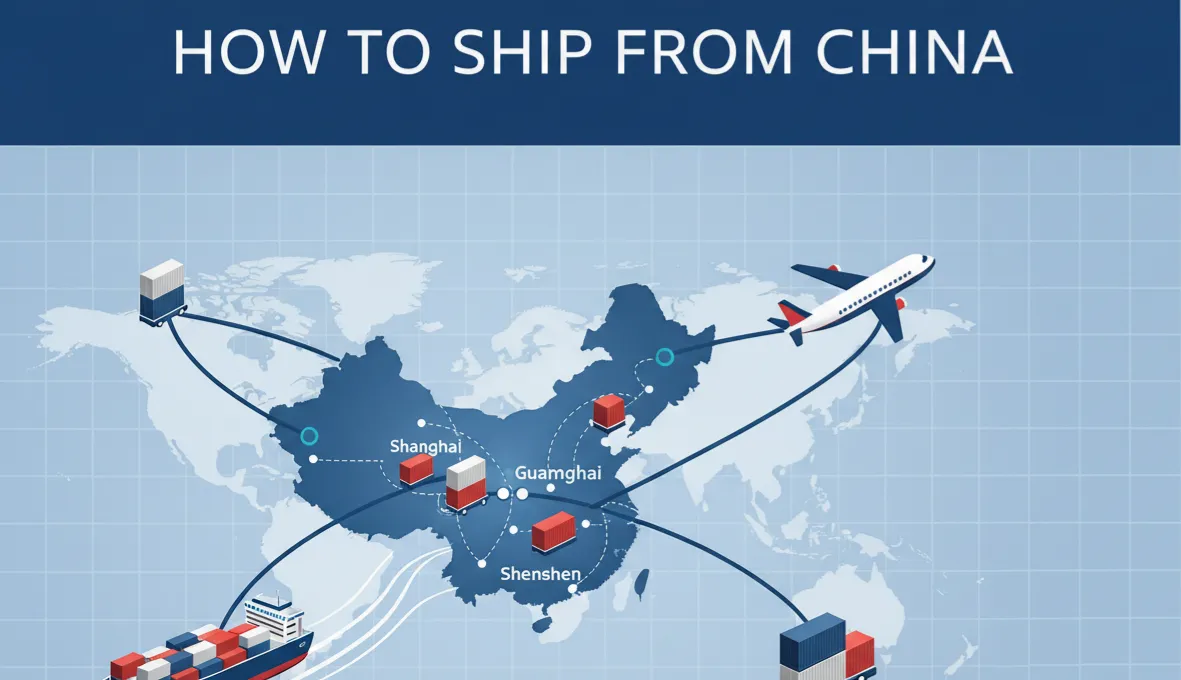
This comprehensive guide will walk you through the entire process, from selecting a supplier to clearing customs under the current rules.

Step 1: Preparing for Your China Shipment
Before you even book a container, you need to lay the groundwork. A successful shipment starts with clear communication and the right terms.
Identifying What You Want to Ship
Be specific about your cargo. Shipping electronics with batteries requires different safety certifications (like MSDS) compared to shipping textiles or furniture. Knowing your product's HS Code (Harmonized System Code) early is critical for estimating duties.
Finding Reliable Suppliers
Most importers source via platforms like Alibaba, Global Sources, or 1688. However, finding a supplier is just step one. You must verify them.
- Check Reviews & History: Look for "Gold Supplier" status or verified badges.
- Request Samples: Never place a bulk order without testing a sample.
- Third-Party Inspection: Services like SGS can inspect goods at the factory before you pay the balance.
Understanding Trade Terms (Incoterms)
Incoterms define who pays for what. The most common ones you’ll encounter are:
- EXW (Ex Works): You pay for everything from the factory door. Maximum control, but maximum work.
- FOB (Free on Board): The supplier pays to get goods to the Chinese port. You take over from there. This is the most recommended term for importers as it balances cost and control.
- CIF (Cost, Insurance, Freight): The supplier pays freight to your destination port. Beware: they may use cheap, slow lines, and you might get hit with hidden "destination fees" upon arrival.
- DDP (Delivered Duty Paid): The supplier (or freight forwarder) handles everything, including customs and duties, delivering to your door.
Step 2: Choosing the Right Shipping Method
Your choice depends on three factors: Budget, Volume, and Urgency.
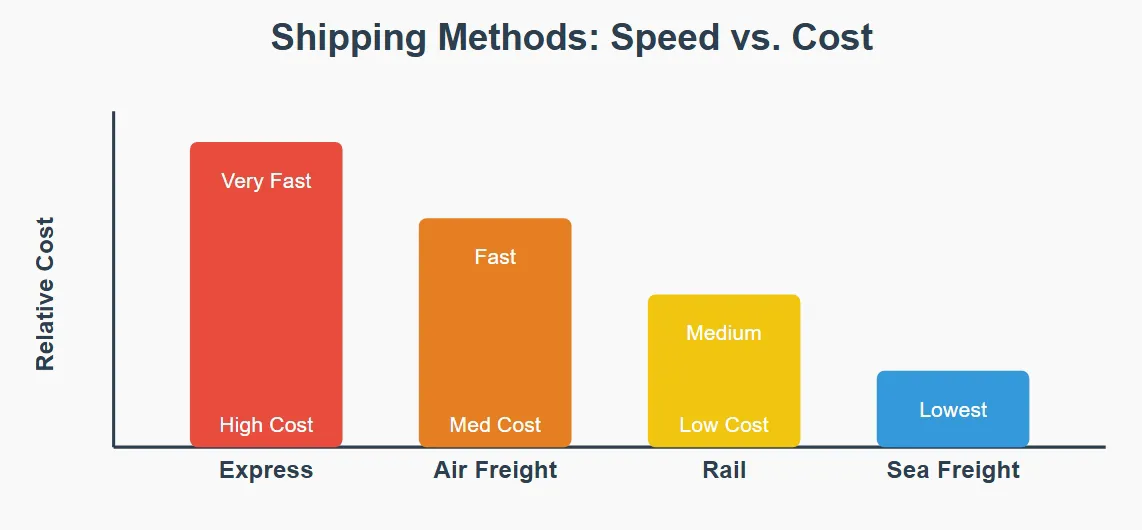
Overview of Shipping Options
| Method | Best For | Transit Time (to USA/EU) | Est. Cost | Pros | Cons |
|---|---|---|---|---|---|
| Express Courier (DHL/UPS) | Samples, Small Parcels (<150kg) | 2–5 Days | Fastest, Door-to-Door | Most Expensive | |
| Air Freight | Urgent stock, Mid-size (150–500kg) | 7–12 Days | Fast, Reliable | Costly for heavy items | |
| Sea Freight (LCL) | Small shipments (<15 CBM) | 20–40 Days | Cheap for small volume | Slower, consolidation delays | |
| Sea Freight (FCL) | Bulk orders (>15 CBM) | 18–35 Days | Lowest cost per unit | Slower, risk of port congestion | |
| Rail Freight | Shipping to Europe/Central Asia | 15–25 Days | Mid-range | Faster than sea, cheaper than air | Limited routes |
Calculating Shipping Costs
Shipping costs are influenced by fuel surcharges and seasonal demand.
- Volumetric Weight: For air freight, if your package is light but large (like pillows), you pay for the space it takes up, not the actual weight.
- Seasonality: Shipping in Q4 (October-December) or before Chinese New Year (January/February) is significantly more expensive.
Step 3: Navigating the New Customs Reality
This is a critical update for all importers.
The End of the "De Minimis" Loophole
In 2025, the USA eliminated the de minimis exemption for goods from China.
- Previously: Shipments under $800 entered duty-free with minimal paperwork.
- Now: All shipments, regardless of value, are subject to duties and formal/informal entry procedures.
What This Means for You
- Customs Bond: You may need a continuous customs bond even for smaller regular shipments.
- Importer of Record: You must ensure your EIN/SSN is correctly registered as the Importer of Record.
- Duties: Be prepared to pay Section 301 tariffs (often 25%) plus standard duties on every shipment.
Step 4: Booking, Tracking, and Receiving
Booking with a Freight Forwarder
Don't rely on your factory to handle shipping—they are experts in manufacturing, not logistics. You need a specialized China Freight Forwarder.
Why Choose AllBestShipping? At AllBestShipping, we specialize in navigating the complexities of customs regulations.
- DDP Specialists: We offer seamless DDP shipping services where we handle the new duty requirements, customs bonds, and clearance for you.
- Competitive Rates: We leverage volume contracts to get you rates that individual shippers can't access.
- Transparency: No hidden destination fees.
Documentation Checklist
Ensure you have these documents ready to avoid customs holds:
- Commercial Invoice: Must list the true value of goods (undervaluing is illegal and risky).
- Packing List: Details count, weight, and dimensions.
- Bill of Lading (B/L): The official contract of carriage.
Tracking Your Shipment
Use tools provided by your forwarder or third-party sites like 17Track. At AllBestShipping, we provide proactive updates so you aren't left guessing where your cargo is.
Step 5: Receiving and Inspecting
When goods arrive:
- Inspect Immediately: Check for damaged boxes before signing the delivery receipt.
- Count Inventory: Ensure quantity matches the packing list.
- File Claims: If there is damage, take photos and notify your forwarder and insurance provider within 3 days.
7 Common Mistakes to Avoid When Shipping from China
Importing from China offers tremendous opportunities, but a single mistake in logistics can wipe out your profit margins. Here are the most common pitfalls we see—and how to avoid them.
1. Focusing Only on FOB Price
Many beginners calculate profits based solely on the product cost (FOB).
- The Fix: Always calculate your Landed Cost. This includes the product price + shipping freight + customs duties + taxes + local delivery fees. A "cheap" product might be expensive once it arrives at your door.
2. Choosing the Wrong Incoterms
Agreeing to EXW (Ex Works) means you are responsible for everything from the factory door in China. Agreeing to CIF often leads to hidden destination fees.
- The Fix: For beginners, DDP (Delivered Duty Paid) is the safest option. For more control, use FOB (Free on Board) where you control the freight forwarder, not the supplier.
3. Underestimating Transit Times & Seasonality
Shipping isn't always linear. Chinese New Year (CNY) freezes production for weeks, and Q4 (Oct-Dec) sees skyrocketing rates.
- The Fix: Plan your inventory 3-4 months in advance. Allow an extra 1-2 weeks buffer for customs clearance in the current regulatory environment.
4. Ignoring Cargo Insurance
"It won't happen to me" is a dangerous mindset. Rough seas, fires, or theft can happen.
- The Fix: Always buy Cargo Insurance. It is incredibly cheap (often ~0.3%-0.5% of commercial value) and protects you from total loss, including "General Average" declarations.
5. Poor Packaging
Goods travel thousands of miles via truck, crane, and ship. Weak boxes will crush.
- The Fix: Require your supplier to use export-grade packaging (5-ply corrugated boxes, pallets, and shrink wrap). Ask for photos before they ship.
6. Incorrect Documentation
A wrong HS Code can trigger customs audits, delays, and retroactive fines.
- The Fix: Double-check HS Codes with your forwarder. Ensure the Commercial Invoice and Packing List match exactly.
7. Managing Multiple Suppliers Alone
Shipping five small boxes from five different factories is inefficient and costly.
- The Fix: Use AllBestShipping's Consolidation Service. We collect goods from all your suppliers, combine them into one shipment, and send them to you as a single delivery. This saves significantly on freight and customs clearance fees.
Conclusion
Shipping from China requires more attention to detail than ever before, but it remains the most profitable sourcing strategy for global businesses. By understanding the new regulations, choosing the right Incoterms, and partnering with a trusted forwarder like AllBestShipping, you can turn logistics from a headache into a competitive advantage.
Ready to ship? Contact AllBestShipping today for a free quote and let us handle the complexities of your supply chain.