Sea Freight from China to Australia: The Ultimate Guide (2026 Update)
Sea Freight from China to Australia is the backbone of trade between these two economic powerhouses. Whether you are a seasoned importer in Sydney or a new e-commerce business owner in Melbourne, understanding the nuances of ocean shipping is critical to your supply chain's success. With trade volumes continuing to rise in 2026, businesses are constantly seeking more efficient, cost-effective, and reliable shipping solutions.
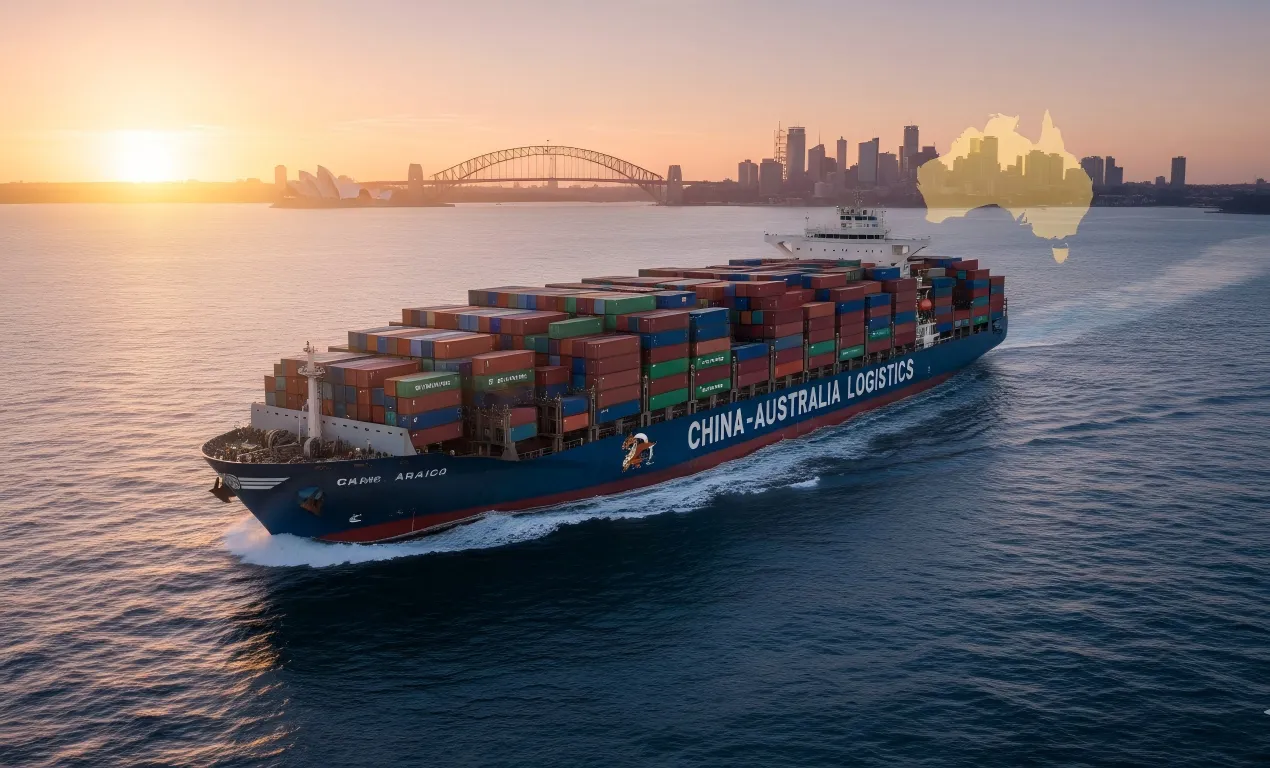
In this comprehensive guide, we will explore everything you need to know about shipping by sea—from choosing the right container load to navigating complex customs regulations. As a leading freight forwarder with over a decade of experience, AllBestShipping is here to help you optimize your logistics strategy.
Why Choose Sea Freight from China to Australia?
When importing goods from China, the primary decision often comes down to Sea Freight versus Air Freight. While air freight offers speed, sea freight remains the dominant choice for over 90% of global trade due to its undeniable economic advantages.
Key Benefits
- Cost-Effectiveness: Ocean shipping is significantly cheaper than air freight, especially for bulky or heavy shipments. For large volumes, the cost per unit drops dramatically.
- Capacity: Cargo ships can handle massive volumes, from heavy machinery to thousands of consumer goods, which air freight simply cannot accommodate.
- Versatility: Whether you are shipping hazardous materials, vehicles, or temperature-sensitive goods, sea freight offers specialized container options.
- Environmental Impact: Ocean freight has a lower carbon footprint per ton-mile compared to air transport.
| Feature | Sea Freight | Air Freight |
|---|---|---|
| Cost | Low ($) | High ($$$) |
| Transit Time | 14–30 Days | 3–7 Days |
| Capacity | Very High | Limited |
| Reliability | Moderate (Weather dependent) | High |
Overview of Sea Freight Options
Understanding the different shipping modes is the first step in optimizing your logistics budget.
Full Container Load (FCL)
FCLstands for Full Container Load. This option is ideal when you have enough cargo to fill (or nearly fill) a standard shipping container. You pay a flat rate for the container use, regardless of whether it is fully loaded.
- Best for: Shipments exceeding 15 cubic meters (CBM).
- Advantages: Faster transit times (no deconsolidation needed), lower risk of damage (less handling), and better security.
- Common Containers: 20GP (33 CBM), 40GP (67 CBM), and 40HQ (76 CBM).
Less than Container Load (LCL)
LCL (Less than Container Load) allows multiple importers to share space in a single container. You only pay for the volume (CBM) your cargo occupies.
- Best for: Smaller shipments between 1 CBM and 15 CBM.
- Advantages: Flexible for small businesses, no need to wait for a full container load.
- Disadvantages: Slightly longer transit times due to consolidation (at origin) and deconsolidation (at destination).
Specialized Cargo & Project Shipments
For goods that don't fit in standard boxes, we offer specialized solutions:
- Reefer Containers: For perishable goods requiring temperature control.
- OOG (Out of Gauge): Flat rack or open top containers for oversized machinery.
- Ro-Ro (Roll-on/Roll-off): For vehicles and wheeled equipment.
Key Shipping Routes and Major Ports
The efficiency of your Shipping from China depends heavily on the ports of origin and destination.
Major Chinese Ports for Exports
China boasts some of the world's busiest ports. Choosing the closest port to your supplier can save on inland trucking costs.
- Shanghai: The world's busiest container port, ideal for suppliers in the Yangtze River Delta.
- Shenzhen (Yantian/Shekou): Key hub for electronics and tech from the Pearl River Delta.
- Ningbo-Zhoushan: A massive port south of Shanghai, often less congested.
- Guangzhou (Nansha): Serves the manufacturing hub of southern China.
- Qingdao: Major gateway for Northern China.
Major Australian Ports for Imports
Australia's ports are strategically located to serve its major population centers.
- Sydney (Port Botany): The largest container port, serving New South Wales.
- Melbourne: The busiest port for containerized cargo, serving Victoria.
- Brisbane: Key port for Queensland.
- Fremantle: The primary gateway for Western Australia (Perth).
- Adelaide: Serves South Australia.
Common Shipping Routes & Transit Times (2026 Estimates)
Transit times can vary based on the shipping line and route (Direct vs. Transshipment).
| Origin Port (China) | Destination Port (Australia) | Est. Transit Time |
|---|---|---|
| Shanghai | Sydney | 14–18 Days |
| Shenzhen | Melbourne | 16–22 Days |
| Ningbo | Brisbane | 15–20 Days |
| Guangzhou | Fremantle | 20–25 Days |
| Qingdao | Adelaide | 22–28 Days |
Note: These are port-to-port times. Door-to-door delivery will require additional time for pickup and customs clearance.
Step-by-Step Guide: How to Ship by Sea from China to Australia
Navigating the shipping process can be daunting. Here is a simplified roadmap.
1. Preparing Cargo & Documentation
Before booking, ensure your goods are ready. Accurate documentation is non-negotiable.
- Commercial Invoice: Details the value and description of goods.
- Packing List: Specifies the contents, weight, and dimensions.
- Bill of Lading (B/L): The contract of carriage and title document.
- Certificate of Origin: Crucial for claiming duty exemptions under ChAFTA.
2. Booking and Scheduling Your Shipment
Work with a reliable freight forwarder like AllBestShipping. We help you select the best carrier, negotiate rates, and book space.
- Tip: Book at least 2-3 weeks in advance, especially before peak seasons like Chinese New Year.
3. Customs Clearance Procedures
Customs Clearance in Australia is strict. The Australian Border Force (ABF) monitors all imports.
- HS Codes: Ensure your goods are classified correctly to determine applicable duties.
- GST & Duty: Most imports attract 10% GST. However, under the China-Australia Free Trade Agreement (ChAFTA), many Chinese goods enter duty-free if properly documented.
4. Delivery & Final Mile Logistics
Once cleared, your cargo needs to move from the port to your warehouse.
- Door-to-Door Shipping: We handle the entire process, picking up from the factory in China and delivering directly to your door in Australia, managing all trucking and warehousing in between.
Cost Structure & Factors Affecting Sea Freight Rates
Understanding your "Total Landed Cost" is essential for profitability.
Breakdown of Shipping Costs
- Ocean Freight: The base cost for the container or CBM.
- Origin Charges: Trucking to port, export customs, terminal handling charges (THC) in China.
- Destination Charges: Port service charges, import processing fees, delivery orders in Australia.
- Customs Duty & GST: Calculated on the Customs Value (FOB) + Freight + Insurance.
- Cargo Insurance: Protects against loss or damage (usually 0.2% - 0.5% of value).
Freight Rate Influencers (2026 Market Update)
- Seasonality: Rates spike during peak seasons (Aug-Oct for Christmas retail, Jan-Feb for CNY).
- Fuel Prices: BAF (Bunker Adjustment Factor) fluctuates with oil prices.
- Exchange Rates: Currency fluctuations between USD, CNY, and AUD.
How to Optimize Shipping Costs
- Consolidate Shipments: Combine orders from multiple suppliers into one FCL shipment.
- Ship Off-Peak: Avoid the "General Rate Increases" (GRI) by shipping during slower months (Mar-Jun).
- Optimize Packaging: Reduce wasted space to fit more goods into fewer containers.
Common Challenges and Solutions
Shipping Delays & Disruptions
Delays can occur due to weather, port congestion, or labor strikes.
- Solution: Buffer your lead times and use a forwarder with real-time tracking capabilities.
Packaging & Damage Prevention
The sea journey is rough. Moisture and movement can damage goods.
- Solution: Use palletization, shrink wrap, and desiccants. Ensure your supplier follows export packaging standards.
Regulatory Compliance & Biosecurity
Australia has some of the strictest biosecurity laws in the world (DAFF).
- BMSB (Brown Marmorated Stink Bug): Seasonal measures (Sep-May) require treatment for high-risk goods from target risk countries.
- Timber: Wooden packaging must be ISPM-15 certified to avoid fumigation delays at destination.
Choosing a Reliable Freight Forwarder
Your freight forwarder is your strategic partner. Choosing the right one can make or break your supply chain.
Evaluation Criteria
- Experience: Do they specialize in the China-Australia trade lane?
- Network: Do they have strong relationships with carriers and local agents in Australia?
- Transparency: Are their quotes all-inclusive, or are there hidden fees?
- Customer Service: Can you reach them when issues arise?
Why AllBestShipping?
At AllBestShipping, we pride ourselves on being more than just a service provider. We are your logistics partner.
- Expertise: Deep knowledge of Australian customs and biosecurity regulations.
- Competitive Rates: Volume contracts with major shipping lines (COSCO, Maersk, MSC).
- End-to-End Service: From factory pickup in China to your doorstep in Australia.
FAQs
1. How long does sea freight take from China to Australia?
Standard sea freight transit times average between 20 and 30 days depending on the port of origin and destination. However, express services on routes like Shanghai to Sydney can take as little as 14-18 days.
2. What is the difference between FCL and LCL shipping?
FCL (Full-Container Load) provides exclusive use of a container for a flat rate and is best for shipments over 15 CBM. LCL (Less-than-Container Load) allows multiple shippers to share space, paying only for the volume used. FCL is generally faster and safer.
3. How much does it cost to ship a container from China to Australia in 2026?
As of January 2026, 20GP FCL rates to major cities like Sydney and Melbourne range between
4. How are Australian import duties and GST calculated?
Import tax consists of a 10% GST and customs duties (usually 5%). GST is calculated on the CIF value + Duty.
- Formula: (Customs Value + Duty + Transport + Insurance) x 10%.
- Tip: Use ChAFTA to potentially reduce Duty to 0%.
5. Is there a tax-free threshold for importing goods?
Yes. Goods with a customs value under AUD $1,000 are generally exempt from both customs duty and GST. However, restricted items (alcohol, tobacco) are always taxed.
6. What documentation is required for customs clearance?
Essential documents include:
- Commercial Invoice
- Packing List
- Bill of Lading
- Certificate of Origin (for ChAFTA)
- Packing Declaration (for biosecurity)
7. How does the Chinese New Year (CNY) affect shipping schedules?
CNY causes factory shutdowns and a "festive rush." Space becomes scarce, and rates can spike by 30–50%. We advise booking at least 3 weeks in advance of the holiday to secure space.
8. What are Australia's biosecurity and quarantine requirements?
The Department of Agriculture, Fisheries and Forestry (DAFF) enforces strict checks. Wooden packaging must be ISPM-15 compliant. During BMSB season (Sep-May), certain goods require mandatory treatment (fumigation) before shipping.
9. Which major ports handle trade between China and Australia?
- China: Shanghai, Shenzhen, Ningbo, Guangzhou, Qingdao.
- Australia: Sydney (Port Botany), Melbourne, Brisbane, Fremantle.
10. Should I use a local Australian forwarder or a China-based agent?
A hybrid approach is often best. A China-based forwarder like AllBestShipping offers lower origin rates and better communication with suppliers, while our strong network in Australia ensures smooth customs clearance and delivery.