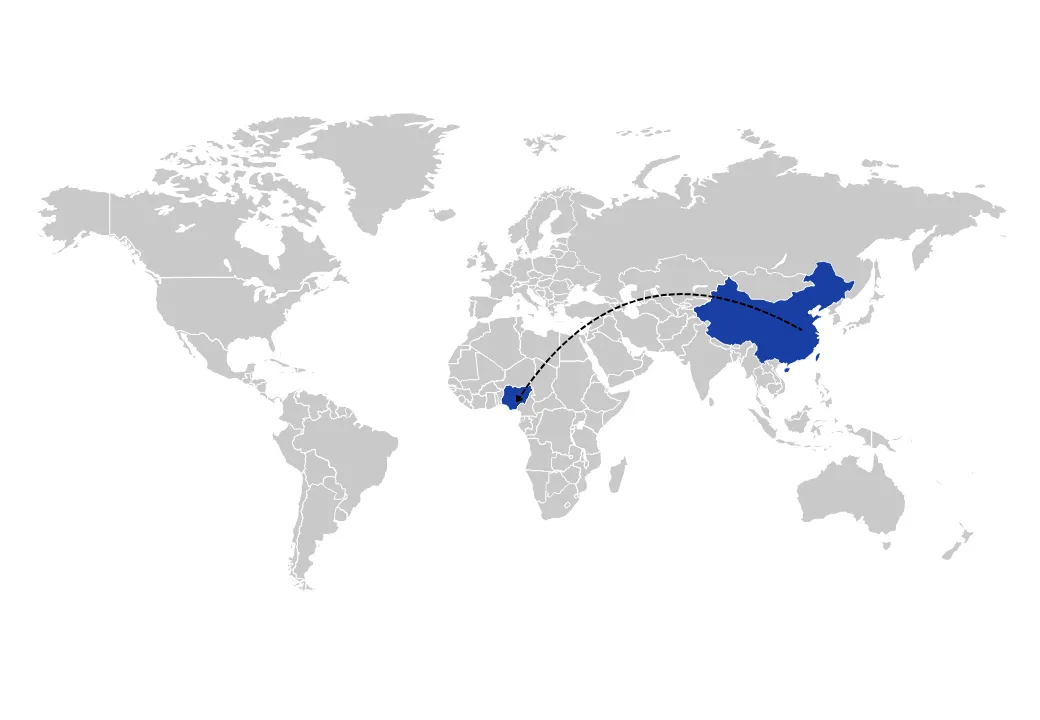
Shipping from China to Nigeria is one of the busiest — and most paperwork-intensive — trade corridors in Africa. In 2026, Nigeria imported over $13 billion of Chinese goods (up 37% year-on-year), equal to more than a quarter of its total import bill. Yet the lane is being reshaped by three forces: the new Lekki Deep Sea Port, which in just two years has become Nigeria's leading gateway; a fully digitalized customs workflow (Form M → PAAR → NICIS II) that punishes sloppy documentation; and the April 2026 prohibition list revision, which now blocks banned goods at the bank counter before they ever reach a port. Whether you are a B2B importer, an e-commerce seller, or a first-time buyer on Alibaba or 1688, relying on outdated advice is a recipe for demurrage bills and stuck containers.
This guide, crafted by the experts at AllBestShipping, cuts through the noise. We provide actionable data on rates, transit times, and the exact steps to move your cargo from a factory in Shenzhen to a warehouse in Lagos, Abuja or Port Harcourt — safely and on budget. Every Shipping From China to Nigeria project is handled end-to-end by our Shenzhen and Lagos teams — from the first quote to final delivery.
Sea Freight from China to Nigeria
Our Sea Freight from China services are the most economical way to move large volumes of goods to Nigeria. For August 2026, importers can expect FCL (Full Container Load) rates to start around $2,970 to Lagos, with port-to-port transit times averaging 30–40 days on direct services. While slower than air, it remains the default choice for electronics, machinery, furniture, building materials, vehicles and regular B2B inventory.
1. Current Market Snapshot (August 2026)
- Lagos Gateway (Apapa & Tin Can Island): Still the historic heart of Nigerian container trade and the epicentre of the famous "Tokunbo" used-vehicle market. Congestion has eased since the pandemic years, but trucking corridors can still slow deliveries, so always schedule buffer.
- Lekki Deep Sea Port: Commissioned in 2023 and built by China Harbour Engineering Company, with CMA CGM's Lekki Freeport Terminal running the container berths. West Africa's deepest port (16.5 m) handled about 40% of Nigeria's port throughput in 2025, overtaking Apapa and Onne, and a Phase Two expansion was announced in June 2026. Expect more direct calls and faster vessel turnaround here.
- Eastern Gateways: Onne / Port Harcourt serve the south-east and the oil & gas sector; Calabar is a smaller but workable option for eastern-region distribution.
- Rate Trend: Ocean rates held stable through mid-2026 after the post-Red-Sea rebalancing, with spot levels around $2,970–$3,630 (20ft) and $3,150–$3,850 (40ft) to Lagos. Expect +15–30% increases during the pre-Chinese New Year and Q4 peak windows, when capacity tightens first.
- Transshipment Reality: For years a large share of Nigerian cargo routed via Lomé, Cotonou or Tema. Lekki's rise is pulling direct calls back into Nigeria — a structural improvement worth tracking when you compare quotes.
2. Sea Freight Rates & Transit Times
Understanding the cost difference between direct services and transshipment is vital for margin planning.
| Container Type | Destination (Nigeria) | Est. Cost (Aug 2026)* | Est. Transit Time |
|---|---|---|---|
| 20' FCL | Lagos (Apapa / Tin Can / Lekki) | $2,970 - $3,630 | 30 - 40 Days |
| 40' FCL | Lagos (Apapa / Tin Can / Lekki) | $3,150 - $3,850 | 30 - 40 Days |
| 20'/40' FCL | Onne / Port Harcourt | $3,200 - $4,200 | 35 - 45 Days |
| LCL (per CBM) | Lagos (consolidated) | $120 - $450 | 36 - 42 Days |
Note: Rates are estimates based on spot market indices and subject to weekly fluctuation. Bunker Adjustment Factors (BAF), Peak Season Surcharges (PSS), and Nigerian port/terminal charges are excluded unless stated as all-in. LCL pricing depends heavily on cargo density and whether the quote is port-to-port or door-to-door.
3. FCL vs. LCL: Which Should You Choose?
Don't have enough goods to fill a container? AllBestShipping offers consolidation services to help you save.
| Feature | FCL (Full Container Load) | LCL (Less than Container Load) |
|---|---|---|
| Volume | > 15 CBM | < 15 CBM |
| Cost | Flat rate per container (Cheaper per unit) | Per CBM (Higher per unit) |
| Security | Sealed at origin, opened at destination | Handled multiple times (Higher risk) |
| Speed | Faster (No consolidation wait time) | Slower (Wait for consolidation/deconsolidation) |
| Best For | High volume, fragile, or exclusive goods | Small trial orders, samples, e-commerce stock |
4. Insider Tip: Direct Service vs. Transshipment
Many importers default to the cheapest quote. However, a transshipment routing via Lomé, Cotonou or Tema can be $150–$300 cheaper per container — but it adds 7–15 days, a real risk of missed connections, and in some cases cargo security concerns at regional transshipment hubs. For the Lagos and Abuja markets, AllBestShipping often recommends a direct sailing: the reliability is worth the premium when your stock or production line depends on it.
Case Study: A dedicated AllBestShipping client importing solar panels switched from a transshipment service to a direct Shenzhen–Lagos sailing, cutting their total lead time by 11 days and eliminating demurrage risk during the peak season.
Air Freight from China to Nigeria
Air freight is the solution when speed is non-negotiable. Whether you are restocking fast-moving inventory, shipping high-value electronics, or sending urgent spare parts, air cargo delivers your goods in 5–8 days. As of August 2026, rates on the China–Nigeria lane average $5.00 - $12.00 per kg for standard shipments, with express courier options for urgent parcels.
1. Air Freight Cost Structure (August 2026)
Air rates are highly sensitive to weight breaks. The heavier your shipment, the lower the cost per kilogram.
| Weight Bracket | Estimated Cost (USD/kg)* | Service Level |
|---|---|---|
| +45 kg | $8.50 - $12.00 | Standard Air |
| +100 kg | $6.80 - $10.00 | Standard Air |
| +300 kg | $5.80 - $8.50 | Standard Air |
| +1000 kg | $5.00 - $7.50 | Consolidation / Heavy Freight |
Pro Tip: If your shipment is close to a weight break (e.g., 95kg), it is often cheaper to pay for 100kg to unlock the lower rate.
2. Transit Times: Airport vs. Door-to-Door
| Service Type | Typical Transit Time | Best For |
|---|---|---|
| Economy Air | 6 - 8 Days | Regular inventory replenishment |
| Express Air | 4 - 6 Days | Urgent stockouts, time-sensitive launches |
| Express Courier (DHL/UPS/FedEx) | 3 - 5 Days | Samples, documents, very small parcels (< 20kg) |
3. The "Chargeable Weight" Trap
New importers often get shocked by the bill because they don't understand Volumetric Weight. Airlines charge based on whichever is greater: Actual Weight or Volumetric Weight.
- Formula:
Length (cm) x Width (cm) x Height (cm) / 6000 - Example: A box of toys might weigh 10kg actually, but its volumetric weight is 25kg. You pay for 25kg.
AllBestShipping Solution: Our warehouse team optimizes your packaging to minimize dead space, potentially saving you 15-20% on air freight costs by reducing volumetric weight.
4. Why Choose AllBestShipping for Air Cargo?
- Block Space Agreements (BSA): We have guaranteed space with major airlines on China–Nigeria routes even during peak season.
- DDP Services: We handle customs coordination and duties upfront, so your goods fly straight to your door without administrative headaches.
- Real-Time Tracking: Know exactly where your high-value cargo is, 24/7.
DDP & Door-to-Door Shipping from China to Nigeria
In the complex landscape of 2026 Nigerian trade regulations, DDP (Delivered Duty Paid) has become the gold standard for e-commerce sellers and small-to-medium businesses. Under DDP terms, AllBestShipping takes full responsibility for the entire door-to-door shipping journey—from the factory floor in China to your warehouse or shop door in Nigeria.
1. What Does DDP Include? (The "All-In" Price)
When you get a DDP quote from us, it is a final landed cost. There are no surprises.
- Pickup: From supplier's factory in China.
- Export: China customs declaration and documentation.
- Freight: International Sea or Air shipping.
- Documentation: Coordination of Form M, PAAR and CTN with the importer's bank and customs agents.
- Duty & Tax: Payment of all import duties, VAT (7.5%), CISS and ETLS levies.
- Delivery: Last-mile trucking to your specific address in Lagos, Abuja, Port Harcourt, Kano or beyond.
2. Critical Update: Form M, PAAR & the 2026 Rules
Warning: Unlike most destinations, a Nigerian DDP shipment still requires the importer to open a Form M through an authorized dealer bank in Nigeria — it cannot be opened by the supplier or on a personal account. Your forwarder coordinates the entire chain, but the Form M must exist before cargo sails.
- April 2026 Prohibition List: The revised import prohibition list bans 17 categories of goods. From 1 April 2026, banks will reject Form M applications for banned items — a pre-shipment compliance gate you cannot negotiate around. Verify your product is importable before ordering.
- PAAR Before Berthing: The Pre-Arrival Assessment Report must be lodged through NICIS II before the vessel arrives; without it the vessel is not supposed to berth, and demurrage starts the moment your container lands.
- CBN Foreign Exchange Manual (2026): The fourth edition of the manual, launched May 2026, raised advance import payment limits to 30% of FOB value and tightened compliance penalties. Plan your payment timeline accordingly.
- Our Promise: AllBestShipping works with licensed Nigerian customs agents and clearing partners to keep your shipments compliant and your cargo safe from costly holds at Lagos or Onne.
3. DDP vs. DDU (DAP): A Quick Comparison
| Feature | DDP (Delivered Duty Paid) | DDU / DAP (Delivered Duty Unpaid) |
|---|---|---|
| Customs Clearance | Seller/Forwarder pays & handles | Buyer must hire a broker |
| Import Duties | Included in quote | Buyer pays separately upon arrival |
| Form M | Coordinated by forwarder (importer opens) | Importer must manage with their bank |
| Predictability | 100% (Fixed Cost) | Variable (Duties may fluctuate) |
| Best For | E-commerce sellers, New Importers | Large Corporations with Customs Teams |
Success Story: An e-commerce seller of phone accessories saved 15+ hours of admin work per shipment by switching to AllBestShipping's DDP LCL service, freeing their team to focus on Jumia and social-commerce marketing in Lagos.
Main shipping routes from China to Nigeria
Choosing the right port pair can save you 3-7 days of transit time and hundreds of dollars per container. AllBestShipping leverages data from thousands of shipments to select the optimal route for your specific cargo.
1. Top Sea Freight Routes (August 2026)
| Route Name | Origin Ports (China) | Destination Ports (Nigeria) | Avg. Transit Time | Key Advantage |
|---|---|---|---|---|
| East China Express (Most Frequent) | Shanghai, Ningbo | Lagos (Apapa / Tin Can / Lekki) | 30 - 38 Days | Most frequent direct sailings; ideal for the Lagos and Abuja markets. |
| South China Express | Shenzhen (Yantian / Shekou), Guangzhou | Lagos (Apapa / Tin Can / Lekki) | 28 - 35 Days | Fastest direct option for Pearl River Delta manufacturers and 1688 buyers. |
| North China Route | Qingdao, Tianjin | Lagos | 35 - 42 Days | Good for machinery, steel and vehicles sourced from northern China. |
| Eastern Gateway | Shanghai, Ningbo, Shenzhen | Onne / Port Harcourt | 35 - 45 Days | Serves the south-east and oil & gas supply chain; less congestion than Lagos. |
2. Top Air Freight Corridors
The "Lagos Mainline": Guangzhou (CAN) / Shenzhen (SZX) to Lagos (LOS)
- Frequency: Multiple weekly flights and freighter capacity
- Best For: Electronics, consumer goods, urgent restocking from the Pearl River Delta.
The "Capital Link": Shanghai (PVG) to Abuja (ABV)
- Frequency: Weekly
- Best For: Government projects, pharmaceuticals, high-value machinery parts destined for the capital region.
The "Express Parcel Lane": Hong Kong (HKG) / Shenzhen (SZX) via DHL / UPS / FedEx to Lagos (LOS) and Abuja (ABV)
- Frequency: Daily
- Best For: Samples, documents, spare parts under 20kg.
3. AllBestShipping's "Smart Routing" Technology
We don't just book the first available slot. We analyze:
- Port Congestion: Is Apapa jammed? We route via Lekki or advise Onne for eastern cargo.
- Seasonality: Chinese New Year and Golden Week? We book space well in advance to lock rates.
- Compliance Readiness: Is your Form M approved and PAAR lodged? We gate shipments on documentation status before loading, so containers never sit and burn demurrage.
Shipping Costs from China to Nigeria
Shipping costs are more than just the "freight rate." To avoid budget overruns, importers must understand the full landed cost structure — and in Nigeria, clearance speed directly affects cost, because every extra day at the port adds demurrage and storage charges.
1. The Anatomy of Shipping Costs
A comprehensive quote from AllBestShipping typically includes these four components:
| Component | Description | Who Pays? |
|---|---|---|
| Origin Charges | Trucking to port, export declaration, document fees. | FOB: Supplier / EXW: Buyer |
| Ocean/Air Freight | The actual cost of moving goods, including BAF and PSS where applicable. | Buyer (unless CIF/DDP) |
| Destination Charges | Port handling (THC), terminal storage, customs agent fees, CTN issuance. | Buyer |
| Duties & Taxes | Import duty, VAT, CISS and ETLS levies — paid in naira. | Buyer (Importer of Record) |
2. Current Cost Indicators (August 2026 Estimates)
These ranges reflect current spot market rates and are subject to change weekly.
Sea Freight (FCL):
- 20' Container: $2,970 - $3,630 (to Lagos)
- 40' Container: $3,150 - $3,850 (to Lagos)
Sea Freight (LCL):
- Per CBM: $120 - $450 (Dependent on density, route and service level)
Air Freight:
- Standard Cargo (>100kg): $6.80 - $10.00 / kg
- Express Courier: $14.00 - $18.00 / kg (Plus applicable duties)
3. The Nigerian Tax Stack (What Really Drives Cost)
Nigeria's import charges stack on top of each other, so the total landed cost is significantly higher than the CIF value:
- Import Duty: 0-35% depending on the HS code, under the ECOWAS Common External Tariff (CET). The average rate is around 17%, and over 80 tariff lines carry effective rates of 50% or more — luxury goods can reach 75%.
- VAT: 7.5% applied on the CIF value plus duty.
- CISS Levy: 1% (Comprehensive Import Supervision Scheme).
- ETLS Levy: 0.5% (ECOWAS Trade Liberalisation Scheme).
Pro Tip: All duties and taxes are paid in naira, so exchange-rate movement directly affects your real cost — budget a buffer. Vehicles attract a 35% duty plus a 15% purchase levy, pushing total duties on cars to 70-90% of the CIF value. Use the AllBestShipping team to confirm your exact HS code and landed cost before shipping to avoid margin-killing surprises.
4. Hidden Fees to Watch Out For
Don't get caught off guard by these common surcharges:
- Demurrage & Storage: The single biggest hidden cost in Nigeria. Containers left at the port beyond free time accrue daily charges that escalate quickly — clearance delays of 30-60 days during congestion can cost thousands of dollars per container.
- CTN Fee: The mandatory Cargo Tracking Note issued through the Nigeria Single Window carries an issuance fee that must be budgeted per shipment.
- PSS (Peak Season Surcharge): Applied during Q4 (Oct-Dec) and the pre-Chinese New Year rush.
- Naira Exchange Risk: Duty is assessed in naira; if the naira weakens between booking and clearance, your duty bill rises. DDP quotes lock this risk out.
How Long Does Shipping Take from China to Nigeria?
"Transit Time" usually only refers to the time on the water or in the air. However, Total Lead Time (what you actually care about) includes pickup, export customs, main transit, Nigerian import clearance, and final delivery.
1. Total Lead Time Breakdown (Door-to-Door)
| Shipping Mode | Port-to-Port Time | Total Door-to-Door Time | Best For |
|---|---|---|---|
| Express Courier | 3 - 5 Days | 5 - 8 Days | Documents, Urgent Samples |
| Air Freight | 2 - 5 Days | 7 - 12 Days | High-Value Electronics, Urgent Restocking |
| Sea Freight (Direct) | 28 - 40 Days | 45 - 70 Days | General Cargo to Lagos |
| Sea Freight (Transshipment) | 40 - 55 Days | 55 - 75 Days | Budget-First Bulk Cargo |
2. Key Bottlenecks That Cause Delays
Even the fastest ship can be delayed by:
- Missing Form M: No Form M, no clearance — period. It must be opened before the goods leave China.
- Late PAAR: PAAR must be lodged before vessel arrival; late submission adds days of waiting at the port.
- Document Mismatch: Inconsistent values or descriptions between the invoice, Form M, PAAR and Bill of Lading trigger customs queries and physical examination.
- Missing Certificates: SONCAP or NAFDAC certificates must exist before shipment — this is the single biggest cause of cargo detention at Nigerian ports.
- Port Congestion: Apapa and Tin Can corridors can add days during peak periods, though Lekki is changing the picture for the better.
- Physical Examination: Examination is very common in Nigeria; plan 3-10 days if your shipment is selected.
3. How AllBestShipping Reduces Your Lead Time
- Pre-Clearance: We coordinate Form M readiness and lodge PAAR through NICIS II before the vessel arrives, so clearance starts the day the ship berths.
- Dedicated Trucking: We don't wait for generic carriers. Our partner fleets pick up your container immediately upon availability.
- Document Gating: We review your full document set at origin — catching mismatches before they become port-side disasters.
Nigeria Customs Clearance & Import Duties
Nigeria runs one of the most document-intensive import regimes in the world, managed digitally through the NICIS II platform and the Nigeria Single Window Trade Portal. Every commercial shipment must clear a fixed sequence of gates before cargo is released.
1. The 2026 Tax Stack
Calculating your landed cost is complex. Your total tax liability typically includes:
- Import Duty: 0-35% based on the HS code (ECOWAS CET).
- VAT: 7.5% on CIF plus duty.
- CISS Levy: 1% of CIF.
- ETLS Levy: 0.5% of CIF.
Pro Tip: Because China has no free trade agreement with Nigeria, imports from China pay the full MFN duty rate. An accurate HS classification is the single biggest lever you control — get it wrong and you face fines, valuation disputes and cargo seizure risk.
2. Mandatory Certifications & Licenses
Depending on your product, pre-shipment approvals may be required before the goods even leave China:
- SONCAP: Standards Organisation of Nigeria Conformity Assessment Programme — electronics, toys, tyres, electrical appliances, glassware and many other manufactured goods. Requires a Product Certificate plus a per-shipment SONCAP Certificate.
- NAFDAC: Food, beverages, pharmaceuticals, cosmetics and medical devices.
- NAQS: Agricultural products, seeds and plants.
- NESREA: Chemicals and hazardous substances.
ISPM-15: All wooden packaging (pallets, crates) must be fumigated and stamped, or it will be rejected at the Nigerian port.
3. The Clearance Workflow (Form M → Release)
Once your Form M is approved, the clearance sequence is fixed:
- Step 1 — Form M: Opened by the importer at an authorized dealer bank (3-7 working days; valid 6 months, or 12 for machinery).
- Step 2 — PAAR: Duty and risk assessment generated on NICIS II (24-72 hours with complete documents) — must be approved before vessel arrival.
- Step 3 — CTN: Cargo Tracking Note issued via the Nigeria Single Window; the CTN number must appear on the Bill of Lading.
- Step 4 — IM7 Entry: Formal customs import declaration filed on NICIS II upon arrival.
- Step 5 — Examination: Customs may select the shipment for physical examination (very common; allow 3-10 days).
- Step 6 — Duty Payment: Assessed duties and levies paid in naira.
- Step 7 — Release: Customs release order, then terminal delivery order after port charges are settled.
4. Critical Documentation
To clear customs smoothly, your paperwork must be flawless:
- Commercial Invoice: Must list the true transaction value. Undervaluation is a criminal offence in Nigeria and a major red flag for customs.
- Packing List: Detailed count and weight, matching the Bill of Lading exactly.
- Bill of Lading / Air Waybill: Must carry the CTN number and match the Form M details exactly.
- CCVO (Combined Certificate of Value and Origin): Verifies declared value and country of origin.
- Insurance Certificate: Cargo insurance must be placed with a Nigerian-registered insurer to be accepted at clearance.
Step-by-Step Shipping Process
From Inquiry to Delivery: A Transparent Roadmap.
Shipping doesn't have to be a black box. Here is the exact workflow when you partner with AllBestShipping:
Step 1: Quote & Strategy
You provide your cargo details (Weight, Volume, Commodity) and Incoterms (FOB/EXW). We analyze the best route (Sea vs. Air vs. DDP) and provide a transparent quote including all 2026 surcharges, duties and Nigerian taxes — and we flag immediately whether your product is importable under the April 2026 prohibition list.
Step 2: Booking & Pickup
Once approved, we contact your supplier directly.
- FOB: We coordinate with the supplier to get the cargo to the port.
- EXW: Our truck picks up the goods directly from the factory floor.
Step 3: Export Customs & Documentation
We review your Commercial Invoice and Packing List, confirm the HS code, check SONCAP/NAFDAC requirements, and verify your Form M and CTN are in place — preventing delays before the goods even leave China.
Step 4: International Transit
Your cargo is loaded onto the vessel or aircraft. You receive a Tracking Number to monitor progress in real-time.
Step 5: Import Clearance in Nigeria
Crucial: We lodge the PAAR through NICIS II before arrival and work with licensed Nigerian customs agents to file the IM7 entry upon berthing. If your documents are clean, we move through examination and pay duties on your behalf.
Step 6: Final Delivery
Whether it's a residential address, a commercial warehouse, or a Jumia / Konga fulfillment hub, our local trucking partners handle the final mile.
One-Stop Shipping Solutions for Alibaba, 1688 & Taobao Buyers
Buying from platforms like Alibaba, 1688, or Taobao often means dealing with multiple factories and fragmented logistics. AllBestShipping acts as your centralized logistics hub in China — the perfect starting point for building your Nigeria import business.
1. Free Warehousing & Consolidation
Don't ship 5 small boxes separately. Send them to our Shenzhen or Yiwu warehouse. We will:
- Collect goods from 5 different suppliers.
- Combine them into one single shipment.
- Save you up to 40% on freight costs compared to individual shipments.
2. Quality Check & Repacking
Factory packaging is often flimsy. We offer:
- Visual Inspection: Verify quantity and basic quality (send you photos).
- Repacking: Reinforce boxes with bubble wrap, corner guards, and pallets — with ISPM-15-certified wood — to survive the long journey to West Africa.
3. E-Commerce Prep for the Nigerian Market
Nigeria's e-commerce scene is booming — Jumia, Konga and social commerce are the main channels, and there is no local Amazon marketplace yet. We help you prepare:
- Labeling: We print and apply barcodes and shipment labels on every unit.
- Compliance: We help ensure product labels and certificates meet SONCAP/NAFDAC requirements before they reach Nigerian shelves.
- Consolidation: We combine multi-supplier orders into single DDP shipments, cutting your cost per unit dramatically.
Ready to Streamline Your Supply Chain?
Shipping from China to Nigeria in 2026 requires more than just a boat; it requires a strategy. With the Form M-PAAR documentation chain, naira-denominated duties, and port congestion risks, you need a partner who watches your back.
AllBestShipping combines local expertise in China with a robust network in Nigeria to deliver:
- Better Rates: Through volume leverage and direct carrier contracts.
- Faster Transits: Through smart routing to Lekki, Apapa and beyond — plus pre-arrival clearance.
- Zero Headaches: Through comprehensive DDP services and licensed Nigerian customs partners.
Looking for related guidance? Read our guide on door-to-door shipping from China to Ghana and air shipping from China to Kenya for more West and East African logistics insights.
Get Your Free Instant Quote Now and stop worrying about logistics—so you can focus on growing your business in Nigeria.