Suez Canal Return 2026: Why China–Europe Rates Are Falling While Transpacific Rates Climb
For the seventh week in a row, the two biggest container trades out of China moved in opposite directions — and the divergence is now large enough to change what you should book, and when.
In its assessment for 17 September 2026, Drewry's World Container Index put Shanghai–Rotterdam at $3,626 per 40ft, down 9% in a single week and roughly 11% in a fortnight. Shanghai–Genoa fell 5% to $4,016. In the same week, Shanghai–New York rose 7% to $10,394 and Shanghai–Los Angeles climbed 5% to $7,712. One index, two markets, moving in opposite directions for almost two months.
The reason on the Europe side is structural, and it is the biggest change on the China–Europe lane since the Red Sea crisis began: container services are going back through the Suez Canal. On 14 September, Maersk and Hapag-Lloyd confirmed that four more Gemini Cooperation services — AE5, AE11, AE12 and ME2 — would shift from the Cape of Good Hope back to the trans-Suez route, joining AE15 and AE19. Two days later, COSCO's 24,188 TEU OOCL Portugal made the group's first southbound Suez transit since the crisis started. Bloomberg's analysis the same week put roughly a quarter of the capacity deployed between Europe and Asia back on the canal, up from 17% at the start of August.
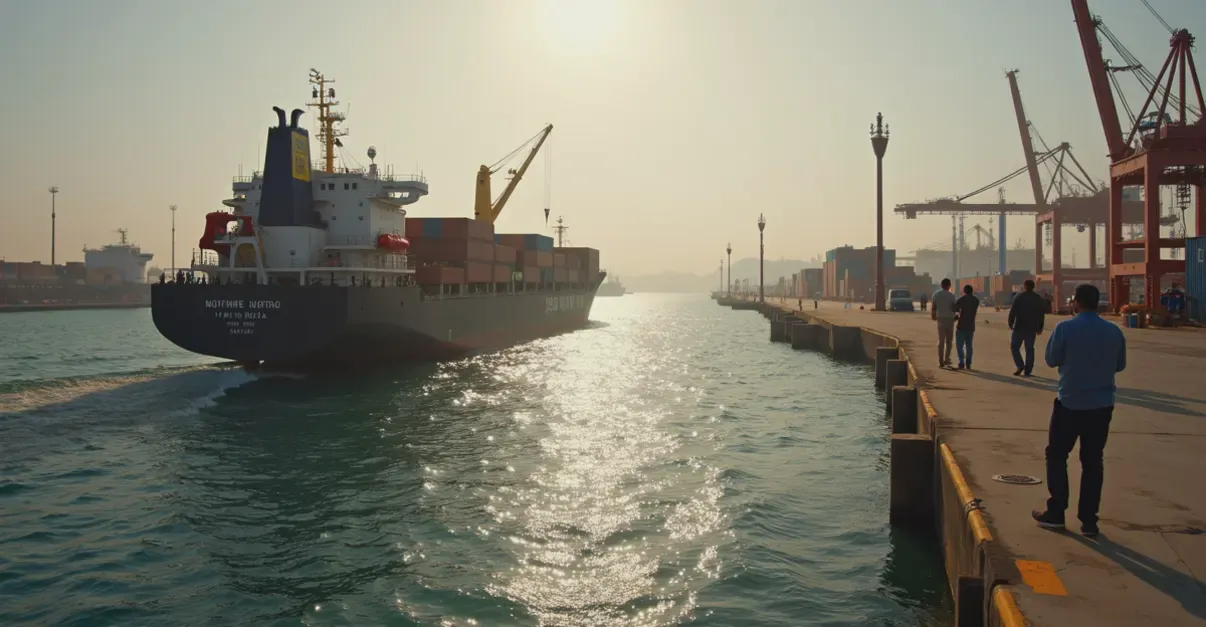
The reason on the transpacific side is cyclical: pre-Golden Week demand plus deliberate carrier capacity management. Drewry counts nine blank sailings on the transpacific for the week ahead, up from eight, and US import volumes are forecast to hit their annual peak in September.
This article is our read on the Suez restart as of 21 September 2026 — what actually changed, what it does to your transit times and landed cost, why your European rates are falling while your US rates are not, the port-side and security risks sitting on top of the saving, and the concrete booking plan we are running with our own clients between now and the second week of October.
The ten numbers that define this week
- $3,626 per 40ft — Shanghai–Rotterdam on 17 September 2026, down 9% week on week and about 11% in two weeks.
- $10,394 per 40ft — Shanghai–New York, up 7% in the same week; the most expensive of Drewry's four headline Shanghai headhaul routes.
- $4,500 per 40ft — the WCI composite, up just 1%, because the transpacific rise and the Asia–Europe fall largely cancelled each other out.
- 7 weeks — consecutive weeks in which the transpacific and Asia–Europe trades have moved in different directions.
- 9 vs 4 — transpacific blank sailings announced for the week ahead, against Asia–Europe blank sailings. The reverse of the pattern that defined early September.
- 72.1 million tons — container-ship net tonnage through the Suez Canal in the first eight months of 2026, up 54.2% on the 46.7 million tons of the same period in 2025.
- ~25% — share of Asia–Europe container capacity now transiting Suez, up from 17% on 3 August.
- 5–7% — the share of global container capacity still absorbed by Cape of Good Hope diversions, roughly 1.7–2.4 million TEU.
- 78 hours — average vessel waiting time at Shanghai in Week 37, up from 65 hours in Week 36.
- 1–7 October 2026 — National Day Golden Week, preceded by the Mid-Autumn holiday on 25–27 September.
What actually changed in the past seven days
This was not a gradual drift. The lane structure changed inside one week.
| Date | Development | Why it matters to you |
|---|---|---|
| 10 Sept 2026 | Attack on Saudi Arabia's East-West pipeline halts crude exports from the Red Sea port of Yanbu; UKMTO issues an incident warning west of Yanbu | The security picture around the Red Sea worsened in the same week carriers expanded Suez routing |
| 13–14 Sept 2026 | Houthi forces seize the Greater and Lesser Hanish islands near Bab el-Mandeb, after taking Mokha earlier in the month | The gate every Suez-bound boxship must pass now sits inside a contested area |
| 14 Sept 2026 | Maersk and Hapag-Lloyd confirm AE5, AE11, AE12 and ME2 move from the Cape to the trans-Suez route, joining AE15 and AE19 | Four more Asia–Europe services shorten their published transit times; trade reporting puts roughly 18% of westbound Asia–Europe capacity back on normalized Suez routing |
| 16 Sept 2026 | COSCO's OOCL Portugal makes the group's first southbound Suez transit since the crisis began; 39 ships and 2.3 million net tons transit the canal that day | China's largest carrier is now publicly rebuilding the corridor, not testing it |
| 17 Sept 2026 | Bloomberg analysis: just over a quarter of Europe–Asia container capacity is on the Suez route, up from 17% on 3 August | The capacity release the market expected in 2027 is happening in 2026 |
| 17–18 Sept 2026 | Drewry WCI: Asia–Europe down again, transpacific up again, seventh consecutive week of divergence | The two halves of your shipping budget are now tracking different markets |
| 18 Sept 2026 | Lloyd's List: 1,232 Suez transits in August, up 28% year on year and the busiest month since December 2023, still ~39% below pre-crisis levels | Recovery is real but incomplete — which is why both routings keep coexisting |
The trajectory is worth putting in context. When we published our February analysis of the Red Sea route resumption, the return to Suez was a carrier intention backed by selective trials and naval escorts. Seven months later it is a network decision with published rotations, named services and first sailing dates: Antonia Maersk on AE11 from Tanjung Pelepas on 19 September, Marchen Maersk on AE5 on 21 September, Cornelia Maersk on ME2 on 24 September, with AE12 to follow. MSC had already committed four East–West services — Jade, Albatros, Himalaya and Tiger — to Suez routing in its 24 August advisory.
The carriers are still hedging. Maersk's own September market update described the earlier trans-Suez changes as "targeted changes" that "do not represent a wider return" of the east–west network, adding that "it remains an unpredictable situation." Read that sentence twice before you plan your Q4 on the assumption that Suez is simply back.
The split network: two transit times, one lane
The single most important operational fact for a China–Europe shipper in September 2026 is that the Cape and Suez routings now run side by side on the same trade lane, often for the same carrier.
That means the same booking — same origin port, same destination port, same commodity — can carry a transit time that differs by ten to fourteen days, depending on which rotation your box lands on. A rate sheet that does not state the rotation is not a rate you can plan against.
Practically, this shows up in three ways:
- Quoted transit times diverge within one carrier's own product. Ask specifically whether the sailing is trans-Suez or via the Cape, and whether the carrier can switch the routing after departure.
- Effective capacity differs by loop, not by market. Because a Cape rotation absorbs more vessel-days for the same cargo, Cape-heavy services effectively remove capacity from the lane even when total fleet capacity looks ample.
- Price spread reflects routing, not just negotiation. When a forwarder shows you two quotes ten days apart on transit, the cheaper one is very often the Suez rotation and the more expensive one is the residual Cape service. That spread is a routing decision, so treat it as one.
For context on how much tonnage is moving on each side of that split: Cape diversions still absorb 5% to 7% of global container capacity, roughly 1.7 to 2.4 million TEU, according to Linerlytica data. Suez container tonnage is up 54.2% year on year for January–August. Neither side owns the lane yet — which is exactly why your rate sheet looks schizophrenic. If your volumes are Europe-bound — whether to Germany, the Netherlands, Italy or the UK — route selection is now a line item you actively manage rather than a detail you inherit. The same is true across the wider Shipping From China to Europe network, where individual services are being re-cut month by month.
One index, two directions: the rate divergence in numbers
Here is the three-week move in Drewry's four headline Shanghai headhaul routes. All figures are US dollars per 40ft container.
| Route | 3 Sept 2026 | 10 Sept 2026 | 17 Sept 2026 | Week on week | Two-week change |
|---|---|---|---|---|---|
| Shanghai → Rotterdam | $4,092 | $3,997 | $3,626 | −9% | −11.4% |
| Shanghai → Genoa | $4,368 | $4,216 | $4,016 | −5% | −8.1% |
| Shanghai → Los Angeles | $7,185 | $7,352 | $7,712 | +5% | +7.3% |
| Shanghai → New York | $9,587 | $9,726 | $10,394 | +7% | +8.4% |
| WCI composite | $4,465 | $4,476 | $4,500 | +1% | +0.8% |
Source: Drewry World Container Index assessments for 3, 10 and 17 September 2026.
Two different mechanisms are producing those two different lines.
North Europe is falling because supply is being restored. Drewry explicitly attributed the downward pressure on Asia–Europe pricing to "the gradual return of services through the Suez Canal," against comparatively weak demand. When four Asia–Europe services move back to the shorter route, the vessels assigned to them complete more voyages per year, so the same fleet carries more cargo. That is capacity being returned to the market, and it prices immediately in the spot market — a 9% weekly drop is what that looks like on a rate sheet.
The transpacific is rising because supply is being withheld. Carriers are managing capacity ahead of Golden Week with blank sailings — nine on the transpacific for the week ahead, up from eight the week before, according to Drewry's Container Capacity Insight. Demand is doing the rest of the work: NRF and Hackett Associates forecast September 2026 as the busiest month of the year at 2.31 million TEU, fractionally above July's finalized 2.30 million, which is unusually late for a peak season and pushes pressure into late September. One freight market update for the week of 14 September reported China–US ocean rates rising $500–600 per container week on week.
A second data source confirms the European direction independently. Xeneta's Far East–North Europe market average spot rate was $4,103 per 40ft in the week to 17 September 2026, down from $4,532 three weeks earlier — and Chinese forwarders were offered $2,799 per 40ft from China to Felixstowe/Southampton as they released excess allocation. That gap between the index average and the lowest offered rate is the most important number in this article: it tells you the North Europe market is soft enough that who you book through now matters more than which week you book in.
The dividend: what ten to fourteen days actually buys you
Transit time is where the Suez restart pays you directly, and the saving is larger than most shippers assume.
| Lane | Suez rotation | Cape rotation | Time saved |
|---|---|---|---|
| Shanghai → Rotterdam | 28–32 days | 38–45 days | 10–13 days |
| Shanghai → Felixstowe (UK) | 30–35 days | 42–47 days | 12–14 days |
| Shanghai → Piraeus (East Med) | 22–25 days | 33–38 days | 11–13 days |
Indicative port-to-port sailing ranges for September 2026, excluding inland haulage and port free time. Actual transit depends on rotation, port pair and berth availability.
The Mediterranean is where the arithmetic is most dramatic. Because a Cape rotation penalizes a Mediterranean destination disproportionately — the detour around Africa has to be unwound at Gibraltar rather than at Algeciras or Suez — industry estimates put the effective capacity contraction on Asia–Mediterranean services at roughly 15%, against 8–12% for North Europe. That is why Shanghai–Genoa held up better than Shanghai–Rotterdam so far, and why the Med premium is the number most likely to compress as more loops return.
Now put a number on the days. Take an importer moving $5 million of goods a month on one lane, financed at roughly 8%. Fourteen days of additional transit ties up about $15,300 per month in inventory sitting on water — call it $184,000 a year — before you pay a single dollar more in freight. On a 10–13 day saving, the working-capital release on a mid-sized importer's programme is real money, and it is available to you for the cost of asking which rotation your cargo is on.
The same logic applies to what you pay for ocean carriage. The Suez route is cheaper to operate — fewer vessel-days, lower bunker burn, lower vessel requirement for the same schedule — which is exactly why the returning loops are being priced below the residual Cape services. But do not model this as "Europe rates are collapsing." Two counterweights are already visible: carriers are adding blank sailings on Asia–Europe (four for the week ahead, up from one), and landside costs in North Europe are rising (see the next section).
For cargo where schedule certainty matters more than the last few hundred dollars — seasonal retail, FBA replenishment, promotional stock — the practical question is not Suez or Cape. It is whether you can get the shorter transit with a berth window that actually holds. That is a sea freight planning question, not a rate-shopping question, and it is where a forwarder with carrier allocation on both routings is worth more than the cheapest quote in your inbox.
The capacity question: why 5–7% coming back will not crash rates
The intuitive read is simple: 5–7% of the global fleet being released back onto shorter routes should collapse freight rates. That is not what is happening, for three reasons.
First, the release is partial and slow. Only about a quarter of Asia–Europe capacity is on the Suez route as of mid-September, against 17% at the start of August. Suez transits in August were up 28% year on year but still 39% below pre-crisis levels, and Bab el-Mandeb traffic actually fell month on month as Houthi threats against Saudi shipping escalated. Carriers are restoring loops in tranches, watching security between each one.
Second, congestion is eating the release. Asian port congestion reached 4.3 million TEU, above the 4.0 million TEU stranded at the peak of the pandemic, and global port congestion is holding roughly 1.7 million TEU of capacity — about 5% of the deepsea fleet — out of the market. Typhoons through late August and early September pushed some Shanghai and Ningbo berthing delays beyond ten days, and Shanghai's average waiting time rose from 65 hours in Week 36 to 78 hours in Week 37. A day of waiting at origin is a day of lost voyage capacity, and it partly cancels the day you saved at Suez.
Third, demand is fragmenting by corridor rather than falling globally. As Sogese's September Europe Container Market Update put it, cargo demand, freight rates and available capacity are increasingly moving in different directions across trade corridors, which makes global fleet capacity a less reliable guide to the capacity available on your lane. That is the diagnosis behind the divergence in the tables above: not one market, but several.
The practical consequence: expect European spot rates to keep drifting down into Q4 with a floor imposed by blank sailings, and do not expect transatlantic or transpacific pricing to follow them.
Where the Suez restart does not help: the landside problem in North Europe
Your container arriving ten days earlier does not help you if the terminal cannot take delivery of it. And in the last two weeks, the North European landside has become the weakest link in the China–Europe chain.
Germany is on the edge of an indefinite port strike. Ver.di members at Germany's six seaports — Hamburg, Bremen, Bremerhaven, Emden, Brake and Wilhelmshaven, covering roughly 11,000 workers — are voting on whether to authorize indefinite strikes, with the ballot closing on the evening of 1 October 2026 and a 75% threshold required. The dispute has already produced two stoppages: a 24-hour walkout on 17–18 August and a 48-hour stoppage from 2–4 September that took Hamburg's container terminals largely out of service. Employers' latest offer — 5.1% over 18–19 months — was rejected by 64.7% of members in the feedback round that closed on 14 September. An indefinite strike carries no published end date, which is precisely what makes it unplannable: a booking confirmation for a Hamburg or Bremerhaven discharge in October is worth less today than it was a month ago.
Congestion at the northern gateways is already extreme. Linerlytica measured more than 160,000 TEU of containership capacity waiting at anchor outside Rotterdam, Hamburg and Bremerhaven at the end of last week, with all three ranked among the world's most congested ports. Rotterdam has absorbed its own strike action — a 48-hour walkout on 4 September and a 24-hour nationwide transport strike on 9 September that also involved ProRail and DB Cargo, removing an important escape valve for inland boxes. Transatlantic schedule reliability has been below 50% for much of 2026.
The UK gateways are tight but functional — the risk has moved inland. Felixstowe is averaging about 1.6 days of waiting, Southampton 1.6–1.7 days, and London Gateway 1.67 days on a seven-day average with dry yard utilization at 73% — and a receiving window cut to seven days, which is now producing gate queues rather than berth queues. In other words, the constraint has shifted from the ship to the appointment system, the haulier and the warehouse slot.
Bunching is the mechanical risk. When several services that were running long Cape rotations are cut back to shorter Suez rotations at once, arrivals compress. Ports that were designed around a spread of calls receive them in bursts, and inland haulage — trucks, rail slots, chassis, warehouse appointments — takes the strain. The first month of a routing change is usually the most disruptive, not the last.
For a Germany-bound programme in particular, this is the quarter to hold a week of slack between discharge and your inland delivery commitment: the terminals are the risk, not the ocean leg. If you ship into Hamburg or Bremerhaven, the service options and port-pair economics are set out on our Shipping From China to Germany route page.
The risk that could reverse the whole thing
Here is the asymmetry you should price into Q4: the Suez dividend is worth 10–14 days, and the risk that removes it is live, not theoretical.
The security position around Bab el-Mandeb deteriorated during September while carriers were expanding Suez routing. Houthi forces captured Mokha and moved toward Perim, then seized the strategic Greater and Lesser Hanish islands in the southern Red Sea, extending their ability to observe and interdict traffic through the strait. They have declared a naval embargo limited to Saudi shipping, and told US officials in recent talks in Oman that they would not target American or Israeli vessels — a distinction that matters to carriers weighing the risk but does not remove it. Separately, the 10 September attack on Saudi Arabia's East-West pipeline halted crude exports from Yanbu, and UKMTO issued an incident warning west of Yanbu the same day. The US Maritime Administration's advisory covering the Red Sea, Bab el-Mandeb, the Gulf of Aden, the Arabian Sea and the Somali Basin remains active through 22 September 2026, listing UAV, missile, explosive boat and boarding threats, and maritime authorities have issued fresh warnings over renewed Somali piracy activity.
Carriers are telling you how they treat that: every restoration notice so far has been conditional, with language about monitoring conditions and reversing if required. War-risk premiums on Red Sea transits remain far above pre-crisis levels and have been estimated in the $100,000–$500,000 per voyage range for large vessels — a cost that ultimately lands in your rate or your surcharge line, not the carrier's.
So plan against three scenarios, not one:
| Scenario | What it looks like | Transit impact | Rate impact |
|---|---|---|---|
| Base case — phased return continues | More Asia–Europe loops move to Suez through Q4; security stays tense but non-escalatory | 28–35 days China → North Europe on Suez loops; 40–47 on Cape loops | Europe soft with a blank-sailing floor; Med premium compresses |
| Escalation — services revert to the Cape | A serious incident or new embargo triggers carrier reassessment; some restored loops reverse | 38–47 days, with little notice and higher schedule volatility | Europe rates firm or spike back toward early-September levels; surcharges return |
| Full normalization — unlikely in 2026 | Sustained stability, most loops back on Suez, war-risk repricing | 25–32 days becomes the lane standard again | Structural downward pressure on Europe rates; capacity overhang returns |
Treat the base case as your planning assumption and the escalation case as your contingency — meaning: keep one cargo allocation on a longer-routing service if your inventory plan cannot absorb a ten-day swing, and do not delete your buffers on the strength of one month of falling rates.
Golden Week 2026: the deadline is now ten days away
Everything above is about to collide with the Chinese holiday calendar.
- 25–27 September 2026 — Mid-Autumn Festival holiday.
- 28–30 September 2026 — the only three consecutive working days between the two holidays; many factory workers and drivers bridge them with annual leave.
- 1–7 October 2026 — National Day Golden Week. Factories, customs offices, banks and most suppliers close.
- 8–16 October 2026 — recovery and backlog clearance; schedule normalization typically takes one to three weeks.
Carriers have already blanked sailings across the holiday. Maersk has cut sailings on AE15 out of Qingdao in the run-up to the holiday, AE12 out of Ningbo on 8 October and AE1 out of Shanghai on 10 October. Shipping Gazette data for the 14 September – 18 October window shows 721 scheduled sailings with 79 cancellations — an 11% cancellation rate — roughly a third of them on Asia–North Europe and Asia–Mediterranean services. The pattern we have seen in previous years and in our Golden Week 2026 blank sailings analysis is consistent: carriers cut sailings into the holiday, space tightens in the final working week, and rolled cargo becomes normal.
Add the origin-side traffic jam. Shanghai's average waiting time rose to 78 hours in Week 37, and the post-typhoon backlog earlier in September pushed some Shanghai and Ningbo delays past ten days. Pre-holiday cargo now has to clear a congested port and a cut capacity schedule in the same fortnight.
Practical cutoffs we are advising clients to work to:
- Cargo intended to load before Golden Week: complete and ready at the supplier's factory by 22–24 September, with full documentation in hand, so it can be gated before the 28–30 September window closes. Anything arriving at the port in the last working week is a rollover candidate.
- Cargo that can wait: target the second half of October, and expect the first post-holiday sailings to be heavily subscribed.
- Booking lead time: increase it from the usual week to two to three weeks, even for cargo that is not yet ready. Several freight market updates made exactly this recommendation for the week of 14 September, and the reason is schedule reliability: securing space early costs nothing, while finding space late costs rate plus rollover.
- Air and express: air capacity tightens on the same dates and rates rise with it. If a shipment must arrive in Europe before the end of October, decide now whether it flies rather than discovering the problem on 5 October.
A three-week action plan (21 September – 11 October 2026)
| Window | Europe-bound cargo | US-bound cargo |
|---|---|---|
| 21–24 Sept | Confirm cargo readiness dates and tell your forwarder which rotation you are targeting; book space now for the 28–30 Sept load window; get quote validity in writing (2–3 weeks is typical) | Book space for the last pre-Golden Week sailings; expect the transpacific to stay firm through early October; confirm whether your routing is Panama-restricted |
| 25–27 Sept (Mid-Autumn) | Document-only work: certificates of origin, invoices, packing lists, and any compliance filings that need a working-day turnaround | Same; customs and banks are closed |
| 28–30 Sept (final window) | Gate cargo early in the window, not on the last working day; confirm the vessel's Suez/Cape status before cutoff | Confirm rollover policy in writing before cutoff |
| 1–7 Oct (Golden Week) | No factory or customs throughput; monitor the German strike ballot result from 1 October | Monitor carrier holiday advisory updates |
| 8–11 Oct | Expect backlog congestion at origin; re-confirm ETAs rather than assuming them; build 5–7 days of slack into inland delivery commitments | Reforecast arrival dates before promising retail or 3PL windows |
How to quote the same lane twice (and why it now matters)
Because two routings coexist on one lane, the questions you ask your forwarder decide whether you get the transit you are paying for. Five that we recommend putting in writing on every Europe-bound quotation:
- Which rotation is this rate for — trans-Suez or via the Cape of Good Hope — and what is the transit time for each?
- Can the routing change after departure, and if so, what happens to my quoted transit time and rate?
- How long is this rate valid? On a market moving 9% in a week, a two-week validity is a risk you should see on the page. Ask for it explicitly.
- How are war-risk and emergency surcharges treated — included, subject to review, or passed through? Red Sea war-risk pricing remains elevated, and you want to know who carries it.
- What free time and detention terms apply at destination — and what does an extra day cost? With North European terminals congested and receiving windows shortened, destination free time is now a real line in your landed cost, not a footnote.
Outlook: October to December 2026
Europe: downward bias with a floor. The Suez return is adding effective capacity at the same time as demand softens, and more loops are expected to follow the Gemini and MSC announcements. Against that, blank sailings will absorb some of the slack, the Golden Week pause removes sailings in early October, and German and Dutch labour action plus northern congestion will keep effective capacity tighter than the headline count suggests. Expect continued rate erosion on North Europe with occasional week-on-week bounces, and the Mediterranean premium — currently the widest on the Asia–Europe complex — to compress as Suez-routed capacity returns to Asia–Med services.
Transpacific: supported through early October by pre-holiday demand and carrier capacity management, with Panama Canal restrictions still capping daily transits at 32 vessels a day (nine Neopanamax slots) since 15 September. Post-holiday, watch the classic post-Golden Week demand cliff, tempered by late-peak import volumes and by how aggressively carriers maintain blank sailings.
The wild card: the Red Sea. A material escalation around Bab el-Mandeb would reverse routing decisions with very little notice, and the resulting swing — 10–14 days of transit plus a surcharge stack — lands on shippers and forwarders, not carriers. Anyone building a Q4 plan on the assumption of permanent Suez capacity is under-pricing that risk.
One long-term footnote worth watching: the first scheduled Arctic container service to Europe, the 1,740 TEU Dubai Tower, left China on 19 August and berthed at Teesport on 9 September — about 25 days, faster than either conventional routing — and its operator has plans for eight such voyages in 2026. It is trial-scale, seasonal, has no tier-one carrier behind it and offers no guaranteed Q4 allocation. Test it with one shipment if you want the data; do not build a peak season on it.
The AllBestShipping view
We are telling our clients three things this week.
Take the Suez saving, but buy it deliberately. Ship with a forwarder who can allocate across both routings and tell you, in writing, which one your cargo is on. At AllBestShipping we are quoting Europe-bound cargo on both rotations with the transit difference stated, so you can choose speed or cost with full information rather than discovering it mid-voyage.
Hold your landside buffer. The ocean leg is improving; the port and inland leg is not. For Germany and Dutch destinations in October, keep a week of slack between discharge and your delivery commitment, and settle destination free time before you book rather than after your container is on the quay.
Book Golden Week space now, not next week. Capacity on the final pre-holiday sailings is being cut by blank sailings and demand is concentrated into a three-day window. Space secured today is free; space secured on 30 September is a premium plus a rollover.
If you want a same-week read on your own shipments — new rates, transit times and customs notes by lane — visit AllBestShipping or send us your supplier list and cargo readiness dates. We will come back with the routings that actually work for your deadlines, including a straight answer on where Suez-route uncertainty affects your booking.
Last updated: September 21, 2026.
FAQ
1. Has the Suez Canal reopened for container shipping in 2026?
Partially, and the pace accelerated sharply in September 2026. Maersk and Hapag-Lloyd moved four more Gemini Cooperation services — AE5, AE11, AE12 and ME2 — back to the trans-Suez route on 14 September, joining AE15 and AE19, and MSC has committed four East–West services to Suez routing. COSCO completed its first southbound Suez transit since the crisis began on 16 September. Roughly a quarter of Asia–Europe container capacity was transiting Suez by mid-September, up from 17% on 3 August — but a large share of services still runs via the Cape of Good Hope, and carriers describe every restoration as conditional.
2. Why are China–Europe rates falling while China–US rates are rising?
Because the two trades are being supplied differently. Asia–Europe rates are falling as Suez-routed services return, adding effective capacity to a market with soft demand — Shanghai–Rotterdam fell 9% to $3,626 per 40ft in the week to 17 September 2026. The transpacific is the opposite: carriers are withholding capacity with blank sailings ahead of Golden Week (nine announced for the week ahead), and US import volumes are at their annual peak, pushing Shanghai–New York up 7% to $10,394 in the same week. Drewry has now recorded seven consecutive weeks of divergence between the two trades.
3. How much transit time does the Suez route actually save on China–Europe?
Roughly 10 to 14 days for most port pairs. Shanghai to Rotterdam runs about 28–32 days via Suez against 38–45 days via the Cape; Shanghai to Felixstowe about 30–35 against 42–47. Mediterranean destinations benefit most, because a Cape rotation penalizes them disproportionately — Shanghai to Piraeus is roughly 22–25 days via Suez against 33–38 via the Cape. Always confirm which rotation your booking is on, because both are being sold on the same lane at the same time.
4. Will the German port strike delay my Q4 shipment?
It may. Ver.di members at six German seaports — Hamburg, Bremen, Bremerhaven, Emden, Brake and Wilhelmshaven — are voting on indefinite strike authorization, with the ballot closing on 1 October 2026 and a 75% threshold required. Two warning strikes have already taken place, including a 48-hour stoppage on 2–4 September that largely shut Hamburg's container terminals. An indefinite strike would carry no published end date, so if you have cargo discharging in Germany this autumn, confirm your terminal, keep a week of slack before your inland delivery commitment, and ask your forwarder for a rerouting option via Antwerp or Rotterdam.
5. What is the last sensible date to ship from China before Golden Week 2026?
For cargo that needs to load before the holiday, target having it ready and documented at the factory by 22–24 September, so it can be gated before the 28–30 September working window closes. The port side is congested (Shanghai's average wait rose to 78 hours in Week 37) and carriers have cut sailings into the holiday — Maersk has blanked sailings on AE15 out of Qingdao in the run-up to the holiday, on AE12 out of Ningbo on 8 October and on AE1 out of Shanghai on 10 October. Anything that has not cleared the gate by 30 September should be planned against post-holiday sailings in the second half of October.
6. Should I move my Europe bookings to Suez-routed services?
Only with conditions attached, and never for the whole programme at once. The saving is genuine — 10–14 days of transit time and lower ocean freight — and it releases working capital. But the security environment around Bab el-Mandeb deteriorated during September even as carriers expanded Suez routing, every restoration notice is conditional, and a reversal would add 10–14 days back with little warning. Our recommendation for Q4 2026 is to route the majority of your volume on the better rotation, keep a minority allocation on a longer-routing service as a hedge, and hold your inventory buffers until the restored loops have proved stable across several consecutive sailings.