Panama Canal Transit Cuts 2026: Surcharges, Delays and Golden Week Math for Asia–US East Coast Shippers
This is the week the Panama Canal tightened for real. On September 4, the waterway began running on a reduced schedule of 34 transits a day instead of its normal 36, and on September 15 it steps down again to 32 — a cut of roughly 11% in the number of ships allowed across the isthmus each day. The Neopanamax locks, the big post-2016 chambers that handle the largest container ships on the Asia–US East Coast run, are now limited to nine slots a day. The cause is water: rainfall across the canal watershed from May to August 2026 came in 34% below the historical average, and inflows into the lakes that feed the locks were 44% below, with a severe El Niño event forecast for 2026–27.
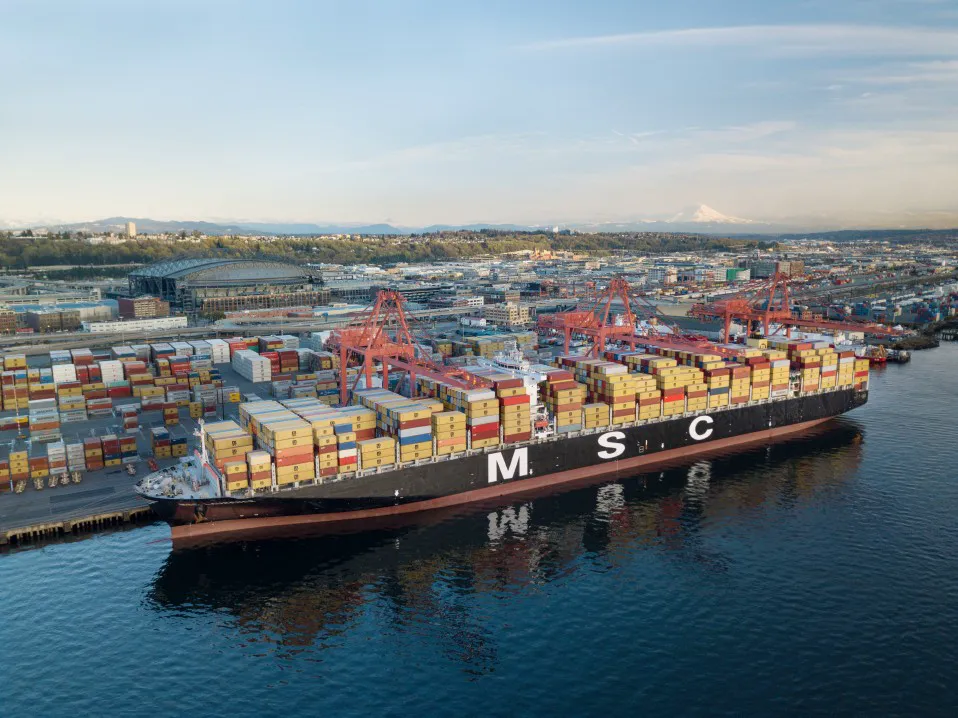
What makes this different from the canal's usual dry-season headache is that the cost arrived in the same ten days. CMA CGM raised its Panama Canal Adjustment Factor to $500 per TEU — about $1,000 per 40ft container — on September 10, and MSC's Panama Canal Surcharge took effect on September 12 at $297 per 40ft. Hapag-Lloyd and ONE had already filed their own canal charges in August. In other words, shippers moving cargo from China to New York, Savannah, Houston or Miami are now paying a dedicated canal charge and absorbing the schedule risk of a canal that cannot take every ship that wants to transit.
And it is landing at the worst possible moment in the Chinese shipping calendar. Mid-Autumn Festival falls on September 25–27, 2026 and National Day Golden Week on October 1–7 — two closely spaced holidays that shut factories and compress export handovers into a narrow window. Drewry counts 79 blank sailings across the major east–west trades between week 38 (September 14–20) and week 42 (October 12–18), an 11% cancellation rate in which 52% of the cuts fall on the transpacific eastbound — the very lane, in the very weeks, when US importers are trying to get holiday stock on the water.
This article is our read on the Panama Canal situation as of September 14, 2026: exactly what the canal authority changed, what the carriers are charging, which lanes are exposed and which are not, the transit-time and rollover math, how Golden Week multiplies all of it, and the concrete steps we are advising our own clients to take this week.
The seven numbers that matter right now
- 36 → 34 → 32 — daily canal transits, from the normal schedule to September 4, then September 15, 2026.
- 9 slots a day — daily capacity at the Neopanamax locks, the chambers that carry the largest Asia–US East Coast container ships (down from 10).
- −34% rainfall, −44% inflows — the May–August 2026 deficit in the canal watershed that triggered the cuts.
- $1,000 per 40ft — the effective value of CMA CGM's $500-per-TEU Panama Canal Adjustment Factor, effective September 10, 2026, on Far East cargo to the US East Coast and Gulf.
- $9,791 per FEU — Shanghai to the US East Coast spot rate in the week of September 4, a fresh 2026 high, with Shanghai–Los Angeles at $7,621.
- 96 hours — average vessel waiting time at Shanghai, up from 35 hours the week before, on top of canal queues.
- 79 blank sailings — scheduled cancellations across major east–west trades from week 38 to week 42, 52% of them on the transpacific eastbound.
What the Panama Canal Authority actually changed
Everything above traces back to one document: Advisory to Shipping No. A-29-2026, issued by the Panama Canal Authority (ACP) on August 20, 2026, under the title "Additional Measures to Address Reduced Precipitation in the Canal Watershed." It is the first time in this drought cycle that the ACP has adjusted transit slots and draft restrictions together, rather than relying on draft limits alone.
| Item | Before | From September 4, 2026 | From September 15, 2026 |
|---|---|---|---|
| Total daily transits (Neopanamax + Panamax) | 36 | 34 | 32 |
| Neopanamax lock slots per day | 10 | 9 | 9 |
| Panamax lock slots per day | 26 | 25 | 23 |
| Maximum authorized draft, Neopanamax | 48.0 ft | 48.0 ft (effective Sept 2) | 48.0 ft — the 47.5 ft step is postponed to Oct 1 |
| Booking rules | Standard reservation system | One booking slot per customer per day; Last Minute Transit suspended; flexibility services narrowed; cancellation charges inside seven days; conditioned Neopanamax slots withdrawn | Same |
Two details matter more than the headline percentages.
First, the September 4 step mostly formalised reality; September 15 is the real cut. The canal averaged just over 34 transits a day through July 2026, so reducing the schedule to 34 did not take much capacity out of the system. Cutting to 32 does — and it does so on the Panamax side, where slot availability falls from 25 to 23 a day. Panamax locks handle a large share of the smaller boxships, bulkers and tankers that feed Latin American and Caribbean services, and capacity there is now the binding constraint.
Second, the reservation rules got stricter, and that is where shippers feel it. Only one booking slot per customer per day, suspension of the Last Minute Transit service, narrower flexibility, and charges for cancelling inside seven days all push the market toward booking early and holding the slot. Vessels arriving without a reservation face longer anchorage waits — the ACP says so explicitly in the advisory — and 2023–24 showed what that queue looks like when it builds.
The canal also left itself room to tighten further. ACP's new administrator said on September 7 that additional restrictions may follow if water levels keep drawing down, and the authority's own advisory framework (Notice to Shipping N-07) allows it to suspend parts of the reservation system if needed. Rain did arrive with Panama's wet season, but not enough: the shortfall is hydrological, not commercial, and it is being managed against Gatún Lake, which also supplies drinking water to roughly half of Panama's population.
Why 2026 is not a repeat of 2023–24 — yet
Anyone who shipped through the last canal crisis will recognise the pattern, but the numbers are not the same.
During the 2023–24 El Niño, the ACP cut daily transits to 32 in August 2023, then 24 in November and 22 in December, and slot auctions occasionally cleared at prices reported near $4 million for a single Neopanamax passage. Today's schedule — 32 from September 15 — is materially looser than that crisis low. Two things are also structurally different: the water-saving basins installed at the Neopanamax locks recover around 60% of the roughly 200 million litres each lockage consumes, and the ACP has had three years of practice in managing a constrained schedule, including the draft-limit playbook it is using now.
What has not changed is the direction of travel. The ACP is acting pre-emptively, roughly four months before Panama's dry season (January–April 2027) would normally bite, because the forecast is for a potentially severe 2026–27 El Niño. If watershed inflows stay 40%+ below normal through the remaining wet months, further slot reductions are the logical next step — and the canal has already shown it will use them. The authority's own FY2027 budget, presented on September 5, projects more than $5.5 billion in revenue despite the constraints, and it is funding a multi-year water-supply project to reduce exactly this vulnerability. Neither of those changes the math for a container that needs to cross in November.
For a shipper, the honest summary is: the disruption is smaller than 2023–24, but it is earlier, deliberately preventive, and pointed at the 2027 dry season. Plan for a canal that could get tighter, not looser.
The surcharge stack: what carriers are now charging
The canal's slots are only half the story. Carriers responded to reduced capacity, longer queues and higher canal costs by filing dedicated Panama charges — and the amounts and the bases differ enough that comparison-shopping on the headline number is a trap.
| Carrier | Charge and basis | Effective | Scope |
|---|---|---|---|
| CMA CGM | Panama Canal Adjustment Factor, $500 per TEU (≈$1,000 per 40ft) | September 10, 2026 | Far East → US East Coast & US Gulf, all cargo; Bangladesh → USEC excluded |
| MSC | Panama Canal Surcharge, $149 per 20ft / $297 per 40ft / $376 per 45ft | September 12, 2026 (gate-in date) | Southeast Asia, China, South Korea, Japan → USEC & US Gulf, all cargo types |
| ONE | Panama Canal Transit Fee, $150 per TEU (≈$300 per 40ft) | August 10, 2026 | Transpacific eastbound services EC1, EC2, EC4 |
| Hapag-Lloyd | Canal surcharge, $130 per TEU (≈$260 per 40ft) | August 15, 2026 | Far East → North America via the Panama Canal |
Read the bases carefully. CMA CGM quotes per TEU, so a standard 40ft box carries roughly $1,000. MSC quotes per container size, and its 40ft rate is $297. ONE and Hapag-Lloyd quote per TEU at $150 and $130 respectively. On a single 40ft unit, the gap between the most and least expensive published charge in this table is roughly $740 — real money on a 5-container shipment, and a legitimate factor in choosing a string.
Three further points on cost:
- These are canal charges only. They stack on top of bunker adjustment factors, peak-season surcharges, and any general rate increases already in the market. Your all-in rate is not the number in the table plus your old rate; ask for the full component breakdown in writing.
- A second round is possible. All four carriers filed these charges before the ACP's August 20 slot announcement; as of late August, none had revised them upward in response to the actual slot cuts. If the canal tightens again in October or November, expect another round.
- Panama charges are not only for US cargo. CMA CGM's separate Panama Canal Transit Surcharge for Far East cargo to Latin America's east coast, the Caribbean and Mexico's east coast went from $100 to $250 per TEU on August 26, 2026, and applies to US territories and Colombia from September 6. If you ship to Cartagena, Manzanillo or Manaus, the same canal math applies to you.
Which lanes are exposed — and which are not
Panama is a chokepoint, not a network. It affects a specific set of routings, and knowing which side of the line your cargo sits on determines whether this is a $300 problem or a $1,000 problem.
| Route | Exposed to the Panama cuts? | Why |
|---|---|---|
| China → US East Coast (New York/New Jersey, Savannah, Norfolk, Charleston) | Yes — most exposed | All-water services transit the canal; Neopanamax slots are the tightest part of the schedule |
| China → US Gulf (Houston, Mobile, New Orleans) | Yes | Same all-water routing; Houston is a common alternative to congested East Coast gateways |
| China → Mexico east coast, Central America east coast, Caribbean, Colombia, Brazil (Manaus) | Yes | Direct Panama transits; CMA CGM's PCTS increase targets exactly this trade |
| China → US West Coast (LA/LB, Oakland, Seattle) | No, directly | Transpacific services do not use the canal — but volume diverted from the East Coast adds to West Coast rail and yard congestion |
| China → North Europe & Mediterranean | No | Suez or Cape routings; Asia–Europe rates actually fell 3% in the first week of September |
| China → Latin America west coast | No | Transpacific direct services |
The indirect channel is the one most importers underestimate. When US East Coast capacity tightens, cargo shifts west — and the West Coast's inland rail network is already straining. International containers moving onto rail at Los Angeles and Long Beach are up 15% year on year, domestic rail is up 23%, and congestion at LA/LB has started while Oakland and Seattle cannot absorb meaningful overflow. The result is that "just ship to the West Coast instead" is no longer a free hedge: it trades a canal queue for a rail dwell, and you need to price both.
One more caveat: the obvious fallback for US East Coast cargo — a Suez-routed string — is not a clean escape hatch this autumn. Several carriers had been cautiously restoring Suez transits through the summer, but the week of September 9–10 brought fresh attacks on ships near the Strait of Hormuz and a Houthi advance to Perim in the Bab el-Mandeb, exactly as we described in our six-month analysis of the Hormuz crisis. Suez routing is available on some strings; it is not a guaranteed lower-risk substitute.
What the canal really costs you: transit time and rollover math
The rate impact of Panama is visible on your invoice. The bigger cost usually hides in your calendar.
| Routing (typical China origin → US destination) | Typical port-to-port transit | What the canal cuts add |
|---|---|---|
| Yantian/Ningbo → New York/New Jersey, all-water via Panama | 26–34 days | +3–7 days for slot queues and schedule recovery; higher rollover risk |
| Yantian/Ningbo → Savannah, via Panama | 28–36 days | Same, plus East Coast terminal dwell |
| Shanghai/Ningbo → Houston, via Panama | 30–38 days | Same, and Gulf services have fewer alternative strings |
| Yantian → Los Angeles/Long Beach, transpacific | 14–18 days | No direct canal impact; add 1–3 days for transload and 7–12 days for inland rail to the Midwest or East |
| China → US East Coast via Suez (where offered) | 30–38 days | No Panama charge, but Red Sea security and rerouting risk |
| China → US East Coast via Cape of Good Hope (rerouting scenario) | +10–15 days on top of a Suez routing | Used only when carriers are forced off Suez or the queue is worse than the detour |
All figures above are typical industry ranges for 2026, not quotations, and every one of them assumes your container makes its booked vessel. That assumption is the weakest link in the chain right now. Global schedule reliability fell to 56.4% in July, a 6.1-point single-month drop that Sea-Intelligence calls the sharpest since January 2021, with the average delay on a late vessel just over six days. Shanghai's on-time arrival performance fell to 21% — its lowest reading in 14 years outside the pandemic — and average vessel waiting time at Shanghai hit 96 hours, nearly triple the previous week.
Put those two effects together and the arithmetic is unforgiving. A container that misses a September sailing because the vessel was blanked, omitted a port or ran out of canal slot does not wait a day or two: weekly strings and an 11% cancellation rate mean the next realistic departure is 7 to 14 days later. On the East Coast, that is the difference between stocking for Black Friday and air-freighting an emergency order in November.
Golden Week turns a tight market into a locked one
Golden Week is a known quantity: factories and ports in China slow from October 1–7, and carriers trim capacity to match. What makes 2026 unusual is the alignment — a canal operating below normal, typhoon-season backlogs still unwinding at Chinese gateways, and a peak season that started a month early in May and never fully ended, with transpacific spot rates roughly 80–120% higher than they were in mid-May on market trackers.
The Chinese holiday calendar splits the crunch into two windows this year. Mid-Autumn Festival runs September 25–27, and National Day Golden Week runs October 1–7, with adjusted working days on September 20 and October 10. In practice, that gives exporters a usable pre-holiday shipping window of roughly September 21 to September 30, bracketed by a short Mid-Autumn pause in the middle. We broke down the first wave of capacity cuts in late August in our analysis of Golden Week 2026 blank sailings, and the pattern has only accelerated since.
Capacity plans reflect it. Drewry's tracker counts 79 blank sailings between week 38 and week 42, an 11% cancellation rate on 721 planned sailings, with 52% of the cuts on the transpacific eastbound, 33% on Asia–North Europe/Mediterranean and 15% on the transatlantic. Alliance-level estimates put the removed capacity at roughly 193,000 TEU (Ocean Alliance ~78,000, MSC ~62,000, Gemini ~53,000), with a further operational impact of about 90,000 TEU from a Premier Alliance service omission at Shanghai — around 283,000 TEU in total. Week 41 is projected to be the most constrained. The post-holiday recovery window is October 8–16, when factories restart, backlogs surface and everyone competes for the same sailings.
| Action window | Dates to aim for | Why |
|---|---|---|
| Cargo for the last dependable pre-holiday sailings | Container yard cut-off September 20–24, sailings through September 30 | Mid-Autumn pause (Sept 25–27) sits inside the window; space is contested |
| Bookings for those sailings | Now — 3 to 5 weeks ahead | One booking slot per customer per day at the canal, 11% blanking rate, tight East Coast space |
| Emergency or high-margin SKUs | Air shipment decision point by September 25 | Ocean cut-offs close, air capacity tightens into Q4 |
| Post-Golden-Week departures | Earliest reliable sailings from October 8–12 | Factory restart, backlog clearance, then a capacity scramble through mid-October |
| US distribution before Thanksgiving (Nov 26) | Cargo on the water by mid-October | USEC transit of 28–36 days plus inland leg leaves no slack after that |
Five ways to protect a Q4 shipment right now
1. Book confirmed space rather than chasing the cheapest quote. In a market with an 11% blanking rate and canal-imposed slot limits, a booking with a named vessel, a written rollover clause and a locked all-in rate is worth more than a $200 saving on a rate that exists only on a quotation sheet. Ask explicitly: if this sailing is blanked, which voyage does my cargo roll to, and who pays storage and demurrage in the gap?
2. Model a West Coast routing honestly, not optimistically. West Coast + inland rail or transload avoids the canal charge entirely and can be faster to inland destinations, but the rail network is absorbing diverted volume (international containers on rail at LA/LB up 15% year on year). Price the inland leg, the dwell risk and the transload cost against the canal surcharge before you switch. Where volumes allow, splitting a shipment across both coasts is legitimate insurance — and it is exactly the kind of comparison our sea freight team runs with clients every week.
3. Use the ports and strings that are actually working this month. Not every US East Coast gateway is equally congested, and not every string transits Panama. A carrier's Suez-routed East Coast service avoids the canal charge but carries Red Sea risk; a Gulf service may have better equipment availability than an East Coast one. This is local, week-by-week operational knowledge that no index publishes.
4. Keep the canal's numbers in your landed-cost model as a separate line. With the base ocean rate, the canal charge, bunker and peak-season surcharges moving independently, a single blended "freight cost per unit" figure hides where your margin is leaking. Split it out per container, and re-run the math when carriers file the next round.
5. Keep air freight as a rescue plan, not a strategy. Air cannot absorb container volumes — a single 40ft box is roughly 25–30 tonnes of cargo — but it can protect the 5% of an order that drives 50% of the revenue. Decide in advance which SKUs justify air and pre-agree the trigger with your forwarder, so the decision takes hours when cut-offs close rather than days. Our air freight desk prices these contingency moves on the same day.
One compliance item worth noting while you plan: starting September 18, 2026, US Customs and Border Protection will begin voiding importer numbers on the spot for inaccurate or incomplete data on Form 5106 — physical address, phone and email must belong to the importer, not to a broker. A voided importer number can stop your shipment at the border with no warning period. If nobody has reviewed yours recently, do it this week.
The cost math: one 40ft container, three routings
Here is how the canal charge shows up in an actual landed-cost calculation. The table shows indicative 2026 ranges for a 40ft container from a Shenzhen/Yantian origin to Savannah, Georgia, before customs duty and tariffs. Treat these as planning estimates, not quotations — spot levels move weekly and carrier charges vary by contract.
| Cost component | All-water via Panama (USEC) | US West Coast + inland rail | Suez-routed USEC string (where offered) |
|---|---|---|---|
| Base ocean freight, 40ft | $7,000–$9,000 | $5,500–$7,000 | $7,500–$9,500 |
| Panama-related surcharge | $260–$1,000 depending on carrier | Not applicable | Not applicable |
| Inland rail / IPI to destination | $0–$500 (if delivered to port) | $1,800–$3,000 | $0–$500 |
| Origin and destination charges (THC, docs, chassis, delivery) | $700–$1,200 | $900–$1,500 | $700–$1,200 |
| Indicative port-to-door total | $8,000–$11,200 | $8,200–$11,500 | $8,200–$11,700 |
Two conclusions fall out of that table. The first is that a Panamanian surcharge of $1,000 is roughly 10% of an all-in East Coast move — significant, but rarely decisive on its own. The second is that the three routings land within a few hundred dollars of each other right now, which means predictability, not price, should drive the decision this quarter: whichever option gets your cargo to the shelf on time is worth more than the cheapest line on the quote. Note that customs duty and tariffs on US-bound goods are excluded here and remain a separate, material line item in 2026.
What we are telling our clients this week
- Release hold orders now if the goods are ready. Anything that can sail before September 30 should be booked this week.
- Confirm canal charges per container, not per TEU. Ask your forwarder to convert each carrier's published charge into dollars per 40ft for your actual routing before you compare.
- Get rollover and omission terms in writing — including who pays for storage or demurrage if the vessel is blanked or omits your port of discharge.
- Add 5–7 days of buffer on East Coast routings through October, and 10–14 days on anything booking into the post-holiday window.
- Review your gateway mix and, if you can, split it. A single reliance on US East Coast all-water is the highest-risk position in this market. Our Shipping from China to USA lane guide covers transit times and options coast by coast.
- Verify your US importer records (Form 5106) and customs bond status before the September 18 enforcement date.
- Re-price thin-margin SKUs now, while you still have room to adjust retail pricing or renegotiate with suppliers — not in November, when the container is already on the water.
Outlook: October to December 2026
Our base case is that canal capacity stays capped at or below 32 transits a day through the end of 2026, East Coast rates stay elevated through the post-Golden Week scramble, and the market starts to breathe in November only if demand softens as expected.
Four signals will tell you which way it goes. Gatún Lake levels, published daily by the ACP, are the leading indicator: if the lake stabilises through the wet season, the September schedule holds; if it keeps drawing down, expect another slot reduction announcement before year-end. Auction clearing prices are the second — during the 2023–24 crisis they reportedly approached $4 million for a Neopanamax slot, and a move back toward seven figures in the reformed auction groups would signal that the market is desperate enough to detour around the Cape. Trade policy is the third wildcard: a US–China trade meeting is expected around September 24, and any change in tariff posture would reshape routing economics within days. The demand cliff after Golden Week is the fourth: if importers front-loaded as heavily this summer as the volume data suggests, November could bring the first genuine rate relief since spring — and if they did not, the Q4 scramble extends into December.
For most importers, the sensible planning position is to assume no relief before November, to hold a contingency for the canal getting tighter rather than looser, and to treat any softening in rates as a bonus rather than a budget line.
The AllBestShipping view
We move boxes through the Panama Canal every week, and our honest read is that this is a risk-management story dressed up as a rate story. The surcharges are visible, predictable and quantifiable; the expensive part is the variability behind them — a canal running below schedule, Chinese gateways still recovering from typhoon season, an 11% blanking rate, and a holiday calendar that leaves a ten-day usable window in the busiest booking month of the year. Shippers who come out of Q4 2026 in good shape will be the ones who booked early, priced the canal charge as its own line item, kept two routings in their pocket instead of one, and accepted that a slightly higher all-in rate on time beats a cheap rate that rolls into December.
That is the advice we give every client, and it is the same advice we would give you: from Shenzhen, with people who can tell you which terminal is backed up this morning and which string still has space, AllBestShipping will quote the canal charge, the alternative and the trade-off in writing, before you commit a single container.
Last updated: September 14, 2026.
FAQ
1. What exactly changed at the Panama Canal in September 2026?
Under Advisory to Shipping No. A-29-2026 (August 20, 2026), the Panama Canal Authority cut daily transits from 36 to 34 effective September 4 and to 32 effective September 15, with Neopanamax slots reduced to nine a day and Panamax slots from 26 to 25 and then 23. The maximum Neopanamax draft remains 48.0 ft after a planned 47.5 ft step was postponed to October 1. Booking rules also tightened: one booking slot per customer per day, suspension of the Last Minute Transit service, narrower flexibility and cancellation charges inside seven days. The trigger is a 34% rainfall deficit and 44% inflow deficit across the canal watershed from May to August 2026.
2. Will my China–US East Coast shipment be delayed?
Probably, but by days rather than weeks in most cases. Reduced slots mean vessels arriving without a reservation wait longer at anchorage, and carriers respond by skipping port calls or slow-steaming to protect schedules — which shows up as cargo rolling to the next voyage. Plan on 3–7 additional days on all-water East Coast services through October, and treat 7–14 days as the realistic cost of a single missed sailing given weekly strings and the current 11% blanking rate. If a carrier reroutes around the Cape of Good Hope instead, add 10–15 days.
3. Which carriers are charging Panama Canal surcharges, and how much per container?
CMA CGM's Panama Canal Adjustment Factor is $500 per TEU (≈$1,000 per 40ft) from September 10, 2026; MSC's Panama Canal Surcharge is $297 per 40ft ($376 per 45ft, $149 per 20ft) from September 12; ONE charges $150 per TEU (≈$300 per 40ft) from August 10; and Hapag-Lloyd charges $130 per TEU (≈$260 per 40ft) from August 15. All apply to Far East cargo routed to the US East Coast and Gulf via Panama, and all sit on top of bunker, peak-season and general rate increases. Confirm the current amount against your own tariff or contract before booking — these charges have been revised repeatedly through 2026.
4. Does the Panama Canal situation affect shipments to the US West Coast or Europe?
Not directly. Transpacific services to Los Angeles, Long Beach, Oakland and Seattle do not transit the canal, and Asia–Europe services route via Suez or the Cape of Good Hope — Asia–Europe rates actually eased 3% in the first week of September. The exposure is indirect: East Coast delays push volume west, and West Coast rail and terminal networks are already handling diverted cargo, with international containers on rail at LA/LB up 15% year on year. The canal also directly affects cargo to Mexico's east coast, Central America, the Caribbean, Colombia and Brazil (Manaus).
5. Is this as bad as the 2023–2024 Panama Canal crisis?
Not yet. The 2023–24 drought took daily transits down to 24 in November 2023 and 22 in December, with slot auctions reportedly clearing near $4 million at the peak. Today's 32-transit schedule is looser, and the water-saving basins at the Neopanamax locks recover roughly 60% of the fresh water each lockage consumes. The difference is timing and direction: the ACP has acted four months before the dry season, citing a potentially severe 2026–27 El Niño, and has said further restrictions are possible — so the risk is that today's cuts are a starting point rather than the floor.
6. What is the deadline for shipping from China before Golden Week 2026?
The usable export window is roughly September 21 to September 30, 2026: Mid-Autumn Festival falls on September 25–27 and National Day Golden Week on October 1–7. Container yard cut-offs for the last dependable pre-holiday sailings fall around September 20–24, and confirmed space should be secured 3–5 weeks ahead given the 11% blanking rate and tight East Coast capacity. Post-holiday recovery runs from October 8–16, when backlogs clear in waves. Cargo that must be in US distribution before Thanksgiving needs to be on the water by mid-October.