Golden Week 2026 Blank Sailings: How Maersk’s Service Cuts Affect China Shipping Rates & Transit Times
If you are planning shipments out of China for late September or early October, the last week brought a warning you should not ignore. On August 23, Maersk announced it is blanking three sailings on its Asia–Europe network around China's Golden Week holiday — and that announcement came on top of a week-37 cancellation on the AE15 service from Qingdao announced four days earlier. For importers, e-commerce sellers, and anyone booking cargo out of Shenzhen, Shanghai, or Ningbo, this is the clearest signal yet that carriers are entering the 2026 peak season with deliberate capacity discipline — which means tighter space, longer booking lead times, and a real chance of rollovers through September and October.
Golden Week (October 1–7) has always been a hinge point in the China shipping calendar: factories and ports wind down, demand dips, and carriers trim schedules accordingly. But the scale and timing of this year's cuts — combined with elevated bunker costs, the ongoing Red Sea and Strait of Hormuz disruptions, and a wave of carrier consolidation — tell a more interesting story about where rates and transit times are headed in Q4. Here is what was announced, why it matters, and what you should do about it this week.
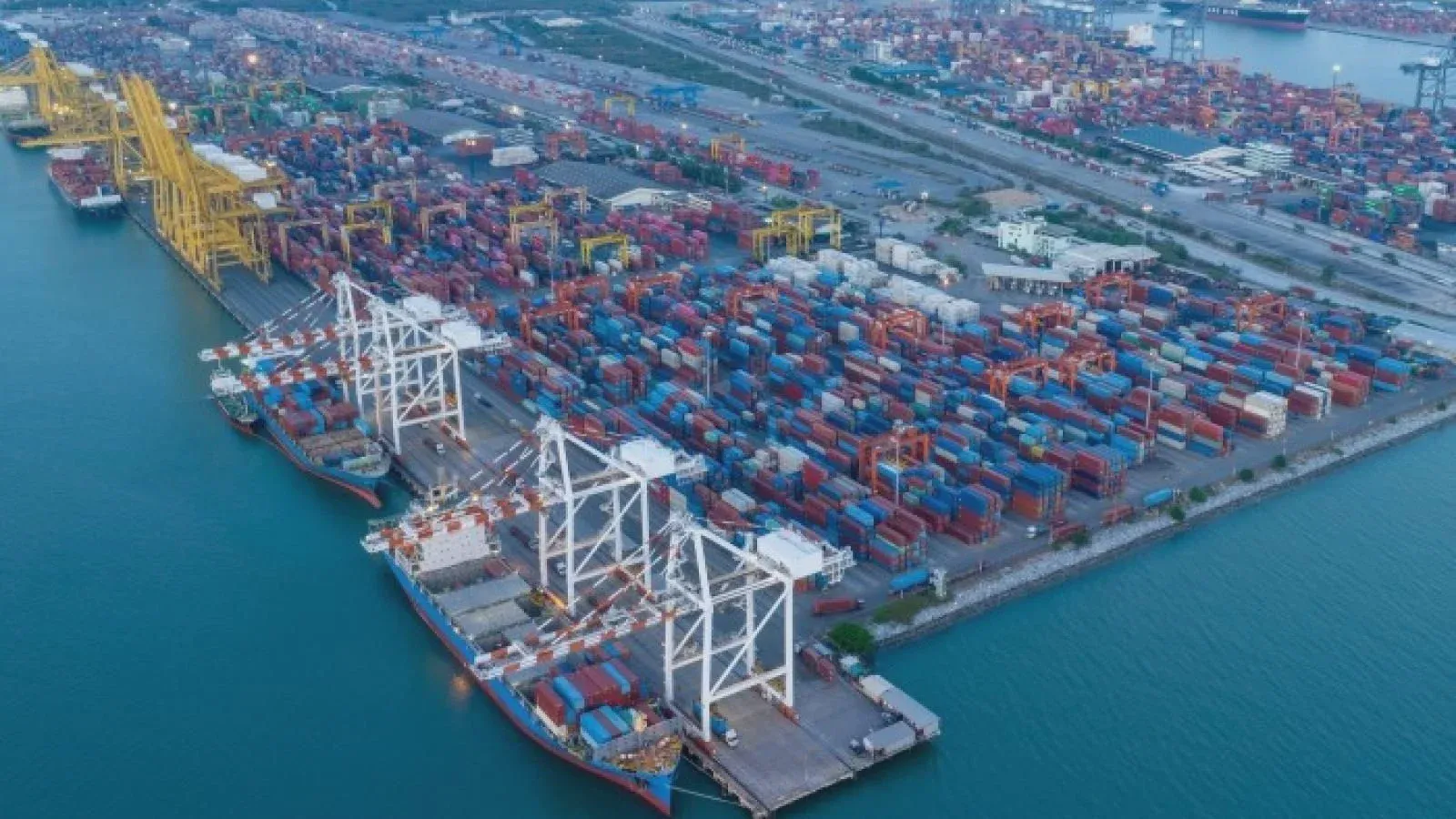
What Maersk announced: the August 2026 service cuts
On August 19, Maersk cancelled voyage 637W/642E on its AE15 service, with Qingdao as first load port and an ETD of September 7, 2026 — a schedule adjustment the carrier said was aimed at maintaining service reliability. Four days later came the bigger news: three blank sailings tied directly to Golden Week, covering the AE15, AE12, and AE1 loops — the workhorses of the Asia–North Europe trade.
| Week | Service | Voyage (WB/EB) | First load port | ETD | Status |
|---|---|---|---|---|---|
| 37 | AE15 | 637W/642E | Qingdao | Sep 7, 2026 | Cancelled |
| 40 | AE15 | 640W/645E | Qingdao | Sep 28, 2026 | Blanked |
| 41 | AE12 | 641W/648E | Ningbo | Oct 8, 2026 | Blanked |
| 41 | AE1 | 641W/648E | Shanghai | Oct 10, 2026 | Blanked |
Two terms are worth being precise about, because they affect your rights and expectations differently:
- A blank sailing is a scheduled voyage that the carrier withdraws from the program in advance. Your cargo is rolled to the next available voyage on the same or an adjacent service, or to alternative coverage the carrier arranges. Maersk has said it will put "coverage plans" in place, and bookings can continue through the usual channels — but a rollover almost always means a delay of 7–14 days versus the original plan.
- A cancelled voyage such as the week-37 AE15 sailing is a similar capacity removal outside the Golden Week context, driven by schedule integrity. Maersk said it will offer alternative transport solutions for affected cargo.
The pattern is the point: Maersk expects demand to soften during the holiday and reduced workforce availability for cargo operations, and it is proactively shrinking supply rather than sailing half-empty vessels. That is standard carrier behavior — but in 2026, it is happening against a market backdrop that makes every removed voyage more expensive for shippers.
Why carriers are cutting sailings now
Golden Week blankings are routine — Maersk and other lines do this every year, and the classic peak-season advice ("ship early, beat the Golden Week rush") exists precisely because of them. What makes August 2026 different is the context.
1. Capacity discipline is a structural strategy, not a seasonal reflex. After the rate crash earlier this year, carriers have consistently prioritized capacity management over volume. Withdrawing voyages before the holiday protects rate levels during the soft patch and sets up a firmer negotiating position for the Q4 peak. The container rate crash of February — when spot rates on major lanes fell sharply as Red Sea rerouting normalized — taught the market that carriers will act aggressively to defend pricing. The August blanking program is that playbook running on schedule.
2. The network is still absorbing disruption costs. The Strait of Hormuz standoff entered its seventh month in mid-August, and Red Sea services are still being reshuffled — a far cry from the clean Red Sea route resumption carriers hoped for earlier in the year. Ocean Network Express (ONE), for example, revised its Red Sea coverage on August 23: it is leaving the RCS service and taking slots on the RES/CRX service (operated by CU Lines and Zhonggu Logistics), marketed as RC2, with Ningbo replacing Qingdao and Shekou on a Shanghai–Ningbo–Nansha–Jeddah–Aqaba–Sokhna rotation. These quiet network changes keep the Asia–Europe system tighter than headline capacity numbers suggest. Meanwhile bunker prices climbed sharply through July — the MABUX VLSFO index rose to about $786 per metric ton and MGO to about $1,345 per ton — giving carriers a further cost floor under rates.
3. Peak-season demand is real but uneven. On the transpacific side, the Port of Los Angeles processed 960,464 TEUs in July — down 6% from its record July 2025 but 7.5% above the five-year average, with imports of 499,552 TEUs still 6% above the five-year mark. Port Executive Director Gene Seroka's read is instructive: businesses moved cargo early in response to the evolving trade policy environment, and some volume that normally arrives later in the season has already shifted. That front-loading dynamic — buying earlier, stocking earlier, chasing tariff and policy windows — is exactly the behavior that compresses peak-season space on China export lanes.
Beyond Maersk: the wider market signals this week
The Maersk announcement did not happen in isolation. In the same five-day window, the market sent several related signals that all point in the same direction: rates are being supported, and costs are creeping up.
- MSC published new FAK rates from the Far East to Africa and the Indian Ocean, effective September 1–14. The headline numbers show how far rates have firmed on secondary lanes: Nigeria at $4,750 per 20ft and $6,000 per 40ft HC, South Africa at $4,800/$5,800, and Mombasa at $4,750/$6,050. FAK (Freight All Kinds) rates are the carrier's published baseline for general cargo — when these go up, every contract and spot quote in the corridor follows.
- CMA CGM updated its Panama Canal Transit Surcharge for Far East cargo to Latin America and the Caribbean at $250 per TEU, effective August 26 (September 6 for US territories and Colombia). Panama Canal tolls and transit surcharges have been a recurring cost line since the 2023–24 drought restrictions, and the surcharge is now being reapplied to East Coast Latin America services.
- Regional Container Lines (RCL) slapped a $450-per-box Port Congestion Surcharge on imports to Khor Fakkan, UAE, where vessel waiting times now exceed seven days. It is a reminder that port congestion — not just ocean capacity — remains a live cost driver on Middle East routes.
- Hapag-Lloyd tightened transit rules through Jeddah for Upper Gulf cargo under new Saudi Ports Authority (Mawani) requirements: shippers must confirm clearance and onward movement within 15 days of discharge, with a Saudi-based notify party and payer. Compliance friction like this adds days to Middle East transits at a time when the Hormuz situation has already squeezed those lanes.
- ZIM confirmed its acquisition by Hapag-Lloyd is targeted to close in Q4 2026 ($35 per share in cash, announced in February), with Israeli Golden Share approval still pending. Carrier consolidation on this scale — a top-10 player being absorbed — reduces the number of independent capacity providers over the medium term and strengthens the remaining carriers' pricing hand.
None of these is a standalone headline for a China importer. Taken together, they describe a market where carriers are coordinated, costs are elevated, and capacity is managed tightly on every corridor that touches China exports.
What this means for importers and e-commerce sellers
If you ship from China regularly, the practical translation of all this is straightforward — and it starts happening now, not in October.
Booking lead times are stretching. In a normal month you can book a container 1–2 weeks ahead of the vessel. In the six weeks around Golden Week, expect to book 3–4 weeks ahead — and for space on the most popular North Europe sailings out of Shanghai, Ningbo, and Qingdao, treat 4 weeks as the safe minimum. If you ship on a less frequent service (say, a transshipment routing via Singapore or a niche direct), add another week.
Rollover risk is real. A blank sailing does not mean your cargo is lost — it means it is rolled. The practical consequence is a 7- to 14-day delay on top of your planned transit, which for a door-to-door DDP shipment to Europe can push arrival past your target date. If your cargo is time-critical (seasonal goods, FBA replenishment, retail PO with a fixed delivery window), a rollover during Golden Week can be the difference between selling into the peak and missing it.
Rates are unlikely to drop — expect firmness with spikes. Carriers removed capacity precisely to defend pricing. Asia–North Europe spot rates are already at elevated levels for 2026; the realistic expectation is that they hold firm through September, dip modestly during the holiday lull (October 1–10), and then climb again as the Q4 peak builds into November. On Africa and Indian Ocean lanes, MSC's September FAK levels give you a concrete floor to budget against. On any lane, treat published rates as a floor and book early to avoid last-minute premium space.
Transit times will slip at the margins. The AE services affected by the August cuts are core Asia–North Europe loops — the same services that carry a large share of containerized trade to Rotterdam, Hamburg, Bremerhaven, and Antwerp. Even with alternative coverage, expect 2–4 days of average slippage on this corridor in late September and October, and longer on transshipment routings. If your cargo is heading to North Europe — say, Shipping From China to Germany — build that buffer into your inventory plan now.
FBA and e-commerce sellers feel this first. Peak-season stock that misses its vessel in late September does not recover — it misses the October–November sales window entirely. Amazon FBA shipments, in particular, need to clear customs, reach the warehouse, and be checked in before the demand spike; a rollover in early October effectively costs you a month of selling time. For any Q4-dated inventory, the window to book is now.
What to expect: the September–November outlook
Here is our read on the next ten weeks, based on the signals above:
- September: Tight but workable. The week-37 AE15 cancellation and the first Golden Week blanking (September 28) start thinning capacity. Book 3–4 weeks ahead; expect spot rates to hold at current levels.
- October 1–10: The lull. Factories close, cargo volumes dip, and the blanked sailings remove exactly the voyages that would have run light anyway. Rates typically ease a little here — but don't count on a bargain, because carriers will not let the dip run away.
- October–November: The real peak. Post-holiday catch-up demand collides with the run-up to Black Friday, Christmas, and European year-end inventory. Space tightens, rates firm again, and rollovers return. This is also when consolidation effects (Hapag-Lloyd–ZIM, and the broader post-2025 M&A wave) start to matter: fewer, larger carriers means more coordinated capacity decisions.
The honest summary: 2026 is not a year for last-minute shipping. The carriers have the pricing power, the costs are structurally higher, and every week of delay in booking now compounds into a week of risk in November.
Six things to do this week
- Book September and early-October cargo now. If you haven't confirmed space for the first three weeks of September, you are already late for the safest windows. Ask your forwarder for vessel options and ETDs before the week-37 and week-40 cuts bite.
- Lock rates, not just space. Ask for FAK or contract protection through October. A confirmed rate on a confirmed vessel beats a cheaper quote on a rolled voyage every time.
- Confirm rollover protection in writing. Before you accept a booking on a service that could be blanked, know what the carrier's alternative coverage is — which voyage your container will roll to, and who pays if storage or demurrage accrues in the gap.
- Build a 7–14 day buffer into your plan. Whether it is a PO date, an FBA delivery window, or a retail in-store date, plan as if your container will arrive one to two weeks late. If it arrives on time, that's a pleasant surprise.
- Consider your alternatives for critical cargo. For genuinely time-sensitive shipments, air freight is the proven fallback: rates are higher per kilo, but a week of lost sales usually costs more. Our Air Freight from China service is built exactly for this — urgent replenishment that cannot afford a rollover. For volume that can wait, keep it on Sea Freight from China and just book early.
- Diversify ports and routings. If you normally load in one port, know your alternatives. The ONE RC2 reshuffle is a reminder that port coverage changes month to month — a forwarder with multi-port options can keep your cargo moving when a specific service is blanked.
The AllBestShipping view
From our base in Shenzhen, we watch these announcements the way other businesses watch weather forecasts: they tell us where the rough patches are, and they tell us when to move cargo early. The August service cuts are not a crisis — they are a predictable, manageable squeeze, provided you act with the right lead time.
What matters most in a market like this is having a partner who sees the full picture: which services are being blanked, which voyages your cargo actually rolls to, what the alternative routings cost, and what the rate trajectory looks like on your specific lane. That is the daily work of a freight forwarder, and it is where a local, operationally strong partner earns its fee. We are currently advising our clients to front-load October bookings, lock FAK levels now, and build rollover buffers into every Q4 plan — and we are seeing those clients avoid the worst of the September space crunch.
If you are shipping from China this fall and want a straight answer on rates, space, and the best routing for your cargo, talk to AllBestShipping. We offer transparent pricing, real-time tracking, and honest advice on every lane we serve — from North Europe and the Mediterranean to Africa, the Middle East, and the Americas. Get a free quote from AllBestShipping and lock your Q4 capacity before the October rush.
FAQ: Golden Week 2026 blank sailings
What is a blank sailing? A blank sailing is a voyage the carrier removes from its published schedule, usually announced 2–4 weeks in advance. Cargo booked on that voyage is rolled to the next available sailing or moved to alternative coverage arranged by the carrier. It is not a cancellation of your booking — but it usually means 7–14 days of additional delay.
Will shipping rates from China rise because of the Golden Week cuts? Rates are already at elevated 2026 levels, and the cuts are designed to keep them there. Expect firm rates through September, a modest seasonal dip during the October 1–10 holiday lull, and renewed firmness as the Q4 peak builds. Budget conservatively and lock rates early rather than hoping for a discount.
When should I book my China shipment to avoid Golden Week delays? For cargo with an ETD between late September and mid-October, book 3–4 weeks in advance — that means confirming space in the next two weeks. For Q4-dated stock, book as early as possible; space tightens progressively through October and November.
What happens if my container is rolled due to a blank sailing? Your forwarder or carrier will re-book the cargo on the next available voyage. You should confirm in advance which voyage that is, what the new ETD is, and who covers any storage or demurrage costs that accrue during the gap. A written confirmation protects you if the rollover stretches beyond the original plan.
Should I use air freight instead of sea freight for Golden Week cargo? For time-critical cargo — seasonal goods, FBA replenishment, retail orders with fixed delivery windows — air freight is the reliable fallback and often the cheaper option once you count the cost of a missed sales window. For volume with flexible timing, sea freight remains far more cost-effective; just book early and build in a buffer.
How can I protect my supply chain during the 2026 peak season? Book early, lock rates, confirm rollover terms in writing, build a 7–14 day buffer into every plan, and use a forwarder who can switch ports and services when a specific voyage is blanked. The companies that treat October as "book by now" rather than "book next month" will be the ones with stock on the shelf in November.