Container Market Crash Feb 2026: 100+ Blank Sailings & Rates Plummet Post-CNY
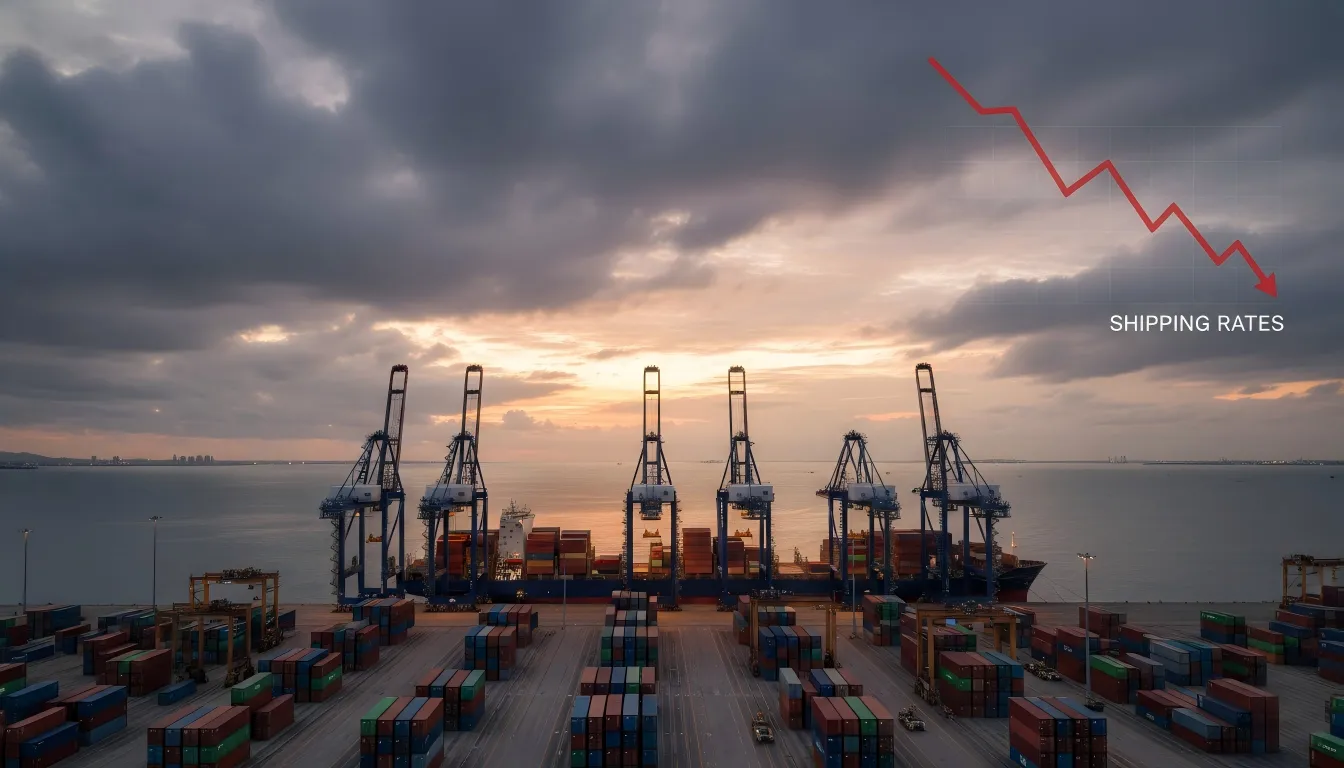
Are we witnessing a market collapse right after the Lunar New Year? The container shipping market has taken a sharp downturn as we enter February 2026. The early optimism of the year has evaporated, replaced by a reality of plummeting container shipping rates and a massive wave of blank sailings.
In our 10+ years of managing freight at AllBestShipping, we've seen post-holiday slumps before, but this year's drop is particularly aggressive. With over 100 voyages cancelled this month alone, shippers are facing a volatile environment where "cheap" rates might come at the cost of severe delays.
In this market update, we analyze the latest data from Drewry and Xeneta, combined with our on-the-ground operational insights, to help you navigate this slump without getting your cargo rolled.
The "New Year" Market Crash Explained
The anticipated cargo rush before the Lunar New Year (CNY) ended prematurely, leaving carriers with excess capacity and dwindling demand. According to Drewry’s World Container Index (WCI), the market sentiment has shifted dramatically.
- January Cancellations: 57 voyages.
- February Forecast: Over 100 blank sailings expected.
This surge in cancellations is a direct response to the freight rate collapse. Carriers are scrambling to manage supply as the "pre-CNY peak" failed to sustain momentum.
Freight Rates in Freefall: A Global Overview
As of January 29, the Drewry WCI dropped by 5% to $2,107 per 40ft container. This decline is not isolated; it’s sweeping across all major trade lanes from Asia.
Key Route Rate Changes (Spot Rates per 40ft Container)
| Route | Previous Rate | Current Rate | Change |
|---|---|---|---|
| Shanghai to New York | ~$3,190 | $2,969 | ▼ 7% |
| Shanghai to Los Angeles | ~$2,540 | $2,442 | ▼ 4% |
| Shanghai to Rotterdam | ~$2,500 | $2,379 | ▼ 5% |
| Shanghai to Genoa | ~$3,500 | $3,293 | ▼ 6% |
For businesses involved in Container Shipping from China to USA, this means immediate cost reductions. However, we must warn our clients: lower rates often correlate with lower reliability. When rates hit rock bottom, carriers prioritize higher-paying contract cargo, leaving spot-rate bookings vulnerable to being "rolled" (bumped to a later vessel).
Why Are Rates Dropping? (Supply vs. Demand)
Multiple factors are converging to push the market down:
- Weak Demand: The Global PMI ended 2025 at 50.4, indicating stagnation. In the US, while sales grew by 4%, container imports paradoxically fell by 6% in October (Sea-Intelligence). In our own data, we've noticed a slowdown in restocking orders from US retailers compared to Q1 2025.
- Overcapacity: Despite the Red Sea crisis forcing ships to take the longer Cape of Good Hope route, the sheer volume of new vessels entering the market has outpaced demand.
- Post-CNY Slump: Historically, demand drops after CNY. This year, the drop is sharper because the pre-holiday peak was weaker than expected.
"The early optimism has dissipated... supply has simply outstripped demand." — Peter Sand, Xeneta Chief Analyst
The Surge in Blank Sailings: What to Expect
Carriers are trying to stop the bleeding by removing capacity. In the next five weeks (Feb 2 - Mar 8), 103 out of 704 scheduled sailings have been cancelled—a 15% cancellation rate.
Where Are the Cancellations Happening?
- Transpacific Eastbound (Asia to USA): 59% of all cancellations.
- Asia to North Europe/Med: 33%.
- Transatlantic Westbound: 8%.
Despite these cuts, overall capacity is still 12% higher than the same period last year. This suggests that even with aggressive blank sailings, rates may continue to face downward pressure.
Operational Risks: It's Not Just About Price
While falling rates are good news for importers, they often come with hidden costs. In our daily operations, we are currently advising clients to watch out for:
- Weather Disruptions: Severe weather in the North Atlantic and US East Coast is causing port closures and delays. We recently had a shipment to New York delayed by 4 days due to winter storms.
- Labor Risks: Potential unrest in North European ports remains a risk factor we monitor closely.
- The "Rolled Cargo" Trap: With 100+ blank sailings, the remaining ships are fuller. If you book the absolute cheapest tier, your container is the first to be left behind if the ship is overbooked.
Expert Advice for Shippers: How We Protect Your Cargo
As a freight forwarder dedicated to transparency, here is our honest advice for this volatile period:
- Don't Fixate on the Lowest Price: A rock-bottom rate is expensive if your factory line stops because the materials didn't arrive. We often recommend paying a slight premium for "guaranteed space" tiers during high-cancellation weeks.
- Buffer Your Lead Times: We currently recommend adding 7-10 days to your standard transit time forecasts to account for the blank sailing ripple effects.
- Diversify Routes: If shipping to the US East Coast is problematic due to weather, we can route via West Coast ports (LA/LB) and transload to rail or truck for faster final delivery.
- Stay Flexible: The situation changes weekly. Work with a partner who monitors these disruptions in real-time.
Need a quote for your next shipment? Contact AllBestShipping today. We don't just give you a price; we give you a strategy to get your goods delivered safely and on time.