Sea Freight from China to Iraq: The Complete 2026 Guide (Costs, Routes & Compliance)
Sea Freight from China to Iraq remains the most cost-effective way to move commercial cargo across the Middle East — but only if you know how to navigate the traps that have caught too many importers off guard. Last year, one of our clients, a construction materials wholesaler based in Baghdad, switched from air freight to a 40ft container and cut his logistics spend by nearly 30%. The victory was short-lived. Because nobody had warned him about Umm Qasr's strict 7-day free time policy, his container sat at the port for twelve days waiting on a delayed Certificate of Conformity. The demurrage bill wiped out almost half of his ocean-freight savings. Stories like this are exactly why we wrote this guide. Whether you are a seasoned B2B importer replenishing inventory, an e-commerce seller testing the Iraqi market, or an SME booking your first container, you will learn how to choose between FCL and LCL, budget for realistic 2026 rates, clear Iraqi customs without surprises, and vet a freight forwarder who actually understands the Umm Qasr port system.
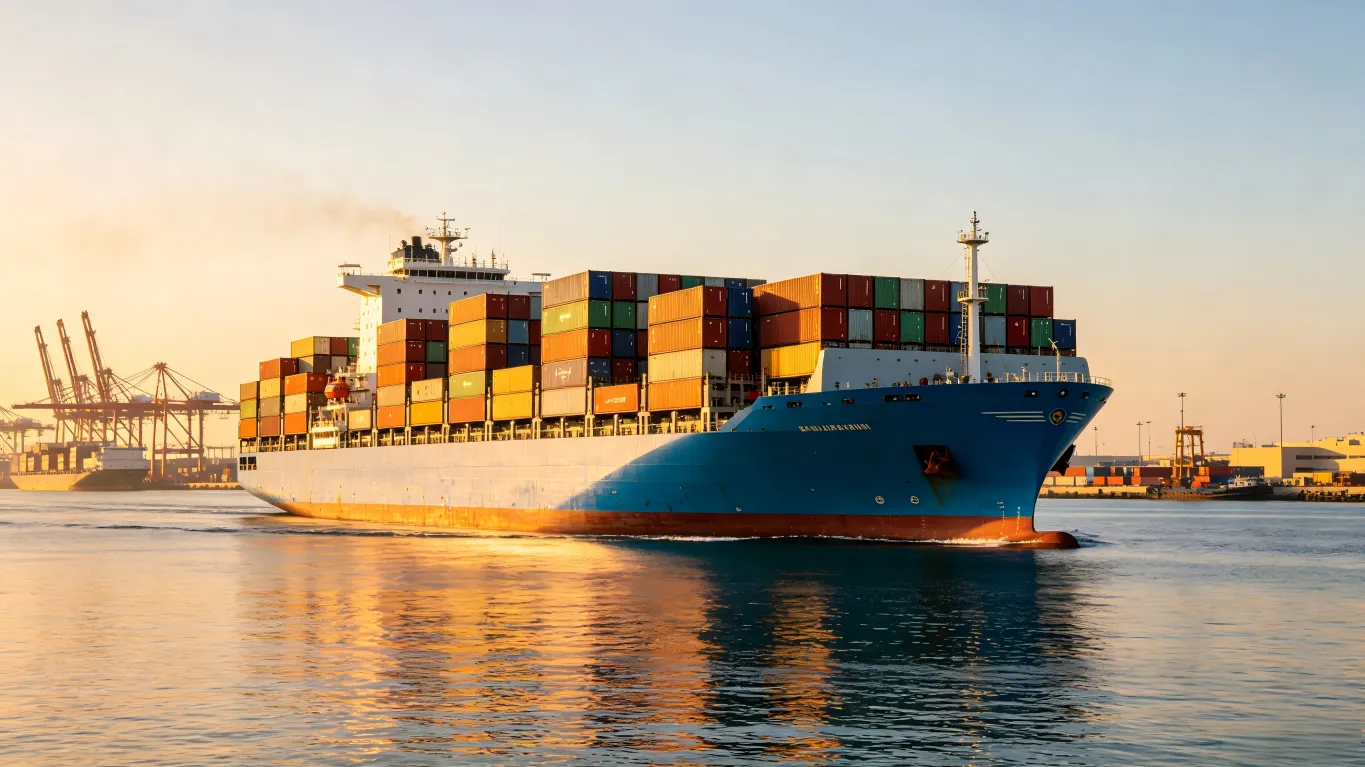
Quick Snapshot: Sea Freight from China to Iraq at a Glance
If you are evaluating whether ocean freight fits your next shipment, start here.
| Factor | Detail |
|---|---|
| Best For | Bulk cargo, B2B replenishment, cost-sensitive shipments, machinery, textiles, electronics |
| Typical Transit | 25–35 days port-to-port; 32–47 days door-to-door |
| Main Destination Ports | Umm Qasr (North & South terminals), Basra, Khor al-Zubair |
| Key Compliance | Certificate of Conformity (CoC) — mandatory for all commercial imports |
| 20ft FCL Cost | $2,050 – $3,300 (port-to-port) |
| 40ft FCL Cost | $3,400 – $5,250 (port-to-port) |
| LCL Cost | $80 – $175 per CBM |
| Free Time Risk | Only 7–14 days at Umm Qasr before demurrage penalties apply |
Is this guide for you?
- [ ] I ship FCL containers monthly and need to lock in stable rates.
- [ ] I am an SME shipping my first LCL batch and have no idea where to start.
- [ ] I need door-to-door DDP delivery to Baghdad, Basra, or Erbil without handling customs myself.
If any of those boxes describe you, keep reading.
Why Sea Freight Is the Smart Choice for China→Iraq Trade
For most importers moving goods from China to Iraq, ocean freight is not just an option — it is the default. The math is simple. Sea freight typically costs $0.10 to $0.30 per kilogram, while air freight averages $4 to $9 per kilogram on the same lane. When you are shipping several tons of construction materials, automotive parts, or consumer electronics, that gap translates into thousands of dollars saved per shipment.
Beyond raw cost, sea freight offers volume flexibility that air simply cannot match. A standard 20ft container holds roughly 28 CBM, and a 40ft High Cube swallows up to 68 CBM. Whether you are moving a single pallet of trial inventory or ten containers of seasonal stock, ocean carriers have the capacity. The range of cargo types is equally broad: heavy machinery, steel products, furniture, textiles, plastics, and even temperature-sensitive goods via Reefer containers all travel regularly from Shanghai and Shenzhen to Umm Qasr.
There is also an environmental angle worth noting. Per ton-kilometer, ocean freight emits significantly less CO₂ than air cargo. If your customers or stakeholders care about supply-chain sustainability, leading with sea freight is an easy win. Explore our full Shipping From China to Middle East hub for regional rate trends and port updates.
That said, honesty matters. If your shipment is urgent — say, medical equipment needed in Baghdad within ten days — sea freight is the wrong tool. In those cases, Air Freight from China or a sea-air hybrid via Jebel Ali makes more sense. The key is matching the mode to the mission.
FCL vs. LCL Shipping from China to Iraq: Which Fits Your Cargo?
Choosing the wrong container strategy is one of the most expensive mistakes an importer can make. Here is how to decide.
Full Container Load (FCL Shipping)
FCL means you reserve an entire container for your cargo alone. In our experience, FCL becomes the better financial and operational choice once your shipment exceeds roughly 13 to 15 CBM, or whenever you are shipping high-value or fragile goods that you do not want handled alongside another shipper's cargo.
Container selection matters:
| Container Type | Internal Volume | Best For |
|---|---|---|
| 20ft GP | ~28 CBM | Dense, heavy cargo (tiles, metal products, machinery) |
| 40ft GP | ~58 CBM | Standard B2B shipments with mixed cargo |
| 40ft HQ | ~68 CBM | Volumetric, lightweight cargo (furniture, plastics, textiles) |
| Reefer | Varies by model | Temperature-sensitive goods (food, pharmaceuticals, chemicals) |
The security advantage of FCL is often overlooked. Your container is sealed at the supplier's warehouse in China and opened only at your destination in Iraq. That means fewer touchpoints, less handling risk, and a lower chance of damage or tampering.
Less than Container Load (LCL)
LCL is the practical choice when your cargo is under 15 CBM and not particularly fragile. Your goods are consolidated with shipments from other importers at a warehouse in China — typically in Shanghai, Shenzhen, or Ningbo — and deconsolidated upon arrival at Umm Qasr. For a comparison of forwarding and consolidation models, see our guide on Freight Forwarding vs. Consolidation Shipping.
To estimate your LCL volume, use the standard formula:
Length (m) × Width (m) × Height (m) = Total CBM
For example, a shipment of twenty cartons measuring 0.6m × 0.4m × 0.3m each equals 0.072 CBM per carton, or 1.44 CBM total — clearly an LCL job.
The trade-off is handling. LCL cargo is loaded, unloaded, sorted, and reloaded multiple times. If you are shipping delicate electronics or high-end glassware, the extra handling may justify upgrading to FCL even if you do not fill the container. Read our LCL Shipping Guide for a full breakdown of consolidation pricing and risks.
FCL vs. LCL Decision Matrix
| Criteria | FCL | LCL |
|---|---|---|
| Best Volume | > 13–15 CBM | < 15 CBM |
| Cost per CBM | Lower at scale | Higher per unit, but no minimum volume |
| Security | Sealed door-to-door | Multiple handling touchpoints |
| Transit Time | 25–35 days port-to-port | 28–38 days (extra consolidation/deconsolidation) |
| Flexibility | Fixed container space | Pay only for space used |
| Ideal For | Bulk orders, fragile goods, repeat B2B shipments | Trial orders, small batches, multi-supplier consolidation |
Major Shipping Routes and Ports (China → Iraq)
Top Origin Ports in China
Where your cargo starts in China affects both cost and speed. These are the ports we book most often for Iraq-bound shipments:
- Shanghai — The world's busiest container port. If your supplier is anywhere in the Yangtze River Delta, this is your natural gateway. Carrier options are plentiful, and schedules are reliable.
- Shenzhen (Yantian / Shekou) — Our home base and the ideal export hub for Pearl River Delta manufacturing. Electronics, textiles, and automotive components flow through here in massive volumes.
- Ningbo — A strong alternative to Shanghai for bulk goods, furniture, plastics, and construction materials. Ningbo often offers slightly faster export customs clearance during peak season.
- Qingdao — The best northern China option for Shandong province suppliers and heavy industrial equipment heading to Iraq.
- Guangzhou (Nansha) — Excellent for consolidated shipments and light industrial goods, especially when you are combining cargo from multiple nearby suppliers.
Destination Ports in Iraq
- Umm Qasr Port — Iraq's primary commercial seaport and the endpoint for nearly all containerized cargo from China. It is divided into two terminals:
- North Terminal — Handles specific carriers and feeder vessels from Jebel Ali.
- South Terminal — Larger volume capacity; different customs broker networks operate here.
Confirming which terminal your carrier uses is not a detail to ignore. A booking error here can add days of confusion, extra trucking costs, and storage fees. Your forwarder should specify this before the vessel sails.
-
Basra Port — Historically significant and still active, though it handles less containerized volume than Umm Qasr. Some bulk and break-bulk cargo still arrives here.
-
Khor al-Zubair — Primarily industrial and bulk cargo, including oil-field support equipment. Not typically relevant for standard containerized imports.
The Primary Route: China → Jebel Ali (UAE) → Umm Qasr
Here is the reality that surprises many first-time importers: direct sailings from China to Iraq are extremely rare. The standard routing moves your container from a Chinese port across the South China Sea, through the Indian Ocean, via the Strait of Hormuz, and into Jebel Ali Port in Dubai, the main hub for Shipping from China to UAE. There, your cargo is transferred to a smaller feeder vessel that completes the final leg to Umm Qasr.
That transshipment adds roughly 5 to 10 days to the overall journey, depending on feeder vessel frequency and port congestion at Jebel Ali. Major carriers serving this lane — MSC, COSCO, CMA CGM — all operate on transshipment schedules, so planning around that reality is essential. For a detailed look at the UAE leg, see our guide on Container Shipping from China to UAE.
The Alternative Route: Northern Gateway via Turkey
If your final destination is Erbil, Sulaymaniyah, or anywhere in the Kurdistan Region, there is a lesser-known alternative worth considering: shipping to Mersin Port in Turkey, then trucking overland through the Zakho border crossing into northern Iraq.
| Route | Transit Time | Best For |
|---|---|---|
| China → Jebel Ali → Umm Qasr | 25–35 days | Southern and Central Iraq (Baghdad, Basra) |
| China → Mersin → Zakho → Erbil | 35–45 days | Northern Iraq, Kurdistan Region |
Total transit via Turkey runs 35 to 45 days, but it can actually be faster to Erbil than clearing at Umm Qasr and trucking north through Baghdad, especially when southern ports are congested. Not every forwarder offers this routing, so it is worth asking explicitly. Businesses shipping to neighboring Gulf markets may also want to review our guides on Sea Freight from China to Saudi Arabia or Shipping from China to Iran for regional rate benchmarks.
Transit Times: How Long Does Sea Freight from China to Iraq Really Take?
Port-to-Port Transit Times (2026 Realistic Estimates)
Some competitors claim door-to-door delivery in 20 days. In our decade of moving cargo on this lane, we have learned to treat those numbers with skepticism. Here are the realistic port-to-port ranges you should plan around:
| China Port | Iraq Port | Transit Time |
|---|---|---|
| Shanghai | Umm Qasr | 25–32 days |
| Shenzhen | Umm Qasr | 26–34 days |
| Ningbo | Umm Qasr | 27–35 days |
| Qingdao | Umm Qasr | 30–38 days |
| Guangzhou | Umm Qasr | 26–34 days |
These ranges account for the Jebel Ali transshipment connection. If a feeder vessel is missed due to congestion or scheduling gaps, your cargo waits for the next one — typically a 3 to 7 day delay. For a broader look at global timelines, see our overview: How Long Does Shipping from China Take.
Door-to-Door Delivery Times
From the moment your forwarder collects cargo at the supplier's door in China to the moment it arrives at your warehouse in Iraq, expect 32 to 47 days total. The extra time comes from:
- Export customs clearance in China (1–3 days)
- Jebel Ali transshipment waiting and feeder connection (5–10 days)
- Iraqi import customs and CoC verification (2–7 days)
- Inland trucking from Umm Qasr to Baghdad, Erbil, or Mosul (1–5 days)
Factors That Speed Up or Slow Down Your Shipment
- Chinese New Year (January–March) — Factory shutdowns and port congestion create a capacity crunch. Book at least three weeks ahead.
- Ramadan — Reduced working hours in Iraq can slow customs clearance. Plan for an extra 3–5 days.
- Q4 Peak Season (October–December) — Global demand spikes. Rates rise, and space becomes competitive.
- Port Congestion at Umm Qasr — During high-import months, berthing delays of 2–4 days are common.
- Documentation Accuracy — An incorrect HS code or a vague product description on the commercial invoice is the fastest way to trigger a red-flag inspection and add a week to your timeline.
Sea Freight Costs from China to Iraq (2026 Breakdown)
What Makes Up Your Total Shipping Cost?
The figures below are market estimates based on Q2 2026 spot rates and long-term carrier contracts. Actual quotes depend on cargo details, seasonality, and carrier availability. Always request a binding, itemized quote before booking.
The ocean freight quote you receive is only the beginning. Here is the full picture we provide every client before they book:
| Cost Component | Typical Share | Notes |
|---|---|---|
| Ocean Freight (base rate) | 50–70% of total | Varies by season, carrier, and container type |
| Terminal Handling Charges (THC) | $150–$400 | Port loading/unloading at origin and destination |
| Bunker Adjustment Factor (BAF) | 10–25% of base | Fuel surcharge; fluctuates monthly with oil prices |
| Documentation Fee (DOC) | $50–$150 | Bill of Lading preparation, telex release |
| Customs Duties & Taxes | 5–30% of CIF + VAT | Depends on HS code classification |
| Certificate of Conformity (CoC) | $300–$1,500+ | Mandatory; varies by product complexity |
| Cargo Insurance | 0.4–0.6% of cargo value | Strongly recommended for Iraq-bound shipments |
| Inland Delivery | $500–$2,500+ | Port-to-warehouse; can equal ocean cost for inland cities |
FCL Container Shipping Costs
| Origin Port | Destination | 20ft Container | 40ft Container |
|---|---|---|---|
| Shanghai | Umm Qasr | $2,050 – $3,200 | $3,400 – $5,000 |
| Shenzhen | Umm Qasr | $2,000 – $3,100 | $3,200 – $4,800 |
| Ningbo | Umm Qasr | $2,100 – $3,300 | $3,300 – $5,100 |
| Shanghai | Basra | $2,500 – $3,200 | $3,300 – $4,400 |
Why the wide ranges? Ocean freight is not a fixed utility. Rates vary dramatically by lane; for comparison, our Sea Freight from China to UK guide details how European routing affects pricing. Seasonality pushes rates up during Q4 and Chinese New Year. Carrier contracts give established forwarders better base rates than spot-market bookings. The BAF adjusts monthly with fuel prices. And General Rate Increases (GRI) announced by carriers can add $200–$500 per container overnight.
For door-to-door delivery, add inland trucking. A container moving from Umm Qasr to Baghdad typically adds $1,500–$2,500 to the total. To Erbil, expect $2,000–$3,500 due to the longer distance and security checkpoint delays.
LCL Shipping Costs
| Origin Port | Destination | LCL Rate (per CBM) |
|---|---|---|
| Shanghai | Umm Qasr | $80 – $175 |
| Shenzhen | Umm Qasr | $85 – $170 |
| Ningbo | Umm Qasr | $75 – $165 |
| Shanghai | Basra | $80 – $165 |
LCL rates usually include origin charges and ocean freight, but destination charges — deconsolidation, customs handling, and local delivery — are often billed separately. Always ask for an all-in quote or a clearly itemized breakdown.
Hidden Costs That Caught Importers Off Guard
-
Demurrage & Detention — Umm Qasr grants only 7–14 days of free time. After that, penalties start at $80 per day and can climb to $150 per day for specialized equipment. We have seen importers rack up over $2,000 in demurrage because a CoC delay pushed them past the free window.
-
Customs Inspection Fees — Iraqi customs operates a risk-based inspection system. A mismatched HS code, a vague product description like "electronic parts" instead of "Bluetooth speakers (HS 8518.22)," or a declared value that looks suspiciously low can trigger a physical inspection. The inspection itself may be "free," but the port storage, labor, and delay costs are not.
-
CoC Re-inspection — If the initial pre-shipment inspection fails — perhaps because the factory sent the wrong sample or the labeling did not match the invoice — the re-inspection adds both time and money.
-
Inland Security Checkpoints — Trucking from Umm Qasr to Baghdad or Mosul involves multiple checkpoints. While most are routine, unexpected delays and unofficial "facilitation fees" can inflate your inland budget.
How to Get an Accurate Quote (Checklist)
Before you request a quote, gather the following. Your forwarder cannot price accurately without them:
- Exact HS code for every product line
- Total gross weight and total CBM
- Pickup address in China (factory or warehouse)
- Final delivery address in Iraq
- Preferred Incoterms (FOB, CIF, DDP, etc.)
- Cargo value (for insurance calculation)
- CoC status (already obtained, or needs forwarder assistance)
- Special handling needs (fragile, hazardous, temperature-controlled)
Iraqi Customs Clearance and Mandatory Compliance
Required Documents Checklist
Smooth customs clearance starts with perfect paperwork. Every shipment needs:
- Commercial Invoice — Must match the CoC application exactly.
- Packing List — Detailed carton-level breakdown with weights and dimensions.
- Bill of Lading (B/L) — The contract of carriage between shipper and carrier.
- Certificate of Origin — Usually issued by the China Council for the Promotion of International Trade (CCPIT).
- HS Code Classification — Accuracy here determines duty rate and inspection risk.
- Certificate of Conformity (CoC) — Mandatory for all imports. No exceptions.
- Import License — Required only for restricted categories (pharmaceuticals, firearms, telecom equipment, etc.).
Certificate of Conformity (CoC): The #1 Compliance Hurdle
If there is one document that destroys more shipments to Iraq than any other, it is the Certificate of Conformity. Issued under the oversight of the Central Organization for Standardization and Quality Control (COSQC), the CoC verifies that your goods meet Iraqi national standards and technical regulations.
The process is straightforward but time-sensitive:
Step 1: Submit Documents to an Authorized Agency
You must work through an accredited third-party inspection body such as Intertek, Bureau Veritas, or SGS. Submit your commercial invoice, packing list, and relevant product test reports. The agency checks that your documentation matches the physical cargo and complies with COSQC requirements.
Step 2: Schedule Pre-Shipment Inspection in China
An inspector visits your supplier's factory to verify product specifications, labeling, and packaging. This is not a formality. We have seen inspectors reject batches because the carton labels listed the wrong voltage or because safety markings were missing.
Step 3: Receive the Final CoC Document
Upon successful inspection, the agency issues the CoC. This document is mandatory for customs clearance at Umm Qasr. Without it, your cargo is blocked, and every day it sits in port adds storage fees and demurrage risk.
Cost: $300 to $1,500+, depending on product complexity, FOB value, and the number of SKUs being inspected.
Consequence of missing CoC: Customs will not release the cargo. You face storage fees, potential re-export, and in some cases, fines.
Customs Duties, Taxes, and Reconstruction Levy
Iraq's import tax structure has three layers:
- Customs Duty: 5% to 30%, determined by your HS code.
- VAT: 10% to 15%, applied to the CIF value plus customs duty.
- Reconstruction Levy: Approximately 5%, applied to CIF plus customs duty.
Worked Example:
You are importing plastic tableware classified under HS 3924.10, with a CIF value of $10,000 and a 15% customs duty rate.
- Customs Duty: $10,000 × 15% = $1,500
- Reconstruction Levy: ($10,000 + $1,500) × 5% = $575
- Subtotal for VAT: $10,000 + $1,500 + $575 = $12,075
- VAT (assuming 14%): $12,075 × 14% = $1,690.50
- Total Import Taxes: $3,765.50
Your landed cost is not just the ocean freight. It is the ocean freight plus roughly 37.7% in duties and taxes on this example.
Prohibited and Restricted Items
Prohibited (will be seized or returned):
- Alcoholic beverages and liquor
- Israeli-origin goods
- Narcotic drugs
- Counterfeit goods and currency
- Pornographic materials
- Materials contrary to Islamic teachings
Restricted (require ministry permits):
| Product Category | Permit Authority |
|---|---|
| Pharmaceutical products | Iraq Ministry of Health |
| Plants and plant products | Department of Agriculture |
| Animals and animal products | Ministry of Agriculture and Water Resources |
| Firearms and ammunition | Ministry of Interior |
| Telecommunications equipment | Communications and Media Commission |
| Cultural artifacts | State Board of Antiquities and Heritage |
Incoterms 2020 for China→Iraq Shipments: A Risk Guide
Choosing the wrong Incoterm can shift thousands of dollars in unexpected costs onto your plate. Here is how each term plays out on the China→Iraq lane:
| Incoterm | Who Pays What | Risk Level for Buyer | Best For |
|---|---|---|---|
| EXW | Buyer arranges pickup from supplier door and everything onward | High | Experienced importers with their own China agent and export license |
| FOB | Supplier delivers to origin port; buyer books ocean freight and handles Iraq destination | Medium | Most B2B importers who work with a freight forwarder |
| CIF | Supplier pays ocean freight and insurance to Iraq port; buyer handles unloading, customs, and inland | Medium-High | Buyers who trust the supplier's carrier choice and have a reliable customs broker in Iraq |
| DDP | Seller or forwarder handles pickup, ocean freight, customs clearance, duties, and final delivery | Low | SMEs, first-time importers, and e-commerce sellers who want a landed cost upfront |
Why DDP is often worth the premium for Iraq:
Iraqi customs is not fully automated. Documentation requirements are strict, the CoC process is complex, and local port practices change with little warning. If you do not have an experienced customs broker in Umm Qasr and a forwarder who can manage the CoC before the vessel sails, DDP shifts all of that risk to a professional who handles it daily. The upfront quote may look higher, but the total landed cost often ends up lower because there are no surprise demurrage bills, no customs fines, and no last-minute trucking negotiations.
3 Importer Scenarios: How Different Businesses Ship to Iraq
Scenario A: The B2B Importer / Wholesaler
Profile: You import 2–4 containers per month of construction materials, electronics, or industrial goods. Cost stability and reliable scheduling matter more than shaving every last dollar.
Recommended Setup: Book FCL 40ft HQ containers on FOB or CIF terms. Negotiate quarterly volume contracts with your forwarder to lock in base rates and secure priority space during peak season.
Pro Tip: Demand extended free time upfront. We regularly negotiate 21 days of combined demurrage and detention free time for our B2B clients. That buffer absorbs most customs delays without penalties.
Scenario B: The E-Commerce / Amazon FBA Seller
Profile: You sell consumer goods online and ship smaller batches to a 3PL or local distributor in Baghdad or Erbil. Compliance and labeling accuracy are critical because your end customers expect intact, correctly labeled products.
Recommended Setup: Start with LCL or small FCL shipments on DDP door-to-door terms. Your forwarder should manage CoC, customs, and final-mile delivery to your warehouse.
Pro Tip: Verify that your forwarder has experience with CoC for your specific product category. Consumer electronics and textiles are the two most common e-commerce categories on this lane, and both have specific labeling and safety standards under COSQC.
Scenario C: The SME First-Timer
Profile: This is your first import from China. If you need the fundamentals, our How to Ship from China tutorial covers documentation, Incoterms, and payment terms step by step. You have no in-house logistics team, and the acronyms alone — FCL, LCL, CoC, BAF, HS — are overwhelming.
Recommended Setup: DDP Door-to-Door Shipping is your safety net. Let the forwarder handle pickup in China, ocean freight, CoC application, Iraqi customs, and delivery to your door. You pay one invoice and receive one tracking link.
Pro Tip: Start with LCL to test the market. Once you understand the duty structure, delivery timelines, and local demand, scaling up to FCL becomes an easy decision.
How to Choose the Right Freight Forwarder from China to Iraq
Not every forwarder who advertises "global shipping" understands the Iraq lane. If you are new to logistics, start with What is a Freight Forwarder to understand the role. Here is how to separate the experts from the generalists.
7 Questions to Ask Before You Book
-
"Do you have direct carrier contracts for the China→Jebel Ali→Umm Qasr lane?" Direct contracts mean better rates, confirmed space, and faster issue resolution when schedules slip.
-
"Can you manage the entire CoC process with Intertek or Bureau Veritas?" If the answer is vague, keep looking. CoC management is non-negotiable for Iraq.
-
"What is the standard free time you negotiate at Umm Qasr, and can you extend it?" A forwarder who cannot quote free time terms off the top of their head has not shipped enough containers to Iraq.
-
"Do you provide door-to-door DDP service to Baghdad and Erbil?" Inland delivery in Iraq requires local trucking partners who understand checkpoint procedures and road conditions.
-
"What is your typical customs clearance time at Umm Qasr?" Experienced forwarders will quote a realistic range (2–5 days for standard cargo) rather than an unrealistic promise.
-
"Do you offer cargo insurance, and what is the claims process?" Given regional risks and multiple handling touchpoints, insurance is not optional for most importers.
-
"Can I track my shipment in real time, and will you notify me of transshipment delays?" Visibility matters. You should know when your cargo hits Jebel Ali and when the feeder connection is confirmed.
Red Flags to Avoid
- Forwarders who cannot explain the CoC process in plain English.
- Quotes that exclude BAF, THC, or destination charges — these are classic bait-and-switch tactics.
- No local partner network or customs brokerage presence in Iraq.
- Vague answers about which Umm Qasr terminal your cargo will use.
Why a Shenzhen-Based Forwarder Matters
Proximity to manufacturing is a genuine competitive advantage. A forwarder based in Shenzhen — the heart of the Pearl River Delta — can visit your supplier's factory for pre-shipment checks, coordinate same-day pickup when schedules shift, and push export customs filings through local port authorities faster than a remote office ever could. Relationships with South China consolidation warehouses also mean better LCL rates and faster cutoff times.
At AllBestShipping, we have spent over ten years building exactly that infrastructure. We manage FCL and LCL Shipping from China to Iraq services with direct carrier contracts, full CoC support through Intertek and Bureau Veritas, and door-to-door DDP delivery to Baghdad, Basra, and Erbil. Our clients know their cargo status in real time, and they never face surprise fees because every quote is itemized upfront.
Common Mistakes That Delay or Derail Shipments to Iraq
-
Using the wrong HS code or a vague product description. "Electronic parts" is not a description. "Bluetooth portable speakers, HS 8518.22, 500 units, $12,000 total" is.
-
Forgetting the CoC until the vessel is already sailing. The CoC inspection happens in China, before export. If you miss that window, the container sails without compliance paperwork, and customs in Iraq will reject it.
-
Underestimating demurrage. Budgeting $2,500 for ocean freight but $0 for port penalties is a recipe for a nasty surprise. Always ask your forwarder for the free time terms and the daily demurrage rate.
-
Poor packaging that triggers re-inspection. Cartons that collapse, labels that peel, or pallets that splinter during ocean transit invite customs suspicion and damage claims.
-
Booking too late during Chinese New Year or Q4 peak season. Carriers fill up. If you book two weeks before Lunar New Year, you are either paying a premium or waiting for the next sailing.
-
Choosing CIF without knowing which carrier the supplier booked. Some suppliers default to the cheapest, slowest feeder option to minimize their own cost, leaving you with a 40-day transit instead of 30.
-
Not confirming Umm Qasr North vs. South terminal. A simple email to your forwarder — "Which terminal?" — saves days of confusion and extra drayage fees.
FAQ: Sea Freight from China to Iraq
How much does sea freight from China to Iraq cost?
For FCL, expect $2,050–$3,300 for a 20ft container and $3,200–$5,250 for a 40ft container, port-to-port. LCL runs $80–$175 per CBM. Always request an itemized quote that separates ocean freight, fuel surcharges, destination charges, and inland delivery.
How long does sea freight take from China to Iraq?
Port-to-port transit is typically 25–35 days, including the Jebel Ali transshipment. Door-to-door delivery ranges from 32 to 47 days, depending on customs clearance speed and inland trucking distance.
Is the Certificate of Conformity (CoC) mandatory for all shipments?
Yes. COSQC requires a valid CoC for virtually all commercial imports into Iraq. Without it, customs will not release your cargo.
What is the cheapest way to ship from China to Iraq?
For commercial volumes, FCL sea freight to Umm Qasr offers the lowest cost per unit. For smaller shipments under 15 CBM, LCL is more economical than paying for empty container space.
Can I ship directly from China to Iraq without transshipment?
Direct sailings are extremely rare. Nearly all containerized cargo routes through Jebel Ali (UAE) via feeder vessel connection to Umm Qasr.
What happens if my cargo exceeds the free time at Umm Qasr?
Demurrage and detention penalties apply immediately. Daily rates typically start at $80 and can reach $150 per day for specialized equipment.
Do I need a customs broker in Iraq?
Strongly recommended. Iraqi customs is not fully automated, and local expertise prevents costly delays, misclassified duties, and inspection triggers.
What is the difference between Umm Qasr North and South terminals?
They are operated by different handling agents and serve different carrier feeder networks. Your forwarder must book the correct terminal to avoid misdelivery and extra trucking costs.
Can I ship to Erbil or Kurdistan by sea?
Yes. Most cargo clears at Umm Qasr and trucks north to Erbil. Alternatively, the northern gateway via Mersin Port in Turkey and overland trucking through Zakho is an option for Kurdistan-specific deliveries.
Is cargo insurance necessary for shipping to Iraq?
It is not legally mandatory, but it is strongly advised. Multiple transshipment touchpoints, regional risk factors, and inland trucking complexity make insurance a smart investment. Standard rates are 0.4–0.6% of cargo value.
What documents do I need for Iraqi customs clearance?
Commercial invoice, packing list, Bill of Lading, certificate of origin, HS code classification, and the mandatory Certificate of Conformity. Restricted goods may require additional ministry permits.
How do I avoid hidden shipping costs?
Request an all-in or fully itemized quote, confirm Umm Qasr free time terms, verify that CoC support is included, and ask your forwarder to disclose inland delivery fees before you book.
Conclusion: Ship Smarter to Iraq with the Right Partner
Sea freight from China to Iraq is not complicated once you understand the rules of the game. FCL is your workhorse for volume. LCL is your testing ground for smaller orders. DDP is your safety net when Iraqi customs feels like a maze. And the Certificate of Conformity is the gatekeeper you must satisfy before your cargo ever touches the water.
The real risk is not the ocean crossing. It is the details that come after: the 7-day free time window at Umm Qasr, the HS code that triggers an inspection, the forwarder who forgets to confirm the South Terminal booking. Avoiding those pitfalls does not require luck. It requires a partner who has managed this lane hundreds of times and knows where the hidden costs live.
At AllBestShipping, we have spent more than a decade moving cargo from Shenzhen, Shanghai, and Ningbo to Umm Qasr, Baghdad, and Erbil. We offer transparent, itemized quotes with no surprise fees. We manage CoC applications from start to finish. We negotiate extended free time to protect you from demurrage. And we provide real-time tracking so you always know where your shipment stands — from factory floor to final delivery.
Ready to ship from China to Iraq without the guesswork? Get your free, itemized quote today and let us handle the complexity while you focus on growing your business.