Container Shipping from China to UAE: The Ultimate Guide (2026)
The trade corridor between China and the United Arab Emirates (UAE) is one of the busiest in the world, serving as a vital lifeline for businesses across the Middle East. Whether you are importing electronics to Dubai or construction materials to Abu Dhabi, mastering container shipping from China to UAE is essential for maintaining a competitive edge.
However, for many importers, the logistics process can feel like a black box. Unpredictable freight rates, confusing terminology like FCL and LCL, and varying transit times often lead to unnecessary delays and inflated costs.
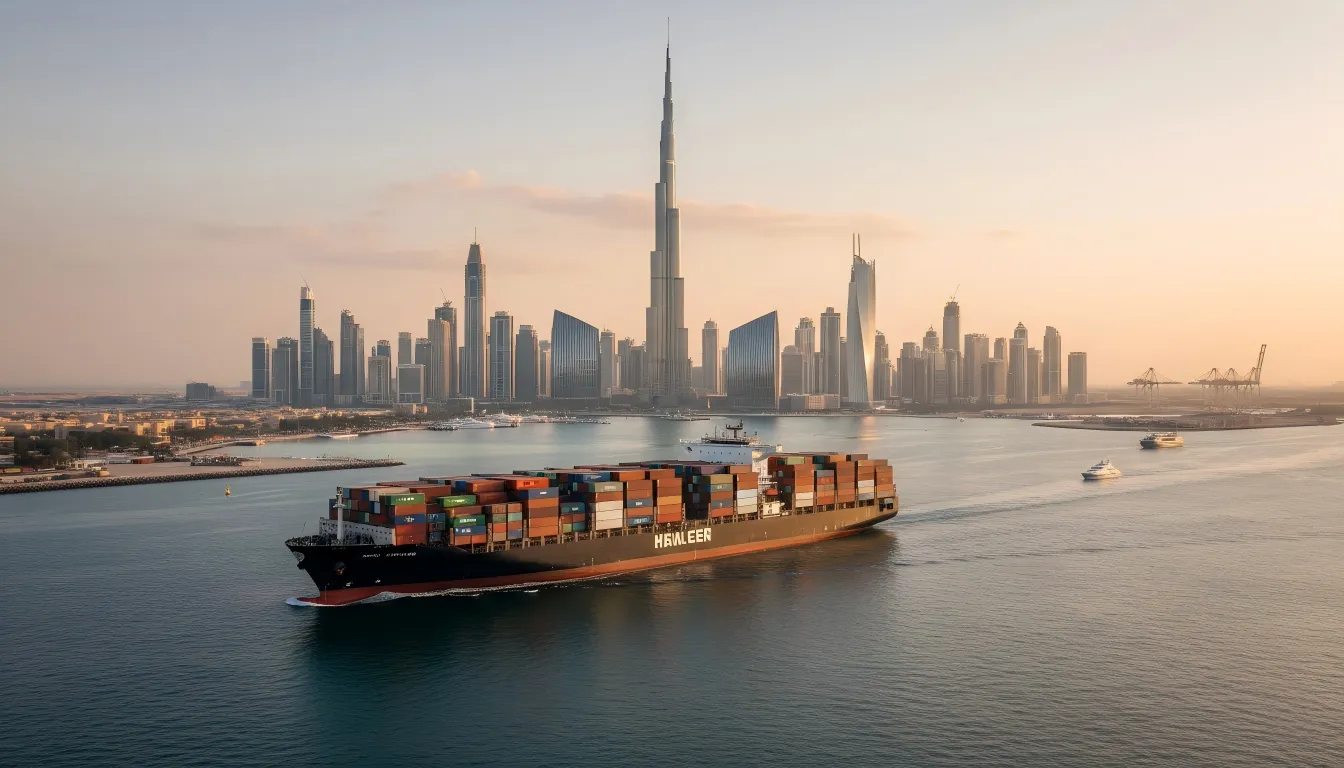
This comprehensive guide is designed to cut through the noise. As experts with over a decade of experience in the China-UAE route, we will walk you through everything you need to know—from current cost estimates and transit times to customs clearance strategies—ensuring your cargo arrives safely and on budget.
Field Note: In our experience managing shipments to Dubai, we've seen first-time importers often overlook the Attestation requirement for documents, leading to costly delays at Jebel Ali. We cover this critical step in the Customs section below.
Why Choose Container Shipping?
While air freight offers speed, container shipping (ocean freight) remains the backbone of global trade, handling over 90% of goods moving from China to the UAE. The reasons are clear:
- Cost Efficiency: For shipments weighing more than 100 kg, sea freight is significantly cheaper than air freight. For large bulk orders, the savings can exceed 70%.
- Capacity: A standard container can hold everything from heavy machinery to thousands of small consumer goods.
- Versatility: Unlike air freight, which has strict restrictions on batteries and liquids, container shipping allows for a broader range of dangerous goods (DG) and oversized cargo.
FCL vs. LCL: Which Option is Right for You?
Choosing between Full Container Load (FCL) and Less than Container Load (LCL) is the first critical decision you will make.
FCL (Full Container Load)
FCL means you hire the entire container for your goods. You don't need to fill it completely, but you pay for the whole unit.
- Best for: High-volume shipments (usually > 15 CBM) or fragile goods that need to avoid handling.
- Pros: Faster (no deconsolidation needed), safer, and lower price per unit.
LCL (Less than Container Load)
LCL involves sharing a container with other importers. You only pay for the volume (CBM) your cargo occupies.
- Best for: Small shipments (1–15 CBM), startups, or trial orders.
- Pros: Flexible and cost-effective for small loads.
- Cons: Slower due to consolidation at origin and deconsolidation at destination; higher risk of damage due to multiple handling.
Warning: During the UAE summer (June–September), temperatures inside standard containers can exceed 50°C. For LCL shipments sitting in consolidation warehouses, heat-sensitive goods (cosmetics, chocolates) are at risk. We recommend reefer containers or air freight for such items during these months.
Comparison: FCL vs. LCL
| Feature | FCL (Full Container Load) | LCL (Less than Container Load) |
|---|---|---|
| Cost | Flat rate per container (Cheaper for large volume) | Charged per CBM (Cheaper for small volume) |
| Transit Time | Faster (Direct loading/unloading) | Slower (Requires consolidation time) |
| Risk | Lower (Sealed from factory to destination) | Moderate (Handled multiple times) |
| Ideal Volume | 15 CBM and above | 1 CBM to 15 CBM |
Cost of Container Shipping from China to UAE (2026 Estimates)
Freight rates are volatile and influenced by seasonal demand (e.g., Chinese New Year, Ramadan), fuel prices (BAF), and geopolitical factors. Below are estimated market rates for early 2026.
Estimated FCL Rates (Port-to-Port)
| Container Type | Estimated Cost (USD) | Notes |
|---|---|---|
| 20ft Container | $1,000 – $2,500 | Ideal for heavy goods (minerals, metals) |
| 40ft Container | $2,500 – $4,000 | Ideal for voluminous goods (furniture, textiles) |
| 40ft HQ Container | $2,600 – $4,200 | Offers extra height for maximum volume |
> Note: These are base ocean freight rates. Always account for local charges in China (pick-up, customs) and UAE (delivery order, clearance).
LCL Costs
LCL is typically priced between $50 – $120 per CBM. However, be wary of "too good to be true" offers (like $0 ocean freight), as these often come with inflated destination charges in Dubai.
Hidden Costs to Watch
When budgeting, don't forget:
- THC (Terminal Handling Charges): Charged by ports at both ends.
- Customs Clearance Fees: Paid to your broker.
- Delivery Order (DO): A fee paid to the shipping line in UAE to release cargo.
- Demurrage & Detention: Jebel Ali is efficient but strict. You typically get 7-14 days of free time. Exceeding this results in daily fines ranging from $80 to $200 per container.
- Duty & VAT: UAE typically applies a 5% customs duty and 5% VAT on CIF value.
Transit Time: How Long Does it Take?
Shipping from China to the UAE is relatively fast compared to routes to Europe or America. The transit time depends largely on the departure port and whether the vessel is direct.
Average Transit Times (Port-to-Port)
| Origin Port (China) | Destination Port (UAE) | Estimated Transit Time |
|---|---|---|
| Shanghai | Jebel Ali / Dubai | 20 – 24 Days |
| Shenzhen (Shekou/Yantian) | Jebel Ali / Dubai | 18 – 22 Days |
| Ningbo | Jebel Ali / Dubai | 21 – 25 Days |
| Guangzhou (Nansha) | Jebel Ali / Dubai | 19 – 23 Days |
| Qingdao | Jebel Ali / Dubai | 24 – 28 Days |
> Pro Tip: Add 5–7 days to these estimates for door-to-door delivery to account for customs clearance and inland trucking.
Major Ports Involved
Key Chinese Ports
- Shanghai: The world's busiest port, ideal for suppliers in the Yangtze River Delta.
- Shenzhen: Key for electronics and tech exports from the Pearl River Delta.
- Ningbo-Zhoushan: Excellent alternative to Shanghai with deep-water capabilities.
Key UAE Ports
- Jebel Ali (Dubai): The largest port in the Middle East and a major transshipment hub. Most shipments from China arrive here.
- Khalifa Port (Abu Dhabi): A highly automated port serving the capital.
- Khalid Port (Sharjah): Useful for goods destined for the northern emirates.
The Shipping Process: Step-by-Step
Navigating the logistics chain is easier when you break it down:
- Booking & Cargo Collection: Your freight forwarder (like AllBestShipping) contacts your supplier to arrange pickup or warehouse delivery.
- Export Customs (China): Goods are declared to Chinese Customs. Documents like the Commercial Invoice and Packing List are submitted.
- Ocean Transit: The container is loaded onto the vessel. You receive the Bill of Lading (B/L).
- Arrival & Import Customs (UAE): Upon arrival at Jebel Ali, your agent submits documents to UAE Customs. Duty and VAT are paid.
- Final Delivery: The container is hauled to your warehouse for unloading.
Customs Clearance & Essential Documentation
The UAE has strict but efficient customs procedures. To avoid delays, ensure you have the following documents:
- Bill of Lading (B/L): The master document proving ownership.
- Commercial Invoice: Must detail the value of goods and HS Codes.
- Packing List: Describes the contents, weight, and dimensions.
- Certificate of Origin (CO): Mandatory for many product categories to prove where goods were manufactured.
- Attestation: For high-value commercial invoices, the UAE Ministry of Foreign Affairs (MoFA) often requires documents to be attested (legalized) by the UAE Embassy in China.
- Delivery Order: Obtained from the shipping line agent in UAE.
> Alert: Ensure your goods do not contain prohibited items (e.g., narcotics, e-cigarettes without ESMA approval, gambling tools, or offensive material) to avoid severe penalties. Regulated products (electronics, cosmetics) may need ESMA/MoIAT registration.
Why Choose AllBestShipping?
Shipping to the Middle East requires a partner who understands both Chinese exports and UAE imports. Here is why AllBestShipping is your best choice:
- Competitive Rates: We leverage long-term contracts with carriers like COSCO, MAERSK, and MSC to secure the best rates for you.
- End-to-End Visibility: Track your container 24/7.
- Expertise: We handle thousands of TEUs to Jebel Ali annually, meaning we know exactly how to handle customs hiccups.
- Door-to-Door Service: We don't just dump your cargo at the port; we deliver it to your doorstep in Dubai, Abu Dhabi, or Sharjah.
FAQ (Frequently Asked Questions)
Q: What is the cheapest way to ship from China to UAE?
A: For shipments over 2 CBM, sea freight (LCL) is the cheapest. For large volumes (over 15 CBM), FCL is the most economical.
Q: How much is customs duty in UAE?
A: Generally, it is 5% of the CIF value (Cost + Cargo Insurance + Freight), plus 5% VAT.
Q: Can I ship personal effects?
A: Yes, but you will need to provide a copy of your passport and residence visa. Personal effects are often exempt from duty if specific conditions are met.
Q: How early should I book before Chinese New Year?
A: We recommend booking at least 3–4 weeks in advance, as space becomes extremely tight and prices spike before the holiday.
Conclusion
Successfully managing container shipping from China to UAE boils down to planning and partnership. By understanding the differences between FCL and LCL, anticipating costs, and preparing the right documentation, you can turn logistics from a headache into a competitive advantage.
Don't let shipping complexities slow down your business.
Ready to ship? Contact AllBestShipping today for a free, transparent quote. Let us handle the logistics so you can focus on growing your business.