How Much Does it Cost to Ship from China to the UK in 2026? Complete Pricing Guide (FCL, LCL, Air & DDP)
How much does it cost to ship from China to the UK? If you've requested quotes from three different forwarders and received answers ranging from $1,200 to $4,100 for the same shipment, you're not alone. Most online guides publish vague rate tables that hide surcharges, skip VAT, and ignore the UK-side fees that can add 30–40% to your final bill.
This guide cuts through the noise. As a Shenzhen-based freight forwarder running weekly consolidations to Felixstowe, Southampton, and London Gateway, we handle Shipping from China to UK every day. Below you'll find the actual rates we see in the market (May 2026), six real-world cost examples, a full landed-cost breakdown, and the compliance essentials every UK importer needs post-Brexit.
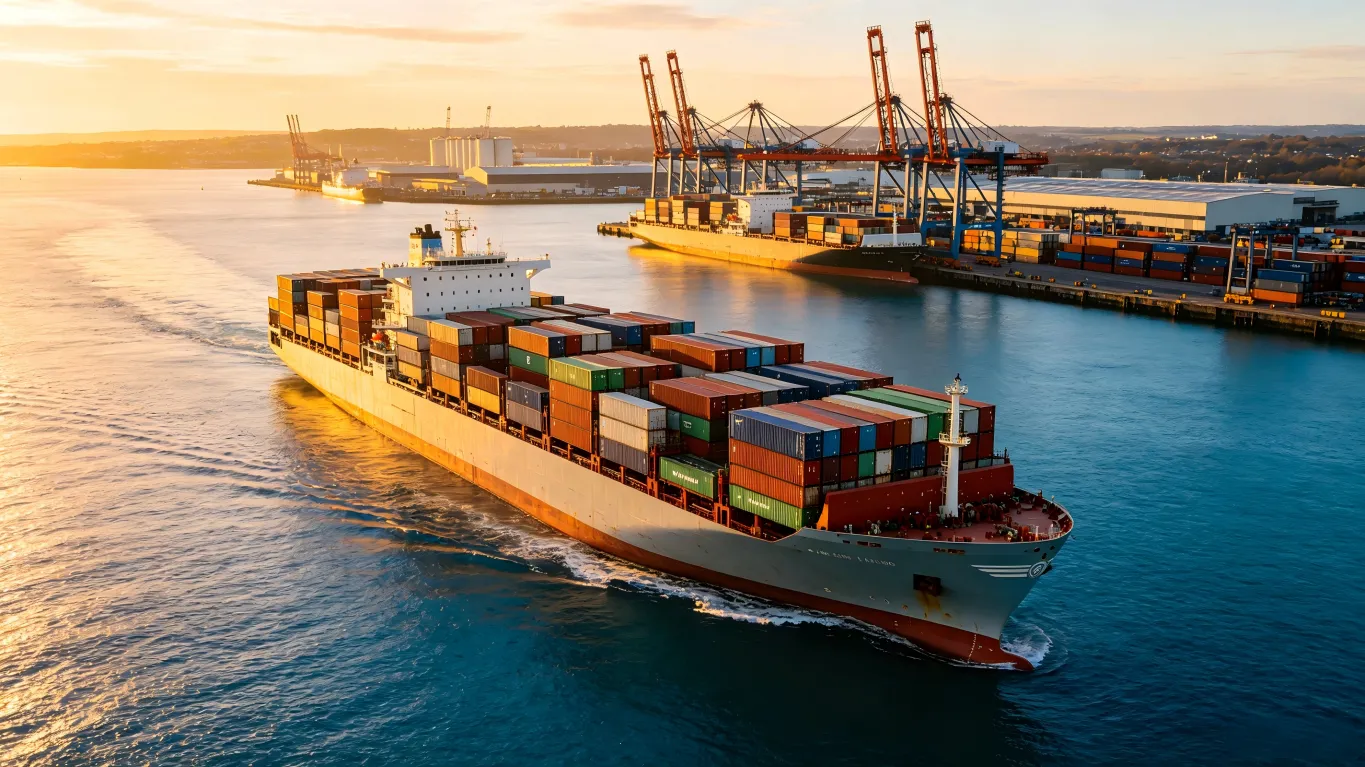
China to UK Shipping Costs at a Glance (May 2026)
May 2026 has brought welcome relief after a volatile Q1. Hormuz rerouting capacity has normalized, pulling FCL rates down 19–25% from April peaks. Air and express rates have also eased roughly 14% as belly-hold capacity rebalanced.
Note: All figures below are indicative spot-market ranges. Forwarder quotes vary by cargo type, packaging, and exact pickup/delivery addresses. Lock in quotes with 2–3 week validity for budget certainty.
Disclaimer: This guide is for informational purposes only and does not constitute legal, tax, or financial advice. Always verify current regulations with HMRC or your licensed customs broker before importing.
| Shipping Method | Cost (USD) | Cost (GBP) | Transit Time | Best For |
|---|---|---|---|---|
| FCL Sea (20GP) | $1,440–$1,760 | £1,150–£1,410 | 25–28 days | Medium to large shipments |
| FCL Sea (40HQ) | $2,250–$2,750 | £1,800–£2,200 | 25–28 days | High-volume, bulky cargo |
| LCL Sea | $35–$80 / CBM | £28–£64 / CBM | 26–45 days | Small–medium loads (1–15 CBM) |
| Rail FCL (20GP) | $4,554–$5,566 | £3,640–£4,450 | 13–14 days | Mid-sized, time-sensitive cargo |
| Rail FCL (40GP) | $6,623–$8,095 | £5,300–£6,480 | 13–14 days | Volume without sea delay |
| Rail LCL | ~$229 / CBM | ~£183 / CBM | 13–14 days | Small–medium batches |
| Air Freight | $5.0–$8.0 / kg | £4.0–£6.40 / kg | 5–9 days | High-value or urgent cargo |
| DDP Air | $7.0–$13.0 / kg | £5.60–£10.40 / kg | 7–12 days | E-commerce, FBA restocks |
| DDP Sea | $2.5–$4.5 / kg | £2.0–£3.60 / kg | 35–50 days | SMEs, bulk consumer goods |
| Express Courier | $8.0–$15.0 / kg | £6.40–£12.00 / kg | 3–5 days | Samples, small parcels |
Sea Freight from China to the UK: FCL & LCL
Sea freight remains the backbone of China–UK trade, handling more than 80% of commercial cargo. It is the most cost-effective option for shipments over 2 CBM or 300 kg, provided you can live with a 25–45 day transit window. AllBestShipping runs dedicated Sea Freight from China sailings every week.
FCL Container Shipping Costs: 20GP, 40GP, and 40HQ
FCL (Full Container Load) means you rent the entire container. The unit is sealed at your supplier's factory and opened only at your warehouse—or at an Amazon FBA prep center. Choose FCL when your cargo exceeds 15–20 CBM or when you need the security of minimal handling. Our Container Shipping from China to UK guide walks through 20GP vs 40HQ sizing in detail.
The base ocean freight rate is only part of the story. What carriers quote as "ocean freight" usually excludes origin trucking, terminal handling, fuel surcharges, and UK-side fees.
| Route | 20GP (USD) | 20GP (GBP) | 40HQ (USD) | 40HQ (GBP) | Transit Time |
|---|---|---|---|---|---|
| Shanghai → Southampton | $1,440–$1,760 | £1,150–£1,410 | $2,250–$2,750 | £1,800–£2,200 | 25–28 days |
| Ningbo → Southampton | $1,500–$1,800 | £1,200–£1,440 | $2,300–$2,800 | £1,840–£2,240 | 26–30 days |
| Shenzhen → Felixstowe | $1,500–$1,800 | £1,200–£1,440 | $2,300–$2,850 | £1,840–£2,280 | 24–32 days |
| Qingdao → Felixstowe | $1,600–$1,900 | £1,280–£1,520 | $2,400–$2,900 | £1,920–£2,320 | 32–42 days |
| Xiamen → Southampton | $1,500–$1,800 | £1,200–£1,440 | $2,350–$2,850 | £1,880–£2,280 | 26–32 days |
What's NOT included in the base rate: - BAF/CAF — fuel and currency adjustment surcharges - THC — terminal handling at origin and destination - Origin trucking — factory to port - Documentation fees — export customs paperwork - UK terminal handling and haulage
LCL Sea Freight Cost per Cubic Meter
LCL (Less than Container Load) lets you share container space with other shippers. You pay only for the volume or weight you occupy.
- Typical range: $35–$80 per CBM (or £28–£64 per CBM)
- Chargeable rule: 1 CBM = 1,000 kg. The carrier bills whichever is higher.
- Best for: 1–15 CBM shipments, multiple small suppliers, non-urgent inventory
LCL becomes less economical when you approach 13–15 CBM. See our LCL Shipping Guide for tips on maximizing space and minimizing damage. At that threshold, a 20GP FCL often costs the same while offering faster handling and less risk of damage.
Main Sea Routes and Transit Times
The primary route from China to the UK runs through the Suez Canal: sail from Shanghai/Shenzhen → Strait of Malacca → Indian Ocean → Suez Canal → Mediterranean → Strait of Gibraltar → UK ports. Port-to-port transit typically takes 25–35 days.
An alternative route around the Cape of Good Hope adds 7–14 days but avoids Suez congestion. Some carriers maintained Cape routing into early 2026 due to Red Sea volatility, though most have normalized Suez schedules by May.
| Origin | Felixstowe | Southampton | London Gateway | Liverpool |
|---|---|---|---|---|
| Shanghai | 29 days | 29 days | 32 days | 38 days |
| Shenzhen | 25 days | 25 days | 30 days | 34 days |
| Ningbo | 32 days | 31 days | 36 days | 37 days |
| Qingdao | 37 days | 37 days | 39 days | 41 days |
| Guangzhou | 25 days | 25 days | 31 days | 34 days |
| Tianjin | 37 days | 40 days | 41 days | 42 days |
| Xiamen | 27 days | 27 days | 32 days | 36 days |
For a deeper look at ocean carriers and port schedules, see our dedicated Sea Freight from China to UK resource.
Air Freight from China to the UK
When stockouts cost more than freight, air cargo is the answer. It is the fastest mode for China–UK lanes, but you pay a premium—often 8–15× the per-kg cost of sea freight.
Classic Air Freight Rates per KG
General cargo moves on scheduled airlines (Air China, British Airways, Qatar Airways, Emirates) and is priced by chargeable weight.
| Destination | General Cargo ($/kg) | Sensitive Cargo ($/kg) | Transit Time |
|---|---|---|---|
| London Heathrow (LHR) | $5.0–$8.0 | $7.0–$12.0 | 5–8 days |
| Manchester (MAN) | $5.0–$8.0 | $7.0–$12.0 | 5–8 days |
| Birmingham (BHX) | $5.0–$8.0 | $7.0–$12.0 | 5–8 days |
Sensitive cargo—batteries, liquids, cosmetics, and some electronics—incurs surcharges due to IATA Dangerous Goods regulations and airline handling restrictions.
Express Courier Costs (DHL / FedEx / UPS)
For parcels under 100 kg, express couriers often beat classic air freight because they bundle pickup, customs, and last-mile delivery into a single per-kg rate.
- General parcels: $8–$15 / kg
- Sensitive items: $10–$20 / kg
- Transit time: 3–5 days door-to-door
Chargeable Weight: Volumetric vs. Actual
Airlines charge whichever is higher: actual weight or volumetric weight.
- Classic air freight: 1 CBM = 167 kg (L×W×H cm ÷ 6000)
- Express couriers: 1 CBM = 200 kg (L×W×H cm ÷ 5000)
Example: A carton measuring 60×40×40 cm has a volumetric weight of 16 kg. If the actual weight is 10 kg, you pay for 16 kg.
Money-saving tip: Reducing carton height by just 5 cm can cut chargeable weight—and your freight cost—by roughly 12%. We see e-commerce clients save 10–15% on air bills simply by optimizing packaging dimensions. For carrier-specific routing options, explore our Air Shipping from China to UK overview.
Rail Freight from China to the UK
Rail freight sits between sea and air on both cost and speed. It is the sweet spot for mid-sized shipments that are too urgent for ocean but too heavy for cost-effective air transport.
The standard route runs from inland China terminals (Yiwu, Xi'an, Chongqing) through Kazakhstan, Russia, Belarus, and Poland to Duisburg, Germany. From there, cargo is transhipped by truck or short-sea ferry through Northern France and the Eurotunnel into the UK.
| Service | Cost (USD) | Cost (GBP) | Transit Time | Best For |
|---|---|---|---|---|
| Rail FCL (20GP) | $4,554–$5,566 | £3,640–£4,450 | 13–14 days | 5–20 CBM, seasonal inventory |
| Rail FCL (40GP) | $6,623–$8,095 | £5,300–£6,480 | 13–14 days | Volume without sea delay |
| Rail LCL | ~$229 / CBM | ~£183 / CBM | 13–14 days | Small–medium batches |
Door-to-door transit is typically 18–25 days once you factor in origin consolidation, customs, and UK inland haulage. Rail schedules are more reliable than ocean because they are less affected by port congestion and weather. That said, rail corridors through Russia and Belarus can face geopolitical delays, so we always confirm current routing with clients before booking.
DDP Door-to-Door Shipping Cost from China to the UK
DDP (Delivered Duty Paid) — our Door-to-Door Shipping service — is the most popular service among UK SMEs and first-time importers because it delivers predictability. You pay one quoted price, and the forwarder handles everything from factory pickup to UK customs clearance, duty, VAT, and final delivery.
DDP Sea vs. DDP Air
| Mode | Cost | Transit Time | Includes |
|---|---|---|---|
| DDP Sea | $2.5–$4.5 / kg ($200–$380 / CBM) | 35–50 days | Pickup, freight, UK customs, duty, VAT, delivery |
| DDP Air | $7.0–$13.0 / kg | 7–12 days | Pickup, freight, UK customs, duty, VAT, delivery |
The DDP sea rate is particularly attractive for e-commerce inventory and consumer goods where you can plan 6–7 weeks ahead. DDP air is the go-to for Amazon FBA restocks, flash-sale inventory, and high-value lightweight products.
DDP vs. DAP vs. FOB: Which Incoterm Saves You Money?
Not all "delivered" quotes are equal. The Incoterms 2020 rule you agree with your supplier determines who pays for what—and who shoulders the risk if something goes wrong.
| Incoterm | Who Pays Freight | Who Pays Duty/VAT | Who Handles UK Customs | Best For |
|---|---|---|---|---|
| EXW | Buyer | Buyer | Buyer | Experienced importers with China presence |
| FOB | Buyer | Buyer | Buyer | Importers with a trusted UK customs broker |
| CIF | Seller (to UK port) | Buyer | Buyer | Buyers who want the ocean leg managed only |
| DAP | Seller | Buyer | Buyer | Importers who want delivery but handle tax |
| DDP | Seller | Seller | Seller | SMEs, first-time importers, Amazon FBA sellers |
FOB looks cheaper on paper, but many importers underestimate UK-side costs. By the time you add terminal handling, customs broker fees, duty, VAT, and inland haulage, the total landed cost often approaches—or exceeds—a well-structured DDP quote. If you do not have an existing customs broker relationship, DDP usually wins on simplicity and cash-flow predictability. You can also read our complete Door to Door Shipping from China to UK guide for booking details.
Real-World Shipping Scenarios: 6 Importer Cost Examples
The tables above show ranges. Below are six composite estimates based on actual shipments we have handled in May 2026. Your exact quote will vary by product type, season, and addresses.
Example 1: Small E-Commerce Seller (50 kg Accessories via Express)
A Shopify seller in London needs a restock of jewelry and accessories from a Shenzhen supplier. The shipment weighs 50 kg and fits in two cartons.
- Method: DHL Express (DDU)
- Route: Shenzhen → London
- Cost: ~$450–$650 all-in
- Transit: 3–5 days
- Why: Under 100 kg, express is often cheaper than classic air freight once you factor in airline minimum charges and documentation fees. DDU means the seller pays import VAT and duty on arrival, which is standard for low-value e-commerce parcels.
Example 2: Amazon FBA Restock (300 kg Electronics via DDP Air)
An Amazon seller needs to replenish FBA inventory before a Prime Day push. The cargo is 300 kg of consumer electronics, requiring palletization and carton labeling.
- Method: DDP Air (all-inclusive)
- Route: Shenzhen → Amazon LHR9
- Cost: ~$2,400–$3,600
- Transit: 8–12 days
- Why: FBA shipments require precise pallet specs (1.0 m × 1.2 m UK standard), SSCC labels, and customs pre-clearance. DDP air handles all of it. The seller receives one all-in invoice and tracks the shipment by air waybill.
Example 3: Furniture Importer (1×40HQ Container via Sea FCL)
A UK furniture retailer orders a full container of dining sets and shelving from a factory near Shenzhen.
- Method: FCL Sea (FOB or DDP)
- Route: Shenzhen Yantian → Southampton
- Cost: $2,500–$3,500 base freight; DDP total ~$5,500–$7,500
- Transit: 30–40 days
- Why: Furniture is high-volume, low-weight-per-CBM. A 40HQ container (76 CBM internal) is ideal. FCL eliminates LCL handling damage risk and avoids deconsolidation fees at the UK port.
Example 4: Machinery Parts (5 CBM via LCL Sea)
An industrial parts distributor in Birmingham needs 5 CBM of replacement components from Ningbo.
- Method: LCL Sea (DDP door-to-door)
- Route: Ningbo → Felixstowe
- Cost: ~$1,200–$1,800 all-in
- Transit: 35–45 days
- Why: 5 CBM is well below the 20GP threshold. LCL is the economical choice. DDP removes the need for the distributor to manage UK customs or hire a separate broker.
Example 5: Fashion Retailer (Seasonal Stock via Rail FCL)
A Manchester apparel brand needs Q3 stock in time for back-to-school season but wants to avoid air-freight peak pricing.
- Method: Rail FCL (20GP)
- Route: Yiwu → Duisburg → UK inland
- Cost: ~$5,000–$6,000 + UK haulage
- Transit: 18–25 days door-to-door
- Why: Rail arrives roughly 50% faster than sea and 40–50% cheaper than air. The predictable schedule lets the retailer plan warehouse staffing and marketing launches with confidence.
Example 6: First-Time Importer (2 CBM Home Goods via DDP Sea)
A new UK online retailer is testing a supplier in Guangzhou for the first time. They want zero customs complexity.
- Method: DDP Sea (LCL consolidation)
- Route: Guangzhou Nansha → London Gateway
- Cost: ~$900–$1,400 all-in
- Transit: 40–50 days
- Why: DDP sea is the lowest-risk entry point for new importers. The forwarder handles EORI, VAT, duty calculation, and delivery. The retailer pays one invoice and tracks the shipment by B/L number.
Hidden Costs Breakdown: What You'll Actually Pay
The headline freight rate is only 60–70% of your total landed cost. If you budget based on ocean freight alone, you will overspend. Here is the complete stack.
Origin Charges (China Side)
Before your cargo touches a vessel or aircraft, these fees apply: - Supplier pickup / factory-to-port trucking: $50–$300 depending on distance from Shanghai, Shenzhen, or Ningbo - Export customs clearance and documentation: $50–$150 - Origin terminal handling (THC): $100–$250 per container; $15–$40 per CBM for LCL - Carton labeling, palletization, and inspection: Optional but recommended for FBA and fragile goods
International Freight Base Rate + Surcharges
The base rate is just the starting point. Carriers layer on surcharges that can add 15–30%: - BAF (Bunker Adjustment Factor): fluctuates with crude oil prices - CAF (Currency Adjustment Factor): hedges USD/CNY/EUR volatility - THC (Terminal Handling Charge): loading and unloading at both ends - Peak season surcharge: typically July through October, and again pre-Chinese New Year - Port congestion surcharge: common at Felixstowe and Southampton during Q4 - War risk / piracy surcharge: applicable on certain corridors
UK Destination Charges
Once the cargo arrives, UK-side costs kick in: - UK terminal handling and unloading - Customs clearance broker fee: £80–£200 - Port storage / demurrage: £60–£120 per day if not collected within free time (typically 5–7 days) - Inland haulage: varies by distance; London is cheaper than Scotland or remote industrial parks
Duties, VAT, and Compliance Costs
This is where many first-time importers get caught off guard.
- Import duty: varies by HS code. Electronics are often 0%, apparel 8–12%, furniture 0–4%, tools 2–6%.
- UK VAT: 20% on (CIF value + duty). If your goods are valued at $10,000, freight is $1,500, and insurance is $100, your CIF is $11,600. At 0% duty, VAT is $2,320.
- Postponed VAT Accounting (PVA): lets you defer VAT payment until your periodic VAT return rather than paying cash upfront at the border. This is a cash-flow game-changer for SMEs.
Worked example: A $10,000 CIF shipment of furniture (0% duty) → Duty $0 + VAT $2,000 = $2,000 total tax liability.
Optional but Recommended Costs
- Cargo insurance: 0.5–2% of declared value
- China warehouse consolidation: combining orders from multiple suppliers into one LCL booking
- UK warehouse unpacking / sorting / labeling: useful if you distribute to multiple fulfillment centers
UK Import Compliance: Brexit, EORI, VAT, and UKCA
Brexit changed the mechanics of importing from China into the UK. The rules that applied when Britain was in the EU no longer hold. Here is what actually matters in 2026.
EORI Number: Do You Need One?
Yes. An EORI (Economic Operator Registration and Identification) number is mandatory for all commercial imports into the UK post-Brexit.
- GB EORI: for Great England, Scotland, and Wales
- XI EORI: for Northern Ireland (still follows EU customs rules in many respects)
- How to register: apply online via HMRC. Most numbers are issued within one week.
- Without an EORI: your shipment will be held at the UK port until you obtain one, incurring demurrage daily.
Postponed VAT Accounting (PVA): A Practical Walkthrough
PVA allows you to account for import VAT on your VAT return instead of paying it upfront when goods enter the UK. This preserves cash flow.
- Who qualifies: any VAT-registered UK business
- How to elect: tick the PVA box on your customs declaration (or instruct your broker to do so)
- Accounting: declare the VAT in Box 1 (output tax) and reclaim it in Box 4 (input tax) on the same return. The net effect is zero cash outlay for VAT at the border.
- Example: A £5,000 VAT bill that would normally be paid at Felixstowe is instead deferred to your quarterly return.
CDS (Customs Declaration Service)
The UK's legacy CHIEF system was retired. All customs declarations now go through the CDS (Customs Declaration Service).
- Your broker must be CDS-ready.
- Common rejection reasons include mismatched EORI numbers, incorrect HS codes, and missing commercial invoice details.
- Make sure your forwarder or broker has CDS software integration before booking.
UKCA Marking and Product Compliance
CE marking is no longer valid for most products placed on the Great Britain market. UKCA (UK Conformity Assessed) marking replaced it.
- Affected categories: toys, electronics, machinery, personal protective equipment, construction products, and more
- What to check: before shipping, ask your Chinese supplier for UKCA test reports and conformity documentation
- Risk: goods without valid UKCA markings can be refused entry, destroyed, or returned at your expense
Common HMRC Inspection Triggers
HMRC does not inspect every container—but when they do, delays cost money.
- Incorrect or inconsistent HS codes
- Undervalued commercial invoices
- Missing certificates of origin or conformity
- First-time importer profile with a high-value shipment
- Vague product descriptions (e.g., "goods" instead of "stainless steel kitchen sinks")
How to minimize risk: use clear descriptions, accurate valuations, consistent terminology across all documents, and pre-submit paperwork where possible.
How to Choose the Cheapest Way to Ship from China to the UK
Price is only one variable. The "cheapest" method is the one that delivers your cargo on time, intact, and at the lowest total landed cost for your specific situation.
By Shipment Size
| Shipment Size | Recommended Mode | Rationale |
|---|---|---|
| Under 50 kg | Express courier | Minimum charges make air freight uneconomical |
| 50–300 kg | Air freight or express | Air if cost matters; express for simplicity |
| 300 kg–2 CBM | Air freight or rail LCL | Depends on deadline; rail cheaper if time allows |
| 2–15 CBM | LCL sea or rail FCL | LCL most economical; rail for speed |
| 15–20+ CBM | FCL sea (20GP) | Sealed container, lowest per-unit cost |
| High volume / bulky | FCL sea (40HQ) | Maximum space utilization |
By Product Category
| Product Category | Best Mode | Key Consideration |
|---|---|---|
| Electronics | DDP air (FBA) or rail | Battery/MSDS documentation; FBA labeling required |
| Furniture | FCL sea (40HQ) | High cube; fragile items need FCL protection |
| Apparel / Fashion | Rail or LCL sea | Seasonal deadlines; rail balances speed and cost |
| Machinery / Auto parts | LCL sea or FCL | Dense but heavy; watch chargeable weight |
| Amazon FBA | DDP air or DDP sea | DDP removes customs complexity for first-time sellers |
By Urgency
| Timeline | Mode | Typical Cost Level |
|---|---|---|
| Emergency (1–3 days) | Express courier | $$$$$ |
| Urgent (5–9 days) | Air freight | $$$$ |
| Standard (15–25 days) | Rail freight | $$ |
| Flexible (30–50 days) | Sea freight (FCL/LCL) | $ |
Seasonal Shipping Calendar & Money-Saving Tips
Shipping is a commodity, but timing is a strategy. In our experience, clients who book 3–4 weeks ahead of peak season routinely save 15–30% compared to last-minute shipments.
2026 Booking Calendar
| Period | Event | Action Required | Rate Trend |
|---|---|---|---|
| Early December | Chinese New Year prep | Book sea freight by early Dec | Rising |
| January–February | Chinese New Year shutdown | Avoid shipping during holiday | Spiked |
| March–April | Post-CNY normalization | Good window for FCL bookings | Softening |
| July–September | Peak season surcharge | Book 3–4 weeks ahead | Rising 15–30% |
| Early October | Christmas inventory (sea) | Last reliable sea booking | Peak |
| Early November | Christmas inventory (air) | Last reliable air booking | Peak |
| Year-round | Rail schedules | Book 2–3 weeks ahead | Stable |
7 Proven Ways to Reduce Your Shipping Costs
- Optimize carton dimensions. A 5 cm height reduction can lower volumetric weight by 12%.
- Book 2–3 weeks ahead. Last-minute bookings attract peak surcharges.
- Choose the right origin port. Ningbo is sometimes cheaper than Shanghai for certain lanes; Shenzhen saves inland trucking for South China suppliers.
- Consolidate multiple suppliers. One LCL shipment is cheaper than three separate air parcels.
- Be flexible on UK delivery. A 3–5 day delivery window can cut inland haulage costs.
- Negotiate incoterms. Switching from EXW to FOB at the factory can save $200–$500 in origin trucking.
- Match insurance to risk. Do not pay for all-risk coverage on low-value, durable goods.
Cargo Insurance & Risk Management
Cargo insurance is not mandatory, but it is wise. In our experience handling claims for clients, ocean carriers and airlines limit their liability far more than most importers realize. If a container goes overboard or a warehouse fire occurs, you could lose your entire shipment value.
Institute Cargo Clauses: A vs. B vs. C
| Clause | Coverage Level | Best For |
|---|---|---|
| ICC (A) — All Risk | Broadest. Covers theft, breakage, water damage, collision, and more. | High-value electronics, fragile goods, temperature-sensitive cargo |
| ICC (B) — Named Perils | Fire, collision, jettison, earthquake, flooding. | Mid-value general cargo |
| ICC (C) — Basic | Major casualties only: fire, sinking, stranding. | Low-value bulk goods where base coverage is sufficient |
When Is All-Risk Coverage Worth the Premium?
- Cargo value exceeds $10,000
- Fragile or sensitive items (glass, ceramics, precision electronics)
- Routes with transshipment complexity
- New supplier relationships where packaging quality is unproven
Claims Process
If damage occurs, file the claim in the UK rather than China. Local evidence, language, and legal jurisdiction make recovery faster.
Required documentation: - Damage report with photos - Original commercial invoice and packing list - Bill of Lading (B/L) or airway bill - Independent surveyor report (for high-value claims)
Timeline: straightforward claims settle in 30–90 days. Disputed liability between carriers can extend this to 6+ months.
Required Documents Checklist
Missing paperwork is the single most common cause of customs delays. Use this checklist before every shipment.
Universal Documents
- Commercial Invoice
- Packing List
- Bill of Lading (B/L) (sea) or Airway Bill (AWB) (air)
Customs Documents
Proper documentation is the foundation of smooth Customs Clearance at both origin and destination. - HS Code declaration - EORI number - Certificate of Origin (if claiming preferential duty)
Product-Specific Documents
- Certificate of Conformity / UKCA documentation
- MSDS (for batteries, chemicals, liquids)
- Import License (for restricted goods)
DDP-Specific Documents
- Power of Attorney for customs broker
- VAT registration evidence (if using PVA)
Amazon FBA-Specific Documents
- FBA Shipment ID
- Carton / FNSKU labels
- Pallet configuration sheet
FAQ: People Also Ask
How much does a 40ft container cost to ship from China to the UK?
Base ocean freight for a 40HQ container from Shanghai or Shenzhen to Southampton or Felixstowe typically ranges from $2,250–$2,750 (or £1,800–£2,200) as of May 2026. However, the all-in door-to-door cost under DDP terms—including UK customs, duty, VAT, and inland haulage—usually totals $5,500–$7,500 depending on cargo value and HS code.
What is the cheapest way to ship from China to the UK?
For shipments under 50 kg, express courier is usually cheapest. For 2–15 CBM, LCL sea freight offers the lowest per-unit cost. For volumes above 15–20 CBM, a 20GP or 40HQ FCL container is the most economical option. If you need faster transit than sea but cannot afford air, rail freight is the middle-ground solution at roughly 50% lower cost than air cargo. For a full cost breakdown by mode, see our guide on the Cheapest way to Ship from China to UK.
How long does sea freight take from China to the UK?
Port-to-port transit via the Suez Canal is typically 25–35 days from major Chinese ports to Felixstowe or Southampton. Door-to-door sea freight—including origin handling, ocean transit, UK customs, and inland delivery—usually takes 35–50 days. Cape of Good Hope routing can add 7–14 days. For transit times across all modes, read How Long to Ship from China to UK.
Do I need an EORI number to import from China?
Yes. An EORI number is mandatory for all commercial imports into the UK post-Brexit. You can register online through HMRC, and most numbers are issued within one week. Without it, your cargo will be held at the port, incurring demurrage charges until the issue is resolved.
How is VAT calculated on imports from China?
UK VAT is charged at 20% on the total of the goods value + international freight + insurance + import duty. This is known as the CIF-plus-duty value. For example, a shipment with a CIF value of $11,600 and zero duty would attract $2,320 in VAT. You can defer this payment using Postponed VAT Accounting (PVA) if you are VAT-registered.
How much does it cost to ship 1 kg / 100 kg from China to the UK?
For a 1 kg parcel, express courier costs roughly $8–$15. For 100 kg, classic air freight is typically $5–$8 per kg (total $500–$800), while DDP air runs $7–$13 per kg (total $700–$1,300). Express minimum charges often make classic air freight cheaper for shipments above 80–100 kg.
Can I track my shipment from China to the UK?
Yes. FCL shipments are tracked by container number. LCL shipments are tracked by Bill of Lading (B/L) number. Air cargo is tracked by Airway Bill (AWB) number. Express couriers provide their own tracking portals. Most freight forwarders also offer milestone-based email or dashboard updates.
What happens if my goods are held at UK customs?
HMRC holds shipments for incorrect HS codes, missing EORI numbers, undervalued invoices, incomplete product descriptions, or random inspections. The cargo sits in a customs warehouse, accruing storage fees of roughly £60–£120 per day. Resolution involves submitting corrected paperwork through your broker. Prevention is simpler than cure: ensure all documents are accurate and consistent before the vessel arrives.
Conclusion: Get an Accurate Quote for Your Shipment
Shipping costs from China to the UK are not a mystery—they are a function of mode, volume, season, and how much of the journey you want managed for you. Sea freight wins on cost for bulk cargo. Air freight wins when stockouts are more expensive than freight bills. Rail freight offers a reliable middle ground. And DDP door-to-door removes the customs complexity that trips up first-time importers.
Use the tables and real-world examples in this guide as a benchmark. If a forwarder's quote is 30% above or below the ranges here, ask what is included—or what is missing. The lowest base rate is rarely the cheapest total landed cost.
At AllBestShipping, we run weekly consolidations from Shenzhen, Ningbo, and Shanghai to Felixstowe, Southampton, and London Gateway. Whether you need a one-time DDP shipment for a new product launch or a monthly FCL contract for established inventory, we provide transparent, itemized quotes with no hidden fees. Our team handles sea freight, air freight, rail, Amazon FBA prep, warehousing, and cargo insurance—all under one roof, managed from our base in Shenzhen, the manufacturing hub of South China.
Ready to stop guessing and start shipping? Get a free, detailed quote tailored to your cargo, timeline, and budget.