How Long to Ship from China to UK: The Ultimate 2026 Guide
In the fast-paced world of international trade, knowing how long to ship from China to UK is the cornerstone of effective inventory planning and customer satisfaction. Whether you are a seasoned e-commerce seller or a first-time importer, the difference between a 30-day ocean voyage and a 5-day air freight delivery can make or break your supply chain.
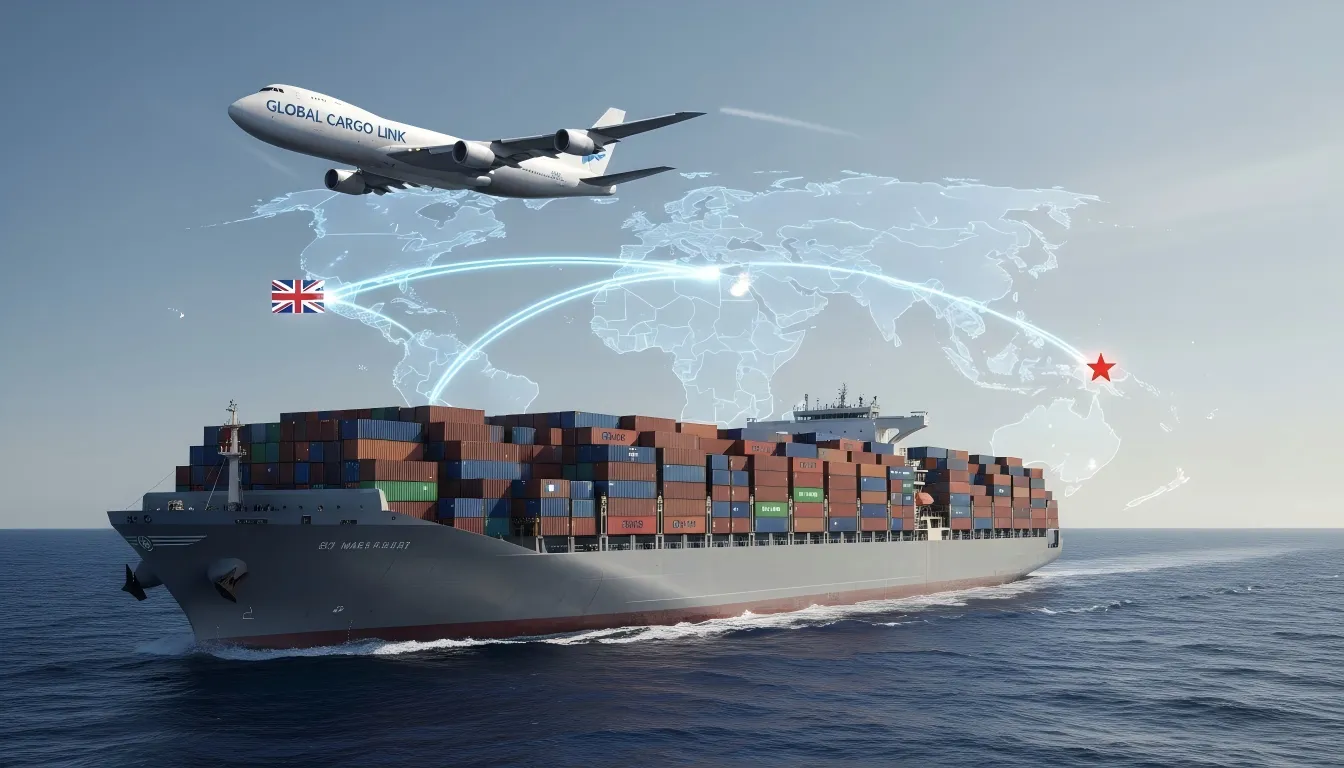
Here is the short answer: express courier (DHL/UPS/FedEx) delivers in 3-5 days, standard air freight takes 5-8 days (airport-to-airport), rail freight takes 18-25 days door-to-door, and sea freight takes 30-40 days port-to-port (add 7-10 days for full door-to-door). One important 2026 caveat: with many Asia-North Europe vessels still avoiding the Suez Canal and routing around the Cape of Good Hope, ocean shipments are frequently running 10-14 days longer than their published schedules - we explain exactly how to plan around this below.
At AllBestShipping, we understand that time is money. This guide cuts through the noise to provide you with realistic, up-to-date transit times for Sea, Air, Rail, and Express shipping, ensuring you can make informed decisions for your business in 2026. For a deeper dive into costs, check out our guide on Container Shipping from China to UK. Last updated: September 2026.
1. Quick Summary: Shipping Modes at a Glance
Before diving into the details, here is a snapshot of what you can expect when moving cargo from China to the United Kingdom.
| Shipping Mode | Estimated Transit Time | Best For |
|---|---|---|
| Express (DHL/UPS/FedEx) | 3 - 5 Days | Urgent samples, documents, small parcels < 100kg |
| Air Freight | 5 - 8 Days | High-value goods, tight deadlines, cargo > 100kg |
| Rail Freight | 18 - 25 Days | Cost-effective middle ground between air and sea |
| Sea Freight (FCL) | 30 - 40 Days | Large volume shipments, cost optimization |
| Sea Freight (LCL) | 35 - 45+ Days | Smaller shipments sharing container space |
Pro Tip: The sea freight figures above are port-to-port estimates. For full door-to-door sea delivery (factory pickup, export customs, import clearance, final trucking) add 7-10 days. And in 2026, many Asia-North Europe vessels are still routing via the Cape of Good Hope instead of the Suez Canal - if your sailing is one of them, budget an additional 10-14 days. Air freight figures are airport-to-airport; express courier and rail figures include final UK delivery.
2. Sea Freight Transit Times from China to UK
Sea freight is the backbone of global trade, handling over 90% of China-UK cargo by volume. It is the most budget-friendly option but requires the longest lead time - and in 2026 it is also the mode most exposed to routing disruption.
FCL (Full Container Load) vs. LCL (Less than Container Load)
The choice between FCL and LCL significantly impacts your total transit time.
- FCL (Full Container Load): When you book a full 20ft or 40ft container, the goods are yours alone. The container is sealed at the factory and opened only at the destination. This streamlines the process, giving a typical port-to-port transit of 30-40 days on direct routings - or roughly 40-52 days while Cape of Good Hope rerouting persists.
- LCL (Less than Container Load): If you don't have enough cargo to fill a container, you share space with other shippers. This involves consolidation at the origin warehouse and deconsolidation at the destination, which adds an extra 5-7 days to the timeline. For more details, see our LCL Shipping Guide. Expect 35-45+ days port-to-port on direct sailings, and more when the mother vessel rounds the Cape.
2026 routing reality check: Since late 2023, security problems in the Red Sea - joined in 2026 by tensions around the Strait of Hormuz - have pushed a large share of Asia-North Europe services onto Cape of Good Hope routings. The detour adds roughly 3,000-4,000 nautical miles and 10-14 days to the ocean leg. Schedules also become less frequent, so when demand spikes (Golden Week, the Christmas peak), rolled cargo is more likely. Always confirm whether your booked sailing transits Suez or rounds the Cape before committing to a delivery date - rotations can change from month to month.
Transit Times by Key Chinese Ports (Port-to-Port)
China's vast coastline means transit times vary depending on where your supplier is located.
| Origin Region | Major Ports | Destination (UK) | Est. Transit Time |
|---|---|---|---|
| South China | Shenzhen, Guangzhou, Hong Kong | Felixstowe, Southampton | 25 - 30 Days |
| East China | Shanghai, Ningbo | Felixstowe, Southampton, London Gateway | 28 - 35 Days |
| North China | Qingdao, Tianjin, Dalian | Liverpool, Felixstowe | 33 - 40 Days |
Note: These times reflect the "on-the-water" duration for a direct Suez-rotation sailing. In 2026, vessel waiting time at congested UK hubs like Felixstowe, Southampton or London Gateway can add 1-3 days, and a Cape of Good Hope routing adds roughly 10-14 days - for example, a Shanghai-Felixstowe voyage of ~30-33 days direct runs closer to 42-47 days via the Cape. UK customs clearance and inland delivery come on top of these port-to-port figures.
3. Air Freight Shipping Times: Speed vs. Cost
When your inventory is running low or you are launching a new product, air freight is the solution. It is also the mode least affected by the ocean rerouting chaos of 2026.
Standard Air Freight vs. Express Courier
Standard Air Freight: Your cargo is flown on commercial passenger flights or dedicated freighters from hubs like Shanghai (PVG), Shenzhen (SZX) or Guangzhou (CAN) into Heathrow, Manchester, Stansted or Birmingham. This is an "Airport-to-Airport" service - you arrange customs clearance (or hire a forwarder like AllBestShipping) and trucking at both ends.
- Transit Time: 5-8 days airport-to-airport, including uplift scheduling and transshipment. Budget 7-10 days if you need door-to-door with UK customs and delivery.
- Ideal For: Shipments over 100kg where speed is critical but Express is too expensive.
Express Courier (Door-to-Door): Services like DHL, UPS, and FedEx offer a seamless "Door-to-Door" experience. They handle pickup, customs (declaring through the UK's Customs Declaration Service), and final delivery as one integrated service.
- Transit Time: 3-5 days door-to-door from pickup.
- Ideal For: Samples, urgent documents, and parcels under 100kg.
4. Rail Freight: The "New Silk Road" Option
Rail freight has emerged as a strategic "middle ground," offering a balance between the high speed of air and the low cost of sea freight. In 2026 it has become more attractive than ever: while ocean schedules wobble under Cape of Good Hope rerouting, the China-Europe Railway Express keeps rolling to remarkably consistent windows.
By mid-2026 the network connected 129 Chinese cities with 236 cities across 26 European countries, and volumes in early 2026 grew roughly 20% year on year as shippers shifted cargo off disrupted ocean loops.
- The Route: Most China-UK rail freight no longer runs direct to London the way the pioneering Yiwu-London (Barking) service did. Today's trains depart hubs like Xi'an, Chengdu, Chongqing, Zhengzhou or Yiwu and terminate at continental gateways - most commonly Duisburg (Germany), plus Hamburg, Malaszewicze (Poland) or Warsaw. UK-bound cargo then transfers to truck or short-sea ferry across the Channel (Dover or the Channel Tunnel), clearing EU export and UK import formalities along the way.
- Transit Time: China to Duisburg is typically 15-18 days station-to-station. Add the cross-Channel leg and UK delivery and you get a door-to-door window of about 18-25 days; with factory pickup, border congestion at Alashankou, Manzhouli or Malaszewicze, plan 21-30 days for the full logistics cycle.
- Why Choose Rail?: It is roughly 40-50% faster than sea freight and 50-60% cheaper than air freight, and it is immune to the Red Sea and Strait of Hormuz disruptions that stretch ocean schedules. It's an excellent choice for medium-value goods like electronics, auto parts, fashion, or furniture.
- Know the Limitations: Most services use the northern corridor via Kazakhstan, Russia and Belarus, so sanctions-sensitive cargo (defense-related items, certain dual-use electronics) may be restricted or uninsurable on this routing. The Middle Corridor via the Caspian Sea avoids Russia but is slower (~20-25+ days) and more expensive. Gauge changes at the Chinese border and terminal congestion at Malaszewicze are the most common sources of delay.
5. Critical Factors That Influence Shipping Time
You might wonder, "Why did my 30-day shipment take 50 days?" In 2026 the answer is usually one (or more) of the following.
Seasonality & Holidays
- Chinese New Year (CNY): Usually in Jan/Feb - the next one falls on 6 February 2027. Factories wind down from mid-January and ports rush to ship goods before the break. Miss the cutoff and expect delays of 2-3 weeks.
- Golden Week (1-7 October 2026): A week-long national holiday that creates a capacity crunch before and after. This year carriers including Maersk announced widespread blank sailings around the holiday, cutting Asia-Europe capacity in late September and early October - expect rolled cargo and higher rates, and see our analysis of Golden Week 2026 blank sailings for details.
- Christmas Rush (Peak Season): From September to November, volumes spike, leading to rolled cargo (bumped to the next ship) and port congestion. With UK ports already under pressure in 2026, book early or risk missing the retail window.
Logistics & Compliance
- Customs Clearance: Missing documents like the Commercial Invoice or Packing List, or incorrect HS Codes, can trigger inspections that hold goods for days. Every commercial import to the UK must be declared through the Customs Declaration Service (CDS) using a valid GB EORI number - couriers and forwarders usually handle this, but the paperwork must be right before the goods arrive.
- Port Congestion: Rising import volumes through 2026 have kept UK hubs - Felixstowe, Southampton and London Gateway - periodically congested, with berthing waits of days at the worst moments. Conditions eased by late summer 2026 (waiting times mostly under 24-30 hours), but yard and trucking capacity remains tight, and demurrage and detention charges add up fast if your container is left sitting.
- Weather: Typhoons in the South China Sea (July-September) can shut Chinese terminals - in August 2026, Typhoon Saudel suspended operations at Ningbo and Shanghai for days - while severe North Sea storms in winter can force vessels to slow down or reroute.
- Geopolitical Rerouting (2026): Red Sea security issues and tensions around the Strait of Hormuz keep many Asia-North Europe services on Cape of Good Hope routings. Beyond adding 10-14 days at sea, longer rotations mean each service calls less frequently, so a missed cutoff can cost you far more than one weekly sailing.
6. Pro Tips to Reduce Delays
To ensure your supply chain runs like clockwork, follow these expert tips from AllBestShipping:
- Book in Advance: Secure your space at least 2-3 weeks before your "Cargo Ready Date" - and 3-4 weeks around Golden Week and the Christmas peak, when blank sailings are cutting available capacity.
- Confirm Your Vessel Routing: Ask your forwarder whether your sailing transits the Suez Canal or rounds the Cape of Good Hope, and re-confirm before departure. A Cape routing adds 10-14 days - build it into your promised delivery dates.
- Choose the Right Incoterms: Opt for FOB (Free On Board) instead of CIF (Cost, Insurance, and Freight). FOB gives you control over the freight forwarder and the route, whereas CIF leaves it to the supplier who may choose the cheapest (and slowest) option.
- Prepare Documents Early: Double-check all paperwork. Make sure your GB EORI number is active, your goods are declared correctly through CDS, and your VAT strategy (including Postponed VAT Accounting, or PVA) is set up before the shipment sails.
- Partner with an Expert: A reliable forwarder monitors routes in real time. At AllBestShipping, we proactively reroute cargo to avoid known bottlenecks - and our dedicated Shipping From China to UK page keeps current sailings, rates and service options in one place.
- Plan for UK Delivery Bottlenecks: Even after the vessel berths, trucking and port appointment slots can add days. Ask your forwarder to book UK haulage in advance and keep free time, demurrage and detention in mind when planning container returns.
7. FAQ: Shipping from China to UK
Q: How long does customs clearance take in the UK? A: For standard goods with correct paperwork, clearance typically takes 1-2 days. However, if your goods are selected for an X-ray or physical inspection, it can take 7+ days. Post-Brexit, all commercial imports move through the Customs Declaration Service (CDS), so an accurate declaration and a valid GB EORI number are essential to avoid holds.
Q: Is rail freight reliable? A: Yes - rail is generally more schedule-stable than sea freight during ocean disruption, which is why 2026 volumes are booming. Just remember that China-UK rail today terminates at European hubs (usually Duisburg) with a truck or ferry leg across the Channel, and that border crossings (e.g., Alashankou, Manzhouli, or Malaszewicze) can occasionally add a few days.
Q: What is the fastest way to ship from China to UK? A: Express Courier (DHL/UPS/FedEx) is the absolute fastest method, delivering door-to-door in as little as 3 days. Standard air freight follows at 5-8 days airport-to-airport.
Q: Why is my sea shipment taking 40-50+ days in 2026? A: Two main reasons. First, many Asia-North Europe vessels are still routed via the Cape of Good Hope to avoid the Red Sea and Strait of Hormuz, adding 10-14 days to the voyage. Second, blank sailings around Golden Week and the Christmas peak, plus congestion at UK ports, cause containers to be rolled to later vessels. Ask your forwarder to confirm the actual rotation of your booked sailing.
Q: How long does door-to-door (DDP) shipping take? A: For sea freight, plan 40-55 days door-to-door on direct routings (duty and 20% VAT included under DDP); while Cape rerouting persists in 2026, 50-65 days is the safer budget, and LCL or peak-season shipments can stretch beyond that. Air DDP runs 7-10 days, express courier 3-5 days, and rail DDP roughly 20-28 days.