Container Shipping from China to UK: The Ultimate 2026 Guide
Are you looking for a reliable way to move goods from the world's factory to the British Isles?
Container shipping from China to the UK remains the absolute backbone of international trade, handling over 90% of the cargo volume between these two economic giants. Whether you are an established retailer restocking for the holiday season or a startup launching your first product line, understanding the nuances of ocean freight is critical to your bottom line. However, the logistics landscape in January 2026 is far from simple. With the Red Sea crisis extending into its third year and causing persistent vessel diversions, combined with the evolving post-Brexit customs regulations, navigating this route requires more than just booking a box; it requires a strategic partnership.
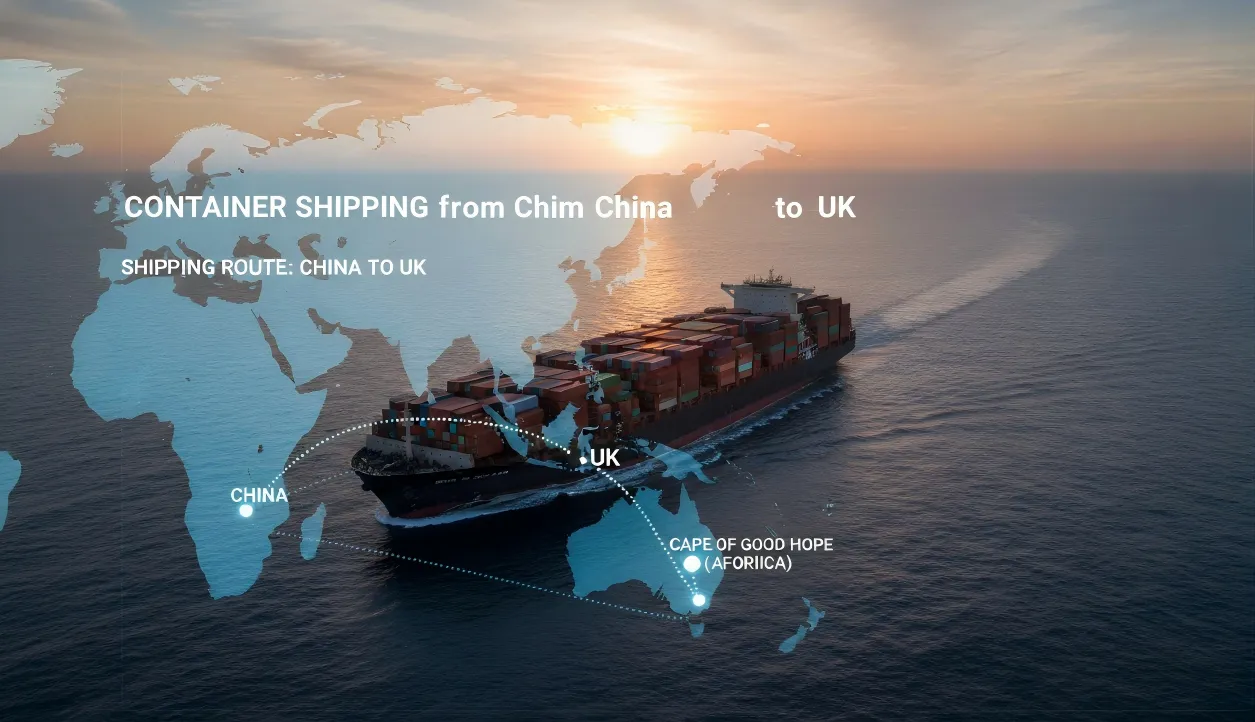
In this comprehensive guide, updated for 2026, we break down everything you need to know: from current FCL and LCL rates and extended transit times due to Cape of Good Hope diversions, to navigating UK customs with confidence. We will explore the pros and cons of different shipping methods, demystify Incoterms, and provide actionable tips to reduce your landed costs. Whether you are shipping furniture from Foshan, electronics from Shenzhen, or textiles from Ningbo, this guide by AllBestShipping will ensure your cargo arrives safely, on time, and within budget.
Why Choose Container Shipping from China to the UK?
For most businesses, sea freight is the default choice, and for good reason. It balances cost, capacity, and reliability in a way that air freight simply cannot match.
Unmatched Cost-Effectiveness
The primary driver for choosing ocean freight is cost. Shipping a 40-foot container holding 20 tons of goods costs a fraction of what it would cost to ship the same volume by air. In 2026, despite fluctuating surcharges and the "war risk" fees associated with geopolitical instability, ocean freight remains 12-15 times cheaper than air freight for large volumes. For businesses importing heavy or bulky items—such as industrial machinery, automotive parts, or home furniture—container shipping is often the only commercially viable option to maintain competitive profit margins.
Capacity for High Volumes
Ocean vessels are titans of transport. The largest container ships servicing the Asia-Europe trade lane, such as the OOCL Spain or MSC Irina, can carry over 24,000 TEU (Twenty-foot Equivalent Units). This massive scale allows you to move huge quantities of stock in a single shipment, simplifying your inventory management.
- High-volume consumer goods: Clothing, footwear, toys, and home goods.
- Heavy machinery: Industrial equipment that is physically too large or heavy for air transport.
- Raw materials: Bulk commodities like plastics, fabrics, or construction materials.
Environmental Considerations
While slower, ocean freight has a significantly lower carbon footprint per ton-kilometer compared to air freight. As consumers and businesses in the UK become increasingly carbon-conscious, choosing sea freight aligns better with corporate sustainability goals (ESG).
Main Container Shipping Methods: FCL vs. LCL
Understanding the difference between FCL and LCL is crucial for optimizing your shipping budget and supply chain efficiency.
Full Container Load (FCL)
FCL (Full Container Load) means you hire the entire container for your shipment. Crucially, you do not need to fill it to the brim; you just need to book the exclusive use of the box.
- Security: Your container is sealed at the factory and (usually) not opened until it arrives at your destination. This significantly reduces the risk of theft or damage.
- Speed: FCL is faster because it bypasses the consolidation and deconsolidation processes at the ports.
- Cost: Pricing is a flat rate per container, making it very economical if you have enough cargo to fill at least 50-60% of a 20ft box.
Common Container Sizes:
- 20ft Container: Holds ~33 CBM (Cubic Meters). Ideal for heavy goods like minerals, metals, or machinery.
- 40ft Container: Holds ~67 CBM. The standard for most consumer goods.
- 40ft High Cube (HQ): Holds ~76 CBM. Perfect for light but bulky cargo like furniture or textiles.
Less than Container Load (LCL)
LCL (Less than Container Load) involves sharing container space with other shippers. You only pay for the volume (CBM) your cargo occupies.
- Flexibility: Perfect for small shipments (typically 1-13 CBM) where you don't have enough stock to justify a full container.
- Complexity: Your goods are collected, taken to a warehouse, and "consolidated" with other shipments. At the destination, they must be "deconsolidated."
- Risk: More handling means a slightly higher risk of damage. Proper packaging is non-negotiable for LCL.
FCL vs. LCL Comparison Table:
| Feature | FCL (Full Container Load) | LCL (Less than Container Load) |
|---|---|---|
| Volume Threshold | Best for > 15 CBM | Best for 1 - 15 CBM |
| Transit Time | Faster (Direct loading) | Slower (+3-7 days for processing) |
| Cost Structure | Flat rate per container | Per CBM (Volume based) |
| Risk of Damage | Low (Less handling) | Medium (More handling) |
| *ustoms Clearance entry per shipment |
20 ft Container Shipping from China to UK
The 20-foot container (20ft dry van) is the industry standard for shipping heavy, dense goods. Because ocean freight rates are often calculated per container rather than per ton, 20ft containers are the most economical choice for high-density cargo.
Key Specifications
- Dimensions (Internal): 5.89m (L) x 2.35m (W) x 2.39m (H) / 19’4” x 7’8” x 7’10”
- Max Payload: ~25,000 kg (varies by shipping line)
- Cubic Capacity: ~33.2 CBM (Practical usable space: 25-28 CBM)
- Pallet Capacity: 10 standard pallets (1000x1200mm) or 11 Euro pallets (800x1200mm)
When to Choose a 20ft Container?
- Heavy Cargo: Metals, minerals, machinery parts, ceramics, sugar, paper coils.
- Small FCL Volumes: If you have 15-28 CBM of goods, a 20ft FCL is safer and often cheaper than LCL.
2026 Cost Insight
As of January 2026, shipping a 20ft container from China to the UK typically costs between
40 ft Container Shipping from China to UK
The 40-foot container is the backbone of the consumer goods trade. If your cargo is bulky but relatively light (like clothes or toys), the 40ft container offers the best "price per cubic meter."
Key Specifications
- Dimensions (Internal): 12.03m (L) x 2.35m (W) x 2.39m (H) / 39’6” x 7’8” x 7’10”
- Max Payload: ~27,600 kg
- Cubic Capacity: ~67.7 CBM (Practical usable space: 54-58 CBM)
- Pallet Capacity: 20-21 standard pallets or 23-24 Euro pallets
40ft High Cube (HQ): The Better Value?
For most importers, the 40ft High Cube (40HQ) is the superior choice. It is one foot taller (2.69m high) and offers ~76 CBM of space. Crucially, in 2026, many carriers charge the exact same rate for a 40HQ as a standard 40ft container.
- Best For: Furniture, textiles, electronics, toys, footwear.
2026 Cost Insight
Shipping a 40ft/40HQ container currently ranges from
2026 Shipping Rates and Costs: What to Expect
Shipping costs in January 2026 have stabilized somewhat compared to the extreme volatility of the pandemic years, but they remain elevated due to the ongoing Red Sea situation.
Estimated Ocean Freight Rates (January 2026)
> Disclaimer: Rates change weekly. These are estimated port-to-port ranges.
| Container Type | Route (e.g., Shenzhen to Southampton) | Estimated Cost Range (USD) |
|---|---|---|
| 20ft FCL | China -> UK | |
| 40ft FCL | China -> UK | |
| LCL | China -> UK |
Understanding "Landed Cost"
The freight rate is just one part of the equation. To calculate your true profit, you must understand the Landed Cost:
- Product Cost: What you pay the supplier.
- Ocean Freight: The cost to move the container.
- Insurance: Typically 0.2% - 0.5% of the cargo value.
- UK Terminal Handling Charges (THC): Fees charged by the port (e.g., Felixstowe) to offload the container.
- Documentation Fees: Bill of Lading fees, customs entry fees.
- UK Customs Duty: Calculated based on the HS Code. (e.g., 12% for bicycles, 0% for certain electronics).
- Import VAT: 20% applied to the total of (Product Cost + Freight + Insurance + Duty).
- Inland Haulage: Trucking from the port to your warehouse.
Transit Times: The "New Normal" in 2026
The Red Sea crisis has fundamentally changed transit times for the Asia-Europe trade lane. Major shipping alliances (2M, Ocean Alliance, THE Alliance) are still diverting the vast majority of their vessels around the Cape of Good Hope to ensure crew and cargo safety.
Impact of Cape of Good Hope Diversion
- Standard Route (via Suez Canal): Used to take ~28-32 days. This route is currently deemed "high risk" by many insurers and carriers.
- Current Route (via Africa): Vessels sail south of Africa, adding ~3,500 nautical miles to the journey. This adds 10-14 days to the transit time.
Port-to-Port Transit Time Estimates (2026)
| Origin Port (China) | Destination Port (UK) | Est. Time (Cape Route) |
|---|---|---|
| Shenzhen (Yantian) | Southampton / Felixstowe | 36 - 42 Days |
| Shanghai / Ningbo | Southampton / Felixstowe | 40 - 46 Days |
| Qingdao / Tianjin | Southampton / Felixstowe | 45 - 52 Days |
| Xiamen | London Gateway | 38 - 44 Days |
> Pro Tip: Always add 7-10 days to these estimates for "Door-to-Door" planning. This accounts for export customs in China (1-2 days), vessel cut-off times, and UK import clearance + haulage (3-5 days).
Key Shipping Ports: China and UK
Knowing your ports can help you choose the best route.
Major Chinese Ports
- Shanghai: The world's busiest container port. Ideal for goods from the Yangtze River Delta (Suzhou, Hangzhou).
- Shenzhen (Yantian/Shekou): The gateway for Southern China (Pearl River Delta). Best for electronics and tech.
- Ningbo-Zhoushan: Located south of Shanghai, often less congested and very efficient for heavy industrial goods.
- Qingdao: Key for Northern China exports.
Major UK Ports
- Felixstowe: The UK's largest container port, handling 48% of Britain's containerized trade. Located on the east coast.
- Southampton: The second largest, located on the south coast. Highly efficient with good rail links.
- London Gateway: A newer, high-tech deep-sea port closer to London, capable of handling the world's largest ships.
Step-by-Step Process of Container Shipping
Shipping from China to the UK involves a complex chain of events. Here is the lifecycle of your shipment:
1. Booking and Documentation
Once you confirm your order with the supplier, AllBestShipping steps in. We book space with the shipping line. You must ensure these documents are ready:
- Commercial Invoice: The proof of value for customs.
- Packing List: Details of dimensions, weight, and packaging.
- Bill of Lading (B/L): The title deed to the goods. You can choose a Telex Release (digital surrender) for faster processing, or an Original B/L (physical paper) for higher security.
2. Export Customs in China
Your freight forwarder handles the export declaration to Chinese customs. Goods cannot leave the country without this "release". This usually takes 24-48 hours.
3. Ocean Transit
The long journey begins. In 2026, this likely involves sailing south past Singapore, across the Indian Ocean, around the tip of South Africa, and up the Atlantic to the UK.
4. UK Import Customs and Delivery
Upon arrival, the goods must clear UK customs. You will need a UK EORI number starting with "GB".
- CHIEF vs. CDS: The UK has migrated to the Customs Declaration Service (CDS). Ensure your forwarder is fully CDS-compliant to avoid your cargo being stuck at the border.
Navigating Challenges: Red Sea & Brexit
The Red Sea Crisis: A 2026 Update
As of early 2026, the security situation in the Red Sea remains fragile. While some niche carriers occasionally risk the Suez transit, major lines prioritize safety. This diversion increases fuel emissions by ~40% and tightens global vessel capacity.
- Strategy: Plan your inventory at least 6-8 weeks in advance. Do not rely on "best case" transit times. Be prepared for "Blank Sailings" (cancelled voyages) as carriers adjust schedules to manage the longer loops.
Post-Brexit Compliance
Since leaving the EU, the UK has implemented strict customs controls.
- Product Standards: Ensure your goods meet UK-specific standards (e.g., UKCA marking) which has replaced the CE mark for many goods.
- VAT Accounting: You can use Postponed VAT Accounting (PVA) to account for import VAT on your VAT return rather than paying it upfront at the port. This is a huge cash-flow benefit for registered businesses.
Essential Incoterms: Who Pays for What?
Incoterms (International Commercial Terms) define the responsibilities of buyers and sellers. Choosing the right one is vital.
- EXW (Ex Works): You pay for everything from the factory door in China to your door in the UK. Maximum control, but maximum work.
- FOB (Free on Board): The standard for most importers. The supplier pays to get the goods onto the ship. You pay for the ocean freight and everything after. This gives you control over the freight cost and forwarder choice.
- CIF (Cost, Insurance, and Freight): The supplier pays for freight to the UK port. Warning: Suppliers often use cheap, slow carriers and you may get hit with hidden "China Import Service Fees" (CISF) upon arrival.
- DDP (Delivered Duty Paid): The "Amazon Prime" experience. The seller/forwarder handles everything, including duties and taxes. Easiest, but often most expensive.
Critical Protection: Cargo Insurance & Restricted Items
Shipping across oceans carries inherent risks. Here is how to protect your business.
Why You Need Cargo Insurance
Many first-time importers assume the carrier will pay if goods are lost or damaged. This is a myth. Carrier liability is extremely limited (often just $500 per container).
- Institute Cargo Clauses (A): The "All Risks" policy. Covers almost everything (theft, fire, sinking). Highly recommended.
- General Average: A maritime law where if a ship is in distress (e.g., fire) and cargo is sacrificed to save the vessel, all cargo owners must split the cost. Without insurance, you could owe thousands of dollars just to get your surviving goods released.
Restricted and Prohibited Items
Before you ship, check your cargo against restricted lists:
- Lithium Batteries: (UN3480/UN3481) Require strict packaging, labeling, and MSDS (Material Safety Data Sheet).
- Liquids & Powders: Need special "Transport of Chemical Goods" certification.
- Counterfeit Goods: Strict "No" from UK Customs. Your goods will be seized and destroyed.
How to Choose a Reliable Freight Forwarder
Your freight forwarder is your logistics partner, not just a vendor. Here is how to choose the right one:
Evaluation Criteria
- Transparency: Do they quote "all-in" prices or hide fees? At AllBestShipping, we believe in 100% transparency.
- Network: Do they have strong relationships with carriers like COSCO, Evergreen, and Maersk to secure space during peak seasons?
- Local Expertise: Do they have a dedicated team in the UK to handle complex clearance issues?
Questions to Ask
- "Does your quote include UK Terminal Handling Charges (THC)?"
- "How are you managing the Red Sea delays for my specific route?"
- "Can you help me classify my goods (HS Code) to ensure I pay the correct duty?"
FAQ: Container Shipping from China to UK
1. How much does it cost to ship a container from China to the UK in 2026?
Roughly
2. How long does shipping take right now? Due to the Cape of Good Hope diversion, expect 35-45 days port-to-port and 45-55 days door-to-door.
3. What is the cheapest shipping method? Sea Freight (LCL) is cheapest for small volumes (<15 CBM). Sea Freight (FCL) is cheapest for large volumes. Air freight is significantly more expensive.
4. Do I need an EORI number? Yes. You cannot import goods into the UK commercially without a valid GB EORI number. It takes about 5-10 minutes to apply online if you are VAT registered.
5. What is the impact of Chinese New Year? Factories close for 3-4 weeks (usually Jan or Feb). Shipping demand spikes before the holiday, causing rates to rise and space to run out. Always book 3-4 weeks before CNY.
6. Can AllBestShipping handle customs clearance in the UK? Absolutely. We offer comprehensive customs brokerage services to ensure your goods clear UK borders smoothly and legally.
Ready to ship?
Container shipping doesn't have to be complicated. With AllBestShipping, you get expert guidance, competitive rates, and peace of mind. Contact us today for a free quote on your next shipment from China to the UK.