Cheapest Way to Ship from China to USA: The Ultimate 2026 Guide for Importers
Are shipping costs eating into your profit margins?
For businesses importing goods, finding the Cheapest Way to Ship from China to USA isn't just about saving a few dollars—it's about survival and scalability. In the competitive world of international trade, logistics costs can often account for 15-20% or even more of your total landed cost. Choosing the wrong shipping method, selecting an inefficient route, or failing to understand customs regulations can obliterate your competitive advantage and turn a profitable product into a financial burden. Whether you are an Amazon FBA seller, a dropshipper, or a large-scale retailer, understanding the nuances of international freight is crucial for your bottom line.
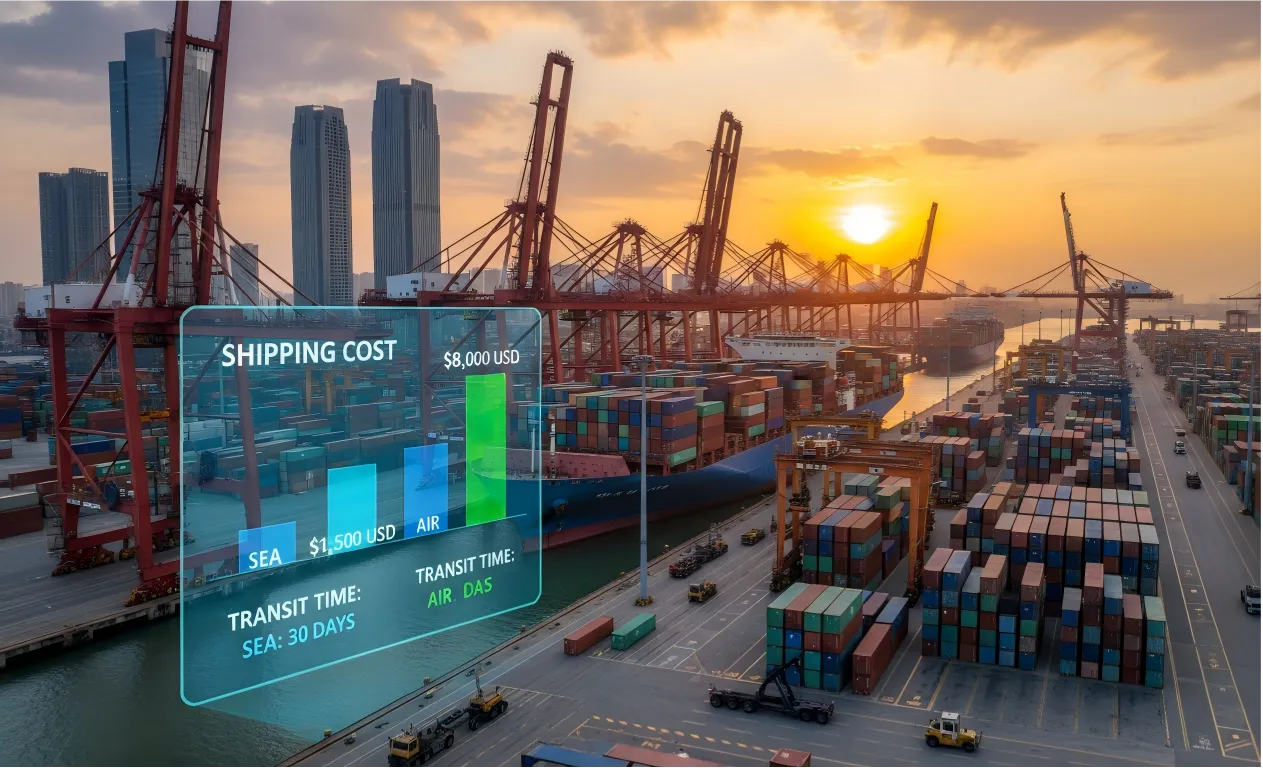
As a freight forwarder with over a decade of experience navigating the complex waters of global trade, AllBestShippinghas helped thousands of clients optimize their supply chains. We have seen it all: from the port congestions of 2021 to the rate fluctuations of today. In this comprehensive guide, we will break down the most cost-effective shipping methods, analyze the factors that drive up costs, and provide actionable, expert strategies to slash your shipping bills in 2026. We will look beyond the simple price per kilogram and explore the "total cost of ownership" for your logistics, ensuring you get the best value for every dollar spent.
Quick Comparison: Which Method Fits Your Budget?
Before diving into the granular details, let's look at a high-level comparison of the available shipping options. The "cheapest" method is not a fixed answer; it depends heavily on the weight, volume, and urgency of your cargo.
| Shipping Method | Ideal Weight | Transit Time | Cost Level | Best For |
|---|---|---|---|---|
| Sea Freight (LCL) | 2 CBM - 15 CBM | 25-40 Days | Low | Small to medium bulk shipments |
| Sea Freight (FCL) | > 15 CBM | 20-35 Days | Lowest | Large volume, full containers |
| Air Freight | 100kg - 500kg | 5-10 Days | High | Urgent, high-value goods |
| Express (Courier) | < 100kg | 3-5 Days | Very High | Samples, very small parcels |
| DDP Shipping | Various | 15-25 Days (Sea) | Medium-Low | E-commerce, avoiding hassle |
Deep Dive: The 4 Main Shipping Methods
To truly master the Cheapest Way to Ship from China to USA, you need to understand the mechanics of each method.
1. Sea Freight: The Undisputed King of Cost Savings
If your priority is purely price and you have time on your side, Sea Freight is almost always the winner. It is the backbone of global trade, handling over 90% of the world's cargo.
FCL (Full Container Load)
For larger shipments, FCL is the most economical choice. You rent the entire container, which typically comes in three sizes:
- 20ft Container: Holds about 33 cubic meters (CBM) of cargo. Best for heavy goods like machinery or metals.
- 40ft Container: Holds about 67 CBM. The standard for most consumer goods.
- 40ft HQ (High Cube): Holds about 76 CBM. Ideal for bulky but light items like furniture or textiles.
Even if you don't fill a container completely, FCL can often be cheaper than LCL once you exceed roughly 15 CBM, because the flat rate for the container is often lower than the cumulative per-CBM charges of LCL.
- Pro Tip: In 2026, we are seeing a "tsunami" of new vessel capacity entering the market. Analysts predict ocean freight rates could drop by another 15-30%, with spot rates for a 40ft container to the US West Coast potentially hovering around
2,650. This makes FCL an even more attractive option.
LCL (Less than Container Load)
If you don't have enough cargo to fill a container, LCL allows you to share space with other shippers. You only pay for the volume (CBM) you use.
- The Process: Your goods are collected at a warehouse (CFS - Container Freight Station), consolidated with other cargo, and loaded into a container. At the destination, the process is reversed.
- Warning: While the ocean freight rate might look low (sometimes even $0/CBM in promotional offers), LCL shipments often come with higher destination charges (CFS fees, release fees). Always compare the "all-in" cost.
2. Air Freight: Speed at a Premium
Air Freight is significantly faster than sea freight but comes with a much higher price tag.
- Standard Air Freight: Airport-to-Airport service. You or your agent must handle customs and trucking at both ends.
- Chargeable Weight: Air freight is calculated based on the greater of actual weight or volumetric weight (Volume / 6000). If you are shipping pillows, you will pay for the space they take up, not just their lightness.
- When to use it: When the cost of stock-outs exceeds the cost of shipping. If you have high-value electronics or need to replenish Amazon FBA inventory urgently for Q4, air freight is a necessary investment.
- Cost Sweet Spot: Air freight becomes competitively priced for shipments between 150kg and 500kg. Below this, Express is often easier; above this, Sea Freight is much cheaper.
3. Express Shipping: Convenience for Small Parcels
For shipments under 100kg-150kg, international couriers like DHL, FedEx, and UPS are often the Cheapest Way to Ship from China to USA when you factor in the "hassle costs."
- Why? They offer door-to-door service with customs clearance included (for low values). There are no complex documentation fees, broker bonds, or destination handling charges.
- The "Zone" Factor: Rates depend on the zone. Shipping to a major city hub (like New York or Los Angeles) might be cheaper than a remote address.
- Strategy: Use Express for samples, prototypes, and initial product launches to test the market quickly before committing to bulk sea shipments.
4. DDP (Delivered Duty Paid): The "All-In" Solution
Door-to-Door Shipping using DDP terms is becoming increasingly popular for e-commerce sellers, especially those shipping to Amazon FBA.
- How it works: The freight forwarder quotes you a flat price per kg (e.g., "Sea Shipping DDP to Amazon FBA: $1.5/kg"). This price includes pickup, sea freight, export declaration, US customs clearance, duty payment, and final delivery via truck or UPS/FedEx.
- Hidden Savings: While the per-kg rate might seem higher than raw port-to-port ocean rates, it eliminates the risk of "surprise" fees at the destination, such as demurrage, detention, or unexpected exam fees. It provides budget certainty.
Key Factors That Inflate Your Shipping Costs
Finding the cheapest rate isn't just about picking a method; it's about optimizing the variables that carriers use to calculate your bill.
1. Dimensional Weight (The "Air" Tax)
Carriers don't just weigh your cargo; they measure it. If your goods are light but bulky (like pillows or bubble wrap), you will be charged based on volumetric weight.
- Formula: Length (cm) x Width (cm) x Height (cm) / 6000 (for Express) or 5000 (for Air Freight).
- Solution: Optimize your packaging. Shaving a few centimeters off your box size can save hundreds of dollars. Work with your supplier to nest products or use vacuum packaging.
2. Choosing the Right Port: East Coast vs. West Coast
The US is a massive country. Shipping to the West Coast (Los Angeles/Long Beach) is faster (14-20 days) and cheaper than shipping to the East Coast (New York/Savannah, 30-45 days) via the Panama Canal.
- The "Land Bridge" Strategy: Many shippers ship to LA/LB and then truck or rail (IPI) the goods to the inland or East Coast. However, during rail congestion, shipping directly to the East Coast might be more reliable despite the longer transit time.
3. Customs Duties and Taxes
Import duties are a tax collected by the US government (CBP). They are based on the HS Code of your product.
- Section 301 Tariffs: Many Chinese goods are still subject to additional tariffs (often 25%) under Section 301.
- Tip: Customs Clearance expertise is vital here. Misclassifying your goods can lead to overpayment of duties or hefty fines. A good forwarder will help you find the correct HS code to ensure compliance while minimizing duty liability legally.
4. Hidden Fees and "Accessorials"
The quote you get often isn't the final bill if you aren't careful. Watch out for:
- Port Congestion Surcharges (PCS): Common during peak seasons.
- General Rate Increases (GRI): Carriers raising prices monthly.
- Chassis Fee: Renting the wheels to move the container.
- Pier Pass / TMF: Fees for using the port during peak hours.
- AMS / ISF Filing Fees: Mandatory security filings for US Customs.
- Customs Bond: You need a continuous bond (annual) or single entry bond to import.
6 Proven Strategies to Reduce Shipping Costs
As an expert freight forwarder, here are the insider strategies I recommend to my clients to secure the Cheapest Way to Ship from China to USA:
1. Consolidate Your Shipments
If you source from multiple suppliers, do not ship separate small batches. Use Warehouse Services to collect goods from Supplier A, B, and C, consolidate them into one larger shipment, and ship them together. One 500kg shipment is much cheaper than five 100kg shipments because you save on fixed costs like document fees and customs entry fees.
2. Ship During "Shoulder" Seasons
Freight rates skyrocket during peak seasons (Aug-Oct for holiday retail, and Jan-Feb before Chinese New Year).
- Action: Plan your inventory to ship in March-June or November when rates are typically lower. Avoid the "pre-CNY rush" where rates can double.
3. Optimize Packaging Density
Don't pay to ship air. Work with your supplier to nest products or use vacuum packaging. Ensure cartons are sturdy to prevent damage, but as compact as possible. If you are shipping furniture, ensure it is "knock-down" (flat-packed) rather than assembled.
4. Buy "Cargo Insurance"
It sounds counterintuitive to spend money to save money, but Cargo Insurance is negligible cost (often <0.3% of value) compared to the total loss of a shipment due to general average (where you share the cost of a ship's rescue) or damage. One container lost overboard without insurance can bankrupt a small business.
5. Mix Your Modes (Hybrid Shipping)
Need stock now but sea freight is too slow? Don't send everything by air.
- The 10/90 Rule: Ship 10% of your stock via Air Freight to keep sales running, and send the remaining 90% via Sea Freight to replenish stock at a lower cost. This balances cash flow and inventory availability.
6. Choose the Right Partner
Don't just look for the cheapest rate on a spreadsheet. Look for a partner who offers transparency. A "cheap" forwarder who hits you with $500 in hidden destination fees is not cheap. At AllBestShipping, we provide detailed quotes with no hidden fees, so you know exactly what you are paying for.
Advanced Strategies: Choosing the Right Courier and Incoterm
To squeeze every last cent out of your shipping budget, you need to look at the micro-details.
Battle of the Couriers: DHL vs. FedEx vs. UPS
When shipping small parcels (under 100kg), not all couriers are created equal.
- DHL: Historically the strongest in Asia. often offers the best rates and fastest transit times from China to the USA. They have massive hubs in Hong Kong and Shanghai.
- FedEx: Often very competitive on "economy" services (International Economy) for slightly heavier shipments (e.g., 50kg-100kg). If you can wait 5-7 days instead of 3, FedEx IE is a great money-saver.
- UPS: Strongest domestic network in the USA. If your final delivery is to a rural US address, UPS might have lower "remote area surcharges" than DHL.
- Strategy: Don't stick to one account. A forwarder like AllBestShipping has volume accounts with ALL of them and will automatically route your package via the cheapest carrier for that specific weight and destination.
The Incoterm Trap: CIF vs. FOB
Many new importers let their Chinese supplier handle the shipping (CIF terms) because it seems easy. This is often a mistake.
CIF (Cost, Insurance, and Freight): Your supplier hires the forwarder. They often choose the cheapest, lowest-quality carrier to save their money, but bill you a premium. Even worse, the destination agent might hold your cargo hostage with inflated "handover fees."
FOB (Free on Board): You hire the forwarder (like AllBestShipping). Your supplier just delivers to the port.
- Why it's cheaper: You control the freight rate. You get a transparent quote. You avoid hidden kickbacks between the supplier and their local agent.
- Verdict: Switching from CIF to FOB is often the single easiest way to reduce your landed cost by 10-15%.
Why Choose AllBestShipping?
Navigating the logistics landscape can be overwhelming. AllBestShipping isn't just a service provider; we are your logistics partner.
- Experience: 10+ years in the industry, handling thousands of TEUs annually.
- Network: Strong relationships with major carriers (Cosco, Maersk, MSC) and airlines, giving us access to preferential rates and guaranteed space.
- Services: From Shipping from China to complex Project Cargo handling.
- Reliability: We handle the headaches of Customs Clearance and documentation so you can focus on growing your business.
- Transparency: We believe in long-term relationships, not quick profits. Our quotes are clear, detailed, and honest.
Frequently Asked Questions (FAQ)
1. What is the overall cheapest shipping method from China to the USA?
Sea freight (ocean freight) is the most economical option for bulk cargo. It offers the lowest rates per cubic meter, especially when shipping large quantities via Full Container Load (FCL). For smaller but still heavy shipments, LCL is the budget-friendly choice.
2. Which shipping method is best for small parcels under 150 kg?
For small parcels or e-commerce orders under 150 kg, express shipping (like DHL, UPS) or premium air freight is often the most convenient and cost-effective choice when you factor in minimum charges for sea freight. While the per-kg rate is higher, you save on minimum documentation and handling fees that sea freight incurs.
3. What is DDP shipping and is it cheaper?
Delivered Duty Paid (DDP) is a service where the forwarder handles all costs, including duties and taxes, in a single all-in price. While it may look more expensive upfront, it is often cheaper overall for small-to-mid loads because it eliminates "surprise" destination fees, exam fees, and storage costs. It effectively transfers the risk of cost overruns to the forwarder.
4. How can I avoid hidden costs?
Request detailed "all-in" quotes. Avoid "too good to be true" rates that often exclude destination handling charges (DTHC), chassis fees, or peak season surcharges. Using a reputable forwarder like AllBestShipping ensures transparency. Always ask: "Is this the final price to my door, or are there destination fees?"
5. How do holidays like Chinese New Year affect shipping rates?
During peak seasons and holidays like Chinese New Year, demand spikes, causing freight rates to surge and capacity to tighten. Factories rush to ship before closing, and carriers impose Peak Season Surcharges (PSS). We recommend booking shipments at least 3-4 weeks in advance during these periods to avoid premium prices and rolled cargo.
6. What are the projected shipping cost trends for 2026?
Experts forecast that ocean freight rates may drop by another 15–30% in 2026 due to a massive influx of new container vessel capacity. Spot rates for a 40ft container to the US West Coast are expected to stabilize at lower levels compared to the pandemic highs, potentially offering a buyer's market for importers.
7. Why should I use a freight forwarder instead of shipping directly with a carrier?
Freight forwarders can negotiate better rates with carriers through volume discounts and handle the entire logistics process, including complex customs clearance. Carriers often do not deal with small shippers directly or provide customer service. A forwarder acts as your travel agent for cargo, solving problems and finding the best routes.
Ready to save on your next shipment? Contact AllBestShipping today for a free, transparent quote and let us help you find the Cheapest Way to Ship from China to USA tailored to your specific needs.