Shipping from Guangzhou to Netherlands: The Complete 2026 Guide (Costs, Transit Times & Customs)
Shipping from Guangzhou to Netherlands is one of the busiest trade lanes connecting South China's manufacturing belt to Europe's largest logistics hub. Yet most guides treat this route as generic "shipping from China to Europe," costing importers thousands in hidden fees, compliance mistakes, and missed sailing schedules. In this guide, we break down every shipping mode from Guangzhou and the Pearl River Delta to the Netherlands — with real cost samples, Dutch customs compliance steps, and practical scenarios you can match to your own shipment. At AllBestShipping, we manage shipping from China to the Netherlands every week from our base in Shenzhen. Here is what actually matters.
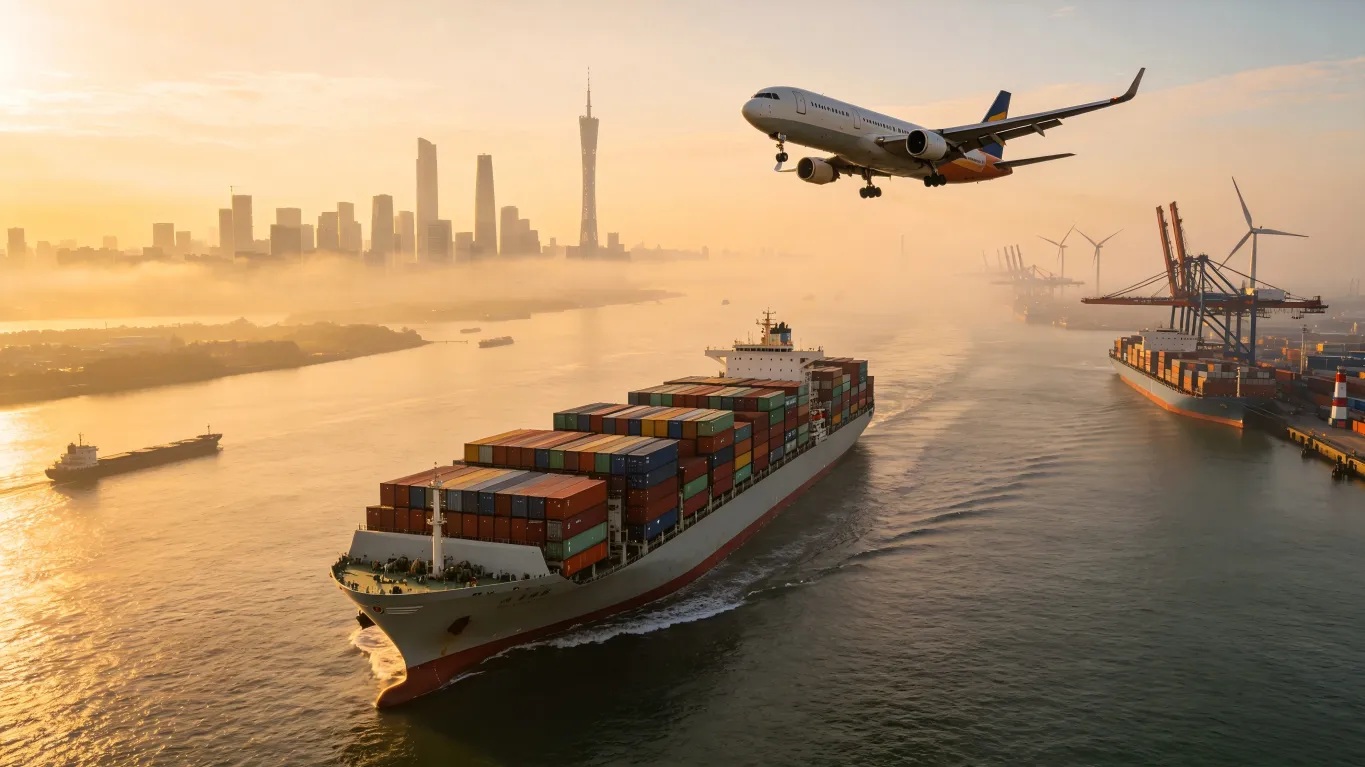
Your Shipping Options from Guangzhou to the Netherlands
Not all cargo is the same, and not every shipping mode fits every shipment. Before you request a quote, you need to understand the five primary ways to move goods from Guangzhou to the Netherlands.
| Shipping Mode | Transit Time | Cost Level | Best For |
|---|---|---|---|
| Sea Freight (FCL) | 25–35 days | Lowest | Bulk shipments over 13–15 CBM |
| Sea Freight (LCL) | 30–40 days | Low | Small to medium cargo, 1–13 CBM |
| Rail Freight (FCL/LCL) | 14–18 days | Medium | Mid-urgency cargo; balanced speed and cost |
| Air Freight | 3–5 days | High | Urgent, high-value, or lightweight cargo |
| Express Courier (DDP) | 2–5 days | Premium | Samples, small parcels under 100 kg |
| Door-to-Door DDP | Variable | All-inclusive | Hands-off importers without customs experience |
How to Choose the Right Mode
The decision comes down to four variables: cargo volume (CBM), weight, urgency, and budget. If you are shipping a full container of furniture from Foshan, sea FCL is almost always the cheapest option. If you are restocking Amazon FBA inventory before a holiday sales window, air freight or express DDP may be the only way to avoid stockouts. For mid-urgency electronics, rail freight offers a compelling middle ground.
In practice, many shippers also combine modes. A common example: truck cargo from a Guangzhou supplier to Shenzhen Yantian Port, then load onto a direct Rotterdam vessel. This short feeder leg (2–4 hours by truck) often unlocks better sailing schedules and lower ocean rates than departing directly from Guangzhou Nansha. We apply the same consolidation logic on other lanes, such as shipping from Guangzhou to USA.
Sea Freight from Guangzhou to the Netherlands
Sea freight remains the dominant mode for shipping from Guangzhou to Netherlands, and for good reason. When you are moving large volumes, nothing beats the per-unit economy of a container vessel.
Departure from Guangzhou: Nansha Port vs. Nearby Alternatives
Guangzhou's primary deep-water port is Nansha Port (CNGGZ). It offers direct Europe services, but the sailing frequency and carrier selection are more limited compared to Shenzhen.
For many of our clients in the Pearl River Delta, the better option is to truck cargo to Shenzhen Yantian or Shekou (2–4 hours from Guangzhou/Foshan). Yantian has more weekly sailings to Rotterdam, more carrier competition, and often better contract rates. The small trucking cost is usually offset by lower ocean freight and faster transit. In one recent shipment, we moved a 40'HQ of furniture from Foshan to Yantian by truck and saved the client roughly $320 on the ocean rate compared to Nansha departure — net of the feeder cost.
At AllBestShipping, we offer free warehousing and consolidation in both Guangzhou and Shenzhen. If you have cargo from multiple suppliers around the PRD, we can collect, consolidate, and load everything at the port that gives you the best rate and schedule.
FCL vs. LCL: Which One Fits Your Cargo?
Understanding when to book a Full Container Load (FCL) versus Less than Container Load (LCL) is critical for controlling costs.
| Container Type | Internal Volume | Max Payload | Best For |
|---|---|---|---|
| 20' GP | 33.2 CBM | ~27,000 kg | Small to medium bulk shipments |
| 40' GP | 67.7 CBM | ~27,000 kg | Large volume shipments |
| 40' HQ | 76.3 CBM | ~27,000 kg | High-cube cargo (furniture, lightweight goods) |
FCL means you rent the entire container. It is sealed at your supplier's warehouse or at the port and opened only at destination. This minimizes handling damage and is almost always cheaper than LCL once you exceed 13–15 CBM.
LCL means your cargo shares a container with other shippers. You pay only for the space you use (per CBM or per ton, whichever is greater). LCL is ideal for smaller shipments, but remember that consolidation and deconsolidation add 5–10 days to total transit.
Transit Times and Routes
| Route | Transit Time | Notes |
|---|---|---|
| Guangzhou Nansha → Rotterdam | 29–33 days | Direct service; fewer sailings |
| Guangzhou Nansha → Amsterdam | 30–35 days | Direct service |
| Shenzhen Yantian → Rotterdam | 26–30 days | More carrier options; often faster |
| Via Singapore/Port Klang | 33–40 days | Transshipment; lower rates possible |
Major carriers serving this lane include MSC, Maersk, COSCO, CMA CGM, and ONE. Most Asia-Europe services transit the Suez Canal, though some carriers maintain contingency routing around the Cape of Good Hope when necessary. This same corridor handles large volumes for sea freight from China to UK and other North European destinations.
Cost Breakdown (2026 Estimates)
| Service | Off-Peak Rate | Peak Season Rate |
|---|---|---|
| 20' GP FCL | $1,800 – $2,500 | $2,800 – $4,000 |
| 40' HQ FCL | $2,800 – $3,800 | $4,500 – $6,500 |
| LCL (per CBM) | $35 – $65 | $55 – $85 |
Hidden costs to factor in: - Origin THC (Terminal Handling Charge) at Nansha or Yantian - BAF/CAF fuel and currency adjustment surcharges - Peak Season Surcharge (August–October) - Destination THC at Rotterdam - Documentation fees and customs broker charges - EU ETS carbon surcharge — under the European Commission's emissions trading rules, carriers must surrender allowances for 100% of verified emissions in 2026, adding roughly $15–$50 per TEU
Sea Freight Documentation Checklist
Before your cargo sails, ensure you have: - Bill of Lading (B/L) — the contract of carriage and title document - Commercial Invoice — stating goods value, HS codes, and Incoterms - Packing List — detailing contents per carton - Certificate of Origin — if claiming preferential duty rates - ICS2 Pre-Lodgement — security filing required before loading for EU-bound cargo
Air Freight from Guangzhou to the Netherlands
When speed matters more than cost, air freight from China to the Netherlands is the answer. Guangzhou Baiyun International Airport (CAN) is South China's second-busiest cargo hub, offering direct and connecting services to Amsterdam Schiphol (AMS).
Guangzhou Baiyun (CAN) to Amsterdam Schiphol (AMS)
Direct freighter and belly-hold cargo flights connect Guangzhou to Amsterdam in approximately 12 hours and 50 minutes. Total door-to-airport transit, including pickup, export customs, and airline handling, typically runs 3 to 5 days.
Carriers operating this lane include China Southern Airlines, China Eastern, KLM Cargo, Qatar Airways Cargo, and Turkish Airlines. Alternative departures from nearby Shenzhen (SZX) and Hong Kong (HKG) expand options during peak seasons.
Air Cargo vs. Express Courier
| Service Type | Weight Range | Cost Range | Best For |
|---|---|---|---|
| Air Cargo (Economy) | 100 kg+ | $4.50 – $7.50/kg | Medium-volume urgent shipments |
| Express (DHL/FedEx/UPS) | Under 100 kg | $6.00 – $12.00/kg | Small parcels, samples, documents |
Airlines bill by chargeable weight — the greater of actual weight or volumetric weight. Use this formula:
Volumetric Weight (kg) = Length × Width × Height (cm) ÷ 6000
For example, a carton measuring 80 × 60 × 50 cm has a volumetric weight of 40 kg. If the actual weight is only 25 kg, the airline charges for 40 kg.
Cost Sample: 500 kg Electronics from Guangzhou to Amsterdam
| Cost Component | Amount (USD) |
|---|---|
| Air cargo freight (economy) | $2,500 – $3,500 |
| Fuel surcharge | $200 – $350 |
| Security screening | $50 – $100 |
| AMS handling | $150 – $250 |
| Customs clearance | $100 – $200 |
| Total (freight + handling) | $3,000 – $4,400 |
An express DDP service for the same cargo would run $4,000–$5,500 all-in, but includes door-to-door delivery and duty handling.
When Air Freight Makes Sense from Guangzhou
- Electronics restocks where missing a sales window costs more than the freight premium
- Fashion samples and seasonal product launches
- High-value goods where inventory carrying cost exceeds air freight cost
- Emergency spare parts for manufacturing lines in Europe
Real-world example: Last November, an electronics seller in Rotterdam faced a stockout two weeks before Black Friday. We air-shipped 280 kg of accessories from Guangzhou Baiyun to Amsterdam in four days door-to-door. The freight cost was higher than sea, but the revenue from avoiding the stockout paid for the air freight ten times over.
Rail Freight from Guangzhou to the Netherlands
Rail freight has emerged as the "goldilocks" option for China-Europe trade: faster than sea, cheaper than air, and with predictable schedules. For shipping from Guangzhou to Netherlands, rail is increasingly viable, though it requires understanding how South China cargo feeds into the main rail network.
How South China Cargo Reaches the China-Europe Rail Network
Direct departures from Guangzhou to Europe exist, but they are less frequent than departures from Yiwu, Xi'an, or Chengdu. In practice, most Guangzhou-area cargo is trucked to a major rail hub (24–48 hours) before boarding the train.
The primary corridor to the Netherlands is the Middle Corridor (New Eurasian Land Bridge):
China (Chengdu/Xi'an/Yiwu) → Kazakhstan → Russia → Belarus → Poland → Germany → Netherlands
Key border crossings include Dostyk (China-Kazakhstan) and Brest (Belarus-Poland). Delays at these crossings are common and can add 1–3 days to published transit times. From our experience, the Dostyk bottleneck tends to worsen in Q4 when westbound rail volume peaks, so we book rail slots at least two weeks ahead during peak season.
Transit Times and Costs
| Service | Transit Time | Cost (2026 Estimates) |
|---|---|---|
| 20' FCL to Netherlands | 14–18 days (including feeder) | $3,200 – $4,800 |
| 40' FCL to Netherlands | 14–18 days | $4,500 – $6,800 |
| LCL (per CBM) | 16–20 days | $90 – $140/CBM |
Rail vs. Sea vs. Air: Which Wins?
Rail is your best choice when: - Sea freight is too slow for your inventory cycle - Air freight would eat your entire product margin - You need predictable delivery windows (rail schedules are more reliable than ocean) - Your cargo is medium-value consumer goods, electronics, or auto parts
Rail limitations: - Not suitable for oversized (OOG) or extremely heavy cargo - Last-mile trucking is required from European rail terminals (e.g., Tilburg, Duisburg, Hamburg) to your final destination - Sanctions screening on the Northern Corridor has made route planning more complex
Rail Documentation
- Rail Waybill (CIM) — the rail equivalent of a Bill of Lading
- Commercial Invoice, Packing List, Certificate of Origin
- EORI Number — required for EU import clearance
Door-to-Door and DDP Shipping from Guangzhou to the Netherlands
DDP (Delivered Duty Paid) is the most hands-off way to import from China. Under DDP, your freight forwarder handles everything from pickup at the Guangzhou factory to delivery at your Dutch warehouse — including export customs, international freight, import customs, duties, and VAT. DDP is the most complete form of door-to-door shipping available.
What DDP Actually Covers (and What It Does Not)
Included in DDP: - Pickup in Guangzhou/PRD - Export customs clearance in China - International freight (sea, air, or rail) - Import customs clearance in the Netherlands - Payment of duties and 21% Dutch VAT - Last-mile trucking to your door
Not included in DDP: - Product compliance — CE marking, testing, certification - EPR registration — packaging, WEEE, batteries - Post-delivery warehousing or distribution
Critical risk warning: For true DDP to work, your Chinese supplier or freight forwarder must be EU VAT-registered. If they are not, the shipment may stall at Dutch customs, or you may receive an unexpected VAT bill. At AllBestShipping, our DDP service includes verified EU VAT handling, so you never face surprise charges.
Incoterms 2020: Choosing the Right Term
| Incoterm | Who Pays Freight | Who Handles Import Customs | Best For |
|---|---|---|---|
| EXW | Buyer | Buyer | Experienced importers who want full control |
| FOB | Buyer | Buyer | Most common for sea freight; you choose the carrier |
| CIF | Seller | Buyer | Seller arranges ocean freight; risky for hidden fees |
| DAP | Seller | Buyer | Seller delivers to your door; you clear customs |
| DDP | Seller | Seller | First-time importers; e-commerce sellers; small parcels |
FOB Shenzhen/Guangzhou remains the most popular choice for experienced B2B importers. It gives you control over the ocean freight contract and destination charges. DDP is ideal if you lack a Dutch customs broker or EU VAT structure.
When DDP Is Worth It (and When It Is Not)
Choose DDP when: - You are a first-time importer without a customs broker in the Netherlands - You run an e-commerce business and need predictable landed costs - You are shipping small parcels or samples
Avoid DDP when: - You have your own Dutch VAT number and customs broker - You ship large volumes where DAP plus self-clearance saves money - You want to control the carrier and routing selection
Customs Clearance and Import Compliance in the Netherlands
The Netherlands is one of the strictest EU customs jurisdictions. Getting your documentation right before cargo arrives is not optional — it is the difference between a 24-hour clearance and a two-week detention.
Before Your Cargo Arrives: Registration and Classification
EORI Number: Every commercial importer into the EU needs an Economic Operators Registration and Identification (EORI) number. For Dutch clearance, this must start with NL. Apply through the Dutch Tax and Customs Administration (Belastingdienst). Processing typically takes 1–2 weeks.
HS Codes: Classify your goods using the EU TARIC database. An incorrect HS code triggers inspections, fines, and storage fees. If you are unsure, ask your freight forwarder to classify before shipping.
ICS2 (Import Control System 2): For sea and air cargo, a security filing with detailed consignee data and HS codes must be submitted before loading in China. Non-compliance means your cargo will not be accepted for EU entry.
PortBase: For maritime arrivals, the Dutch Port Community System requires electronic declarations. Your forwarder or customs broker should handle this.
Calculating Duties and VAT
| Cost Component | Rate | Calculation Base |
|---|---|---|
| Customs Duty | 0% – 17%+ | CIF value × duty rate (varies by HS code) |
| Import VAT (BTW) | 21% | (CIF value + duty) × 21% |
| Customs Processing | €30 – €80 | Fixed fee per declaration |
Sample calculation:
You import machinery valued at $10,000 CIF with HS code 8479. - Customs duty: $0 (many industrial machines enter duty-free) - Import VAT: ($10,000 + $0) × 21% = $2,100 - Total due at customs: $2,100
Article 23 VAT Deferment: Regular importers can apply for deferred VAT accounting. Instead of paying 21% at customs, you declare it on your periodic VAT return. This improves cash flow but requires Dutch VAT registration.
Required Documents for Dutch Customs
- Commercial Invoice (in English, with accurate values)
- Packing List (matching invoice line items)
- Bill of Lading, Air Waybill, or Rail Waybill
- Certificate of Origin (if claiming preferential rates)
- CE marking documentation (for regulated products)
- EORI certificate
Product Compliance: CE Marking and EPR
CE Marking: Required for electronics, toys, machinery, medical devices, and construction products. Dutch market surveillance authorities actively check imports. If your product lacks valid CE documentation, it will be destroyed or returned at your expense.
EPR Registration: The Netherlands enforces Extended Producer Responsibility for: - Packaging materials - Electrical and electronic equipment (WEEE) - Batteries and accumulators
You must register with a Dutch producer responsibility organization and report volumes. Non-compliance blocks customs clearance.
Customs Inspection Lanes: Green, Orange, and Red
Dutch customs use a risk-based system: - Green Lane: Automatic clearance; no inspection - Orange Lane: Document check; cargo may proceed after verification - Red Lane: Full physical inspection; delays of 2–10 days
How to stay in the green lane: - Use accurate, consistent HS codes across all documents - Ensure consignee history is clean (no past violations) - Work with a forwarder who has AEO (Authorized Economic Operator) status - Pre-lodge declarations accurately and on time
Insider tip: Dutch customs flag inconsistencies between your commercial invoice and packing list more aggressively than many other EU jurisdictions. Even a minor mismatch in carton count or gross weight can push you from green to orange. We always run a three-point check (invoice, packing list, B/L) before lodging the ENS declaration.
Costs Breakdown: What You Will Actually Pay
Generic rate tables do not help you budget. Here are realistic, all-in cost scenarios for shipping from Guangzhou to Netherlands in 2026. Note: these figures are market estimates based on our recent quotations and carrier contracts. Actual rates vary with fuel indexes, seasonal capacity, and your specific cargo profile. Always request a formal quote before booking.
Sample All-In Cost Scenarios
| Scenario | Mode | Volume | All-In Cost (USD) | Transit Time |
|---|---|---|---|---|
| B2B Machinery | Sea FCL 40'HQ | 65 CBM | $4,500 – $6,500 | 28–32 days |
| E-commerce Restock | Air Cargo | 300 kg | $1,800 – $2,500 | 4–5 days |
| SME Furniture | Rail LCL | 8 CBM | $1,200 – $1,800 | 16–20 days |
| Amazon FBA Shipment | Air Express DDP | 150 kg | $1,500 – $2,200 | 5–7 days |
These figures include origin charges, freight, fuel surcharges, destination handling, and standard customs clearance. They do not include product compliance testing, EPR registration, or inland warehousing.
Hidden Costs That Catch Importers Off Guard
- Origin THC at Nansha or Yantian — often $100–$300 per container
- BAF/CAF — fluctuates monthly with fuel prices and exchange rates
- Peak Season Surcharge — carriers add $200–$800 per container during Aug–Oct
- Rotterdam destination THC — €150–€300 per container
- Customs inspection fees — €200–€500 if your shipment hits the red lane
- Demurrage and detention — daily charges if you do not clear and return containers on time
- EU ETS carbon surcharge — now at 100% of verified emissions in 2026
How to Get an Accurate Quote
Provide your forwarder with: 1. Exact cargo dimensions and weight per carton 2. Total volume (CBM) or container size needed 3. HS code (or product description for classification) 4. Pickup address (factory or warehouse) 5. Delivery address (warehouse, port, or Amazon FC) 6. Preferred Incoterm (FOB, EXW, DDP, etc.)
Quotes vary because forwarders hold different carrier contract tiers, fuel indexes change weekly, and peak season capacity is finite. Always request quotes 2–4 weeks before your desired shipping date. If you are new to international logistics, read our guide on how to ship from China for a step-by-step overview.
Amazon FBA and E-Commerce Shipping from Guangzhou to the Netherlands
The Netherlands is a strategic Amazon EU marketplace, and Dutch fulfillment centers serve customers across Benelux and beyond. If you are shipping from Guangzhou to Amazon FBA in the Netherlands, your logistics strategy needs to account for Amazon's strict inbound requirements.
Netherlands FBA Warehouse Network
Amazon operates major fulfillment centers near: - Amsterdam (Schiphol area) - Rotterdam (port logistics zone) - Venlo (near German border — popular for EU-wide distribution) - Eindhoven
Routing strategy: - Air to AMS for urgent restocks and small parcels - Sea or rail to Rotterdam + trucking for bulk inventory replenishment - Express DDP for initial test shipments or seasonal surges
FBA Prep from Guangzhou
Before cargo leaves China, ensure it meets Amazon EU requirements:
- Labeling: Each unit needs an FNSKU label. Outer cartons need "Made in China," suffocation warnings (for polybags), and carton content labels.
- Palletization: EU standard pallets are 120 × 80 cm (4-way entry). Amazon requires pallets to be stackable and wrapped securely.
- Carton limits: Maximum 23 kg per carton unless marked "Heavy Package." Maximum carton dimensions apply per FC.
At AllBestShipping, our Guangzhou warehouse offers FBA prep services including labeling, repacking, palletization, and quality inspections before export.
VAT and EORI for E-Commerce Sellers
Every Amazon EU seller needs: 1. EORI number — for customs clearance 2. Dutch VAT number — for VAT reporting 3. OSS registration (optional) — if you sell to multiple EU countries and want to report VAT in one place
Under DDP, your forwarder pays import VAT at customs. If you are VAT-registered, you can reclaim this via your VAT return. If you are not registered, DDP effectively shifts the VAT burden to your forwarder — which is fine, but it inflates your per-unit landed cost.
Electronics and Furniture: Product-Specific Tips
Electronics from Guangzhou: - CE marking is mandatory before import - WEEE registration required for electrical goods sold in the EU - Lithium batteries need UN38.3 test reports for air and rail transport - REACH compliance for substances of very high concern (SVHCs)
Furniture from Foshan/Guangzhou: - EPR packaging registration required - REACH compliance for treated wood, upholstery foams, and coatings - Large-item delivery appointments may be needed for non-FBA shipments - Consider LCL sea freight or rail LCL for cost-effective bulk transport
Seasonal Planning and Risk Management
Shipping is not static. Rates, capacity, and transit times fluctuate throughout the year. Planning around these cycles can save thousands.
Peak Season Calendar
| Period | Impact | Action Required |
|---|---|---|
| Pre-Chinese New Year (Jan–Feb) | Factories close 2–3 weeks; rates spike | Book 4–6 weeks ahead |
| Q4 Holiday Rush (Aug–Oct) | Rates up 20–40%; space shortages | Lock FCL contracts early |
| Post-CNY (Mar–Apr) | Backlog clearance; rates normalize | Good window for flexible shipments |
| Summer Lull (Jun–Jul) | Lowest rates of the year | Ideal for non-urgent inventory |
Current Route Risks and Mitigation
Red Sea / Suez Canal Contingency: While most services currently transit Suez, geopolitical instability can force carriers to reroute via the Cape of Good Hope, adding 7–10 days. Monitor carrier advisories and build buffer stock for critical inventory.
EU ETS Carbon Surcharge: The EU Emissions Trading System now requires carriers to cover 100% of verified emissions in 2026. This adds roughly $15–$50 per TEU to base ocean rates and will continue rising.
Blank Sailings: Carriers periodically cancel sailings to manage capacity and stabilize rates. If your shipment is time-sensitive, confirm sailing schedules 2 weeks before cargo readiness.
Rotterdam Port Congestion: As Europe's busiest port, Rotterdam experiences periodic congestion. Build 2–3 days of flexibility into your delivery timeline, especially during Q4.
Cargo Insurance for Netherlands-Bound Shipments
| Coverage Level | What's Covered | Recommended For |
|---|---|---|
| ICC A (All Risk) | All physical loss or damage except exclusions | High-value electronics; essential for all FCL |
| ICC B (Named Perils) | Fire, collision, jettison, etc. | Standard general cargo |
| ICC C (Minimal) | Major casualties only | Low-value, non-fragile bulk goods |
We recommend ICC A coverage at 110% of CIF value for Netherlands-bound shipments. LCL cargo carries higher handling risk and should always be insured.
How to Choose a Freight Forwarder for Guangzhou–Netherlands Shipments
Not all freight forwarders understand the nuances of this lane. The right partner makes the difference between a smooth shipment and a customs nightmare.
What to Look For
- Guangzhou/Shenzhen origin office: For pickup, supplier coordination, and pre-shipment inspections
- Netherlands/EU destination network: A local customs broker who understands Dutch Douane procedures
- Multi-modal capability: Sea, air, rail, and DDP under one roof
- Cargo-specific experience: Electronics, furniture, and FBA shipments have unique requirements
- Transparency: Itemized quotes with no hidden fees
- Tracking: Real-time visibility from pickup to delivery
Red Flags to Avoid
- Quotes that omit the Incoterm
- Forwarders with no physical presence in South China
- Vague cost breakdowns ("handling fee" with no explanation)
- No cargo tracking or customer portal
- Promises of unrealistically low transit times
Why AllBestShipping?
As a professional freight forwarder based in Shenzhen, China, AllBestShipping specializes in China-to-Europe logistics with deep experience on the Guangzhou–Netherlands lane.
- Local origin advantage: Direct access to Nansha Port, Yantian Port, and Baiyun Airport. Free warehousing and loading supervision in Guangzhou and Shenzhen.
- Netherlands delivery network: Customs clearance support, last-mile trucking, and Amazon FBA appointment scheduling.
- Transparent pricing: Itemized quotes with no hidden fees. You know exactly what you are paying for before cargo moves.
- Real-time tracking: Monitor your shipment from factory pickup through Rotterdam customs to final delivery.
- Multi-modal flexibility: Sea, air, rail, and DDP — we recommend the mode that fits your cargo, not the one that maximizes our margin.
Whether you are a B2B importer moving machinery, an e-commerce seller restocking Amazon FBA, or an SME shipping furniture, we tailor the solution to your timeline, budget, and compliance requirements.
FAQ: Your Top Questions Answered
How long does shipping take from Guangzhou to the Netherlands?
Sea freight takes 25–35 days, rail takes 14–18 days, air freight takes 3–5 days, and express courier takes 2–5 days. Add 2–4 days for pickup and export customs on the China side.
What is the cheapest way to ship from Guangzhou to the Netherlands?
For bulk cargo over 15 CBM, FCL sea freight is cheapest. For smaller volumes, LCL sea freight or rail LCL offers the best value. Air and express are premium options for urgent shipments.
Do I need an EORI number to import into the Netherlands?
Yes. An EORI number is mandatory for all commercial imports into the EU. For Dutch customs, it must start with NL.
What is the VAT rate for imports into the Netherlands?
The standard Dutch import VAT (BTW) is 21%, calculated on the CIF value plus customs duty.
Can I ship directly from Guangzhou to Amazon FBA in the Netherlands?
Yes. You can use air express DDP for small, urgent shipments or sea/rail + trucking for bulk inventory. Ensure proper FNSKU labeling, palletization, and EORI/VAT registration.
What documents do I need for customs clearance in the Netherlands?
Commercial invoice, packing list, bill of lading (or AWB/rail waybill), certificate of origin, CE documentation (if applicable), and your EORI number.
Is DDP shipping from Guangzhou to the Netherlands safe?
DDP is safe if your forwarder is EU VAT-registered and experienced in Dutch customs. If not, consider DAP and use your own Dutch customs broker.
Should I use Guangzhou Nansha Port or truck to Shenzhen?
Use Nansha for convenience if the sailing schedule matches your timeline. Use Shenzhen Yantian for more carrier options, competitive rates, and better Europe sailing frequency.
What is the best shipping method for electronics from Guangzhou?
Air freight for urgent or high-value electronics. Sea FCL for bulk. Rail for mid-urgency restocks. Always ensure CE marking and UN38.3 battery certifications (for lithium batteries).
Can I track my container from Guangzhou to Rotterdam?
Yes. Sea containers are tracked via the B/L or container number. Air cargo uses the AWB number. Rail shipments use the rail waybill number.
Conclusion: Your Next Step
Shipping from Guangzhou to the Netherlands does not have to be complicated. The three keys to a smooth shipment are:
- Choose the right mode — sea for bulk, air for urgency, rail for the middle ground, and DDP for hands-off convenience.
- Get the Incoterm right — FOB puts you in control; DDP simplifies everything but requires EU VAT compliance.
- Prepare for Dutch customs — accurate HS codes, CE marking, EORI registration, and EPR compliance eliminate delays.
Generic rate tables will not tell you what your shipment actually costs. Start with a realistic quote based on your cargo profile, pickup location, and delivery requirements.
Ready to ship? AllBestShipping provides free, all-in quotes for Guangzhou to Netherlands shipments with no hidden fees. We handle pickup in Guangzhou and the Pearl River Delta, export customs, international freight, Dutch customs clearance, and final delivery — so you can focus on growing your business, not managing logistics.