Shipping from Guangzhou to USA: The Ultimate Guide for Importers (Updated 2026)
Guangzhou, the pulsating heart of the Pearl River Delta, stands as a global manufacturing powerhouse. For businesses importing everything from textiles to electronics, mastering the art of Shipping from Guangzhou to USA is not just a logistical necessity—it's a strategic advantage. Whether you are a seasoned importer or launching your first product line, navigating the complexities of international freight, fluctuating rates, and customs regulations can be daunting. But it doesn't have to be.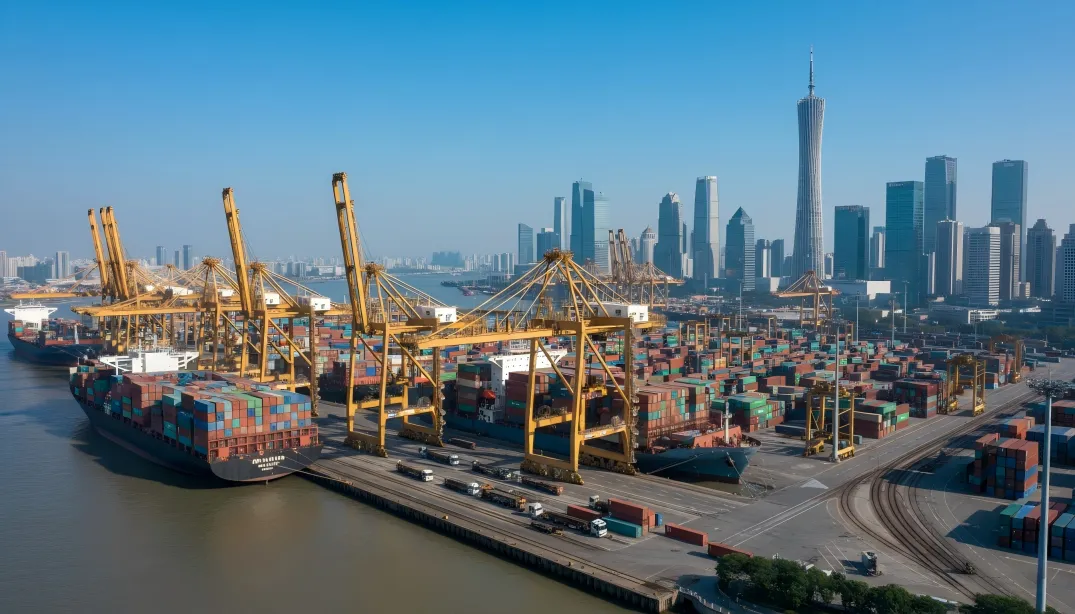
At AllBestShipping, we have managed thousands of TEUs (Twenty-foot Equivalent Units) from Guangzhou's Nansha and Huangpu ports to major US gateways. We've seen firsthand how a well-planned logistics strategy can save importers up to 20% on landed costs.
This comprehensive guide is designed to demystify the entire process. We will break down every shipping method, analyze costs and transit times, and provide actionable strategies to optimize your supply chain. By the end of this article, you will have the knowledge to make informed decisions that save you time and money, ensuring your goods arrive safely and efficiently.
1. Why Source from Guangzhou?
Guangzhou is more than just a city; it is a critical node in the global supply chain. As the capital of Guangdong province, it hosts the famous Canton Fair and serves as a hub for a diverse range of industries.
The Manufacturing Powerhouse
From the textile markets of Zhongda to the auto parts centers in Sanyuanli, Guangzhou offers an unparalleled variety of suppliers. Key industries include:
- Apparel and Textiles: A dominant sector with thousands of factories.
- Consumer Electronics: High-quality gadgets and components.
- Automotive Parts: A major export category for the US market.
- Furniture and Lighting: extensive wholesale markets catering to global buyers.
World-Class Logistics Infrastructure
The city's logistics capabilities are world-class. Guangzhou Port is one of the busiest in the world, with the Nansha Port area serving as a deep-water gateway for mega-vessels. For air cargo, Guangzhou Baiyun International Airport (CAN) is a major aviation hub, ranking among the top airports globally for cargo traffic. Its strategic location, neighboring Shenzhen and Hong Kong, allows for flexible routing options, giving importers multiple choices to optimize their shipping strategy.
2. Shipping Methods from Guangzhou to USA
Choosing the right shipping method depends on your budget, timeline, and cargo volume. Here is a detailed breakdown of the primary options based on our operational experience.
2.1 Ocean Freight
Ocean freight is the backbone of international trade, accounting for over 90% of goods shipped. It is the most cost-effective solution for large volumes. When considering Sea Freight from China to USA, you have two main options:
FCL (Full Container Load)
FCL is ideal when you have enough cargo to fill a container or want to ensure your goods are not handled until they reach the destination.
- 20ft Container: Suitable for heavy cargo (up to 25,000kg) but lower volume (approx. 28-33 CBM).
- 40ft Container: The standard for most importers, holding about 58-67 CBM.
- 40ft HQ (High Cube): Offers extra height, perfect for voluminous but light cargo (approx. 68-76 CBM).
LCL (Less than Container Load)
If you don't have enough goods to fill a container, LCL allows you to share space with other shippers. You pay only for the volume (CBM) you use. Check our LCL Shipping Guide to see if this is cost-effective for shipments between 1 CBM and 15 CBM. Pro Tip: Be wary of extremely low LCL rates; often, destination fees at the US port can be surprisingly high.
Matson / ZIM Fast Boats
For importers who need speed but find air freight too expensive, "Fast Boat" services like Matson (CLX service) or ZIM are the perfect middle ground.
- Route: Typically departs from Shanghai or Ningbo (goods are trucked from Guangzhou) and arrives directly at the Port of Long Beach.
- Advantage: High on-time reliability and dedicated terminals for faster unloading. We recommend this for e-commerce sellers needing to restock quickly before Q4.
2.2 Air Freight
When time is money, Air Freight is the answer. It is best suited for high-value, low-volume goods or urgent restocking. From our experience, air freight is generally viable when the cargo value per kg exceeds $15.
- Standard Air Freight: Airport-to-airport service. You or your forwarder handle customs and trucking. Ideal for shipments over 500kg.
- Express Air Freight: Premium services that prioritize speed, often used for critical supply chain gaps.
2.3 Express Courier
For samples, documents, or very small parcels (under 100kg), Express Couriers like DHL, FedEx, and UPS offer door-to-door delivery with integrated customs clearance. While the per-kilogram rate is high, the convenience and speed (2-5 days) are unmatched for small shipments. Note: Dimensional weight (LxWxH/5000) often applies, so package efficiently.
2.4 DDP (Delivered Duty Paid) Shipping
DDP Shipping is a favorite among Amazon FBA sellers and small business owners.
Definition: The freight forwarder handles everything—shipping, export/import customs, duty payment, and final delivery to your door or warehouse.
Modes:
- Air DDP: Fast but pricey.
- Sea DDP: Economical but slower.
Benefit: You pay one all-inclusive price, eliminating the headache of dealing with customs brokers and unpredictable duty bills. However, ensure your forwarder is compliant with US Customs to avoid seizure of goods, a rising issue in 2025.
3. Transit Time: How Long Does It Take?
Understanding transit times is crucial for inventory planning. Many importers ask How Long to Ship from China to USA? The table below outlines estimated times for door-to-door delivery.
| Shipping Method | Destination (USA) | Port-to-Port Time | Door-to-Door Time (Est.) |
|---|---|---|---|
| Ocean FCL/LCL | West Coast (LA/LB) | 18 - 25 days | 25 - 35 days |
| Ocean FCL/LCL | East Coast (NY/NJ) | 30 - 40 days | 40 - 55 days |
| Matson Fast Boat | West Coast | 11 - 12 days | 15 - 20 days |
| Standard Air Freight | Any Major Airport | 3 - 5 days | 5 - 10 days |
| Express Courier | Nationwide | N/A | 2 - 5 days |
Note: These are estimates. Weather, port congestion, and customs inspections can cause delays.
4. Shipping Costs: Rates & Factors
Freight rates are notoriously volatile, influenced by global supply and demand. However, understanding the cost components can help you negotiate better.
Key Cost Factors
Weight & Volume: Air freight is charged by "chargeable weight" (actual weight vs. volumetric weight, whichever is higher). Sea freight LCL is charged per CBM.
Incoterms: Your choice of Incoterms (e.g., EXW, FOB, CIF, DDP) dictates who pays for what.
- FOB (Free on Board): You pay for freight from the Chinese port. Recommended for better control.
- CIF (Cost, Insurance, and Freight): The supplier arranges freight, but you may face hidden costs at the destination.
Seasonality: Rates spike during peak seasons (August-October) and before Chinese New Year (January/February).
Surcharges: Look out for GRI (General Rate Increase), BAF (Bunker Adjustment Factor), and Peak Season Surcharges.
⚠️ The "Hidden Fees" Watchlist
Transparency is key. Beyond the base rate, be prepared for these potential extra costs:
- Chassis Fee:
50 per day for the trailer chassis in the US. - Demurrage & Detention: Fees charged if you don't pick up or return containers on time. We advise clearing customs before the vessel arrives to avoid this.
- Exam Fees: If CBP flags your container for X-ray or intensive exam, costs can range from
2,000+.
Estimated Cost Ranges (2025/2026 Reference)
- Sea Freight FCL:
6,000 per 40ft container (highly variable). - Sea Freight LCL:
150 per CBM. - Air Freight:
8 per kg. - Express:
10 per kg.
Disclaimer: Rates change weekly. Contact AllBestShipping for a real-time quote.
5. Key Ports & Routes
Origin: Guangzhou
- Nansha Port: The deep-water jewel of Guangzhou, capable of handling the world's largest container ships. It offers direct routes to the US West Coast.
- Huangpu Port: Located closer to the city center, it is a feeder port often used for barging goods to Hong Kong or Shenzhen for transshipment.
- Baiyun Airport (CAN): One of China's three major aviation hubs, offering extensive direct flights to US cities like Los Angeles, Chicago, and New York.
Destination: USA
- West Coast: Los Angeles (LAX/LGB) and Long Beach are the primary gateways for Asian imports, handling the bulk of ocean freight. Oakland and Seattle are alternatives.
- East Coast: New York / New Jersey, Savannah, Norfolk, and Charleston serve the eastern seaboard. Transit times are longer via the Panama Canal.
- Inland: Goods can be moved inland to Chicago, Dallas, or Memphis via rail (IPI - Inland Point Intermodal) or truck.
6. Customs Clearance & Documentation
US Customs and Border Protection (CBP) has strict requirements. Compliance is key to avoiding delays and fines.
Essential Documents
- Commercial Invoice: detailed list of goods and values.
- Packing List: details of packaging, weight, and dimensions.
- Bill of Lading (B/L) or Air Waybill (AWB): The contract of carriage.
- Certificate of Origin: May be required for certain goods.
US Specific Requirements
- ISF (Importer Security Filing): Also known as "10+2". Must be filed by the importer 24 hours before the vessel departs China. Warning: Failure to file ISF on time is the #1 mistake we see new importers make, resulting in an automatic $5,000 fine from CBP.
- Customs Bond: You must have a customs bond (Single Entry or Continuous) to clear goods valued over
500/year) if you plan to import more than 3 times a year.** - H.S. Codes & Tariffs: Ensure you use the correct Harmonized System (HS) code. Be aware of Section 301 Tariffs (trade war tariffs) which apply additional duties to many Chinese products. Always verify with the US International Trade Commission before shipping.
7. Step-by-Step Shipping Process
- Supplier Coordination: Once your order is ready, we contact your supplier to confirm cargo details.
- Booking: We book space with the carrier (Airline or Steamship Line) based on your chosen method.
- Pick-up & Consolidation: Goods are trucked from the factory to our Guangzhou warehouse. If you have multiple suppliers, we consolidate them here.
- Export Customs: We handle the export declaration to clear Chinese customs.
- International Transit: Your cargo departs Guangzhou for the USA.
- Import Customs: Upon arrival (or prior), your customs broker files the entry with CBP.
- Final Delivery: Once cleared, goods are picked up and delivered to your doorstep or Amazon FBA warehouse.
8. Tips for Reducing Shipping Costs
- Consolidate Shipments: Instead of sending three small LCL shipments, combine them into one larger shipment to lower the per-unit cost. We offer free warehousing in Guangzhou for up to 30 days to help you consolidate.
- Optimize Packaging: Carriers charge for "air"; reduce empty space in your boxes to lower the volumetric weight. Ask your supplier to use vacuum sealing for textiles.
- Plan Ahead: Avoid urgent shipments. Air freight costs 4-5x more than sea freight. Booking 14 days in advance also avoids peak season premiums.
- Choose FOB: Buying FOB instead of CIF gives you control over the freight forwarder and the costs, preventing hidden destination fees.
9. Why Choose AllBestShipping?
At AllBestShipping, we don't just move boxes; we optimize supply chains.
- Local Expertise: We know Guangzhou inside and out. Our team coordinates seamlessly with local factories in Baiyun, Panyu, and Huadu.
- Competitive Rates: Our volume contracts with major carriers like COSCO, EMC, and Matson allow us to pass significant savings to you.
- End-to-End Service: From DDP solutions for Amazon sellers to complex project cargo, we handle it all.
- 24/7 Support: We believe in transparency. You will always know where your cargo is.
10. FAQ
Q: What is the Cheapest Way to Ship from China to USA? A: Ocean Freight (LCL or FCL) is the most economical method. For small shipments (under 100kg), standard air freight or DDP services might be competitive. However, cheap doesn't always mean best—consider the risk of delay.
Q: How much is shipping per kg from Guangzhou to USA? A: Rates vary widely. As of early 2026: Air freight is $4-$8/kg; Sea freight can be as low as $0.20-$0.50/kg when converted from CBM rates, but minimum charges apply. Always ask for an "all-in" quote to avoid surprises.
Q: Can you ship batteries or liquids from Guangzhou? A: Yes, but these are classified as dangerous goods. They require special documentation (MSDS) and packaging. AllBestShipping has experience handling these sensitive items and can arrange the necessary DG declaration.
Q: Do I need a freight forwarder for shipping? A: While not legally required, it is highly recommended. A forwarder handles the complex logistics, documentation, and customs procedures, saving you from costly errors like the ISF fine mentioned above.
Ready to ship? Contact AllBestShipping today for a free, no-obligation quote and experience the difference of a professional logistics partner.