Shipping from Shenzhen to UAE: The Ultimate Guide (2026)
Are you looking for a reliable solution for shipping from Shenzhen to UAE? Whether you are importing electronics, machinery, or consumer goods, navigating the logistics from China’s tech hub to the Middle East’s trade gateway can be complex. This comprehensive guide will walk you through everything you need to know—from shipping methods and transit times to costs and customs regulations—ensuring your cargo arrives safely and on time.
As a freight forwarding expert with over a decade of experience in the China-Middle East trade lane, I’ve seen how critical a well-planned logistics strategy is for business success. Shenzhen, home to world-class ports like Yantian and Shekou, pairs perfectly with the UAE’s Jebel Ali and Dubai International Airport to create a bustling trade corridor. Let’s dive into the details.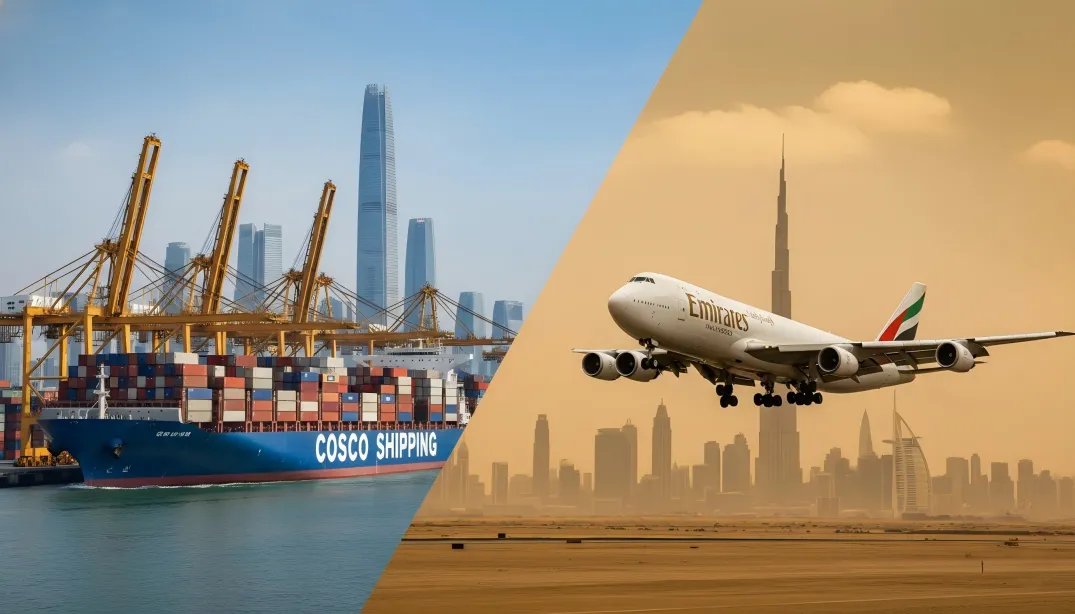
Why Ship from Shenzhen to the UAE?
The trade relationship between Shenzhen and the UAE is a powerhouse of global commerce. Shenzhen is not just a manufacturing giant; it is the Silicon Valley of hardware, producing a vast percentage of the world's electronics, telecommunications equipment, and high-tech components.
On the receiving end, the UAE—specifically Dubai and Abu Dhabi—serves as the logistics hub for the entire Middle East, Africa, and parts of South Asia.
- Shenzhen's Strategic Advantage: With deep-water ports like Yantian (ideal for large vessels) and Shekou (closer to manufacturing centers), Shenzhen offers flexible export options. In our daily operations, we often route heavy machinery through Yantian for its superior handling capacity, while urgent electronics batches are better suited for Shekou's efficient customs processing.
- UAE's Connectivity: Jebel Ali Port in Dubai is the largest man-made harbor in the world and the busiest port in the Middle East. It acts as a primary re-export hub, meaning goods shipped here often find their way to Saudi Arabia, Oman, and beyond.
Shipping Methods from Shenzhen to UAE
Choosing the right shipping method depends on your budget, timeline, and the nature of your goods. Here is a breakdown of the primary options.
1. Sea Freight
Sea Freight is the backbone of international trade, accounting for the vast majority of cargo movement for Shipping from China to the UAE. It is the most cost-effective solution for large volumes.
- FCL (Full Container Load): This is your best option if you have enough cargo to fill a 20ft or 40ft container (typically over 15-20 CBM). You get exclusive use of the container, which reduces the risk of damage and generally offers faster transit times since there is no need for consolidation. Common container types include 20GP, 40GP, and 40HQ.
- LCL (Less than Container Load): If you are shipping smaller quantities (e.g., 1-15 CBM), LCL allows you to share container space with other shippers. You only pay for the volume you use. However, keep in mind that LCL shipments take slightly longer due to the consolidation and deconsolidation process at both ports. We typically advise clients to buffer an extra 3-5 days for LCL cargo compared to FCL.
2. Air Freight
When speed is paramount, Air Freight is the go-to choice. It is ideal for high-value electronics, urgent samples, or seasonal products that need to hit the market quickly.
- Standard Air Freight: Shipped from Shenzhen Bao'an International Airport (SZX) to Dubai International Airport (DXB), Al Maktoum International (DWC), or Abu Dhabi International (AUH). This is suitable for shipments over 100kg.
- Express Shipping: For small parcels (under 100kg) or documents, courier services like DHL, FedEx, and UPS offer door-to-door delivery. While expensive, they provide the fastest service and handle customs clearance on your behalf.
3. Door-to-Door (DDP/DDU) Shipping
For a hassle-free experience, many businesses opt for Door-to-Door services.
- DDP (Delivered Duty Paid): The freight forwarder handles everything—pickup, shipping, customs clearance, and duty payment—delivering the goods directly to your warehouse in the UAE. This is highly recommended for e-commerce sellers (like Amazon FBA) or those new to importing.
- DDU (Delivered Duty Unpaid): The forwarder delivers the goods to your door, but you are responsible for paying import duties and taxes upon arrival.
Expert Advice: For new importers, DDP is the safest bet to avoid unexpected customs fines. However, if you have a registered entity in the UAE with a valid Tax Registration Number (TRN), DDU (or DAP) might offer better cost transparency.
Transit Time: How Long Does It Take?
Transit time is a crucial factor in supply chain planning. Below is a comparison of average transit times from Shenzhen to the UAE.
| Shipping Method | Route | Estimated Transit Time |
|---|---|---|
| Sea Freight (Port-to-Port) | Shenzhen (Yantian/Shekou) to Jebel Ali | 13 - 18 days |
| Sea Freight (Port-to-Port) | Shenzhen to Khalifa Port (Abu Dhabi) | 15 - 20 days |
| Sea Freight (Door-to-Door) | Shenzhen Factory to UAE Warehouse | 25 - 35 days |
| Air Freight (Direct) | SZX to DXB | 1 - 3 days |
| Air Freight (Indirect) | SZX to DXB (via Hub) | 3 - 5 days |
| Express Courier | Door-to-Door (DHL/FedEx/UPS) | 2 - 4 days |
Note: Transit times can be affected by weather conditions, port congestion, and customs clearance procedures.
Shipping Costs from Shenzhen to UAE
Freight rates are volatile and change frequently due to fuel prices, seasonal demand, and carrier capacity. However, having a baseline helps in budgeting.
Sea Freight Rates (Estimates)
- FCL: A 20ft container typically costs between
1,500, while a 40ft container ranges from 3,500. Rates peak before Chinese New Year (January/February) and the Golden Week (October). - LCL: Rates are usually calculated per CBM (Cubic Meter), ranging from
100 per CBM. Note that there is often a minimum charge (e.g., 1 CBM minimum).
Air Freight Rates (Estimates)
Air freight is charged based on chargeable weight (the higher of actual weight or volumetric weight).
- +45 kg: ~
7.00 per kg - +100 kg: ~
6.00 per kg - +300 kg: ~
5.50 per kg - +1000 kg: ~
4.50 per kg
Additional Costs to Consider
Local Charges in Shenzhen: Trucking, documentation, export customs clearance.
Destination Charges in UAE: Terminal Handling Charges (THC), delivery order fees, customs clearance.
Customs Duties & Taxes:
- Import Duty: Generally 5% on the CIF (Cost, Insurance, and Freight) value for most commercial goods.
- VAT: A standard 5% Value Added Tax applies to most imports in the UAE.
Hidden Costs Warning: Always ask your forwarder about demurrage and detention free time. At Jebel Ali, standard free time is usually 5-7 days. If your clearance is delayed, these fees can quickly exceed the freight cost.
Major Ports and Airports
Understanding the geography helps in optimizing your route.
Origin: Shenzhen
- Yantian Port: Deep-water port, best for large mother vessels going to Europe and the Middle East.
- Shekou Port: Located in Western Shenzhen, ideal for barges and feeder vessels, but also handles significant international traffic.
- Shenzhen Bao'an International Airport (SZX): One of China’s largest cargo airports, offering direct and connecting flights to the Middle East.
Destination: UAE
- Jebel Ali Port (Dubai): The primary gateway. Highly efficient and connected to the Jebel Ali Free Zone (JAFZA).
- Khalifa Port (Abu Dhabi): A growing hub, technologically advanced and ideal for cargo destined for Abu Dhabi.
- Dubai International Airport (DXB): The main hub for air cargo.
- Al Maktoum International Airport (DWC): Dedicated largely to cargo operations and future expansion.
Customs Clearance and Documentation
Smooth customs clearance is vital to avoid delays and storage fees. The UAE customs authority is strict but efficient. You will need the following documents. Note that HS Codes are critical—ensure your supplier provides the correct 6-digit HS code to avoid misclassification penalties.
- Commercial Invoice: Must detail the HS code, description, value, and origin of goods. Tip: The "Made in China" mark must be visible on each product, not just the carton. UAE customs often inspect this rigorously.
- Packing List: Specifies the contents, weight, and dimensions of each package.
- Bill of Lading (B/L) or Airway Bill (AWB): The contract of carriage.
- Certificate of Origin (COO): Often required to prove the goods are made in China. For certain free trade agreements or exemptions, this is mandatory.
Pro Tip: Ensure your goods do not fall under the restricted list (e.g., alcohol, pork products, gambling devices, and certain sensitive electronics require special permits). Always check the latest regulations on the Federal Customs Authority website.
Tips for Reducing Shipping Costs
- Optimize Packaging: Air freight is charged on volumetric weight. Reducing empty space in your boxes can save you significant money.
- Plan Ahead: Sea freight rates skyrocket 3-4 weeks before major holidays like Chinese New Year. Booking early secures space and lower rates.
- Consolidate Shipments: If you are buying from multiple suppliers in Shenzhen, ask your freight forwarder to consolidate them into one shipment. This saves on documentation fees and minimum freight charges.
- Understand Incoterms: Buying FOB (Free on Board) Shenzhen usually gives you more control over shipping costs than CIF (Cost, Insurance, and Freight), where the supplier chooses the forwarder (often at a higher hidden cost to you).
Why Choose AllBestShipping?
At AllBestShipping, we specialize in the China-to-Middle East trade lane. We understand the unique requirements of shipping from Shenzhen to the UAE and offer tailored solutions to fit your business needs.
- Competitive Rates: We leverage our volume to negotiate the best sea and air freight rates with top carriers like COSCO, OOCL, and Emirates.
- End-to-End Visibility: Track your shipment 24/7 with our real-time tracking systems.
- Expert Customs Clearance: Our local teams in Dubai and Shenzhen ensure your documents are perfect, minimizing the risk of customs delays.
- Flexible Options: From DDP to port-to-port, we handle it all.
FAQ
Q: What is the cheapest way to ship from Shenzhen to UAE? A: Sea freight (LCL for small volumes, FCL for large volumes) is the cheapest method. For very small parcels (under 2kg), standard post is cheapest but slowest.
Q: How much is customs duty in UAE? A: The general custom duty rate is 5% of the CIF value. Additionally, there is a 5% VAT.
Q: Can you handle dangerous goods like batteries? A: Yes, but they require MSDS (Material Safety Data Sheet) and special handling. Always declare these upfront.
Q: Do you offer warehousing services in Shenzhen? A: Yes, AllBestShipping offers warehousing in Shenzhen for consolidation, inspection, and repackaging before shipping.
Conclusion
Shipping from Shenzhen to the UAE is a critical link in the global supply chain. By understanding the different shipping methods, transit times, and documentation requirements, you can make informed decisions that save time and money. Whether you choose the speed of air freight or the economy of sea freight, partnering with a reliable freight forwarder is key.
Ready to streamline your logistics? Contact AllBestShipping today for a free, no-obligation quote and let us handle the complexities of international shipping for you.