Sea Freight from China to Uganda: The Landlocked Route Through Mombasa, Priced End to End
Sea freight from China to Uganda is two different shipments wearing one price: the ocean leg that ends at a Kenyan quay, and the inland leg that has to reach Kampala. Price both before you compare anything. On October 2026 quotations the ocean half runs $3,420–4,180 for a 20GP and $4,410–5,390 for a 40GP/40HQ port to port into Mombasa, and the inland half adds roughly $2,100–2,800 per box to Kampala, which puts a door-delivered 20GP at $6,600–8,100 before duty. The decisive fact of the year sits outside the rate: since 25 October 2026 CMA CGM has charged a $1,000 per TEU peak-season surcharge on South China and Hong Kong cargo to Mombasa, and every container bound for Uganda now clears Ugandan duty at sea under the Single Customs Territory rather than at the border.
This guide takes the lane apart in the order the money is spent: the ocean booking, the Mombasa port bill that Uganda Revenue Authority itself published on 20 October 2026, the customs file lodged while your box is still afloat, the UNBS certificate that can add 15 percent of CIF at the door, and the 1,169-kilometre road or rail leg that decides when the cargo actually arrives. The scale is easy to underrate: China shipped $207 million of goods to Uganda in August 2026 alone, and Mombasa handled 45.45 million tonnes in 2025, up from 40.99 million a year earlier, a large share of it transit cargo for Uganda, Rwanda, the DRC and South Sudan. Shipping From China To Uganda is a landlocked run with a coastal bill attached, so if you read only one section, read the pre-booking self-check in Section 12.
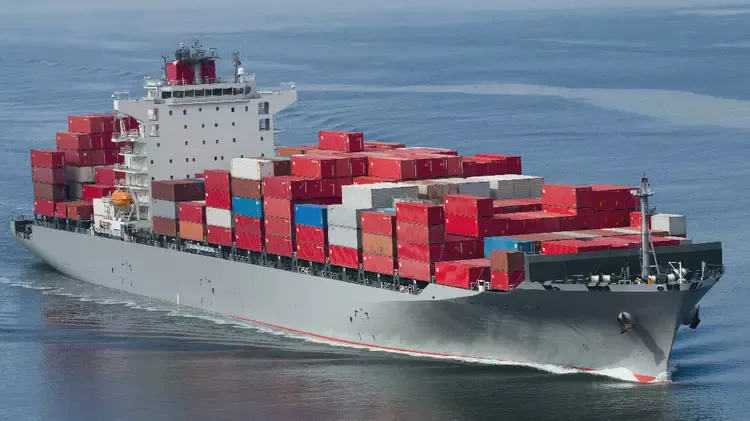
1. Why Your Cargo to Kampala Never Reaches a Ugandan Port
Uganda has no coastline, and that single sentence reorganises the entire shipment. Your container goes to Mombasa, where Kenya handles the ship and Uganda handles the tax, and from there it travels 1,169 kilometres inland by truck or by a rail-and-road combination that changes hands at the border. Roughly 85 percent of Ugandan container imports come through this Northern Corridor; the rest arrive via Dar es Salaam on the Central Corridor and cross at Mutukula.
Four stages, four different parties, four separate invoices:
| Stage | Where it happens | Who charges you | Time it eats |
|---|---|---|---|
| Ocean freight | Shekou, Yantian, Nansha, Shanghai or Ningbo to Mombasa | Carrier, plus origin handling and surcharges | 26–30 days of sailing |
| Port and customs | Mombasa container terminal and the URA file lodged against it | KPA terminal charges, UNBS, clearing agent, bond | 4–7 days for SCT cargo |
| Border | Malaba (or Busia), with an electronic and a metallic seal | URA sealing, weighbridge, transporter | 1–3 days, longer in a queue |
| Inland delivery | Malaba to Kampala, 217 kilometres | Trucker or Kenya Railways plus a Kampala hauler | 3–5 days |
The numbers on that last stage are the ones importers misjudge. The Northern Corridor Transport Observatory tracked trucks on the route from January to June 2026 and found an average of 118 hours from Mombasa to Kampala against a 70-hour target. Mombasa to Malaba alone averaged 75 hours over 921 kilometres against a 55-hour target, and Malaba to Kampala 23 hours over 217 kilometres against 13. In 2024 the full run took 105 hours, so average road speed on the corridor has not improved in two years.
The port adds its own delay. Mombasa has been running hot through the second half of 2026: vessel waiting averaged 3.0 days in the week to 27 October, up from 2.5 days in the week to 13 October, with high yard utilisation, empty-container imbalances, customs processing delays and weak trucking productivity all cited by carriers in the same bulletin. Containers spent an average of 106.7 hours inside the port in 2025, more than double the 48-hour target, and import dwell in the first half of 2026 was 105 hours, essentially unchanged. For a lane where the ship is the cheap and reliable half of the journey, that is the baseline to plan against. Importers who have done this route twice stop asking why freight costs what it costs and start asking how many days the box will sit in a port it has already paid for.
2. Two Corridors, Two Different Clocks: Mombasa Against Dar es Salaam
Every serious Uganda quote should state which corridor it prices, because the two run on different distance, different border posts and different customs behaviour. Mombasa is the default and should be; Dar es Salaam is a genuine alternative that gets used badly.
| Northern Corridor (Mombasa) | Central Corridor (Dar es Salaam) | |
|---|---|---|
| Share of Ugandan container imports | About 85% | The remainder, mostly western Uganda |
| Border crossing into Uganda | Malaba or Busia | Mutukula |
| Door-to-door transit | 35–45 days | 40–50 days |
| Customs behaviour | SCT declaration lodged in Uganda, duty paid at destination while cargo is at Mombasa | Same SCT framework, longer road leg and a second port's clearance queue |
| Where it wins | Anything for Kampala, Jinja, Mbale, Gulu; time-critical cargo | Cargo whose supplier routes through Southeast Asia into Dar, western Uganda, and weeks when Mombasa is gridlocked |
| Where it loses | Peak-season vessel queues at Mombasa | Longer road haul, more border friction, fewer direct sailings |
Two policy changes shifted the balance in 2026. Kenya operationalised the Naivasha Inland Container Depot as a priority clearance point for long-haul transit cargo bound for Uganda, Rwanda, the DRC and South Sudan, with the port of Mombasa told to concentrate on domestic and short-haul traffic. The depot has a handling capacity of 4,000 TEU and was running at about 19 percent occupancy when the policy was announced, which tells you how much slack Kenya is trying to fill with your boxes. Uganda holds land inside the Naivasha Special Economic Zone for a national cargo station.
Kenya Railways also connected the standard-gauge line to the metre-gauge line at Naivasha, which matters more to importers than the depot policy does. Cargo railed from Mombasa and transhipped at the ICD can reach Malaba 36 hours after the train leaves the port, with 30 days of free storage at Naivasha under the promotional programme. Compare that with 75 hours of average road time on the same stretch and the rail option stops being theoretical.
The catch is control. Once your container is railed to Naivasha it is in a second queue with a second set of charges, and if nobody clears it, it ages. Uganda Revenue Authority published a public notice on 20 October 2026 naming un-customed goods sitting in the customs warehouse at Naivasha and at Mombasa port, giving owners 30 days from first publication to clear them or lose them to an automated public auction. Section 4 covers what that notice also reveals about the cost of the port itself.
3. The Ocean Leg: What China to Mombasa Actually Costs This Month
The table below is indicative port-to-port spot freight to Mombasa from the Chinese load regions that matter for this trade, on late October 2026 quotations. General cargo only; reefers, flat racks, out-of-gauge and hazardous cargo price separately and always will.
| Origin (China) | 20GP (USD) | 40GP / 40HQ (USD) | Ocean transit to Mombasa |
|---|---|---|---|
| Shenzhen (Yantian / Shekou) | $3,420 – $4,180 | $4,410 – $5,390 | 22–26 days |
| Guangzhou (Nansha) | $3,600 – $4,200 | $5,600 – $6,350 | 22–24 days |
| Shanghai | $3,060 – $4,165 | $5,010 – $5,790 | 24–30 days |
| Ningbo-Zhoushan | $3,100 – $4,200 | $5,100 – $5,900 | 24–30 days |
| Qingdao | $3,600 – $4,300 | $5,400 – $6,000 | 28–33 days |
| Tianjin | $3,700 – $4,400 | $5,500 – $6,100 | 30–33 days |
Three cost lines sit behind those ranges, and each one is moving this month.
Carrier FAK rates are a different product, and right now a much higher one. MSC's published all-in FAK for Far East to Mombasa, valid 15–31 October 2026, is $4,950 for a 20DV and $6,250 for a 40DV/HC, before local charges at both ends. Your supplier may find that number and conclude your quote is fiction. Both are real, because spot space and FAK space are bought differently, FAK carries longer validity and firmer allocations on a lower-frequency Africa service, and the gap of roughly $1,500 per box is what that certainty costs. What matters is the all-in figure on a quote you can hold, with the validity window written down. On this lane 7–14 days is normal.
The peak-season surcharge arrived on 25 October. CMA CGM put a $1,000 per TEU surcharge on cargo from South China and Hong Kong to Mombasa, effective 25 October 2026, after lifting Far East to Durban from $550 to $750 per TEU days earlier. On a $3,600 base rate that is a 28 percent addition in a single notice, and it is the sort of line that appears on your invoice after the booking is confirmed. Ask, in writing, whether the number you were given includes PSS or sits beneath it.
Bunker costs are rising again. Brent crude reached $110 on 16 October 2026, its highest since May, on continued disruption around the Strait of Hormuz. Bunker adjustment on Africa services tends to lag crude by several weeks, so a quote issued in mid-October may not yet carry the full fuel cost. Meanwhile the wider container market is cooling: Drewry's World Container Index stood at $4,351 per 40ft on 8 October 2026, down 2 percent in a week, as Golden Week demand faded and 63 percent of Asia–Europe capacity returned to the Suez route. Those forces pull in opposite directions on your invoice, which is exactly why the validity date matters more than the headline rate.
For China-wide sailing options and consolidation cut-offs, our sea freight desk quotes Uganda as a routed number for precisely this reason: the ocean rate is the part of the lane that everyone can see.
4. Mombasa Port Charges, Line by Line: What URA Published on 20 October
Most Uganda quotes bury the Kenyan port bill inside a single "destination charges" line. You do not have to accept that. Uganda Revenue Authority's public notice of 20 October 2026 on clearance and removal of goods at the customs warehouse in Naivasha and at Mombasa port lists the indicative KPA and UNBS charges that apply to cargo leaving those facilities. They are worth reading closely, because they are the floor under every quote you will be given:
| Charge | 20ft | 40ft |
|---|---|---|
| KPA nominal fees, per container | $100 | $100 |
| KPA shore handling | $105 | $160 |
| KPA wharfage | $70 | $105 |
| KPA handling charges | $575 | $1,013 |
| KPA subtotal | $850 | $1,378 |
| UNBS charges, general goods | $235 | $235 |
| Port and standards subtotal | $1,085 | $1,613 |
| Rail freight Mombasa to Naivasha, if used | $600 | $700 |
The table carries two implications. The 40-foot bill is not proportionally bigger; it is 62 percent bigger for 2.4 times the volume, which is one more reason a 40HQ is the cheap box per cubic metre on this lane. Second, UNBS charges are levied at the port whether or not your goods carry a certificate of conformity, and they are separate from the 15 percent CIF surcharge that applies when the certificate is missing — Section 6 covers that distinction, because importers conflate the two constantly.
The notice also carries a warning that has nothing to do with money and everything to do with money. Under Section 42(1) of the East African Community Customs Management Act, owners of un-customed goods at Mombasa and Naivasha were given 30 days from 20 October 2026 to clear them by paying taxes, fees, penalties and charges, after which the goods are disposed of by automated public auction. If a container of yours is sitting at Mombasa because a document went missing, the clock on it is now measured in weeks, and auction proceeds are only recoverable by formal application to the Commissioner within one year.
The other clock, the one that costs money every day, is the container itself. Kenyan practice gives roughly 15 days of free time for local cargo and 30 days for transit cargo before empty containers must be returned to a nominated depot, and Mombasa's five primary depots hold about 28,400 TEU between them, which is why empty-container imbalances were named as a drag on terminal efficiency through October. Beyond free time, detention typically runs $25–50 per box per day, rising to $100–300 per day in the second week and beyond, depending on the line and the equipment. On a landlocked route where the inland leg alone consumes five days of road time, the return clock is not a detail to be delegated.
5. Single Customs Territory: Paying Duty While the Box Is Still at Sea
This mechanism is what makes the Uganda lane work, and most importers understand it least. Under the EAC Single Customs Territory, your goods are declared in Uganda, in the Uganda Revenue Authority system, while they are still physically at Mombasa. Taxes are assessed and paid at the destination partner state, the cargo moves under a single regional bond, and the release is transmitted onward. There is no second customs entry at Malaba, because there was never a Kenyan import entry to begin with. The framework itself is published by the East African Community.
The performance difference is stark. A Northern Corridor time-release study found that goods cleared under the Single Customs Territory left Mombasa port within 13.5 hours of being offloaded. Home-use goods took over 72 hours, and transit goods cleared the old bonded way took over 144 hours. The dwell time runs roughly ten times longer for the same ship on the same quay.
| Single Customs Territory | Classic bonded transit | |
|---|---|---|
| Where the declaration is lodged | Destination country, in URA's system | Country of arrival, then re-entered at the border |
| Where duty is paid | Uganda, before the box moves | At the inland border post |
| Security | One regional bond | National transit bond plus seals |
| Typical port dwell | Hours, not days | Days |
| Failure mode | Wrong importer TIN or HS code stops the release at Mombasa | Discrepancy at the border, duty and penalties charged twice while you argue |
The same three errors come up repeatedly, and each of them is avoidable:
- The supplier puts the wrong party on the bill of lading. Under SCT the consignee and the TIN must match the declaration exactly. A supplier who names a freight forwarder as consignee to "simplify things" creates a file that cannot be matched in URA's system, and the container waits at Mombasa while it is corrected.
- The declaration is prepared for the border, not the sea. A forwarder who files at Malaba has already given away the main advantage of the lane. Ask when the declaration will be lodged, and expect the answer "before the vessel berths".
- The HS code is assumed rather than checked. Uganda's CET bands run 0, 10, 25 and 35 percent. A code move from 10 to 25 percent is not a rounding error on machinery, and it is the single most common cause of a customs value dispute on this corridor.
Duty itself stacks in a way worth internalising before you price a product: CET at 0–35 percent on CIF, then IDF at 1 percent plus the infrastructure levy at 1.5 percent, 2.5 percent combined for home-use goods, then VAT at 18 percent on the duty-inclusive value, and withholding tax at 6 percent where it applies. Transit and re-export cargo does not pay IDF or the infrastructure levy, which is why misclassifying a home-use consignment as transit is treated as fraud rather than paperwork.
6. UNBS Certification: The 15% CIF Surcharge Waiting at the Border
Uganda's standards gate is the most predictable reason a Kampala shipment becomes expensive, and it is settled entirely in China before the container is loaded. The Pre-Export Verification of Conformity programme requires a Certificate of Conformity for goods above USD 2,000 FOB that fall under a compulsory Uganda standard, obtained from an appointed inspection agent in the country of export. Load the cargo without one and the rules are unambiguous: a surcharge of 15 percent of CIF plus full destination inspection, which adds one to two weeks and moves your cargo from a routine clearance to an argument.
The compliance baseline shifted on 1 January 2026. Legal Notice No. 14 of 2025 revised the schedule of compulsory standards with 57 changes: 30 new standards and 27 revisions, spanning products that had previously moved without a certificate. Importers who had a workable routine in 2024 discovered in early 2026 that a product line they had shipped for years now required a CoC, and the first they heard of it was a surcharge quote at the border.
Four details decide whether this runs smoothly:
- The certificate must match the consignment, not the product family. A CoC is issued against an invoice and a shipment, and it cannot be amended freely afterwards; changes need prior approval from the agent. Order the inspection after the goods are ready, not before.
- A certificate of road worthiness is a different document from a CoC. Since bill-of-lading dates after 14 April 2025, used motor vehicles and used earthmoving equipment, cranes and forklifts require mandatory PVoC with a CRW or CoC respectively. Vehicles are the category where this rule is enforced hardest.
- The 15-year vehicle age cap still stands, and the 13-year story is wrong. A Traffic and Road Safety Amendment Bill proposing a 13-year limit was withdrawn from Parliament in April 2026, and it is now common for importers to be told otherwise by a broker. The 15-year cap is the operative rule.
- Ask for the Import Clearance Certificate, not just the CoC. UNBS issues an ICC as evidence that goods have passed its inspection and clearance processes; it is the document to hold in your files if a future consignment is questioned.
Budget the certificate as a percentage of FOB charged by the inspection agent, put it in the first landed-cost estimate rather than the last, and confirm which agency holds the current China-zone contract before booking the inspection. That last detail moves: a contract change five months ago reshuffled which agent issues certificates for mainland China and Hong Kong, and files prepared under the old arrangement were rejected at loading.
7. FCL or LCL: Where the Math Turns for a Landlocked Buyer
The rule of thumb you will read everywhere says switch from LCL to a 20-foot container at 13 to 15 cubic metres. It does not hold on a landlocked route, and the inland leg is why. Both modes pay the same 1,169 kilometres and the same KPA charges, but a 20GP pays them once while LCL pays them per cubic metre. That pushes the crossover much later.
The arithmetic below uses $180 per CBM for LCL ocean freight to Mombasa, a $250 minimum handling charge, $110–160 per CBM for groupage trucking to Kampala, and the door-delivered 20GP figure of $6,600–8,100 from Section 4:
| Cargo volume | LCL, all-in to Kampala | LCL per CBM | 20GP, all-in to Kampala | 20GP per CBM |
|---|---|---|---|---|
| 5 CBM | $1,700 – $1,950 | $340 – $390 | $6,600 – $8,100 | $1,320 – $1,614 |
| 10 CBM | $3,150 – $3,650 | $315 – $365 | $6,600 – $8,100 | $661 – $807 |
| 15 CBM | $4,600 – $5,350 | $307 – $357 | $6,600 – $8,100 | $441 – $538 |
| 20 CBM | $6,050 – $7,050 | $302 – $352 | $6,600 – $8,100 | $330 – $404 |
| 22 CBM | $6,630 – $7,730 | $301 – $351 | $6,600 – $8,100 | $300 – $367 |
| 25 CBM | $7,500 – $8,750 | $300 – $350 | $6,600 – $8,100 | $264 – $323 |
The crossover lands at roughly 22 cubic metres of light cargo, and later still if your cargo is dense enough to be billed on the W/M rule, where one cubic metre or one metric tonne counts as a revenue tonne, whichever is greater. Tiles, steel fittings, machinery spares, drums and anything ceramic hit that rule hard: you were quoted a per-CBM rate and you will be invoiced per tonne.
Two practical consequences follow. Under about 20 CBM, LCL to Uganda is genuinely cheaper, and the difference is large enough at 10 CBM to fund your clearing agent twice. Above 25 CBM, taking a 20GP and filling it badly is cheaper than paying per cubic metre, because the fixed 1,169-kilometre leg is already paid inside the container rate. The economic zone where both are defensible is narrow, which is why the honest answer to "FCL or LCL" on this lane is a volume check rather than an opinion.
If your shipment is container-sized but your consignee cannot handle release, bond and trucking separately, the same box can be booked as door-to-door with one party answerable from Shekou to the Kampala gate. For the FCL mechanics specific to this trade, the container shipping guide to Uganda goes deeper into equipment and loading.
8. Step by Step Through Malaba: What the Border Does to Your Container
Malaba is where a well-run shipment stays on schedule and an average one loses three days. The crossing makes more sense read as a process than as a delay. The container arrives with the Uganda declaration already paid, a release order already issued and a RECTS electronic tracking seal already fitted at Mombasa. So why does anything take a day?
Because URA adds a second, metallic electronic seal at the border before the truck enters Uganda. That rule was reinstated in July 2026 after a period when seals were suspended and cargo theft rose, and URA's own Eastern Region manager defended it publicly on the record. The effect was immediate: trucks cleared per day fell from 1,500–1,600 to about 750, a queue stretched nearly 35 kilometres back into Kenya, and the Ugandan side of the crossing went quiet for days. The backlog was eventually cleared, but the procedure stayed.
| Step | What is checked | Typical time | What stops you |
|---|---|---|---|
| Arrival and queue | Truck joins the sealed-transit line | 2–18 hours | Concurrent seal backlog; Friday arrivals are worst |
| Metallic seal fitting | Seal number recorded against the transit entry | 1–4 hours | Seal number not matching the documents |
| Documents and declaration | Invoice, packing list, bill of lading, CoC, release order, transit entry | 2–8 hours | HS code query, valuation query, missing CoC |
| Weight and axle check | Weighbridge tolerance, COMESA road transit charge | Under an hour | Overload; charges run about $10 per 100 km for trucks over three axles |
| Release and onward movement | Exit stamp, RECTS continues to Kampala | 2–6 hours | Random or targeted 100 percent verification |
Three habits buy back days here. Put your cargo on a vessel that berths Monday to Wednesday; a box released from Mombasa on Thursday arrives at Malaba at the weekend, and weekend capacity at the border is thinner than weekday capacity. Keep the seal chain unbroken and documented, because URA treats a broken or mismatched seal as a tampering signal and escalates to full verification, which is a two-day event rather than a two-hour one. And insist that the CoC travels with the file, since the border is a genuinely bad place to discover that a certificate exists only in a supplier's inbox.
The alternative rail path is worth pricing on this stretch. Kenya Railways moves boxes from Mombasa to Malaba in 36 hours once the train departs, transhipping from standard gauge to metre gauge at Naivasha's ICD, against an average 75 hours by road. In 2024 the railway charged $860–960 for a 20ft and $1,110–1,260 for a 40ft on that stretch, and it raised freight rates by 12 percent in May 2026 under a fuel-linked pricing formula, which puts the current level at roughly $960–1,080 and $1,240–1,410. Add the 217-kilometre road leg to Kampala and the combined cost is usually within range of all-road trucking, with one caveat: rail requires your cargo to be at the ICD on the train's schedule, not yours.
9. Transit Times by Leg, From Shekou to Kampala
Uganda transit times are quoted as a single number and built out of six. Break the lane into its parts and the estimate stops being a guess:
| Leg | Typical | What sets the upper end |
|---|---|---|
| 1. Sailing, South China to Mombasa | 26–30 days | Transshipment, blanked sailings; a North China origin adds 4–6 days |
| 2. Berthing and discharge | 1–3 days | Vessel waiting averaged 3.0 days in the week to 27 October 2026 |
| 3. SCT clearance and release | 2–5 days | 13.5 hours once the declaration is filed, against a 105-hour average port dwell |
| 4. Mombasa to Malaba, 921 km | 3–4 days | 75-hour average against a 55-hour target |
| 5. Malaba border formalities | 1–3 days | Metallic seal queues; five days or more during the July 2026 backlog |
| 6. Malaba to Kampala, 217 km | 3–5 days | 23-hour driving average against a 13-hour target |
A clean FCL shipment lands at about 41 days door to door, which is why the planning range is 35–45 days. LCL adds consolidation at origin and deconsolidation at a Mombasa CFS, which is worth about a week, so plan 45–55 days. Routing via Dar es Salaam instead runs 40–50 days, and the extra is road, not sailing. Air freight to Entebbe is a completely different lane: 3–5 days airport to airport and 7–10 days door to door through Addis Ababa, Dubai, Doha or Nairobi, at rates from about $5.50 per kg on base breaks down to $5–6.50 per kg above 500 kilograms.
Peak season bends all six legs at once. December is the month to add buffer rather than to negotiate: festive-season volumes were already pushing the Kenya Ports Authority to consider diverting vessel traffic to Lamu and to convert conventional berths and part of the cruise terminal for container use, with gate digitisation underway. If your cargo has to be on a Kampala shelf before Christmas, the container should be sailing in the first half of November, and the price you pay for waiting is not a rate, it is the ability to promise a date. Our transit time study for the Uganda lane tracks the same legs against previous quarters.
10. Flat Racks, Project Cargo and the First-Oil Squeeze on Equipment
Standard containers are the easy half of this market. Uganda's oil developments have been consuming unusual equipment for two years, and that demand does not behave like retail import demand. The East African Crude Oil Pipeline is a 1,443-kilometre heated and insulated line running from Kabaale in Hoima to the Chongoleani terminal near Tanga, 296 kilometres of it in Uganda and 1,147 in Tanzania, and construction stood at 91 percent completion in August 2026.
The timing matters more than the percentage. Uganda's 31 July 2026 first-oil target was missed, and the reason given by the Petroleum Authority was logistics: equipment loaded in the Gulf had to be offloaded and rerouted through Oman when the Middle East conflict closed the original routing, with the metering, electrical and telecom packages arriving late. EACOP itself has said it is targeting completion by the end of 2026. For an importer of ordinary goods that sounds irrelevant. For anyone shipping flat racks, out-of-gauge skids, heavy-lift pieces or anything over 20 tonnes, it means the equipment pool and the corridor's abnormal-load capacity are shared with a project that books them weeks ahead.
Practical consequences for a non-oil shipper:
- Flat racks and open tops need booking 3–4 weeks out, not 3–4 days, and the equipment is repositioned from wherever it last discharged rather than from your load port.
- Abnormal loads need route surveys. Masaka and the Kampala northern bypass have clearance constraints for over-height cargo, and a survey is cheaper than a reload.
- Any oversize shipment should be priced with the inland leg first. The ocean rate for a flat rack is negotiable; the truck that can legally carry it on the Northern Corridor is not.
11. Six Charges a Kampala Quote Usually Excludes
Two quotes for the same container, differing by $1,800, are usually not competing on rate. They are competing on scope. These are the six lines that appear later, in this order of likelihood:
| Charge | Typical amount | Where it comes from |
|---|---|---|
| Origin terminal handling and documentation | $120–280 per box | Billed by the Chinese port, never inside a "sea freight" number |
| Peak-season and bunker surcharges | $400–1,000 per TEU | PSS at $1,000/TEU from South China from 25 October; BAF following Brent at $110 |
| Mombasa port and UNBS charges | $1,085 (20ft) / $1,613 (40ft) | KPA handling, wharfage, shore handling and UNBS |
| Transit bond and clearing agent | $300–700 per file | Regional bond guarantee plus the agent's fee |
| Certificate of Conformity | Percentage of FOB | Payable in China before loading; 15 percent of CIF if missed |
| Detention and demurrage | $25–50 per box per day, rising to $100–300 | Free time is 15 days local, 30 days transit, and the landlocked leg consumes it |
The question that separates a real quote from a brochure is uncomfortable but simple: ask for the six lines above as separate rows with their validity dates, and ask which of them the forwarder absorbs if the vessel is late. A forwarder who can answer that in writing has priced the lane. One who answers with a single all-in number and a 30-day validity has priced the ocean and is hoping the rest goes well.
12. The Pre-Booking Self-Check for Landlocked Cargo
Ten questions, all answerable before the container is sealed. Each one corresponds to a failure we have seen cost a Ugandan importer money or a week.
- Does the consignee name and TIN on the bill of lading match the URA declaration exactly? Under the Single Customs Territory this determines whether your box moves hours after discharge or waits at Mombasa while the file is rebuilt.
- Will the declaration be lodged before the vessel berths, or at the border? If the answer is the border, you are paying for a fast ship and then driving slowly.
- Which HS code, and has it been checked against the 2026 CET schedule? Bands run 0, 10, 25 and 35 percent, and duty changes the VAT and IDF totals with it.
- Does every regulated product in the consignment have a Certificate of Conformity, issued in China, against this invoice? Missing certificates cost 15 percent of CIF plus one to two weeks of destination inspection.
- Has vehicle age and road-worthiness status been confirmed for used units? The 15-year cap applies, road-worthiness certificates have been mandatory since bill-of-lading dates after 14 April 2025, and the 13-year limit was withdrawn.
- Is the CoC for a China-issued shipment coming from the correct zone contractor? Contracts move; files prepared for the previous agency have been rejected at loading.
- Do you have 15 days of free time as local cargo, or 30 days as transit, and does the inland plan fit inside it? Mombasa to Kampala averages 118 hours before any queue, and detention starts inside the free-time window.
- Who owns the seal chain between Mombasa and Malaba? A mismatched or broken seal is treated as tampering and triggers full verification.
- Is the container going by road from Mombasa, or railed to Naivasha? Both are legitimate; neither is controllable if nobody has decided which one you are on.
- Is there a named person following up un-customed goods at Mombasa or Naivasha? URA's 20 October 2026 notice gave owners 30 days from publication before automated auction, and it was not addressed to your forwarder alone.
13. Frequently Asked Questions
Can I clear Uganda customs while the container is still in Mombasa? Yes, and on this lane you should. Under the EAC Single Customs Territory the declaration is lodged in Uganda, duty is paid at destination and the cargo moves under one regional bond. Goods cleared that way have left Mombasa port within 13.5 hours of offloading, against over 144 hours for transit cargo cleared the old bonded way.
Does a container from China to Kampala travel by rail at any point? Only if you choose it, and only on the Kenyan stretch. There is no rail service into Uganda: containers can be railed from Mombasa to Naivasha's inland depot and onward to Malaba, then trucked 217 kilometres into Kampala. The standard-gauge extension from Naivasha through Kisumu to Malaba is under construction with a target of through service later in the decade, so any quote promising rail to Kampala today is selling a plan, not a service.
How much does a sea freight container from China to Kampala cost in 2026? A 20GP runs $3,420–4,180 port to port into Mombasa and about $6,600–8,100 delivered to Kampala once port charges, UNBS fees and the inland leg are included. A 40GP or 40HQ runs $4,410–5,390 ocean and roughly $8,100–9,800 delivered. Duty, VAT, IDF, the certificate of conformity and detention are on top, and they are usually a larger share of the bill than the ocean freight itself.
Why was my container railed to Naivasha instead of staying at Mombasa? Kenya has prioritised the Naivasha inland container depot for long-haul transit cargo bound for Uganda, Rwanda, the DRC and South Sudan, so boxes for Kampala are often moved upcountry by rail in order to free berth and yard space at Mombasa. It is not a diversion or an error, but it does mean your clearing agent needs to be able to operate at Naivasha as well as at the port.
What happens if my goods arrive without a UNBS certificate of conformity? A surcharge of 15 percent of CIF applies, plus full destination inspection, which adds one to two weeks and removes any claim you had to a routine clearance. The certificate must be obtained in China before loading from an appointed agent, and it cannot be freely amended afterwards.
How long does the Malaba border actually take in peak season? One to three days in normal conditions. During the July 2026 backlog caused by the reinstated metallic seal requirement, trucks cleared per day halved from about 1,500–1,600 to 750 and the queue reached nearly 35 kilometres. Build three to five days into a December shipment and avoid arriving on a Friday.
Is Dar es Salaam a real alternative to Mombasa? It is a real alternative and a worse default. The SCT framework applies on both corridors, but the road leg is longer, the number of direct China sailings is smaller and the border post is Mutukula rather than Malaba. It earns its place for western Uganda cargo and for weeks when Mombasa is gridlocked, not as a routine substitution.
What can go wrong that no quote warns me about? Two things, both with deadlines. URA published a notice on 20 October 2026 giving owners of un-customed goods at Mombasa and Naivasha 30 days to clear them or lose them to an automated public auction. And free time for returning the empty container is 15 days for local cargo and 30 for transit, after which detention runs $25–50 per box per day and then $100–300. Both are administrative until they are expensive.
14. Start Your Uganda Shipment With a Landed-Cost Quote
A Uganda shipment is an ocean booking, a Kenyan port bill, a customs file lodged before the ship berths, a conformity certificate issued in China, and 1,169 kilometres of corridor that runs slower in 2026 than its own operators target. We quote the whole of it: ocean freight with surcharges itemised, Mombasa port charges at the published KPA and UNBS levels, the SCT declaration prepared in advance, and the inland leg priced by road and by rail so you can see which one fits your deadline.
Send us the product, the volume and the delivery address in Uganda, and you will get a landed-cost number with the six excluded charges from Section 11 written out as separate lines, plus a validity date you can hold. AllBestShipping works from Shenzhen with partner agents at Mombasa, Naivasha and Kampala, because a landlocked route cannot be quoted properly from one desk alone.