Air Shipping from China to Belgium: Rates, Gateways and Customs in 2026
Air shipping from China to Belgium is not what the per-kilogram tables on either side of the lane suggest. The cheap end of this market is shrinking while the heavy end grows: between January and September 2026 Liège Airport handled 1,032,283 tonnes of cargo, 7.3 percent more than a year earlier, yet in July the number of e-commerce shipments entering its Bierset customs zone fell 24 percent year on year after the EU's €3 per-item duty on parcels worth up to €150 took effect on 1 July. Both figures come from the same airport's own monthly reporting. Importers who plan around the headline rate alone are pricing the version of this market that is disappearing.
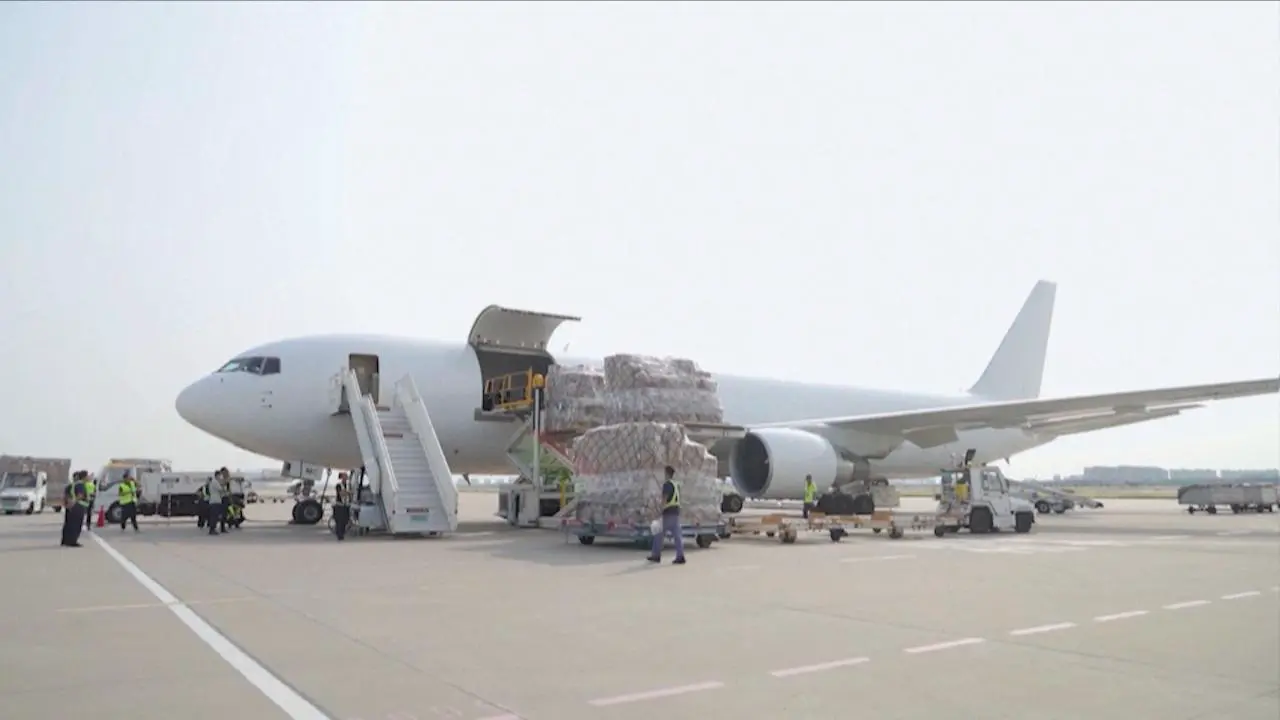
This guide covers the lane as it stands in mid-October 2026: the per-kilogram bands by weight break, the chargeable-weight arithmetic that decides more invoices than the rate itself, how to choose between Liège and Brussels, the terminal and storage charges that never appear in a headline quote, the import declaration as it now works through IDMS, the 21 percent import VAT and the ET 14.000 deferral that keeps it off your cash flow, and the value-density line that tells you honestly when air freight is worth it. The scale behind the numbers: Belgian customs data and trade compilations put Chinese exports to Belgium at $19.8 billion in 2024, with $3.32 billion in May 2026 alone, and the country works as the distribution base for Benelux, northern France and the Rhine-Ruhr. Everything from Shipping From China To Belgium by air or sea passes the same customs gate, so if you read only one section, read the eight questions in Section 11, the list we run through before confirming an air booking ourselves.
1. The invoice tells a different story than the rate card
Ask five forwarders for a China-to-Belgium air rate and you will get five prices per kilogram that look like a market. They are not comparable, because the number in the subject line is the freight only and rarely more than three quarters of what you actually pay.
Take a realistic consolidated shipment: 300 chargeable kilograms, cartons and one pallet, Shanghai to Brussels, cleared and delivered to a warehouse in Ghent. At $5.20 per kilogram the air freight line is $1,560. The rest of the invoice arrives after the flight.
| Line on the invoice | Typical range | Who sets it |
|---|---|---|
| Air freight, 300 kg at $5.20/kg | $1,560 | Carrier, via your forwarder's buy rate |
| Export declaration in China | $35–70 | Chinese customs broker |
| Air waybill and documentation fee | $25–45 | Forwarder or airline |
| Security screening, around $0.10–0.15/kg | $30–45 | Ground handler at origin |
| Import delivery charge at the Belgian airport, per AWB | €160–230 | Terminal operator (Liège general cargo tariff) |
| Import declaration through IDMS | €80–200 | Belgian customs agent |
| Delivery inside Belgium, €0.60–1.20/kg | €180–360 | Road carrier |
| Duty, 0–17 percent of the customs value | varies by TARIC code | Belgian customs |
| Import VAT, 21 percent of value plus duty | deferrable under ET 14.000 | Belgian VAT administration |
Total, before duty and VAT: $2,120 to $2,605, or $7.07 to $8.68 per kilogram door to door. Ancillary charges are therefore 26 to 40 percent of the bill. The per-kilogram rate you negotiated moved $1,560 of it.
The three euro lines on that invoice are converted at €1 = $1.12, the ECB reference rate on 15 October 2026, because the Belgian half of your bill is billed in euro whatever currency the freight is quoted in.
Scale the same invoice down and the fixed lines take over. On an 80-kilogram shipment in the $8.50–12.00 band, air freight is $680–960, but the €420–790 of Belgian charges and the $90–160 of Chinese documentation fees do not shrink with the weight: the same consignment lands at roughly $1,240–2,005 door to door, or $15.50–25.00 per kilogram, and the ancillary lines are now 45 to 52 percent of the bill rather than 26 to 40. This is the most common disappointment on this lane, and it is why the 45-kilogram minimum is not the same thing as the weight at which air freight starts winning: an express courier at $7.00–13.00 per kilogram all-in carries few of these fixed lines, so at 80 kilograms it is often the cheaper door-to-door answer. Compare both until the weight break is doing the work for you.
The rate itself sits here this month, for airport-to-airport bookings out of Shanghai, Shenzhen, Guangzhou, Hong Kong and Qingdao into Brussels or Liège:
| Chargeable weight | Rate per kg, October 2026 | What it suits |
|---|---|---|
| 45–99 kg | $8.50–12.00 | Samples, urgent spares, first orders for a new product line |
| 100–299 kg | $6.00–8.50 | One to two pallets of electronics, cosmetics or retail replenishment |
| 300–499 kg | $5.00–7.00 | The band most SME importers land in, and the first real volume discount |
| 500–999 kg | $4.40–6.00 | Half-ULD consolidations and repeat weekly shipments |
| 1,000 kg and above | $3.80–5.20 | Full pallet positions on freighter services, contracted capacity |
These are spot bands, quoted per shipment and valid for 7 to 14 days. Rates reset with weekly fuel and capacity adjustments, and the fourth quarter is when space tightens on the China-to-Europe corridor.
Two market anchors are worth carrying into any negotiation this month. The average full-market rate from China to Europe was $4.53 per kilogram in September 2026, up 9 percent year on year and recovering from $4.26 in August and $5.22 in June. The broader index of global air freight rates was 24.3 percent higher year on year on 12 October and jet fuel was running 108 percent above the level of October 2025, which is why rates at the heavy weight breaks have stopped falling even though e-commerce volumes out of southern China and Hong Kong are down.
Then read the same shipment as three separate questions: what does the freight cost, what will the Belgian side cost, and what happens if the goods sit on the airport. Most quotes answer only the first.
2. What the 2026 parcel rules did to Belgium's air cargo
Belgium is the country where the EU's parcel reform is most visible, because Liège is the airport it was aimed at.
The mechanics are worth stating precisely. Since 1 July 2026 the EU charges a flat €3 customs duty per item on consignments valued up to €150, under Council Regulation (EU) 2026/382. It is charged per item, not per parcel, which matters as soon as a shipment contains more than one unit. It applies to distance sales to consumers, runs until 1 July 2028, and it is levied on the seller rather than collected from the consumer at the border. Two follow-on deadlines land this year: product identifiers (PIDs) become mandatory on 1 November 2026, and the separate €2 Union handling fee is scheduled to start on 1 November 2026 as well, so confirm the date with your forwarder before it lands in a price list. The Commission's guidance page for the duty and the fee carries the legal text if you need it for a supplier discussion.
The effect at Liège was immediate. In July 2026, e-commerce shipments into the Bierset customs zone fell 24 percent year on year and 41 percent against June, while the number of customs declarations dropped 52 percent year on year. Shipments valued above €150 rose 10 percent, which tells you where the volume went. Total tonnage still grew 4 percent that month to 114,064 tonnes on pharmaceuticals, data center equipment and flowers, and the third quarter came in flat at roughly 334,500 tonnes with aircraft movements down 6 percent to 6,826: fewer, fuller flights carrying more valuable freight.
The Chinese side of the lane moved with it. Combined mainland China and Hong Kong air tonnage to Europe fell 10 percent year on year in September, an improvement on declines of 14 percent in July and 15 percent in August. The split inside those numbers is the part worth understanding: Hong Kong volumes fell 24 percent while mainland China volumes fell only 2 percent, and mainland tonnage has recovered close to June levels. Freighters that used to shuttle loose e-commerce parcels now carry built-up pallets for importers who consolidate.
| Item | Consumer parcels, B2C | Commercial air freight, B2B |
|---|---|---|
| Duty basis since 1 July 2026 | €3 flat per item up to €150 | Normal duty, 0–17 percent by TARIC code |
| Data required | PIDs mandatory from 1 November 2026 | Commercial invoice with CN/TARIC codes |
| Charges from 1 November 2026 | €2 Union handling fee per consignment | Not applicable |
| Rate basis | Per parcel, dense small-packet networks | Per kilogram by weight break, minimum 45 kg |
| Booking lead time | Same-day to 48 hours | 3–7 days in the October–December window |
| What changed for you | Per-unit landed cost rose on low-value SKUs | Capacity share improved as parcel volume left |
The practical read for an importer: if your product sells for under €150 a unit and you were relying on parcel economics, the arithmetic has changed and consolidation is now the cheaper structure. If you are shipping commercial freight to a Belgian business, the €3 duty never applied to you, and the tightening of parcel capacity has freed lift and moderated rates at the heavier breaks.
3. Chargeable weight: the one line that sets your bill
Airlines bill the greater of actual gross weight and volumetric weight, and volumetric weight depends on a divisor your forwarder chooses. Most quote ÷6000, which turns one cubic meter into 166.67 kilograms. Some carriers apply ÷5000, which turns the same cubic meter into 200 kilograms, a fifth more.
The three examples below use real carton and pallet dimensions from China-to-Belgium consolidations. All three are priced at $5.20 per kilogram to isolate the divisor.
| Shipment | Gross weight | Volume | Chargeable at ÷6000 | Chargeable at ÷5000 | Freight at ÷6000 / ÷5000 |
|---|---|---|---|---|---|
| 20 cartons of small electronics | 60 kg | 0.5 CBM | 84 kg | 100 kg | $437 / $520 |
| 1 pallet, mixed consumer goods | 240 kg | 1.8 CBM | 300 kg | 360 kg | $1,560 / $1,872 |
| 3 pallets, hardware and tools | 900 kg | 3.0 CBM | 900 kg | 900 kg | $4,680 / $4,680 |
The middle row is the one that hurts. Cargo light enough to cube out pays on the divisor, so a quote that looks 8 percent cheaper per kilogram from a carrier using ÷5000 can cost you $312 more on that one pallet.
Three levers move the number, and all three are decided in China before the pallet is built:
- Carton dimensions. Cutting 5 centimeters from the height of a 40×30 centimeter carton reduces volume by about 12 percent on that line. On the pallet example that is roughly 36 kilograms of chargeable weight.
- Pallet height. Standard Euro pallets cap out around 1.60 meters of build when they enter a ULD. Height is the fastest lever of the three, because the divisor applies to the whole stack: on a 1.2 × 0.8 meter footprint, one extra 20-centimeter layer adds 0.192 CBM, which is 32 kilograms of chargeable weight at ÷6000.
- The 45-kilogram minimum. Commercial air rates start at 45 kilograms of chargeable weight. Below that, an express courier at $7.00–13.00 per kilogram all-in is usually cheaper than an air freight booking with its terminal and declaration fees attached.
Fragile and high-value goods rarely cube out and pay on gross weight, which is why they are the natural air cargo from China to Belgium. Bulky low-value goods always cube out and should not fly at all.
4. Choosing a Belgian gateway: Liège, Brussels, or a truck from Amsterdam
Belgium has two cargo airports that behave almost like different countries, plus the option of landing elsewhere and trucking in. The choice changes your AWB routing, the customs office that releases your goods and, often, the price by more than a rate negotiation would.
| Gateway | Cargo profile | 2026 volumes | Best when |
|---|---|---|---|
| Liège (LGG) | Freighters, pharmaceuticals, e-commerce consolidation, perishables and cut flowers, live animals | 1,032,283 tonnes January–September, up 7.3 percent; exports up 18.5 percent | Heavy freighter lift, cold chain, or a shipment arriving after Brussels closes |
| Brussels (BRU) | Belly capacity on passenger flights plus freighters, pharmaceuticals, integrators | About 420,000 tonnes in the first half, up 8.3 percent; 70,257 tonnes in September, up 6.8 percent | You need daily belly frequency, an integrator, or onward connection |
| Road feed from Amsterdam or Frankfurt | Trucked cargo consolidated abroad, cleared in Belgium on arrival | Brussels trucked volumes rose 37.2 percent in September | Your rate is cheaper into Schiphol or Frankfurt and the Belgian leg is short |
Liège is the freighter specialist and describes itself as Europe's largest cargo-only airport. Its first nine months of 2026 grew even as its parcel business contracted: exports alone reached 453,265 tonnes, up 18.5 percent, with routes to Asia up 17 percent and North America up 51 percent in the first half. That export growth is what offset the €3 duty, and the airport's third-quarter results document the trade-off in plain figures.
Brussels is the flexible one. Its September 2026 numbers show the mix clearly: flown cargo up only 2.5 percent, belly cargo up 11.4 percent, full-freighter volumes down 1.1 percent and trucked cargo up 37.2 percent. Brussels also added an Air China route to Chengdu in the first half, giving the lane an extra direct connection into western China.
Whichever gateway you use, the road leg inside Belgium is short. Brussels, Antwerp and Ghent are all within roughly 1.5 to 3 hours of either airport, so delivery cost rarely decides the choice. What decides it is availability: which flights actually have space this week, where the goods can be stored if a declaration stalls, and how cold-chain cargo is handled at the terminal.
5. The charges that live outside the headline rate
The shortest way to compare air quotes from China to Belgium is to ask what each one excludes. These are the items that show up later, with the trigger that produces each one.
| Charge | Trigger | Typical amount |
|---|---|---|
| Fuel surcharge | Weekly carrier adjustment; jet fuel was 108 percent above October 2025 levels on 2 October 2026 | $0.60–1.20 per kg when quoted separately |
| Security screening | Every consignment, X-ray or explosive trace detection at origin | $0.10–0.15 per kg |
| Import delivery charge at the Belgian terminal | Per air waybill, general cargo, Liège tariff from 1 June 2026: €160 up to 500 kg, €180 to 1,000 kg, €200 to 2,000 kg, €230 to 3,000 kg, then €0.033 per kg | €160–230 per AWB |
| Storage after free time | Liège import cargo is free for 18 hours from the notice of arrival, then €19.30 per 100 kg per day with a €150 minimum, rising to €27.00 per 100 kg per day after 48 hours | €150 minimum per day |
| Oversize or single-piece heavy cargo | Any piece longer than 3 meters, or over the carrier's single-piece limit | $25–150 per piece |
| Pallet build and ULD preparation | Shrink wrap, corner boards, pallet exchange | $15–60 per pallet |
| Dangerous goods handling | Lithium batteries, aerosols, liquids with an IATA DGR entry | $80–300 per shipment |
| Temperature control | Pharma or perishables booked in a reefer container with data logging | $0.30–0.80 per kg |
| Customs examination | Physical inspection or scan ordered on arrival | €50–150 plus time |
| Cargo insurance | Declared value based, arranged per shipment | A small percentage of value |
Rate validity is not a charge, but it decides every line above it: forwarder buy rates reset weekly and sell rates are quoted for 7 to 14 days, so ask for the last valid date in writing before comparing two offers.
The storage line deserves its own warning, because it is the one that turns a $300 delay into a $900 invoice. On the Liège import tariff, free time is 18 hours from arrival notification and the charge then starts at €19.30 per 100 kilograms per day with a €150 minimum, doubling to €27.00 per 100 kilograms per day after 48 hours. A three-pallet shipment of 300 kilograms that waits four days can therefore accumulate roughly €560 in terminal storage alone, on top of the freight that already flew.
Any air quote worth signing states its currency, its weight break, the divisor used for volumetric weight, the surcharge basis, and which of the lines above it includes. Air Freight from China is quoted on that basis by default, because the alternative is a client discovering the terminal charge on collection day.
6. Belgian customs on an air shipment, in order
Belgian import procedures themselves are settled; what changed recently is which system receives your data.
Before departure. Every consignment entering the EU now needs a valid entry summary declaration. For air, the pre-loading minimum dataset has to reach ICS2 before the goods are loaded, and the full declaration for a flight of four hours or more must be filed at least four hours before arrival at the first EU airport. Shorter flights need it by takeoff. Since 1 June 2026 this applies to all consignments by every mode, so a supplier who has never filed ENS data before will need the air waybill, the house level details and an EORI number in place before the pallet is tendered.
On arrival. The declaration itself goes through IDMS, the Import Declaration Management System that replaced PLDA Import in October 2024 and closed its transition period in September 2025. Export re-declarations moved to AES, transit to NCTS Phase 5, and the old goods accounting system was replaced by PN-TS. If your customs agent is still describing your file in PLDA terms, the terminology has moved on.
The duty calculation. Import duties run from 0 to 17 percent depending on the TARIC classification. Anti-dumping and countervailing duties apply to more than fifteen categories of Chinese goods, with rates from 9.9 to 122.8 percent. The invoice must carry the correct TARIC additional code for those goods, because customs applies the highest applicable rate when the additional code is missing. That single omission is the most expensive clerical error on this lane. Import VAT is 21 percent, calculated on the customs value plus duty, with reduced rates of 12 and 6 percent for specific categories.
Documents to send with the freight. The set is shorter than most first-time importers expect, but each missing line costs a day:
- Commercial invoice showing the CN or TARIC code, the additional code where one applies, the declared value and the Incoterms 2020 term.
- Packing list that reconciles with the cartons and the pallet count on the air waybill.
- EORI number, plus CE marking and GPSR responsible-operator details where the product category requires them.
- MSDS for anything classified as dangerous goods, and a certificate of origin only where a specific measure or your buyer asks for one — there is no EU–China trade agreement, so Chinese-origin goods import at MFN rates with no preferential tariff available to claim.
Our customs clearance team files these in Brussels or Liège depending on the gateway, and the same declaration pattern applies whether the goods arrive by air or by sea.
Keeping the 21 percent VAT off your cash flow
Belgian import VAT is a real cash payment at release unless you hold the ET 14.000 authorisation, which moves the VAT from the customs release to your periodic VAT return. On a shipment valued at €100,000, the deferral keeps €21,000 out of the customs transaction and in your working capital for the length of your VAT cycle.
Three conditions matter. The authorisation is granted by the Belgian VAT administration, not the customs authority, and it requires a Belgian VAT registration. Non-EU companies cannot normally apply directly: they need a Belgian fiscal representative or a Belgian entity, and that representative carries joint and several liability for unpaid VAT, interest and penalties, which is exactly why DDP structures exist on this lane. The authorisation is not retroactive, so it is worth starting the process before your first shipment rather than after.
One more 2026 change affects the paperwork around your goods rather than the goods themselves. Belgian VAT-registered businesses must issue structured electronic invoices between each other since 1 January 2026, using the Peppol BIS Billing 3.0 format. Paper and PDF invoices are no longer valid VAT invoices between Belgian businesses, which matters if you have set up a Belgian entity to act as your importer.
7. Door-to-door timelines and where they slip
Air freight from China to Belgium is a two-day flight and a five-day shipment, and the difference between those two statements is where your planning should focus.
| Step | Normal conditions | October–December peak |
|---|---|---|
| Booking and space confirmation | 1–2 days | 3–7 days |
| Cargo pickup, build and export declaration in China | 1–2 days | 1–3 days |
| Flight, airport to airport | 2–5 days | 2–6 days |
| Arrival to cargo availability at the terminal | 4–24 hours | 12–48 hours |
| Import declaration and duties in Belgium | 0.5–2 days | 1–3 days |
| Delivery inside Belgium | 1–2 days | 1–2 days |
| Door to door, total | 5–12 days | 8–18 days |
Airport-to-airport transit from Shanghai, Shenzhen, Guangzhou, Hong Kong or Qingdao into Brussels or Liège normally runs 2 to 5 days including a transfer at a hub such as Leipzig. Door to Door Shipping from China to Belgium breaks the same journey into its customs and delivery stages if you need the full sequence for an FBA or 3PL delivery.
Five things actually delay this lane, in order of frequency:
- Document errors on the invoice. A missing TARIC additional code, a value that does not match the payment record, or a description that reads "samples" for a commercial shipment. Each one parks the goods while the terminal storage clock runs.
- ICS2 referrals. Customs risk analysis can issue a referral before loading, asking for more detail, screening or a decision not to load. The assessment only resumes after the referral is answered, so a slow reply from a supplier costs days before the flight is even booked.
- The 18-hour storage clock. Cargo that arrives Friday evening and clears Monday has already spent the free window. On a 300-kilogram shipment, three weekend days at the Liège rate add about €400.
- Capacity in the peak window. October to December is when e-commerce, seasonal retail and electronics launches compete for the same freighters. Booking three days before cargo ready date is normal; booking a day before is a lottery.
- Dangerous goods approvals. Lithium battery shipments need a shipper's declaration, correct UN numbers and a carrier that accepts them on the routing. Approval can take longer than the flight.
Plan 5 to 12 days door to door in normal conditions and 8 to 18 days in the fourth quarter. Treat anything quoted below five days to a Belgian warehouse as a best case rather than a plan.
8. Air, rail or sea: the value-density line
The decision to fly is arithmetic more than urgency: how much the premium costs relative to the value of what is moving. That calculation can be done before you ask for a quote.
Air freight door to door runs about $7.50 per kilogram on a 300-kilogram shipment. Sea freight door to door runs $120–200 per CBM, which converts to a much lower figure per kilogram as density rises. The premium between the two is therefore stable at roughly $5.50–7.00 per kilogram across normal cargo densities.
| Goods density | Sea cost per kg door to door | Air premium per kg | Air premium as a share of value at $25/kg goods | At $50/kg goods | At $100/kg goods |
|---|---|---|---|---|---|
| 100 kg/CBM | $1.20–2.00 | $5.50–6.30 | 22–25% | 11–13% | 5.5–6.3% |
| 150 kg/CBM | $0.80–1.33 | $6.17–6.70 | 25–27% | 12–13% | 6.2–6.7% |
| 200 kg/CBM | $0.60–1.00 | $6.50–6.90 | 26–28% | 13–14% | 6.5–6.9% |
| 250 kg/CBM | $0.48–0.80 | $6.70–7.02 | 27–28% | 13–14% | 6.7–7.0% |
Read the last three columns as a screening test. If your goods are worth $25 per kilogram and you fly them, the freight premium adds roughly a quarter of the product value and air is hard to justify unless you are recovering a stockout. At $100 per kilogram, the same premium is under 7 percent and air stops being expensive: electronics, medical devices, instrument parts and cosmetics all clear that bar. The break-even most of our clients converge on is a premium under roughly 10 percent of goods value, which corresponds to goods worth about $70 per kilogram or more (a $6.50–7.00 premium is 10 percent of $65–70 of goods value), or a situation where a month out of stock costs more than $6.50 per kilogram.
Rail sits between the two and gets left out of too many comparisons. Door-to-door transit runs 25–34 days at $180–280 per CBM for LCL or $5,000–7,500 for a 40HQ, which is 40–60 percent cheaper than air and 10–14 days faster than sea, with one honest caveat: 85–90 percent of China–Europe trains enter the EU through the single Polish crossing at Malaszewicze, where gauge change queues can move your delivery by several days in either direction. Full sea freight remains the answer for anything under about $10 per kilogram unless the delay genuinely breaks your business.
How Much Does it Cost to Ship from China to Belgium runs the same comparison at shipment level, including the landed-cost side that duty and VAT add.
9. Pharma, perishables and dangerous goods through Liège
The reason Liège kept growing while its parcel volumes fell is the cargo mix underneath. Pharmaceuticals, temperature-controlled freight, data center equipment and cut flowers carried the airport through July 2026 when monthly e-commerce shipments dropped by a quarter.
The mix determines what a booking can include. Temperature-controlled cargo needs a validated chain on both ends: a reefer container or insulated ULD, a data logger that travels with the goods, and handling agreements with the terminal and the road carrier that hold the same temperature range. Pharmaceutical shipments also need Good Distribution Practice documentation, and the importer in Belgium must hold the wholesaler authorisation appropriate to the product. Perishables such as flowers, fresh food and plant material need phytosanitary certification and usually an import permit, and they compete for priority uplift, which is priced accordingly. Dangerous goods need an IATA DGR-classified description, the correct UN number, packing instructions matched to the goods, a shipper's declaration signed at origin, and a carrier that accepts that class on the routing. Lithium batteries remain the most common snag, because UN3480, UN3481 and UN3091 attract different carrier restrictions and state-of-charge rules depending on how they are packed.
| Cargo type | What it needs beyond a normal booking | Typical extra cost |
|---|---|---|
| Pharmaceuticals | GDP documentation, validated temperature range, data logger, importer authorisation | $0.30–0.80 per kg |
| Perishables and flowers | Phytosanitary certificate, import permit, priority uplift | $0.20–0.60 per kg |
| Lithium batteries | UN number, packing instruction, shipper's declaration, carrier approval | $80–300 per shipment |
| Oversized machinery parts | Special loading, possibly a main-deck charter or freighter with nose door | Quoted per piece |
| High-value electronics | Screening above standard, security escort options, insurance | 0.2–0.5 percent of value, insurance depending |
The €3 duty changed the capacity share on this lane in a way that helps pharmaceutical and industrial importers: with fewer loose parcel consignments moving through Bierset, freighters are carrying more built pallets and more of the temperature-controlled and high-value freight that Liège has built its cold chain around.
10. What to send your forwarder for a firm rate
Most quoted rates are wrong because the request was incomplete. These eight inputs are what turn a per-kilogram indication into a number you can plan against.
| Send this | Why it moves the price |
|---|---|
| Carton and pallet dimensions plus gross weight | Sets chargeable weight and therefore whether you pay on volume or on weight |
| Total volume in CBM | Confirms the volumetric calculation at the divisor your carrier uses |
| HS code, and the TARIC additional code where one applies | Determines duty from 0 to 17 percent and whether anti-dumping duty applies |
| Commercial value and Incoterms 2020 term | Sets the customs value, the VAT base and who acts as importer of record |
| Delivery postcode in Belgium | Prices the road leg and identifies whether the delivery needs a tail lift or a dock |
| Cargo ready date | Decides which flights are realistically available, and the rate validity you can be offered |
| Dangerous goods status or MSDS | Adds handling fees and can eliminate routings entirely |
| Whether you want the goods insured | Sets the insurance premium and the declared value on the AWB |
Two questions do most of the work when you compare offers. First, ask for the divisor in writing, because a ÷5000 quote compared against a ÷6000 quote is not a comparison at all. Second, ask for the landed cost, not the rate: duty, VAT, terminal handling, declaration and delivery inside Belgium typically double the number in the subject line, and a forwarder who cannot produce that breakdown is not pricing your shipment, only your flight.
11. Questions importers ask before their first China-Belgium air shipment
How much does air shipping from China to Belgium cost per kilogram in October 2026?
Airport-to-airport rates run $8.50–12.00 per kilogram at 45–99 kilograms of chargeable weight, $6.00–8.50 at 100–299 kilograms, $5.00–7.00 at 300–499 kilograms, $4.40–6.00 at 500–999 kilograms and $3.80–5.20 above a tonne. Door to door, add roughly $1.50–3.00 per kilogram for terminal handling, declaration and delivery. The China-to-Europe average full-market rate was $4.53 per kilogram in September 2026, so anything significantly below that on a small shipment is either an indication or a quote with items excluded.
Does the €3 EU customs duty apply to my air shipment?
Only if you are selling to consumers in consignments valued up to €150. The €3 per-item duty introduced on 1 July 2026 applies to distance sales to consumers, not to normal commercial cargo moving to a business. A pallet of components consigned to a Belgian company pays standard duty by TARIC code, between 0 and 17 percent, plus 21 percent VAT. The €2 Union handling fee due to start on 1 November 2026 follows the same logic, and PIDs become mandatory for those consignments on the same date.
Should I book into Liège or Brussels?
Book Liège when you need freighter capacity, cold chain or a slot that Brussels does not have; the airport handled 1,032,283 tonnes in the first nine months of 2026 and is the busiest cargo-only gateway in Europe. Book Brussels when you want belly capacity on daily passenger flights, an integrator service or a connection onward. Both are within about three hours by road of Antwerp, Ghent and the Brussels logistics belt, so the rate and the available space decide it more often than the geography.
What is chargeable weight, and does the divisor really matter?
Airlines bill the greater of gross weight and volumetric weight. At the standard divisor of ÷6000, one cubic meter equals 166.67 kilograms; at ÷5000 the same cubic meter equals 200 kilograms. On a one-pallet shipment of 1.8 CBM weighing 240 kilograms, that difference is 300 kilograms against 360 kilograms, or $1,560 against $1,872 at $5.20 per kilogram. Always ask which divisor applies before comparing two rates.
Can I defer the 21 percent import VAT in Belgium?
Yes, with the ET 14.000 authorisation from the Belgian VAT administration, which moves the payment from the customs release to your periodic VAT return. On a €100,000 shipment it keeps €21,000 out of the customs transaction. It requires a Belgian VAT registration, is not retroactive, and non-EU companies generally need a Belgian fiscal representative or entity whose liability for unpaid VAT is joint and several.
How long does Belgian customs take on an air shipment, and what does the declaration need?
A clean declaration through IDMS releases in half a day to two days; a flagged or amended one takes longer, and the terminal's storage clock starts 18 hours after arrival notification. The documentation set is a commercial invoice with CN or TARIC codes and any applicable additional code, a packing list, the air waybill, your EORI number, certificates for the product category, and the ET 14.000 reference if you are deferring VAT. Missing TARIC additional codes on goods subject to anti-dumping duty are the most expensive error, because customs then applies the highest rate.
What is the smallest shipment worth sending by air?
Commercial air rates start at a minimum chargeable weight of 45 kilograms. Below that, an express courier at $7.00–13.00 per kilogram all-in usually costs less than an air freight booking once the air waybill fee, terminal handling and declaration are added. Between 45 kilograms and about 150 kilograms, compare both before booking, because the answer depends on how much documentation your goods need.
Do I need an EORI number and a fiscal representative?
You need an EORI number to import into the EU, and it can be registered in Belgium or in any other member state, though the declaration must then follow the corresponding rules. A fiscal representative is a different requirement: non-EU businesses that register for Belgian VAT almost always have to appoint one, and that representative is jointly and severally liable for unpaid VAT. Most importers sidestep it by letting the forwarder act as importer of record under a DDP arrangement, which shifts the registration and the liability.
12. Get a China-Belgium air quote you can hold
The rate on this lane resets weekly, so the useful conversation is not about today's number but about what your shipment actually pays from factory door to Belgian warehouse.
Send a packing list with carton dimensions, an HS code, a delivery postcode and a cargo ready date, and AllBestShipping returns a landed-cost comparison across air, rail and sea with the air rate held for 7 days. We are a Shenzhen-based freight forwarder working Chinese export clearance, freighter and belly capacity into Liège and Brussels, Belgian import declarations through IDMS, ET 14.000 VAT deferral where you qualify, cargo insurance and final delivery across Benelux, France and Germany. Importers use us because the number we quote is the number you pay, including the terminal and storage charges that most quotes leave out.