Sea Freight from China to Tanzania in 2026: Rates, Transit Times and the Dar es Salaam Gateway
Sea freight from China to Tanzania is priced like a commodity and lost on paperwork. The rate itself is straightforward on October 2026 spot quotations to Dar es Salaam: $2,100–3,300 for a 20GP, $3,250–5,200 for a 40GP/40HQ port to port, $70–145 per CBM for LCL, and 25–40 days on the water from Chinese load ports. What decides whether your container clears in four days or sits at the quay for five weeks sits outside the rate. From 1 July 2026 the customs processing fee on every import declaration rose from 0.6 to 1 percent of FOB under the Finance Act 2026, and the TBS Certificate of Conformity still has to be issued in China, before loading, under a China-zone inspection contract that changed operator on 1 May 2026. Miss either gate and the rate you negotiated stops mattering.
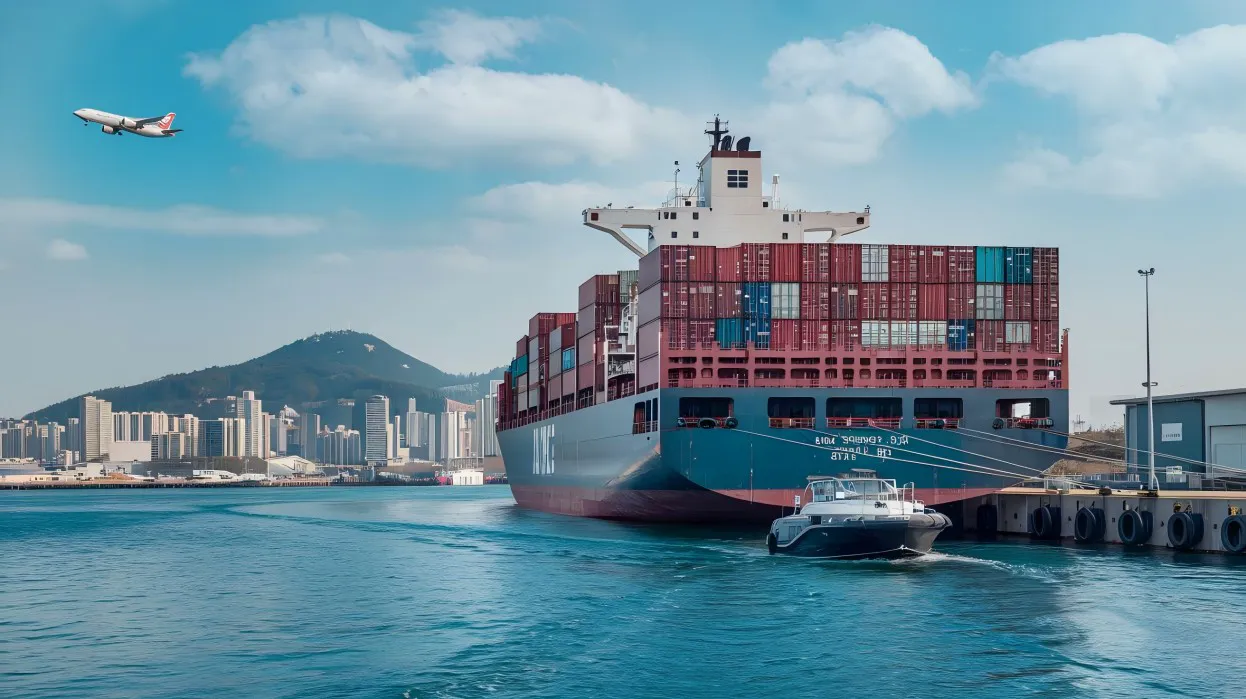
This guide covers both halves of the lane as it stands in October 2026: port-pair FCL and LCL rates plus the cost per cubic meter that settles the FCL-or-LCL argument, the inland and cross-border corridors with the customs regime each one runs under, transit times broken into sailing, berth waiting and clearance, the PVoC and TANCIS gates, duties of 0–35 percent with 18 percent VAT on the mainland, the September–December surcharge window, and the demurrage clock that starts the day your box is discharged. The scale behind those numbers: China supplies Tanzania more than any other single country, at roughly $8.7 billion in the twelve months to February 2026, and Dar es Salaam (TZDAR) handles over 90 percent of the country's seaborne trade while also serving Zambia, the DRC, Malawi, Rwanda, Burundi and Uganda. Everything from Shipping From China To Tanzania inland has to clear the same documentation before your booking is accepted, so if you read only one section, read the twelve questions in Section 10, the list we work through before we confirm a Tanzania-bound sailing ourselves.
1. One Port, Two Markets: What Dar es Salaam Actually Is in 2026
Most lane guides treat Dar es Salaam as one destination. It is two. The port has two customer bases that share berths, cranes and truck queues but almost nothing else:
- Tanzanian home consumption: cargo cleared at Dar es Salaam, Tanga or Zanzibar and released to a local importer, with duty and VAT paid on arrival.
- Transit cargo: boxes entered for Zambia, the DRC, Malawi, Rwanda, Burundi or Uganda under suspension of duty, moved under bond and an electronic seal, and only finally taxed at an inland border post. Transit cargo competes for the same berths as everything else.
That split is why two importers on the same vessel, shipping the same product, can compare notes and find that one cleared in four days and the other is still arguing about security at Tunduma a month later. When you get a quote for "Dar es Salaam," the first question worth asking is which of those two files your forwarder is pricing.
Two events in 2026 changed the arithmetic on both sides of that line:
| Date | What changed | Who it hits | What to do |
|---|---|---|---|
| 1 July 2026 | Customs Processing Fee (CPF) rose from 0.6% to 1% of FOB under the Finance Act 2026 | Every import and transit declaration | Budget it: about $165 on a container with a $16,500 FOB value. Check whether your clearing agent already quoted it |
| 1 May 2026 | The TBS Pre-shipment Verification of Conformity (PVoC) contract for the China zone moved to a new three-year operator | Regulated goods sourced in mainland China, Hong Kong, Taiwan, Macau and Mongolia | Confirm which agency now issues the Certificate of Conformity for your province before you book an inspection |
| 1 November 2025 | TBS introduced a new CoC certificate template with phased system integration | All PVoC files | Expect a different document format at loading. An old-format file can stall the entry |
| 1 July 2026 | Excise on used vehicles is now banded by age: 18% for 8–10 years, 35% for 10–20 years, 40% above 20 years, and 5% for engines of 1,000cc or less | Vehicle importers and dealers | Run the model through TRA's used-vehicle valuation before you bid. Tanzania values from its own system, not from your invoice |
| March 2026 | TASAC regulation GN. 83 of 2026 sets minimum clearing-agent fees for import, export and transit cargo | Anyone appointing a clearing and forwarding agent | Ask for a fee breakdown in writing. If a quote looks unusually cheap, it usually reappears on the invoice |
| Ongoing through 2026 | Dar es Salaam capacity work (berths 12–15 plus two 500-metre berths), a rebuilt TAZARA line under a $1.4 billion rehabilitation signed in November 2025, and the standard-gauge railway already moving boxes from Dar es Salaam's Malindi area to Bahi in Dodoma, with Mwanza–Isaka at 68 percent completion in February 2026 | Everyone, and especially Zambia and DRC transit shippers | Ask for rail-plus-road quotes alongside all-road. Rail is back on the table on the Central Corridor, not just on paper |
The operational picture has genuinely improved, and that deserves saying, because this port earned its bad reputation when the waits really were worse. Dar es Salaam handled 27.7 million tonnes in 2024/25, up 17 percent, and the two private terminal operators are competing on performance: DP World's Terminal 1 moved 110,199 TEU in the first quarter of 2026 against 57,401 TEU a year earlier, a 92 percent increase, and the Adani-operated container terminal set a monthly throughput record in August 2026. Vessel waiting time, the number that decides whether your cargo is on the quay in week three or week five, ran a 1.37-day median in the week to 3 October 2026, down from 1.78 days the week before, with the port rated at medium congestion rather than high. The carrier operational notices from the same period are less cheerful: DP World berths were showing up to 24–48 hours of waiting for a berth sequence, the Adani terminal up to 48 hours, and the terminal gate and port access roads congested. Compare that with 7.4 days in March 2026 and roughly 4 days in August, and you get the honest read: congestion here is now event-driven, not chronic.
Market context matters less on this lane than on the Suez lanes, which is itself a selling point. Drewry's World Container Index stood at $4,351 per 40ft on 8 October 2026, down 2 percent week on week and down from $4,500 on 17 September, as Golden Week demand faded; carriers were still trying to push FAK increases through in the second half of October. The East Africa service is not routed through the Red Sea, so China–Tanzania cargo has not been carrying war-risk premiums or canal-transit uncertainty. What it does carry is a documentation gate in China and an inland leg in Tanzania, and those are where shipments go wrong in 2026.
2. What Sea Freight from China to Tanzania Costs in October 2026
The table below gives indicative port-to-port (CY-CY) spot rates to Dar es Salaam from the six Chinese load regions that dominate this trade, on October 2026 forwarder quotations cross-checked against booking-desk rate logs. General cargo only: reefers, flat racks, out-of-gauge and hazardous cargo price separately.
| Origin (China) | Destination | 20GP (USD) | 40GP / 40HQ (USD) | Direct transit |
|---|---|---|---|---|
| Shenzhen (Yantian / Shekou) | Dar es Salaam | $2,100 – $3,300 | $3,250 – $4,550 | 25–30 days |
| Guangzhou (Nansha) | Dar es Salaam | $2,100 – $3,200 | $3,450 – $5,200 | 25–30 days |
| Shanghai | Dar es Salaam | $2,100 – $3,100 | $3,550 – $5,100 | 28–35 days |
| Ningbo-Zhoushan | Dar es Salaam | $2,000 – $3,000 | $3,850 – $5,000 | 28–35 days |
| Qingdao | Dar es Salaam | $2,950 – $3,150 | $3,850 – $4,300 | 33–40 days |
| Tianjin | Dar es Salaam | $3,050 – $3,200 | $4,050 – $4,300 | 35–40 days |
Those are base ocean freight figures. Origin handling, terminal handling at both ends, fuel and peak-season surcharges, the Certificate of Conformity, duty and VAT are all on top, and on this lane they habitually add 25–40 percent to the base rate before anyone has paid a shilling of tax. Our own Sea Freight from China desk quotes Tanzania as a routed, all-in number for exactly that reason.
Now look at the same rates the way a cargo owner should: divided by the freight you can actually load, not by the container's nameplate capacity. A 20-foot general purpose box takes about 28 CBM of practical cargo; a 40-foot high cube takes around 60 CBM:
| Load region | Freight per CBM in a 20GP | Freight per CBM in a 40HQ | LCL per CBM |
|---|---|---|---|
| South China (Shenzhen / Guangzhou) | $75 – $118 | $54 – $87 | $80 – $140 |
| Shanghai / Ningbo | $71 – $111 | $59 – $85 | $70 – $130 |
| Qingdao / Tianjin | $105 – $114 | $64 – $72 | $85 – $145 |
The table settles two arguments. First, a 40HQ is almost always the cheap box per cubic meter, at $54–87 instead of $71–118, even though it costs 45–55 percent more than a 20GP, because you are buying 32 CBM of extra space for that premium. Second, LCL is not a discount for large shipments: at $80–140 per CBM in South China it sits at the top of the FCL range per cubic meter, which is precisely why the crossover comes earlier here than most importers expect (Section 4 does that arithmetic).
Three pricing notes for October 2026 specifically.
Spot and carrier FAK prices are two different products, and both are honest. If your supplier pulls a published carrier tariff and sees a number several hundred dollars higher per box than this table, nobody is lying: FAK rates are list prices with longer validity, more surcharge inclusion and firmer space commitments, and on a lower-frequency Africa service they buy you a box when the allocation is tight. What matters is the all-in figure on a quote you can actually hold, with the validity period written down. On this lane 7–14 days is the normal window.
Peak-season surcharges are the bigger story than the FAK gap. Midway through 2026, carriers announced peak-season surcharges of $400–600 per TEU on China–Dar es Salaam bookings, port congestion surcharges of $100–200 per TEU, and bunker adjustment of $120–300 per container on top of the base rate. Surcharges of that size are not a rounding error on a $2,100 box; they are 20–30 percent of it. Ask a pointed question: is the PSS already inside this figure, or will it be added at booking?
North China pays for the extra leg, and often should not. The spread between a South China and a Tianjin 20GP is roughly $950 and 10 days of sailing. A supplier in Shandong should price the trucking to Shanghai against that spread before defaulting to the local port, and a Zhejiang or Jiangsu supplier should simply use Ningbo, assuming the booking desk can confirm sailing frequency for the week they need.
For the deeper cost breakdown, including every service level, per-kilogram air tiers, DDP rates and worked landed-cost examples, our cost guide to shipping from China to Tanzania covers the same lane product by product.
3. The Inland Leg: What Happens After the Container Lands
Port-to-port thinking is what makes Tanzania quotes look cheaper than they are. On this lane a meaningful share of cargo does not stop at Dar es Salaam, and the customs regime, not the distance, decides how long the last stage takes. The table below is the one to keep next to your booking.
| Final destination | Preferred corridor | Customs regime | Add to port clearance |
|---|---|---|---|
| Dar es Salaam, Tanga, Zanzibar | Direct truck from the port | Entered for home consumption | 1–3 days |
| Dodoma, Singida | Standard-gauge rail to Bahi, or road | Home consumption | 2–4 days |
| Arusha, Moshi, Mwanza | Road (rail to Mwanza under construction) | Home consumption | 3–6 days |
| Uganda, Rwanda, Burundi | Central Corridor by road | EAC Single Customs Territory: declared and cleared at the first port of entry | 4–8 days |
| Zambia, Malawi, DRC | TAZARA rail (under rehabilitation) or road | Classic bonded transit: security lodged in TANCIS, electronic seal, bond discharged on exit confirmation | 5–10 days plus border time |
Three points about transit cargo that importer conversations tend to skip.
Duty on transit cargo is suspended, not forgiven. If the boxes cannot be accounted for at the exit border post (customs here calls it a discrepancy on the transit declaration), the full duty and VAT fall due in Tanzania, with interest and penalties, on an importer who was never planning to pay Tanzanian tax at all. This is not a theoretical risk on the Tunduma and Kasumbalesa crossings, and it is the single strongest argument for using a forwarder that controls the bond rather than handing it to whoever is cheapest at the port gate.
There are two regimes, and picking the wrong one wastes days. EAC member destinations (Uganda, Rwanda, Burundi, and Kenya) move under the Single Customs Territory: one declaration at the first port of entry, taxes paid there, release order and exit note transmitted onward. Zambia, Malawi and the DRC fall outside that and need classic bonded transit: a TANCIS transit entry, a security, and an electronic cargo seal that is only released when the exit station confirms departure. A regional EAC Customs Bond is now available as an additional security option across partner states, which can lower the cost of multi-country consignments.
Rail is genuinely back in play, selectively. The $1.4 billion TAZARA rehabilitation signed in November 2025 is aimed at the Zambia and DRC corridor, while Tanzania's own standard-gauge railway already hauls boxes from Dar es Salaam's Malindi area to Bahi in Dodoma, with the Mwanza–Isaka section at 68 percent completion in February 2026. Until the full corridor is finished, road plus bonded transit at Tunduma and Kasumbalesa remains the workhorse for Central African cargo. Ask for a rail-plus-road comparison on Dodoma, Singida and anything TAZARA still serves, because on those routes it can be both cheaper and steadier than trucking through the long rains.
Cost-wise, plan on $180–600 per container for inland delivery within Dar es Salaam and more for upcountry destinations, with trucking to Arusha, Mwanza or Dodoma adding several days on top of clearance. Zanzibar has no direct container service: cargo is transshipped from Dar es Salaam, adding 3–7 days and $200–400 in ferry or barge handling, and any quote that treats Zanzibar as a port call is a quote that has not been checked. If your consignee would rather not manage the clearing agent, the bond and the trucking separately, a door-to-door booking puts all three under one party, and one party to call when a border officer disagrees with the seal.
4. LCL from China to Dar es Salaam: The W/M Rule and the 15-CBM Line
Less-than-container-load shipping prices by the revenue tonne (one cubic meter or one metric tonne, whichever is greater) with a minimum charge per shipment. On this lane in October 2026:
| Load region | LCL rate per CBM | Notes |
|---|---|---|
| Shenzhen / Guangzhou | $80 – $140 | Two to three sailings a week, fastest consolidation cut-off |
| Shanghai / Ningbo | $70 – $130 | Two to three sailings a week |
| Qingdao | $85 – $145 | Longer inland positioning, fewer weekly consolidations |
Add a minimum charge of $200–250 per shipment at most consolidators, plus origin CFS handling, documentation and destination deconsolidation and delivery-order fees. The destination side is where LCL budgets usually break, because those charges are invisible in a port-to-port comparison and unavoidable once your cargo has been stripped out of a shared box.
The W/M rule catches one category of importer hard: dense freight. Tiles, ceramic sanitaryware, machinery spares, drums of chemicals and anything built of steel are billed on weight rather than volume once the cargo passes roughly 1,000 kg per cubic meter, so the rate per CBM you were quoted stops being your rate. If your product is heavy, ask for the tonne rate as well before you compare LCL against a 20GP.
Then there is the crossover, which on this lane lands close to 15 CBM, earlier than on most trade lanes, because South China LCL pricing sits at $80–140 per CBM while a 20GP to Dar es Salaam starts at $2,100. Run a 14 CBM shipment at $110 per CBM: $1,540 of ocean freight, plus $360–580 in CFS and handling at both ends, gives you $1,900–2,120 before duty. A 20GP from Shenzhen at $2,100–3,300 excludes those CFS charges entirely and arrives 3–7 days faster, because there is no consolidation cut-off to miss and no deconsolidation queue to join. Between roughly 14 and 16 CBM the two options are close enough that you should price both; above 16 CBM the container almost always wins, and above 28 CBM you should be comparing a 40HQ rather than a 20GP.
Two service details matter more than the rate. Consolidation frequency decides your real transit time: a forwarder that consolidates Tanzania cargo fortnightly can hold your cargo a week before the vessel sails, and a weekly cut-off is a checkable difference rather than a sales line. And LCL means sharing a bill of lading: if another consignee in the same box has a valuation query, an unpaid duty bill or a red-channel inspection, your cargo waits while it is resolved. For trial orders and mixed first shipments that is a fair trade. For stock you have already promised to a customer, a sealed container is worth the extra few hundred dollars.
5. Transit Times, Decomposed: Sailing, Berth Wait and Clearance
Port-to-port transit ranges hide four separate clocks, and only one of them is the ship. Breaking them apart is how you tell a realistic schedule from an optimistic one:
| Stage | Planning range | What actually goes wrong |
|---|---|---|
| Supplier pickup, consolidation, export clearance | 2–5 days | Late production, a missed CFS cut-off, a customs query on the export declaration |
| PVoC inspection and CoC issuance | 3–7 days | Inspection slots fill during the September–December peak; wrong product data on the application means starting again |
| Ocean sailing (direct) | 25–40 days by load port | Blank sailings, weather, relay port congestion |
| Vessel waiting for a berth at Dar es Salaam | 1–8 days | Vessel bunching and peak surges. The 2026 median sat near 1.4 days, but March ran past 7 |
| TRA clearance, duty payment and release | 3–7 working days | A missing CoC adds two to three weeks; TANCIS rejects incomplete declarations and restarts the clock |
| Inland delivery | 1–4 days locally, 3–10 days upcountry or cross-border | Truck availability, and upcountry road conditions in the March–May long rains |
Stack those up and a South China FCL shipment lands 31–52 days door to door, East China 35–58 days and North China 41–64 days, which is why we quote 35–55 days as the working door-to-door range and add 5–10 days for the September–December window. LCL sits 3–7 days behind FCL because of consolidation and deconsolidation on top of a 30–45 day transit. If the booking transships at Singapore, Colombo or Jebel Ali instead of running direct, add another 5–10 days. A relay is a second chance to miss a connection, and on a lower-frequency East Africa service the next vessel may be a week away.
FCL versus LCL timing on a direct South China sailing is the cleanest comparison: 25–30 days of sailing for a full container against 30–45 days for a shared one, all of it explained by what happens at the two ends rather than on the water. We publish the fuller breakdown by trade lane in our transit time guide for China to Tanzania shipping.
Air freight, for the record, compresses the middle stage and nothing else. Express courier runs 3–5 days at $12–15 per kilogram, standard air cargo 5–7 days at $8.50–12.00 per kilogram in the 45–99 kg band, $6.50–9.00 per kilogram between 100 and 299 kg, and consolidated freighter or belly space from 500 kg upward at $5.80–6.20 per kilogram with a 6–9 day transit. There are no meaningful freighter frequencies from mainland China to Dar es Salaam, so most air cargo moves on belly capacity or consolidates through Dubai, Doha, Addis Ababa or Nairobi, and all-in air DDP lands at 8–14 days at $5.50–12.00 per kilogram. Julius Nyerere International (DAR) is the main gateway, Kilimanjaro (JRO) serves the north and Zanzibar (ZNZ) takes limited capacity at premium rates.
6. The 2026 Compliance Stack: PVoC in China, TANCIS Before Arrival
Two gates decide whether a Tanzania shipment runs smoothly, and neither of them is at the port.
The Certificate of Conformity, issued before loading. Tanzania's Pre-shipment Verification of Conformity programme covers regulated imports: electrical goods, electronics, toys, textiles and footwear, building materials, food and beverages, and a long list of manufactured consumer goods. Verification happens in the country of export. For cargo sourced in China, that means an inspection in China before the container is loaded; destination inspection is not an acceptable substitute. The fee runs about 0.53 percent of FOB, with a minimum of $250 and a maximum of $5,000 per shipment. Cargo that arrives without a CoC faces destination inspection and a penalty of 15 percent of CIF plus the cost of that inspection, and clearance stretches by two to three weeks while it is sorted out. The programme details, including the regulated product list, are published by the Tanzania Bureau of Standards.
Three 2026 specifics on that gate. The China-zone three-year PVoC contract took effect on 1 May 2026 under a new operator, so the agency that issued your last CoC may no longer be the one that issues the next. Confirm the current contractor for your province before you book an inspection. TBS introduced a new CoC certificate template from 1 November 2025, with phased system integration, so old-format documents can stall an entry. And inspection slots in Guangdong and Zhejiang fill up during the September–December peak; a CoC issued after the goods have been loaded is worth nothing, which is why the file should open when your supplier confirms production dates, not when you book the vessel.
The TANCIS entry, lodged before the vessel arrives. Tanzania requires a licensed Clearing and Forwarding Agent to file your declaration in TANCIS, the national customs system, and customs asks for lodgement at least seven days before vessel arrival. Declarations with insufficient descriptions or missing supporting documents are rejected automatically by the Integrated Query System inside TANCIS and the clock restarts. A practical document pack ready before arrival: final commercial invoice, packing list, bill of lading, agent authorisation letter, the import declaration form, any TBS or TMDA import permit, and the Certificate of Conformity for regulated goods. Destination brokerage and clearing fees run $200–400 per container, and since March 2026 TASAC's GN. 83 of 2026 has set minimum fees for import, export and transit agency work, so a suspiciously low clearing quote is now a warning rather than a bargain.
One clarification worth having in writing with your supplier: Tanzania does not require a CTN or ECTN cargo tracking note. The mandatory pre-shipment document here is the TBS Certificate of Conformity. Brokers occasionally bill importers for an electronic cargo tracking number that no Tanzanian authority asks for, and it is an easy few hundred dollars to avoid.
Vehicles deserve their own line, because the rules changed in July. Tanzania admits right-hand-drive vehicles only. Left-hand drive is refused, and conversions are not accepted. Age is counted from the year of manufacture, not first registration, and from 1 July 2026 excise duty on used passenger cars is banded by age: 18 percent for 8–10 years, 35 percent for 10–20 years, 40 percent above 20 years, and 5 percent for engines of 1,000cc or less, which were previously exempt. TRA values used vehicles through its own system rather than from your invoice, so a low declared purchase price does not lower the assessment, and every unit needs pre-shipment inspection and a CoC before it sails.
7. Duties and the Real Landed Cost of a Container
Tanzania's tax stack on imports is built on the EAC Common External Tariff, and the bands are worth knowing before your clearing agent's figures arrive:
| Charge | Basis | Typical 2026 level |
|---|---|---|
| Import duty (EAC CET) | CIF | 0% on raw materials and capital goods, 10% on semi-finished goods, 25% on finished goods, up to 35% on sensitive items such as textiles and footwear |
| Value Added Tax | CIF + duty + excise + RDL | 18% on the mainland, 15% on Zanzibar |
| Railway Development Levy (RDL) | CIF | 2% |
| Customs Processing Fee (CPF) | FOB | 1% since 1 July 2026, up from 0.6% |
| Excise duty | CIF + duty, on selected goods | Specific rates, raised in the 2026 budget by around 8% on cement, refined fuel, confectionery, paint and lubricants |
| Certificate of Conformity | FOB | About 0.53%, minimum $250, maximum $5,000 |
There is no de minimis threshold on this lane, which surprises sellers used to the UK, the EU or the United States: a $40 sample shipment attracts duty, VAT, RDL and CPF like any container. For finished consumer goods, the statutory charges typically land between 45 and 55 percent of CIF, and the CPF increase is one reason that ceiling moved this year. The change is documented in the Finance Act 2026 analysis published by EY.
A worked example makes it concrete. Take a 20-foot container of furniture from a factory near Foshan with a CIF value of $18,000 and an FOB value of $16,500, in the 25 percent duty band:
| Charge | Calculation | Amount (USD) |
|---|---|---|
| Import duty | 25% × $18,000 | $4,500 |
| Railway Development Levy | 2% × $18,000 | $360 |
| Customs Processing Fee | 1% × $16,500 FOB | $165 |
| Certificate of Conformity | 0.53% of FOB, minimum $250 | $250 |
| VAT | 18% × (CIF + duty + RDL = $22,860) | $4,115 |
| Statutory subtotal | Paid to TRA and TBS | $9,390 |
That $9,390 is 52 percent of the declared goods value, before a single truck moves. Add ocean freight, origin and destination handling, brokerage and delivery, typically $3,500–5,500 on this lane, and the shipment costs the importer $12,890–14,890 on top of $18,000 of goods. This is the number to carry into a pricing conversation, not the port-to-port rate, and it is the reason a 10 percent saving on ocean freight changes the landed cost by about 1.5 percent while a mistaken HS code can change it by thousands.
Where the money is genuinely recoverable depends on your VAT position. A Tanzanian VAT-registered importer can offset import VAT against output tax, so the $4,115 above is a cash-flow cost rather than a permanent one. An overseas seller running DDP into Tanzania cannot recover it, which is why DDP pricing here is quoted per CBM or per kilogram with duty and VAT already inside, at $150–350 per CBM by sea and $5.50–12.00 per kilogram by air, and why those rates only compare fairly between DDP providers when the declared goods value is the same in both quotes.
8. When the Port Gets Busy: Tanzania's September–December Window
Tanzania's import calendar is not the same as Europe's or North America's, and the difference costs money to anyone who plans on the northern-hemisphere rhythm.
| Window | What happens on this lane | What to do |
|---|---|---|
| January – February | Chinese New Year factory closures; space tightens before the holiday, then empties | Book 3–4 weeks before the cut-off; confirm the supplier's last production date in writing |
| March – May | Tanzania's long rains slow upcountry road transport; berth waiting spiked to 7.4 days in March 2026 | Add 5–7 days for upcountry delivery; keep rail or a bonded inland depot in the plan |
| June – August | The steadier stretch: waiting time fell back to about 4 days in August 2026, capacity work at the port is in progress | Best window for project cargo, heavy lifts and anything needing a physical inspection |
| September – December | Peak import season for Christmas and New Year stock; PVoC inspection slots fill, carriers announce peak-season surcharges of $400–600 per TEU, port congestion surcharges of $100–200 per TEU return, and berth queues lengthen | Lock space early, open the CoC file at production confirmation, and budget an extra 15% on freight plus 5–10 days on transit |
Rate context for the decision: the benchmark Drewry World Container Index ended the peak-entry month at $4,351 per 40ft on 8 October 2026, down from $4,500 on 17 September, with carriers still trying to push FAK increases through in the second half of October. Falling global averages do not automatically reach a lower-frequency East Africa service. West Africa lanes and Tanzania both price on how many vessels call per week as much as on global capacity. If you are shipping into the December deadline, treat the quote's validity as a planning instrument: hold a 7–14 day price, confirm space allocation before your supplier finishes production, and book the CoC inspection slot at the same time.
9. What a China–Tanzania Sea Freight Quote Usually Excludes
The fast way to compare two Tanzania quotes is to list what is not in them. On this lane, the exclusions below are the ones that show up later:
| Excluded item | Who pays | Rough order of cost |
|---|---|---|
| Origin trucking, export documentation and CFS handling | Shipper | $250–450 per container |
| Terminal handling at both ends | Shipper / consignee | $180–280 at origin, $180–300 at Dar es Salaam |
| BAF (fuel) and PSS / GRI (peak season) | Shipper | $120–300 BAF, $0–800 per container in PSS, announced monthly |
| PVoC inspection and Certificate of Conformity | Importer | About 0.53% of FOB, minimum $250 |
| Destination brokerage, TANCIS entry and CFA fee | Importer | $200–400 per container, with TASAC minimums since March 2026 |
| Demurrage, detention and port storage | Importer | Published line tariffs start near $40–100 per day for a 20ft and $80–160 for a 40ft once free time expires; TPA storage is charged separately |
| Inland delivery and offloading | Importer | $180–600 within Dar es Salaam and more upcountry |
| Marine insurance | Importer | Roughly 0.5 percent of invoice value for all-risk cover on a CIF basis |
Free time deserves the warning it always gets and never quite receives. Container free days at Dar es Salaam are short relative to a 25–40 day ocean transit, and the clock starts when the box is discharged, not when your documents are ready. If a Certificate of Conformity is still pending, or duty payment is waiting on a bank transfer, those free days disappear while the container sits. Treat the last three days before free time expires as a hard deadline for duty payment and release, and get the free days on your booking confirmed in writing. The difference between seven free days and five is a few hundred dollars per box on this lane.
10. Twelve Questions to Ask Before Your Container Is Loaded
Work through these before booking, not after the sailing, because eight of the twelve cannot be fixed once the vessel is at sea.
- Is my product on the TBS regulated list, and who currently issues the CoC for my province under the China-zone contract that changed on 1 May 2026?
- Does the quote include the Certificate of Conformity, or is PVoC billed separately?
- Is the PSS already inside the ocean freight figure, or will it be added at booking?
- What validity period is attached to this rate, and what happens if I book inside it?
- Is my final destination home consumption or transit cargo, and under which regime: EAC Single Customs Territory or classic bonded transit?
- If transit, who holds the security, and what happens if the border entry cannot account for the boxes?
- Which load port and which sailing am I actually booked on, direct or transshipment through Singapore, Colombo or Jebel Ali?
- What are the free days, and when exactly does the demurrage clock start?
- What are the destination charges in writing: CFS, deconsolidation, delivery order, brokerage, CFA minimums under GN. 83 of 2026?
- If this is LCL, is the consolidation weekly or fortnightly, and what is the minimum charge per shipment?
- For vehicles: is the unit right-hand drive, and what does TRA's own valuation system say the excise band will be?
- Who pays the CPF, at 1 percent of FOB since 1 July 2026, and is it already in the figures I have been given?
11. Frequently Asked Questions
Does Tanzania require a CTN or ECTN number? No. Tanzania is not on the list of countries that require an electronic cargo tracking note, and no Tanzanian authority asks for one on arrival. The mandatory pre-shipment document here is the TBS Certificate of Conformity issued under the PVoC programme, in China, before loading. If an agent invoices you for a tracking note, ask which regulation requires it.
What happens if my cargo arrives at Dar es Salaam without a Certificate of Conformity? Regulated goods that arrive without a CoC face destination inspection and a penalty of 15 percent of CIF, on top of the inspection cost, and clearance typically stretches by two to three weeks. Because verification is carried out in the export country, this is not a problem that can be repaired on arrival. The file should open when your supplier confirms production dates.
How much does it cost to move a container from Dar es Salaam to Lusaka or Lubumbashi? That depends on volume and route, but plan on 5–10 days of transit plus border time, and expect the cost to sit well above a local delivery because the cargo moves under bond with a security and an electronic seal. Duty is suspended rather than paid in Tanzania: the boxes are taxed when they enter Zambia or the DRC. Note that a regional EAC Customs Bond does not cover these destinations; they are outside the Single Customs Territory.
Can I import a used car into Tanzania in 2026? Yes, but only a right-hand-drive unit, and the tax bill depends on age. Since 1 July 2026, excise on used passenger cars runs 18 percent for 8–10 years, 35 percent for 10–20 years and 40 percent above 20 years, with 5 percent for engines of 1,000cc or less. TRA values the vehicle through its own system rather than from your invoice, and a pre-shipment inspection with a Certificate of Conformity is required before loading.
Why did my clearing agent's fee go up this year? Two reasons. TASAC's GN. 83 of 2026, issued in March, sets minimum fees for clearing import, export and transit cargo, so the floor rose for agents working on thin margins. Separately, the Customs Processing Fee increased from 0.6 to 1 percent of FOB on 1 July 2026, an increase of about 67 percent on that line. That is a TRA charge rather than an agent's charge, and it should appear separately on the invoice.
Is air freight worth it to Tanzania instead of sea? For high-value, low-weight cargo with a deadline, yes: 3–7 days against 25–40 days of sailing. Expect $8.50–12.00 per kilogram in the 45–99 kg band, falling to $5.80–6.20 per kilogram above 500 kg, against roughly $71–118 per CBM of container freight by sea. There is no meaningful freighter frequency from mainland China to Dar es Salaam, so most of it moves on belly capacity or consolidates through Dubai, Doha, Addis Ababa or Nairobi, and the door-to-door air DDP figure lands at 8–14 days.
Is VAT 18 percent or 15 percent on my shipment? 18 percent on the mainland, 15 percent on Zanzibar, and the base is CIF plus duty plus excise plus the Railway Development Levy, not the CIF value alone. That distinction is the most common source of a landed-cost surprise at this port, along with the fact that there is no de minimis threshold for small shipments.
12. Start Your Tanzania Shipment with a Rate You Can Hold
On this lane the money is lost in three places: a Certificate of Conformity that should have been arranged in China, a transit bond nobody controlled after the box was discharged, and a rate that looked sharp until the peak-season surcharge arrived. At AllBestShipping, we handle PVoC files, TANCIS entries and transit bonds on the Central Corridor every week from our base in Shenzhen, and we quote Tanzania as a routed, all-in number with the exclusions above written out rather than assumed. Tell us your product, volume, supplier city and target week, and whether the final destination is Dar es Salaam, upcountry Tanzania or a landlocked neighbour, and we will come back with a sea freight rate you can hold for 7–14 days, with the CoC scope, the surcharge position and the destination charges already inside it.