Canton Fair 2026 Shipping Guide: Getting Your Samples and Orders from Guangzhou to Your Door
You walk out of the Pazhou halls on day three with a suitcase that no longer closes, forty business cards, four WeChat group chats and one ceramic sample the factory wrapped in a booth banner — and the most expensive decision of the whole trip is still in front of you. Not the price you negotiated. The part where all of this has to physically travel from China to your warehouse. The 140th Canton Fair opened on 15 October 2026 and runs to 4 November, and here is the single fact that shapes everything about shipping from this fair: almost nothing you buy in Guangzhou actually ships from Guangzhou. The fair is a marketplace, not a factory town. The lighting supplier you met has a plant in Zhongshan, the furniture maker is in Foshan, the electronics factory is in Dongguan or Shenzhen, and half the traders on the floor will send your order to a trading warehouse in Yiwu. Every order you place this week will be produced over the next 15 to 60 days and will ship in November or December, straight into a post-Golden-Week market where transpacific and European rates have split so far apart that one index number no longer means anything.
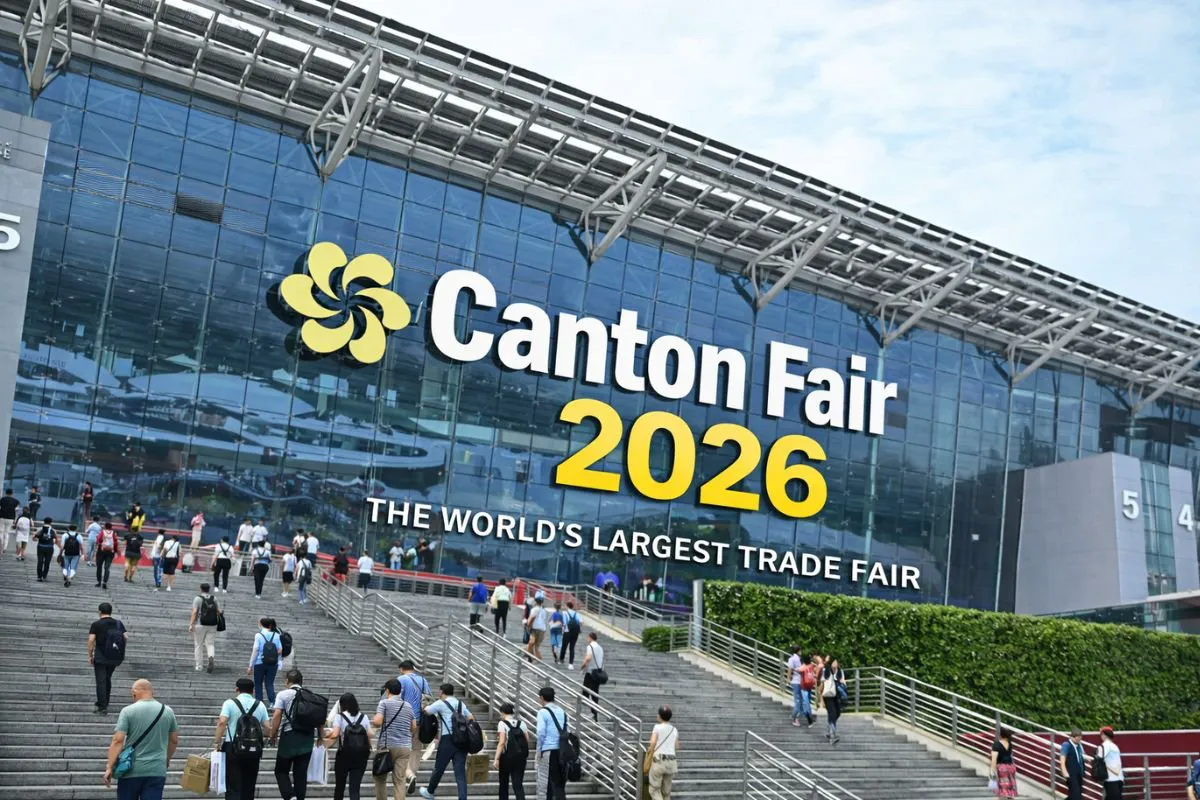
Whether you are walking the halls this week or flying in for Phase 2 (23–27 October) or Phase 3 (31 October–4 November), four questions decide whether your fair purchases get home cheaply: how to get samples out of the Pazhou halls without paying eight separate courier minimums, how to turn orders from a dozen scattered suppliers into one shipment, what freight actually costs in October 2026, and whether the port next door — Nansha — genuinely gives Guangzhou-sourced cargo an edge. The scale behind those questions: the previous session drew 314,000 overseas buyers from 220 countries and recorded USD 25.7 billion in on-site intended orders, and this session arrived with over 220,000 buyers pre-registered from 197 countries before the doors even opened. If you read only one section, read the mode-matching table in Section 5, because choosing wrong there is how a $400 sample run becomes a $2,800 lesson.
1. The 140th Fair on the Ground: Dates, Phases and the Days Nothing Ships
The fair runs in three five-day phases, each with a different product mix — and, importantly for your freight planning, each with different cargo characteristics that change how your shipment should be packed, booked and insured. The halls close completely on the changeover days, which are dead time for logistics too: most exhibition-service counters shut down and the freight desks shift equipment between phases.
| Phase | Dates (2026) | What is on the floor | What that means for shipping |
|---|---|---|---|
| Phase 1 | 15–19 October | Electronics and appliances, machinery, tools, new energy, vehicles and hardware | Weight, batteries and dangerous goods become your problem: lithium classifications, machinery crating, out-of-gauge dimensions. Air couriers will refuse loose battery goods |
| Phase 2 | 23–27 October | Furniture, building materials, houseware, ceramics, gifts and decorations | CBM-heavy and fragile: furniture eats container space, ceramics need palletizing and moisture protection. This is the LCL-and-wrap phase |
| Phase 3 | 31 October–4 November | Textiles, shoes, bags, toys, personal care, food and health products | Label and compliance-sensitive: fiber content labels, toy safety documents, ingredient restrictions at destination. Food-adjacent cargo triggers extra checks |
| Date | Fair status |
|---|---|
| 15–19 October | Phase 1 open |
| 20–22 October | Changeover: halls closed |
| 23–27 October | Phase 2 open |
| 28–30 October | Changeover: halls closed |
| 31 October–4 November | Phase 3 open |
| 5 November onward | The real shipping season begins |
That last row matters more than most attendees realize. The fair is where deals are made, not where goods are shipped. Suppliers leave Pazhou with order books, go home, buy raw material and start production. The volume wave hits the ports in the second half of November and runs through December — which is also when buyers trying to beat the January factory slowdown ahead of Chinese New Year all want the same sailings and the same air space.
2. Before You Fly In: Six Details That Decide Your Freight Bill
Experienced buyers collect information at the booth the way they collect catalogs — systematically. The difference is that these six details, gathered in a two-minute conversation, are what your freight forwarder needs to give you a number that survives contact with reality:
- The real pickup address, not the booth number. "Canton Fair Complex, Hall 9.3" tells a forwarder nothing. You want the factory or warehouse city and district: Foshan Shunde, Dongguan Chang'an, Shenzhen Bao'an, Yiwu. Distance to a port varies from 30 minutes to 900 kilometres, and that is often the difference between a routine pickup and a $300 inland trucking line item nobody quoted.
- Manufacturer or trading company. Ask directly. A trading company adds a layer: goods may arrive at their consolidation point first, which changes who controls the export declaration and the timeline.
- Whether the supplier can export. Some excellent factories have no export licence and quietly hand your order to an agent. That is workable, but your forwarder needs to know which regime applies before booking.
- The Incoterm on the quote. EXW, FOB, FCA and DDP are four different freight bills with the same goods inside. "FOB Guangzhou" from a factory in inland Hunan is a red flag worth chasing down at the booth, not in week six.
- Realistic cargo-ready dates. A sample on the table today does not mean a carton ready next week. Get the production lead time in writing on the proforma invoice: 15, 30 or 60 days. Your consolidation plan depends on it.
- The special-cargo profile. Batteries installed or loose, liquids, powders, magnets, branded goods, wood packaging that needs ISPM 15 heat treatment. Any of these can stop a courier acceptance or a booking at the airport. Two minutes of questions at the booth saves a week of replanning.
One more habit that pays for itself: photograph the product, the carton marks and the business card together, and keep one folder per supplier. When four suppliers all sell you "LED lighting" and two cartons arrive unmarked at the warehouse in week five, that photo is the difference between a one-hour sort and a three-day mystery.
3. Inside the Halls: Getting Samples Home Without Eight Courier Invoices
Almost every buyer at the fair faces the same logistics problem by day two: the samples. They are awkward, some are fragile, your luggage is full, and the easy answer, handing each supplier your hotel address and letting them courier the sample internationally, is also the expensive one. Eight suppliers sending eight separate DHL or FedEx parcels from China to your office means eight China-origin pickup charges, eight international minimum-weight charges, eight tracking numbers and eight separate customs entries at destination. The per-kilogram price of a 3 kg courier parcel is several times that of a 30 kg consolidated one.
The alternative is consolidation inside China. Each supplier sends their sample by cheap domestic courier to one receiving warehouse, where each batch is labelled against your supplier list, checked in with photos, and combined into one international shipment. You pay one export declaration, one international leg, and one clearance event at home. It is not automatically cheaper in every case — supplier location, waiting time and restrictions all matter — but for anything above three or four sample parcels it is worth pricing both ways before the suppliers start dispatching.
A few rules that apply no matter which route you take:
- A commercial invoice travels with the goods even for free samples. Customs at destination works from a document describing what is inside, quantity, value and origin. A proforma invoice is an estimate, not a substitute.
- Declare honestly. Marking samples as "commercial samples for evaluation, not for resale" is legitimate where it applies. Under-declaring value to dodge duty is not, and the saving is trivial against the consequences of a misdeclaration on your import record.
- Ask what basis the shipment moves on. Samples sent to you and exhibits moving between trade shows are treated as different transaction types; confirm with the supplier which one applies and who prepares the paperwork.
- Courier counters in and around the complex — plus hotel pickup services offered by forwarders and the airlines' baggage-delivery desks at the Pazhou ferry terminal — are convenient for one urgent parcel. They are priced for urgency, not for the eight-parcel scenario.
The four realistic routes out of the fair, and where each one stops making sense:
| Route | Best for | Watch out for |
|---|---|---|
| Carry it home | Small, unbreakable samples | Fragile ceramics and glass travel badly in luggage; airline baggage limits |
| Courier from booth or hotel | One or two urgent parcels | Per-kilogram price jumps as weight rises; battery and liquid refusals |
| Domestic consolidation, then one international shipment | Three or more sample parcels from different suppliers | Adds a few days of domestic transit; needs a warehouse address in China |
| Leave the sample, ship with the bulk order later | Large or heavy reference pieces | You commit before testing the supplier; protect yourself with the inspection step in Section 8 |
If the samples include batteries, liquids or anything with a motor, sort that out at the booth. Express networks are far stricter on loose battery goods than ocean freight, and a sample refused at the counter three days before your flight home is a problem with no cheap fix.
4. After the Fair: Where Your Orders Actually Are
Here is the map most first-time fair buyers never see. The business card says Guangzhou, but the cargo is scattered across half of China's manufacturing geography:
- Pearl River Delta core: Guangzhou itself, Foshan (furniture, ceramics, building materials), Dongguan (electronics, plastics, toys), Shenzhen (electronics, high-value consumer goods), Zhongshan and Jiangmen (lighting, hardware, appliances), Huizhou (electronics, batteries).
- East and Central China: Ningbo and Shanghai (machinery, consumer goods, textiles), Suzhou (precision goods), and Yiwu — the trading and small-commodity hub where many Canton Fair traders consolidate their orders before export.
Practically, this means your October fair order is really three to eight separate domestic shipments that must converge before anything crosses a border. A lighting factory in Zhongshan finishes on 12 November, a display-fixture maker in Foshan on 16 November, an electronics supplier in Dongguan on 28 November. Nothing ships efficiently until every carton is in one place, checked against what was agreed at the booth, with the wrong cartons held back and the supplier chased in Chinese when something arrives short. That receiving-and-checking function needs a real address in China and someone who can refuse a delivery. No freight quote includes it, and no courier service substitutes for it.
The timeline that results is predictable, which is why it pays to plan around it:
| Stage | Typical timing after the fair | What happens |
|---|---|---|
| Order confirmation | Week 1 | Booth conversation becomes a proforma invoice: material, dimensions, packing, quantity, unit price, lead time, trade term. If it is not written, it was not agreed |
| Deposit and production | Weeks 1–8 | Commonly 30 percent deposit; production lead times run 15–60 days depending on product and season. Fair-season orders stack up behind each other at busy factories |
| Goods delivered to warehouse | November–December | Each supplier ships domestically to the consolidation point; batches are checked in, counted, photographed |
| Consolidation, booking, export | Once the last batch lands | One shipment booked; one export declaration; one bill of lading with your name on it |
| Transit and delivery | December–February | Ocean to most markets, air for the urgent remainder, with the Chinese New Year factory shutdown in late January and February 2027 compressing everything before it |
The buyers who get their fair orders home cheap are rarely the ones who negotiated the hardest at the booth. They are the ones who decided in October where the cartons would converge in November.
5. Match the Mode to What You Bought
The single most common money-waster after the fair is applying one shipping method to purchases that have nothing in common. Use this table as the first pass, then get a quote on the real numbers:
| What you have | Typical size | Sensible first option | Why |
|---|---|---|---|
| One or two small samples | Under 5 kg | International courier | Door-to-door, tracked, declared correctly. Paying for speed you do not need is still cheaper than the alternatives at this weight |
| Samples from many suppliers | 5–30 kg total | Consolidate at one China warehouse, then one international parcel or small air shipment | One export declaration, one clearance event; domestic leg in China costs very little |
| A small trial order | 100–500 kg | Standard air freight or LCL by sea | Air freight prices per kilogram drop hard above courier weight; LCL wins if you can wait 3–5 weeks |
| Several trial orders from different factories | 1–8 CBM combined | Warehouse consolidation, then LCL as one shipment | Each factory booking its own LCL means multiple minimum charges and multiple destination fees. One consolidated LCL wipes most of that out |
| A full container's worth from one or two suppliers | 13+ CBM, especially 25–28 CBM | FCL 20GP or 40HQ | The LCL-versus-FCL break-even sits around 13–15 CBM once destination CFS fees are counted; above that a whole container is usually cheaper per unit and far gentler on the cargo |
| Furniture, machinery or project cargo | One or more containers | FCL with loading supervision | Container utilization, crating and lashing decide the cost more than the ocean rate does. Inspect loading or pay for photos at minimum |
| Amazon FBA or 3PL inventory | Cartons, palletized | Freight plus destination prep | Labels, carton weights and dims, and FBA receiving requirements must be settled before the goods leave China, not at the destination port |
Two things in that table deserve emphasis. First, the 13–15 CBM LCL break-even surprises people every year: LCL quotes look cheap per cubic meter, but destination charges — CFS handling, documentation, minimums — are charged per consignment, and they multiply with every separate shipment. Second, if you want the whole thing handled as one all-in number — pickup, consolidation, export, ocean or air, destination clearance, duties and delivery — that is exactly what a door-to-door shipping from China service is for, and it is how most small and mid-size fair buyers avoid managing six vendors from a hotel room.
6. What October 2026 Rates Actually Look Like
Fair-season pricing this year has a trap in it: the global indexes are calm-looking while the lane you actually ship on may be anything but. Golden Week ended on 7 October, and the rate relief that normally follows the holiday did not arrive — the market split in two. On 6 October, the Freightos Baltic Index print showed Asia–US West Coast at $8,322 per FEU and the East Coast level around $9,600, with market averages for Far East–US East Coast as high as $11,512 on 7 October, roughly 335 percent above the pre-war baseline. Asia–North Europe, meanwhile, had fallen for a thirteenth straight week to about $3,645 per FEU (−34 percent since 1 July) and the Mediterranean to $4,007, as carriers moved services back through the Suez Canal and poured capacity onto the lane.
For a fair buyer, three consequences follow:
- Your negotiation anchor depends on your destination. A US-bound importer and a Germany-bound importer standing at the same booth are buying in different markets that happen to share a loading port. Do not import a "China shipping rate" from a headline; ask for a quote on your lane, this week.
- Surcharges are doing the moving. With base rates under pressure on some lanes, carriers are pushing cost through elsewhere — emergency congestion surcharges on crowded legs, Peak Season Surcharges stacked back onto transpacific bookings, and equipment imbalances that show up as fees rather than rates. The all-in number and the base rate can differ by 25–40 percent.
- Space, not price, is the October bottleneck. Only 34 blank sailings were announced across the main east–west trades for the five weeks from 12 October — light by historical standards — but carriers are holding back transpacific capacity while recovering Asia port operations, and air freight out of South China tightened again as factories restarted after the holiday. We track the weekly movement in our Golden Week 2026 blank sailings and rate analysis, and the practical advice stands: book confirmed space for November–December departures now, and treat any quote older than two weeks as a historical document, not a price.
None of this should scare you off ordering. Rates at these levels are workable for most product categories, and European-bound buyers are shipping into the cheapest Asia–Europe market in over a year. It simply means the fair discount you negotiated sits inside a freight market that rewards people who book early and punishes people who assume rates will wait for them.
7. The Guangzhou Advantage: Nansha Port and When to Look Elsewhere
Buyers who source at the Canton Fair have a logistical gift sitting 60 kilometres down the Pearl River that competitors sourcing in Yiwu or inland China do not: Nansha, the deep-water container port that handles roughly three quarters of Guangzhou's container volume. The 2025 numbers tell the story: Guangzhou Port moved 28.05 million TEU, up 6.1 percent year on year, and Nansha alone moved 22.25 million TEU, up 10.2 percent — growth that has not let up for two decades. Guangzhou is now a top-five container port in the world, and Nansha is where the fair's cargo actually loads.
What that means at booth level:
- Direct sailings without the Shenzhen detour. Nansha runs around eight weekly sailings to North America and Europe and more than 75 services worldwide, including direct calls that save the Hong Kong or Yantian relay. For furniture and houseware out of Foshan, the factory-to-berth dray is often under an hour.
- Cheaper, faster gate traffic. Terminal turn times around the half-hour mark and 24/7 operation mean pickups and deliveries are not hostage to gate windows — a quiet but real saving on trucking.
- Room to grow exactly when fair volume peaks. The fifth phase of Nansha's expansion broke ground on 15 May 2026, adding capacity on the very timeline the post-fair shipping wave needs. On 13 October 2026, the largest electric container ship in South China began a zero-carbon Nansha–Hong Kong shuttle service carrying 240 TEU — small in capacity, but a sign of how actively the port is adding feeder options.
- Lower local haulage. Drayage to Nansha from the western PRD factory belt routinely runs 30–50 percent below equivalent moves into Shenzhen terminals, which matters when your order is three LCL batches converging from three cities.
When should you look past Guangzhou? When the supplier cluster dictates it. Electronics out of Shenzhen's eastern districts sometimes load cheaper via Yantian or Shekou; orders consolidated in Yiwu belong on a Ningbo or Shanghai sailing; and some destination lanes have better direct coverage from other ports. The rule is simple: the port should follow the cargo, not the fair. Our sea freight from China desk prices Guangzhou-origin cargo ex Nansha as the default and only moves the load port when the numbers genuinely say so. A US-bound buyer, for example, can line up three references on the same cargo: our Shipping from China to USA lane page for port-to-port benchmarks across all Chinese load ports, and the shipping from Guangzhou to the USA guide for what the South China factory belt specifically adds or saves on that trip.
8. Seven Mistakes Fair Buyers Repeat Every Session
Freight forwarders have watched fair crowds for decades, and the same seven errors show up every single session:
- Letting every supplier ship separately. Ten suppliers, ten LCL bookings, ten sets of destination charges. Consolidation at one China warehouse turns that into one shipment — usually the single biggest saving available after the fair.
- Booking freight before the cargo exists. Production slips; sailings get missed; demurrage clocks start. Book against confirmed cargo-ready dates, with the flexibility to roll, not against hope.
- Accepting "FOB Guangzhou" from a factory 800 kilometres inland. The inland leg does not disappear because it is inside an acronym. Ask what the FOB port actually covers and who pays the trucking to it.
- Under-declaring samples. A "$20" declaration on a $200 sample saves a few dollars of duty and buys a permanent mark on your importer record if customs disagrees. Declare what it is worth.
- Skipping the paperwork pass at the booth. HS codes, battery status, export licence, lead time — all of it is answerable in two minutes face to face and painful to chase across time zones in week five.
- Paying the balance before inspection. Once the balance leaves your account, your leverage is gone. Inspect against the approved sample before the final payment, every time.
- Ignoring the calendar after the fair. Orders placed at Phase 1 that slip four weeks land in mid-December, collide with the pre-holiday rush and the January factory slowdown ahead of Chinese New Year 2027. A week of slippage in October is cheap; the same week in January is expensive.
9. What AllBestShipping Can Do While You're Still in Guangzhou
If you are reading this between halls at Pazhou, the useful part is what can start today. AllBestShipping is a Shenzhen-based freight forwarder, about an hour from the fair complex, and the three fair weeks are the busiest stretch of our year:
- Send us your supplier list from the booth. Cities, products, estimated cartons, cargo-ready dates, Incoterms. We turn that into a consolidation-and-freight plan with real numbers, usually the same day, so you can place orders knowing the landed cost rather than guessing it.
- Samples and small buys: we collect from your hotel or arrange domestic delivery to our warehouse, consolidate, and ship as one parcel, one air shipment or one LCL consignment.
- Multi-supplier orders: we receive from anywhere in China — Foshan, Dongguan, Shenzhen, Zhongshan, Yiwu — check each batch against your packing lists with photos, hold the wrong cartons, and load the rest as one shipment.
- Full-service options: FCL and LCL ocean freight, air freight, rail to Europe, DDP door-to-door where your market calls for it, export customs clearance, freight insurance, and Amazon FBA routing with labels and receiving requirements handled before departure.
- Languages and hours: our team works in English and Chinese across the fair weeks, which matters when the supplier's "Friday" and your "Friday" are different conversations.
The practical next step: before your flight home, put every business card into one message — photos of the cards are fine — with the destination country and postcode for each order. You will land with a shortlist of priced options instead of a folder of maybes.
10. Frequently Asked Questions
Can I ship a sample directly from my booth or hotel in Guangzhou?
Yes. Forwarders and courier services can collect from the exhibition complex or your hotel during the fair; some exhibition-service counters inside the halls handle urgent parcels as well. For more than two or three samples, price consolidation at a China warehouse against separate courier dispatches before you commit — separate parcels multiply both the freight and the destination clearance charges.
How long after the Canton Fair will my order actually ship?
Most orders placed at the fair are produced over 15–60 days, so the shipping wave peaks from mid-November through December. Add ocean transit of roughly 2–5 weeks depending on destination, and expect the pre-Chinese-New-Year factory slowdown in late January and February 2027 to compress the schedule for anything that slips.
Should I let each supplier arrange their own shipping?
Only if you enjoy paying minimum charges in multiples. Separate shipments mean separate export declarations, separate destination fees and separate tracking headaches. Consolidating everything through one warehouse and one forwarder is almost always cheaper for multi-supplier orders, and it gives you one accountable party when something goes wrong.
Is DDP door-to-door a good idea for a first-time fair buyer?
Often, yes. DDP hands one vendor the whole chain — pickup, export, freight, destination clearance, duties and delivery — which suits buyers without an import setup at home. The trade-off is that you must verify what the DDP quote actually includes: duty basis, destination handling and any exclusions. Ask for the breakdown in writing before comparing it against CIF-plus-local-costs.
My best supplier is in Yiwu, not Guangzhou. Does that change anything?
The fair is in Guangzhou; manufacturing is everywhere. A Yiwu-based supplier's cargo will usually export via Ningbo or Shanghai rather than Nansha, and a good consolidation plan accounts for that routing instead of forcing everything through Guangzhou. Distance to load port is one of the inputs we price per supplier, not an afterthought.
What paperwork do I need for samples compared with a commercial order?
Both travel with a commercial invoice describing contents, quantity, value and origin — even low-value or complimentary samples. Commercial orders add a packing list, bill of lading or air waybill, HS classification, and any product-specific certificates your destination requires. Never let a "gift" or "no value" declaration stand in for an invoice.