Sea Freight from China to Ghana: FCL & LCL to Tema in 2026
Sea freight from China to Ghana costs $3,000–4,350 for a 20GP and $4,400–5,900 for a 40GP/40HQ port-to-port to Tema on October 2026 forwarder spot rates, with LCL at $190–290 per CBM and 30–46 days of sailing from Chinese load ports. What decides whether this quarter's shipment succeeds is no longer the number on the quote. Since 1 July 2026 every applicable consignment needs a Ghana EASYPASS Certificate of Conformity issued in the export country before it is loaded, and since 3 August 2026 a shipper that is not registered with the Ghana Shippers' Authority cannot get a declaration processed on the ICUMS platform at all — two gates that cannot be repaired after arrival, and the reason shipments that were routine in 2025 are being refused clearance in late 2026.
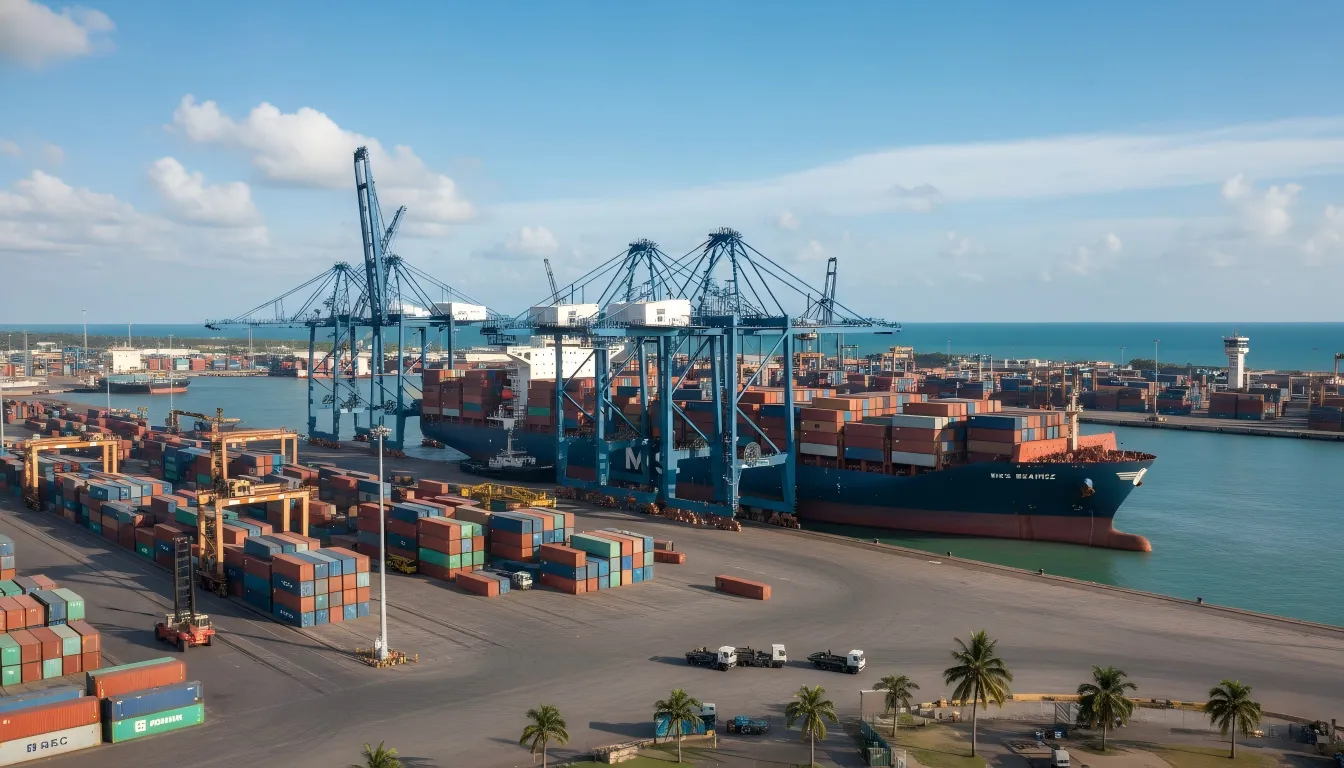
This guide covers the whole lane as it stands in October 2026: port-pair FCL and LCL rates and why carrier FAK list prices read $600–1,300 higher per box, transit times by origin port, the 13–15 CBM point at which LCL stops paying, the Tema CFS unpacking trap, the new GH¢720 container administrative charge, choosing between Tema and Takoradi, the registration–conformity–vehicle-standards stack that now gates loading day, duties of 0–35 percent with a 20 percent effective VAT, and the storage and demurrage clocks that bill you by the day. The scale behind those numbers: China is Ghana's largest source of imports, supplying 22.7 percent of everything the country bought in 2025 — GH¢57.6 billion — and widening to 29.7 percent in the first quarter of 2026, on bilateral trade of $14.1 billion last year. Everything from Shipping From China To Ghana onward has to line up before your booking is accepted, so if you read only one section, read the nine questions in Section 10 — the checklist we clear before we confirm a Ghana-bound sailing ourselves.
1. The China–Ghana Ocean Lane in October 2026: What Has Changed
- 3 August 2026 — shipper registration became a clearance gate. Section 26(1) of the Ghana Shippers' Authority Act, 2024 (Act 1122) requires every importer and exporter to register with the Authority before processing shipment transactions in ICUMS, and enforcement on the platform began on 3 August 2026 after the freight-forwarding associations asked for more time at the 5 August sensitization session in Accra. Registration costs GH¢150 and is valid for 12 months; a declarant can be billed for it on your behalf, but an unregistered shipper's declaration simply does not move. The authoritative notice is published by the Ghana Shippers' Authority. On a DDP or door-to-door booking this is our registration, not yours — but ask, because plenty of quotes still ignore it.
- 1 July 2026 — EASYPASS conformity became mandatory, pre-shipment only. The Ghana Standards Authority's EASYPASS programme launched on 1 June 2026 and has been mandatory for the covered product groups since 1 July, with verification carried out in the country of export before the goods are shipped; destination inspection is explicitly not allowed, so cargo that arrives without a Certificate of Conformity cannot be cleared afterward. The GSA now issues the CoC directly, having taken over the third-party inspection role, and applications run through the EASYPASS portal. The programme data sheet is published on gsa.gov.gh.
- 1 October 2026 — GS 4510 used-vehicle enforcement began. The GSA moved to strict enforcement of the Ghana Standard 4510 requirements for used vehicles, having first set a 10-year age limit and then revised it to 15 years on 14 August 2026 after consulting the trade. Prohibited vehicles include those originally built right-hand drive, units assembled from spare parts, flood- or fire-damaged vehicles, structurally compromised chassis, and any vehicle whose speedometer does not read in kilometers per hour. A Certificate of Conformance is mandatory. Vehicles shipped before 1 October 2026 are exempt even if they arrive later — a booking cut-off, not an arrival date. The notice is summarized by Graphic Online.
- The GH¢720 container administrative charge is now being enforced. The approved Container Administrative Charge is collected per container and the Ghana Institute of Freight Forwarders is actively enforcing it with its members — roughly US$61 at the 11.77 cedi rate of 9 October 2026. It is small, it is real, and it is the kind of line item that turns into an argument at collection.
- The 2026 VAT reform is still working through invoices. Under the VAT Act 2025 (Act 1151), the 1 percent COVID-19 Health Recovery Levy was abolished on 1 January 2026 and NHIL and GETFund moved onto the same tax base as VAT, taking the effective rate from 21.9 to 20 percent. For unregistered importers, withholding VAT at import rose from 12.5 to 20 percent of customs value. Anyone still quoting a 12.5 percent figure is working from a 2025 spreadsheet.
- The Smart Port Note has been declared and deferred — it is still not live. Announced on 23 December 2025 under L.I. 2190 for sailings from 1 February 2026, it would have required a unique SPN code per bill of lading, issued and verified at the port of loading, for all cargo including transit — with the fee carried by the exporter, not the Ghanaian consignee. The Authority deferred the rollout on 20 January 2026 for further consultation and has not set a new date. Do not plan for it, and do not dismiss it: confirm the status per booking.
- Tema is busy, but the wait is shorter than it was mid-year. Tema Terminal 3 — 127 hectares, 1.4 km of quay and 16 m draft, which lifted container capacity from roughly 800,000 to 3.7 million TEU — is carrying the growth, on a port that handled about 2.2 million TEU in 2025 and is partway through a $1.5 billion expansion. Vessel waiting time at Tema ran a 3.57-day median in the week to 27 September 2026, down 18 percent week on week but still rated high congestion; in June 2026 the seven-day average peaked around 5.8 days while GPHA publicly flagged landside congestion from import surges, empty-container accumulation and blocked port roads. Expect improvement, not relief.
- Global rates are elevated, and West Africa is a low-frequency lane. The Drewry composite index printed $4,351 per 40ft on 8 October 2026 — down 2 percent on the week, but up 164 percent year on year (Drewry World Container Index). Ghana has few direct calls, so most boxes transship at Tanjung Pelepas, Singapore, Colombo, Lomé or Tanger Med, and each transshipment is a chance to lose a week. Golden Week's blank sailings tightened early-October space out of China, and this month the Premier Alliance began resuming some Red Sea transits — progress that matters more to sailing times than to rates.
Two things did not change. Tema still handles the overwhelming majority of Ghana's containerized imports, with Takoradi serving the west and the mining belt. And EASYPASS obligations still travel with the goods, not with the Incoterm: FOB, CIF or DDP, if your product group is covered, the Certificate of Conformity has to exist before loading.
2. How Much Does Sea Freight from China to Ghana Cost?
The table below shows indicative port-to-port (CY-CY) spot rates from the six Chinese load ports that dominate Ghana-bound trade to Tema for October 2026, compiled from forwarder quotations published through Q3 and early Q4 2026 and cross-checked against booking-desk rate logs. These are general-cargo figures; reefers, out-of-gauge and hazardous cargo price separately.
| Origin Port (China) | Destination | 20GP (USD) | 40GP / 40HQ (USD) |
|---|---|---|---|
| Shenzhen (Yantian / Shekou) | Tema | $3,000 – $3,900 | $4,400 – $5,300 |
| Guangzhou (Nansha) | Tema | $3,050 – $3,950 | $4,500 – $5,400 |
| Shanghai | Tema | $2,950 – $3,850 | $4,300 – $5,200 |
| Ningbo | Tema | $3,150 – $4,050 | $4,600 – $5,500 |
| Qingdao | Tema | $3,300 – $4,250 | $4,800 – $5,800 |
| Tianjin | Tema | $3,400 – $4,350 | $4,900 – $5,900 |
Three things to read into those ranges before you compare them against anyone else's quote.
First, South and East China load cheapest; the north pays for the extra leg. The spread between Shanghai and Tianjin is roughly $450 per box on the same sailing week, driven by how many West Africa strings call each port and how much feeder or relay volume sits behind them. Shenzhen and Guangzhou run the most sailings and the shortest transits, which is why Guangdong suppliers rarely gain anything by routing through another port. For a supplier in Zhejiang or Jiangsu, Ningbo is the obvious load port; a supplier in Shandong should compare Qingdao against trucking to Shanghai before assuming the local port wins.
Second, the 40HQ is the volume play — but check the ratio, not the sticker. A 40-foot high cube carries roughly twice the cubic capacity of a 20GP for about 45 to 55 percent more freight on this lane, which is a slimmer premium than most importers expect, because West African equipment positioning has been tight on 20-foot units and carriers price accordingly. Once your cargo passes 28 CBM, the per-cubic-meter math almost always favors the 40HQ; below that, a 20GP protects you from paying for air you are not shipping. Note the anomaly while you are here: on some weeks in 2026 the 40-foot rate into West Africa has printed below the 20-foot rate on all-in quotations, because carriers needed to repatriate forty-foot equipment. If your forwarder offers you that, take it — and confirm the free time that comes with it.
Third, spot and FAK are two different products, and both are honest. If your buyer's bank or their customs broker pulls up a carrier tariff and sees a number $600–$1,300 higher per box than this table, nobody is lying. FAK rates are list prices with longer validity, broader surcharge inclusion and priority space positioning. Spot rates through a forwarder are cheaper on paper and can be repriced at booking. What matters is the all-in figure on a quote you can hold, including every line item Section 8 lists. Some Ghana-side forwarders publish all-in port-to-port figures starting near $2,900 per 20GP on October rate sheets; the gap between that and a CY-CY spot rate is not a discount, it is a different scope — usually with destination terminal handling folded in and free time trimmed.
One more October 2026 note on timing: with Golden Week behind us and blank sailings absorbing early-month capacity, forwarders report space tightening into the second half of the month, and the FAK-versus-spot gap tends to widen exactly when space does. If your cargo is ready, this is a reasonable window to lock an FCL — with the 7–14 day validity written into the quote, and a named reconfirmation step before booking. Our own Sea Freight from China desk quotes Ghana as a routed, all-in number rather than a headline ocean rate, because on this lane the exclusions are where the money hides.
3. LCL from China to Ghana: Per-CBM Pricing and the Tema CFS Trap
Less-than-container-load shipping — sharing a box and paying only for the space you use — prices at $190–290 per CBM into Tema in October 2026, billed on the revenue tonne (one metric ton or one cubic meter, whichever is greater, with a one-CBM minimum at most consolidators), plus fixed documentation and container freight station (CFS) charges at both ends.
The math looks simple until Tema enters it. Ghana's destination deconsolidation and handling fees are high, and they are destination charges: invisible in a port-to-port comparison and impossible to dodge once your cargo has been stripped out of the container. That is why experienced importers treat 13–15 CBM as the break-even point for Ghana, not the 20GP's 28-CBM physical capacity:
- Below ~12 CBM, LCL wins on total landed cost, full stop.
- Between 13 and 15 CBM, quote both. A shipment at 14 CBM priced at $240 per CBM costs about $3,360 in ocean freight, plus $250–450 of destination unpacking, warehouse handling and documentation — call it $3,610–3,810 before duties. A 20GP from Shenzhen at $3,000–3,900 with no CFS unpacking obligation is frequently the cheaper and always the calmer option. The container being half empty is not a loss; it is unused risk capacity.
- Above ~16 CBM, FCL almost always wins; above 28 CBM, go straight to the 40HQ math from Section 2.
Three refinements that matter in Q4 2026. First, the GH¢720 Container Administrative Charge is levied at container level, so on an LCL file it is either absorbed by the consolidator or passed through on your invoice — ask which, in writing, before you book. Second, consolidation frequency decides more than the sailing. If your forwarder only consolidates Ghana cargo every two weeks, you can lose a fortnight before the vessel ever sails; weekly consolidation is a real, checkable service difference, and it is why our Ghana LCL books run weekly. Third, LCL adds 3–7 days for consolidation in China and deconsolidation at Tema, on top of a port that has been rated highly congested all year.
One structural point worth understanding before you choose LCL for a mixed order: your shipment travels under one bill of lading shared with other shippers' cargo. If another consignee in that container has a valuation dispute, an unpaid duty bill or a red-channel inspection, your cargo waits with theirs. For trial orders and small accessory runs, that shared fate is a fair trade for the lower cost. For a shipment you have promised a customer, FCL Shipping — where the box is sealed at your supplier's factory and opened at your consignee's warehouse — is the product you actually want.
4. Sea Freight Transit Times from China to Ghana (By Port Pair)
Transit on the China–Ghana lane is a transshipment story before it is anything else. There are few direct West Africa calls from China, so most cargo relays at Tanjung Pelepas, Singapore, Colombo, Lomé or Tanger Med, and the relay — plus the wait for the connecting vessel — is where honest ranges come from. The table gives port-to-port FCL times by origin port and the fuller LCL window:
| Origin Port (China) | Destination | FCL Port-to-Port | LCL (adds consolidation) |
|---|---|---|---|
| Shenzhen (Yantian / Shekou) | Tema | 30 – 35 days | 33 – 42 days |
| Guangzhou (Nansha) | Tema | 32 – 38 days | 35 – 45 days |
| Shanghai | Tema | 32 – 42 days | 35 – 49 days |
| Ningbo | Tema | 35 – 40 days | 38 – 47 days |
| Qingdao | Tema | 38 – 45 days | 41 – 52 days |
| Tianjin | Tema | 40 – 46 days | 43 – 53 days |
| Qingdao / Tianjin | Takoradi | 42 – 48 days | 45 – 55 days |
Read those numbers against three clocks. The sailing clock is the ocean leg itself: 30–46 days port-to-port, with South China fastest because it gets the strongest relay connections and North China trailing through feeder legs. The port clock is Tema — add vessel waiting time, which ran a 3.57-day median in the last full week of September 2026 (down from about 5.8 days in June) plus 3–7 working days of clearance once documents are in order, or route through Takoradi if your consignee sits in the Western Region. The compliance clock is the one importers forget: EASYPASS verification happens before loading, so a missing Certificate of Conformity does not add days to your transit, it cancels your sailing.
Stacked realistically, door-to-door sea freight from China to Ghana plans at 40–55 days — supplier's dock to consignee's warehouse — and the disciplined move is to quote your customer the conservative end while working internally to the optimistic one. If your booking lands on a service that relays twice, the same shipment becomes 55–65 days without anyone having made a mistake. For the full picture across all modes, including air to Accra's Kotoka International Airport at 3–7 days, our How Long to Ship from China to Ghana guide compares the options side by side.
5. Choosing Your Arrival Port: Tema, Takoradi and the Inland Terminals
Ghana has one dominant gateway and one specialist one. In 2026 they play genuinely different roles, and the third option on the horizon is not yet a decision you can make:
| Gateway | Region | 2026 Profile | Best For |
|---|---|---|---|
| Tema | Greater Accra, 30 km from Accra | Over 80% of national container traffic; about 2.2 million TEU handled in 2025; Terminal 3 lifted capacity from ~800,000 to 3.7 million TEU; $1.5 billion expansion under way; vessel waiting 3.57 days median (late September 2026); landside congestion from import surges and empty-container build-up | Almost everything: Accra, Tema, Kumasi, Tamale and national distribution |
| Takoradi | Western Region | Oil, gas, mining and bulk first; integrated container terminal phase one complete; feeder call typically adds 2–4 days and $150–300 per box | Consignees in Sekondi-Takoradi, Tarkwa and the mining belt, where a 200 km inland haul from Tema costs more than the feeder |
| Boankra (BILT) | Inland, near Kumasi | Around 85% complete on 2026 budget reporting; YILPORT visited the Authority in January 2026 to discuss investment and operation; projected inland-freight cuts of 14% toward Takoradi and 48% toward Tema — not open for routine routing decisions | Future inland dry-port cargo, including transit to Burkina Faso, Mali and Niger |
Two strategic reads. For FCL, default to Tema unless your consignee is in the Western Region — Tema's carrier frequency, reefer capability and terminal productivity are simply better, and the inland truck from Tema to Kumasi is a known, quotable cost. For LCL, Tema is not optional: the consolidation and CFS infrastructure sits there, and deconsolidating anywhere else adds days you cannot recover. Both ports now run 24-hour operations under the government's 24-Hour Economy policy, which has helped yard throughput even where the road approaches remain the bottleneck.
Watch one number as you plan. Roughly 40 percent of Tema and Takoradi throughput is transit cargo bound for landlocked Burkina Faso, Mali and Niger. When those corridors back up — and they did repeatedly in 2026 — congestion spills back into the Tema yard, which is exactly the mechanism behind the June 2026 wait times. If your shipment lands in a week when the northern corridors are jammed, your "port congestion" is really someone else's transit delay, and no amount of broker pressure will fix it.
6. The 2026 Compliance Stack: Register, Certify, Then Book
If you remember one section of this guide, remember this one. Ghana has rebuilt its import administration around two principles in 2026 — every shipper must be registered, and applicable goods must be verified before they sail — and both deadlines fall before loading, not after arrival. Here is the stack in the order we clear it.
Step 1 — Shipper registration with the Ghana Shippers' Authority. Under Section 26(1) of Act 1122 (2024), no importer or exporter may process shipment transactions in ICUMS without registering. Enforcement began on the platform on 3 August 2026. Companies register with a Certificate of Incorporation, individuals with a valid Ghana Card, and the fee is GH¢150 for 12 months, covering all shipments in that period. A clearing agent acting for an unregistered shipper can be billed the GH¢150 to cover registration — but the declaration still stops until it happens. Registration details are shared with GRA Customs, which is why a registered shipper tends to see fewer red-channel surprises.
Step 2 — EASYPASS Certificate of Conformity, issued before loading. The Ghana Standards Authority verifies applicable cargo in the country of export, before shipment, through documentary review, testing and physical inspection, and issues a Certificate of Conformity (CoC) on success — or a Non-Conformity Report, which ends the file at the factory gate. Destination inspection is not permitted. The covered product groups are broad and squarely aimed at China-origin consumer imports: textiles and textile articles, base metals, plastics and rubber, chemical products, stone, cement and ceramic articles, machinery and electrical equipment, vehicles and transport equipment, optical and measuring instruments, miscellaneous manufactured articles, and used products (excluding selected prohibited items such as undergarments, mattresses, sanitary ware and LPG cylinders). Applications run through the EASYPASS portal at easypass.gsa.gov.gh and follow one of three routes:
| Route | Who it fits | Indicative cost |
|---|---|---|
| A | Any trader, any covered product — one-off shipment verification | Fee scale based on FOB value; exporters commonly budget 0.35–0.50% of FOB |
| B | Goods already registered with the GSA (regular importers/exporters) | USD 400 per year, covering the first 15 products, then USD 25 per product per year |
| C | Annual factory assessment (licensed manufacturers) | USD 1,200 per factory per year |
Fees sit with the exporter and are exclusive of taxes. Labeling and instructions must be supplied at minimum in English, and the standards hierarchy runs Ghanaian standard first, then international standards, then European or other national standards, then manufacturer specifications. On a DDP shipment this is our responsibility to sequence — but it belongs to the goods, not the Incoterm, so a CIF or FOB buyer who assumes the forwarder handles it is buying a clearance failure.
Step 3 — Track the Smart Port Note, but do not plan around it. The SPN regime was announced for 1 February 2026 then deferred on 20 January 2026 with no replacement date: one unique code per bill of lading, verified at the load port, fee on the exporter. Because it would apply at the load port, it is a booking-time requirement rather than a clearance-time one, which is why it belongs in this stack rather than in Section 7.
Step 4 — Vehicle-specific standards, if you import cars. From 1 October 2026 the GSA strictly enforces GS 4510: used vehicles must be 15 years old or newer (revised down from an initial 10-year proposal on 14 August 2026), originally manufactured left-hand drive, complete rather than assembled from spare parts, not flood-, fire- or structurally damaged, with speedometers reading in km/h. A Certificate of Conformance is mandatory — no CoC, no entry — and importers, distributors and dealers must register with the Authority, with pre-shipment inspection in the exporting country. Vehicles shipped before 1 October 2026 are exempt.
Step 5 — TIN, ICUMS and a licensed clearing agent. Every declaration runs through ICUMS, the GRA's electronic single window; duties are assessed in the system and paid at a participating bank against the generated tax bill, after which the cargo is routed to a channel. Commercial importers need a TIN, individuals a Ghana Card, and clearance must be filed by a licensed customs agent. A foreign seller cannot simply declare in its own name in Ghana.
Step 6 — If you are selling DDP, use a licensed Ghanaian importer of record. That is the structure we run: our Ghana partner holds the registration, files in ICUMS, pays duty and VAT, and delivers — which is why a DDP or door-to-door sale removes the registration and clearance burden from your customer entirely, without changing the EASYPASS obligation. Our Door to Door Shipping from China to Ghana guide walks through that structure end to end, including what happens if your buyer's own TIN is used instead.
7. Documents, Duties and Taxes on Arrival
The document set. For a standard sea consignment into Tema, assemble: a commercial invoice consistent in every line with the customs declaration, a packing list, the original or telex-release bill of lading (for vehicles, also showing chassis number, engine number, engine size, year, make and model), a certificate of origin where the goods or your buyer's bank require it, the EASYPASS Certificate of Conformity for covered groups, the importer's TIN or the individual's Ghana Card, and the Shippers' Authority registration reference. Any drift between invoice, packing list and B/L is what turns a green channel into a red one. Because ICUMS allows declarations to be lodged ahead of arrival on the strength of the manifest, a well-prepared file is typically cleared 3–7 working days after discharge — and a file with a discrepancy routinely takes longer than the sailing did.
The tariff ladder. Import duty follows the ECOWAS CET in five bands — 0, 5, 10, 20 and 35 percent — applied to CIF value: raw materials at 5 percent, intermediate goods at 10 percent, finished consumer goods at 20 percent, and sensitive categories such as textiles and poultry products at the 35 percent ceiling. On top of duty:
| Charge | Rate | Base / Notes |
|---|---|---|
| Import duty (ECOWAS CET) | 0 / 5 / 10 / 20 / 35% | CIF; confirmed by HS code at the six-digit level |
| VAT | 15% | CIF + duty, plus NHIL 2.5% and GETFund 2.5% on the same base |
| NHIL + GETFund combined | 5% | Same base as VAT — the reform that took the effective rate from 21.9% to 20% |
| COVID-19 Health Recovery Levy | Abolished 1 January 2026 | Do not let it appear on your invoice |
| ECOWAS levy | 0.5% | CIF |
| African Union import levy | 0.2% | CIF |
| EXIM levy | up to 0.75% | CIF |
| Special Import Levy | 2% | Specific goods categories |
| Examination fee | about 1% | CIF |
| Processing fee | about 1% | Customs value |
| Container Administrative Charge | GH¢720 | Per container, enforced in 2026 |
| Withholding VAT (unregistered importers) | 20% | Customs value — up from 12.5% |
A worked example you can reuse. Take $10,000 of CIF value in general consumer goods at the 20 percent band: import duty $2,000; VAT plus NHIL and GETFund at 20 percent of the $12,000 dutiable-plus-duty value $2,400; ECOWAS, AU and EXIM levies at roughly 1.45 percent of CIF about $145; examination and processing fees around 1–2 percent, call it $100–200; and the GH¢720 container charge about $61. Total landed tax and clearance cost of roughly $4,700–4,800 — about 47 percent of CIF — before your forwarder's brokerage fee of GH¢800–1,500 and before any inland haulage. There is no de minimis in Ghana: duty and VAT are due from the first unit, which is why even sample shipments need a declared value and a proper classification.
Two costs that surprise first-time importers. Free time is short and the penalties are daily: GPHA allows 7 days of free storage, then charges $35 per day for a 20-foot container and $52.50 per day for a 40-foot, while carrier demurrage and detention run on 7 days free for dry containers and 5 for reefers (21 days for coastal West African transit cargo, 28 for landlocked destinations). And clearance requires cash on the day: duties, VAT and levies are paid through the bank before the cargo is released, so a buyer who has budgeted only the freight has budgeted about two-thirds of the bill.
8. What a Sea Freight Quote Usually Excludes
The base ocean rate is the headline, not the price. On the China–Ghana lane in 2026, the gap between a port-to-port figure and the cash your shipment actually consumes runs 30–45 percent — wider than most lanes, because the destination side is heavier here than in Europe or North America. Before comparing two quotes, force both to this skeleton:
- Origin charges: trucking to port, export customs declaration, terminal handling (THC), documentation and VGM filing.
- Ocean surcharges: BAF (bunker), peak-season surcharges in the August–October stocking window, and any general rate increase filed mid-quarter.
- Destination charges: Tema or Takoradi THC, delivery order, port handling and documentation, and for LCL, the CFS unpacking, warehouse storage and handling that Ghana charges at the upper end of the regional range.
- The GH¢720 Container Administrative Charge, per container — new to many invoices in 2026.
- Customs stack: brokerage (GH¢800–1,500), examination and processing fees, import duty, VAT, NHIL, GETFund, ECOWAS/AU/EXIM levies and the Special Import Levy where applicable.
- Storage and demurrage: GPHA free storage of 7 days, then $35/day (20ft) or $52.50/day (40ft); carrier demurrage and detention after 7 free days for dry containers, 5 for reefers.
- Inland haulage: Tema to Accra or Kumasi, Takoradi to the mining belt, or cross-border transit to Burkina Faso, Mali and Niger.
- Cargo insurance, which is not the carrier's liability limit, and which we quote separately rather than bury.
Two quoting disciplines pay for themselves on this lane. First, always ask "is this port-to-port or all-in, and what is excluded?" — the cheapest-looking Ghana quote on the internet is almost always a port-to-port rate wearing an all-in costume, and the difference shows up at the Tema counter. Second, write validity into the quote itself: 7 days in volatile windows, 14 in calm ones, with a named reconfirmation step before booking. A spot rate that moved with Golden Week will not hold through your supplier's production delay.
One more question separates good quotes from good shipments on this lane: "who is responsible for EASYPASS?" If the answer is vague, the answer is nobody, and your container is on a ship carrying cargo that Ghana will not clear.
9. Step by Step: How a Sea Shipment Actually Moves
Here is the full sequence we run on a Ghana-bound sea file, with the steps most quotes leave out:
- Week -8 to -6: classification and conformity scoping. Confirm the HS code at the six-digit level, decide duty exposure, and check whether your product group falls under EASYPASS. Do this before you buy anything more — if a CoC is needed, the inspection has to be arranged in China with lead time, and rejection at that stage is far cheaper than rejection at Tema.
- Week -6 to -4: registration and quote. Confirm the Shippers' Authority registration is active for the importer of record (ours, on a DDP booking; your buyer's, on FOB/CIF), fix the Incoterm, choose Tema or Takoradi, and lock the routing and the quote's validity window in writing.
- Week -4 to -2: sampling, testing and CoC application where EASYPASS applies, plus document preparation — invoice, packing list, certificate of origin, and English labeling and instructions on the goods.
- Week -2: conformity certificate issued, booking confirmed. Container released to the supplier, stuffing and sealing supervised, VGM filed, and the export declaration lodged at the Chinese port.
- Loading week: vessel cut-off, sailing, and B/L issuance on the terms your buyer's bank or terms of payment require.
- Transit (30–46 days port-to-port): track the relay. If the connecting vessel is rolled at the transshipment hub, re-advise the consignee immediately, because the arrival logistics move with it — and on a DDP file, so does our delivery scheduling.
- Arrival (day 0–7): declaration lodged in ICUMS on the manifest where possible, duties, VAT and levies paid at the bank against the tax bill, channel routed, and cargo released.
- Delivery: container out, unstuffed or delivered intact, empty returned inside the 7-day dry free time — this is where the $35/$52.50 (GPHA) and demurrage clocks live — and inland haulage to the consignee's warehouse.
Total elapsed from booking to warehouse: plan 45–60 days end to end, and treat any promise materially shorter than that as a sales line rather than a plan.
10. Nine Questions to Ask Before You Book
Run this checklist — on us, on any forwarder, or on your own process — before confirming a Ghana-bound sailing:
- Is the shipper registration (Act 1122, Section 26(1)) active for the importer of record, and is it in the name that will appear on the declaration?
- Does this product group require EASYPASS verification, and is the Certificate of Conformity already issued — not "in progress"?
- Is the quote spot or FAK, port-to-port or all-in, and exactly which charges are excluded?
- What is the written validity of the quote, and what triggers reconfirmation?
- Which routing and relay — direct call or transshipment hub — and what happens to transit if the connection is rolled?
- For LCL: what are the destination CFS and unpacking charges at Tema, and is a 20GP cheaper at my volume?
- What free time is secured for storage and demurrage, and what does each extra day cost?
- Is the GH¢720 container administrative charge included, excluded, or assumed by someone else?
- Who is the importer of record, and does the structure comply with Ghana's licensing and registration rules for a foreign seller?
Nine "yes" answers, and the lane is boring — which is exactly what a supply chain should be.
11. Frequently Asked Questions
How much does sea freight from China to Ghana cost in 2026? On October 2026 forwarder spot rates, budget $3,000–4,350 for a 20GP and $4,400–5,900 for a 40GP/40HQ port-to-port to Tema, or $190–290 per CBM for LCL. Published carrier FAK tariffs run roughly $600–1,300 higher per box. Import duty of 0–35 percent, 20 percent effective VAT, the GH¢720 container charge and clearance fees are additional.
How long does sea freight take from China to Ghana? 30–46 days port-to-port for FCL depending on the origin port — Shenzhen is fastest at 30–35 days to Tema, Tianjin slowest at 40–46 — plus 3–7 days for LCL consolidation and deconsolidation, about 3.6 days of current vessel waiting time at Tema, and 3–7 working days of clearance. Plan 40–55 days door-to-door.
Is LCL or FCL cheaper for shipping to Ghana? Below about 12 CBM, LCL wins. Between 13 and 15 CBM, quote both: a 14 CBM LCL at $240 per CBM is about $3,360 plus $250–450 of destination unpacking, which frequently exceeds a 20GP. Above 16 CBM, FCL almost always wins — and above 28 CBM, compare a 40HQ.
What is Ghana EASYPASS, and do I need a Certificate of Conformity? EASYPASS is the Ghana Standards Authority's pre-shipment conformity programme, mandatory for covered product groups since 1 July 2026, with verification performed in the export country and no destination inspection allowed. If your goods fall in a covered group — textiles, base metals, plastics, machinery and electrical equipment, vehicles, and most consumer manufactured articles — you need the CoC before loading. It stays with the goods regardless of whether you ship FOB, CIF or DDP.
Do I have to register with the Ghana Shippers' Authority? Yes. Under Section 26(1) of the Shippers' Authority Act 2024 (Act 1122), all importers and exporters must register before processing shipment transactions in ICUMS, enforced since 3 August 2026. Registration costs GH¢150 and is valid 12 months. A clearing agent can be billed to register an unregistered shipper, but the declaration does not move until it is done.
What documents do I need to clear goods at Tema? Commercial invoice, packing list, bill of lading (with VIN and engine details for vehicles), certificate of origin where required, the EASYPASS Certificate of Conformity for covered goods, the importer's TIN or Ghana Card, and the shipper registration reference — all consistent with the ICUMS declaration filed by a licensed clearing agent.
What happens if my container overstays at Tema? GPHA grants 7 days of free storage, then $35 per day for a 20-foot and $52.50 per day for a 40-foot container, while carrier demurrage and detention start after 7 free days for dry containers and 5 for reefers. Because duties and VAT must also be paid before release, an overstaying box ties up both the cargo and your cash.
Can I import a used vehicle into Ghana in 2026? Yes, within limits. From 1 October 2026 the GSA strictly enforces GS 4510: vehicles must be 15 years old or newer (revised from 10 years on 14 August 2026), originally manufactured left-hand drive, complete rather than reassembled, not flood- or fire-damaged, with a speedometer reading in km/h, and covered by a Certificate of Conformance issued before shipment. Vehicles shipped before 1 October 2026 are exempt. Importers, dealers and distributors must register with the GSA.
Get a Sea Freight Quote You Can Hold
Sea freight to Ghana rewards preparation and punishes optimism, and in 2026 the punishing is done at the loading gate rather than at the port: a shipper registration that was never filed, or a Certificate of Conformity that was never issued, cannot be repaired once the vessel has sailed. At AllBestShipping, every Ghana booking starts with the nine questions above — we confirm the importer of record and its Shippers' Authority registration, scope EASYPASS and arrange the CoC in China before loading, benchmark LCL against a 20GP at your exact volume, confirm which port and relay your cargo is actually booked on, and put the quote's validity and exclusions in writing. Tell us your cargo, volume, supplier city and target week, and we will come back with a routed, all-in sea freight quote for Tema or Takoradi within one working day.