Container Shipping from China to Uganda: A Complete 2026 Guide
Are you losing money on delays, unexpected customs fines, or freight quotes that balloon after your cargo is already at sea? For Ugandan importers sourcing from Asia, container shipping from China to Uganda is not as straightforward as port-to-port logistics. Because Uganda is a landlocked country in East Africa, every container must travel through a third-party coastal nation before it ever reaches Kampala. That single geographical fact changes everything: your choice of route, your documentation requirements, your total transit time, and ultimately your landed cost per unit.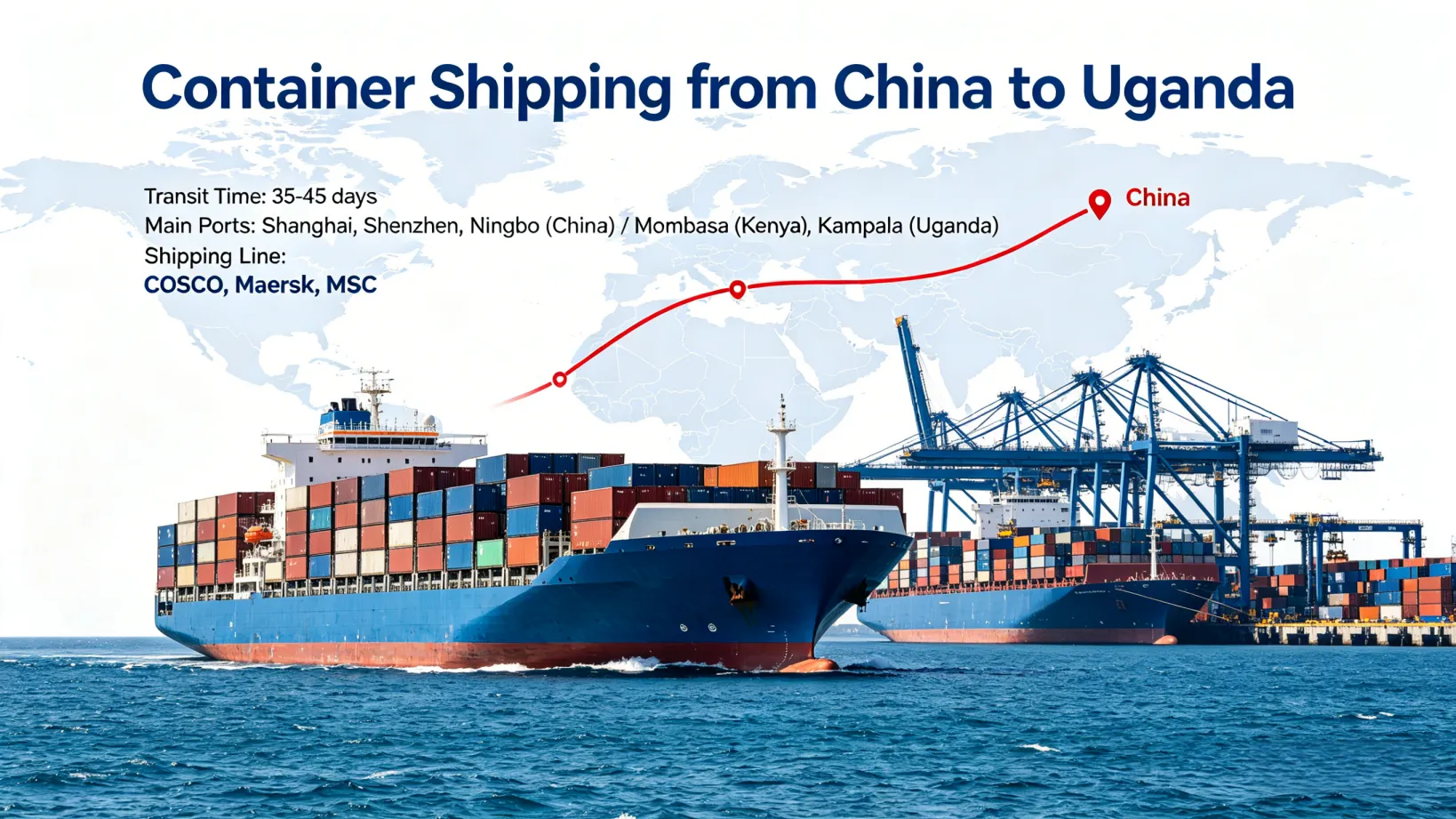
This guide is designed to eliminate the guesswork. Whether you are importing construction materials, electronics, textiles, or machinery, you will learn the exact shipping methods available in 2026, the real transit times via Mombasa and Dar es Salaam, current cost estimates for 20ft and 40ft containers, the mandatory compliance certificates you cannot skip, and the step-by-step process to move cargo from a Chinese factory floor to your warehouse in Uganda without unnecessary delays. If you are ready to take control of your supply chain, keep reading—or reach out to AllBestShipping for a tailored quote based on your specific cargo profile.
Why Container Shipping from China to Uganda Is Unique
Most international container trade follows a simple model: cargo leaves Port A, sails to Port B, and clears customs at the destination waterfront. Uganda breaks that model entirely. Located in the interior of East Africa and bordered by Kenya, Tanzania, Rwanda, and the Democratic Republic of the Congo, Uganda has no coastline of its own. Every kilogram of ocean freight must first arrive at a port in a neighboring coastal country and then continue overland.
This reality forces Ugandan importers to think in terms of multimodal logistics. You are not just buying ocean freight; you are buying a bundled service that includes:
- Ocean carriage from China to a gateway seaport
- Port handling and customs transit procedures at the coastal country
- Inland haulage by truck or rail to the Uganda border
- Border crossing formalities
- Final delivery within Uganda
The two dominant corridors handle nearly all of Uganda's containerized imports from Asia:
Northern Corridor (via Mombasa, Kenya) This is the workhorse route. Cargo arrives at the Port of Mombasa, East Africa's largest seaport, and then travels northwest via road or a combination of rail and road to the Malaba or Busia border crossing into Uganda. The Northern Corridor is preferred by the majority of importers because of higher sailing frequencies from China, more mature clearing infrastructure, and generally shorter transit times. However, it is also notorious for congestion at the Malaba border, where incomplete paperwork or customs system outages can add days to your delivery schedule.
Central Corridor (via Dar es Salaam, Tanzania) This alternative route moves containers through the Port of Dar es Salaam, then inland to the Mutukula border with Uganda. While the ocean leg is typically longer than the voyage to Mombasa, some shippers choose this corridor when Kenyan port congestion is severe or when their final destination is in southern Uganda, closer to the Tanzanian border. The Central Corridor also offers an alternative transit bond system, which can be advantageous depending on your freight forwarder's network strength in Tanzania.
Understanding these two corridors is not optional trivia—it is the foundation of every cost and timing decision you will make.
Available Shipping Methods in 2026
Importers shipping from China to Uganda can choose from several service levels. The right choice depends on your cargo volume, budget, and how quickly you need the goods.
| Method | Best For | Transit Time | Relative Cost |
|---|---|---|---|
| Sea FCL (20ft / 40ft / 40HQ) | Bulk, heavy, or cost-sensitive commercial shipments | 30–45 days door-to-door | Lowest per-unit cost |
| Sea LCL | Smaller shipments under 15 CBM that do not fill a full container | 40–55 days door-to-door | Moderate (priced per CBM) |
| Air Freight | Urgent, high-value, or perishable cargo | 3–7 days airport-to-airport | High |
| Express Courier | Samples, documents, or parcels under 30 kg | 3–5 days door-to-door | Highest per kg |
| Multimodal (Sea + Rail/Truck) | Medium-volume cargo where balancing cost and speed matters | 25–35 days | Medium |
Sea FCL (Full Container Load) remains the dominant choice for regular importers. A 20ft container holds roughly 28–30 CBM, while a 40ft High-Cube (40HQ) offers approximately 68 CBM of space. If you are moving enough volume to justify the space, FCL gives you the lowest cost per unit and the simplest handling, since your cargo is sealed at origin and only opened at destination.
Sea LCL (Less than Container Load) is ideal for smaller trial orders or businesses that do not yet have the volume to fill a container. Your cargo is consolidated with other shipments in China, then deconsolidated at a warehouse near Mombasa or Dar es Salaam before final inland delivery. The trade-off is longer transit time and slightly higher risk of handling damage because your goods are moved in and out of shared containers.
Air Freight is the premium option. It is rarely used for containerized cargo but is common for electronics spare parts, medical supplies, or seasonal fashion items that cannot wait a month. Entebbe International Airport is Uganda's primary air gateway.
Multimodal solutions have gained popularity since the launch of Kenya's Standard Gauge Railway (SGR). Under this model, containers move by ocean from China to Mombasa, then by rail to the inland container depot at Naivasha or directly to Nairobi, and finally by truck to Kampala. This can shave days off the total transit time compared to pure road haulage from the coast.
Container Shipping Routes and Transit Times
Transit time is where theory meets reality. Because Uganda is landlocked, you must calculate not just the ocean voyage but also the inland leg and potential border delays.
Primary Ports of Loading in China
Major Chinese ports serving the East Africa trade include:
- Shanghai and Ningbo (Yangtze River Delta)
- Shenzhen and Guangzhou (Pearl River Delta)
- Qingdao and Tianjin (Northern China)
Shanghai and Shenzhen generally offer the most frequent sailings to Mombasa, which can translate into better schedule reliability and more competitive rates.
Transit Time Breakdown by Route
| Origin Port (China) | Gateway Port | Ocean Leg | Inland to Kampala | Total Door-to-Door |
|---|---|---|---|---|
| Shanghai / Ningbo | Mombasa | 22–27 days | 5–10 days | 30–37 days |
| Shenzhen / Guangzhou | Mombasa | 22–26 days | 5–10 days | 30–36 days |
| Qingdao | Mombasa | 25–30 days | 5–10 days | 33–40 days |
| Any Major Port | Dar es Salaam | 25–35 days | 7–14 days | 40–50 days |
| Any Major Port | LCL via Mombasa | 25–30 days | 7–14 days (incl. deconsolidation) | 40–55 days |
Note: Door-to-door estimates include Customs Clearance and typical border crossing times. Delays due to inspections or documentation errors are not included.
The SGR Factor
Kenya's Standard Gauge Railway has changed the inland calculus. Containers can now move from Mombasa to Nairobi by rail in roughly 8–12 hours, bypassing the notoriously congested Mombasa Road. From Nairobi, trucks complete the journey to the Malaba border in approximately 6–10 hours. This rail segment can reduce overall inland time compared to all-road haulage, though it requires coordination with a forwarder that has SGR booking capabilities.
Border Realities: Malaba and Mutukula
The Malaba border between Kenya and Uganda is the busiest crossing for cargo in East Africa. It is also the most common source of delay. Typical causes include:
- Incomplete or mismatched documentation
- Physical cargo inspections triggered by risk profiling
- Customs system downtime on either side of the border
- Truck queuing during peak import seasons
To mitigate these risks, experienced forwarders pre-clear cargo through the Kenya Revenue Authority and Uganda Revenue Authority systems before the truck even arrives at the border. At AllBestShipping, we coordinate pre-arrival processing to minimize time spent in the queue.
Cost Breakdown for 2026
Pricing transparency is one of the biggest pain points for Ugandan importers. Many first-time shippers receive a quote for ocean freight only to discover a long list of additional charges at destination. Here is what you should actually budget.
Full Container Load (FCL) Rates
The following estimates include ocean freight from China to the gateway port plus inland transport to Kampala. They are market averages for early-to-mid 2026 and exclude Ugandan customs duties, taxes, and insurance.
| Container Type | Ocean Freight (China → Mombasa) | Inland Transport (→ Kampala) | Total Door-to-Door Estimate |
|---|---|---|---|
| 20ft FCL | $1,800 – $2,600 | $1,850 – $2,500 | $3,500 – $4,800 |
| 40ft FCL | $2,700 – $4,100 | $2,600 – $3,200 | $5,500 – $7,250 |
| 40HQ FCL | $2,700 – $4,100 | $2,600 – $3,200 | $5,500 – $7,250 |
Rates fluctuate based on seasonal demand, fuel surcharges, equipment availability, and whether you are shipping during the pre-Chinese New Year rush or the mid-year lull.
Less than Container Load (LCL) Rates
For shipments that do not justify a full container:
- Ocean leg: approximately $80 – $130 per CBM to Mombasa
- Door-to-door all-in: approximately $150 – $280 per CBM, including consolidation fees, inland transport, and deconsolidation
Air Freight Rates
| Weight Range | Estimated Cost per kg (USD) |
|---|---|
| 45–100 kg | $6.00 – $9.00 |
| 100–300 kg | $5.00 – $8.00 |
| 300+ kg | $4.00 – $7.00 |
| Express Courier | $8.00 – $14.00/kg (all-inclusive) |
Additional Fees You Cannot Ignore
Beyond the base freight rate, importers should budget for:
- Terminal Handling Charges (THC): $80–$250 at origin; $180–$500 at destination port
- Inland Transport: $400–$2,300+ depending on service level and routing (road vs. SGR + road)
- Documentation: $60–$150 per shipment
- Cross-Border/Road Tolls: approximately $100–$150 per container
- Fuel/BAF Surcharges: currently 8–12% of base ocean freight
- Uganda Customs Duties & Taxes: based on CIF value and HS code; typically 0–25% depending on product classification
- Cargo Insurance: typically 0.3–0.5% of cargo value
- PVOC/COC Certificate: mandatory pre-shipment inspection cost obtained in China
- Demurrage & Detention: charged if the container is not cleared and returned within the free time window (usually 9–14 days at Mombasa)
If your forwarder is not quoting these items upfront, ask for an all-inclusive door-to-door rate to avoid surprises.
You may be interested in the following related shipping routes:
- Shipping From China To Ghana
- Shipping From China To South Africa
- Shipping From China To Tanzania
- Shipping From China To Kenya
Essential Documentation and Compliance
Uganda and its transit neighbors operate strict documentation regimes. Missing a single paper can hold your cargo for days or result in penalties.
Mandatory Documents Checklist
- Commercial Invoice — Declares the value and description of goods
- Packing List — Details the contents, weight, and dimensions of each package
- Bill of Lading (B/L) or Sea Waybill — The contract of carriage and title document
- Certificate of Origin — Often required to prove the country of manufacture
- Import License / Permit — Required for regulated goods such as pharmaceuticals, chemicals, or telecommunications equipment
PVOC and COC: The Compliance Gatekeeper
The Pre-Export Verification of Conformity (PVOC) program is a mandatory inspection regime administered by Uganda's standards body. Before your cargo leaves China, it must be inspected by an accredited agency (such as Bureau Veritas, Intertek, or SGS) to verify that it meets applicable Ugandan standards.
Upon successful inspection, you receive a Certificate of Conformity (COC). Without this certificate, your cargo will be refused entry at the Uganda border or subjected to costly destination inspection and potential destruction of non-compliant goods.
Key points to remember:
- The inspection must be initiated before shipment departs the factory in China
- The cost is typically borne by the exporter or importer, depending on your Incoterms
- Lead time for inspection is usually 5–10 working days
Transit Bond Requirements
Because your cargo passes through Kenya or Tanzania without being imported there, the respective revenue authorities require a transit bond. This financial guarantee ensures that the goods will exit the transit country and not be dumped in the local market. Your freight forwarder typically arranges the bond, but you should confirm whether the bond cost is included in your quote.
Common Documentation Mistakes
- Mismatched product descriptions between the invoice, packing list, and B/L
- Missing HS codes or incorrect classification
- Expired or missing PVOC certificate
- Failure to update the B/L with the correct consignee name
At AllBestShipping, our documentation team reviews every file set before cargo departs China to catch these errors early.
Step-by-Step Shipping Process
If you are new to importing from China, here is the exact sequence of events from factory to warehouse.
Step 1: Choose FCL vs. LCL Evaluate your cargo volume. If you have more than 15 CBM, FCL Shipping is usually more economical. If you have less, LCL is the pragmatic choice.
Step 2: Select Your Route Decide between Mombasa and Dar es Salaam. Mombasa is generally faster and offers more sailing options; Dar es Salaam can be a useful alternative during peak congestion periods.
Step 3: Obtain PVOC/COC Certificate Initiate the pre-shipment inspection process as soon as production is complete. Do not wait until the cargo is already at the port.
Step 4: Book Container Space In 2026, demand on the China–East Africa corridor is firm. Forwarders recommend booking 4–6 weeks in advance to secure space and avoid roll-overs.
Step 5: Prepare Documentation Gather and verify your commercial invoice, packing list, B/L instructions, certificate of origin, and import permits.
Step 6: Ocean Transit Your cargo sails from China to Mombasa or Dar es Salaam. Typical ocean leg is 22–35 days depending on the origin port.
Step 7: Destination Handling and Inland Transport Upon arrival, the container is discharged, and customs transit formalities are initiated. The container is then loaded onto a truck or rail for inland movement.
Step 8: Border Crossing and Final Delivery The truck crosses at Malaba/Busia or Mutukula. With proper pre-clearance, this can take a few hours; without it, delays of several days are possible.
Step 9: Ugandan Customs Clearance and Duties Payment The container arrives at a bonded warehouse or your premises in Kampala. Ugandan customs processes the final entry, duties and taxes are paid, and the cargo is released.
2026 Market Trends and Expert Tips
The China–Uganda shipping lane continues to evolve. Here is what importers should know this year.
Rates Are Stabilizing After the volatility of 2024 and early 2025, container rates on the East Africa corridor have stabilized in 2026. While seasonal surcharges still apply around Chinese New Year and the back-to-school season in East Africa, base rates are more predictable than in previous years.
Book Early Infrastructure imports—particularly construction materials and solar equipment—are driving strong demand. Booking at least one month ahead is no longer a best practice; it is a necessity.
Route Flexibility Matters Smart importers maintain relationships with forwarders who can pivot between Mombasa and Dar es Salaam depending on port congestion, weather disruptions, or political events affecting border crossings.
Avoid Demurrage and Detention Storage charges at Mombasa can escalate quickly. The best defense is proactive documentation and a forwarder with direct relationships with local clearing agents who can prioritize your file.
Work with an East Africa Specialist Generic international forwarders may offer low headline rates but often lack the local relationships to resolve problems at the Malaba border or navigate the PVOC process efficiently. AllBestShipping specializes in the China–East Africa corridor, offering competitive rates, transparent quotes, and ground-level expertise in both Kenyan and Ugandan customs procedures.
How to Choose the Right Freight Forwarder
Not all forwarders are equipped to handle the complexities of landlocked Africa. When evaluating a shipping partner for your China–Uganda trade, ask the following:
- Do they have their own office or established agency network in both China and Uganda?
- Can they provide true door-to-door quotes that include inland haulage, THC, and documentation?
- Do they have experience arranging PVOC inspections in China?
- Can they coordinate SGR rail bookings from Mombasa to Nairobi?
- What is their track record for clearing cargo at Malaba within 24 hours?
Red flags include vague quotes, reluctance to put inland charges in writing, and an inability to explain the PVOC process clearly.
Frequently Asked Questions
How long does container shipping from China to Uganda take in 2026? Door-to-door transit via Mombasa is typically 30–45 days for FCL and 40–55 days for LCL. Via Dar es Salaam, expect 40–50 days for FCL.
How much does it cost to ship a 20ft or 40ft container from China to Uganda? A 20ft container costs approximately $3,500–$4,800 door-to-door, while a 40ft or 40HQ container ranges from $5,500–$7,250. These figures include ocean freight and inland transport but exclude Ugandan customs duties and taxes.
What is PVOC and do I need it for Uganda imports? Yes. The Pre-Export Verification of Conformity (PVOC) is mandatory for most goods. It requires pre-shipment inspection in China to obtain a Certificate of Conformity (COC) before cargo departs.
Can containers be shipped directly to a port in Uganda? No. Uganda is landlocked. All ocean containers must arrive at a coastal port—most commonly Mombasa, Kenya, or Dar es Salaam, Tanzania—and then travel inland by road or rail.
What is the best shipping route: Mombasa or Dar es Salaam? Mombasa is generally faster and has more frequent sailings, making it the preferred route for most importers. Dar es Salaam is a viable alternative when Mombasa is congested or when your final destination is in southern Uganda.
What documents are required to clear goods in Uganda? You need a commercial invoice, packing list, Bill of Lading, certificate of origin, import permit (if applicable), and a valid PVOC Certificate of Conformity.
How can I avoid delays at the Malaba border? Ensure your documentation is accurate and complete, initiate pre-arrival clearance through your forwarder, and confirm that your transit bond is active before the truck arrives at the border.
Is air freight or sea freight better for shipping to Uganda? Sea Freight is far more economical for bulk and heavy cargo. Air freight is only justified for urgent, high-value, or perishable shipments due to its significantly higher cost.
Conclusion
Container shipping from China to Uganda demands more planning than standard port-to-port logistics. Because every shipment must cross a foreign port, an international border, and multiple regulatory checkpoints, success depends on choosing the right route, preparing flawless documentation, and partnering with a forwarder who understands the East Africa corridor inside and out.
The key takeaways for 2026 are simple: book your space early, budget for the full landed cost (not just ocean freight), obtain your PVOC certificate before production ships, and build flexibility into your routing strategy. Do not let your cargo become another statistic in the Malaba delay queue.
Ready to ship? Contact AllBestShipping today for a transparent, all-inclusive Door-to-Door Shipping quote tailored to your cargo volume, product type, and delivery timeline. Let us handle the complexity so you can focus on growing your business.