Shipping from Shenzhen to Iraq: A Complete Freight Forwarding Guide (2026)
Shipping from Shenzhen to Iraq remains one of the most complex yet vital trade lanes for businesses sourcing electronics, machinery, and consumer goods from China’s manufacturing powerhouse. Over the past decade, our team at AllBestShipping has managed hundreds of shipments along this corridor, and we have seen firsthand how a single documentation error or incorrect HS code can trap cargo at Umm Qasr for weeks. Are you struggling with unpredictable transit times, confusing customs paperwork, or hidden fees that blow your landed cost calculations? Whether you are a first-time importer planning your maiden shipment or an experienced procurement manager optimizing your supply chain, this guide distills our operational expertise into actionable steps. From choosing between FCL and LCL sea freight to navigating Iraqi import duties and DDP logistics, you will learn how to move cargo efficiently while avoiding costly mistakes. By the end of this article, you will have a clear roadmap to ship confidently from Shenzhen’s Yantian Port or Bao’an Airport straight to Baghdad, Basra, or Erbil. If you are new to international logistics, our How to Ship from China primer offers additional foundational guidance.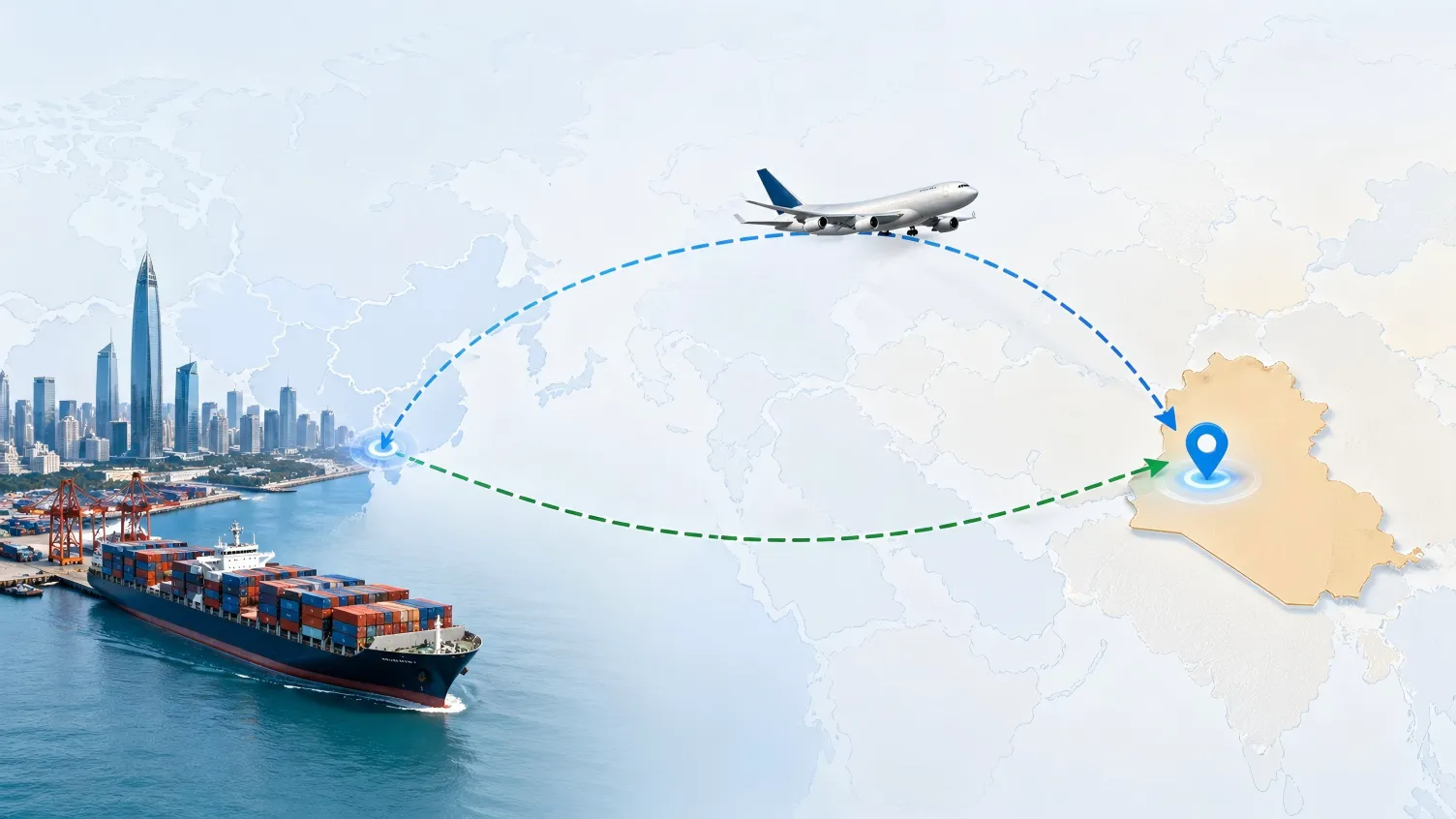
Disclaimer: The rates and transit times cited in this guide reflect 2026 market estimates based on our internal booking data. Ocean freight rates fluctuate weekly due to fuel adjustments, capacity constraints, and seasonal demand. Always request a firm, dated quote from your forwarder before booking.
Why Ship from Shenzhen to Iraq?
Shenzhen is not just another Chinese city on the map; it is the beating heart of global electronics and hardware manufacturing. For Iraqi importers, sourcing from Shenzhen offers unparalleled access to factories, wholesalers, and component suppliers that power everything from mobile phones to industrial automation equipment. The city’s dual-port advantage—Yantian Port and Shekou Port—provides deep-water container handling and optimized routes toward the Middle East, while Shenzhen Bao’an International Airport (SZX) ranks among China’s busiest cargo hubs for air freight.
On the demand side, Iraq’s ongoing reconstruction efforts and growing consumer market have created massive import demand. China consistently ranks as one of Iraq’s top trading partners, supplying construction materials, automotive parts, pharmaceuticals, and household electronics. For a broader overview of this corridor, explore our dedicated page on Shipping from China to Iraq. For Iraqi businesses, establishing a reliable shipping channel from Shenzhen directly impacts inventory levels, project timelines, and ultimately, profitability. Understanding the infrastructure and logistics ecosystem in Shenzhen gives importers a strategic edge before cargo even leaves Chinese soil.
Shipping Methods Available
Selecting the right transportation mode is the single most important decision in your shipping strategy. Each method balances speed, cost, and cargo volume differently.
Sea Freight (FCL & LCL)
Sea Freight dominates China–Iraq trade volumes, and for good reason. It is the most economical option for large or heavy shipments.
FCL (Full Container Load) means you book an entire container exclusively for your cargo. A standard 20ft container holds roughly 28–30 CBM, while a 40ft container accommodates approximately 58–60 CBM. FCL is ideal when you have enough volume to fill at least half a container, or when your goods require dedicated space to prevent contamination or damage from other shippers’ cargo.
LCL (Less than Container Load) allows multiple shippers to share container space. You pay only for the volume your cargo occupies, measured in cubic meters (CBM). LCL is the go-to choice for shipments under 15 CBM. However, keep in mind that LCL adds extra handling—consolidation at the origin warehouse and deconsolidation at destination—which can extend transit times by several days.
Typical transit time from Shenzhen to Iraq’s primary seaport, Umm Qasr, ranges from 21 to 35 days. Most vessels do not sail direct; they transship through regional hubs such as Jebel Ali (Dubai), Singapore, or Salalah before reaching the Persian Gulf. In our experience, the Dubai transshipment is usually the most reliable, but it adds 3–5 days compared to a direct sailing. We once had a client’s machinery shipment delayed at Jebel Ali for eight days because the connecting feeder vessel was overbooked during Ramadan—an operational reality that pure rate-shopping websites rarely mention.
Air Freight
When speed outweighs cost, Air Freight is the logical choice. Electronics samples, medical supplies, automotive spare parts, and perishable goods often travel by air to meet tight deadlines. From Shenzhen Bao’an Airport, cargo typically routes through major Middle Eastern hubs like Dubai, Doha, or Istanbul before landing in Iraq.
Transit time for air freight ranges from 3 to 10 days door-to-door, depending on whether the flight is direct or requires transshipment. The primary destination airports in Iraq are Baghdad (BGW), Erbil (EBL), and Basra (BSR). Air freight rates are calculated based on whichever is greater: the actual weight or the volumetric weight of your cargo. Volumetric weight is derived by dividing the cargo’s cubic centimeters by 6,000 (the IATA standard). For example, a shipment measuring 100 cm × 80 cm × 60 cm has a volumetric weight of 80 kg, even if its scale weight is only 45 kg—you will be charged for 80 kg.
Express Courier
For documents, small product samples, or e-commerce parcels under 100 kg, international express couriers such as DHL, FedEx, and UPS offer door-to-door service with built-in customs brokerage. Transit time is typically 3 to 6 days. While convenient, express shipping becomes prohibitively expensive at higher weights, making it unsuitable for bulk commercial orders.
Rail & Multimodal
An emerging alternative is rail freight combined with trucking, usually routed through Turkey or Central Asia. This multimodal option offers a middle ground between sea and air, with transit times of approximately 20 to 25 days. Although rail volumes on the China–Iraq lane are still developing, it is worth exploring for medium-sized shipments where sea freight is too slow but air freight is too costly.
Key Ports & Airports
Understanding the exact origin and destination infrastructure helps you plan pickup and final delivery more accurately.
Origin in Shenzhen, China
| Facility | Type | Advantage |
|---|---|---|
| Yantian Port | Sea | Deep-water terminal; handles mega-vessels; strong Middle East connections |
| Shekou Port | Sea | Optimized for ASEAN and Gulf routes; efficient customs processing |
| Shenzhen Bao’an (SZX) | Air | Major cargo hub with extensive international freighter networks |
Destination in Iraq
| Facility | Type | Notes |
|---|---|---|
| Umm Qasr Port | Sea | Iraq’s only deep-water port; handles ~90% of maritime trade |
| Basra Port | Sea | Secondary seaport; often used for project cargo and bulk commodities |
| Baghdad International (BGW) | Air | Highest cargo volume; primary gateway for central Iraq |
| Erbil (EBL) | Air | Key entry point for Kurdistan Region and northern Iraq |
| Basra (BSR) | Air | Serves southern Iraq’s oil and industrial sectors |
| Sulaymaniyah | Air | Regional airport for eastern Kurdistan |
| Najaf | Air | Growing cargo capacity for religious tourism and commerce |
Transit Times & Costs (2026 Estimates)
Budgeting accurately requires realistic expectations for both timing and pricing. The following tables summarize current market conditions.
Transit Time Comparison
| Shipping Method | Port-to-Port / Airport-to-Airport | Door-to-Door |
|---|---|---|
| Sea FCL | 21–32 days | 28–40 days |
| Sea LCL | 25–35 days | 30–45 days |
| Air Freight | 3–5 days | 6–10 days |
| Express Courier | 3–5 days | 3–6 days |
Cost Estimates
| Mode | Estimate | Notes |
|---|---|---|
| FCL 20ft | $1,400 – $2,550 | Subject to seasonal fuel and peak-season surcharges |
| FCL 40ft | $2,100 – $3,500 | Better per-CBM value for large volumes |
| LCL | $10 – $200 per CBM | Highly variable based on consolidation fees |
| Air Freight | $2 – $15 per kg | Volumetric weight applies; rates drop at 1,000 kg+ |
| DDP Air | $5.50 – $15.00 per kg | All-inclusive door-to-door pricing |
| DDP Sea (LCL) | $100 – $300 per CBM | Includes customs clearance and last-mile delivery |
Keep in mind that ocean freight rates fluctuate monthly based on vessel capacity, fuel costs (BAF), and seasonal demand. Carriers also impose General Rate Increases (GRI)—often $200–$400 per TEU—at the start of each quarter or ahead of major holidays. During Q1 2026, we observed two consecutive GRI announcements on the Asia–Middle East route due to Red Sea capacity adjustments. Always request a firm quote that specifies the validity date, Incoterms, and whether the rate is subject to PSS (Peak Season Surcharge) or EBS (Emergency Bunker Surcharge).
Required Documentation
Incomplete paperwork is the leading cause of customs delays on the China–Iraq lane. Preparation on both ends is essential.
Export from China
- Commercial Invoice: Declares the value and description of goods.
- Packing List: Details weight, dimensions, and packaging type for each carton or pallet.
- Bill of Lading (B/L) or Air Waybill (AWB): The contract of carriage between shipper and carrier.
- China Export Declaration: Filed by your forwarder or supplier to clear Chinese customs.
- Special Licenses: Required for restricted categories such as telecommunications equipment, encryption devices, and drones. These are regulated by MOFCOM.
Import into Iraq
- Commercial Invoice, Packing List, and Certificate of Origin: Must be consistent and often require legalized stamps.
- Iraqi Import License: Mandatory for regulated goods including vehicles, pharmaceuticals, and food products.
- Accurate HS Code Classification: Determines duty rates; misclassification triggers fines and inspections.
- Pre-shipment Inspection (PSI): The Central Organization for Standardization and Quality Control (COSQC) may require PSI for certain products before export. According to Iraqi Customs Regulation No. 23 of 1984 (as amended), regulated goods—including electronics, foodstuffs, and automotive parts—must undergo conformity assessment in the country of origin. Without the COSQC clearance certificate, your shipment will be rejected at Umm Qasr, and return freight costs will fall on the importer.
- Arabic Translations: Labels, manuals, and technical documents often need Arabic versions to satisfy Iraqi authorities.
Iraqi Customs Clearance & Duties
Iraqi Customs Clearance procedures are notoriously document-intensive. Based on our operational records, roughly 30% of first-time shipments to Iraq encounter avoidable delays at the documentation stage. Partnering with a licensed local customs broker who is registered with the Iraqi General Commission of Customs is not a luxury—it is a necessity.
Clearance Process
Once your vessel docks at Umm Qasr or your cargo lands at Baghdad International, the import clearance process begins:
- Document Submission: Your broker submits the import license, commercial invoice, and B/L or AWB.
- HS Code Verification: Customs officers confirm the tariff classification.
- Physical Inspection: Random or targeted inspections check for discrepancies, contraband, or mislabeling.
- Duty and VAT Payment: Fees must be paid before cargo release.
- Cargo Release: Upon clearance, goods are available for inland trucking.
Typical clearance duration is 3 to 7 days at Umm Qasr North Gate, which handles the bulk of containerized cargo. However, if your shipment is routed to Umm Qasr South—a common occurrence when North is congested—add 2–3 extra days just for yard positioning. Incomplete documents or inspection backlogs can extend the total process to several weeks. In one instance, a client’s commercial invoice listed the wrong HS code for LED drivers, triggering a full container inspection that delayed release by 11 days and incurred over $1,300 in demurrage and detention fees.
Duties & Taxes
| Charge | Rate | Notes |
|---|---|---|
| Import Duties | 5% – 35% | Based on HS code; consumer electronics often fall in the 5%–15% range |
| VAT | 15% | Applied to the CIF value plus duty |
| Reconstruction Levies | Variable | Occasionally applied to construction-related imports |
DDP Shipping from Shenzhen to Iraq
For importers who want minimal involvement in the logistics process, DDP (Delivered Duty Paid) is the gold standard.
What is DDP?
Under DDP Incoterms, the freight forwarder or seller assumes responsibility for the entire journey: picking up cargo from your Shenzhen supplier, arranging sea or air freight, managing both export and import customs clearance, paying all duties and taxes, and delivering to your specified address in Iraq. DDP is particularly popular among first-time importers and e-commerce operators who lack an in-house Iraqi customs team.
DDP vs. DDU vs. DAP
| Term | Who Pays Import Duties/VAT? | Best For |
|---|---|---|
| DDP | Seller / Forwarder | Hassle-free, hands-off buyers who want a single invoice |
| DDU | Buyer | Buyers who have their own customs broker in Iraq |
| DAP | Buyer | Experienced importers who want control over clearance |
Hidden Fees to Watch
Even under DDP, certain exclusions can generate unexpected bills. We have seen too many importers caught off guard by these line items:
- Demurrage & Detention: Port storage fees (demurrage) at Umm Qasr run approximately $120 per day after the 3–5 free days expire. If you hold the container too long inland, the carrier charges detention—often $50–$80 per day. A DDP quote rarely includes more than 7 days of free time.
- Re-packaging: Required if customs inspections damage original cartons. Iraqi inspectors are thorough, and if they cut open shrink-wrapped pallets to verify contents, you may face $150–$300 in re-palletization fees before cargo can leave the port.
- Special Certifications: Ministry of Health approvals for medical devices can exceed $350, and COSQC conformity certificates for electronics add another $85–$160. These are frequently omitted from all-inclusive DDP quotes.
- Remote Area Delivery: Surcharges apply for destinations outside Baghdad, Basra, and Erbil. Delivering to Mosul, Kirkuk, or Najaf can add $200–$500 to the final mile, depending on security escort requirements.
When requesting a DDP quote, ask your forwarder for a detailed line-item breakdown rather than a lump-sum figure. If they hesitate to provide one, that is a red flag.
Packaging, Labeling & Insurance
The journey from Shenzhen to Iraq involves multiple handling points, transshipment hubs, and potentially rough inland roads. Proper packaging is not optional.
Packaging Standards
- Use double-walled corrugated boxes or ISPM-15 compliant wooden crates for heavy machinery.
- Add moisture barriers and desiccant packets for electronics and metal components to combat humidity during sea transit. The Persian Gulf leg of the journey is particularly brutal between May and September, when container interiors can reach condensation levels high enough to corrode circuit boards.
- Apply clear, durable labels in Arabic indicating handling instructions such as "Fragile," "This Side Up," and weight limits.
- Secure pallets with shrink wrap and corner protectors to prevent shifting.
Cargo Insurance
Standard carrier liability is shockingly low—often just $1 to $2 per kilogram. For commercial shipments, Cargo Insurance is essential. Premiums typically range from 0.5% to 2% of the declared cargo value and cover damage, theft, piracy, weather events, and total loss. At AllBestShipping, we always recommend comprehensive insurance for Iraq-bound shipments because the combination of multiple transshipments and inland trucking creates higher-than-average risk exposure.
Compliance, Sanctions & Restricted Goods
Iraq operates under a complex regulatory environment where international sanctions, local religious norms, and security protocols intersect.
Sanctions Screening
Before shipping, verify that neither the sender, recipient, nor any financial intermediary appears on UN, OFAC, or EU sanctions lists. Iraq-specific sanctions are layered and complex: while the UN Oil-for-Food era sanctions were lifted, targeted designations against individuals and entities linked to regional instability remain active. Violations can result in cargo seizure, bank account freezing, and criminal prosecution in multiple jurisdictions. We run every new Iraqi client through a three-tier screening process before accepting a booking.
Prohibited & Restricted Items
| Category | Status | Details |
|---|---|---|
| Weapons and ammunition | Prohibited | Strictly banned |
| Counterfeit goods | Prohibited | Includes trademark-infringing electronics and apparel |
| Pornography | Prohibited | Contrary to public order and religious values |
| Used vehicles and machinery | Restricted | Tight scrutiny; additional permits required |
| Pharmaceuticals | Restricted | Ministry of Health approval needed |
| Food products | Restricted | Health certificates and labeling compliance |
Electronics and machinery may also require ISQCO conformity assessments, costing between $85 and $160 depending on product complexity. In practice, we recommend budgeting an extra 5–7 business days for ISQCO processing before your cargo even leaves Shenzhen. Rushing this step is a common and expensive mistake.
How to Choose a Freight Forwarder
Not every freight forwarder with a website can handle the Shenzhen-to-Iraq lane effectively. The right partner makes the difference between a smooth delivery and a customs nightmare. Here is what we look for when vetting subcontractors—and what you should demand from any forwarder quoting this lane.
- Proven China-to-Iraq Experience: Familiarity with Umm Qasr port authorities and Iraqi customs workflows is non-negotiable. Ask for references from at least three Iraqi imports completed in the last six months.
- End-to-End Services: Door-to-door pickup, customs brokerage, warehousing, and inland delivery within Iraq. If a forwarder subcontracts the Iraqi customs clearance to an unknown third party, you lose visibility and accountability.
- Industry Credentials: Membership in FIATA or IATA signals professional standards, but verify the membership is current. A surprising number of websites display expired badges.
- Real-Time Tracking: Online portals with milestone updates from Shenzhen pickup through final delivery. At a minimum, you should receive automated notifications at export clearance, departure, transshipment, arrival, customs hold (if any), and delivery.
- Multilingual Support: Chinese, English, and Arabic language capabilities prevent miscommunication. In our experience, 80% of documentation errors on this lane stem from poor translation of product descriptions or HS code classifications.
- Transparent Pricing: Itemized quotes with no hidden fees. A reputable forwarder will explicitly state what is not included—such as demurrage, detention, or remote delivery surcharges.
AllBestShipping specializes in China–Middle East freight forwarding, offering competitive rates, stable transit times, and responsive customer support tailored to Iraqi import regulations. Whether you need FOB Shenzhen sea freight or DDP door-to-door air cargo, our team manages every milestone so you can focus on growing your business. We do not believe in one-size-fits-all pricing: if your cargo is lightweight but voluminous, we will recommend air freight consolidation rather than a full DDP air parcel service, because our priority is your landed cost—not our margin.
Step-by-Step Shipping Process
Here is the complete workflow from factory floor to final delivery:
- Prepare Cargo: Confirm packaging meets international standards and gather all required documents.
- Select Shipping Method: Choose sea, air, express, or rail based on your budget and deadline.
- Book Space: Reserve container load or air cargo space with your freight forwarder.
- Arrange Pickup: Coordinate inland transport from your Shenzhen supplier to Yantian, Shekou, or SZX.
- Complete Export Clearance: Your forwarder files the China export declaration.
- International Transit: Monitor vessel or flight status, including transshipment tracking.
- Import Clearance: Submit documents, pay duties and VAT, and clear inspections in Iraq.
- Final Delivery: Arrange inland trucking from Umm Qasr or Baghdad airport to your warehouse.
Seasonal Considerations & Peak Seasons
Timing your shipment around known disruptions saves both money and stress.
- Chinese New Year (late January / early February 2026): Factories close for 2–4 weeks, and port congestion at Yantian spikes 10–14 days before the holiday. We advise booking FCL space at least 6 weeks in advance and LCL cargo 4 weeks ahead.
- Eid al-Fitr (expected late March 2026): Iraqi customs staffing drops by roughly 40%, and Umm Qasr port operations slow to a crawl. If your vessel is scheduled to arrive within 5 days of Eid, expect clearance delays of 3–5 additional days.
- Golden Week (October 1–7): Reduced Chinese port staff can cause minor delays, but the real bottleneck is pre-holiday trucking shortages from inland factories to Shenzhen.
During peak seasons, both ocean and air rates rise due to capacity constraints. Locking in rates early with your forwarder protects your budget.
FAQ
How long does shipping from Shenzhen to Iraq take? Sea freight takes 21–40 days depending on FCL or LCL, while air freight ranges from 3–10 days door-to-door.
How much does DDP shipping from Shenzhen to Iraq cost? DDP air freight averages $5.50–$15.00 per kg, and DDP sea LCL ranges from $100–$300 per CBM, inclusive of duties and delivery.
What documents are required for import into Iraq? You need a commercial invoice, packing list, certificate of origin, import license (if applicable), and accurate HS codes. Arabic translations may also be required.
Is sea freight or air freight better for my cargo? Choose sea freight for bulk, heavy, or non-urgent cargo. Choose air freight for urgent, high-value, or lightweight shipments under 500 kg.
Can I track my shipment door-to-door? Yes. Reputable forwarders provide online tracking portals that update at every milestone from pickup to final delivery.
Does Iraq require product inspections or certifications? Certain goods—including electronics, PPE, machinery, food, and pharmaceuticals—require COSQC inspections or Ministry of Health approvals.
What is the difference between DDP and DAP? Under DDP, the seller pays all import duties and taxes. Under DAP, the buyer assumes those costs and customs responsibilities.
Are there direct sea routes from Shenzhen to Umm Qasr? Most cargo transships through Dubai, Singapore, or Salalah. Direct sailings are rare, so factor transshipment time into your planning.
Conclusion
Shipping from Shenzhen to Iraq does not have to be a guessing game. By understanding your options—whether FCL sea freight through Umm Qasr, urgent air cargo to Baghdad, or hassle-free DDP door-to-door service—you can align your logistics strategy with your business goals. The keys to success are accurate documentation, realistic budgeting for duties and VAT, and partnering with a forwarder who knows both the Chinese export system and the Iraqi import landscape inside out.
This guide reflects our operational experience and current market conditions as of April 2026. Regulations, rates, and carrier schedules change frequently. Always confirm the latest requirements with your forwarder and the relevant customs authorities before shipping.
Ready to move your next shipment? Contact AllBestShipping today for a tailored quote. Provide your cargo weight, dimensions, HS code, and preferred Incoterms, and our team will design a shipping plan that delivers on time and on budget.