Cheapest Way to Ship from China to UAE: A Complete 2026 Cost Guide
If you are looking for the cheapest way to ship from China to UAE, you have probably noticed that freight quotes can swing wildly depending on the forwarder, the season, and the shipping method. Just last month, one of our clients at AllBestShipping received three quotes for the same 40-foot container from Ningbo to Jebel Ali: $2,400, $3,100, and $4,200. The difference was not the carrier—it was whether the quote included origin handling, bunker adjustment, and the new IMO 2026 carbon surcharge. For smaller shipments, the confusion is even worse: is sea freight still cheaper than air when you only have two cubic meters of goods? What about door-to-door DDP services that promise to handle customs for you—do they save money or simply hide costs?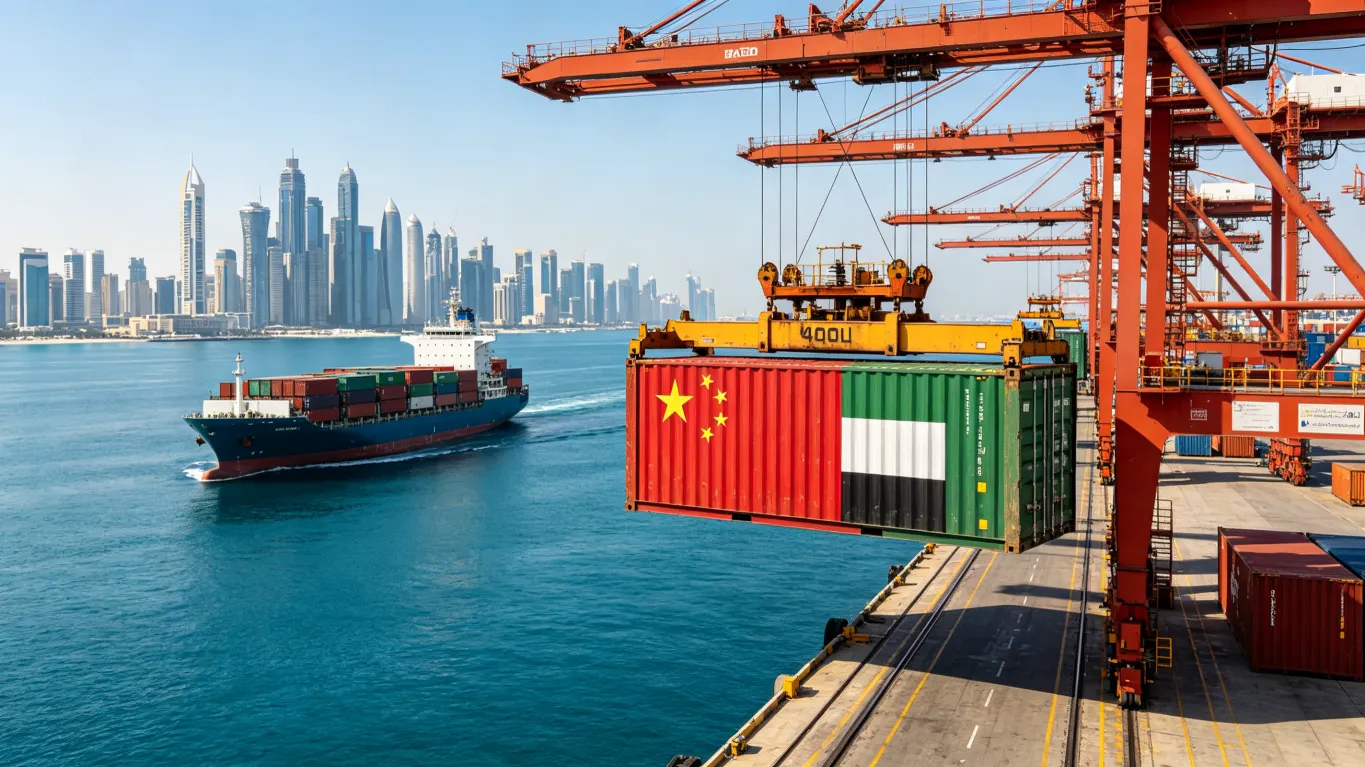
In this guide, we draw on over a decade of hands-on freight forwarding experience across the China–UAE corridor to break down every major shipping option, expose the hidden fees that destroy "cheap" rates, and give you a clear decision framework so you never overpay again. Every rate, surcharge, and transit time referenced below reflects live market data as of April 2026 and actual bookings our operations team has processed this quarter. Please note that shipping rates are volatile; the figures here are estimates intended for planning purposes, and your actual quote may vary based on commodity type, seasonality, and carrier availability. If you want a personalized quote before you read on, the team at AllBestShipping (https://allbestshipping.com/) can audit your cargo specs and match you with the most cost-effective lane within 24 hours.
Quick Answer: Cheapest Shipping Method by Cargo Size
The fastest way to cut through the noise is to match your cargo size to the right mode. Below is a decision table based on April 2026 market data.
| Shipment Size | Cheapest Method | 2026 Estimated Cost | Transit Time |
|---|---|---|---|
| < 1 CBM / Small parcels | LCL Ocean or Sea DDP | LCL: ~$30/CBM port-to-port; DDP: ~$117/CBM all-in | 14–30 days |
| 1–15 CBM | LCL Ocean or Consolidated Sea DDP | LCL: $18–$26/CBM; DDP: ~$114–$117/CBM delivered | 14–35 days |
| > 15 CBM / Heavy cargo | FCL 40ft Container | 40GP: $2,300–$2,850 port-to-port from Ningbo/Shekou | 14–23 days |
| Urgent / High-value | Air Cargo (500kg+) | From $7/kg (PEK–DXB bulk rates) | 2–5 days |
Sea Freight is the undisputed champion for cost minimization. LCL (Less than Container Load) wins for anything under roughly 10–12 CBM, while FCL (Full Container Load) takes over for larger volumes. Air freight should be reserved for time-sensitive or high-value goods where inventory-holding costs exceed the freight premium.
Sea Freight: The Cheapest Option for Most Shipments
FCL (Full Container Load) — Best for Large Volumes
When your cargo exceeds 15–20 CBM, renting an entire container becomes the most economical choice on a per-unit basis. In April 2026, ocean rates from China to Jebel Ali have softened roughly 10% from March highs as partial Red Sea route recovery adds capacity back into the market.
| Origin Port | Container Type | Rate (USD) | Transit Time |
|---|---|---|---|
| Shenzhen Shekou | 40GP to Jebel Ali | $2,850 | 14 days direct |
| Ningbo | 40GP to Jebel Ali | $2,300–$3,100 | 19–23 days |
| Shenzhen Yantian | 40GP to Jebel Ali | $3,250–$3,800 | 18–22 days |
| Shanghai | 40GP to Jebel Ali | $2,400–$3,150 | 18–22 days |
A critical detail many buyers miss is the 40HC (40-foot High Cube). It costs only $50–$100 more than a standard 40GP yet offers approximately 12% additional volume (76 CBM vs. 67 CBM). Last quarter, we helped a Dubai-based furniture importer switch from 40GP to 40HC for a shipment of lightweight rattan chairs. The ocean freight difference was $75, but the client fit an extra 9 CBM of product—cutting the cost per unit by roughly 11%. If you are shipping lightweight, bulky goods such as furniture, plastic products, or home appliances, the 40HC almost always wins on a per-unit basis.
Weight limits matter too, and this is where inexperienced shippers get burned. Most carriers impose Heavy Weight Surcharges (HWS) once cargo exceeds 18–21 metric tons in a 40-foot box. We have seen a client loading ceramic tiles hit 23 tons and face an unexpected $280 HWS fee because the factory used heavier-than-standard wooden crates. Distributing load across two containers, switching to lighter pallets, or asking the supplier to reduce packaging density can often avoid this penalty entirely.
LCL (Less than Container Load) — Best for Small/Medium Cargo
Not every order justifies a full container. LCL allows you to share container space and pay only for the volume your freight occupies. Rates from South China to Dubai/Jebel Ali remain the most competitive in the market.
| Volume | Rate (USD/CBM) | Transit Time |
|---|---|---|
| 0–1 CBM | $30 | ~14 days |
| 1–3 CBM | $26 | ~14 days |
| 3–5 CBM | $23 | ~14 days |
| 5–15 CBM | $18 | ~14 days |
While the per-CBM rate looks attractive, watch for CFS (Container Freight Station) charges, consolidation fees at origin, and deconsolidation delays at destination. These extras can add $30–$80 per shipment. In our experience, LCL cargo arriving at Jebel Ali on a Friday afternoon often sits until Monday morning deconsolidation, which can push you into detention territory if you are not tracking free time carefully. As a rule of thumb, once your volume crosses 10–12 CBM, request an FCL quote as well. At that breakpoint, the total container cost often undercuts LCL, and you avoid the risk of another shipper’s customs hold delaying your cargo.
Sea DDP (Door-to-Door, All-Inclusive)
DDP (Delivered Duty Paid) means the forwarder handles everything: factory pickup, ocean freight, export and import customs clearance, duties, taxes, and delivery to your Dubai warehouse. It is not always the absolute cheapest freight rate, but it can be the cheapest total option if you lack an import license or customs broker in the UAE.
That said, we advise caution with DDP if you plan to import regularly. Because the forwarder controls the customs broker, you lose visibility into duty calculations and may miss opportunities to claim exemptions under the GCC Common External Tariff. For a one-off trial shipment, DDP is excellent. For an established e-commerce or retail business importing monthly, learning to manage FOB or CIF imports with your own broker usually pays for itself within two to three shipments.
| Cargo Type | 1–5 CBM | 5+ CBM | Transit |
|---|---|---|---|
| General Goods | RMB 850/CBM (~$117/CBM) | RMB 830/CBM (~$114/CBM) | ~30 days |
| Branded / Battery | RMB 1,250–1,630/CBM | RMB 1,230–1,610/CBM | 30–35 days |
Note that DDP rates typically include customs and taxes but may exclude final last-mile delivery from the warehouse to your door. Always confirm the exact delivery point before booking. For businesses that want simplicity and predictable budgeting, AllBestShipping offers transparent DDP quotes with no hidden terminal handling fees.
Air Freight: When Speed Beats Cost
Traditional Air Cargo
Air Freight is rarely the cheapest option by weight, but it wins when inventory carrying costs or sales velocity justify the premium. In practice, we see air freight make financial sense when the goods are worth more than roughly $15–$20 per kilogram, or when missing a sales window costs more than the freight premium itself. Bulk air cargo rates improve significantly as weight increases.
| Route | Weight | Rate |
|---|---|---|
| Beijing (PEK) → Dubai (DXB) | 500kg+ | From $7/kg |
| Hong Kong (HKG) → Dubai (DXB) | 500kg+ | From $9/kg |
| Shanghai (PVG) → Dubai (DXB) | 500kg+ | From $3.10–$3.80/kg |
Use air freight when your goods have a high value-to-weight ratio—electronics, medical devices, or fast-fashion replenishment. For anything heavier than 100kg with low unit value, sea freight is almost always the smarter financial choice.
Express Couriers (DHL / FedEx / UPS / EMS)
For samples, documents, or e-commerce parcels under 20kg, express couriers are convenient but expensive on a per-kilogram basis.
| Courier | Example Weight | Retail Rate (Est.) |
|---|---|---|
| DHL | 1 kg | ~$82 |
| DHL | 5 kg | ~$243 |
| DHL | 10 kg | ~$381 |
| EMS | Small personal packages | Often 20–40% cheaper than DHL/FedEx |
If you ship small parcels regularly, ask your forwarder about consolidated agent rates. At AllBestShipping, we batch multiple clients’ small parcels into weekly consolidated air bags to Dubai, unlocking pricing closer to $5–$8/kg for 100kg+ batches. EMS remains the budget alternative for non-urgent personal packages, though in our experience tracking updates can lag by 24–48 hours compared to DHL or FedEx, and delivery to remote Emirates (such as Ras Al Khaimah) may add an extra day.
2026 Cost Comparison: All Methods Side-by-Side
| Method | Best For | Price Range | Transit | Cost per CBM Equivalent* |
|---|---|---|---|---|
| Sea LCL | < 15 CBM | $18–$30/CBM | 14–22 days | Baseline |
| Sea FCL 20ft | 10–28 CBM | $750–$3,250 | 14–22 days | Often 20–35% lower than LCL at scale |
| Sea FCL 40ft | 28–58 CBM | $2,300–$3,950 | 14–23 days | Lowest per-CBM cost |
| Sea DDP | No customs capability | ~$114–$300/CBM | 30–45 days | Premium for convenience |
| Air Cargo | Urgent / high-value | $3.10–$7/kg | 2–5 days | 5–10x sea freight |
| Express | Documents / samples | $5–$15/kg | 2–5 days | Highest per-kg cost |
*Cost per CBM equivalent for air/express assumes typical cargo density.
Major Chinese Ports: Which Is Cheapest for UAE?
Choosing the right origin port is not just about the ocean freight rate—it is about total landed cost, including inland trucking from your factory.
| Region | Ports | Strengths | Typical 40GP Rate to Jebel Ali |
|---|---|---|---|
| South China | Shenzhen / Guangzhou | Electronics hub; fastest transit to UAE; lowest LCL rates | $2,350–$3,950 |
| East China | Shanghai / Ningbo | Largest volume; Ningbo often slightly cheaper than Shanghai | $2,300–$3,950 |
| North China | Qingdao / Tianjin | Industrial goods; less frequent direct sailings | $2,500–$4,100 |
The golden rule: the port closest to your supplier usually wins. Shipping goods from Zhejiang to Shenzhen just to catch a slightly lower ocean rate often erases savings with a $400–$800 trucking bill. For buyers sourcing across multiple provinces, AllBestShipping can run a port-optimization analysis to identify the true lowest-cost origin.
Hidden Costs That Destroy "Cheap" Shipping
A $2,300 container quote can balloon to $4,000 if you are unprepared for the following:
- UAE Customs Duties: The standard rate is 5% of CIF value under the GCC Common External Tariff, though certain categories (foodstuffs, medical supplies, goods imported into free zones) enjoy exemptions or reduced rates. We recommend verifying your HS code against the Federal Customs Authority database before shipment, as misclassification is the leading cause of border delays.
- VAT: 5% levied on the CIF value plus duty amount, per Federal Tax Authority regulations. Many first-time importers forget to budget for this second-layer tax.
- Demurrage & Detention: Jebel Ali currently allows 7 days of free demurrage for standard imports and 10 days for FCL containers from certain trade-lane agreements. After that, daily charges escalate quickly—often $80–$150 per day for a 40-foot container. We have seen a client lose $900 because their trucker was delayed over a weekend.
- AI Pre-Clearance Penalties: Since January 2026, Dubai Customs has deployed an AI-driven risk-assessment engine that pre-scans declarations before vessel arrival. Cargo flagged for mismatched HS codes, undervaluation, or missing certificates is routed to a manual inspection bay. The resulting demurrage and inspection fees start at $150/day and can add 4–7 days to clearance.
- Green Shipping Surcharges: The IMO 2026 CII (Carbon Intensity Indicator) enforcement has added 8–12% to total shipping costs through low-sulfur fuel mandates and EU-aligned carbon quota programs affecting vessels calling at UAE ports. According to the International Maritime Organization, these costs are passed directly to shippers via carrier-level BAF and ETS surcharges.
- Red Sea Rerouting Premiums: While partial Suez transits resumed in early 2026, carriers still maintain dynamic rerouting clauses in their tariffs. When geopolitical tensions spike or canal transits slow, carriers activate Emergency Contingency Surcharges (ECS) that can add $200–$500 per container with 72 hours’ notice.
When comparing quotes, always ask your freight forwarder for the total landed estimate, not just the ocean freight component.
7 Proven Strategies to Cut Shipping Costs in 2026
After moving thousands of containers from China to the UAE over the past decade, our operations team has identified seven tactics that reliably lower freight bills. These are not theoretical tips—they are the same protocols we run for our regular clients:
- Ship from Shekou or Ningbo — In Q1 2026, Ningbo consistently undercut Shanghai by $150–$300 per 40GP on the Jebel Ali lane because of lower terminal handling charges. Shekou offers the fastest direct sailings (14 days) and the deepest LCL consolidation pool.
- Lock in long-term contracts — Spot rates on the China–UAE corridor swung 18% between January and March 2026 due to Red Sea uncertainty. Clients who signed 3–6 month NVOCC contracts in February locked rates roughly 12–15% below the March peak.
- Choose FOB terms if possible — If you have a UAE trade license and a reliable customs broker, FOB (Free On Board) can save 8–12% over DDP because you control the import broker selection and avoid the forwarder’s markup on destination charges.
- Use 40HC for bulky cargo — As noted earlier, the extra volume for minimal cost makes the cost-per-CBM significantly lower for lightweight goods. We run a quick density calculation for every client: if your cargo weighs under 14 tons and exceeds 55 CBM, the 40HC is almost always the winner.
- Consolidate orders — Combining two small orders into one FCL shipment almost always beats two separate LCL bookings. We recently consolidated three partial orders (4 CBM, 5 CBM, and 3 CBM) for a Dubai retailer into a single 20-foot container. The total freight cost dropped by 22% versus three individual LCL shipments.
- Avoid incorrect HS codes — Misclassification triggers manual inspections, demurrage, and potential fines. The UAE’s 2026 tariff schedule now includes granular subcategories for electronics and textiles. Invest in a professional customs broker or use AllBestShipping’s pre-classification service to verify codes before production begins.
- Book 3+ weeks in advance — Red Sea adjustments and carbon compliance requirements mean capacity can tighten quickly. Carriers typically release their vessel space 4–5 weeks before sailing. Booking at that window gives you the widest choice of vessels and the lowest rates.
Step-by-Step: How to Book the Cheapest Shipment
Follow this workflow—the same one our operations team uses for client bookings—to secure the best rate every time:
- Measure and weigh cargo accurately — Length × width × height gives you CBM. Compare actual weight to volumetric weight. For air freight, carriers charge whichever is higher: actual weight or (length × width × height) ÷ 6,000.
- Calculate the LCL vs. FCL breakpoint — Under 10 CBM, default to LCL. Over 12 CBM, get an FCL quote. At exactly 10–12 CBM, get both quotes; market conditions can shift the breakeven point by a few cubic meters.
- Request quotes from 3+ forwarders — Specify FOB or DDP clearly so you are comparing apples to apples. Ask each forwarder to itemize origin THC, BAF, and documentation fees separately.
- Verify all-in costs — Ask for the total landed estimate including origin handling, ocean freight, destination charges, customs, and delivery. A reliable forwarder should provide this within 24 hours.
- Choose Incoterms based on your capability — If you do not have a UAE import license, DDP is worth the premium. If you do, FOB or CIF gives you more control and usually lower total cost.
- Prepare complete documents before cargo arrives — Commercial Invoice, Packing List, and Bill of Lading must be error-free and consistent. Even a one-letter mismatch between the Bill of Lading and Commercial Invoice can trigger a Dubai Customs hold in 2026.
- Track and arrange fast pickup — Use forwarder tracking tools to coordinate truck availability and avoid storage fees. We recommend scheduling pickup 2–3 days before free time expires to buffer against trucker delays.
Required Documents for China-to-UAE Shipping
Accurate documentation is the cheapest insurance against delays. In our experience, 30–40% of delays at Jebel Ali originate from paperwork inconsistencies rather than physical inspections. Ensure you have:
- Commercial Invoice — Must match the actual transaction value. Round numbers (e.g., exactly $10,000) are a red flag for AI risk engines; use precise figures.
- Packing List — Detailed weight and dimensions per carton. The total carton count and weights on the Packing List must exactly match the Bill of Lading.
- Bill of Lading (Sea) or Air Waybill (Air) — The contract of carriage. For ocean freight, we recommend requesting a Telex Release or Express Bill of Lading for faster clearance instead of waiting for original documents to arrive by courier.
- Certificate of Origin — Required for certain goods to claim preferential duty rates under GCC trade agreements. Check whether your product category qualifies before shipping.
- Import/export licenses — If applicable for regulated products such as cosmetics, medical devices, or telecommunications equipment. The UAE Ministry of Industry and Advanced Technology (MoIAT) maintains an updated list of regulated goods.
- UAE AI Pre-Clearance Submission — Since January 2026, advance declaration through Dubai’s digital customs platform is strongly recommended. We submit declarations 48–72 hours before vessel arrival for our clients, which has reduced inspection rates by roughly 60% compared to post-arrival filings.
Missing or inconsistent paperwork is the number one reason "cheap" shipments become expensive. Double-check that product descriptions, HS codes, and values align across every document.
Frequently Asked Questions
What is the absolute cheapest way to ship from China to the UAE? Sea freight is the cheapest method overall. For shipments under 10–12 CBM, LCL offers the lowest cost, with rates starting around $18–$30 per CBM. For larger volumes, a 40ft container provides the best per-unit economics.
How much does it cost to ship a 40ft container from China to the UAE? As of April 2026, a 40GP container from major Chinese ports to Jebel Ali ranges from $2,300 to $3,950 port-to-port, depending on origin and carrier. Total landed cost including handling and clearance typically falls between $3,100 and $4,800.
How long does sea freight take from China to the UAE? Port-to-port transit is 14–23 days depending on origin. Door-to-door DDP service adds customs clearance and inland delivery, extending total time to roughly 30–45 days.
What is the difference between LCL and FCL shipping? LCL means your cargo shares container space with other shippers; you pay per CBM. FCL means you rent the entire container. FCL offers better security, faster port handling, and lower per-CBM costs for large volumes.
Is air freight cheaper than sea freight? No. Air freight is typically 5–10 times more expensive by weight or volume. It should be reserved for urgent, high-value, or lightweight goods.
What is DDP shipping, and is it cost-effective? DDP is a door-to-door service where the forwarder manages pickup, freight, customs, duties, and delivery. It is cost-effective for small businesses without import licenses or customs brokers in the UAE.
Which Chinese port is cheapest to ship from? Ningbo and Shenzhen Shekou often have the lowest base ocean rates to Jebel Ali. However, the cheapest total cost usually comes from the port closest to your supplier because inland trucking is minimized.
How can I reduce shipping costs from China to the UAE? Consolidate shipments, use 40HC containers for bulky goods, book early, choose the nearest port, and avoid incorrect HS codes that trigger inspections. Long-term contracts with a forwarder can also cut rates by up to 15%.
How much does express shipping (DHL/FedEx/UPS) cost for small packages? Retail express rates from China to the UAE start around $82 for 1kg and scale to roughly $381 for 10kg via DHL. Consolidated agent rates for 100kg+ batches can drop to $5–$8/kg.
What documents are required for shipping from China to the UAE? You need a Commercial Invoice, Packing List, Bill of Lading or Air Waybill, Certificate of Origin (if applicable), and any required import/export licenses. Since 2026, advance digital customs submission is highly recommended in the UAE.
Conclusion
Finding the cheapest way to ship from China to UAE is not about chasing the lowest sticker price—it is about matching the right shipping mode to your cargo size, urgency, and customs capability. For small and medium volumes, LCL sea freight remains unbeatable. Once you cross the 15 CBM threshold, FCL 40-foot containers—especially the high-cube variant—deliver the best per-unit economics. Air freight and express couriers have their place, but only when time sensitivity outweighs cost sensitivity.
Before you book your next shipment, audit the total landed cost, verify your paperwork, and lock in rates early. The strategies in this guide—consolidation, correct HS codes, early booking, and port optimization—are the same ones we apply daily for our clients at AllBestShipping. If you want an expert review of your cargo specs and access to contracted rates that are not publicly listed, contact us at https://allbestshipping.com/ for a free, no-obligation quote.
Disclaimer: The rates, surcharges, and transit times cited in this article reflect market conditions as of April 2026 and are based on actual bookings handled by AllBestShipping. Freight rates are subject to rapid change due to fuel costs, geopolitical events, carrier capacity, and seasonal demand. The information provided is for general guidance only and does not constitute legal, tax, or customs advice. Always consult a licensed customs broker or freight forwarder for decisions specific to your shipment.