Sea Freight from China to USA: The Ultimate Guide for 2026
Are you looking for the most cost-effective way to move goods across the Pacific? Sea Freight from China to USA remains the backbone of global trade, handling over 90% of cargo volume between these two economic giants. In 2026, navigating the ocean shipping landscape requires more than just booking a container; it demands understanding shifting rates, capacity fluctuations, and regulatory compliance.
Whether you are an e-commerce seller needing Amazon FBA Shipping or a large enterprise importing raw materials, this comprehensive guide will walk you through everything you need to know about ocean shipping. From current freight rates and transit times to customs clearance and choosing the right Sea Freight service, we provide the expert insights you need to optimize your supply chain.
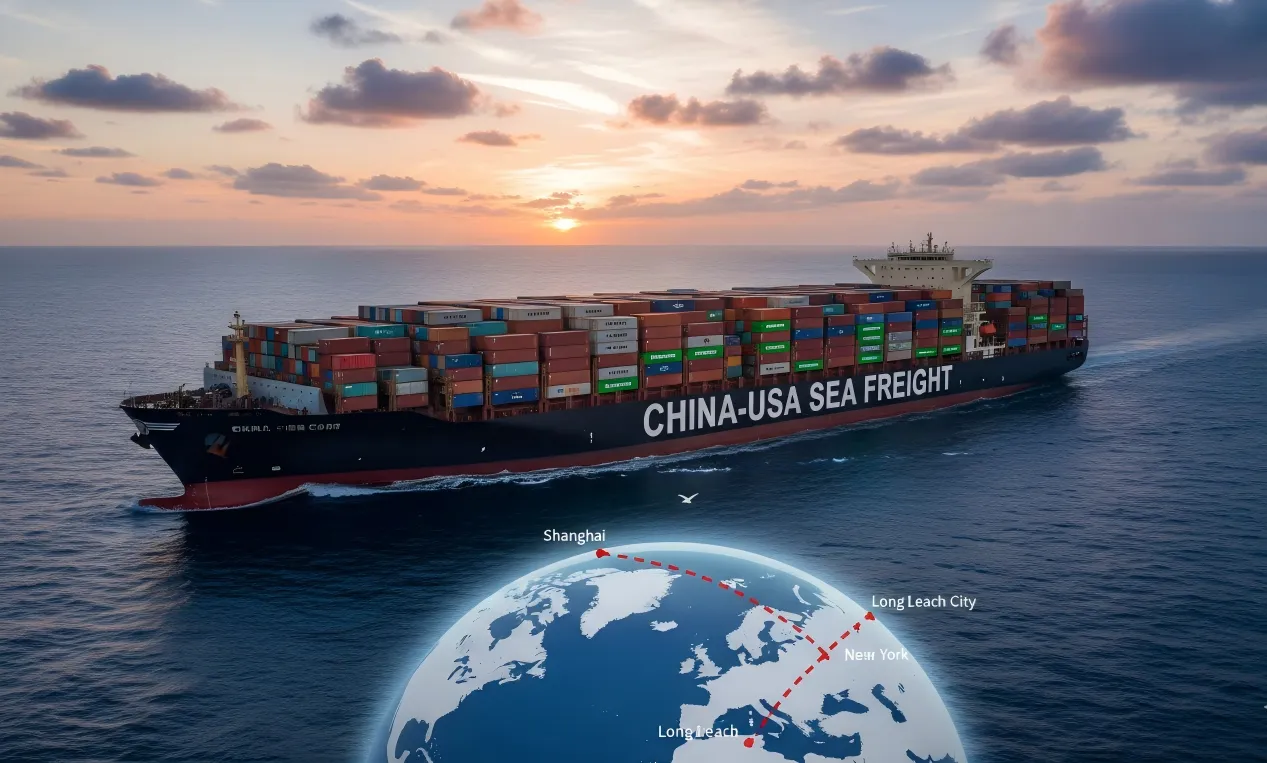
At AllBestShipping, we leverage over a decade of experience to provide reliable, transparent, and efficient Shipping from China solutions tailored to your business needs.
What is Sea Freight from China to USA?
Definition and Overview of Sea Freight
Sea Freight, also known as ocean freight, is the method of transporting large quantities of goods via cargo ships. For trade between China and the USA, this involves moving containers across the Pacific Ocean or through the Panama Canal to the East Coast. It is the preferred mode of transport for bulky, heavy, or non-urgent shipments due to its superior cost-efficiency compared to Air Freight.
In the context of 2026, the industry is witnessing a "tsunami" of new capacity, with analysts predicting a significant influx of new container ships (estimated at 9 million TEU). This overcapacity is expected to keep rates competitive, making ocean shipping an even more attractive option for importers.
Why Choose Sea Freight for Shipping from China to USA?
Choosing Sea Freight from China to USA offers several distinct advantages:
- Cost-Effectiveness: It is significantly cheaper than air cargo, especially for shipments weighing more than 500 kg.
- Capacity: Large vessels can carry massive volumes, accommodating everything from small LCL shipments to heavy machinery.
- Safety: Modern containerization ensures goods remain secure from factory to warehouse.
- Environmental Impact: Ocean shipping has a lower carbon footprint per ton-mile compared to air transport.
Understanding Container Types: 20ft vs 40ft vs 40HQ
Selecting the right container size is the first step in optimizing your shipping strategy.
- 20ft General Purpose (20GP): Ideal for heavy cargo like minerals, metals, or machinery. It holds about 33 cubic meters (CBM) of cargo.
- 40ft General Purpose (40GP): Designed for voluminous but lighter cargo, such as furniture, textiles, or toys. It holds approximately 67 CBM.
- 40ft High Cube (40HQ): Similar to the 40GP but taller, offering about 76 CBM of space. This is the most popular choice for most general merchandise.
- Special Containers: For perishable goods, Reefer Containers maintain temperature control. Open Top and Flat Rack containers are used for Out-of-Gauge (OOG) cargo that doesn't fit in standard boxes.
Sea Freight Shipping Process from China to USA
Navigating the logistics of international shipping can be complex. Here is a step-by-step breakdown of how a typical sea freight shipment works.
Step-by-Step Guide to Ocean Shipping
- Booking and Inquiry: You contact a freight forwarder like AllBestShipping for a quote.
- Cargo Pickup: We arrange for goods to be picked up from your supplier’s factory in China.
- Port Handling: Goods are transported to the port of origin (e.g., Shanghai, Shenzhen).
- Customs Clearance (Export): All necessary export documentation is filed with Chinese customs.
- Ocean Transit: The vessel departs and travels to the US port (e.g., Los Angeles, New York).
- Customs Clearance (Import): Upon arrival, Customs Clearance procedures are initiated in the USA.
- Final Delivery: Goods are transported via truck or rail to your warehouse or Amazon FBA center.
Key Documentation Required for Sea Freight
Accurate documentation is crucial to avoid delays. The "Checklist Pattern" helps ensure nothing is missed:
- Commercial Invoice: Details the value and description of goods.
- Packing List: Specifies the contents, weight, and dimensions.
- Bill of Lading (B/L): The contract of carriage and receipt of cargo.
- Importer Security Filing (ISF): Must be filed 24 hours before loading to avoid fines (up to $5,000 per violation).
- Certificate of Origin: May be required for tariff classifications.
Customs Clearance Procedures in China and USA
Customs compliance is often the most challenging part of Shipping from China.
- In China: The focus is on export licenses and accurate declaration of goods.
- In USA: Importers must navigate HTS codes, duties, and taxes. With Section 301 tariffs still relevant in 2026, verifying your specific 8-digit HTS subheading is vital. Using a professional Customs Clearance broker ensures you pay the correct duties and avoid penalties.
Essential Incoterms for Importers
Understanding International Commercial Terms (Incoterms) is vital to defining responsibility between buyer and seller.
- FOB (Free On Board): The most common term. The Chinese supplier handles everything until the goods are on the ship. You (the buyer) control the freight and choose the forwarder. This gives you better control over costs and shipping schedules.
- EXW (Ex Works): You are responsible for everything from the factory floor in China to your door in the USA. This offers maximum control but also maximum risk and workload.
- DDP (Delivered Duty Paid): The seller handles everything, including shipping, customs, and delivery to your door. While convenient, it can be more expensive as the seller marks up the freight costs.
- CIF (Cost, Insurance, and Freight): The seller pays for shipping and insurance to the destination port. However, you are responsible for arrival charges and customs, which can sometimes lead to surprise fees.
For most businesses shipping from China to the USA, FOB is recommended as it balances risk and control effectively.
Sea Freight Cost from China to USA
Understanding freight rates is essential for budgeting. As of late 2025 and moving into 2026, rates have seen a downward trend due to increased vessel supply.
Main Factors Affecting Sea Freight Rates
- Fuel Costs (BAF): Fluctuations in oil prices directly impact the Bunker Adjustment Factor.
- Seasonality: Rates spike during peak seasons like pre-Chinese New Year and the pre-holiday rush (August-October).
- Capacity vs. Demand: The 2026 influx of new ships is putting downward pressure on prices.
- Route: Shipping to the West Coast (shorter distance) is cheaper than the East Coast.
How to Calculate Shipping Cost from China to USA
To estimate your total landed cost, consider:
- Ocean Freight: The base rate per container (FCL) or per CBM (LCL).
- Local Charges: Terminal Handling Charges (THC) at both origin and destination.
- Trucking Fees: Cost for pickup and final delivery.
- Customs Duties: Based on the commercial value and HS code.
- Insurance: Cargo Insurance is a small percentage of value but critical for risk management.
Market Insight: As of late 2025, spot rates for a 40ft container to the US West Coast were hovering between
Common Hidden Charges in Sea Shipping
Beware of "hidden" fees that can inflate your invoice:
- Chassis Split Fee: If the trucker needs to pick up a chassis from a different location.
- Demurrage and Detention: Fees charged if containers linger at the port or warehouse too long.
- GRI (General Rate Increase): Carriers may implement sudden rate hikes.
- Peak Season Surcharge (PSS): Applied during high-demand periods.
Tips to Reduce Ocean Freight Charges
In a competitive market, every dollar counts. Here is how to save:
- Consolidate Shipments: Combine orders from multiple suppliers into one Sea Freight container (Buyer's Consolidation).
- Optimize Packaging: Reduce dead space. Shipping "air" is expensive.
- Book in Advance: securing space 2-3 weeks early can often lock in better rates.
- Avoid Peak Seasons: If possible, ship during "slack season" (March-July) when rates are lowest.
- Audit Invoices: Always check your freight bill against the quote to spot discrepancies.
Sea Freight Transit Times from China to USA
Time is money. Knowing how long your goods will take to arrive helps in inventory planning.
Typical Shipping Times by Major Routes and Ports
Transit times vary significantly based on the destination port:
- China to US West Coast (LA/Long Beach): 14–20 days (Port-to-Port).
- China to US East Coast (NY/Savannah): 28–35 days (via Panama Canal).
- Door-to-Door: Add 7–14 days for trucking and customs processing.
Factors That Influence Sea Shipping Duration
- Port Congestion: High volumes at ports like LA can cause berthing delays.
- Weather: Tyhpoons in the Pacific can disrupt schedules.
- Customs Inspections: Random exams can add days or weeks.
- Carrier Schedule Reliability: In late 2025, reliability was around 65%, meaning delays are common.
Comparing Transit Times: FCL vs LCL
- FCL: Generally faster as the container is unloaded and trucked directly.
- LCL: Takes longer (5–7 extra days) due to the need for consolidation at the origin and deconsolidation at the destination warehouse.
FCL vs LCL: Which Shipping Option is Best?
Choosing between Full Container Load (FCL) and Less than Container Load (LCL) depends on your shipment volume.
Differences Between Full Container Load and Less than Container Load
- FCL: You rent the entire container (20ft or 40ft). You don't have to fill it, but you pay a flat rate. Best for high-volume shipments (usually > 15 CBM).
- LCL: You share a container with other shippers. You pay only for the space (CBM) you use. Best for smaller shipments (< 15 CBM).
FCL vs LCL: Cost and Time Comparison
| Feature | FCL (Full Container Load) | LCL (Less than Container Load) |
|---|---|---|
| Cost | Cheaper per unit for large volumes | Cheaper for small volumes |
| Speed | Faster (No deconsolidation) | Slower (Requires consolidation) |
| Risk | Lower risk of damage (less handling) | Higher risk (mixed cargo) |
| Tracking | Easier to track container | Tracking per pallet/carton |
Suitability for Different Types of Shipments
- Choose FCL if you have enough goods to fill at least half a 20ft container or if your goods are fragile.
- Choose LCL if you are a startup or shipping small sample batches.
Major Sea Freight Routes and Destination Ports
Top Chinese Ports for Exporting to USA
- Shanghai: The world's busiest container port.
- Shenzhen (Yantian/Shekou): Key for electronics and manufacturing in South China.
- Ningbo-Zhoushan: Excellent alternative to Shanghai.
- Qingdao: Major hub for Northern China.
Popular USA Ports for Importing from China
- Los Angeles / Long Beach: The primary gateway for trans-Pacific trade. Handles the bulk of imports but prone to congestion.
- New York / New Jersey: The largest East Coast port complex.
- Savannah: A fast-growing port for the Southeast market.
- Houston: Key for the Gulf Coast region.
Route Selection and Its Impact on Cost and Time
Choosing the right port pair is critical. Shipping to LA is faster and cheaper ocean-wise, but if your warehouse is in New York, the inland trucking (intermodal) costs might outweigh the ocean savings. AllBestShipping can help analyze the best Door-to-Door Shipping route for your specific location.
Specific Transit Time Examples (Port-to-Port)
- Shanghai to Los Angeles: ~16 Days
- Shenzhen to Long Beach: ~15 Days
- Ningbo to Seattle: ~18 Days
- Shanghai to New York (via Panama): ~30 Days
- Shenzhen to Savannah: ~32 Days
- Qingdao to Houston: ~35 Days
Note: These are estimated times on the water. Always add 7-10 days for origin processing and destination clearance.
Tips for Smooth and Cost-Effective Sea Freight from China to USA
How to Choose a Reliable Freight Forwarder
A good forwarder is your strategic partner. Look for:
- Experience: Proven track record in China-US trade.
- Network: Strong relationships with carriers and local truckers.
- Transparency: No hidden fees in quotes.
- Service: Capabilities for Warehouse Services and Customs Clearance.
Best Practices for Packaging and Labeling
- Palletizing: Use standard pallets (40x48 inches for USA) to facilitate forklift handling.
- Labeling: Ensure "Made in China" is clearly visible on every carton (US Customs requirement).
- Protection: Use high-quality cardboard and moisture-absorbing packets to prevent "container rain" damage.
Tracking and Managing Your Shipment
Utilize technology to stay updated. AllBestShipping provides real-time tracking so you know exactly where your cargo is. Always plan for "buffer time"—add 1-2 weeks to your lead time to account for unforeseen delays.
Common Challenges and Solutions in Sea Freight
Even with the best planning, issues can arise. Here is how to handle them:
Rolled Cargo: This happens when a carrier overbooks a vessel and leaves your container behind.
- Solution: Book your space at least 3-4 weeks in advance, especially before Golden Week or Chinese New Year.
Customs Exams: US Customs (CBP) may flag your shipment for a random X-ray or intensive exam, causing delays of 3-10 days.
- Solution: Ensure your HTS codes are accurate and your ISF is filed on time. Budget for potential exam fees (
1000).
- Solution: Ensure your HTS codes are accurate and your ISF is filed on time. Budget for potential exam fees (
Cargo Damage: Rough seas or poor handling can damage goods.
- Solution: Use professional palletizing and shrink-wrapping. Always purchase Cargo Insurance for peace of mind.
Lost Original Bill of Lading: Losing the original B/L halts cargo release.
- Solution: Request a "Telex Release" (Electronic Release) from the supplier to avoid mailing physical documents.
FAQ: Sea Freight from China to USA
Q: What are the current ocean freight rates for a 40ft container?
A: As of 2026 projections, rates are stabilizing. Expect to pay between
Q: How long does sea freight take from China to USA? A: Port-to-port is roughly 14-20 days (West Coast) and 28-35 days (East Coast). Door-to-door usually takes 25-45 days depending on the final destination.
Q: What is the cheapest time to ship? A: Usually post-Chinese New Year (March-April) and mid-summer (June-July) before the peak season hits.
Q: Do I need cargo insurance? A: Yes. Carrier liability is limited. Cargo Insurance protects your investment against loss or damage at sea.
Q: Can you handle Amazon FBA shipments? A: Absolutely. We specialize in Amazon FBA Shipping, ensuring your goods meet Amazon's strict packaging and labeling standards.