Door to Door Shipping from China to France: The Ultimate Guide (2025-2026)
Are you an importer looking for the most efficient, hassle-free way to transport goods from Asia to Europe? If navigating complex customs regulations, coordinating multiple carriers, and managing inland transportation sounds overwhelming, then Door to Door Shipping from China to France is the solution you need. In the rapidly evolving logistics landscape of 2025 and 2026, understanding this comprehensive service is key to optimizing your supply chain.
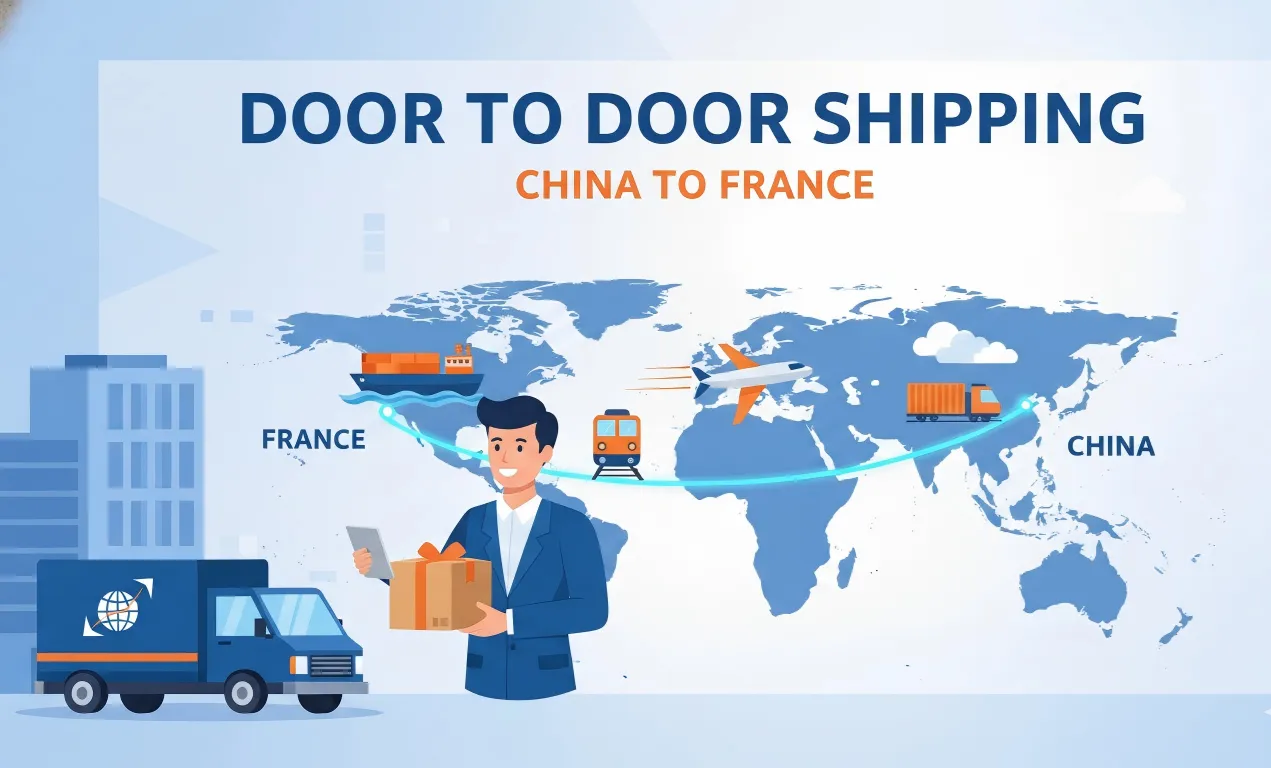
As a freight forwarder with over a decade of experience in international logistics, I have witnessed how Door to Door shipping has revolutionized global trade. It transforms a complicated multi-step process into a seamless experience where your goods are picked up from the supplier in China and delivered directly to your warehouse, office, or private address in France. Whether you are shipping to Paris, Lyon, Marseille, or Le Havre, this guide will cover everything you need to know—from costs and transit times to the latest customs regulations like ICS2 and the Triman logo requirement.
1. What is Door to Door Shipping from China to France?
Definition and Core Benefits
Door to Door shipping is a logistics service where the freight forwarder manages the entire shipping process from the point of origin (the supplier's factory or warehouse in China) to the final destination (the consignee's doorstep in France). Unlike traditional "Port to Port" shipping, where your responsibility begins as soon as the cargo arrives at the destination port, Door to Door service handles every intermediate step.
This "one-stop" solution typically includes:
- Pickup and Inland Transport in China.
- Export Customs Declaration and documentation.
- International Freight (Sea, Air, or Rail).
- Import Customs Clearance in France.
- Payment of Duties and Taxes (depending on the Incoterm).
- Final Delivery to your specified address.
The primary benefit is simplicity. You deal with a single point of contact—your trusted freight forwarder—rather than juggling separate contracts with trucking companies, customs brokers, and shipping lines.
DDP vs. DAP: Understanding the Incoterms
When arranging Door to Door Shipping from China to France, it is crucial to understand the two main Incoterms (International Commercial Terms) used: DDP and DAP.
| Feature | DDP (Delivered Duty Paid) | DAP (Delivered at Place) |
|---|---|---|
| Seller/Forwarder Responsibility | Maximum. Covers transport, insurance, customs clearance, and duties/taxes. | High. Covers transport to the destination door. |
| Buyer Responsibility | Minimal. You just receive the goods. | Import Customs Clearance and payment of Import Duties & VAT. |
| Risk Transfer | At the buyer's doorstep after unloading (usually). | At the buyer's doorstep ready for unloading. |
| Best For | E-commerce sellers (Amazon FBA), first-time importers, or those wanting zero hassle. | Established businesses with their own VAT number and customs capability. |
Choosing between DDP and DAP depends on your ability to handle French customs procedures. If you want a truly "hands-off" experience, DDP shipping is the preferred choice for many SMEs and e-commerce businesses.
2. Main Shipping Methods for Door to Door Delivery
Selecting the right mode of transport is a trade-off between speed and cost. Here are the primary options for shipping from China to France.
Sea Freight Door to Door
Sea Freight is the most common and cost-effective method for large shipments.
- FCL (Full Container Load): You rent an entire container (20ft or 40ft). It is the most economical option for high-volume shipments. Goods are sealed in China and opened only at your warehouse in France.
- LCL (Less than Container Load): If you don't have enough cargo to fill a container, your goods are consolidated with others. In early 2026, LCL rates remain very competitive (e.g., around $30/cbm), making it ideal for smaller businesses.
- Key Ports: Major gateways include Le Havre (the primary port for Paris), Marseille-Fos, and Dunkirk.
Air Freight Door to Door
Air Freight is the fastest option, ideal for high-value goods (electronics, fashion) or urgent shipments.
- Standard Air Freight: Goods are flown to major airports like Paris Charles de Gaulle (CDG) or Lyon-Saint Exupéry (LYS), cleared, and trucked to the final address.
- Speed: Typically 5-7 days door-to-door.
- Cost: Significantly higher than sea freight, often calculated by chargeable weight (actual weight vs. volumetric weight).
Rail Freight (China-Europe Railway Express)
Rail Freight offers a balanced middle ground—faster than sea, cheaper than air.
- Routes: The Northern Route (via Russia/Kazakhstan) and the Middle Corridor (via Caspian Sea).
- Transit Time: Approximately 15-20 days to European hubs, plus 2-3 days for final delivery to France.
- Sustainability: Rail emits significantly less CO2 than air freight, appealing to eco-conscious brands.
Express Courier
For small parcels (samples, documents, or goods under 100kg), services like DHL, UPS, FedEx, and TNT offer the fastest Door to Door speeds (3-5 days). They handle clearance internally, though this can sometimes be more expensive per kg than consolidated air freight.
3. Shipping Costs: 2026 Market Update
The cost of Door to Door Shipping from China to France fluctuates based on fuel prices, seasonal demand, and geopolitical factors.
Factors Affecting Costs
- Weight and Volume: Heavier and bulkier items cost more. Air freight uses a "1:167" volumetric ratio, while sea freight LCL typically charges per CBM (Cubic Meter).
- Seasonality: Shipping just before Chinese New Year (e.g., February 2026) usually sees a spike in rates due to high demand and capacity shortages.
- Geopolitical Events: The ongoing situation in the Red Sea has forced many vessels to route via the Cape of Good Hope, increasing transit times and fuel surcharges, leading to a ~27% rise in sea freight rates in early 2026.
Estimated Cost Ranges (Reference Only)
- Sea Freight (LCL):
300 per CBM (Door to Door, varying by location and Incoterm). - Rail Freight:
2.5 per kg (Door to Door). - Air Freight:
8.00 per kg (for +100kg shipments).
Note: Always request a real-time quote from AllBestShipping for the most accurate pricing.
4. Shipping Time: How Long Does It Take?
Transit time is a critical factor for inventory planning.
- Sea Freight: 35-45 days. (Port-to-port is ~28 days, plus customs and inland haulage). Delays at ports like Le Havre can add time.
- Rail Freight: 18-24 days. A reliable alternative when sea routes are congested.
- Air Freight: 5-8 days. The quickest option for time-sensitive cargo.
- Express: 3-5 days.
Tips to Reduce Delays:
- Book space at least 2 weeks in advance, especially before holidays.
- Ensure all documents are accurate to avoid customs holds.
- Choose a forwarder with strong local networks in France to speed up the "last mile" delivery.
5. Customs Clearance and Compliance in France
Shipping to France requires strict adherence to EU and French national regulations. A competent Door to Door provider will guide you through this.
Key Documents Required
- Commercial Invoice: Must include the HS Code, value, and description of goods.
- Packing List: Details the contents, weight, and dimensions.
- Bill of Lading (B/L) or Air Waybill (AWB).
- Certificates: CE Certificate (for electronics, toys), MSDS (for batteries/chemicals).
Important Regulations (2025-2026)
- VAT and Duties: France's standard VAT rate is 20%. Duties vary by product type (check the TARIC database). For example, standard electronics might have a 0-2% duty, while textiles could be up to 12%.
- PVA (Postponed VAT Accounting): Since 2022, companies with a French VAT number can self-assess import VAT on their VAT return instead of paying it in cash at the border. This provides a massive cash flow advantage, as you don't need to tie up capital while waiting for a VAT refund.
- ICS2 (Import Control System 2): Mandatory safety and security data reporting prior to arrival. This applies to all modes of transport (Air, Sea, Rail). Failure to comply can lead to rejected shipments or severe delays at the EU border.
- Triman Logo: France strictly enforces the Triman logo and sorting instructions (Info-Tri) on recyclable products and packaging (electronics, textiles, furniture, packaging). Non-compliant goods can face fines of up to €15,000 per product line or be blocked from entering the market. Ensure your packaging design is updated!
- EORI Number: Essential for any business importing into the EU. You must have an EORI number linked to your VAT number to process customs declarations.
Restricted and Prohibited Items
Not everything can be shipped freely. France has strict controls on:
- Counterfeit Goods: Zero tolerance. Goods will be destroyed, and you may face heavy fines.
- Food and Agricultural Products: Require specific health certificates and sanitary inspections.
- Endangered Species: Items made from ivory, certain skins, or woods are banned under CITES.
- Dangerous Goods: Lithium batteries, chemicals, and flammable liquids require special handling, labeling, and MSDS documents.
6. Proper Packaging and Cargo Insurance
How to Pack for International Shipping
Proper packaging is your first line of defense against damage.
- Palletization: Use standard Euro pallets (120x80cm) if possible, or standard industrial pallets (120x100cm). Ensure goods are strapped and shrink-wrapped.
- Labeling: Every carton should have a clear shipping mark (Consignee Name, Box Number, Made in China).
- Inner Protection: Use bubble wrap, foam, or air pillows for fragile items. Do not leave empty space inside boxes to prevent crushing.
Cargo Insurance: Do You Need It?
We strongly recommend Cargo Insurance for all door-to-door shipments.
- Carrier Liability is Limited: Carriers usually have limited liability (e.g., $2.00 per kg). This often won't cover the value of your goods.
- "All Risk" Policy: Covers loss or damage from external causes (theft, fire, sinking, rough handling) for the full value of the goods plus freight costs. It is a small investment (often 0.3% - 0.6% of cargo value) for peace of mind.
7. The Door to Door Shipping Process: Step-by-Step
Here is what the journey looks like when you partner with AllBestShipping:
- Quotation: You provide cargo details; we offer a transparent, all-in quote.
- Booking: We contact your supplier in China to arrange pickup.
- Pickup & Export: Goods are collected, brought to our warehouse, and cleared for export from China.
- International Transit: Cargo moves via Sea, Air, or Rail. You can track the status online.
- Arrival & Clearance: Upon arrival in France (e.g., Le Havre or CDG), our local team handles Customs Clearance.
- Payment: Duties and taxes are paid (if DDP, we handle this).
- Final Delivery: The shipment is trucked to your specified address.
8. Why Choose AllBestShipping?
Selecting the right partner is crucial. AllBestShipping offers:
- Expertise: Deep knowledge of Shipping From China to France routes and regulations.
- Transparency: No hidden fees. Our quotes are comprehensive.
- Network: Strong relationships with carriers and customs brokers in France ensure smooth handling.
- Flexibility: Tailored solutions for FCL, LCL, Air, and Rail.
Frequently Asked Questions (FAQ)
Q: Can you ship batteries or electronics to France? A: Yes, but they require specific documentation like MSDS and UN38.3 test reports. Ensure your products comply with CE standards and have the Triman logo on packaging.
Q: What is the cheapest shipping method from China to France? A: Sea Freight (LCL) is generally the cheapest for small to medium shipments, while FCL is best for large volumes.
Q: Do I need a VAT number to import to France? A: For DDP shipping, the forwarder can often handle this. However, for regular importing under DAP terms or to use the PVA scheme, you should register for a French VAT and EORI number.
Q: How does the "Red Sea Crisis" affect my shipment? A: It currently adds about 7-10 days to sea freight transit times and increases costs due to the longer route around Africa. We recommend planning your inventory with this buffer in mind.