Container Shipping from China to USA: The 2026 Ultimate Guide (Rates & Time)
Are you looking to streamline your supply chain and master the complexities of Container shipping from China to USA? In the dynamic world of international trade, efficient logistics is the backbone of success for businesses of all sizes. With bilateral trade between China and the United States reaching hundreds of billions of dollars annually, the transpacific route remains one of the most critical arteries of the global economy. Whether you are an e-commerce giant scaling your operations or a small startup importing your first batch of goods, understanding how to navigate this route is crucial.
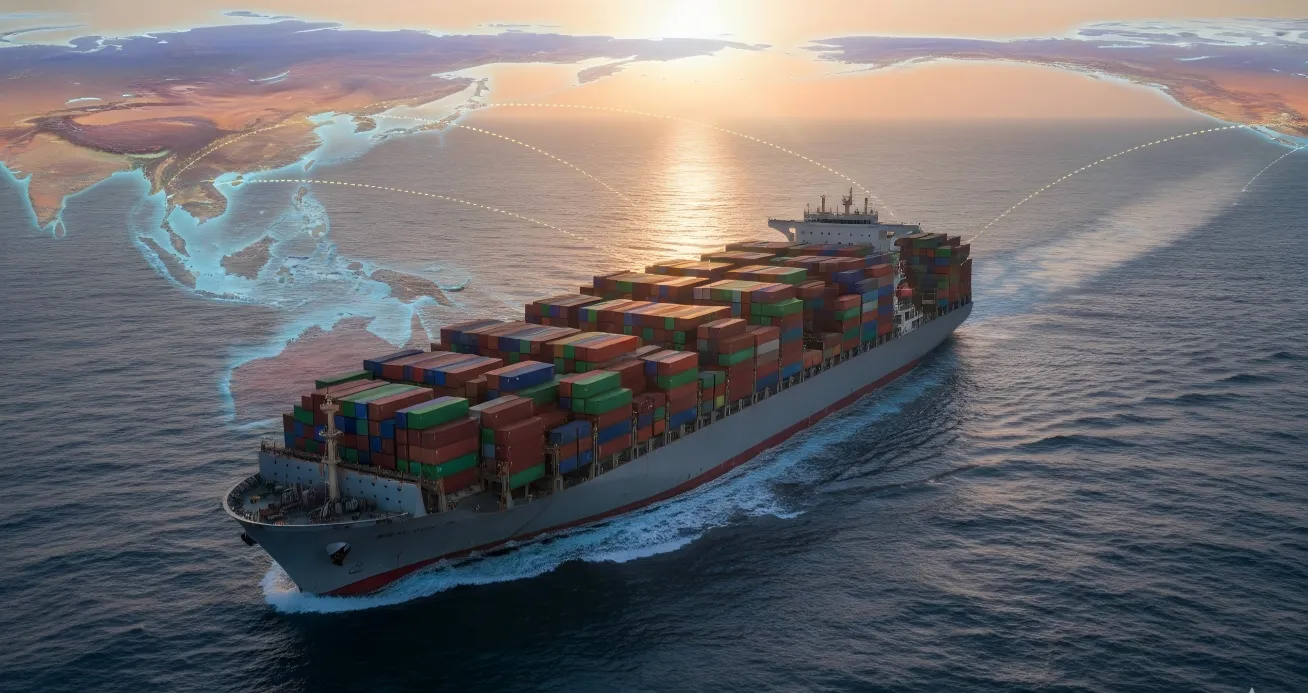
However, the landscape of global shipping is constantly evolving. From fluctuating freight rates and capacity constraints to changing customs regulations and geopolitical shifts, staying informed is not just an option—it's a necessity for survival. This comprehensive guide, updated for January 2026, will walk you through everything you need to know about shipping containers from China to the US. We will cover route options, cost structures, transit times, and actionable strategies to ensure your cargo arrives safely, on time, and within budget. At AllBestShipping, we leverage over a decade of expertise to simplify this process for you, acting as your trusted partner in global logistics.
Understanding the Basics of Container Shipping
What Is Container Shipping?
Container shipping is the method of transporting goods in standardized steel boxes, known as intermodal containers. This system has revolutionized global trade by allowing cargo to be moved seamlessly between ships, trucks, and trains without being unpacked or handled directly. The standardization ensures safety, security, and efficiency, making Sea Freight the most popular choice for moving large volumes of goods across the Pacific Ocean.
While there are many types of containers, the two workhorses of the industry are:
- 20-foot General Purpose (GP): Ideal for heavy, dense goods like machinery, metals, and raw materials. It has a smaller volume but a high weight capacity.
- 40-foot General Purpose (GP) and High Cube (HC): Better suited for voluminous but lighter cargo such as textiles, electronics, toys, and furniture. The High Cube version offers an extra foot of height, which is invaluable for stacking lightweight pallets.
Beyond these, there are specialized containers like Reefer Containers for perishable goods, Open Top Containers for over-height cargo, and Flat Rack Containers for heavy machinery that cannot fit inside a standard box.
Key Players in the Shipping Process
Navigating the logistics chain involves several key parties, each playing a vital role. Understanding who does what is the first step in managing your supply chain effectively:
- The Shipper (Exporter): The party in China sending the goods, usually your manufacturer or supplier.
- The Consignee (Importer): You, the buyer in the USA, who is ultimately responsible for the goods upon arrival.
- The Carrier: The shipping line that owns and operates the vessel (e.g., Maersk, COSCO, MSC). They are responsible for the ocean transit.
- The Freight Forwarder: A crucial intermediary like AllBestShipping. We act as your travel agent for cargo, arranging the transport, negotiating competitive rates with carriers, handling documentation, and solving problems that arise during transit.
- Customs Broker: Licensed experts who handle Customs Clearance. They ensure your goods comply with US regulations, file necessary entries, and facilitate the payment of duties and taxes.
Major Container Shipping Routes from China to USA
Primary Chinese Ports of Origin
China boasts some of the world's busiest and most efficient ports, serving as the factory of the world. The choice of origin port often depends on where your supplier is located to minimize inland trucking costs.
- Shanghai: The world's busiest container port, ideal for suppliers in the Yangtze River Delta (e.g., Jiangsu, Zhejiang). It offers the most frequent sailings.
- Shenzhen (Yantian/Shekou): A key gateway for goods from the Pearl River Delta, which is a hub for electronics and high-tech manufacturing.
- Ningbo-Zhoushan: Known for its deep-water capabilities and proximity to manufacturing hubs south of Shanghai. It is often a great alternative when Shanghai is congested.
- Qingdao & Tianjin: Major hubs for Northern China exports, handling heavy industry goods and commodities.
- Xiamen: A key port for the Fujian province, serving light industry and stone exports.
Main US Ports of Destination
On the US side, ports are categorized mainly into West Coast, East Coast, and Gulf Coast.
- West Coast (Los Angeles/Long Beach): These twin ports handle the majority of transpacific trade. They offer the fastest route from China but can be prone to severe congestion during peak seasons.
- Pacific Northwest (Seattle/Tacoma): A viable alternative for goods destined for the northern US or Canada.
- East Coast (New York/New Jersey, Savannah, Norfolk): Accessible via the Panama Canal. Transit times are significantly longer, but these ports offer easier access to the densely populated eastern US markets, bypassing the need for cross-country rail.
- Gulf Coast (Houston): Strategic for shipments destined for the central and southern US, particularly for heavy equipment and oil/gas related machinery.
Typical Shipping Lanes and Transit Times
Transit times vary significantly based on the route and service type (direct vs. transshipment).
- China to US West Coast: Typically takes 15 to 25 days. This is the fastest ocean option and is preferred for time-sensitive goods.
- China to US East Coast: Usually takes 30 to 40 days as vessels navigate the Panama Canal.
- China to US Gulf Coast: Approximately 30 to 35 days.
Note: These are port-to-port times. Door-to-door delivery will add another 5-10 days for Customs Clearance, terminal handling, and final trucking.
Key Factors Affecting Container Shipping Costs and Time
Influences on Freight Rates
Freight rates are notoriously volatile and can change weekly. Several factors drive the cost of Sea Freight:
- Fuel Costs (Bunker Adjustment Factor - BAF): Fluctuations in global oil prices directly impact shipping rates. Carriers pass this cost on to shippers via BAF.
- Seasonality: Shipping during peak seasons (August to October, before the holiday shopping rush) or right before Chinese New Year (January/February) can see rates skyrocket due to high demand.
- Capacity & Blank Sailings: When demand drops, carriers may cancel scheduled voyages (known as "blank sailings") to artificially reduce supply and keep rates high.
- General Rate Increases (GRI): Carriers may periodically announce rate hikes across the board in response to market conditions.
Customs Duties and Tariffs
Importing into the USA requires strict adherence to CBP (Customs and Border Protection) regulations. You must consider:
- Harmonized Tariff Schedule (HTS): The classification of your goods determines the duty rate. Even a small error in classification can lead to significant overpayment or penalties.
- Section 301 Tariffs: Specific tariffs on Chinese goods that have been a significant factor in recent years. These punitive tariffs can add 25% or more to your costs.
- Merchandise Processing Fee (MPF): An ad valorem fee charged by customs for processing trade data.
- Harbor Maintenance Fee (HMF): Applicable for ocean freight entering via US ports.
Working with a knowledgeable partner for Customs Clearance is essential to accurately budget for these costs and avoid penalties.
Common Delays and How to Avoid Them
Delays can occur due to port congestion, customs exams, or bad weather. To mitigate these risks:
- Book Early: Secure space at least 2-3 weeks in advance, especially during peak season.
- Accurate Documentation: Ensure all paperwork (Commercial Invoice, Packing List, Bill of Lading) is error-free to prevent customs holds.
- Use Reliable Forwarders: A partner like AllBestShipping can reroute cargo or provide Door-to-Door Shipping solutions to navigate bottlenecks efficiently.
Cost of Shipping a 40ft Container from China to USA
Average Rates and Cost Breakdown
As of early 2026, the cost to ship a 40ft container (FEU) from China to the US West Coast generally ranges between
- Ocean Freight: The base rate for transporting the container from port to port.
- Terminal Handling Charges (THC): Fees charged by the port terminals at both origin and destination for loading/unloading.
- Documentation Fees: Fees for issuing the Bill of Lading and filing the ISF.
- Security Surcharges: ISPS (International Ship and Port Facility Security) fees.
- Chassis Fee: In the US, you often need to rent a chassis to move the container from the port, which is a separate daily charge.
Factors Affecting the 40ft Container Shipping Cost
The price for a 40ft container offers better value for money compared to a 20ft container if you have enough cargo. Factors influencing this price include the "China+1" manufacturing shifts affecting route demand, and the stability of global fuel prices. Additionally, opting for premium "expedited" services can increase costs but significantly reduce transit time, which might be worth it for high-value goods.
Real-World Cost Examples
- Scenario A: Shipping furniture from Shenzhen to Los Angeles in June (Slack Season). You might pay around $3,800 for the ocean freight, plus $500 in local charges and $1,200 for trucking to the warehouse.
- Scenario B: Shipping electronics from Shanghai to New York in September (Peak Season). The rate could jump to $6,200 due to GRI and Peak Season Surcharges (PSS). These are estimates; for real-time quotes, contact AllBestShipping.
Cost of Shipping a 20ft Container from China to USA
Typical Shipping Costs for 20ft Containers
A 20ft container (TEU) typically costs about 70-80% of a 40ft container, not 50% as some might assume. Current rates to the West Coast hover around
Comparing 20ft vs 40ft Container Shipping Costs
When deciding between a 20ft and 40ft container, consider the economy of scale. A 40ft container holds roughly double the volume (approx. 67 CBM vs 33 CBM) but often costs only 30-40% more than a 20ft unit.
| Feature | 20ft Container (TEU) | 40ft Container (FEU) |
|---|---|---|
| Volume Capacity | ~33 CBM | ~67 CBM |
| Payload Capacity | ~25,000 kg | ~27,600 kg |
| Best For | Heavy, dense goods (metals, minerals) | Voluminous, light goods (textiles, toys) |
| Cost Efficiency | Lower total cost, higher per-unit cost | Higher total cost, lower per-unit cost |
- Choose 20ft: If your cargo volume is under 30 CBM or is very dense/heavy (like tiles or metals).
- Choose 40ft: If your cargo is between 30 and 65 CBM. It is almost always cheaper to ship one 40ft container than two 20ft containers.
How to Optimize Costs for 20ft Containers
If you don't have enough goods to fill a 20ft container, consider LCL (Less than Container Load) shipping. However, if you are close to filling it, FCL (Full Container Load) is safer and faster. To optimize, try to consolidate orders from different suppliers into one container using Warehouse Services offered by forwarders like AllBestShipping.
How to Reduce & Manage Container Shipping Costs
Choosing the Right Shipping Partner and Route
Selecting a freight forwarder with strong carrier relationships can unlock better rates. AllBestShipping can advise whether a direct service or a transshipment (which might be slower but cheaper) is best for your needs. Sometimes, shipping to a less congested port (like Tacoma instead of LA) and trucking the goods via rail (intermodal transport) can save money and time.
Booking Strategies and Advance Planning
- Ship during slack season: If possible, avoid the pre-Holiday rush (August-October).
- Book in advance: Booking 3-4 weeks out can secure better spot rates and guarantee space.
- Optimize Packaging: Reduce wasted space in your packaging to fit more units per container.
- Use the Right Incoterms: Understand the difference between FOB (Free on Board) and EXW (Ex Works). Buying FOB means your supplier pays for local costs in China, which is often cheaper than you arranging EXW and paying for pickup and Chinese customs yourself.
Additional Tips for Managing Unexpected Charges
- Free Time: Negotiate for longer free time at the destination port to avoid Demurrage and Detention charges. These fees can accrue quickly if you can't pick up your container or return the empty one on time.
- Cargo Insurance: Always secure Cargo Insurance. The cost is minimal compared to the potential loss from accidents, theft, or General Average claims.
- Transparent Quotes: Ensure your quote is "all-in" to avoid surprise local fees upon arrival.
Step-by-Step Guide: How to Ship Containers from China to USA
1. Planning and Choosing the Shipping Method (FCL vs. LCL)
Determine your shipment volume. If you have over 15 CBM, FCL is usually the way to go. For smaller shipments, LCL allows you to share space. Consider Air Freight only for urgent, high-value, low-volume goods due to the high cost (often 5-10x ocean freight).
2. Documentation and Customs Requirements
Prepare the "Holy Trinity" of shipping documents: Commercial Invoice, Packing List, and Bill of Lading. Additionally, for US imports, the ISF (Importer Security Filing) must be filed 24 hours before the ship leaves China. Failure to do so can result in a $5,000 fine. Other documents like the Certificate of Origin may be needed for tariff benefits.
3. Booking and Preparing Your Cargo
Contact AllBestShipping to book your space. Ensure your supplier packs the goods properly for ocean transit (pallets, shrink wrap). Proper labeling is crucial for US Customs compliance (Country of Origin marking is mandatory).
4. Shipping, Tracking, and Delivery
Once on board, you can track your container. Upon arrival, your customs broker clears the goods. You can then arrange for Door-to-Door Shipping, where the container is trucked directly to your warehouse.
FAQs about Container Shipping from China to USA
1. What is the difference between FCL and LCL shipping? FCL (Full Container Load) means a single shipper has exclusive use of a container, whereas LCL (Less than Container Load) involves sharing container space with other shippers. FCL is generally faster and more cost-effective for shipments exceeding 15 cubic meters, while LCL offers flexibility for smaller volumes.
2. How long does it take for a container to arrive from China to the USA? Sea freight typically has the longest lead time, averaging between 15-25 days to the West Coast and 30-40 days to the East Coast. Door-to-door delivery usually adds another 1-2 weeks for customs clearance and inland trucking.
3. What is the Importer Security Filing (ISF) "10+2" rule? The ISF is a mandatory filing required by U.S. Customs and Border Protection (CBP) that must be submitted at least 24 hours before cargo is loaded onto a vessel in China. It requires 10 data elements from the importer and two from the carrier to evaluate security risks.
4. How have recent tariffs affected shipping costs? The tariff landscape (like Section 301) caused fluctuations in U.S. imports from China. While they don't change the freight rate itself, they significantly increase the landed cost. These geopolitical tensions have led many shippers to adopt "China+1" strategies.
5. What is the most economical way to ship small vs. large quantities? For small shipments under 150 kg, express freight is usually the cheapest; for 150 kg to 500 kg, standard air freight is preferred. Once a shipment exceeds 500 kg, Sea Freight becomes the most cost-effective option due to its tremendous economies of scale.
6. What are "Incoterms" and why are they important? Incoterms are mutually agreed-upon terms (such as FOB, EXW, or DDP) that clearly define the responsibilities of the buyer and seller regarding costs and risks. Choosing the right Incoterm is critical as it determines who is responsible for clearing Chinese export customs and arranging the ocean transit.
7. What is a "Green Shipping Corridor"? It is a partnership between major ports, like Los Angeles and Shanghai, aimed at decarbonizing trade routes. The initiative focuses on phasing in low and zero-carbon fueled ships, which is becoming increasingly important for companies with sustainability goals.
8. What is the "New Queuing System" at US Ports? To reduce congestion, ports like LA/LB have implemented systems where vessels are assigned a spot based on their departure time rather than arrival, reducing the number of ships idling at anchor and lowering emissions.
Conclusion
Shipping containers from China to the USA is a complex but manageable process with the right knowledge and partners. From understanding the difference between 20ft and 40ft containers to navigating customs and optimizing routes, every decision impacts your bottom line. By leveraging the expertise of AllBestShipping, you can ensure your goods move efficiently across the Pacific. We offer comprehensive solutions, including Door-to-Door Shipping, Customs Clearance, and Warehouse Services, to support your business growth in 2026 and beyond. Contact us today for a quote and let us take the stress out of your global logistics.