Sea Freight from China to Canada: The Ultimate Guide (2026)
With China being Canada's second-largest trading partner, mastering the logistics of Sea Freight from China to Canada is crucial for businesses aiming to maximize profitability. Whether you are importing electronics, furniture, or machinery, navigating the complex web of shipping routes, fluctuating rates, and strict customs regulations can be overwhelming. This comprehensive guide covers everything you need to know—from FCL and LCL options to customs clearance and 2026 cost estimates—ensuring your supply chain remains efficient and cost-effective.
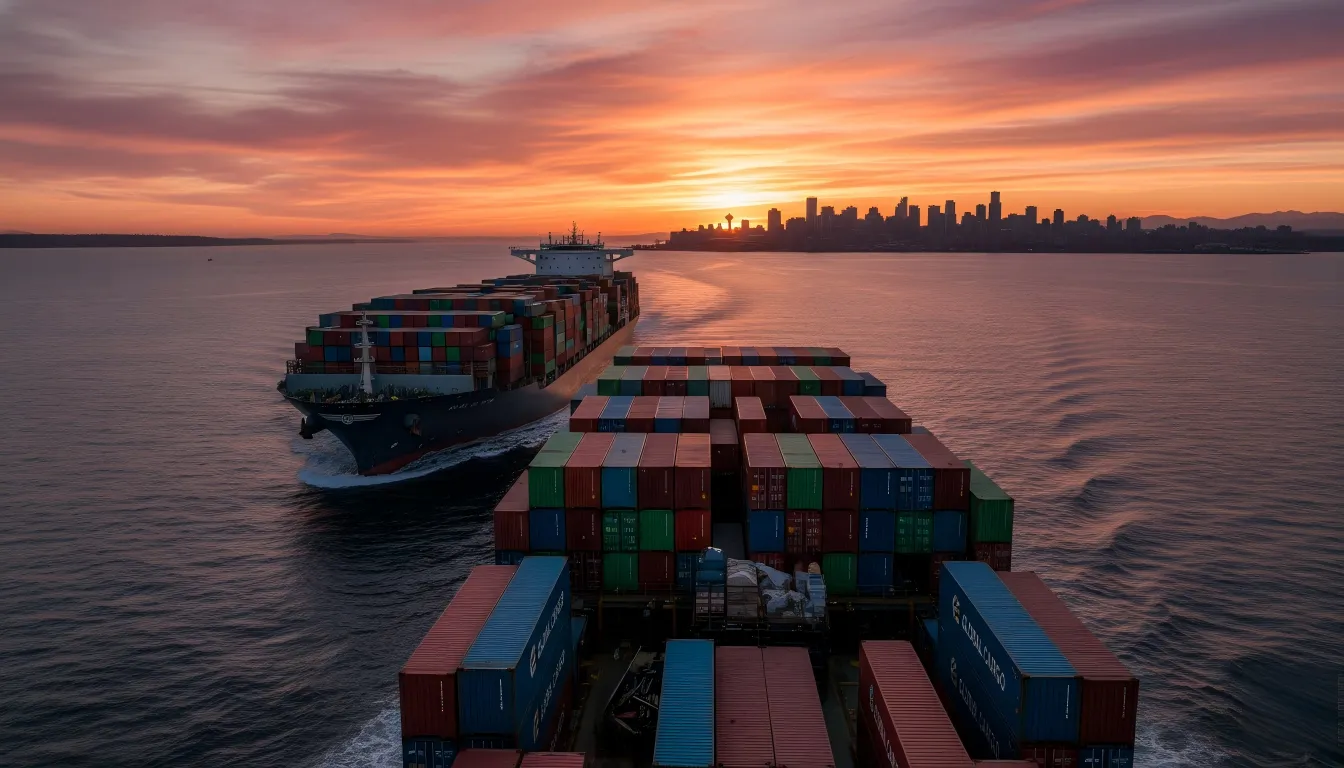
Why Choose Sea Freight from China to Canada?
For most importers, ocean freight remains the dominant choice for moving goods across the Pacific. While air freight offers speed, sea freight provides unmatched advantages for scalable businesses.
Cost-Effectiveness
The most compelling reason to choose sea freight is cost. For large volumes, shipping by sea is approximately 5 to 10 times cheaper than air freight. If your shipment is not time-sensitive, opting for ocean transport can significantly improve your profit margins.
Capacity for Large Cargo
Sea freight is the only viable option for moving massive machinery, bulk commodities, and large inventories. Standard shipping containers are designed to handle heavy and bulky items that simply cannot fit on an aircraft.
Sustainability
With growing environmental awareness, many companies are looking to reduce their carbon footprint. Ocean shipping generates significantly fewer CO2 emissions per ton-kilometer compared to air cargo, making it a greener choice for your supply chain.
FCL vs. LCL: Which One Do You Need?
Choosing between FCL (Full Container Load) and LCL (Less than Container Load) is the first decision you'll need to make.
FCL (Full Container Load)
FCL means renting an entire container for your goods. You don't have to fill it completely, but you pay for the whole unit.
- Container Sizes: The most common types are 20GP (20ft General Purpose), 40GP, and 40HQ (40ft High Cube).
- Best For: Shipments with a volume greater than 15 CBM (Cubic Meters).
- Advantages: Faster transit times (no need to wait for consolidation), lower risk of damage (less handling), and generally cheaper per unit for large volumes.
LCL (Less than Container Load)
LCL involves sharing container space with other shippers. You only pay for the volume your cargo occupies.
- Best For: Small shipments, typically between 1 CBM and 15 CBM.
- Calculation: Costs are calculated based on "Revenue Tons" (w/m), which considers both weight and volume.
- Trade-off: While flexible, LCL takes longer due to the consolidation (at origin) and deconsolidation (at destination) processes.
Key Shipping Routes and Ports
Understanding the geography of Container shipping from China to Canada helps in planning accurate delivery schedules.
Major Chinese Ports
Most shipments originate from China's coastal economic hubs:
- Shanghai: The world's busiest container port.
- Shenzhen (Yantian/Shekou): Ideal for electronics and goods from the Pearl River Delta.
- Ningbo: A key gateway for manufacturing in Zhejiang province.
- Qingdao & Guangzhou: Major hubs for Northern and Southern China respectively.
Major Canadian Ports
West Coast:
Vancouver: Canada's largest port and the primary gateway for Asian trade. It handles the majority of container traffic.
Prince Rupert: Located further north, it offers the fastest rail connection to the US Midwest and Eastern Canada, bypassing some of Vancouver's congestion.
Pro Tip: Prince Rupert is our top recommendation for urgent shipments to Toronto or Montreal. Its rail terminal is integrated directly with the port, saving 2-3 days compared to Vancouver's trucking-to-rail transfer process.
East Coast:
- Montreal & Toronto: While located inland or on the east, these cities are major distribution hubs. Goods often arrive in Vancouver and are transported via rail (CN Rail or CP Rail) to these destinations.
- Halifax: A strategic entry point for Atlantic Canada.
How Long to Ship from China to Canada
Transit times vary significantly based on the route and service type. Below are estimated times for 2026.
| Route | Port-to-Port Time (Days) | Door-to-Door Time (Days) |
|---|---|---|
| Shanghai to Vancouver | 14 - 18 | 25 - 30 |
| Shenzhen to Toronto | 22 - 28 | 35 - 45 |
| Ningbo to Montreal | 26 - 32 | 40 - 50 |
| Qingdao to Prince Rupert | 12 - 16 | 22 - 28 |
Note: Door-to-door times include customs clearance and inland trucking. Factors like port congestion, adverse weather, and peak seasons can add delays.
Expert Insight: In our experience, the "last mile" from the Canadian port to the final destination is often where unexpected delays occur. We recommend budgeting an extra 3-5 days for rail transfers during winter months, as heavy snow can impact CN and CP Rail operations.
Cost of Sea Freight from China to Canada (2026 Estimates)
Freight rates are volatile and change weekly. However, Q1 2026 trends suggest the following estimates.
FCL Rates
- 20ft Container: ~
4,000 USD - 40ft Container: ~
4,800 USD
LCL Rates
- Per CBM: Ranges from
120 USD, depending on the route and density.
Additional Fees to Consider
Shipping costs aren't just about the freight rate. Be aware of:
Terminal Handling Charges (THC): Charged by ports at both ends.
Bunker Adjustment Factor (BAF): A surcharge for fuel price fluctuations.
Currency Adjustment Factor (CAF): Accounts for exchange rate risks.
GRI (General Rate Increase): Carriers often announce rate hikes at the start of the month. Working with a forwarder who locks in rates early can save you hundreds of dollars.
Demurrage & Detention: Often overlooked, these are fees for using containers beyond the free time.
- Demurrage: Charged when the container is still inside the terminal.
- Detention: Charged when you hold the container outside the port longer than the allotted time (usually 3-7 days).
Customs Clearance Fees & Duties: Including GST (5%) and potentially HST depending on the province.
The Shipping Process: Step-by-Step
1. Incoterms Selection
Choosing the right Incoterms (International Commercial Terms) is vital.
FOB (Free on Board): The supplier handles transport to the Chinese port. You (the buyer) take control from there. This is often the best option for importers as it gives you control over costs and the choice of Freight Forwarder.
Warning: Avoid CIF (Cost, Insurance, and Freight) if possible. While it looks cheaper upfront, suppliers often use "kickback" agents who charge exorbitant destination fees upon arrival in Canada.
EXW (Ex Works): You handle everything from the factory door. Maximum control but maximum responsibility.
DDP (Delivered Duty Paid): The supplier handles everything to your door. Convenient but often more expensive and with less transparency.
2. Booking & Documentation
Once the shipment is ready, your forwarder will book space. Key documents include:
- Bill of Lading (B/L): The contract of carriage and receipt of goods.
- Commercial Invoice: Used for customs valuation.
- Packing List: Details the contents of each package.
- Certificate of Origin: Required for certain goods to claim preferential tariffs.
3. Customs Clearance
Canada has strict import regulations managed by the CBSA (Canada Border Services Agency).
- ACI eManifest: Carriers must transmit cargo data to CBSA 24 hours prior to loading at the port of loading.
- Duties & Taxes: You must pay applicable duties and the Goods and Services Tax (GST) before goods are released.
4. Final Delivery
After clearance, goods are moved from the port or rail yard to your warehouse via truck. This "last mile" delivery is crucial for meeting your inventory deadlines.
Tips for Reducing Shipping Costs
Consolidate Shipments: If you buy from multiple suppliers, ask AllBestShipping to combine them into one FCL shipment. This saves on LCL fees and clearance charges.
Client Success Story: We recently helped a Toronto furniture retailer consolidate orders from three different factories in Foshan. Instead of three separate LCL shipments, we loaded everything into one 40HQ container, saving them over $1,500 USD in freight and destination charges.
Optimize Packaging: reducing dead space in your packaging can significantly lower LCL costs and allow more goods per container.
Plan Ahead: Avoid shipping during peak seasons like Chinese New Year (Jan/Feb) and the pre-holiday rush (Sept/Oct) when rates spike.
Choose the Right Forwarder: A partner like AllBestShipping leverages high-volume contracts to negotiate better rates with carriers like COSCO, MSC, and Maersk.
Why AllBestShipping is Your Best Partner
At AllBestShipping, we specialize in the China-to-Canada trade lane.
- Expertise: We understand the nuances of Canadian customs and the complexities of the trans-Pacific route.
- Network: Our strong relationships with major carriers and local Canadian trucking fleets ensure priority space and reliable delivery.
- Transparency: We provide clear, all-inclusive quotes with no hidden fees, so you know exactly what your landed cost will be.
FAQ
How much is duty from China to Canada?
Duty rates vary by product code (HS Code). While some items are duty-free, others may attract rates from 5% to 18%. Always verify with the CBSA tariff schedule.
What is the cheapest shipping method?
For shipments over 15 CBM, FCL is generally the cheapest. For smaller shipments (1-10 CBM), LCL sea freight is more economical than air freight.
Can I ship hazardous materials?
Yes, but it requires special documentation (MSDS) and handling. AllBestShipping has certified experts to handle Dangerous Goods (DG) shipments safely.
How do I track my sea freight shipment?
We provide real-time tracking for all shipments. You can monitor your cargo's status from the moment it leaves the factory until it arrives at your door in Canada.