Red Sea Route Resumption: How the 2026 Shift Impacts Global Freight Rates & Supply Chains
Are you still factoring in extended transit times and inflated surcharges for your Asia-Europe shipments? The landscape is shifting. With major carriers announcing a return to the Suez Canal in February 2026, the global logistics network is poised for a significant reset. Red Sea Route Resumption is no longer just a hope—it is becoming a reality, and understanding its ripple effects on freight rates, capacity, and port congestion is crucial for every logistics manager.
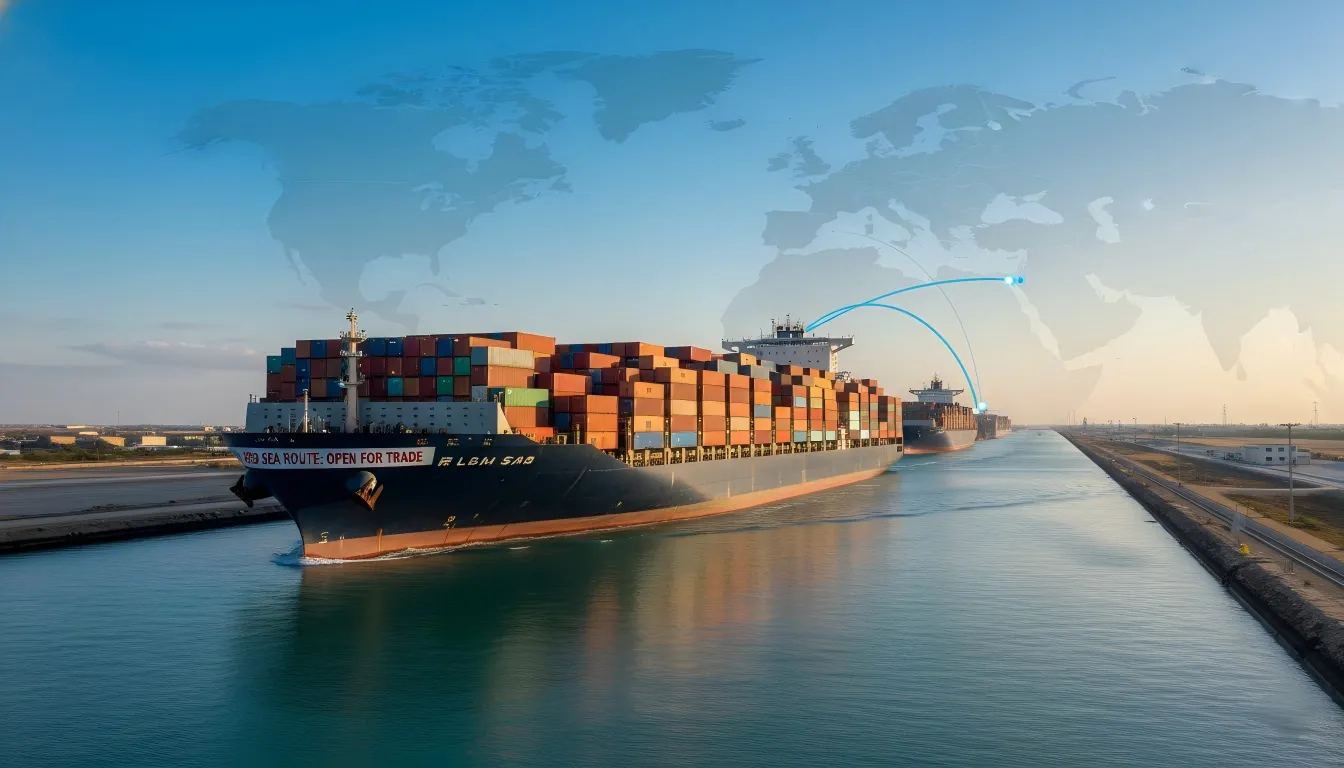
In this analysis, we explore how the reopening of this critical artery will reshape the supply chain in 2026, what industry giants like DSV are predicting, and how you can leverage AllBestShipping to navigate the coming changes.
The Return to the Suez: A Major Logistics Pivot
After nearly two years of avoiding the Red Sea due to security concerns, the tide is turning. In early February 2026, shipping giants Maersk and Hapag-Lloyd confirmed plans to resume transit through the Suez Canal for select services, supported by enhanced naval escorts.
This marks a pivotal moment for global trade. The diversion around the Cape of Good Hope added thousands of miles and weeks of delay to voyages. The return to the Suez route effectively shortens the loop, acting as an immediate injection of capacity into the market.
Transit Time Comparison: Cape of Good Hope vs. Suez Canal
| Feature | Cape of Good Hope Route | Suez Canal Route | Impact |
|---|---|---|---|
| Distance (Asia-Europe) | ~11,000+ Nautical Miles | ~8,500 Nautical Miles | ~25% Reduction |
| Transit Time | 35-45 Days | 25-30 Days | Faster Inventory Turnover |
| Fuel Consumption | High (Longer Distance) | Moderate | Lower Bunker Costs |
| Vessel Turnaround | Slow | Fast | Increased Effective Capacity |
Analyzing the Impact on Freight Rates
The resumption of the Red Sea route is a double-edged sword for pricing. According to DSV, the world's largest freight forwarder, the shorter transit times will inevitably lead to a release of effective capacity.
1. Capacity Injection & Rate Softening
When vessels complete voyages faster, they can perform more loops per year. This "virtual" capacity increase typically exerts downward pressure on Ocean Freight rates.
- Spot Rates: Likely to see immediate corrections as the "risk premium" and "detour surcharges" evaporate.
- Contract Rates: May face renegotiation pressure as the baseline costs for carriers decrease.
2. The Pricing Cycle Shift
We are moving from a "scarcity" cycle driven by long transit times to a "normalization" cycle. However, shippers should not expect rock-bottom rates immediately. The transition will be gradual as carriers manage the redeployment of fleets.
Expert Insight: "That will free up some capacity obviously if you get the transit time reduced quite a bit," noted DSV CFO Michael Ebbe, highlighting the correlation between speed and available space.
The Hidden Risk: European Port Congestion
While the open sea offers relief, the shore may bring new headaches. The sudden shift in schedules and the arrival of vessels that were previously delayed or rerouted could create a "bunching" effect at major European hubs like Rotterdam, Hamburg, and Antwerp.
- Port Congestion: A rapid return to normal schedules can temporarily overwhelm terminal operations, leading to berthing delays.
- Hinterland Connectivity: If ports become bottlenecks, trucking and rail services (Intermodal transport) may struggle to clear containers efficiently.
AllBestShipping advises clients to maintain a buffer in their inventory planning during this transition period (Q1-Q2 2026) to mitigate potential shoreside delays.
2026 Market Outlook: Growth & Consolidation
Beyond the Red Sea, the broader logistics picture for 2026 is one of moderate growth and intense consolidation.
- Volume Growth: DSV forecasts global air freight and sea freight volumes to grow by 2-3% in 2026, aligning with global GDP trends.
- Industry Consolidation: With DSV expecting to finalize its integration of DB Schenker by the end of 2026, the market is seeing fewer, larger players. This consolidation could stabilize rates in the long term but limits options for shippers who rely solely on carrier-direct contracts.
Strategies for Shippers in a Transitioning Market
As the market adjusts to the Red Sea Route Resumption, agility is your best asset. Here is how to stay ahead:
- Diversify Your Routing: Don't put all your cargo on the first vessel back through the Suez. Maintain some allocation on alternative routes or services to spread risk.
- Monitor Spot vs. Contract Mix: With rates likely to soften, consider a flexible mix of spot bookings to take advantage of dips, while keeping core volumes on contracts for security.
- Leverage Digital Forwarding: Use platforms that offer real-time visibility.
Why Choose AllBestShipping?
In a fluctuating market, you need a partner who values transparency and speed. At AllBestShipping, we provide:
- Competitive Pricing: We leverage our network to find the best spot rates as the market corrects.
- Real-Time Updates: Stay informed about which vessels are taking the Suez and which are still diverting.
- End-to-End Solutions: From EXW to DDP, we handle the complexities of customs and final mile delivery, ensuring your supply chain remains robust despite port congestion risks.
Conclusion
The reopening of the Red Sea route is a positive signal for global trade, promising lower costs and faster transit times. However, the transition brings its own set of challenges, from rate volatility to potential port bottlenecks. By staying informed and partnering with a reliable forwarder like AllBestShipping, you can turn this disruption into a competitive advantage.
Ready to optimize your 2026 logistics strategy? Contact AllBestShipping today for a quote and expert advice on navigating the new normal.