Container shipping from China to Saudi Arabia
Container shipping from China to Saudi Arabia is the lifeblood of the booming trade relationship between these two economic giants. With Saudi Arabia’s Vision 2030 driving massive infrastructure projects, the demand for importing machinery, building materials, and consumer goods has reached unprecedented levels. However, for many importers, choosing the right container size (20ft vs. 40ft) and navigating the complex SABER certification process can be daunting tasks.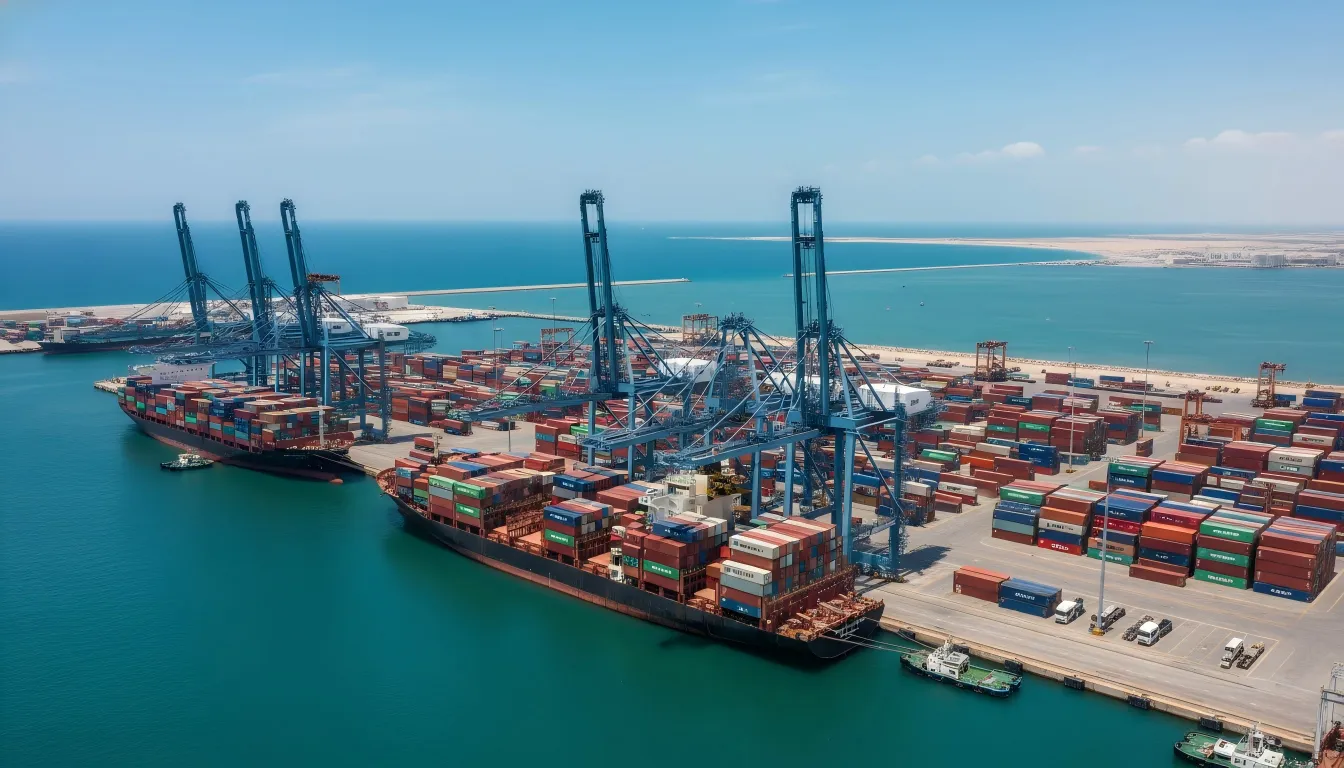
At AllBestShipping, we have managed thousands of shipments to Jeddah and Dammam, witnessing firsthand how a simple documentation error can lead to weeks of delay. This comprehensive guide is designed to demystify the process based on our decade of operational experience. We will break down everything you need to know about 20ft and 40ft container shipping, analyze the costs of FCL vs. LCL, and provide expert tips on clearing Saudi customs without delays. Whether you are shipping heavy industrial equipment to Dammam or retail goods to Jeddah, this guide will help you optimize your logistics strategy.
Understanding Container Sizes: 20ft vs. 40ft
Selecting the correct container type is the first step in optimizing your shipping costs. The choice largely depends on the volume (CBM) and weight of your cargo.
20ft Standard Container (20GP)
The 20ft container is the industry standard for heavy cargo.
- Dimensions: Approximately 5.9m (L) x 2.35m (W) x 2.39m (H).
- Capacity: Holds about 33 CBM (Cubic Meters).
- Payload: Designed for heavy cargo such as minerals, metals, machinery parts, ceramics, and tiles.
- Why Choose It: If your goods are dense and reach the maximum weight limit (usually around 25-28 tons) before they fill the container's volume, the 20GP is your most cost-effective option.
Expert Insight: For inland transport in Saudi Arabia, strict weight limits apply. While a 20ft container can physically hold 28 tons, Saudi road regulations often limit the gross weight to 24-25 tons. We always advise clients to verify the final delivery location's weight restrictions to avoid fines or the need for special chassis.
40ft Standard Container (40GP)
The 40ft container offers double the volume of a 20ft unit but not double the weight capacity.
- Dimensions: Approximately 12m (L) x 2.35m (W) x 2.39m (H).
- Capacity: Holds about 67 CBM.
- Payload: Ideal for voluminous but lighter goods like furniture, textiles, plastic products, and toys.
- Cost Insight: A 40ft container is typically only 30-50% more expensive than a 20ft container, despite offering double the storage space. If you have enough volume, upgrading to a 40ft is often cheaper per unit.
40ft High Cube Container (40HQ)
For general cargo, the 40HQ is often the "MVP" of container shipping.
- Difference: It is 30cm taller than a standard 40ft container.
- Capacity: Holds about 76 CBM.
- Best Value: Because the price difference between a 40GP and 40HQ is usually negligible, most importers prefer the 40HQ to maximize their shipping volume.
Special Containers
- Reefer Containers: Essential for shipping perishable food and temperature-sensitive medicines.
- Open Top / Flat Rack: Used for OOG (Out of Gauge) machinery that is too tall or wide to fit inside a standard box.
Shipping Modes: FCL vs. LCL
FCL (Full Container Load)
FCL means you rent the entire container exclusively for your goods. You don't have to fill it completely, but you pay for the whole box.
- Security: The container is sealed at your supplier’s factory and is not opened until it arrives at your warehouse in Saudi Arabia. This minimizes the risk of damage or theft.
- Speed: FCL shipments are faster because they skip the consolidation and deconsolidation processes at the ports.
- Cost: It offers a lower cost per cubic meter for larger volumes (typically above 15 CBM).
LCL (Less than Container Load)
LCL involves sharing container space with other shippers.
- When to Use: Ideal for smaller shipments (1 - 15 CBM) where booking a full container would be a waste of money.
- Process: Your goods are collected and consolidated at a warehouse in China, then deconsolidated at the destination port in Saudi Arabia.
- Trade-off: While cheaper for small volumes, LCL takes longer due to the handling time at both ends.
Major Container Ports
Choosing the right origin and destination ports can significantly reduce your inland trucking costs.
Key Chinese Origin Ports
- Shanghai: The world's busiest container port, offering the most frequent sailings.
- Shenzhen (Yantian/Shekou): The primary gateway for electronics and tech products from Southern China.
- Ningbo-Zhoushan: An excellent choice for heavy industrial goods manufactured in Zhejiang province.
- Qingdao: The key exit point for exports from Northern China.
Key Saudi Destination Ports
- Jeddah Islamic Port: Handling roughly 70% of Saudi Arabia's imports, this is the main gateway to the Red Sea and cities like Mecca and Medina.
- King Abdulaziz Port (Dammam): The primary entry point for the Oil & Gas industry and the Eastern Province.
- King Abdullah Port: A newer, highly efficient port known for its modern facilities.
- Riyadh Dry Port: Connected by rail from Dammam, this is vital for delivering goods directly to the capital city.
Container Shipping Cost Analysis (2026 Estimates)
Shipping rates are volatile and influenced by market factors such as the Red Sea situation, fuel surcharges (BAF), and Peak Season Surcharges (PSS). Below are estimated rates to help you budget.
FCL Container Rates (Estimated)
| Route | 20ft Container (USD) | 40ft/40HQ Container (USD) |
|---|---|---|
| Shanghai to Jeddah | $2,100 - $2,400 | $2,800 - $3,200 |
| Shenzhen to Jeddah | $2,050 - $2,350 | $2,750 - $3,100 |
| Shanghai to Dammam | $2,000 - $2,200 | $2,600 - $2,900 |
| Shenzhen to Dammam | $1,950 - $2,150 | $2,550 - $2,850 |
Note: These rates are estimates and change weekly. For a precise, real-time quote tailored to your cargo, please contact AllBestShipping.
Sea Freight Transit Times
Transit time is critical for inventory planning. Sea Freight times vary based on the route and whether you choose a direct service or transshipment.
| Route | Transit Time (Days) |
|---|---|
| Shanghai to Jeddah | 22 - 28 days |
| Shenzhen to Jeddah | 20 - 25 days |
| Qingdao to Dammam | 28 - 35 days |
| Ningbo to Riyadh (via Dammam) | 30 - 40 days |
- Insight: FCL shipments are generally 3-5 days faster than LCL shipments because they bypass the consolidation warehouses.
Customs Clearance & SABER Compliance
Saudi Customs (ZATCA) is known for being one of the strictest in the world. Non-compliance can lead to severe delays, fines, or even the rejection of your shipment.
The SABER System
SABER is the mandatory electronic platform for product and shipment conformity, overseen by the Saudi Standards, Metrology and Quality Organization (SASO).
- Stage 1: PCoC (Product Certificate of Conformity): You must register your product on SABER. If it meets the standards, a PCoC is issued, valid for one year.
- Stage 2: SCoC (Shipment Certificate of Conformity): For every specific shipment, you must generate an SCoC. This is required to clear customs.
Warning: A common issue we see is the mismatch between the HS Code used for the PCoC and the one on the Commercial Invoice. This discrepancy will cause the SCoC issuance to fail. Ensure your Harmonized System (HS) Codes are identical across all documents.
HS Codes & Documents
- HS Codes: Accurate classification is crucial to determine the correct Customs Duty (5-20%) and VAT (15%).
- Required Documents:
- Bill of Lading (BL)
- Commercial Invoice
- Packing List
- Certificate of Origin (CO)
Why Choose AllBestShipping for Container Freight?
At AllBestShipping, we specialize in simplifying the complex logistics between China and Saudi Arabia.
- Container Allocation: We have guaranteed space agreements, ensuring your cargo ships even during peak seasons like Chinese New Year.
- DDP Services: Don't want to deal with SABER? Our DDP (Delivered Duty Paid) service handles the entire process, including customs clearance and duty payment, delivering straight to your door.
- Competitive Rates: Our volume allows us to negotiate the best rates directly with carriers like COSCO, MSC, and MAERSK.
- Expertise: Whether it's heavy machinery in a 20ft container or bulky furniture in a 40HQ, we know how to pack and ship it efficiently.
FAQ: Container Shipping Questions
What is the maximum weight for a 20ft container to Saudi Arabia?
Generally, the maximum payload for a 20ft container is around 28,000 kg (28 tons). However, based on our on-the-ground experience with Saudi trucking regulations, we strongly recommend capping the weight at 25 tons. Loads exceeding this often face fines at weigh stations or require expensive tri-axle chassis for inland delivery.
How much cargo can I fit in a 40HQ container?
A 40HQ container has a volume of 76 CBM. In practice, depending on your packaging (pallets vs. cartons), you can typically load between 68 to 72 CBM of cargo.
Is it cheaper to ship 2 x 20ft or 1 x 40ft container?
It is almost always cheaper to ship 1 x 40ft container than two 20ft containers. The terminal handling charges (THC) and trucking costs for a 40ft are lower than for two separate 20ft units.
Does the shipping cost include Saudi customs duties?
Standard Port-to-Port shipping quotes do not include Saudi customs duties or VAT. These are paid by the importer upon arrival. However, our DDP service includes all these costs in one final price.
How do I track my container from China?
When you ship with AllBestShipping, we provide you with a tracking number and a link to our real-time tracking portal, so you always know where your goods are.
Conclusion
Mastering container shipping from China to Saudi Arabia requires a strategic approach to container selection and strict adherence to customs regulations. Choosing the right container size—whether it's a heavy-duty 20GP or a high-volume 40HQ—can save you thousands in shipping costs. Furthermore, ensuring SABER compliance is non-negotiable for a smooth entry into the Saudi market.
Ready to streamline your supply chain? Contact AllBestShipping today for a free, transparent container shipping quote and let our experts handle the logistics while you focus on growing your business.