Canada Cuts Chinese EV Tariffs to 6.1%: The 2026 Shipping & Compliance Guide
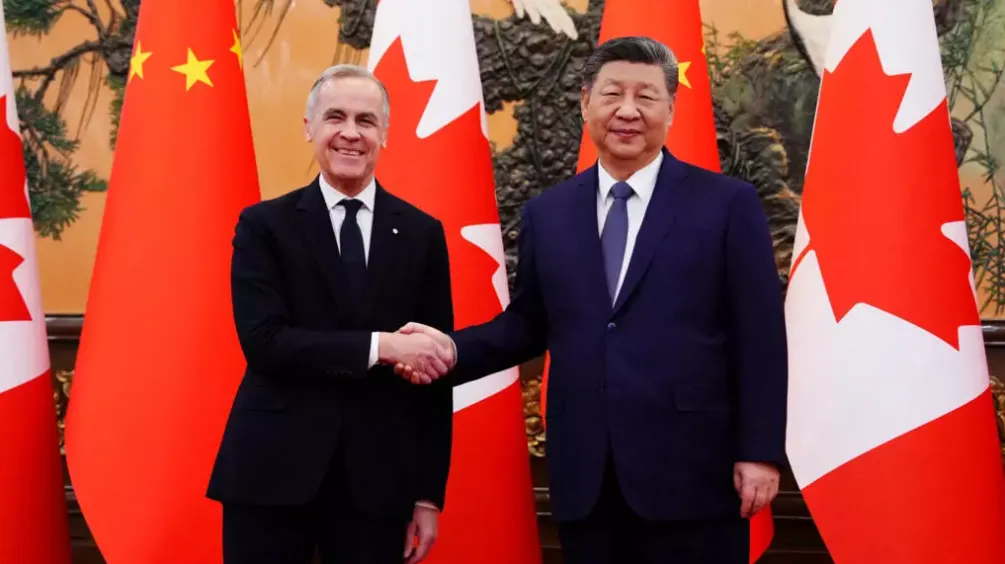
Are you ready to seize the biggest opportunity in the automotive trade since 2020? Last week’s historic joint statement between China and Canada has rewritten the rules for importing electric vehicles. With tariffs slashing from a prohibitive 100% to just 6.1%, the door is finally open—but only for the first 49,000 vehicles.
For automotive importers, dealerships, and supply chain managers, the race is on. But lower tariffs don't mean lower standards. How do you navigate the complex Canadian Motor Vehicle Safety Standards (CMVSS)? What is the "Case-by-Case" authorization pathway? And how do you safely ship high-voltage lithium-ion batteries across the Pacific?
In this comprehensive guide, we break down the new 2026 trade agreement and provide a step-by-step logistics solution for Shipping From China to Canada. Backed by AllBestShipping's expertise in Dangerous Goods transport and Ro-Ro/Container logistics, we help you navigate the quota race with confidence.
The New Deal: 100% Tariff vs. 6.1% Quota
The headline is clear: Canada will allow 49,000 Chinese-made electric vehicles (EVs) to enter annually at a preferential tariff rate of 6.1%. This is a massive reduction from the previous surtax that effectively blocked Chinese EVs from the market.
This policy shift, announced during the recent Beijing summit, is part of a reciprocal agreement involving Canadian canola exports. However, the "Quota System" creates a first-mover advantage. Once the 49,000 cap is reached, the tariff likely reverts to the standard higher rate (or the prohibitive 100% surtax).
Cost Impact Analysis
| Cost Component | Old Scenario (2025) | New Scenario (2026 Quota) | Savings |
|---|---|---|---|
| Vehicle Value (CIF) | $30,000 USD | $30,000 USD | - |
| Base Duty (6.1%) | $1,830 | $1,830 | - |
| Surtax (100%) | $30,000 | $0 | $30,000 |
| Total Customs Cost | $31,830 | $1,830 | ~$30,000 |
Note: Calculations are estimates for illustration. Actual duties depend on HS codes and final assessment by CBSA.
The Regulatory Gate: CMVSS and the "CBC" Pathway
Here is the critical detail most general news outlets missed: A lower tariff does not automatically grant market access. All vehicles must still meet the Canadian Motor Vehicle Safety Standards (CMVSS).
For new entrants in 2026, the standard "Appendix G" pre-clearance used by established giants (like Toyota or Ford) may be too slow or currently restricted.
The Solution: Case-by-Case (CBC) Authorization
For the 2026 quota, the most viable pathway for many importers is Case-by-Case (CBC) Importation.
- What it is: A specific authorization from Transport Canada for specific VINs.
- The Advantage: If you have a CBC authorization number, you may be able to bypass the standard Registrar of Imported Vehicles (RIV) program.
- The Requirement: You must prove that the specific vehicles meet Canadian safety standards (brakes, lighting, tires, etc.) before they leave China.
Expert Tip: Do not ship a single car until you have your CBC authorization in hand. Customs Clearance for vehicles without proper Transport Canada paperwork is impossible, and re-exporting them is financially disastrous.
Logistics Solutions: Shipping EVs from China to Canada
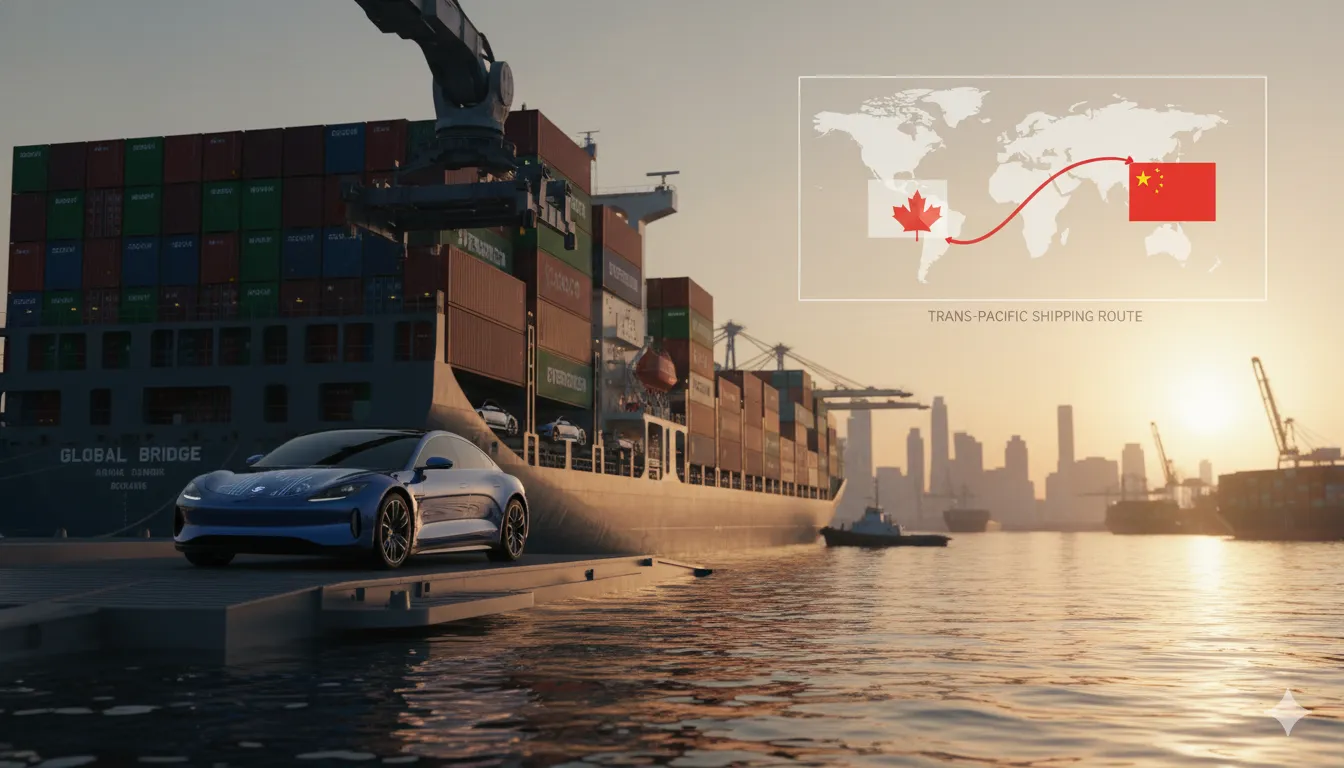
Shipping electric vehicles is fundamentally different from shipping traditional combustion engine cars due to the high-voltage lithium-ion batteries. These are classified as Dangerous Goods (Class 9, UN 3171). We provide two main shipping solutions tailored to your volume and budget.
1. Comparison of Shipping Methods
| Feature | Ro-Ro (Roll-on/Roll-off) | Container Shipping (40HQ) |
|---|---|---|
| Best For | Large Fleets (50+ units) | Dealers/Trial Orders (3-4 units) |
| Cost Efficiency | Lowest per unit cost | Higher per unit, but cost-effective with racking |
| Handling | Vehicles driven on/off the vessel | Vehicles loaded/blocked/braced in container |
| Protection | Exposed to internal ship decks | Fully enclosed, protected from sea salt/weather |
| Flexibility | Fixed routes/ports only | Flexible, can be trucked anywhere inland |
| Transit Time | Direct ports are fast | Similar port-to-port, but longer loading/unloading |
A. Ro-Ro (Roll-on/Roll-off) - The "Floating Parking Lot"
Ro-Ro is the industry standard for manufacturers. Vehicles are driven directly onto the vessel and secured to the deck.
- Key Requirement: Vehicles must be "Run and Drive" capable.
- Port Constraints: Only available at major ports (e.g., Shanghai/Tianjin to Vancouver/Halifax). Inland delivery requires separate car-carrier trucking.
- Risk: While safe, there is a slightly higher risk of minor scratches or theft of loose items compared to sealed containers.
B. Container Shipping (40HQ) - The "Secure Box"
For the new 49,000 quota entrants, container shipping is often the smarter choice.
Professional Racking: We use specialized steel or wood racking systems to stack vehicles safely.
- Capacity: We can typically fit 3 mid-sized SUVs or 4 compact EVs in a single 40HQ container.
- Consolidation: You can mix spare parts, charging stations, or marketing materials in the same container (impossible with Ro-Ro).
Inland Reach: The container can be delivered Door-to-Door directly to your dealership in Toronto or Montreal via rail/truck without unloading at the port.
2. Mandatory Battery Regulations (Class 9 DG)
EVs are not "general cargo." Misdeclaring them can lead to fines of $50,000+ and shipment rejection.
UN Classification: UN 3171 (Battery-powered vehicle). Note: Loose batteries shipped as spares are UN 3480 and require stricter packing.
State of Charge (SoC): Most shipping lines strictly require the battery SoC to be between 20% and 50%.
- < 20%: Battery damage risk.
- > 50%: Fire risk.
Required Documentation:
- MSDS (Material Safety Data Sheet): Must be the latest version.
- UN38.3 Test Report: Proof that the battery design has passed safety tests (vibration, shock, thermal).
- Dangerous Goods Declaration (DGD): We prepare this for you.
Why Choose AllBestShipping?
Navigating the intersection of new trade quotas, Transport Canada regulations, and Dangerous Goods shipping requires more than just a truck and a boat.
At AllBestShipping, we offer:
- Specialized DG Handling: We are experts in UN 3171 shipping requirements.
- Quota Monitoring: We stay updated on the 49,000 unit cap to ensure your shipment qualifies for the 6.1% rate.
- End-to-End Solutions: From factory pickup in Shenzhen or Shanghai to Door-to-Door Shipping in Vancouver, Toronto, or Montreal.
Ready to import? The 2026 quota is filling up fast. Contact us today to secure your space and navigate the new Canada-China trade landscape.
Frequently Asked Questions (FAQ)
1. What is the exact tariff rate for Chinese EVs in 2026?
Canada has slashed the tariff from 100% to 6.1% for the first 49,000 vehicles. This is part of a reciprocal trade deal involving Canadian canola exports.
2. Is there a limit on how many cars I can import?
Yes. The quota is capped at 49,000 vehicles for the first year, growing to approximately 70,000 over five years. Once the cap is reached, higher tariffs may apply.
3. Can I import these vehicles into the USA?
No. Vehicles compliant with Canadian standards (CMVSS) do not automatically meet US regulations (FMVSS). They cannot be registered in the USA.
4. How do Chinese EVs handle Canadian winters?
Leading brands like XPeng are testing "winter-ready" models in Scandinavia. However, importers should verify battery chemistry; NMC batteries typically offer better cold-weather performance than standard LFP batteries.
5. What is the expected landed cost?
Industry projections suggest many models will land with an import price under $35,000 CAD (approx. $25,000 USD), making them highly competitive.