Comprehensive Guide to Shipping from Shenzhen to Germany (2026 Update)
Are you struggling to manage the escalating costs and frustrating delays of importing goods from China's tech capital to Europe's economic powerhouse? Navigating the complexities of shipping from Shenzhen to Germany can overwhelm even the most experienced importers. With fluctuating freight rates, unpredictable transit times, and complex European customs regulations, a single misstep can lead to severe supply chain disruptions and diminished profit margins.
However, importing from Shenzhen doesn't have to be a logistics nightmare. Whether you are an Amazon FBA seller, a medium-sized enterprise, or a large-scale manufacturer, understanding the intricacies of the global supply chain is the key to unlocking consistent profitability. In our 10+ years of managing shipments along this corridor, our team at AllBestShipping has seen firsthand how a poorly planned logistics strategy can erode margins overnight—and conversely, how strategic route optimization can turn shipping into a competitive advantage.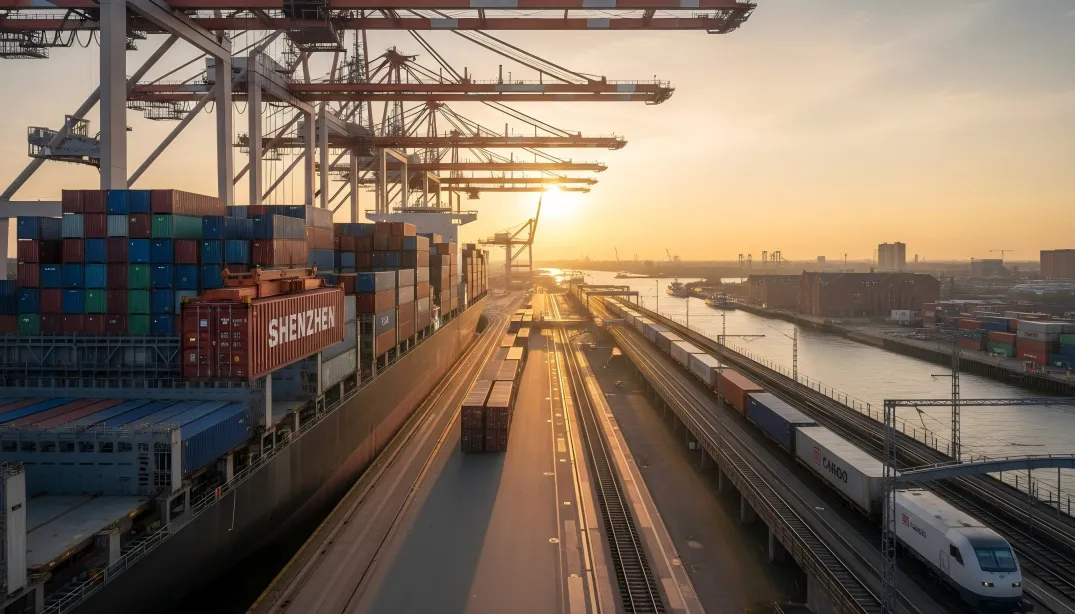
This expert guide breaks down everything you need to know about moving your cargo efficiently from Shenzhen to Germany in 2026. From comparing sea freight, air freight, and rail options to demystifying the essential Bill of Lading, European customs clearance, and critical Incoterms, we provide practical tips to optimize your logistics strategy and ensure your products arrive safely and on time.
1. Why the Shenzhen to Germany Route Matters
To truly appreciate the logistics required for this specific trade lane, it is crucial to understand the economic relationship between Shenzhen and Germany. This corridor is not just another shipping route; it is a vital artery of global commerce.
1.1 Shenzhen: The Global Manufacturing and Tech Hub
Shenzhen is widely recognized as the "Silicon Valley of Hardware." It is home to thousands of high-tech manufacturers, electronics suppliers, and innovative startups. If you are importing consumer electronics, LED lighting, telecommunications equipment, or advanced machinery components, there is a very high probability that your goods originate in or pass through Shenzhen. The city boasts world-class infrastructure, including the massive Port of Yantian and the bustling Shenzhen Bao'an International Airport, making it a powerhouse for global exports.
1.2 Germany: Europe's Industrial and Consumer Powerhouse
On the receiving end is Germany, the largest economy in Europe and a global leader in automotive, engineering, and high-quality manufacturing. German consumers and businesses have an insatiable demand for the electronics, machinery parts, and consumer goods produced in Shenzhen. The country's logistics infrastructure is unparalleled, featuring mega-ports like Hamburg and Bremerhaven, as well as Europe's largest air cargo hub in Frankfurt.
1.3 The Logistics Synergy
The robust logistics infrastructure connecting these two regions ensures that whether you need to move a 2-kilogram sample of a new gadget or a 40-foot container full of industrial machinery, there is a specialized solution available. Understanding how to leverage this infrastructure is what separates successful importers from those who constantly battle delays and cost overruns.
2. Shipping Methods from Shenzhen to Germany: Which is Best for You?
Choosing the right shipping method is the most consequential decision you will make. It directly impacts your landing costs, inventory turnover rate, and customer satisfaction. Below is an in-depth analysis of your primary options.
2.1 Sea Freight (Ocean Freight)
For the vast majority of importers, sea freight remains the backbone of their supply chain. It is the most economical way to move large volumes of goods across the globe. When utilizing ocean freight, you have two primary options:
- FCL (Full Container Load): This involves renting an entire 20-foot or 40-foot container exclusively for your goods. FCL is ideal for bulk shipments. Because your goods are not mixed with cargo from other shippers, FCL generally experiences faster transit times, lower risk of damage, and simplified customs clearance. Insider Tip: If your cargo volume exceeds 15 CBM, it is often more cost-effective to book a 20ft FCL container even if you don't fill it completely, as you avoid the high destination deconsolidation fees associated with LCL.
- LCL (Less than Container Load): If your cargo is not large enough to fill a whole container, LCL allows you to share container space with other importers. While this is cost-effective for smaller shipments (typically between 1 and 15 cubic meters), LCL requires additional time for consolidation at the port of origin and deconsolidation at the destination port.
Key Ports: Goods typically depart from the Port of Yantian or the Port of Shekou in Shenzhen. They arrive at major German seaports, predominantly the Port of Hamburg, Bremerhaven, or Wilhelmshaven. We often route time-sensitive shipments through Wilhelmshaven to avoid the occasional congestion delays seen at Hamburg during peak seasons.
Best for: Bulk shipments, heavy machinery, furniture, cost-sensitive cargo, and non-urgent deliveries where long-term planning is feasible.
2.2 Air Freight
When time is money, air freight is the undeniable champion. While significantly more expensive than ocean freight, the speed and reliability it offers can be invaluable for certain types of businesses.
- Standard Air Freight: Your goods are flown on commercial passenger airlines or dedicated cargo planes. This is the standard choice for goods weighing between 150 kg and 500 kg.
- Express Air Freight: Services provided by companies like DHL, FedEx, or UPS. This is a premium door-to-door service that guarantees the fastest possible delivery times.
Key Airports: Flights generally originate from Shenzhen Bao'an International Airport (SZX) or nearby Hong Kong International Airport (HKG) and land at major German hubs like Frankfurt Airport (FRA), Munich Airport (MUC), or Leipzig/Halle Airport (LEJ).
Best for: High-value goods (like smartphones or medical devices), electronics, seasonal fashion apparel, and urgent shipments required to prevent production line halts or stockouts.
2.3 Rail Freight (China-Europe Railway Express)
Rail freight has emerged as the perfect "middle-ground" solution for shipping from China to Europe. Utilizing the expansive China-Europe Railway Express network, this method offers a fantastic balance between cost and speed.
- The Logistics: Trains travel from Chinese hubs directly into the heart of Europe. While Shenzhen is not a primary rail terminus like Xi'an or Chongqing, goods from Shenzhen are easily trucked to these rail hubs before embarking on the transcontinental journey.
- Routes: The railway network connects directly to major German rail terminals, notably Duisburg (the largest inland port in the world) and Hamburg.
Best for: Medium-urgency shipments, automotive parts, machinery, and medium-value consumer goods. It is generally 50% faster than sea freight and up to 60% cheaper than air freight.
2.4 Express Couriers (Door-to-Door)
For very small shipments, express couriers provide an unbeatable level of convenience. Companies like DHL, FedEx, and UPS handle the entire process from picking up the goods at the Shenzhen factory to delivering them directly to your warehouse or office in Germany, including all customs clearance procedures.
Best for: Small parcels, product samples, essential documents, and shipments typically weighing under 150 kg. The premium price tag is offset by the speed and entirely hands-off nature of the service.
3. Transit Times and Costs: A Detailed Comparison
Understanding the average transit times and costs is essential for accurate supply chain forecasting. Prices and times can fluctuate based on global events, but the following table provides a reliable benchmark for 2026.
| Shipping Method | Average Transit Time (Days) | Cost Efficiency | Best Suited For |
|---|---|---|---|
| Sea Freight (FCL) | 28 - 35 Days | Highest (Lowest cost per unit) | Bulk goods, large volume orders |
| Sea Freight (LCL) | 32 - 40 Days | High (Cost-effective for medium sizes) | Shipments between 1 - 15 CBM |
| Rail Freight | 16 - 22 Days | Medium (Balance of speed and cost) | Medium urgency, moderate value goods |
| Air Freight | 3 - 8 Days | Low (High cost per kg) | Urgent, high-value, perishable goods |
| Express Courier | 2 - 5 Days | Lowest (Most expensive per kg) | Samples, documents, parcels <150 kg |
Factors Affecting Transit Times and Costs
- Peak Seasons: The weeks leading up to the Chinese New Year (usually January/February) and the Q4 holiday rush (October/November) see massive spikes in demand. During these times, expect higher freight rates and potential rollovers (delays).
- Port Congestion and Weather: Typhoons in the South China Sea or strikes at European ports can unexpectedly add days or even weeks to your transit time.
- Hidden Surcharges: Always ask your Freight Forwarder for an all-inclusive quote. Watch out for hidden fees like Fuel Adjustment Factors (FAF), Bunker Adjustment Factor (BAF), Terminal Handling Charges (THC), and Peak Season Surcharges (PSS). Some forwarders quote a low base rate but inflate these surcharges—we make it a point to provide transparent, all-in pricing to avoid these surprises.
4. Navigating Customs Clearance in Germany
German customs (Zoll) are known for their strict adherence to European Union regulations, particularly with the recent implementation of ICS2 (Import Control System 2). A single missing document or incorrect classification can lead to your cargo being held at the port, racking up exorbitant demurrage and detention charges.
4.1 Essential Documents
To ensure a smooth customs clearance process, you must have the following documentation meticulously prepared:
- Commercial Invoice: A detailed bill for the goods from the seller to the buyer, explicitly stating the value of the goods. Must match the value declared to customs exactly.
- Packing List: An itemized list detailing the contents, weight, and dimensions of each package.
- Bill of Lading (B/L): The most critical document in sea freight. It acts as a receipt for the cargo, a contract of carriage, and a document of title. For air freight, the equivalent is the Air Waybill (AWB).
- Certificate of Origin (C/O): A document declaring in which country a commodity or good was manufactured.
4.2 EORI Number
Before you can import anything into Germany (or any EU country), your business must be registered with customs and possess an EORI Number (Economic Operators Registration and Identification number). Without this number, your goods cannot legally clear customs. We strongly advise applying for this weeks before your first shipment departs Shenzhen.
4.3 Taxes and Duties
When your goods arrive in Germany, they are subject to taxation.
- Import Duties: The duty rate depends on the classification of your goods, determined by their HS Code (Harmonized System Code). Duty rates can range from 0% for certain electronics to over 10% for textiles and footwear. Misclassifying an HS Code to get a lower rate is a common mistake that can lead to severe penalties and retroactive audits.
- Value Added Tax (VAT): In Germany, the standard VAT rate is 19%. This is calculated based on the Customs Value of the goods (the cost of the goods + shipping costs + insurance + import duties).
Partnering with an experienced Customs Broker is highly recommended. They will ensure your goods are classified with the correct HS Code, minimizing your tax liability and ensuring compliance with all EU regulations.
5. Understanding Key Incoterms for Your Shipment
Incoterms 2020 (International Commercial Terms) are standardized rules published by the International Chamber of Commerce (ICC) that define the responsibilities of buyers and sellers in international trade. Choosing the right Incoterm dictates who pays for shipping, insurance, and who bears the risk at each stage of the journey.
- FOB (Free on Board): Under FOB, the seller in Shenzhen is responsible for all costs and risks until the goods are loaded onto the vessel at the departure port (e.g., Port of Yantian). After that, the buyer takes over. FOB is the most popular and recommended choice for sea freight because it gives you, the buyer, control over the main international freight costs and the choice of Freight Forwarder. We strongly recommend FOB for most commercial shipments, as it prevents your supplier from marking up the freight costs.
- EXW (Ex Works): The seller simply makes the goods available at their factory in Shenzhen. The buyer is responsible for everything else, including local Chinese transport, export customs, international freight, and import customs. EXW offers maximum control but requires a highly capable logistics partner in China to handle the complex local export procedures.
- DDP (Delivered Duty Paid): The ultimate hassle-free option. The seller is responsible for delivering the goods directly to your door in Germany, covering all costs, including shipping, insurance, and German import duties and taxes. DDP is highly recommended for e-commerce businesses and Amazon FBA sellers who want a predictable, all-inclusive landed cost without dealing with customs bureaucracy. However, note that under DDP, the seller controls the timeline, which can sometimes lead to unexpected delays if they choose a cheaper, slower routing.
6. How to Choose the Right Freight Forwarder
Your Freight Forwarder is your strategic partner in global trade. A poor choice can lead to hidden fees, lack of communication, and stranded cargo. When selecting a partner for the Shenzhen to Germany route, look for:
- Local Expertise: They should have a strong physical presence or robust partnerships in both Shenzhen and Germany.
- Transparent Pricing: Avoid forwarders who provide vague quotes. Demand a breakdown of all potential surcharges.
- Communication: In international logistics, proactive communication is everything. You need a forwarder who informs you of a delay before you have to ask them about it.
Why Choose AllBestShipping?
At AllBestShipping, we specialize in the China-to-Europe trade lane. We offer customized, end-to-end solutions tailored specifically for importing from Shenzhen to Germany. Whether you need a cost-effective FCL sea freight solution, rapid air freight, or a fully comprehensive DDP service for your Amazon FBA inventory, we have you covered. We pride ourselves on our price-match guarantee, dedicated 24/7 customer support, and deep expertise in navigating complex European customs.
7. Frequently Asked Questions (FAQ)
How long does it take to ship from Shenzhen to Germany?
Transit times vary wildly depending on the method. Express couriers take 2-5 days, standard air freight takes 3-8 days, rail freight takes 16-22 days, and sea freight (FCL or LCL) generally takes between 28 and 40 days.
What is the cheapest shipping method from Shenzhen to Germany?
For large shipments (over 2 CBM or 500 kg), sea freight is undoubtedly the cheapest method. Specifically, FCL (Full Container Load) offers the lowest cost per unit if you have enough cargo to fill a container.
Can I ship batteries or electronics from Shenzhen?
Yes, but electronics, especially those containing lithium-ion batteries, are classified as Dangerous Goods (DG) under international shipping regulations. They require specialized packaging, specific UN documentation (like an MSDS - Material Safety Data Sheet), and must be handled by carriers certified for DG transport. Not all airlines or shipping lines will accept them, so you must inform your Freight Forwarder in advance. For instance, air freighting standalone lithium batteries from SZX to FRA requires strict adherence to IATA DGR regulations and often incurs a DG surcharge.
Do I need a customs broker in Germany?
While it is technically possible to clear customs yourself, it is highly discouraged unless you are a large corporation with a dedicated compliance department. An experienced Customs Broker will navigate the complex German Zoll system, ensure correct HS Code classification, and prevent costly delays. Most reputable freight forwarders, including AllBestShipping, provide in-house customs brokerage services.
8. Conclusion
Shipping from Shenzhen to Germany involves navigating a complex web of transportation modes, customs regulations, and fluctuating costs. By understanding the differences between sea, air, and rail freight, mastering essential documents like the Bill of Lading, and choosing the right Incoterms, you can transform your supply chain from a source of stress into a competitive advantage.
The key to long-term success is partnering with a reliable logistics expert who understands the nuances of this specific trade lane.
Ready to streamline your supply chain? Contact Us today for a free, customized quote. Let our experts handle your next shipment from Shenzhen to Germany seamlessly, so you can focus on what you do best: growing your business.