The Ultimate Guide to Shipping from Shenzhen to USA (2026 Update)
Are you struggling with unexpected delays and rising costs when importing goods? Shipping from Shenzhen to USA can seem like a logistical minefield, but mastering this crucial supply chain route is the key to maintaining a competitive edge. In our team's 10+ years of experience handling transpacific freight, we've seen firsthand how a single missing document or poorly chosen routing can wipe out an e-commerce seller's profit margins. Shenzhen is the world's manufacturing powerhouse, and getting your products from its bustling factory floors to US customers or Amazon fulfillment centers requires a battle-tested strategy.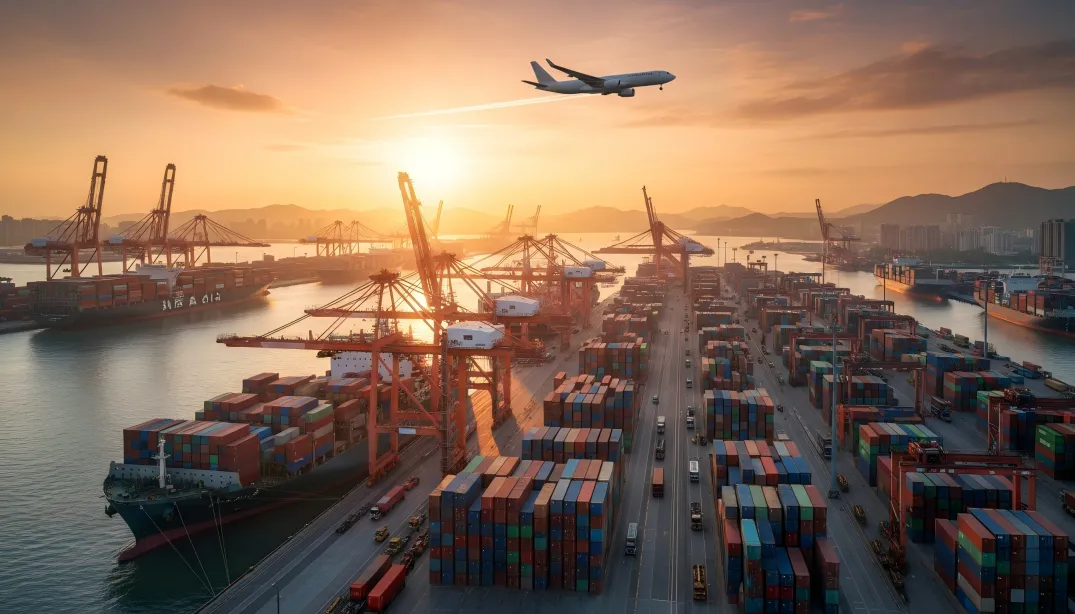
In this comprehensive guide, we break down everything you need to know to streamline your imports based on current 2026 market conditions. You will discover actionable insights on choosing the best shipping methods, avoiding hidden surcharges, navigating strict US customs requirements, and accurate cost estimates. Read on to learn how partnering with a reliable forwarder like AllBestShipping can transform your logistics from a daily headache into a strategic advantage.
1. Understanding the Shenzhen to USA Shipping Route
Before diving into costs and methods, it is essential to understand the geographical and infrastructural layout of the Shenzhen to USA shipping route. Shenzhen is not just a single port; it is a sprawling logistics hub composed of several specialized port areas. Knowing the nuances of each can save you critical days during peak season.
Shenzhen's Key Export Hubs
Shenzhen's port infrastructure is world-class, but knowing which specific terminal to use can save you days of transit time.
- Yantian Port (YICT): This is the crown jewel of Shenzhen's maritime infrastructure. Deep-water berths allow mega-vessels to dock easily, making it the primary choice for large-scale e-commerce exports and electronics. Our Insider Tip: If you are shipping to the US West Coast, Yantian offers the most direct express sailings. However, during the Q3 peak season, container drop-off windows can become extremely tight, requiring precise trucker coordination.
- Shekou Port: Located in the western part of Shenzhen, Shekou is excellent for river-to-sea transshipments from the broader Pearl River Delta. While it handles a significant volume of Asian and European trade, it also offers highly competitive routes to the US, particularly for LCL (Less than Container Load) consolidations. It is often less congested than Yantian during peak seasons, making it a great backup option.
- Nanshan (Chiwan/Mawan): Often grouped with Shekou, the Nanshan port area provides robust alternatives when Yantian experiences peak-season congestion. It is highly efficient for bulk cargo and specialized logistics.
Major US Destination Ports
Your choice of destination port in the United States drastically affects both your transit time and inland transportation costs. A common mistake is routing cargo to the wrong coast, resulting in exorbitant trucking fees.
- West Coast Ports (Los Angeles, Long Beach, Seattle, Oakland): The West Coast is the fastest entry point for goods originating in Shenzhen. The Ports of Los Angeles and Long Beach handle the lion's share of transpacific trade. Shipping here is generally cheaper and faster, but you must account for potential rail or trucking costs if your final destination is in the Midwest or East Coast. For Amazon FBA sellers with fulfillment centers in California or Nevada, this is the optimal routing.
- East Coast Ports (New York/New Jersey, Savannah, Charleston): If your warehouse or primary customer base is on the Eastern Seaboard, shipping directly to the East Coast via the Panama Canal is often more cost-effective than shipping to the West Coast and paying for cross-country trucking. However, this route adds roughly 10 to 15 days to your transit time. You must balance the savings in trucking against the increased time your capital is tied up in inventory on the water.
2. Main Shipping Methods: Choosing the Right Option
Selecting the optimal shipping method is a balancing act between budget constraints, cargo volume, and delivery urgency. Here is a detailed breakdown of your primary options when moving freight from Shenzhen to the United States.
Sea Freight (Ocean Freight)
Sea Freight is the backbone of global trade and the most cost-effective solution for large, bulky, or heavy shipments. It is divided into two main categories:
- FCL (Full Container Load): With FCL, you rent an entire 20-foot or 40-foot container exclusively for your goods. This is the safest and most economical choice if your cargo volume exceeds 15 CBM (Cubic Meters). Because the container is sealed at the factory in Shenzhen and remains unopened until it reaches your warehouse, the risk of damage or loss is minimized.
- LCL (Less than Container Load): If your shipment is between 1 and 15 CBM, LCL is the way to go. Your cargo shares container space with goods from other importers. While the cost per CBM is slightly higher than FCL due to the labor involved in consolidating and deconsolidating the container, it remains far cheaper than air freight for medium-sized loads.
Air Freight & Express Courier
When time is money, air transport is the undisputed champion, though it comes at a premium price.
- Air Freight: This involves shipping cargo on commercial passenger airlines or dedicated cargo planes. It is airport-to-airport, meaning you will still need to arrange for local pickup in Shenzhen and final-mile delivery in the USA. It is ideal for high-value electronics, seasonal fashion trends, or inventory that must hit the shelves within a week.
- Express Courier (DHL, FedEx, UPS): This is a premium, door-to-door service. The courier handles everything from factory pickup in Shenzhen to final delivery and customs clearance in the US. It is highly recommended for urgent samples, important documents, or lightweight shipments under 150 kg.
Hybrid/Multimodal Solutions
E-commerce sellers increasingly rely on hybrid shipping models to find the sweet spot between the speed of air freight and the economy of sea freight.
- Sea + Express (Fast Sea): Goods are shipped via fast ocean vessels (like Matson or ZIM) to the US West Coast, cleared through customs, and then handed over to UPS or FedEx for rapid domestic delivery. This cuts standard sea transit times by a week or more while remaining significantly cheaper than pure air freight.
- Air + Truck: Goods are flown to a major US hub (like LAX or ORD) and then transported via dedicated LTL (Less than Truckload) trucking to the final destination.
Table: Shipping Methods Comparison (Shenzhen to USA)
| Shipping Method | Estimated Transit Time | Cost Level | Best For |
|---|---|---|---|
| Express Courier | 3-7 Days | $$$$ | Urgent samples, documents, lightweight goods (<150kg) |
| Air Freight | 5-12 Days | $$$ | High-value electronics, seasonal trends, time-sensitive stock |
| Sea Freight (LCL) | 25-40 Days | $$ | Small to medium steady inventory (1-15 CBM) |
| Sea Freight (FCL) | 20-35 Days | $ | Large volume shipments, bulk goods (>15 CBM) |
| Hybrid (Fast Sea) | 15-25 Days | $$½ | Amazon FBA restocks, balancing speed and cost |
3. How Much Does It Cost to Ship from Shenzhen to the USA?
Freight rates are notoriously volatile, fluctuating based on fuel prices, vessel capacity, and seasonal demand. However, understanding the baseline costs for 2026 will help you budget effectively.
Current Freight Rates (2026 Estimates)
Please note that these are average estimates and subject to market changes.
- 20ft Container (FCL): Typically ranges from $2,500 to $3,800 to the West Coast, and $3,500 to $4,800 to the East Coast.
- 40ft Container (FCL): Generally costs between $3,800 to $5,200 to the West Coast, and $4,800 to $6,500 to the East Coast.
- LCL (Per CBM): Expect to pay around $100 to $180 per CBM, depending on the destination and consolidation fees.
- Air Freight (Per KG): Standard air freight fluctuates between $4.50 and $8.00 per kilogram.
- Express Courier: Usually costs between $7.00 and $12.00 per kilogram, heavily dependent on dimensional weight.
Understanding the Cost Breakdown
Your final invoice from a freight forwarder is rarely just a single flat rate. To avoid being overcharged, you must understand these core components:
- Base Freight Rate: The core cost of moving the goods across the ocean or through the air.
- Bunker Adjustment Factor (BAF): A surcharge that compensates for fluctuating fuel prices.
- Peak Season Surcharge (PSS): Applied by carriers during high-demand periods (typically August through November).
- Terminal Handling Charges (THC): Fees levied by the port authorities in Shenzhen and the US for loading and unloading containers.
Hidden Fees to Avoid (Our Expert Advice)
Inexperienced importers often see their profit margins destroyed by unexpected port charges. In our experience, these three fees cause the most headaches:
- Demurrage: A penalty fee charged by the shipping line if your full container sits at the destination port beyond the allotted free days. Pro Tip: Always negotiate extended free days (e.g., 14 days instead of the standard 5) before booking.
- Detention: A fee charged if you take the container out of the port to unload it but fail to return the empty equipment to the shipping line on time.
- Customs Exam Fees: If US Customs and Border Protection (CBP) selects your shipment for an X-ray or intensive physical exam, you are responsible for the examination costs and any resulting storage fees.
Working with a transparent forwarder like AllBestShipping ensures that all potential costs are outlined upfront. We provide radical transparency on potential surcharges, preventing nasty surprises when your cargo arrives.
4. Transit Times: Planning Your Inventory
Effective inventory management requires precise knowledge of transit times. A common mistake is confusing "port-to-port" time with "door-to-door" time.
- Port-to-Port: This is strictly the time the vessel spends on the water (e.g., 14 days from Yantian to Los Angeles).
- Door-to-Door: This encompasses the entire journey: factory pickup, export customs in Shenzhen, ocean transit, import customs in the USA, and final-mile trucking to your warehouse. A 14-day port-to-port voyage can easily translate to a 30-day door-to-door timeline.
Seasonal Impacts on Transit
Global logistics is heavily influenced by seasonality.
- Chinese New Year (CNY): Factories shut down for weeks in January or February. The rush to ship goods before CNY causes massive port congestion in Shenzhen, leading to rolled cargo (delays) and skyrocketing prices.
- Golden Week (October): A week-long Chinese holiday that creates a similar, albeit smaller, bottleneck.
- Q4 Holiday Season: The rush to stock US shelves for Black Friday and Christmas strains capacity from August to November.
Pro Tip: Always buffer an extra 5 to 7 days into your supply chain schedule to account for potential customs clearance holds, weather delays, or final-mile trucking shortages.
5. Essential Documentation & US Customs Clearance
Customs clearance is often the most intimidating aspect of international shipping. Missing or inaccurate paperwork can lead to severe delays, fines, or even the seizure of your goods.
Crucial Shipping Documents
To successfully export from Shenzhen and import into the USA, you must prepare the following:
- Commercial Invoice: This is the fundamental document detailing the transaction between the buyer and seller. It must include a clear description of the goods, quantities, unit prices, total value, and the country of origin.
- Packing List: A detailed breakdown of how the goods are packed, including carton counts, dimensions, gross weights, and net weights. It must perfectly match the Commercial Invoice.
- Bill of Lading (B/L): Issued by the ocean carrier or freight forwarder, this acts as a receipt for the cargo and a contract of carriage. For air shipments, the equivalent document is the Air Waybill (AWB).
- Certificate of Origin: Sometimes required to prove the goods were manufactured in China, which can impact tariff applications.
US Customs Requirements
The US Customs and Border Protection (CBP) enforces strict regulations on all imports.
- ISF (10+2) Filing: The Importer Security Filing (ISF) is mandatory for all ocean freight entering the US. It requires you (or your broker) to submit 10 data elements about the shipment to CBP at least 24 hours before the cargo is loaded onto the vessel in Shenzhen. Failure to file on time can result in a $5,000 fine.
- Customs Bond: To import commercial goods into the US, you must post a Customs Bond. This guarantees that all duties, taxes, and fees owed to the federal government will be paid. You can purchase a single-entry bond for one-off shipments or a continuous bond if you import frequently.
- HS Code Classification: Every product imported must be classified under the Harmonized System (HS Code). This 10-digit number determines the specific duty rate applied to your goods. Misclassifying products to secure a lower duty rate is illegal and can trigger audits and severe penalties.
Using a licensed Customs Broker is highly recommended to navigate these complexities smoothly.
6. Best Practices for Amazon FBA Sellers
Shipping directly from Shenzhen to Amazon FBA warehouses requires an extra layer of precision. Amazon has zero tolerance for non-compliance.
Packaging & Labeling Rules
Amazon FBA centers are highly automated. If your cargo arrives with incorrect labeling, it will be rejected.
- FNSKU Labels: Every single unit must have a scannable FNSKU barcode covering the original manufacturer barcode.
- Carton Labels: Every master carton must have an FBA shipment label.
- Pallet Requirements: If shipping on pallets, they must be standard 40" x 48" 4-way access wooden pallets, properly shrink-wrapped, and not exceeding height and weight limits.
Understanding Incoterms for FBA
Incoterms define who is responsible for paying for and managing the shipment, insurance, and customs clearance.
- EXW (Ex Works): You are responsible for everything from the moment the goods leave the factory floor in Shenzhen.
- FOB (Free on Board): The supplier pays to get the goods loaded onto the ship in Shenzhen; you pay for the ocean freight and everything thereafter. We often recommend FOB for experienced buyers as it offers more control over freight costs.
- DDP (Delivered Duty Paid): This is the holy grail for FBA sellers. Under DDP, the freight forwarder handles the entire process, including paying US customs duties and taxes. The goods are delivered straight to the Amazon warehouse with no hidden bills.
Utilizing AllBestShipping's dedicated Amazon FBA Shipping prep services ensures your cargo is inspected, labeled, and routed directly to the correct Amazon fulfillment centers seamlessly.
7. Why Choose AllBestShipping?
Navigating the transpacific supply chain doesn't have to be a solo endeavor. Partnering with a proven logistics expert mitigates risk and protects your bottom line.
AllBestShipping brings decades of hands-on experience managing the Shenzhen to USA lane. We pride ourselves on radical transparency—meaning we clearly explain the risks of each shipping method and outline all potential fees upfront. Whether you need a fully hands-off DDP solution for Amazon FBA or a specialized port-to-port routing strategy for oversized machinery, we offer unbiased advice and tailored logistics plans designed to fit your specific business needs and budget constraints.
8. Frequently Asked Questions (FAQ)
What is the cheapest way to ship from Shenzhen to the US? The most economical method depends entirely on your volume. For large shipments over 15 CBM, Sea Freight FCL is the absolute cheapest option per unit. For smaller shipments between 1 and 15 CBM, Sea Freight LCL is the most cost-effective. Air freight should only be used when speed is prioritized over cost.
Do I need to pay customs duties on goods from China? Yes, in most cases. Currently, many goods imported from China are subject to Section 301 tariffs, which impose an additional 7.5% to 25% duty on top of the standard rate. However, under the Section 321 De Minimis rule, shipments valued under $800 to a single individual in one day can enter the US duty-free.
Who is responsible for customs clearance, the buyer or the seller? This depends entirely on the agreed-upon Incoterms negotiated with your supplier. If you purchase under FOB or EXW terms, you (the buyer) are responsible for US import customs clearance and duties. If you negotiate DDP terms, the seller (or their freight forwarder) is responsible for all clearance processes and duty payments.
How do I prevent my cargo from getting stuck at US customs? The best prevention is preparation. Ensure your Commercial Invoice and Packing List are perfectly accurate, use the correct HS Code, file your ISF (10+2) on time, and ensure your products comply with all US safety regulations (e.g., FDA, FCC, CPSC).
9. Conclusion
Successfully managing Shipping from Shenzhen to USA is a critical component of any international e-commerce or retail business. By understanding the nuances of different shipping methods, accurately forecasting costs, preparing meticulous documentation, and understanding US customs regulations, you can transform your supply chain into a competitive advantage.
Do not leave your logistics to chance or get blindsided by unexpected fees and delays. Take control of your imports today. Contact AllBestShipping to get a free, customized freight quote and let our team of experts optimize your transpacific supply chain for maximum efficiency and profitability.