Understanding FOB Incoterms 2020: A Complete Guide for Global Importers
Are you struggling to understand the complexities of international shipping terms? The FOB Incoterms 2020 (Free On Board) is one of the most widely used trade terms in global commerce, defining exactly when costs and risks transfer from the seller to the buyer. Whether you are importing electronics from China or exporting heavy machinery across the globe, mastering the FOB term can save you thousands of dollars and prevent critical supply chain disruptions. Let's dive deep into what FOB means, the exact responsibilities of buyers and sellers, and why partnering with a reliable forwarder like AllBestShipping is your best move.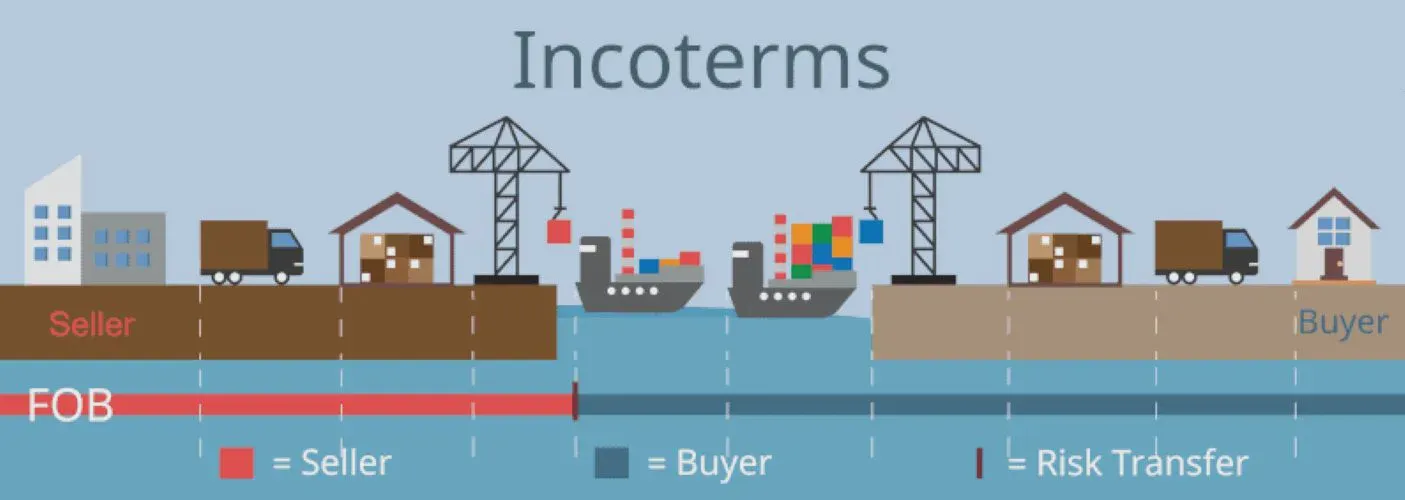
What Does FOB Mean in Shipping?
FOB stands for Free On Board. It is an international commercial term (Incoterm) published by the International Chamber of Commerce (ICC) that dictates the specific obligations, costs, and risks involved in the delivery of goods from sellers to buyers.
Under the FOB Incoterms 2020 rules, this term is strictly intended for sea freight or inland waterway transport. It should not be used for air freight or multi-modal transport (where FCA is recommended). In a standard FOB agreement, the seller is responsible for all costs and risks up to the point where the goods are loaded safely onto the vessel designated by the buyer at the named port of shipment.
The Exact Point of Risk Transfer in FOB
The defining feature of FOB is the critical moment when the risk of loss or damage to the goods shifts from the seller to the buyer.
According to the latest Incoterms 2020, the transfer of risk occurs precisely when the goods are safely loaded "on board" the vessel at the departure port.
- If the cargo drops into the ocean while being lifted by the crane, the seller bears the loss.
- The moment the cargo touches the deck of the vessel, the risk immediately transfers to the buyer. If the ship sinks during transit, the buyer (or their insurance provider) must cover the loss.
This clear delineation is why choosing an experienced logistics partner like AllBestShipping is crucial to ensure that your Bill of Lading and insurance coverage are flawlessly executed.
Seller's Responsibilities Under FOB Incoterms 2020
In an FOB transaction, the seller acts as the exporter and handles the initial leg of the journey. Their obligations include:
- Packaging and Labeling: Preparing the goods securely for international ocean transport.
- Delivery to Port: Transporting the goods from the factory or warehouse to the agreed-upon departure port.
- Export Customs Clearance: Handling all export licenses, paying export duties, and clearing the goods for departure through local customs.
- Loading Charges: Paying the terminal handling charges (THC) and loading the cargo onto the buyer's designated vessel.
- Proof of Delivery: Providing the buyer with a clean Bill of Lading or equivalent transport document as proof that the goods have been loaded.
Once these steps are completed, the seller's financial and legal obligations end.
Buyer's Responsibilities Under FOB Incoterms 2020
As the importer, the buyer takes control once the goods are on the ship. The buyer's responsibilities are extensive and include:
- Ocean Freight Arrangements: Selecting the shipping line or freight forwarder, booking the vessel space, and paying the main Ocean Freight costs.
- Marine Insurance: While insurance is not strictly mandatory under FOB, it is highly recommended. The buyer must arrange and pay for cargo insurance to protect their investment during the sea voyage.
- Import Customs Clearance: Managing the import process at the destination port, including paying import duties, taxes, and securing necessary import permits.
- Onward Transportation: Arranging the final delivery from the arrival port to the final destination warehouse or fulfillment center.
Because the buyer controls the main freight leg, FOB provides them with greater visibility and control over shipping costs and transit times compared to other terms.
FOB vs. CIF: Which One Should You Choose?
When negotiating with overseas suppliers, buyers often face a choice between FOB and CIF (Cost, Insurance, and Freight). Understanding the difference is vital for cost management.
| Feature / Responsibility | FOB (Free On Board) | CIF (Cost, Insurance, and Freight) |
|---|---|---|
| Ocean Freight Payment | Paid by Buyer | Paid by Seller |
| Marine Insurance | Arranged by Buyer (Optional) | Arranged and Paid by Seller (Mandatory) |
| Control Over Logistics | High (Buyer selects the forwarder) | Low (Seller selects the forwarder) |
| Risk Transfer Point | When goods are loaded on the vessel | When goods are loaded on the vessel |
| Best Suited For | Experienced buyers wanting cost control | New buyers wanting a hands-off approach |
Many seasoned importers prefer FOB because it allows them to work with a trusted logistics partner like AllBestShipping. By controlling the freight, you avoid the hidden markups and unexpected destination fees that often plague CIF shipments.
Common Mistakes to Avoid When Using FOB
While FOB is a popular Incoterm, missteps can lead to severe financial consequences. Here are the top mistakes to avoid:
- Using FOB for Air Freight: FOB is strictly for sea freight. If you are shipping by air, you should use FCA (Free Carrier).
- Ignoring Insurance: The risk transfers to you the moment the goods are on the ship. If a storm hits and containers are lost, you bear the cost. Always secure comprehensive cargo insurance.
- Misunderstanding Terminal Charges: Make sure your contract clearly states that the seller covers all origin terminal handling charges. Ambiguity can lead to disputes at the port.
- Failing to Vet Your Forwarder: Since the buyer controls the main carriage, your choice of freight forwarder dictates the success of the shipment.
Why Choose AllBestShipping for Your FOB Shipments?
Navigating the complexities of FOB Incoterms 2020 requires a logistics partner with deep industry expertise, global networks, and unwavering reliability. This is where AllBestShipping excels.
With over a decade of experience in international freight forwarding, AllBestShipping offers:
- Unbeatable Freight Rates: We leverage our massive shipping volume to secure the most competitive Ocean Freight rates on the market, maximizing the cost-saving benefits of your FOB terms.
- End-to-End Visibility: Our advanced tracking systems keep you informed from the moment your goods are loaded at the origin port to the final delivery at your warehouse.
- Expert Customs Brokerage: We seamlessly handle the complex Import Customs Clearance process, ensuring your cargo avoids costly delays and penalties.
- Comprehensive Insurance Options: We provide robust cargo insurance solutions to protect your investment during the risky sea transit phase.
When you buy FOB, you take control of your supply chain. Let AllBestShipping be the engine that drives it forward. Contact our team of logistics experts today to get a customized quote for your next FOB shipment.