Understanding EXW Incoterms 2020: A Complete Guide for Global Importers
The EXW Incoterms 2020 (Ex Works) is a foundational trade term that places maximum responsibility on the buyer, but it also offers unparalleled control over your supply chain costs. If you are importing from China or anywhere else in the world, understanding the true meaning of EXW is the first step toward optimizing your logistics. Let's break down the exact responsibilities of buyers and sellers, the critical point of risk transfer, and why partnering with an expert freight forwarder like AllBestShipping is essential when buying under Ex Works terms.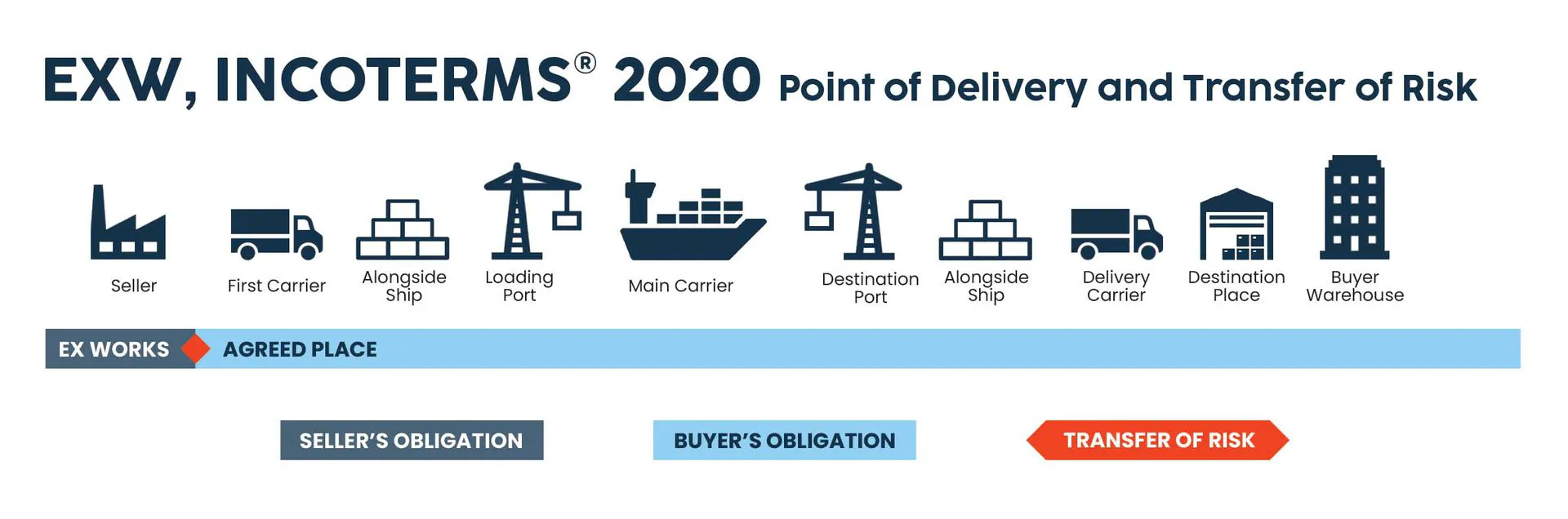
What Does EXW Mean in Shipping?
EXW stands for Ex Works. Under this internationally recognized Incoterm published by the International Chamber of Commerce (ICC), the seller's only obligation is to make the goods available at their own premises (such as a factory, warehouse, or workshop) on the agreed-upon date.
Unlike other terms like FOB or CIF, EXW can be used for any mode of transport—whether it is sea freight, air freight, or rail freight. From the moment the goods are made available at the seller's facility, the buyer assumes 100% of the costs, risks, and responsibilities associated with moving the goods to their final destination.
The Exact Point of Risk Transfer in EXW
The defining characteristic of EXW Incoterms 2020 is that the transfer of risk happens extremely early in the shipping process.
The risk of loss or damage shifts from the seller to the buyer the moment the seller notifies the buyer that the goods are ready for pickup at the named place.
- Crucial Note on Loading: Under strict EXW rules, the seller is not responsible for loading the goods onto the truck sent by the buyer. If the seller helps load the goods and damages them in the process, the buyer technically bears the risk (unless otherwise negotiated in the contract).
- From the factory floor in China all the way to your warehouse in your home country, every step of the journey is at the buyer's risk.
Seller's Responsibilities Under EXW Incoterms 2020
In an EXW transaction, the seller has the minimum level of obligation compared to any other Incoterm. Their responsibilities include:
- Manufacturing and Packaging: Producing the goods and packaging them suitably for export transport (e.g., palletizing, shrink-wrapping).
- Making Goods Available: Placing the goods at a designated location on their premises (factory, warehouse) on the agreed date.
- Providing Documentation: Supplying the buyer with the commercial invoice and any basic information needed for export clearance.
Once the goods are packaged and waiting on the factory floor, the seller's job is completely done. They do not clear the goods for export, and they do not pay any freight charges.
Buyer's Responsibilities Under EXW Incoterms 2020
Because the seller does so little, the buyer must handle almost everything. The buyer's extensive responsibilities include:
- Loading at Origin: Arranging the loading of goods onto the collection vehicle at the seller's premises.
- Inland Transportation: Paying for and organizing the truck to move the goods from the factory to the departure port or airport.
- Export Customs Clearance: This is a major hurdle. The buyer must obtain export licenses and clear the goods through customs in the origin country.
- Origin Terminal Charges: Paying terminal handling charges (THC) at the departure port.
- Main Carriage (Freight): Booking and paying for the primary international transport (sea, air, or rail).
- Marine Insurance: Arranging cargo insurance to protect the goods during transit.
- Import Customs Clearance: Paying duties, taxes, and handling import procedures at the destination.
- Final Delivery: Transporting the goods from the destination port to the final warehouse.
Because of this heavy burden, buyers utilizing EXW usually rely on a robust freight forwarding partner to act on their behalf at the origin.
EXW vs. FOB: Which Should You Choose?
Many importers debate between EXW and FOB (Free On Board). The choice usually comes down to how much control you want versus how much local knowledge you have in the exporting country.
| Feature / Responsibility | EXW (Ex Works) | FOB (Free On Board) |
|---|---|---|
| Origin Inland Transport | Paid and arranged by Buyer | Paid and arranged by Seller |
| Export Customs Clearance | Handled by Buyer | Handled by Seller |
| Risk Transfer Point | At the seller's premises | When goods are loaded on the vessel |
| Control Over Costs | Maximum control for the buyer | High control, but origin costs are hidden in the product price |
| Best Suited For | Experienced buyers with a strong forwarder | Buyers who want the seller to handle local export hurdles |
While EXW gives you total visibility into every cent spent on logistics, it requires you to manage export customs in a foreign country—a task that can be daunting without the right local partner.
Common Risks and Mistakes with EXW
Using EXW Incoterms 2020 without proper preparation can lead to costly delays. Watch out for these common pitfalls:
- Export Customs Nightmares: In many countries (like China), export clearance requires specific licenses. If you buy EXW, you are legally responsible for this. If your seller does not have an export license and you don't have a local customs broker, your goods will be stuck.
- The Loading Liability: As mentioned, the buyer is responsible for loading the goods at the factory. If the seller’s forklift drops your pallet during loading, you bear the financial loss. Always clarify loading responsibilities in your sales contract (often modified to "EXW Loaded").
- Hidden Origin Fees: New importers often underestimate the cost of origin trucking and terminal handling fees. Always get a full door-to-door quote from your forwarder before agreeing to an EXW price.
Why Choose AllBestShipping for Your EXW Shipments?
Successfully executing an EXW shipment requires a logistics partner with boots on the ground in the origin country. This is exactly where AllBestShipping shines.
When you purchase goods under EXW terms, we act as your local extension, handling every complex detail from the factory door to your final destination:
- Seamless Origin Services: We arrange the factory pickup, handle the tricky loading process, and manage the inland trucking to the port.
- Export Customs Expertise: Our local teams possess deep knowledge of origin customs regulations, ensuring your goods clear export smoothly, even if your supplier lacks an export license.
- True Door-to-Door Logistics: From the moment the goods leave the seller's floor, we manage the ocean or air freight, customs clearance, and final delivery.
- Complete Transparency: With AllBestShipping, you get a clear, itemized breakdown of all origin, freight, and destination charges, allowing you to maximize the cost-control benefits of EXW.
Don't let the complexities of EXW logistics overwhelm you. Let AllBestShipping turn your Ex Works terms into a seamless, cost-effective supply chain advantage. Contact us today for a comprehensive door-to-door quote.