Understanding CIF Incoterms 2020: A Comprehensive Guide for Importers and Exporters
The CIF Incoterms 2020 (Cost, Insurance, and Freight) is a highly popular shipping agreement, especially for bulk and non-containerized sea cargo. It offers a convenient solution for buyers who prefer the seller to manage the main logistics leg. However, misunderstanding the crucial difference between who pays the costs and who bears the risks can lead to severe financial headaches. Let's delve into the exact meaning of CIF, the responsibilities of both parties, and why partnering with a trusted logistics provider like AllBestShipping ensures your cargo arrives safely and on budget.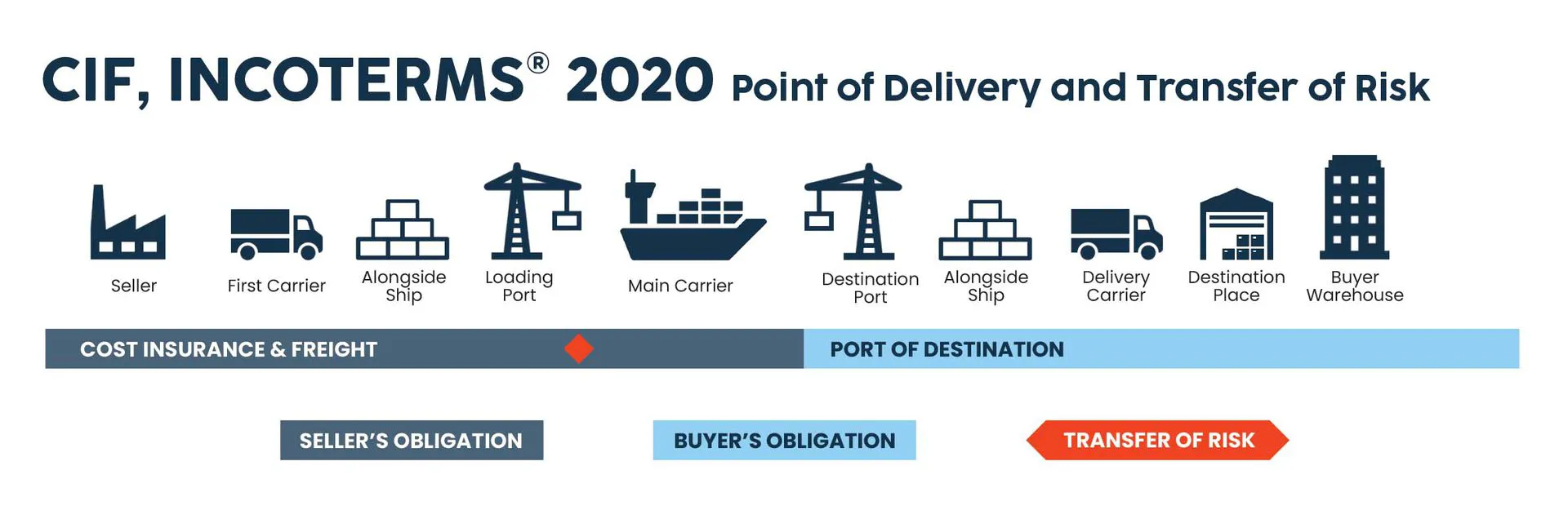
What Does CIF Mean in Shipping?
CIF stands for Cost, Insurance, and Freight. Under this international commercial term published by the International Chamber of Commerce (ICC), the seller is responsible for paying the costs, freight, and marine insurance necessary to bring the goods to the named port of destination chosen by the buyer.
It is vital to note that under the CIF Incoterms 2020 rules, this term is strictly designed for sea freight or inland waterway transport. It should not be used for air freight, road transport, or modern containerized shipping (where CIP—Carriage and Insurance Paid To—is the appropriate alternative). In a CIF agreement, the seller holds significant control over the origin logistics and the main ocean journey.
The Tricky Point of Risk Transfer in CIF
The most misunderstood aspect of CIF is the point at which risk transfers from the seller to the buyer. Unlike costs, which the seller pays all the way to the destination port, the risk transfers much earlier.
Under CIF Incoterms 2020, the risk of loss or damage to the goods shifts from the seller to the buyer the moment the goods are safely loaded on board the vessel at the origin port.
- Even though the seller is paying for the ocean freight and the insurance, if the ship encounters a storm and the cargo is lost at sea, it is the buyer who suffers the loss and must file the claim with the insurance company provided by the seller.
- This split between cost and risk is why CIF requires careful attention to the insurance policy details.
Seller's Responsibilities Under CIF Incoterms 2020
In a CIF transaction, the seller takes on a substantial portion of the logistical and financial burden up to the destination port. Their obligations include:
- Packaging and Export Clearance: Properly packaging the goods and handling all export customs clearance procedures, licenses, and duties in the origin country.
- Origin Charges and Loading: Transporting the goods to the origin port and paying the terminal handling charges to load the cargo onto the vessel.
- Ocean Freight: Booking the vessel and paying the main Ocean Freight costs to transport the goods to the named destination port.
- Marine Insurance: Crucially, the seller must purchase cargo insurance against the buyer's risk of loss or damage during the carriage. Under Incoterms 2020, the minimum requirement for CIF is basic coverage (Institute Cargo Clauses C), covering 110% of the contract value.
- Providing Documents: Supplying the buyer with the commercial invoice, insurance policy, and the transport document (usually a Bill of Lading).
Buyer's Responsibilities Under CIF Incoterms 2020
While the seller manages the main transport, the buyer still has critical responsibilities once the goods arrive at the destination port. The buyer's duties include:
- Assuming Risk During Transit: Bearing all risks of loss or damage from the moment the goods are loaded on the ship at the origin port.
- Destination Terminal Charges: Paying unloading costs and terminal handling charges (THC) at the destination port (unless these were explicitly included in the seller's freight contract).
- Import Customs Clearance: Managing the complex import process, including paying all import duties, taxes, and securing necessary customs permits.
- Onward Transportation: Arranging and paying for the final delivery of the goods from the destination port to the final warehouse or facility.
CIF vs. FOB: Which is Better for You?
The debate between CIF and FOB (Free On Board) is common among global traders. Here is a breakdown to help you choose:
| Feature / Responsibility | CIF (Cost, Insurance, and Freight) | FOB (Free On Board) |
|---|---|---|
| Ocean Freight Paid By | Seller | Buyer |
| Marine Insurance | Mandatory (Arranged & Paid by Seller) | Optional (Arranged by Buyer) |
| Control Over Logistics | Low for Buyer (Seller chooses forwarder) | High for Buyer (Buyer chooses forwarder) |
| Risk Transfer Point | Goods loaded on the vessel at origin | Goods loaded on the vessel at origin |
| Cost Transparency | Often hidden markups by the seller | Total transparency for the buyer |
While CIF seems easier for the buyer since the seller handles the shipping, experienced importers often prefer FOB. Under CIF, sellers frequently inflate the freight and insurance costs to increase their profit margins. Furthermore, if a claim arises, the buyer must deal with a foreign insurance company chosen by the seller, which can be a logistical nightmare.
Why CIF is Not Recommended for Containerized Cargo
A critical update in recent Incoterms editions is the strong recommendation against using CIF for containerized freight.
When you ship via containers, the goods are handed over to the carrier at a container terminal days before they are actually loaded "on board" the vessel. If damage occurs while the container is sitting in the terminal yard, a "grey area" of liability arises because the risk hasn't officially transferred yet according to strict CIF rules. For containerized cargo, the ICC strongly recommends using CIP (Carriage and Insurance Paid To) instead.
Optimize Your Supply Chain with AllBestShipping
Whether you are buying CIF and need a reliable partner to handle the complex destination logistics, or you are looking to transition to FOB for better cost control, AllBestShipping is your premier freight forwarding partner.
With over 10 years of expertise, we offer:
- Expert Destination Services: If you buy CIF, we seamlessly handle your Import Customs Clearance, destination port fees, and final inland delivery, ensuring no unexpected delays.
- Better Alternatives: We can provide highly competitive Ocean Freight rates, allowing you to confidently switch from CIF to FOB, giving you total control over your shipping costs and eliminating hidden supplier markups.
- Comprehensive Insurance: We offer robust cargo insurance solutions that provide far better protection than the minimal "Clause C" coverage usually provided by sellers under CIF terms.
- End-to-End Visibility: Our dedicated team keeps you informed at every step, transforming complex international logistics into a smooth, transparent process.
Don't let shipping terms dictate your profit margins. Partner with AllBestShipping today to take control of your global trade strategy. Contact us for a customized logistics consultation.