Container Shipping from China to Australia: The Complete 2026 Guide
The booming bilateral trade between China and Australia continues to break records, with everything from high-tech electronics and heavy machinery to fast fashion and home furniture crossing the ocean daily. For importers, navigating the complexities of global logistics is not just an operational necessity—it is the backbone of a successful, profitable import business. However, international trade is fraught with challenges. Importers constantly face pain points such as fluctuating freight rates, notoriously complex customs regulations, hidden port fees, and unexpected transit delays that can rapidly eat into profit margins.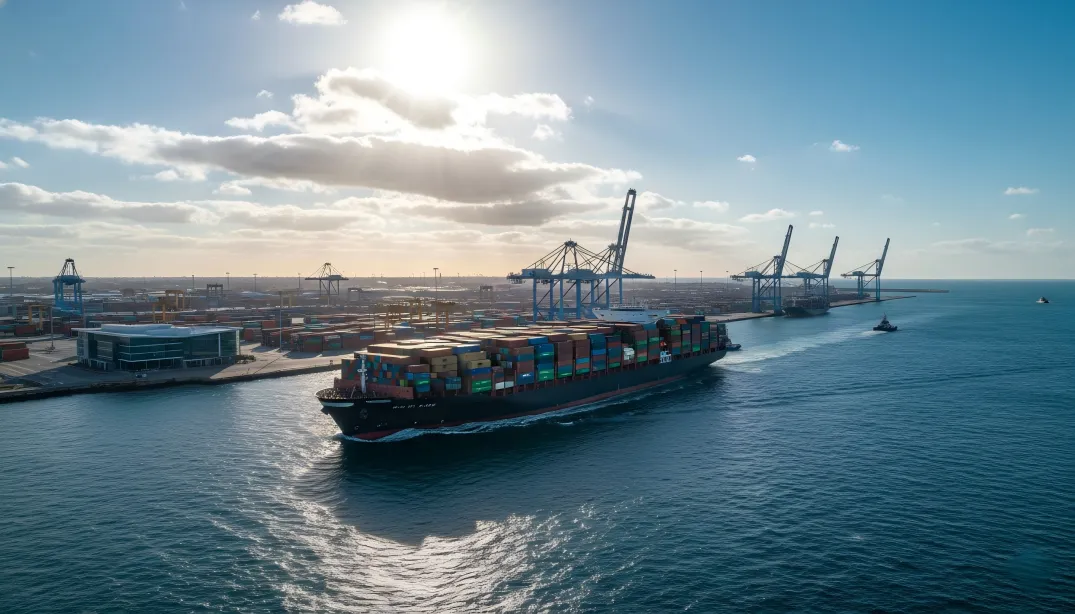
If you want to maintain a competitive edge, mastering container shipping from China to Australia is absolutely critical. In my 10+ years of managing supply chains across the Asia-Pacific corridor, I've seen countless importers lose thousands of dollars simply because they misunderstood a biosecurity regulation or chose the wrong container type. This comprehensive 2026 guide will provide you with a deep dive into every aspect of the shipping process, drawing directly from our team's daily operational experiences. You will learn the exact breakdown of container shipping costs, accurate transit times, how to choose between FCL and LCL, and how to navigate Australia's incredibly strict biosecurity rules. Furthermore, you will discover how partnering with a top-tier freight forwarder like AllBestShipping can simplify your entire supply chain, ensuring fast, cost-effective, and fully compliant deliveries every single time.
1. Container Types and Capacities for China-Australia Shipping
Choosing the right container is the first step in optimizing your logistics strategy. The type of container you select directly impacts your shipping costs, the safety of your cargo, and the efficiency of the loading and unloading process. In the maritime shipping industry, standard dry containers are the most common choice, but understanding their exact specifications is vital for maximizing payload and minimizing wasted space.
Standard Shipping Containers
Standard shipping containers come in three primary sizes: 20-foot, 40-foot, and 40-foot High Cube (HC). Each serves a specific purpose depending on the volume and weight of your cargo.
| Container Type | Dimensions (L x W x H) | Max Payload (Approx.) | CBM Capacity | Ideal Cargo Types |
|---|---|---|---|---|
| 20ft General Purpose (20GP) | 5.9m x 2.35m x 2.39m | 28,000 kg | 28 - 30 CBM | Heavy, dense goods like machinery, tiles, steel coils, and dense raw materials. |
| 40ft General Purpose (40GP) | 12.03m x 2.35m x 2.39m | 28,800 kg | 58 - 60 CBM | Standard retail goods, electronics, apparel, and general merchandise. |
| 40ft High Cube (40HC) | 12.03m x 2.35m x 2.69m | 28,600 kg | 68 - 70 CBM | Bulky, lightweight items like furniture, plastic toys, and large appliances. |
Expert Tip: To optimize your payload and reduce per-unit shipping costs, always calculate your cargo's total volume (CBM) and weight before booking. If your goods are heavy but small in volume, a 20GP is the most cost-effective choice. If your goods are voluminous but relatively light, paying a slight premium for a 40HC will give you an extra 10 CBM of space, drastically lowering your average cost per item. Avoid "dead space" by using specialized cargo loading software or consulting with your freight forwarder to plan the stowage.
2. FCL vs. LCL: Which is Right for Your Business?
When booking Shipping from China to Australia, you must choose between two primary shipping modes: FCL and LCL. Understanding the fundamental differences between these two options is crucial for balancing cost and transit speed.
FCL (Full Container Load)
FCL means you are renting the entire container exclusively for your goods. Even if your cargo does not fill the container to the brim, you pay a flat rate for the whole box.
- Benefits: FCL offers significantly faster transit times because the container is sealed at the factory in China and only opened when it arrives at your warehouse in Australia. This exclusive use translates to a much lower handling risk, reducing the chances of damage or loss. For bulk shipments, FCL is always the most cost-effective method on a per-CBM basis.
LCL (Less than Container Load)
LCL is designed for importers whose cargo volume is too small to justify the cost of a full container. In this mode, your goods share container space with shipments from other buyers.
- Benefits: It is highly flexible and cost-effective for small volumes (typically under 15 CBM), as you only pay for the space you actually use.
- Cons: LCL shipments generally take longer. The cargo must be sent to a Container Freight Station (CFS) in China for consolidation (packing multiple shipments into one container) and then deconsolidated at a CFS in Australia before final delivery. This extra handling increases the risk of damage and adds several days to the overall transit time.
The Decision Matrix: The "15 CBM Rule"
A common rule of thumb among logistics experts is the "15 CBM Rule." If your cargo volume is below 15 CBM, LCL is usually the cheapest option. However, once your cargo hits 15 CBM or more, the combined costs of LCL Sea Freight plus the high origin and destination handling charges often exceed the flat rate of a 20ft FCL container. At this tipping point, switching to FCL not only saves money but also provides superior security and faster transit.
3. How Much Does It Cost to Ship a Container from China to Australia?
Ocean freight rates are notoriously volatile, influenced by global demand, fuel prices, and seasonal peaks. In 2026, the market has seen fluctuations, but prices have stabilized compared to previous years. Below is an overview of the estimated FCL shipping rates from major Chinese ports to key Australian destinations. For a deeper breakdown, you can read more on How Much Does it Cost to Ship from China to Australia.
| Origin Port (China) | Destination Port (Australia) | 20GP Estimated Rate (USD) | 40GP/40HC Estimated Rate (USD) |
|---|---|---|---|
| Shenzhen / Guangzhou | Sydney / Melbourne | ||
| Shanghai / Ningbo | Sydney / Melbourne | ||
| Qingdao / Tianjin | Brisbane | ||
| Shenzhen / Shanghai | Fremantle (Perth) |
Note: These are estimated port-to-port ocean freight rates and do not include local charges, customs duties, or inland delivery.
Hidden Costs to Watch Out For
The ocean freight rate is just one piece of the puzzle. When calculating your landed cost, you must account for various surcharges. We believe in radical transparency, so here are the hidden fees you need to anticipate:
- BAF (Bunker Adjustment Factor): A surcharge levied by shipping lines to compensate for fluctuating fuel prices.
- THC (Terminal Handling Charges): Fees charged by the ports in both China and Australia for lifting the container on and off the vessel.
- Documentation Fees: Charges for issuing the Bill of Lading and other export/import paperwork.
- Customs Clearance Fees: Fees paid to your customs broker for filing the import declaration. Reliable Customs Clearance is vital to avoid penalties.
- Port Service Charges: Specific fees applied by Australian ports, including infrastructure levies and biosecurity inspection fees.
The AllBestShipping Advantage: Hidden fees can destroy your profit margins. At AllBestShipping, we pride ourselves on 100% transparent pricing. While we offer DDP (Delivered Duty Paid), we often objectively recommend FOB for first-time importers with large volumes to give them more control over the origin costs. When you request a quote under DDP or DDU terms, we provide a comprehensive, itemized breakdown with zero hidden fees, ensuring you know exactly what you will pay upfront. (Note: Freight rates mentioned are current estimates for early 2026 and are subject to market fluctuations).
4. Transit Times: How Long Does It Take?
Time is money in the import business. Transit times for container shipping from China to Australia depend heavily on the specific ports of loading and discharge, as well as whether you choose a direct sailing or a transshipment route.
Port-to-Port vs. Door-to-Door
- Port-to-Port refers strictly to the time the vessel spends on the water, traveling from the Chinese port to the Australian port.
- Door-to-Door includes the entire journey: picking up the cargo from the Chinese factory, export customs, ocean transit, Australian import customs, and final trucking to your warehouse. Door-to-door typically adds 7 to 14 days to the port-to-port time.
| Origin Port | Destination Port | Estimated Port-to-Port Transit (Days) |
|---|---|---|
| Shenzhen (Yantian) | Sydney | 12 - 15 Days |
| Shenzhen (Shekou) | Melbourne | 14 - 18 Days |
| Shanghai | Brisbane | 15 - 19 Days |
| Ningbo | Fremantle | 16 - 20 Days |
| Qingdao | Sydney | 18 - 22 Days |
Factors That Cause Delays
Even with the best planning, delays can happen. In our experience, the most common culprits include severe weather (such as typhoons in the South China Sea during Q3), port congestion during peak seasons (like the rush before Chinese New Year or Black Friday), and unexpected customs holds due to documentation errors. For instance, last year, we saw a client's shipment held up in Melbourne for two weeks simply because the HS code on the Commercial Invoice didn't match the physical goods. Choosing a reliable freight forwarder who monitors your shipment 24/7 is crucial for mitigating these risks.
5. Navigating Australian Customs and Biosecurity (AQIS/BMSB)
Australia has some of the strictest customs and biosecurity regulations in the world. The Australian Border Force (ABF) and the Department of Agriculture, Fisheries and Forestry (DAFF - formerly DAWE) rigorously inspect imports to protect the country's unique ecosystem and economy. As a seasoned freight forwarder, I cannot stress enough how critical compliance is here; even a minor oversight can lead to severe penalties or the destruction of your cargo.
The ChAFTA Advantage
The China-Australia Free Trade Agreement (ChAFTA) is a massive advantage for importers. Under this agreement, the vast majority of goods manufactured in China can enter Australia with a 0% import duty. To claim this exemption, your supplier must provide a valid Certificate of Origin (CO) specifically formatted for ChAFTA. Original Insight: Don't wait until the cargo arrives to check your CO. We always pre-verify the HS codes on the ChAFTA CO against the ABF's tariff classifications before the vessel leaves China to prevent last-minute duty shocks.
Mandatory Documents Checklist
To ensure a smooth customs clearance process, your documentation must be flawless. The essential documents include:
- Bill of Lading (B/L): The official contract of carriage and document of title.
- Commercial Invoice: Must clearly state the buyer, seller, FOB or CIF value, and accurate HS codes.
- Packing List: Detailed breakdown of weights, dimensions, and packaging types.
- Certificate of Origin: Required to claim ChAFTA duty exemptions.
Biosecurity & Quarantine Regulations
Australia's biosecurity laws are uncompromising. According to the Department of Agriculture, Fisheries and Forestry (DAFF), non-compliance is not an option.
- ISPM 15 Fumigation: If your cargo uses any solid wood packaging (like wooden pallets or crates), it must be treated and stamped with the internationally recognized ISPM 15 mark, accompanied by a valid Fumigation Certificate.
- BMSB (Brown Marmorated Stink Bug): Between September 1 and April 30 each year, Australia enforces strict BMSB regulations. High-risk goods (like machinery, vehicles, and metal parts) manufactured in or shipped from target risk countries must undergo mandatory offshore treatment before arriving in Australia. Exclusive Tip: We strongly advise our clients to use plastic or steel pallets during the BMSB season to entirely bypass the wood fumigation scrutiny and speed up the DAFF clearance process. Failure to comply will result in the cargo being turned away or destroyed at your expense.
6. Step-by-Step Container Shipping Process
Understanding the logistical workflow will help you maintain control over your supply chain. Here is the step-by-step process of shipping a container from China to Australia:
- Requesting a Quote and Booking Freight: Contact a trusted forwarder like AllBestShipping. Provide your cargo details, preferred Incoterms (e.g., FOB, EXW), and delivery requirements to secure vessel space.
- Cargo Preparation and Container Stuffing: The supplier manufactures, packages, and labels the goods. For FCL, the empty container is delivered to the factory for loading. For LCL, the goods are sent to a consolidation warehouse.
- Chinese Export Customs Clearance: The forwarder submits the export declaration to Chinese Customs. Once approved, the container is cleared for loading onto the vessel.
- Ocean Transit and Tracking: The vessel departs. A modern freight forwarder will provide you with a tracking link to monitor your cargo's journey across the ocean in real-time.
- Australian Import Clearance and Quarantine: Before the ship arrives, your customs broker submits the import declaration to the ABF. You must pay the 10% GST (Goods and Services Tax) and any applicable duties. DAWE will review the documents for biosecurity compliance.
- Final Inland Delivery: Once the container is discharged and cleared by customs, it is loaded onto a truck or train for final delivery to your warehouse, distribution center, or Amazon FBA facility.
7. Pro Tips to Reduce Shipping Costs and Avoid Delays
Experienced importers use specific strategies to keep their logistics costs low and their supply chains running smoothly:
- Consolidate Shipments: If you buy from multiple suppliers in China, use a freight forwarder's warehouse to consolidate all the goods into a single FCL container. This is vastly cheaper than shipping multiple LCL consignments.
- Timing is Everything: Ocean freight rates skyrocket in the weeks leading up to major holidays, especially the Chinese New Year (usually January/February). Plan your inventory and book your shipments at least 3-4 weeks in advance to avoid peak season premiums and space shortages.
- Document Accuracy is Non-Negotiable: A single typo on the Commercial Invoice or a mismatched weight on the Packing List can trigger a customs hold, resulting in weeks of delays and thousands of dollars in port storage fees. Always double-check your paperwork.
- Work with Specialized Experts: The ROI of hiring a freight forwarder who specializes in the China-Australia route is immense. They know the local port dynamics, have established relationships with customs brokers, and can anticipate problems before they occur.
8. Why Choose AllBestShipping for Your China-Australia Route?
When it comes to container shipping from China to Australia, you need a partner who offers more than just a spot rate. You need a comprehensive logistics solution. AllBestShipping stands out as the premier choice for Australian importers.
Our core competencies include highly competitive contract rates with major shipping lines, guaranteeing vessel space even during peak seasons. We specialize in end-to-end DDP (Delivered Duty Paid) and DDU (Delivered Duty Unpaid) services, meaning we handle everything from the factory floor in China directly to your door in Australia. Our deep expertise in handling complex Australian customs and strict biosecurity clearances ensures that your cargo will never be delayed due to compliance errors. With 24/7 customer support and a commitment to transparent pricing, we take the stress out of international trade.
Call to Action: Ready to streamline your imports, cut costs, and guarantee on-time delivery? Contact AllBestShipping today for a free, no-obligation quote and let our experts optimize your supply chain.
9. Frequently Asked Questions (FAQ)
Do I have to pay GST on imports from China to Australia?
Yes. Australia imposes a 10% Goods and Services Tax (GST) on most imported goods. The GST is calculated on the Value of the Taxable Importation (VoTI), which includes the customs value of the goods, any import duties, and the cost of international transport and insurance. While there used to be a low-value threshold exemption, current laws often require GST payment for commercial imports regardless of value.
What happens if my cargo fails an Australian biosecurity inspection?
If DAWE finds that your cargo does not meet biosecurity standards (e.g., untreated wood packaging or evidence of insect infestation), the consequences are severe. The cargo will be ordered for immediate onshore treatment (like fumigation) at an exorbitant cost to you. In severe cases, the goods may be deeply buried (destroyed) or forcibly re-exported back to China at your expense.
How far in advance should I book my container space?
During standard periods, booking 10 to 14 days prior to the estimated departure date is usually sufficient. However, during peak seasons (August to November, and pre-Chinese New Year), you should book at least 3 to 4 weeks in advance to secure space and avoid premium surcharges.
Does AllBestShipping provide door-to-door delivery in Australia?
Absolutely. We offer comprehensive Door-to-Door Shipping logistics solutions. Whether your final destination is a commercial warehouse in Sydney, a retail storefront in Melbourne, or an Amazon FBA fulfillment center in Brisbane, our extensive trucking network across Australia ensures your container is delivered safely and on schedule.