How Much Does it Cost to Ship from China to Australia? [2026 Ultimate Guide]
Shipping from China to Australia is the lifeline for thousands of Australian businesses, from e-commerce startups to large-scale retailers. However, one question constantly plagues importers: "How much does it really cost to ship from China to Australia?"
The answer is rarely a simple number. Shipping costs are a dynamic mix of freight rates, fuel surcharges, seasonal fluctuations, and hidden port fees. In 2026, a 40ft container might cost you anywhere from
If you are looking for a definitive answer, you have come to the right place. This comprehensive guide—written by freight forwarders who manage this route daily—will break down every single cost component. Whether you are shipping heavy machinery via Sea Freight or urgent electronics via Air Freight, we will help you budget accurately and avoid nasty surprises.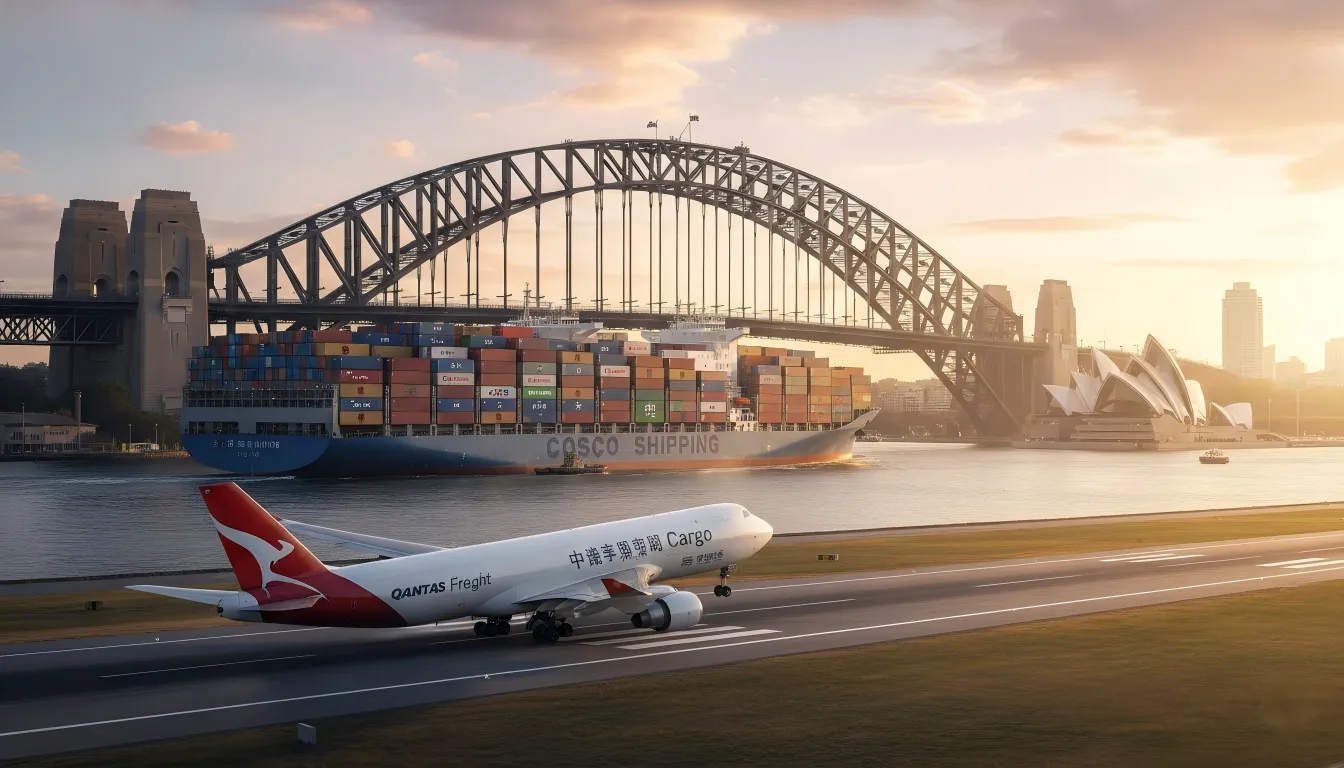
At AllBestShipping, we specialize in optimizing these costs. With over 10 years of experience and thousands of containers delivered to Sydney, Melbourne, and Brisbane, we leverage our volume agreements to help you navigate the complexities of international logistics.
1. Sea Freight Costs from China to Australia
The most economical choice for bulk shipments.
For 90% of importers, Sea Freight is the default choice. It is slow, yes, but the cost savings compared to air freight are massive, especially for bulky or heavy goods. Sea freight costs are generally divided into two categories: FCL (Full Container Load) and LCL (Less than Container Load).
1.1 FCL (Full Container Load) Rates
If you have enough goods to fill (or nearly fill) a container, FCL is your best friend. It offers the lowest cost per unit and is generally safer than LCL because your goods aren't mixed with others.
Current Estimated FCL Rates (2026 Market Average):
| Container Type | Route (China to AU Major Ports) | Estimated Cost (USD) | Suitable For |
|---|---|---|---|
| 20ft General Purpose (20GP) | Shanghai/Ningbo/Shenzhen -> Sydney/Melbourne | Heavy cargo, machinery, raw materials (approx. 28-30 CBM) | |
| 40ft General Purpose (40GP) | Shanghai/Ningbo/Shenzhen -> Sydney/Melbourne | General consumer goods, furniture, textiles (approx. 58-60 CBM) | |
| 40ft High Cube (40HQ) | Shanghai/Ningbo/Shenzhen -> Sydney/Melbourne | Light but bulky cargo, e-commerce stock (approx. 68-70 CBM) |
Note: These rates are port-to-port ocean freight only. They do not include local charges in China or Australia. Rates fluctuate weekly based on the General Rate Increase (GRI) and seasonal demand.
Why do rates vary so much?
- Port Pairs: Shipping to Sydney or Melbourne is usually cheaper and faster than shipping to Fremantle or Adelaide due to direct vessel calls.
- Carrier Choice: Premium carriers (like Maersk or COSCO) might charge more for guaranteed space, while budget carriers offer lower rates with a higher risk of "rolling" (delaying) your cargo.
1.2 LCL (Less than Container Load) Rates
If you don't have enough cargo to fill a 20ft container (usually less than 15 CBM), LCL allows you to share container space with other importers.
- Pricing Model: LCL is charged per CBM (Cubic Meter) or per Ton, whichever is greater.
- Typical Rate:
150 USD per CBM.
The "Cheap" LCL Trap: Many new importers see a quote of "$50/CBM" and think it's a steal. Be careful! LCL shipments often come with higher destination charges (unpacking fees, depot handling) than FCL.
- Rule of Thumb: If your shipment is over 15 CBM, it is often cheaper to book a full 20ft container, even if you don't fill it completely. The flat fees for FCL are predictable, whereas LCL destination fees can spiral quickly.
1.3 Special Container Costs (Reefer, Open Top, Flat Rack)
Standard containers fit most goods, but what if you are shipping perishable food or oversized machinery?
- Reefer Containers (Refrigerated): Essential for food, pharmaceuticals, and chemicals. Expect to pay 30-50% more than standard FCL rates due to power consumption and monitoring fees.
- Open Top / Flat Rack: For cargo that cannot fit through the door (like large excavators). These are significantly more expensive and often require "Out of Gauge" (OOG) surcharges.
1.4 Port Congestion & Peak Season Surcharges (PSS)
During high-demand periods, ports like Sydney and Melbourne can get clogged.
- Congestion Surcharge: Carriers may slap a
300 fee per TEU (Twenty-foot Equivalent Unit) if vessels are forced to wait at anchor. - Detention & Demurrage: If you can't pick up your container within the "free time" (usually 7 days) because of congestion, you will be charged daily penalties ranging from
400 per day. Tip: Ask AllBestShipping for extended free time (14-21 days) when booking.
2. Air Freight Costs from China to Australia
Speed vs. Cost trade-off.
When time is money, Air Freight is the solution. While ocean freight takes weeks, air freight takes days. This mode is ideal for high-value electronics, fashion samples, or urgent replacement parts.
2.1 Standard Air Freight Rates
Standard air freight is an "Airport-to-Airport" service. Rates are calculated based on the Chargeable Weight, which is the higher of the Actual Weight (dead weight) or the Volumetric Weight.
2026 Estimated Air Freight Rates:
| Weight Bracket | Estimated Rate (USD/kg) | Best For |
|---|---|---|
| +45 kg | Small commercial shipments | |
| +100 kg | Standard mid-sized cargo | |
| +300 kg | Larger consolidated shipments | |
| +500 kg | Bulk air shipments |
Understanding Volumetric Weight: Airlines charge for space. If you are shipping cotton pillows, you will pay for the volume, not the weight.
- Formula: Length (cm) x Width (cm) x Height (cm) / 6000 (for most freight forwarders).
- Example: A box weighs 10kg but has a volumetric weight of 20kg. You pay for 20kg.
2.2 Express Shipping (Courier) Rates
For shipments under 100kg, or when you need "Door-to-Door" simplicity, Express couriers like DHL, FedEx, and UPS are unbeatable.
- Estimated Cost:
10.00 per kg. - Advantages: Includes customs clearance (for low value), door delivery, and end-to-end tracking.
- Insider Tip: Official carrier rates are expensive. By booking through a freight forwarder like AllBestShipping, you can access wholesale rates that are 30-60% lower than the public prices.
2.3 Dangerous Goods & Battery Shipments
Shipping Lithium Batteries (Power Banks, E-Scooters, Laptops) is tricky.
- Regulations: IATA (International Air Transport Association) has strict rules. You need an MSDS (Material Safety Data Sheet) and UN38.3 test report.
- Extra Cost: Dangerous Goods (DG) handling fee is typically
150 per shipment. - DG Packaging: Must be UN-certified boxes. Warning: Never misdeclare batteries as "general cargo." Airlines scan every box. If caught, you face massive fines and blacklisting.
2.4 Deferred vs. Priority Air Freight
- Priority Air: Fastest (Direct flights). Use for AOG (Aircraft on Ground) or production line stoppage.
- Deferred Air: Uses transshipment hubs (e.g., via Singapore or Hong Kong). Takes 2-3 days longer but is 15-20% cheaper. Ask AllBestShipping for "Deferred Options" if your deadline is flexible.
3. Additional Fees & Surcharges (The "Hidden" Costs)
Freight rate is just the iceberg's tip.
A common rookie mistake is budgeting only for the "Freight Rate" and forgetting the local charges. These can easily add $1,000+ to your total bill.
3.1 Origin Charges (China)
Who pays these depends on your Incoterms:
- EXW (Ex Works): You pay everything. Trucking from factory to port, export declaration, document fees, and port handling in China.
- FOB (Free on Board): Your supplier pays these. You only take over costs once the goods are on the ship. We highly recommend FOB for most importers.
Typical Origin Costs (if EXW):
- Pick-up Fee:
300 (depending on distance). - Customs Clearance:
100. - Documentation:
50.
3.2 Destination Charges (Australia)
These are unavoidable fees charged by the port and your logistics provider in Australia.
| Fee Name | Description | Estimated Cost (AUD) |
|---|---|---|
| Port Service Charges (PSC) | Charged by the port authority for crane lifts and infrastructure. | |
| Terminal Handling Charges (THC) | Handling fees charged by the shipping line terminal. | Included in PSC or separate ~$200 |
| Delivery Order (D/O) Fee | Admin fee to release the cargo to the trucker. | |
| Customs Clearance Fee | Fee paid to your customs broker to file the import declaration. | |
| Cartage (Trucking) | Delivery from the Australian port to your warehouse. | Variable ( |
3.3 Import Processing Charge (IPC)
The Australian Government charges an IPC for all consignments valued over AUD 1,000.
- Sea Freight (FCL): Approx. AUD 100 - 150 per declaration.
- Air/Sea (LCL): Approx. AUD 50 - 90 per declaration.
4. Customs Duties & Taxes (GST)
Australia has a strict but transparent tax regime.
4.1 Goods and Services Tax (GST)
You must pay 10% GST on almost all imports. According to the Australian Border Force (ABF), the calculation is strictly enforced:
Calculation Formula:
- CIF Value = Cost of Goods + Insurance + Freight.
- Even if you pay for shipping in USD, the GST is calculated on the converted AUD value.
4.2 Customs Duty (Tariffs)
The standard duty rate is 5% for many goods (textiles, automotive parts, etc.). However, many items are duty-free.
4.3 The ChAFTA Advantage
The China-Australia Free Trade Agreement (ChAFTA) is a game-changer. Under this agreement, most goods imported from China into Australia are Duty-Free (0%).
- Requirement: You must obtain a valid Certificate of Origin (COO) form from your Chinese supplier.
- Tip: Always ask your supplier for a ChAFTA COO before the goods ship. It costs them very little (~$20) but saves you 5% of your cargo value!
- Official Resource: Check the full tariff schedule on the Department of Foreign Affairs and Trade (DFAT) ChAFTA page.
5. Factors Influencing Shipping Costs
Why did you pay
5.1 Seasonality
- Peak Season (August - October): Retailers are stocking up for Christmas. Space is tight, and rates skyrocket.
- Chinese New Year (January/February): Factories close for weeks. The rush to ship before the holiday causes a "capacity crunch," driving prices up.
- Golden Week (October): Another Chinese holiday that disrupts supply chains.
5.2 Fuel Prices (BAF)
Ocean carriers apply a Bunker Adjustment Factor (BAF) and airlines apply a Fuel Surcharge (FSC). These fluctuate monthly with global oil prices. When oil is expensive, shipping is expensive.
5.3 Currency Exchange Rates
Freight is almost always traded in USD. If the Australian Dollar (AUD) is weak against the USD, your landed cost in AUD will increase significantly, even if the USD freight rate stays the same.
6. Transit Time: Sea vs. Air
Understanding the transit time helps you plan your inventory and avoid paying for expensive air freight due to poor planning.
| Mode | Route | Estimated Transit Time |
|---|---|---|
| Sea Freight | South China (Shenzhen) -> Sydney | 12 - 15 Days |
| Sea Freight | North China (Shanghai/Ningbo) -> Sydney | 14 - 18 Days |
| Sea Freight | China -> Melbourne | 15 - 22 Days |
| Sea Freight | China -> Brisbane | 18 - 25 Days |
| Sea Freight | China -> Fremantle (Perth) | 25 - 35 Days |
| Air Freight | Airport to Airport | 3 - 7 Days |
| Express | Door to Door | 3 - 5 Days |
Note: These are port-to-port times. Add 3-7 days for customs clearance and final delivery.
7. How to Reduce Shipping Costs
You don't have to accept high rates. Here are proven strategies to cut costs.
7.1 Choose the Right Incoterms: FOB vs CIF
Avoid CIF (Cost, Insurance, and Freight). While it looks convenient because the supplier handles shipping, they often use the cheapest, lowest-quality shipping lines and mark up the cost. Plus, you lose control over the shipment.
- Go FOB: You choose the freight forwarder (like AllBestShipping). You control the cost, the timing, and the service quality. This prevents hidden "Kickback Fees" that suppliers sometimes get from their forwarders.
7.2 Consolidate Your Shipments (Buyer's Consolidation)
If you buy from three different suppliers in China, don't ship three small LCL loads.
- The Problem: 3 x LCL shipments means 3 x Customs Fees, 3 x Trucking Fees, and 3 x Doc Fees.
- The Solution: Ask AllBestShipping to collect goods from all your suppliers into one warehouse in China (e.g., Shenzhen), load them into a single FCL container, and ship them together.
- The Saving: You save on destination charges and clearance fees (only one customs entry instead of three). This can save you
1,000 per shipment.
7.3 Optimize Packaging
Carriers hate "dead air." If your supplier packs goods loosely, you pay for empty space.
- Ask your supplier to minimize packaging dimensions.
- For air freight, ensure cartons are densely packed to avoid volumetric weight charges.
- Palletizing: While safer, pallets add weight and volume. If you are shipping loose cartons (LCL), ask if they can be floor-loaded (if safe) to save space, but be aware of higher unloading labor costs in Australia.
7.4 Plan Ahead
Emergency shipping is expensive shipping. By forecasting your inventory needs 3-4 months in advance, you can ship via sea freight during off-peak seasons (March-July), locking in the lowest possible rates.
7.5 Audit Your Invoices
Mistakes happen. Always check your freight invoice against your quote. Look for unauthorized "General Rate Increase" (GRI) or "Peak Season Surcharge" (PSS) that wasn't agreed upon.
8. Common Shipping Mistakes to Avoid
Even experienced importers make costly errors.
Ignoring Biosecurity (BMSB): From September to April, Australia enforces strict measures against the Brown Marmorated Stink Bug (BMSB). Certain goods from high-risk countries (including transshipments via Europe/USA, though China is currently "target risk" for some categories) must be fumigated. Failure means your container gets re-exported or destroyed.
Real-World Case: In Oct 2024, a client shipped outdoor furniture from Italy (transshipped via Shanghai) without BMSB treatment. The container was held at Sydney port for 3 weeks, incurring $4,500 in detention fees before being ordered for re-export.
Missing Documents: If your Bill of Lading (BL) or Commercial Invoice has a typo (e.g., wrong HS Code), customs clearance gets delayed. Storage fees at the port can reach $500/day.
Under-Insuring: Relying on the carrier's default liability (usually $2/kg) is risky. If a container falls overboard, you get pennies on the dollar. Always buy comprehensive cargo insurance.
9. FAQ
Q: What is the cheapest way to ship from China to Australia?
A: For small shipments (under 100kg), standard LCL sea freight might seem cheap but minimum fees make it pricey; often Express courier is competitive here. For anything over 15 CBM, FCL Sea Freight is undisputed as the cheapest option per unit.
Q: Do I need insurance for shipping from China to Australia?
A: Yes, absolutely. Carrier liability is extremely limited (often only $2.00/kg). Cargo insurance is cheap (usually 0.1% - 0.3% of cargo value) and protects you against total loss, damage, or General Average claims.
Q: How much is the customs duty from China to Australia?
A: Most general goods attract a 5% duty. However, if you have a valid ChAFTA Certificate of Origin, the duty is 0%. GST of 10% applies to all imports regardless of duty.
Q: Can AllBestShipping handle customs clearance in Australia?
A: Yes. We provide a full Door-to-Door service. We handle the export in China, the ocean/air freight, and the customs clearance and delivery in Australia. You just wait for your goods to arrive.
Conclusion
Determining how much it costs to ship from China to Australia requires looking beyond just the freight rate. You must factor in origin fees, destination charges, customs duties, and the hidden costs of delays or poor service.
In 2026, the market is stabilizing, but volatility remains. The difference between a well-planned shipment and a rushed one can be thousands of dollars.
Don't leave your logistics to chance.
At AllBestShipping, we provide transparent, competitive quotes with no hidden fees. Whether you are shipping your first pallet or your hundredth container, our team is ready to optimize your route and save you money.
Contact AllBestShipping Today for a free, instant quote and take the guesswork out of your supply chain.