Shipping from Guangzhou to Egypt: A Complete 2026 Guide (Costs, Transit Times & Customs)
Shipping from Guangzhou to Egypt should be straightforward. Yet last month, one of our clients — a lighting importer in Alexandria — received two quotes for the same 40HQ container of LED displays from Panyu. One forwarder promised 18 days. Another quoted 33. Neither explained why. That confusion cost him a week of delay while he scrambled for clarity.
This guide fixes that problem. At AllBestShipping, we run weekly consolidations from Guangzhou Nansha to Alexandria and Port Said. We have handled everything from electronics and furniture to automotive parts on this corridor. Below is exactly what actually happens when you ship from Guangzhou to Egypt — no generic "China-to-Egypt" filler, just the operational details, 2026 rate reality, and customs knowledge you need to move cargo without surprises.
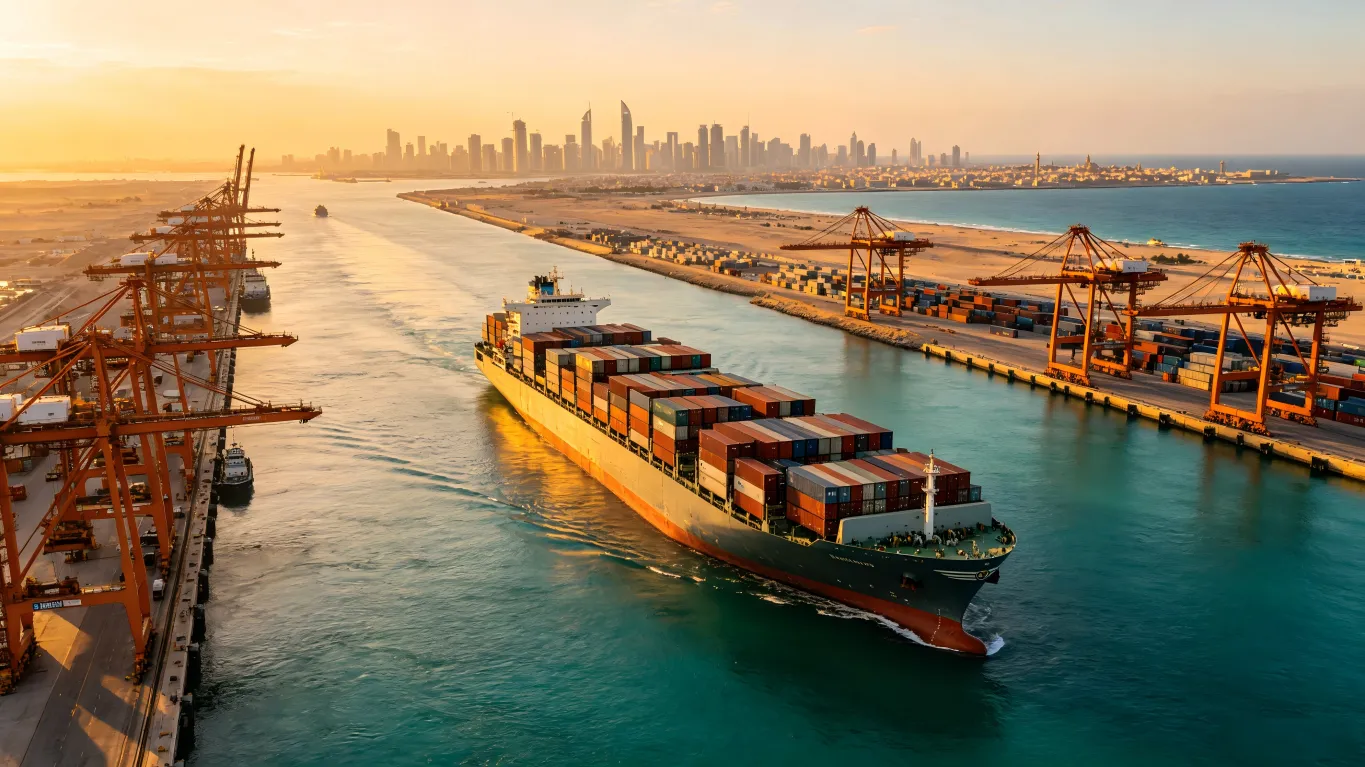
Why Guangzhou Is a Strategic Export Hub for Egypt-Bound Cargo
Most online guides treat Guangzhou as an interchangeable origin. It is not. If your supplier is in the Pearl River Delta, understanding Guangzhou's specific logistics advantages — and how they differ from Shenzhen or Hong Kong — directly affects your transit time, cost, and documentation accuracy. As a key hub for shipping from China to Africa, Guangzhou also sits on one of our busiest shipping from China to Egypt corridors.
Nansha Port: Guangzhou's Deepwater Gateway
Nansha Port is Guangzhou's primary container terminal and one of the fastest-growing ports in South China. For Egyptian importers, Nansha offers a critical advantage: direct all-water services to the Mediterranean via the Suez Canal, operated by major carriers including MSC, COSCO, and CMA CGM.
While Shenzhen's Yantian and Shekou terminals handle higher overall volumes, Nansha often provides more flexible booking windows for Egypt-bound FCL during peak season. The port's automated terminal operations and expanding barge network from upstream Guangzhou districts (Panyu, Huadu, Zengcheng) reduce inland trucking bottlenecks.
Guangzhou Baiyun International Airport (CAN)
For air freight, Guangzhou Baiyun International Airport (CAN) moves approximately 2 million tonnes of cargo annually. Direct freighter and belly-hold connections to Cairo International Airport (CAI) make CAN a viable alternative to Shenzhen (SZX) or Hong Kong (HKG) — especially when your supplier is located in central or western Guangzhou districts where trucking to Baiyun is faster and cheaper than crossing the border to Hong Kong.
Air freight from CAN to CAI typically runs $4.50–$7.50 per kilogram for general cargo above 100 kg, with airport-to-airport transit of 3–5 days.
Guangzhou's Manufacturing Ecosystem
Guangzhou is not just a port city. It is a production hub with distinct industrial clusters that shape how you should pack, classify, and ship your cargo:
| Industrial Zone | Key Products | Shipping Implications |
|---|---|---|
| Panyu / Tianhe | LED lighting, consumer electronics, mobile accessories | High-value, fragile; often suited for air or secure FCL |
| Lecong / Shunde | Furniture, building materials, ceramics | Bulky, volume-heavy; 40HQ optimization critical |
| Liwan / Haizhu | Textiles, garments, wholesale goods | LCL consolidation friendly; frequent small-batch shipments |
| Zengcheng | Automotive parts, plastics | HS code accuracy vital; some parts face 35% Egypt duty |
Guangzhou vs. Shenzhen: An Honest Comparison
| Factor | Guangzhou (Nansha / CAN) | Shenzhen (Yantian / SZX / Shekou) |
|---|---|---|
| Port throughput | Large and growing; less congested than Yantian | World's 4th busiest container port; tighter peak-season capacity |
| Inland trucking | Better for central/west PRD factories | Better for Dongguan, Shenzhen, Huizhou suppliers |
| Forwarder density | High; competitive rates for Egypt LCL | Extremely high; more carrier options |
| Air freight | CAN direct to CAI; strong domestic connectivity | SZX and HKG offer more international freighter frequency |
| Egypt direct sailings | MSC, COSCO direct; stable weekly service | More carrier choices; sometimes faster transshipment |
Bottom line: If your supplier is in Guangzhou city or western Pearl River Delta, shipping from Nansha or Baiyun usually saves you 1–2 days of inland trucking and reduces coordination complexity. If your supplier is in Dongguan or Shenzhen itself, Yantian may make more sense. If you are shipping from Guangzhou to other markets, we also provide dedicated services for shipping from Guangzhou to the USA, shipping from Guangzhou to Canada, and shipping from Guangzhou to Australia.
Shipping Methods from Guangzhou to Egypt: Your Options Explained
Choosing the right mode depends on cargo volume, value, urgency, and your appetite for managing documentation. Here is how each option works specifically from Guangzhou origins.
Sea Freight: FCL and LCL from Nansha Port
Sea freight remains the most economical choice for commercial cargo from Guangzhou to Egypt. For a nationwide perspective on rates and carriers, see our dedicated guide to container shipping from China to Egypt. It breaks down into two main options:
FCL (Full Container Load) means you book an entire container. Use FCL when your cargo exceeds 13–15 CBM or when you need the security of a sealed container. From Nansha, you typically choose between:
- 20GP: ~28 CBM capacity. Best for dense cargo like ceramics, machinery, or small electronics.
- 40GP: ~56 CBM capacity. The standard for general commercial cargo.
- 40HQ (High Cube): ~68 CBM capacity. Ideal for lightweight, bulky cargo like furniture or inflatable products — it offers the lowest cost per cubic meter.
LCL (Less than Container Load) means your cargo shares container space with other shippers. At AllBestShipping, we consolidate LCL cargo at our Guangzhou warehouse before dispatching to Nansha. LCL is cost-effective below ~15 CBM, though you pay a per-CBM rate ($85–$150 depending on the season) and should budget for slightly longer transit due to consolidation and deconsolidation time. For more on shared-container strategies, see our LCL shipping guide.
Air Freight from Guangzhou Baiyun to Cairo
Air freight from Guangzhou Baiyun International Airport (CAN) to Cairo International Airport (CAI) is the fastest option. Typical cargo includes urgent electronics samples, high-value LED components, and pharmaceutical products.
Airlines calculate chargeable weight — the greater of actual weight or volumetric weight. The volumetric formula for standard air cargo is (Length × Width × Height in cm) / 6,000.
For example, a carton measuring 60 × 50 × 40 cm has a volumetric weight of 20 kg. If the actual weight is only 12 kg, you will be charged for 20 kg.
Door-to-Door and DDP Shipping from Guangzhou to Egypt
DDP (Delivered Duty Paid) is the most hands-off option and the core of our door-to-door shipping service. Under DDP, your forwarder manages pickup from the Guangzhou supplier, export customs, international freight, Egyptian import customs, duty/VAT payment, and final delivery to your door.
At AllBestShipping, our DDP service flow from Guangzhou looks like this:
- Pickup from factory or warehouse in Guangzhou
- Consolidation (if LCL) at our Guangzhou hub
- Export customs clearance at Nansha or Baiyun
- International transit by sea or air
- Egypt import clearance with ACID verification
- Duty and VAT settlement on your behalf
- Inland delivery to Cairo, Alexandria, or any Egyptian destination
Warning: Not all forwarders quote true DDP. Some quote "DDP" but exclude Egypt VAT (14%) or storage fees at destination. Always confirm exactly what is included before booking.
Guangzhou to Egypt Transit Times: What to Expect in 2026
Transit time is one of the biggest sources of confusion on this route. The ranges you see online vary wildly because they rarely distinguish between direct sailings, transshipment services, and port-specific delays.
Sea Freight Transit Times from Nansha Port
| Route | Direct Service | Transshipment via Singapore/Colombo |
|---|---|---|
| Nansha → Alexandria | 26–33 days | 35–45 days |
| Nansha → Port Said | 25–33 days | 34–42 days |
| Nansha → Damietta | 27–35 days | 36–46 days |
| Nansha → Ain Sokhna | 28–35 days | 38–48 days |
Direct services typically route through the Suez Canal. Transshipment services stop at a hub port (commonly Singapore, Colombo, or Port Kelang) where containers are transferred to a second vessel. Transshipment adds 7–12 days but sometimes offers lower rates during capacity crunches.
Air Freight Transit Times from CAN to CAI
| Service Type | Transit Time | Notes |
|---|---|---|
| Airport-to-airport | 3–5 days | Best for standard general cargo |
| Door-to-door (air) | 6–10 days | Includes pickup, customs, and final delivery |
| Express courier | 5–8 days | For small parcels under 50 kg |
What Actually Delays Your Shipment
In our experience managing this route, three factors cause the majority of delays:
- Red Sea and Suez Canal disruptions. Since 2024, geopolitical conditions in the Red Sea have forced some carriers to reroute around the Cape of Good Hope, adding 10–14 days to Mediterranean services. Always confirm with your forwarder whether your booking is on a Suez routing or Cape routing.
- Peak season capacity crunches. August through October is the busiest window for China-to-Egypt cargo. Book FCL at least 3 weeks ahead during this period.
- Egyptian customs inspection backlogs at Alexandria. Random inspections and ACID verification checks can add 3–7 days if documentation is imperfect.
Shipping Costs from Guangzhou to Egypt (2026 Market Rates)
Let us address the question every importer asks first: what will this actually cost?
May 2026 Market Rates from Guangzhou
The following rates reflect our current bookings from Guangzhou Nansha and Baiyun to Egyptian destinations. They are indicative ranges — your exact quote depends on cargo type, Incoterms, and booking date.
| Shipping Mode | Route | Cost Range (May 2026) | Notes |
|---|---|---|---|
| FCL 20GP | Nansha → Alexandria | $2,800 – $3,800 | Rates elevated due to Mediterranean capacity tightness |
| FCL 20GP | Nansha → Port Said | $2,600 – $3,600 | Slightly lower than Alexandria due to canal proximity |
| FCL 40GP/40HQ | Nansha → Alexandria | $3,500 – $4,800 | 40HQ flat pricing; best value for bulky cargo |
| FCL 40GP/40HQ | Nansha → Port Said | $3,400 – $4,600 | Stable demand from EU transshipment cargo |
| LCL | Nansha → Alexandria / Port Said | $85 – $150 per CBM | Based on chargeable CBM; minimum 1 CBM |
| Air freight | CAN → CAI (100 kg+) | $4.50 – $7.50 per kg | Chargeable weight; fuel surcharge included in range |
| Air freight | CAN → CAI (1,000 kg+) | $4.00 – $6.00 per kg | Bulk discounts apply at higher weight breaks |
Why Rate Ranges Are So Wide
If you have received quotes that differ by $1,000 or more for the same container, you are not being scammed. Several legitimate factors drive the spread:
- Seasonality and BAF (Bunker Adjustment Factor). Ocean carriers adjust fuel surcharges monthly. A 20GP rate can swing $300–$500 based on oil prices alone.
- Carrier choice. MSC, COSCO, and CMA CGM each have different contract rates and service levels on the Nansha–Egypt corridor.
- Incoterms. An EXW quote from your supplier's Guangzhou factory includes inland trucking to Nansha. An FOB Nansha quote does not. That difference alone can be $200–$400.
- Red Sea risk premiums. Some carriers apply temporary surcharges when routing through the Suez Canal during heightened geopolitical risk.
Hidden Costs You Must Budget For
The ocean freight or air freight rate is only part of your landed cost. Here is what experienced importers factor into their budgets:
| Cost Category | Typical Range | When It Applies |
|---|---|---|
| Origin trucking (factory to Nansha) | $80 – $250 | EXW bookings from Guangzhou districts |
| Export customs brokerage | $50 – $120 | All sea and air shipments |
| Terminal handling (THC) — origin | $150 – $300 | FCL shipments |
| Terminal handling (THC) — destination | $200 – $400 | All container arrivals in Egypt |
| Delivery order (D/O) fee | $50 – $100 | Egypt port release |
| Egypt customs duty | 0% – 60% | HS-code dependent |
| Egypt VAT | 14% | Applied to CIF value + duty |
| Cargo insurance | 0.5% – 2% of cargo value | Optional but strongly recommended |
| Port storage (if delayed) | $10 – $30 per day | After free time expires |
Cost-Saving Tips from Our Operations Team
- Book 2–3 weeks ahead for FCL during Q3–Q4. Last-minute bookings in peak season can cost 20–30% more.
- Consolidate LCL at a Guangzhou warehouse rather than shipping multiple small parcels separately. You reduce per-shipment handling fees.
- Use 40HQ for lightweight, bulky cargo. The cost per CBM is often 15–20% lower than 20GP for furniture and inflatable products.
- Ship January through March when possible. Post-Chinese New Year slack demand typically brings the year's lowest rates.
Real-world example: One of our furniture clients in Cairo recently cut per-unit shipping costs by 18% simply by switching from 20GP to 40HQ and requesting knock-down packaging from their Lecong supplier. The ocean freight savings alone covered their Egypt import duty.
Choosing the Right Egyptian Port: Alexandria, Port Said, Ain Sokhna, or Damietta?
Your choice of Egyptian destination port should depend on where your cargo is ultimately going, not just which port is cheapest to ship to.
Alexandria and El Dekheila
Alexandria is Egypt's largest seaport, handling roughly 75% of the country's container traffic. El Dekheila, its modern satellite terminal, specializes in heavy loads and bulk cargo. Choose Alexandria when:
- Your final destination is northern Egypt, the Nile Delta, or Alexandria itself
- You need the widest range of carrier options and frequent sailings
- You are importing general commercial cargo or textiles
Downside: Alexandria can experience congestion during peak import periods, adding 2–4 days to discharge and customs clearance.
Port Said and East Port Said
Port Said sits at the northern entrance of the Suez Canal. East Port Said operates as a transshipment and free zone hub with modern container facilities. Choose Port Said when:
- You are transshipping to EU markets or need fast feeder connections
- Your cargo is time-sensitive FCL that benefits from quicker customs processing
- You want to leverage the Port Said Free Zone for warehousing or re-export
Ain Sokhna
Ain Sokhna is a Red Sea port located on the western shore of the Suez Gulf, approximately 120 km from Cairo. It has become increasingly popular for China-origin cargo because:
- It is the closest major port to Cairo's industrial zones (6th of October City, 10th of Ramadan City)
- Inland trucking from Ain Sokhna to Cairo is 3–4 hours shorter than from Alexandria
- Many DDP forwarders prefer Ain Sokhna for door-to-door deliveries to Upper Egypt
Damietta
Damietta handles approximately 1.2 million TEU annually and has a strong reputation for project cargo and furniture shipments. It serves as a useful alternative when Alexandria is congested, though it offers fewer direct sailings from Nansha.
Port Selection Decision Framework
| Your Final Destination | Recommended Port | Rationale |
|---|---|---|
| Alexandria, Delta, North Coast | Alexandria / El Dekheila | Largest network; lowest trucking cost |
| Cairo, 6th of October, Giza | Ain Sokhna or Alexandria | Ain Sokhna for DDP; Alexandria for FCL flexibility |
| Suez Canal Zone, Sinai | Port Said | Proximity; free zone advantages |
| Upper Egypt (Luxor, Aswan) | Ain Sokhna | Shortest inland leg |
| EU transshipment | Port Said | Fastest feeder connections to Mediterranean hubs |
Egyptian Customs Clearance: What Guangzhou Exporters Must Know in 2026
Egyptian customs is not the place to cut corners. Since the full enforcement of the Advance Cargo Information (ACI) system, documentation must be prepared before your cargo leaves Guangzhou — not while it is floating toward Alexandria.
The ACI / ACID System: What Changed
Egypt's ACI (Advance Cargo Information) system, managed through the NAFEZA platform and enforced by Egypt's Customs Authority, requires every shipment to have a unique 19-digit ACID number before the cargo departs China. Without it, your container will be rolled or rejected at the Egyptian port.
Here is what Guangzhou exporters need to know:
- The Egyptian importer (or their customs broker) registers the shipment on NAFEZA and generates the ACID number.
- The ACID number must appear on every document — commercial invoice, packing list, and bill of lading or air waybill.
- CargoX registration is required for Chinese exporters. Your supplier in Guangzhou must register on the CargoX platform to submit documentation electronically to Egyptian customs.
- Lead time: Request the ACID number at least 5–7 days before cargo departure. Last-minute ACID requests are one of the top causes of delay on this route.
Mandatory Documents Checklist
| Document | Purpose | Common Mistake |
|---|---|---|
| Commercial Invoice | Declares value and description for duty assessment | Value mismatch with ACID declaration |
| Packing List | Details quantity, weight, and dimensions per carton | Discrepancies with physical cargo |
| Bill of Lading (B/L) or Air Waybill (AWB) | Contract of carriage and title document | Missing ACID number annotation |
| Certificate of Origin (CO) | Proves country of manufacture for duty rates | Outdated or unsigned certificate |
| Conformity Certificates | Required for specific product categories (electronics, cosmetics) | Wrong standard or expired certificate |
Egyptian Import Duties and VAT
Egypt applies customs duty based on HS codes, followed by 14% VAT on the CIF value plus duty.
| Product Category | Typical Customs Duty | VAT | Total Import Tax Burden |
|---|---|---|---|
| Electronics | 10% – 30% | 14% | 25% – 48% of CIF |
| Textiles and garments | 5% – 20% | 14% | 20% – 37% of CIF |
| Machinery | 2% – 15% | 14% | 16% – 31% of CIF |
| Furniture | 10% – 30% | 14% | 25% – 48% of CIF |
| Automotive parts | 10% – 35% | 14% | 25% – 54% of CIF |
| Agricultural products | 0% – 10% | 14% | 14% – 25% of CIF |
Worked example: Suppose you are importing $15,000 CIF worth of LED lighting from Guangzhou Panyu. The HS code places this in the 10% duty bracket.
- Customs duty: $15,000 × 10% = $1,500
- VAT base: $15,000 + $1,500 = $16,500
- VAT: $16,500 × 14% = $2,310
- Total import taxes: $3,810
That $3,810 is on top of your ocean freight, insurance, and local charges. Importers who forget to budget for it are the ones who panic when their cargo is held at Alexandria pending payment.
Disclaimer: The rates, duties, and tax figures in this guide reflect market conditions as of May 2026. Ocean freight rates fluctuate weekly based on fuel prices, vessel capacity, and geopolitical conditions. Egyptian customs duties and VAT rates are subject to change by government policy. Always confirm current figures with your forwarder before booking.
China-Egypt Free Trade Agreement (FTA)
The China-Egypt Free Trade Agreement reduces or eliminates duties on certain product categories, including select machinery, agricultural goods, and raw materials. To claim FTA benefits:
- Your Certificate of Origin must explicitly reference the China-Egypt FTA
- The HS code must fall under an FTA-covered category
- The goods must meet rules of origin requirements (typically 40% local content)
At AllBestShipping, we verify FTA eligibility during the quotation phase so importers do not overpay duties unnecessarily.
Common Customs Mistakes We See at Alexandria
After years of clearing cargo at Egyptian ports, here are the errors that cost importers time and money:
- Invoice value mismatches. If your commercial invoice shows $12,000 but the ACID declaration lists $10,000, customs will flag the discrepancy and require revised paperwork.
- Incorrect HS codes. A single digit error can change your duty rate from 10% to 30%. We always recommend pre-classifying goods before departure.
- Missing CargoX registration. Some Guangzhou suppliers still do not understand that CargoX is mandatory. Confirm this with your supplier before booking freight.
- Conformity certificate gaps. Electronics often require GOEIC or NTRA registration. Without it, your shipment may be rejected or held for laboratory testing.
Shipping by Product Type: Guangzhou Specialties to Egypt
Guangzhou exports a distinct mix of products. One-size-fits-all shipping advice does not work here.
Electronics from Guangzhou (LEDs, Consumer Electronics, Mobile Accessories)
Guangzhou's Panyu and Tianhe districts are world-famous for LED lighting and consumer electronics. When shipping these to Egypt:
- HS codes typically fall in the 85.xx series, attracting 10%–30% Egyptian duty.
- Packaging matters. Electronics are fragile and high-value. Use double-wall corrugated cartons, foam inserts, and moisture-absorbent silica gel. We have seen too many LED panels arrive cracked because the supplier tried to save $5 on packaging.
- Air vs. sea decision. For initial samples or urgent replenishment, air freight from CAN makes sense. For bulk orders, FCL 20GP or 40GP is standard.
- Regulatory note. Egypt requires GOEIC registration for many electronic products. Verify this before shipping — unregistered electronics can be confiscated or returned at the importer's expense.
Furniture from Guangzhou and Lecong
Lecong, just south of Guangzhou, is one of the world's largest furniture manufacturing clusters. If you are importing furniture to Egypt:
- Always consider 40HQ. Furniture is bulky but lightweight. A 40HQ container holds approximately 68 CBM — nearly 2.5 times the volume of a 20GP — for only 30–40% more freight cost.
- Knock-down (KD) packaging. Ask your supplier to ship furniture disassembled and flat-packed. KD packaging can increase container utilization by 20–30%, directly lowering your per-unit shipping cost.
- LCL vs. FCL break-even. For furniture, the break-even point is typically 13–15 CBM. Below that, LCL is cheaper. Above that, book a 40HQ.
- Egypt duty. Furniture typically faces 10%–30% duty plus 14% VAT. Accurate HS classification (usually 94.xx series) is essential.
Automotive Parts
Zengcheng and surrounding Guangzhou districts supply a growing volume of auto parts to Egyptian assembly plants:
- Duty risk. Automotive parts can attract up to 35% Egyptian customs duty. Never guess the HS code — misclassification here is expensive.
- Ain Sokhna advantage. If your parts are destined for Cairo-based assembly plants, route through Ain Sokhna instead of Alexandria. The inland trucking savings and faster clearance often offset any port cost difference.
- Packaging. Use rust-inhibitor film and VCI bags for metal components. Egypt's humid coastal climate can corrode unprotected parts during port storage.
Textiles and Garments
Liwan and Haizhu wholesale markets feed a steady stream of textiles to Egyptian retailers:
- LCL consolidation is your friend. Textile shipments are often 3–8 CBM — perfect for LCL. We consolidate multiple textile orders at our Guangzhou hub to secure better per-CBM rates.
- Seasonal peaks. Demand spikes before Eid al-Fitr and the back-to-school season. Book early if your cargo aligns with these windows.
- Egypt duty. Textiles generally face 5%–20% duty, lower than electronics or furniture.
Step-by-Step: How to Ship from Guangzhou to Egypt
Here is the exact workflow we use at AllBestShipping for Guangzhou-to-Egypt shipments. Whether you are a first-time importer or scaling up volume, following these steps prevents costly surprises. If you are new to exporting from China, our guide on how to ship from China covers the fundamentals.
Step 1: Define your Incoterms 2020 terms.
Your sales contract should reference Incoterms 2020, the current international standard published by the International Chamber of Commerce. These terms determine who pays for freight, insurance, and customs at each stage.
- EXW (Ex Works): You control everything from the factory door onward. Best if you have a reliable forwarder in China.
- FOB (Free On Board): Your supplier delivers cargo to Nansha Port and handles export clearance. You control the ocean freight. This is our most common recommendation for experienced importers.
- CIF (Cost, Insurance, Freight): The supplier books freight to Alexandria. Simple, but you lose control over carrier choice and documentation quality.
- DDP (Delivered Duty Paid): The most hands-off option. Ideal for SMEs without an Egypt customs broker.
Step 2: Choose your shipping mode and destination port.
Use the tables in Sections 3 and 6 above to decide between FCL, LCL, or air — and whether Alexandria, Port Said, or Ain Sokhna makes sense for your final destination.
Step 3: Prepare documentation.
Confirm your supplier has: - Commercial invoice (matching ACID declaration) - Packing list - Certificate of Origin - CargoX registration (for ACI compliance) - Conformity certificates (if required by product type)
Step 4: Book cargo space.
For sea freight, book 2–3 weeks ahead during peak season (August–October). For air freight, 1 week is usually sufficient unless capacity is tight.
Step 5: Arrange inland pickup.
If shipping EXW, coordinate trucking from the Guangzhou factory to Nansha Port or Baiyun Airport. Typical trucking time from Panyu to Nansha is 2–3 hours.
Step 6: Export customs clearance in China.
Your forwarder or supplier submits the export declaration to Chinese customs. This usually takes 1–2 business days.
Step 7: International transit and tracking.
Once the vessel sails or the aircraft departs, you receive a tracking reference. Monitor transit closely, especially if routing through the Suez Canal during periods of geopolitical tension.
Step 8: Egypt import customs clearance.
Upon arrival, your Egypt customs broker submits the ACID-verified documentation, pays duty and VAT, and arranges cargo release.
Step 9: Inland delivery to final destination.
From Alexandria to Cairo is approximately 3–4 hours by truck. From Ain Sokhna to Cairo is 2–3 hours.
Pro tip: Work with a freight forwarder who has both Guangzhou origin capabilities and Egypt destination partnerships. A generic broker who does not understand Nansha port operations or NAFEZA compliance will cost you more in delays than you save on their commission.
Common Mistakes to Avoid When Shipping from Guangzhou to Egypt
After years on this corridor, we have seen the same errors repeat. Here is how to avoid them.
Mistake 1: Treating Guangzhou and Shenzhen as identical origins.
They are not. Nansha and Yantian have different carrier schedules, trucking costs, and peak-season congestion patterns. Choosing the wrong origin port can add $200–$400 in unnecessary inland transport and delay your booking by days.
Mistake 2: Ignoring ACID and CargoX until cargo is already at the port.
We have seen containers sit at Nansha for a week because the supplier forgot to register on CargoX and the Egyptian importer had not applied for an ACID number. Fix this 5–7 days before departure.
Mistake 3: Choosing CIF without understanding the risks.
Under CIF, your supplier controls the freight booking. If they choose a cheap carrier with poor documentation standards, you are the one who suffers when Egyptian customs rejects the paperwork. FOB or EXW gives you control.
Mistake 4: Underestimating Egypt VAT and duty.
Importers who budget only for ocean freight are shocked when Alexandria customs demands 30% duty plus 14% VAT. Use the worked example in Section 7 to calculate your true landed cost before you order.
Mistake 5: Shipping during Chinese New Year or Ramadan without a buffer.
Chinese factories shut down for 2–3 weeks during Lunar New Year (January or February). Egyptian customs and port operations slow during Ramadan. If your shipment coincides with either holiday, add 10–14 days to your timeline.
FAQ: Shipping from Guangzhou to Egypt
How long does shipping from Guangzhou to Egypt take?
Sea freight (FCL) from Nansha to Alexandria or Port Said takes 26–33 days on direct services. Air freight from Baiyun to Cairo takes 3–5 days airport-to-airport. Add 3–5 days for door-to-door air service.
How much does a 20ft container cost from Guangzhou to Egypt?
As of May 2026, a 20GP container from Nansha to Alexandria ranges from $2,800 to $3,800 depending on the carrier, season, and Incoterms.
What is the cheapest way to ship from Guangzhou to Egypt?
For cargo above 15 CBM, FCL sea freight is the cheapest per-unit method. For smaller shipments, LCL consolidation at a Guangzhou warehouse offers the best rate. Shipping during January–March typically yields the lowest annual rates.
Do I need a customs broker in Egypt?
Yes. Egypt's ACI/ACID system and complex duty structure make self-clearance impractical for most importers. A licensed Egypt customs broker ensures ACID compliance, correct HS classification, and smooth duty payment. This is why professional customs clearance support matters on this route.
What documents are required for Egypt customs?
You need a commercial invoice, packing list, bill of lading or air waybill, certificate of origin, and an ACID number. Depending on the product, conformity certificates (GOEIC, NTRA, etc.) may also be required.
Can AllBestShipping handle DDP from Guangzhou to Cairo?
Yes. AllBestShipping provides end-to-end DDP service from Guangzhou to any Egyptian destination, including Cairo, Alexandria, and 6th of October City. We manage pickup, export clearance, freight, import clearance, duty/VAT payment, and final delivery.
Is cargo insurance necessary for China-to-Egypt shipments?
It is not legally mandatory, but we strongly recommend it. Ocean transit carries risks of container damage, moisture intrusion, and theft. Cargo insurance typically costs 0.5%–2% of cargo value and protects your investment.
What is the difference between FOB and DDP for Egypt imports?
Under FOB, your supplier delivers cargo to Nansha Port and handles export clearance. You control the international freight and Egypt import process. Under DDP, your forwarder handles everything including Egypt customs and delivery. FOB gives you more control and transparency. DDP is easier if you lack local logistics resources.
How do I get an ACID number for my shipment?
Your Egyptian importer (or their customs broker) must register the shipment on Egypt's NAFEZA platform before departure. The system generates a 19-digit ACID number, which must appear on all shipping documents. Chinese exporters must also register on CargoX to submit documents electronically.
Can I ship lithium batteries from Guangzhou to Egypt?
Lithium batteries are classified as dangerous goods (UN 38.3). They require special packaging, labeling, and carrier approval. Some airlines and ocean carriers refuse them entirely. Contact AllBestShipping before booking — we can advise on compliant routing and documentation.
Conclusion: Get Your Guangzhou-to-Egypt Shipment Moving
Guangzhou is not just another Chinese origin. Its Nansha Port offers direct Mediterranean sailings. Its Baiyun Airport moves two million tonnes of cargo annually. Its industrial zones produce electronics, furniture, and automotive parts that Egyptian importers demand every day.
But those advantages only matter if your forwarder understands the local landscape. Shipping from Guangzhou to Egypt requires more than a generic freight quote. It requires someone who knows Nansha's carrier schedules, understands Baiyun's consolidation options, and has cleared cargo through Alexandria's ACID system enough times to know where the bottlenecks hide.
At AllBestShipping, we are headquartered in Shenzhen with active consolidation operations in Guangzhou. We handle weekly sea and air freight to Alexandria, Port Said, and Ain Sokhna. Whether you need FCL, LCL, air freight, or full DDP door-to-door delivery, we provide transparent quotes, real-time cargo tracking, and Egypt customs expertise that prevents delays before they happen.
Ready to ship? Get a free quote today and let our Guangzhou operations team move your cargo to Egypt — on time, on budget, and without customs surprises.