Sea Freight from China to Italy: The Ultimate 2026 Guide (Cost, Transit Times, Ports & Customs)
Are you importing furniture, machinery, or wholesale goods and trying to figure out the real cost of sea freight from China to Italy? Between fluctuating container shipping rates, complex Italian customs procedures, and unpredictable port delays, getting a clear picture can feel impossible. You are not alone — every importer faces the same challenge of balancing cost against reliability.
This guide gives you exactly what you need: 2026 sea freight from China rates for FCL and LCL, port-to-port transit times for every major route pairing, a complete Italian customs clearance checklist, and hard-won strategies to avoid the delays that eat into your margins. Let us cut through the noise.
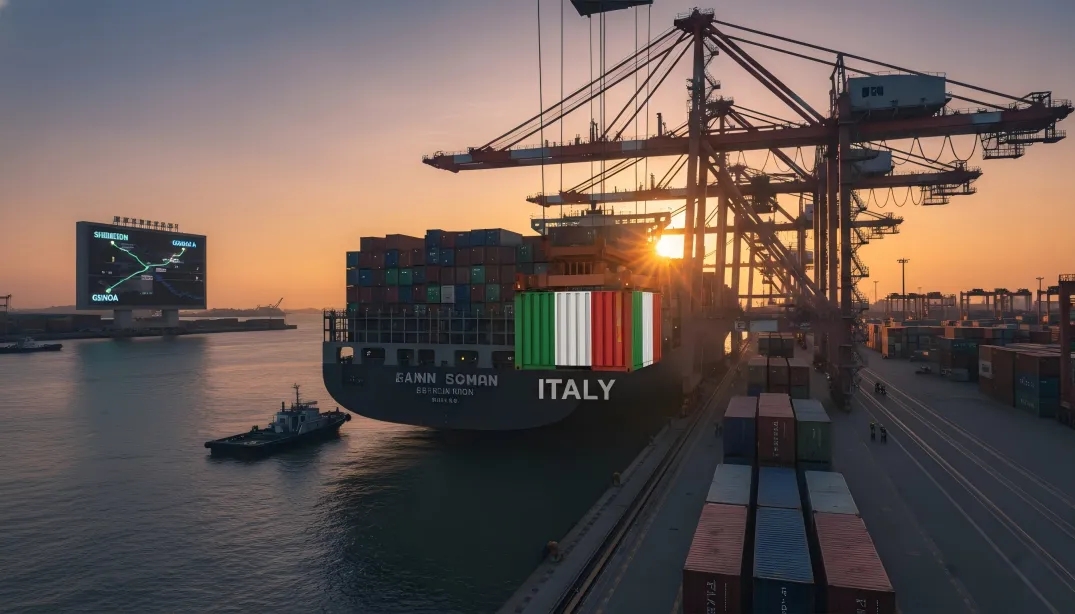
Sea Freight from China to Italy: What Every Importer Needs to Know
At its core, shipping by sea from China to Italy means your cargo travels in steel containers aboard ocean vessels through the South China Sea, across the Indian Ocean, through the Suez Canal, and into the Mediterranean. This is the backbone of China-Italy trade — handling everything from furniture and apparel to machinery and electronics.
You have two primary choices: FCL (Full Container Load) and LCL (Less than Container Load).
FCL means you rent an entire 20ft, 40ft, or 40HQ container exclusively for your cargo. It is the go-to option when your shipment exceeds roughly 15 CBM. Because the container is sealed at your supplier's factory and not opened until it reaches its final destination, FCL shipping reduces handling damage and gives you more predictable transit times — typically 25 to 35 days port-to-port. It is ideal for bulky goods like furniture, building materials, machinery, and large wholesale orders.
LCL lets you share container space with other importers, paying only for the cubic meters (CBM) you actually use. This is perfect for trial orders, sample runs, small-batch e-commerce restocking, or consolidating goods from multiple suppliers. The trade-off is longer transit — expect 30 to 42 days — because your cargo spends extra time at consolidation warehouses on both ends. For a detailed breakdown of how LCL pricing works and when it saves you money, see our LCL shipping guide.
So when does ocean freight win over air or rail? Whenever your priority is cost per unit. Sea freight costs roughly one-eighth to one-tenth of air freight per kilogram, making it unbeatable for cargo that can tolerate a 30-to-45-day door-to-door timeline.
2026 Sea Freight Costs & Transit Times: A Complete Breakdown
Understanding the numbers helps you budget accurately. Here is what the market looks like in Q3 2026.
FCL Container Rates
| Container Type | Estimated Cost (USD) | Best For |
|---|---|---|
| 20GP (20ft) | $1,900 – $2,600 | Heavy goods: tiles, hardware, dense machinery |
| 40GP (40ft) | $2,900 – $3,900 | Standard cargo: textiles, consumer goods, auto parts |
| 40HQ (40ft High Cube) | $3,200 – $4,500 | Bulky items: furniture, home appliances, lightweight volume cargo |
These are baseline ocean freight rates. Your final invoice will also include BAF (Bunker Adjustment Factor) for fuel, PSS (Peak Season Surcharge) during high-demand months, and origin charges such as THC (Terminal Handling Charge) , documentation fees, and booking fees — typically adding $150 to $400.
LCL Rates
| Origin | Destination | Rate (per CBM) |
|---|---|---|
| Shenzhen / Shanghai | Genoa | $40 – $95 |
LCL rates cover Chinese export clearance, ocean freight, and destination deconsolidation. They do not include destination THC, customs brokerage, or last-mile delivery — so always request an all-in quote.
FCL vs. LCL: When to Switch
Here is a question we hear constantly: "At what volume does FCL become cheaper than LCL?" The break-even point sits around 12 to 15 CBM. Here is why:
Our Industry Insight: A client shipping home decor from Ningbo to Milan was paying approximately $1,350 for 15 CBM via LCL ($90/CBM). We ran the numbers for a 20GP FCL at $2,200 all-in — just $850 more for a full container. They consolidated two months' worth of orders into one FCL shipment and cut their per-unit freight cost by nearly 40%. If you are consistently shipping above 10 CBM, it is worth running this calculation every quarter.
Transit Times by Route
| Departure Port (China) | Arrival Port (Italy) | Sea Transit (Days) |
|---|---|---|
| Shanghai | Genoa | 28 – 32 |
| Shenzhen (Yantian) | Genoa | 25 – 30 |
| Ningbo | La Spezia | 30 – 35 |
| Qingdao | Naples | 32 – 37 |
| Shanghai | Trieste | 30 – 34 |
These are port-to-port estimates. For door-to-door delivery, add an additional 3 to 7 days for customs clearance and inland transport.
China-to-Italy Port & Route Matrix: Find Your Optimal Port Pair
Choosing the right port on both ends can save you days of transit and hundreds of dollars in inland trucking. Let us break down what each port offers.
Chinese Departure Ports
| Port | Region Served | Best For |
|---|---|---|
| Shenzhen (Yantian/Shekou) | South China (Guangdong) | Electronics, furniture, consumer goods — highest sailing frequency to Italy. For Guangdong-based shippers, our guide on shipping from Shenzhen to Italy covers local pickup and port options in detail. |
| Shanghai | East China (Zhejiang, Jiangsu) | Widest route coverage, ideal for industrial goods and textiles |
| Ningbo-Zhoushan | East China manufacturing belt | Machinery, hardware, auto parts — strong FCL availability |
| Qingdao | North China (Shandong) | Heavy industry, chemicals, bulk commodities |
Italian Arrival Ports
Genoa is Italy's largest container port and the default choice for shipments destined for Milan, Turin, and the industrial north. La Spezia offers an efficient alternative with strong rail links to northern and central Italy, and its terminals are generally faster for LCL deconsolidation. Trieste is the strategic gateway if your cargo is ultimately headed to Austria, Hungary, or southern Germany — its rail corridors into Central Europe are among the best in the Mediterranean. Naples serves southern Italy, including Rome and Sicily. Venice covers the northeast, particularly the Veneto manufacturing region.
Decision Matrix
| Your Destination in Italy | Recommended Italian Port | Recommended China Port |
|---|---|---|
| Milan / Turin (North) | Genoa, La Spezia | Shanghai, Ningbo |
| Bologna / Florence (Central) | La Spezia, Livorno | Shenzhen, Ningbo |
| Rome / Naples (South) | Naples | Shenzhen, Shanghai |
| Central / Eastern Europe | Trieste | Shanghai, Qingdao |
The Complete End-to-End Sea Freight Process
Understanding the full journey helps you spot where delays happen and who is responsible at each stage.
Step 1 — Booking & Container Pickup: Your freight forwarder reserves space with the shipping line and arranges an empty container to be delivered to your supplier's factory.
Step 2 — Loading & Export Documentation: The container is loaded and sealed. Your supplier prepares the Commercial Invoice (with HS codes and declared value) and Packing List (with gross weight, net weight, and CBM).
Step 3 — China Export Customs Clearance: The forwarder submits the customs declaration to Chinese authorities. Once cleared, the container is released to the port and the Bill of Lading (B/L) is issued — this is your proof of ownership.
Step 4 — Port Loading & Ocean Transit: The vessel departs, transiting the South China Sea → Indian Ocean → Red Sea → Suez Canal → Mediterranean Sea.
Step 5 — Arrival at Italian Port: The ship docks. Under the 2026 ICS2 regulation, all cargo entering the EU must have pre-arrival security data submitted, or it will not be cleared.
Step 6 — Italian Import Customs Clearance: Your broker submits the import declaration to the Italian Customs Agency, pays applicable duties and VAT, and obtains release.
Step 7 — Inland Transport: The container is picked up from the terminal and trucked or railed to your warehouse or Amazon FBA facility.
Step 8 — Final Delivery: Your goods arrive at the final address. For DDP (Delivered Duty Paid) shipments, this is entirely handled by your forwarder.
Which Service Model Fits You?
- Port-to-Port: Best if you already have a customs broker and local trucking partner in Italy.
- DDP Door-to-Door: The forwarder handles everything — pickup, ocean freight, Italian customs clearance, duty and VAT payment, and final delivery. Ideal for SMEs and e-commerce sellers without an Italian EORI number.
- Sea + Truck (海卡): Your FCL container is delivered directly by truck from the port to your warehouse.
- Sea + Courier (海派): Your LCL shipment is deconsolidated at the destination warehouse, then handed to a local courier (DHL, DPD, GLS) for last-mile delivery — the preferred method for Amazon FBA sellers shipping to Italian fulfillment centers.
Italian Customs Clearance: A Practical Guide
Italian customs can be smooth or painful — the difference almost always comes down to paperwork.
2026 Compliance Essentials
Three regulatory changes matter for every importer this year. The ICS2 system now mandates pre-arrival security filing for all EU-bound cargo — no filing, no clearance. Commercial shipments require formal customs declarations; simplified procedures have been phased out. And regulated products — electronics, machinery, toys, textiles — must carry the relevant CE marking and compliance documentation.
Required Documents
| Document | Purpose |
|---|---|
| Commercial Invoice | Declares goods value, HS code, Incoterms |
| Packing List | Itemizes quantity, gross/net weight, CBM |
| Bill of Lading (B/L) | Proof of ownership and contract of carriage |
| EORI Number | Mandatory EU economic operator identifier |
| Certificate of Origin | Required if claiming preferential duty rates |
| CE / REACH / RoHS Certificates | Required for regulated product categories |
Common Customs Pitfalls
| Pitfall | Consequence | How to Avoid It |
|---|---|---|
| Incorrect HS code classification | Underpaid duty, back-taxes, penalties | Verify HS codes with your forwarder before shipping |
| Under-declared cargo value | Customs inspection, fines, shipment seizure | Declare the actual transaction value |
| Mismatched documents | 3–7 day clearance delay | Ensure invoice, packing list, and B/L data match exactly |
| No EORI number | Cannot clear customs | Use a DDP forwarder who clears under their EORI, or register your own |
How to Avoid Delays: Risk Management, Peak Seasons & Insurance
Delays are not random — they follow predictable patterns. Here is what to watch and how to prepare.
Italian Port Disruptions Are Real
Italy has one of the most active labor union environments in Europe. In February 2026, a coordinated 24-hour national dockworker strike shut down operations at Genoa, La Spezia, Trieste, Venice, Livorno, and Ravenna — La Spezia alone reported a 78% activity drop. In June 2026, a separate 72-hour trucking strike at Genoa and Savona blocked port gate access, stranding an estimated 14,000 TEU of cargo and forcing multiple carriers to divert to French and Spanish ports.
Real-Life Scenario: During the February 2026 Mediterranean-wide strike, one of our clients had an FCL shipment scheduled to arrive at Genoa on the strike date. Because we had flagged the risk three weeks earlier, we re-routed the booking to Trieste instead. The container cleared customs two days after arrival, while competing shipments sat at Genoa anchorage for another five days waiting for terminal operations to normalize. A simple port switch saved them a full week of delay and avoided demurrage charges.
As of July 2026, PSA Genova Prà continues to face congestion from labor shortages and rail disruptions, with carriers increasingly omitting Genoa calls in favor of La Spezia or Vado. If your cargo is time-sensitive, ask your forwarder about alternative port options before booking.
Peak Season Survival Guide
| Peak Period | Timing | Book Ahead By |
|---|---|---|
| Pre-Chinese New Year | December – mid-January | 4–6 weeks |
| Christmas restocking | August – October | 3–4 weeks |
| Autumn peak | September – November | 2–3 weeks |
During these windows, spot rates can spike 15% to 40%, and vessel space fills up fast. Late bookings are the number one cause of rolled cargo.
Do You Need Marine Insurance?
Short answer: if your shipment is worth more than you are comfortable losing, yes.
All Risks coverage — the most comprehensive option — protects against physical loss or damage from virtually any external cause during transit. It costs roughly 0.3% to 0.5% of your cargo value. That means insuring a $20,000 shipment costs about $60 to $100.
FPA (Free of Particular Average) only covers total losses — if your container falls overboard, you are covered; if water seeps in and damages 30% of the goods, you are not. For most importers, the marginal savings are not worth the exposure. We recommend All Risks for first-time shipments, high-value electronics, fragile goods, and any cargo traveling during peak congestion periods.
How to Choose a Reliable Sea Freight Forwarder
Not all freight forwarders are equal on the China-to-Italy route. Here are five questions to ask before you book:
-
Do they have dedicated China-Italy experience? A forwarder who mostly handles transpacific routes may not know Genoa's congestion patterns or Italian customs nuances.
-
Is their pricing fully transparent? A low ocean freight rate means nothing if the destination THC, customs clearance fee, and delivery charge are hidden until the container arrives.
-
Can they handle DDP? If you do not have an Italian EORI or VAT number, you need a forwarder who clears under their own credentials and manages duty and VAT payment on your behalf.
-
Do they offer real-time tracking? You should be able to see your container's location without emailing for updates.
-
Can they secure space during peak season? The difference between a forwarder with contracted allocation and one booking on the spot market becomes painfully clear in September and January.
AllBestShipping, headquartered in Shenzhen — the heart of China's manufacturing hub — operates dedicated sea freight services from Shenzhen, Shanghai, Ningbo, and Qingdao to Genoa, La Spezia, Trieste, and Naples. Our DDP door-to-door solution covers factory pickup, ocean freight, Italian customs clearance, duty and VAT handling, and final delivery across Italy — so you get one transparent quote and one point of contact for the entire journey.
FAQ
How long does sea freight take from China to Italy? Standard FCL transit is 25–35 days port-to-port. LCL takes 30–42 days due to consolidation and deconsolidation. Door-to-door DDP typically adds 3–7 days, bringing the total to 35–45 days.
What is the cheapest sea freight option from China to Italy? LCL is the lowest upfront cost if your shipment is under 12–15 CBM. Above that threshold, FCL delivers a lower cost per unit.
Which is the best Italian port for sea freight from China? Genoa for northern Italy (Milan, Turin). La Spezia for central Italy and faster LCL handling. Trieste for Central and Eastern European distribution. Naples for the south.
What documents are required for Italian customs clearance? Commercial Invoice, Packing List, Bill of Lading, EORI number, and — depending on the product — Certificate of Origin, CE marking documentation, or REACH/RoHS certificates.
How can I avoid delays when shipping by sea to Italy? Book 3–6 weeks ahead during peak seasons. Monitor Italian labor calendars for strike risks. Ask your forwarder about alternative port options. Double-check your HS codes and document accuracy before the container sails.
Can I ship door-to-door from China to Italy without an Italian VAT number? Yes. Under DDP terms, your freight forwarder handles customs clearance, duty payment, and VAT on your behalf — no Italian registration required on your end.
Do I need marine insurance for sea freight? Strongly recommended for shipments valued above $5,000, fragile goods, first-time supplier orders, or peak-season cargo. All Risks coverage costs ~0.3%–0.5% of cargo value.
Does AllBestShipping offer DDP sea freight to Italy? Yes. We provide full-service DDP sea freight from Shenzhen, Shanghai, Ningbo, and Qingdao to anywhere in Italy — including customs clearance, duty and VAT payment, and final delivery. Visit AllBestShipping.com for a custom quote.
Getting sea freight from China to Italy right comes down to three things: choosing the right port pair, getting your customs documentation accurate, and planning around the predictable risks — peak seasons, port congestion, and labor disruptions. Whether you are shipping a 20ft container of furniture to Milan or consolidating LCL shipments for Amazon FBA in Italy, the right freight forwarder makes the difference between a smooth supply chain and a costly headache. Partner with a team that knows both the Chinese export landscape and Italian import realities — and get your next shipment moving with confidence.