How Much Does it Cost to Ship from China to Spain? 2026 Rates & Complete Guide
If you're importing goods from China to Spain, the first question on your mind is probably: how much does it cost to ship from China to Spain? Between fluctuating ocean freight rates, peak season surcharges, and the maze of customs duties and VAT — getting a straight answer isn't easy. Most pricing pages only quote in US dollars, leaving you to guess the euro equivalent. And the gap between a "base freight quote" and your actual landed cost can be shockingly wide.
This guide gives you exactly what you need: transparent 2026 price ranges for every shipping method — sea freight, air freight, rail freight, and door-to-door DDP — in both USD and EUR. You'll also find a clear decision framework to pick the right method for your cargo, plus a full breakdown of the hidden surcharges most forwarders don't tell you about upfront.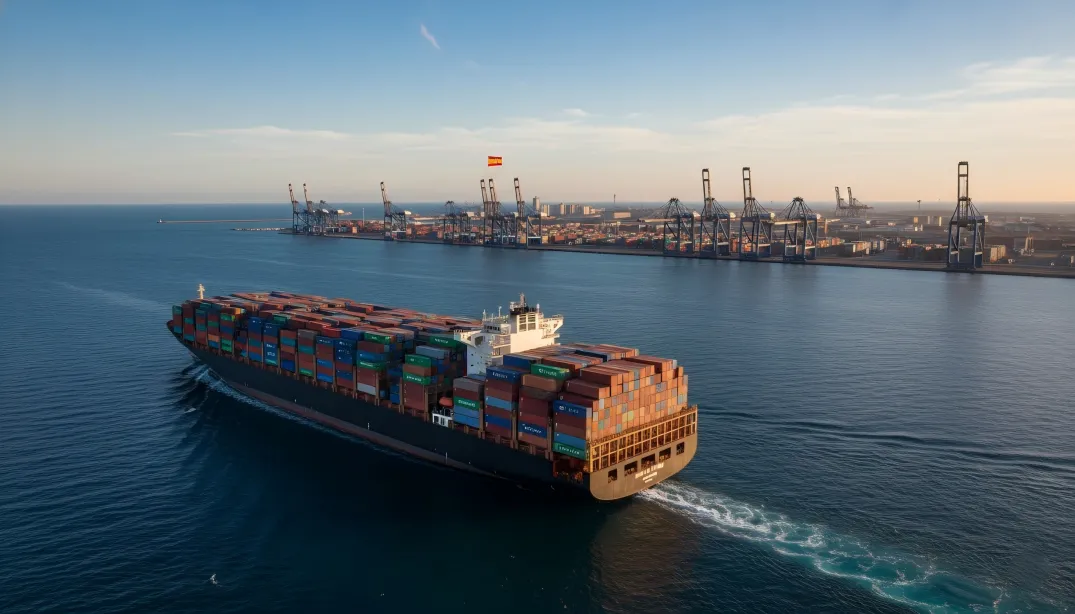
China-Spain Trade & Shipping Landscape (2026 Market Overview)
China is Spain's largest non-EU trading partner, with bilateral trade exceeding €58.2 billion in 2025 according to Eurostat. Electronics, furniture, machinery, and textiles account for the bulk of imports, and demand continues to grow across all categories.
The 2026 shipping landscape has stabilized following the Red Sea disruptions of 2024. Mediterranean routes serving Barcelona, Valencia, and Algeciras are operating on near-normal schedules, though peak season patterns (July through December) still drive up freight rates by 15–25%. For importers, the key takeaway is clear: booking 2–4 weeks in advance is no longer optional — it's a cost-control necessity.
China-Europe Railway Express continues expanding capacity, with dedicated services to Madrid and Barcelona offering a competitive middle ground between sea and air. Meanwhile, air freight capacity from major Chinese hubs like PVG, CAN, and SZX has recovered, keeping air freight rates more predictable than in 2024–2025.
The major shipping corridors connect key Chinese departure ports — Shanghai, Shenzhen, Ningbo, Guangzhou, and Qingdao — to Spain's primary entry points: Barcelona (Spain's largest container port), Valencia (the top southern EU hub), Algeciras (major transshipment gateway), and Bilbao (Atlantic-facing). For a broader overview of routes and logistics options, see our dedicated guide to Shipping from China to Spain.
Shipping Costs at a Glance: All Methods Compared (USD + EUR)
Below is a master reference table covering all six shipping modes. Prices reflect June 2026 market rates and include port-to-port freight charges. For door-to-door DDP pricing (which includes duties, taxes, and final delivery), see Section 6.
| Shipping Mode | USD Range | EUR Range (approx.) | Transit Time | Best For |
|---|---|---|---|---|
| Sea FCL (20ft) | $2,000–$4,200 | €1,850–€3,900 | 28–40 days | Heavy cargo, machinery, bulk orders |
| Sea FCL (40ft) | $2,700–$5,500 | €2,500–€5,100 | 28–40 days | Large-volume, furniture, bulky goods |
| Sea LCL | $50–$170 / CBM | €46–€158 / CBM | 30–42 days | Small-volume B2B, mixed shipments |
| Rail Freight | $140–$330 / CBM | €130–€305 / CBM | 18–25 days | Mid-weight goods, e-commerce inventory |
| Air Freight | $4.50–$8.50 / kg | €4.20–€7.90 / kg | 5–9 days | High-value electronics, urgent orders |
| Express Courier | $10–$18 / kg | €9.30–€16.70 / kg | 3–7 days | Samples, documents, small B2C parcels |
Why the wide ranges? Freight rates fluctuate daily based on fuel prices (BAF), carrier capacity, seasonal demand, and route-specific factors. The lower end typically represents off-peak direct sailings from major ports; the upper end reflects peak season or transshipment routes.
Sea Freight Costs: FCL & LCL Detailed Pricing
FCL (Full Container Load) — Port-to-Port Pricing
Full Container Load shipping means you're renting an entire container — either a 20-foot (20ft) or 40-foot (40ft) unit — for your exclusive use. This is the most cost-effective option for shipments above 15 CBM. For a detailed breakdown of full container options, visit our FCL Shipping page.
A 20ft container measures approximately 6.06m × 2.44m × 2.59m with a payload of 21–28 tonnes, making it ideal for heavy goods like machinery, tiles, and hardware. A 40ft container (12.19m × 2.44m × 2.59m) offers roughly double the volume at only 30–50% higher cost — delivering significantly better per-CBM economics for bulky cargo.
Here are the latest sea freight rates by port pair:
| POL (China) | POD (Spain) | 20ft (USD) | 40ft (USD) | Transit |
|---|---|---|---|---|
| Shanghai | Barcelona | $2,450–$3,950 | $2,750–$5,300 | 28–38 days |
| Shenzhen | Barcelona | $2,500–$4,100 | $2,800–$5,500 | 28–38 days |
| Ningbo | Valencia | $2,400–$4,050 | $2,700–$5,200 | 28–40 days |
| Qingdao | Barcelona | $2,500–$4,150 | $2,950–$5,400 | 30–40 days |
| Guangzhou | Valencia | $2,550–$4,200 | $2,900–$5,500 | 30–40 days |
Several factors can shift these prices. Peak season (July–December) typically adds a Peak Season Surcharge (PSS) of $300–$800 per container. The pre-Chinese New Year rush (January–February) creates a similar spike. Carrier choice also matters — COSCO and MSC tend to offer more competitive rates on Mediterranean routes than some European carriers, while direct sailings save 5–7 days and $200–$400 compared to transshipment services.
LCL (Less than Container Load) — Cost per CBM
If your shipment doesn't fill a container, Less than Container Load lets you share space with other shippers' cargo. You only pay for the volume you use, calculated in cubic meters (CBM).
| Origin Port (China) | Destination Port (Spain) | LCL Rate (USD/CBM) |
|---|---|---|
| Shanghai | Valencia | $60–$130 |
| Shenzhen | Barcelona | $65–$140 |
| Ningbo | Barcelona | $60–$145 |
| Guangzhou | Algeciras | $55–$135 |
| Qingdao | Bilbao | $70–$150 |
LCL is most economical when your cargo is under 15 CBM. The trade-off is a longer transit time — typically 5–7 days more than FCL — because goods need to be consolidated at origin and deconsolidated at destination. If you're also exploring routes to other European markets, our guide to Container Shipping from China to Spain offers additional route and pricing insights.
Air Freight & Rail Freight Costs
Air Freight — When Speed Matters
For time-sensitive, high-value, or perishable goods, air freight delivers unmatched speed. Cost is calculated per kilogram, with volumetric weight (L × W × H in cm ÷ 6000) applied — meaning bulky but light cargo can cost more than its actual weight suggests.
Standard air freight from China to Spain currently ranges from $4.50 to $8.50 per kg (€4.20–€7.90). Major routes include:
- Shanghai Pudong (PVG) → Madrid-Barajas (MAD): 5–7 days, $5.00–$8.50/kg
- Guangzhou (CAN) → Barcelona-El Prat (BCN): 5–8 days, $4.50–$7.50/kg
- Shenzhen (SZX) → Madrid (MAD): 5–8 days, $4.50–$8.00/kg
Express air services (3–5 days) command a premium of $1.00–$2.00/kg. For budget-conscious shipments, economy air (7–10 days) can bring costs down to $4.00–$6.00/kg.
Rail Freight — The Cost-Speed Sweet Spot
China-Europe Railway Express has transformed the cost-speed equation for shipping to Spain. Trains depart weekly from Yiwu, Xi'an, Chengdu, and Chongqing, arriving at the Madrid rail hub or Barcelona in 18–25 days.
Rail freight costs range from $140 to $330 per CBM (€130–€305), with full-container rail (40HQ) to Madrid typically priced at $7,000–$9,500 depending on season. LCL rail consolidations are available at $150–$250 per CBM.
For shipments between 2 and 20 CBM that are too urgent for sea but too heavy for air, rail is the undeniable sweet spot. Fashion retailers, auto parts distributors, and e-commerce brands increasingly rely on rail to balance inventory speed with freight budgets. If you're looking for a similar cost-speed balance on routes to other destinations, our article on How Much Does it Cost to Ship from China to Australia provides a useful comparison.
Quick comparison — Air vs Rail:
| Factor | Air Freight | Rail Freight |
|---|---|---|
| Cost | $4.50–$8.50/kg | $140–$330/CBM |
| Transit | 5–9 days | 18–25 days |
| Best cargo | Light, high-value | Mid-weight, moderate urgency |
| Carbon footprint | Higher | Lower |
Door-to-Door (DDP) Shipping: The All-Inclusive Option
What is DDP and Why It Matters for Spanish Importers?
DDP (Delivered Duty Paid) is the most predictable shipping term for importing into Spain. Your freight forwarder handles everything — factory pickup in China, export clearance, international freight, Spanish customs clearance, import duties, VAT (IVA), and final delivery to your door. You receive one upfront quote and pay exactly that amount. Learn more about our Door-to-Door Shipping services.
This stands in stark contrast to CIF terms, which many Chinese suppliers offer by default. A CIF quote covers freight and insurance to the Spanish port only. What it doesn't include — and what surprises many first-time importers — are the destination charges: Terminal Handling Charges (THC) at Valencia or Barcelona, customs brokerage fees, and the Spanish 21% VAT. These can easily double your expected costs.
The difference between DDP and DAP is equally important. Under DAP (Delivered at Place), the forwarder delivers to your door but you remain responsible for paying import duties and VAT. For small-to-medium importers without a dedicated customs broker in Spain, DDP is the safer, simpler choice.
DDP Cost Estimates to Spain
Here are all-inclusive DDP rates as of June 2026:
| Transport Mode | DDP Rate (All-Inclusive) | Transit (Door-to-Door) | Includes |
|---|---|---|---|
| Sea LCL DDP | $2.50–$4.00 / kg | 35–45 days | Freight + duties + VAT + delivery |
| Rail DDP | $4.50–$6.50 / kg | 18–25 days | Freight + duties + VAT + delivery |
| Air DDP | $8.00–$12.00 / kg | 5–10 days | Freight + duties + VAT + delivery |
Spanish Import Taxes & Duties Explained
All goods entering Spain from China are subject to two charges:
-
Customs Duty: 0–17.6% of CIF value, determined by the product's HS Code. Electronics often fall between 0–14%, clothing around 12%, furniture 0–2.7%, and footwear 8–17%.
-
VAT (IVA): 21% applied to (CIF value + customs duty). Certain essentials like food and books qualify for reduced rates of 10% or 4%.
Example tax calculation for a €10,000 electronics shipment:
| Item | Amount |
|---|---|
| CIF Value | €10,000 |
| Customs Duty (5%) | + €500 |
| VAT Base | = €10,500 |
| VAT (21%) | + €2,205 |
| Total Import Tax | €2,705 |
In addition to taxes, commercial imports require an EORI number (Economic Operators Registration and Identification). Products like electronics, toys, machinery, and medical devices must carry valid CE marking documentation. Missing either can result in cargo holds and daily demurrage charges at Spanish customs.
Hidden Costs & Surcharges You Should Know
The single biggest mistake importers make is budgeting based on the base freight quote alone. Here's what else can appear on your final invoice:
| Surcharge | Abbr. | Typical Range | When It Applies |
|---|---|---|---|
| Bunker Adjustment Factor | BAF | 10–30% of base freight | Always (fuel cost pass-through) |
| Peak Season Surcharge | PSS | $300–$800 / container | Jul–Dec, pre-CNY |
| Terminal Handling Charge | THC | $200–$400 / container | At both origin and destination |
| Currency Adjustment Factor | CAF | 2–8% of base freight | Exchange rate fluctuations |
| Documentation Fee | DOC | $50–$150 / shipment | Every shipment |
| Customs Clearance Fee | — | $150–$350 | At destination |
| Demurrage / Detention | — | $50–$200 / day | Container not returned on time |
| Cargo Insurance | — | 0.3–0.5% of cargo value | Optional, strongly recommended |
Spain-specific charges worth noting include potential SOIVRE inspection fees (for certain regulated imports) and local agent fees at Barcelona or Valencia.
Rule of thumb: add 20–30% on top of a base freight quote to cover these surcharges when budgeting. Better yet, work with a freight forwarder who provides all-inclusive DDP pricing from the start.
How to Choose the Right Shipping Method
Decision Framework: Speed vs Cost vs Volume
With so many options, here's a practical framework to narrow your choice:
| If Your Cargo Is… | Best Method | Why |
|---|---|---|
| >15 CBM, not urgent | Sea FCL | Lowest per-unit cost; exclusive container |
| 2–15 CBM, budget priority | Sea LCL or Rail LCL | Pay only for volume used |
| 2–20 CBM, need it in 3 weeks | Rail Freight | 50% faster than sea, 70% cheaper than air |
| <2 CBM or high-value (>€50/kg) | Air Freight | Fastest option; ideal for electronics/samples |
| Small parcels, e-commerce | Express / DDP | Door-to-door simplicity, tax included |
Money-Saving Tips
- Book 2–4 weeks ahead. Last-minute bookings during peak season (July–December) can cost 15–25% more.
- Consolidate shipments from multiple suppliers into one container. A single 40ft container is far cheaper than three separate LCL shipments.
- Match container size to cargo density. Use 40ft containers for bulky but lightweight goods; use 20ft for heavy, dense cargo like tiles or machinery.
- Ship during off-peak windows. March through June typically offers the most stable rates before the summer peak season kicks in.
- Choose the right Incoterm. DDP gives you the most predictable all-in cost. FOB lets you control freight selection. EXW offers maximum flexibility but requires you to manage the entire logistics chain.
- Partner with a China-based freight forwarder. A forwarder with feet on the ground in Shenzhen, Shanghai, or Ningbo can negotiate better rates, manage factory pickups, and handle Chinese export clearance far more efficiently than a destination-only agent. If you're sourcing from the Pearl River Delta, our guide to Shipping from Shenzhen to Germany shows how proximity to major ports can reduce both cost and transit time.
Frequently Asked Questions (FAQ)
How much does it cost to ship a 20ft container from China to Spain?
A 20ft container typically costs $2,000–$4,200 USD (€1,850–€3,900), depending on the port pair and season. For example, Shanghai to Barcelona averages $2,450–$3,950, while Shenzhen to Barcelona runs $2,500–$4,100.
How much does it cost to ship a 40ft container from China to Spain?
A 40ft container typically costs $2,700–$5,500 USD (€2,500–€5,100). The per-CBM cost is significantly lower than a 20ft container, making it the preferred choice for large-volume imports like furniture or wholesale goods.
How much does air freight from China to Spain cost per kg?
Standard air freight from China to Spain ranges from $4.50 to $8.50 per kg (€4.20–€7.90). DDP air freight (all-inclusive with duties and VAT) runs from $8.00 to $12.00 per kg. Volumetric weight (L × W × H ÷ 6000) applies — bulky lightweight cargo may cost more than its actual weight.
What is the cheapest way to ship from China to Spain?
Sea freight, either LCL or FCL, is the cheapest method for shipments over 2 CBM. For a balance of cost and speed, rail freight offers the best value — roughly half the cost of air freight and twice as fast as sea.
How long does shipping from China to Spain take?
Sea freight: 28–40 days. Rail freight: 18–25 days. Air freight: 5–9 days. Express courier: 3–7 days. Door-to-door DDP adds 3–7 days for customs clearance and final delivery.
Do I need a Spanish VAT number to import goods?
Not if you use DDP shipping. Under DDP, your freight forwarder handles VAT payment on your behalf using their own fiscal representation. If you import under CIF or DAP terms, you'll need your own VAT and EORI registration.
What taxes and duties apply when importing to Spain from China?
All imports are subject to customs duty (0–17.6%, depending on HS code) plus VAT at 21% on the CIF + duty value. Some essential goods qualify for reduced VAT rates of 10% or 4%.
Is DDP shipping to Spain worth the extra cost?
For most small-to-medium importers without a dedicated customs broker in Spain, yes. DDP eliminates unpredictable destination charges, customs delays, and the risk of cargo being held for unpaid duties. The all-inclusive pricing also makes budgeting far more reliable.
Do I need CE certification to ship products to Spain?
Yes, for regulated products including electronics, toys, machinery, and medical devices. Missing CE marking documentation can result in cargo being held at Spanish customs, triggering daily demurrage charges.
Can I ship from China to Amazon FBA warehouses in Spain?
Yes. Most professional freight forwarders offer dedicated Amazon FBA Shipping services to Spanish fulfillment centers, including proper FBA labeling, palletizing, and carrier booking. Both sea and air options are available.
Need a customized quote for your specific shipment? Contact AllBestShipping — a professional China-based freight forwarder with extensive experience on the China-to-Spain route. Whether you're shipping a single pallet or a full container load, you'll get transparent pricing in both USD and EUR, complete DDP support, and end-to-end shipment tracking from factory to final delivery across Spain.