Door to Door Shipping from China to Germany: The Complete 2026 Guide (DDP, Costs & Transit Times)
Door to door shipping from China to Germany is the most hassle-free way to move your goods across continents without juggling multiple vendors, customs brokers, and transport companies. Whether you are a B2B importer restocking inventory, an Amazon FBA seller shipping directly to German warehouses, or an SME with no in-house logistics team, a single freight forwarder can manage the entire journey—from your supplier's factory floor to your warehouse door in Berlin, Hamburg, or Munich.
In our experience managing thousands of shipments from China to Europe, the biggest mistake we see first-time importers make is trying to coordinate every leg of the journey themselves. In this complete guide, we break down every step of the process, compare costs and transit times across all shipping methods, explain German customs requirements, and show you how to avoid the hidden fees that catch most newcomers off guard. By the end, you will know exactly how to choose the right DDP shipping from China to Germany solution for your business.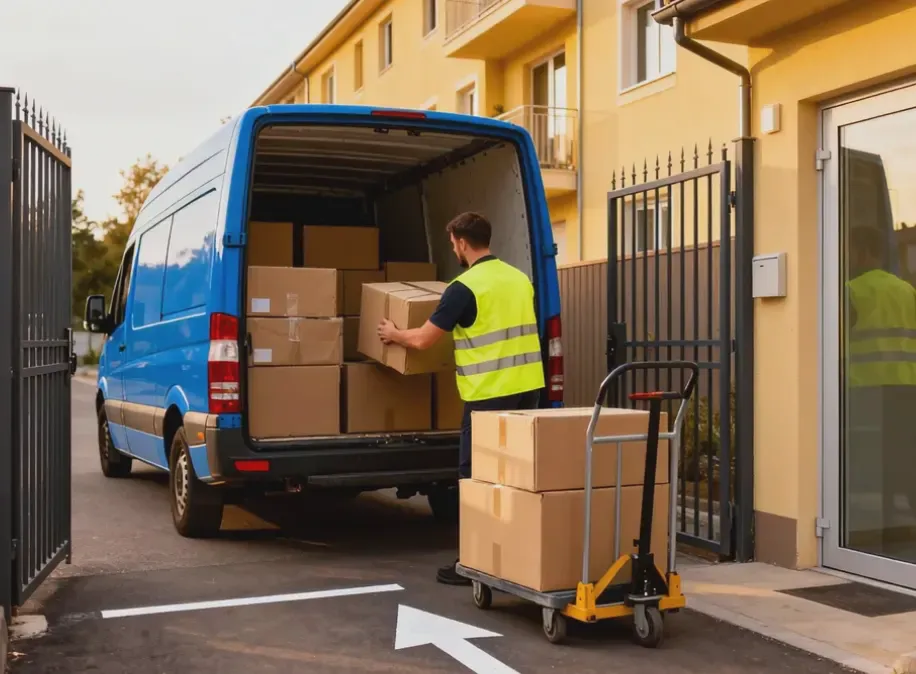
What Is Door-to-Door Shipping from China to Germany?
Door-to-door shipping is a comprehensive logistics service where one freight forwarder manages the entire supply chain from the origin address in China to the final destination in Germany. Instead of coordinating separately with a Chinese trucker, a customs broker, an ocean carrier, a German customs agent, and a local courier, you work with a single point of contact who handles everything.
For businesses looking to simplify their supply chain, Door-to-Door Shipping From China offers a streamlined solution that eliminates the need to manage multiple vendors across two continents. We also provide specialized Shipping From China to Germany services tailored to businesses of all sizes. For example, a client shipping automotive parts from Ningbo to Munich recently saved 18% on total logistics costs by switching from pure air freight to our tailored sea-rail combined service, cutting transit time from 35 days to 22 days while maintaining cost predictability through our DDP arrangement.
What Is Included in a Door-to-Door Service?
A true door-to-door solution typically covers:
- Factory pickup or warehouse collection in China
- Export customs clearance at the Chinese port or airport
- International transportation by sea, air, rail, or express courier
- Import customs clearance in Germany
- Duty and tax payment (VAT and customs duties)
- Inland transportation and final delivery to your address
DDP (Delivered Duty Paid): The Most Common Door-to-Door Term
Under DDP (Delivered Duty Paid), the seller—or more commonly, the freight forwarder acting on their behalf—assumes all responsibility, risk, and cost until the goods are delivered to the buyer's premises. This includes paying all import duties, taxes, and clearance fees in Germany. For most importers, DDP shipping from China to Germany is the preferred choice because it eliminates surprises and provides cost certainty upfront.
Who Needs Door-to-Door Shipping?
- B2B importers and wholesalers who want predictable costs and minimal administrative work
- E-commerce sellers using Amazon FBA or Shopify who need goods delivered directly to fulfillment centers
- SMEs without dedicated logistics teams who lack the expertise to manage customs clearance and tax compliance
- First-time importers who are unfamiliar with German import regulations
Shipping Methods: Choosing the Right Option for Your Cargo
Not all shipments are the same. The best door to door freight China Germany solution depends on your budget, timeline, and cargo characteristics. Here are the four primary methods available for door-to-door service.
International Express (Courier)
Best for: Urgent documents, small parcels, product samples, and high-value items under 30 kg.
Major carriers like DHL, FedEx, and UPS offer integrated door-to-door express services with built-in customs clearance. A shipment from Shenzhen or Shanghai can reach Frankfurt or Berlin in 3–7 business days. For businesses based in South China, our Shipping from Shenzhen to Germany guide provides detailed routing options and cost-saving strategies.
Pros: Fastest option, full tracking, minimal paperwork for the shipper.
Cons: Most expensive per kilogram; strict restrictions on batteries, liquids, and branded goods without authorization.
Air Freight
Best for: Medium-weight, time-sensitive cargo ranging from 30 kg to 500 kg.
With door to door air freight from China to Germany, a forwarder collects your goods, consolidates them with other shipments if needed, and arranges delivery via commercial flights to major German airports like Frankfurt (FRA) and Munich (MUC). Total door-to-door time is typically 5–10 business days.
Pros: Good balance of speed and cost; ideal for restocking e-commerce inventory.
Cons: Chargeable weight applies (volumetric vs. actual weight); less economical for bulky items.
Sea Freight (FCL & LCL)
Best for: Large, heavy, or non-urgent shipments.
Door to door sea freight from China to Germany is the most economical option for bulk cargo. You have two choices:
- FCL (Full Container Load): You rent an entire 20-foot or 40-foot container. Best for shipments that can fill most of a container.
- LCL (Less than Container Load): Your goods share container space with other shippers. You pay only for the volume you use.
If you are shipping large volumes regularly, our FCL Shipping service provides dedicated container space with competitive rates for the China-Germany route.
Door-to-door transit time via ocean is 25–40 days, depending on the port pair and customs efficiency.
Pros: Lowest cost per unit for large volumes; suitable for almost any type of cargo.
Cons: Long transit time; potential for port congestion at Hamburg or Bremerhaven.
Rail Freight
Best for: Medium-urgency cargo that needs a balance between cost and speed.
The China-Europe Railway Express has become a popular alternative, connecting hubs like Chengdu, Chongqing, and Xi'an to terminals in Duisburg, Hamburg, and Nuremberg. Door to door rail freight China to Germany takes 18–22 days.
Pros: Faster than sea, cheaper than air; fixed schedules; more environmentally friendly.
Cons: Less flexible than air or sea for non-standard cargo; limited to specific routes.
Door-to-Door Shipping Method Comparison
| Method | Transit Time | Best For | Cost Level | Environmental Impact |
|---|---|---|---|---|
| Express | 3–7 days | Urgent samples, small parcels | Highest | High (air) |
| Air Freight | 5–10 days | Medium-weight, time-sensitive goods | High | High (air) |
| Rail Freight | 18–22 days | Balanced speed and cost needs | Medium | Low |
| Sea Freight (LCL) | 28–40 days | Small to medium bulk shipments | Low | Medium |
| Sea Freight (FCL) | 25–35 days | Large-volume shipments | Lowest | Medium |
The Complete Door-to-Door Shipping Process (Step-by-Step)
Understanding the full journey helps you set realistic expectations and avoid delays. Here is how a typical door to door shipping with customs clearance China Germany works from start to finish.
Step 1: Factory Pickup & Warehouse Receiving
Your freight forwarder coordinates pickup from your supplier's factory or delivers the goods to their consolidation warehouse in China. At this stage, the forwarder inspects the cargo for visible damage and verifies carton counts against the packing list.
Step 2: Export Customs Clearance (China)
The forwarder submits the required export documents to Chinese customs. This includes the commercial invoice, packing list, and export declaration. Most consumer goods clear within 1–2 business days, but sensitive items like electronics or chemicals may require additional inspections.
Step 3: International Transit
Goods are loaded onto the chosen transport mode—vessel, aircraft, or train. During transit, you receive a tracking number or bill of lading number to monitor progress. For sea freight, this is the longest leg of the journey.
Step 4: Import Customs Clearance (Germany)
This is the most critical step. German customs are efficient but strict. Your forwarder or their German partner submits the import declaration, commercial invoice, packing list, and certificate of origin. Correct HS code classification is essential; misclassification can trigger inspections, fines, or seizure.
Step 5: Duty & Tax Payment (VAT)
Germany applies a standard 19% import VAT (USt) on most goods, plus any applicable customs duties based on the HS code. Under a DDP door to door China to Germany arrangement, your forwarder prepays these charges on your behalf and includes them in your all-inclusive quote.
Step 6: Inland Transportation & Final Delivery
After customs release, the cargo is transferred to a local trucking network for final delivery. Whether your destination is a commercial warehouse in Hamburg, a distribution center in Frankfurt, or an Amazon FBA warehouse near Leipzig, the forwarder ensures the goods arrive at the correct dock or loading bay.
How Much Does Door-to-Door Shipping from China to Germany Cost?
Door to door shipping cost from China to Germany depends on multiple variables: cargo weight and volume, shipping method, fuel surcharges, and whether the destination is a major city or a remote area. Below are general price ranges for 2026 to help you budget.
General Price Ranges (2026 Estimates)
| Shipping Method | Price Range | Notes |
|---|---|---|
| Express (DHL/FedEx/UPS) | $8.00 – $15.00 / kg | Based on chargeable weight; includes customs clearance |
| Air Freight (DDP) | $5.00 – $8.50 / kg | Best for 100–500 kg; price drops at higher volumes |
| Rail Freight (DDP) | $3.00 – $5.00 / kg | Fixed-route pricing; stable throughout the year |
| Sea Freight LCL | $60 – $120 / CBM | Ideal for 1–15 CBM; minimum charges may apply |
| Sea Freight FCL (20ft) | $3,000 – $3,500 / container | Flat rate regardless of weight (within limits) |
| Sea Freight FCL (40ft) | $5,500 – $6,200 / container | Best for 25–28 CBM of cargo |
Hidden Costs to Watch For
Even with a DDP quote, be aware of potential extras:
- Customs inspection fees: If German customs select your shipment for physical inspection, additional handling fees apply.
- Port congestion surcharges: Peak seasons can trigger temporary fees at Hamburg or Bremerhaven.
- Remote area delivery: Deliveries outside major German cities may incur extra trucking charges.
- Documentation amendments: Errors in the commercial invoice or packing list that require correction after submission.
Cost Calculation Example
Imagine you are shipping 500 kg of electronics from Shenzhen to Munich via air freight DDP:
- Chargeable weight: 500 kg
- Air freight rate: $6.50 / kg
- Subtotal freight: $3,250
- Fuel surcharge (approx. 15%): $488
- Import duties (approx. 2% for electronics): $75
- German VAT (19% on CIF + duty): $742
- Total estimated door-to-door cost: $4,555
This example illustrates why DDP is valuable: you know the full cost before the shipment leaves China.
How Long Does Door-to-Door Shipping from China to Germany Take?
Door to door shipping time from China to Germany varies significantly by transport mode. Here is a summary of typical transit times:
| Shipping Method | Door-to-Door Transit Time |
|---|---|
| Express Courier | 3 – 7 business days |
| Air Freight | 5 – 10 business days |
| Rail Freight | 18 – 22 days |
| Sea Freight (FCL) | 25 – 35 days |
| Sea Freight (LCL) | 28 – 40 days |
Factors That Can Delay Your Shipment
- Customs inspections: Random checks by Chinese or German customs can add 2–5 days.
- Port congestion: Hamburg, Europe's third-largest port, occasionally experiences backlog during peak season.
- Weather and seasonal events: Winter storms or the Chinese New Year holiday can disrupt schedules.
- Peak seasons: Q4 (October–December) sees surges in e-commerce volume, leading to tighter capacity and longer waits.
Pro tip: In our experience navigating peak season capacity crunches, we always recommend building a 10–14 day buffer into your inventory planning for sea freight and a 3–5 day buffer for air freight. This accounts for both customs inspection delays and the Q4 e-commerce surge that typically hits German ports between mid-October and mid-December.
German Customs Clearance & Required Documents
German customs regulations are among the most stringent in the EU. Proper documentation is not optional—it is the difference between a smooth delivery and a costly detention.
Essential Documents Checklist
Before your shipment leaves China, ensure the following documents are accurate and complete:
- Commercial Invoice: Details the goods, value, seller, and buyer. Must match the actual contents exactly.
- Packing List: Itemizes the contents of each carton, including weight and dimensions.
- Bill of Lading (B/L) or Air Waybill (AWB): The contract of carriage issued by the carrier.
- Certificate of Origin: Confirms the goods were manufactured in China; may affect duty rates under certain trade agreements.
German-Specific Requirements
EORI Number
An EORI (Economic Operators Registration and Identification) number is mandatory for any business importing goods into Germany or the EU. If you do not have one, your shipment cannot clear customs. According to the German Customs Administration (Zoll), the EORI application is free and typically processed within 3–5 business days. Your freight forwarder can guide you through the application, or you can apply directly through the German customs portal (Zoll.de).
VAT (USt)
Germany charges a standard 19% import VAT on the total value of the goods plus shipping costs and insurance (CIF value). Under DDP, your forwarder pays this upfront and bills you as part of the all-inclusive rate.
HS Code Classification
Every product imported into Germany must be classified under the correct Harmonized System (HS) code. This 6-to-10-digit code determines the applicable duty rate. Incorrect classification can result in overpayment, underpayment (and subsequent fines), or seizure.
CE Marking
Products such as electronics, machinery, toys, and medical devices must carry the CE mark to show compliance with EU safety standards. German customs may request the relevant conformity certificates during clearance.
Common Customs Mistakes to Avoid
- Submitting an invoice that undervalues goods to save on duties (this is illegal and can result in heavy penalties)
- Using the wrong HS code because the supplier provided an incorrect one
- Missing certificates for regulated products (batteries, cosmetics, food items)
- Failing to include the EORI number on the import declaration
DDP vs. DDU vs. EXW: Which Incoterm Should You Choose?
Understanding Incoterms is critical when negotiating with suppliers or freight forwarders. Here is how the three most relevant terms compare for international shipping from China to Germany.
Incoterm Comparison Table
| Responsibility | EXW | DDU | DDP |
|---|---|---|---|
| Factory pickup | Buyer | Buyer/Seller | Seller |
| Export customs (China) | Buyer | Seller | Seller |
| International freight | Buyer | Seller | Seller |
| Import customs (Germany) | Buyer | Buyer | Seller |
| Import duties & VAT | Buyer | Buyer | Seller |
| Final delivery | Buyer | Seller | Seller |
| Cost predictability | Low | Medium | High |
| Administrative burden | Highest | Medium | Lowest |
DDP (Delivered Duty Paid)
While DDP is the most hassle-free option for most importers shipping to Germany, if you have your own customs broker in Hamburg or Frankfurt and are comfortable handling VAT declarations internally, choosing DDU or FOB with our standard freight service might reduce your total landed cost by 3–5% on high-volume shipments. We recommend DDP for businesses without local EU customs expertise.
DDU (Delivered Duty Unpaid)
The seller delivers to your door but does not pay German import duties or VAT. You must settle these directly with customs before delivery. DDU can work if you have a local customs broker, but it introduces uncertainty—you will not know the final cost until the shipment arrives.
EXW (Ex Works)
You are responsible for every step from the factory onward. EXW offers the lowest upfront product price but the highest coordination burden. Unless you have extensive logistics experience and a team in China, EXW is not recommended for most German importers.
Amazon FBA Door-to-Door Shipping from China to Germany
For e-commerce sellers, door to door shipping for Amazon FBA from China to Germany is a game-changer. Instead of receiving inventory at your own warehouse and then re-shipping to Amazon, you can send goods directly from your Chinese supplier to Amazon fulfillment centers.
AllBestShipping provides dedicated Amazon FBA Shipping services that handle labeling, palletization, and delivery appointments for major European markets, including Germany.
Why FBA Sellers Need a Specialized Door-to-Door Service
Amazon has strict receiving requirements. A standard freight forwarder might deliver to the wrong dock, use the wrong pallet type, or miss the delivery appointment—resulting in rejected shipments and storage fees. A specialized FBA freight forwarder understands these rules and ensures compliance from day one.
The FBA Shipping Process
- Labeling: Each unit needs an FNSKU label. Every carton needs a carton label with shipment ID, box count, and weight. Every pallet needs a pallet label.
- Packaging: Cartons must be standard six-sided boxes, no loose packing materials. Pallets must be EU-standard (120 cm × 80 cm) four-way entry wooden pallets.
- Palletization: If shipping full pallets, wrap them in clear plastic stretch wrap and ensure the stack is stable.
- Delivery Appointment: Your forwarder must book a delivery slot with Amazon in advance. Walk-in deliveries are not accepted.
Key German FBA Warehouses
Major Amazon fulfillment centers in Germany include locations near:
- Leipzig (LEJ1, LEJ2)
- Bad Hersfeld (FRA1, FRA3)
- Werne (DUS2, DUS4)
- Graben (MUC3, MUC5)
- Winsen (HAM2)
Avoiding Rejection at the Warehouse
Common reasons for refusal include:
- Incorrect or missing labels
- Overweight cartons (exceeding 23 kg per box unless clearly marked "Team Lift")
- Non-compliant pallets (plastic pallets are not accepted)
- Arriving without a scheduled appointment
Working with an experienced forwarder like AllBestShipping eliminates these risks because we pre-check every shipment against Amazon's latest inbound requirements.
How to Choose a Reliable Door-to-Door Freight Forwarder
Selecting the right partner is as important as choosing the right shipping method. Here are the criteria that separate professional forwarders from risky operators.
Key Criteria
- Proven China-Germany experience: Look for a forwarder with established routes, local offices or partners in both countries, and a track record of successful deliveries.
- Transparent pricing: The best forwarders provide itemized quotes with no hidden fees. If a quote seems vague, ask for clarification.
- DDP expertise: Not all forwarders truly understand German customs. Choose one that regularly handles DDP shipments and has direct relationships with German customs brokers.
- Real-time tracking: You should be able to monitor your shipment at every stage, from pickup to final delivery.
- Responsive communication: Time zone differences between China and Germany can cause delays if your forwarder is slow to respond.
Red Flags to Avoid
- Quotes that are 30–40% below market rate (usually a sign of hidden fees or corner-cutting)
- No physical office address or company registration in China
- Poor English communication or refusal to provide references
- Pressure to pay 100% upfront before any documentation is prepared
Why AllBestShipping?
AllBestShipping is a professional freight forwarder based in Shenzhen, China, with over a decade of experience managing door to door delivery China to Germany. We specialize in DDP solutions that take the complexity out of international logistics.
Our team has handled thousands of shipments across the China-Europe corridor, from electronics and automotive parts to textiles and consumer goods. We know the specific documentation requirements for German customs, the peak season bottlenecks at Hamburg port, and the exact labeling standards Amazon FBA warehouses expect. Whether you need Sea Freight from China from Shanghai to Hamburg, Air Freight from China from Shenzhen to Frankfurt, or rail freight to Duisburg, we provide transparent, competitive pricing with no surprises.
With AllBestShipping, you get:
- A single point of contact for your entire shipment
- Competitive, all-inclusive DDP rates with no hidden fees
- Real-time tracking from factory to doorstep
- Expert customs clearance support for Germany and the EU
- Dedicated Amazon FBA logistics with pre-check compliance
FAQ: Door-to-Door Shipping from China to Germany
How much does door-to-door shipping from China to Germany cost?
Costs range from $3.00/kg for rail freight to $15.00/kg for express courier, depending on weight, volume, and shipping method. Sea freight FCL starts at approximately $3,000 per 20-foot container. For an accurate quote, contact a freight forwarder with your specific cargo details.
How long does door-to-door shipping from China to Germany take?
Express takes 3–7 days, air freight 5–10 days, rail freight 18–22 days, and sea freight 25–40 days. Always add a buffer for customs inspections and peak season delays.
What documents are needed for door-to-door shipping to Germany?
You need a commercial invoice, packing list, bill of lading or air waybill, and certificate of origin. For German customs, an EORI number is mandatory, and regulated products may require additional certificates (e.g., CE marking).
What is the difference between DDP and DDU shipping?
Under DDP, the seller pays all import duties and taxes, delivering the goods to your door with no extra charges. Under DDU, the seller delivers to your door but you must pay German import duties and VAT separately before receiving the goods.
Do I need a customs broker for shipping from China to Germany?
If you choose a DDP door-to-door service, your freight forwarder handles customs brokerage as part of the package. You do not need to hire a separate broker.
Can I ship Amazon FBA from China to Germany door to door?
Yes. Specialized freight forwarders offer direct-to-FBA warehouse delivery, handling labeling, palletization, and delivery appointment scheduling on your behalf.
What are the customs duties for importing from China to Germany?
Duty rates vary by product category (HS code). Many consumer goods face rates between 0% and 15%, plus the standard 19% German VAT. Electronics typically fall in the 0–2% range, while textiles can be higher.
How can I track my door-to-door shipment from China to Germany?
Your freight forwarder will provide a tracking number, bill of lading number, or reference code. You can use this to monitor progress through the forwarder's online portal or the carrier's website.
What is the cheapest way to ship from China to Germany door to door?
For large volumes, sea freight LCL or FCL is the cheapest option. For smaller shipments, rail freight often offers the best balance of cost and speed.
How do I get an EORI number for importing into Germany?
Apply online through the German customs authority (Zoll.de) or request assistance from your freight forwarder. The process is free and typically takes a few business days.
What happens if my shipment is held by German customs?
If documentation is incorrect or incomplete, customs may detain the shipment for inspection. Your forwarder will notify you, provide a list of required corrections, and work to resolve the issue. This is why accurate paperwork is essential from the start.
Can I ship personal effects from China to Germany door to door?
Yes, but personal effects are subject to different rules than commercial goods. You may need to prove residency status, and certain items may be restricted. Consult your forwarder before shipping.
What is the best shipping method from China to Germany?
There is no single "best" method. Express is best for speed, sea freight for cost, air freight for balance, and rail freight for a middle ground. The right choice depends on your cargo, budget, and deadline.
Are there any restricted items I cannot ship to Germany?
Yes. Prohibited items include counterfeit goods, certain chemicals, weapons, and undeclared food products. Always check with your forwarder if you are unsure about a specific product.
How do I handle VAT when importing from China to Germany?
Under DDP, your freight forwarder prepays the 19% import VAT and includes it in your all-inclusive quote. Under DDU or EXW, you must pay VAT directly to German customs before the goods are released.
Conclusion
Door to door shipping from China to Germany simplifies one of the most complex aspects of international trade. By choosing a reliable freight forwarder and the right shipping method for your cargo, you can eliminate administrative headaches, avoid hidden costs, and ensure your goods arrive on time—every time.
Whether you are shipping a single pallet via air freight or a full container to Hamburg, the key is preparation. If you are also exploring other European markets, we offer comprehensive Shipping From China to France and Shipping From China to Italy services with the same DDP door-to-door convenience.
Understand your Incoterms, prepare accurate documents, and partner with a forwarder who knows both the Chinese export process and German import regulations inside and out.
Ready to ship? Contact AllBestShipping today for a free, no-obligation door-to-door quote and let our team handle the logistics while you focus on growing your business.