How Much Does it Cost to Ship from China to Saudi Arabia? (2026 Ultimate Guide)
With Saudi Arabia's Vision 2030 driving massive infrastructure projects, a rapidly expanding e-commerce sector, and a booming consumer market, importing goods from the world's manufacturing hub has never been more critical. However, if you are an importer, distributor, or e-commerce seller, you are likely asking a fundamental question: how much does it cost to ship from China to Saudi Arabia? Fluctuating international freight rates, hidden destination fees, and increasingly complex customs clearance procedures can quickly eat into your profit margins if they are not managed proactively.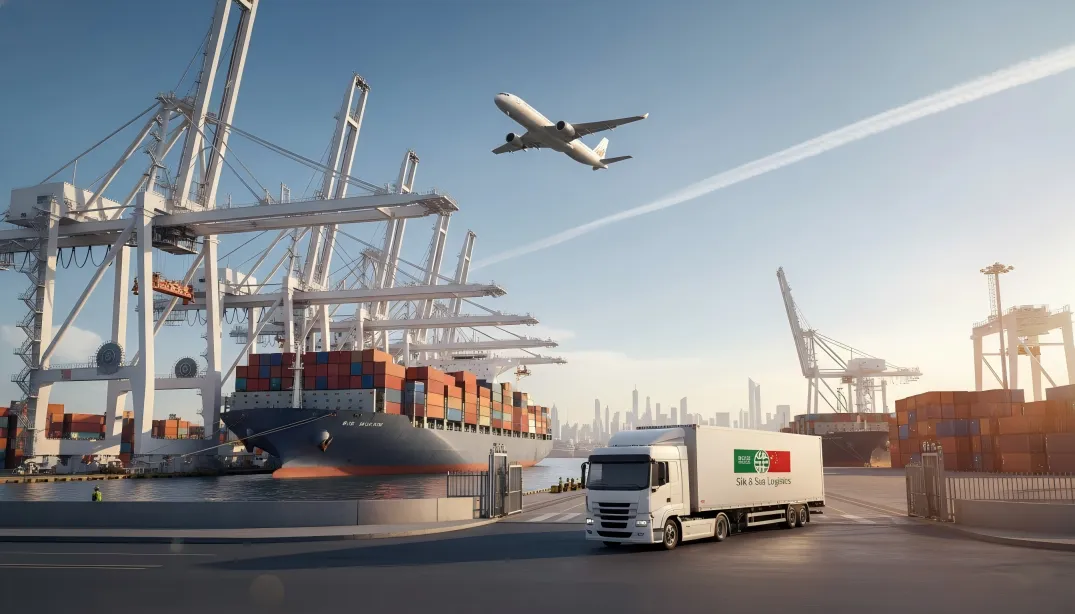
In this comprehensive 2026 ultimate guide, we will break down every single aspect of shipping costs, transit times, and strategic logistics planning. Whether you are moving heavy construction machinery via ocean freight or urgent consumer electronics via air freight, understanding the deep nuances of FCL, LCL, and DDP shipping will empower you to optimize your entire supply chain and secure the best possible rates. Let's dive into the true costs of importing to the Kingdom and explore how you can protect your bottom line.
Quick Cost Overview: Shipping from China to Saudi Arabia
Before we delve into the intricate details and operational mechanisms of each transportation mode, it is incredibly helpful to have a baseline understanding of the current market rates. The final cost of your shipping campaign depends heavily on the volume and weight of your cargo, the required transit time, the type of goods you are moving, and the specific incoterms you negotiate with your Chinese supplier, such as FOB (Free on Board) or EXW (Ex Works). Based on our recent shipments handling industrial equipment to Dammam and consumer electronics to Riyadh, here is what you can expect.
Here is a quick cost comparison table to give you an immediate, high-level idea of what to expect when budgeting for your imports:
| Shipping Method | Average Cost Estimate (USD) | Estimated Transit Time | Best Suited For |
|---|---|---|---|
| Sea Freight (FCL 20ft) | $1,100 - $1,600 per container | 20 - 30 Days | Large volume shipments, heavy machinery, bulk retail goods |
| Sea Freight (FCL 40ft) | $1,600 - $2,500 per container | 20 - 30 Days | High-volume, lighter goods, furniture, textiles, automotive parts |
| Sea Freight (LCL) | $60 - $120 per CBM | 25 - 35 Days | Small to medium loads (1-15 CBM) not filling a whole container |
| Air Freight | $4.50 - $8.00 per kg | 3 - 7 Days | High-value goods, electronics, urgent medical supplies, fashion |
| Express Courier | $8.00 - $15.00 per kg | 3 - 5 Days | Product samples, critical documents, very small parcels under 50kg |
| DDP (Sea) | $120 - $200 per CBM | 30 - 40 Days | Amazon FBA sellers, B2B e-commerce, hassle-free door-to-door delivery |
Note: These are average market rates projected for early 2026 and are inherently subject to change based on seasonality, global fuel prices, and carrier vessel capacity.
Sea Freight Costs from China to Saudi Arabia
Sea freight remains the undisputed backbone of Sino-Saudi international trade. For businesses importing large quantities of commercial goods, ocean freight offers the most economical and scalable solution. Saudi Arabia's primary ports—Jeddah Islamic Port on the Red Sea, and King Abdulaziz Port (Dammam) and Jubail Commercial Port on the Arabian Gulf—handle millions of TEUs (Twenty-foot Equivalent Units) annually from Chinese mega-ports like Shanghai, Shenzhen, Guangzhou, and Ningbo.
FCL (Full Container Load) Costs Explained
When you opt for FCL shipping, you are renting an entire ocean container exclusively for your goods. This method is highly secure, minimizes the risk of damage due to reduced handling, and is generally faster than shared containers because it does not require deconsolidation upon arrival. The pricing dynamics for FCL revolve around standard container sizes:
- 20ft Container: Ideal for heavy, dense cargo like ceramic tiles, metal components, or industrial machinery. The maximum payload is around 28,000 kg, holding up to 33 CBM (Cubic Meters) of internal volume.
- 40ft and 40HQ (High Cube) Containers: Much better suited for voluminous but physically lighter cargo like household furniture, apparel, plastic toys, or packaging materials. A standard 40ft holds about 67 CBM, while a 40HQ can hold up to 76 CBM, offering excellent value for bulky items.
Here is a detailed breakdown of estimated FCL rates from major Chinese origin ports to key Saudi destinations:
| Port of Loading (China) | Port of Discharge (KSA) | 20ft Container (USD) | 40ft/40HQ Container (USD) |
|---|---|---|---|
| Shanghai / Ningbo | Jeddah Islamic Port | $1,100 - $1,450 | $1,650 - $2,200 |
| Shanghai / Ningbo | Dammam Port | $1,250 - $1,600 | $1,800 - $2,400 |
| Shenzhen / Guangzhou | Jeddah Islamic Port | $1,150 - $1,500 | $1,700 - $2,300 |
| Shenzhen / Guangzhou | Dammam Port | $1,300 - $1,650 | $1,850 - $2,450 |
| Qingdao / Tianjin | Jubail Port | $1,400 - $1,750 | $2,000 - $2,600 |
LCL (Less than Container Load) Costs Explained
If your shipment volume falls between 1 and 15 CBM, renting an entire 20ft container is simply not financially viable. This is where LCL comes into play as the perfect middle ground. With LCL, your cargo is consolidated with other importers' goods inside a single shared container. In our experience, LCL is fantastic for first-time Amazon FBA sellers testing the Saudi market before committing to bulk FCL orders.
Pricing for LCL is calculated based on the weight or measure (W/M) rule. Freight forwarders will charge you per CBM (volume) or per 1,000 kg (weight), whichever yields the greater revenue. Since most LCL cargo is relatively light compared to its size, you will usually be billed per CBM.
- Average LCL Base Rate: $60 to $120 per CBM.
- Hidden Costs Alert: While the base ocean freight rate for LCL might seem exceptionally low at first glance, importers must be prepared for higher destination charges at the Saudi port. Because the container must be physically unloaded and sorted at a Container Freight Station (CFS), you will incur deconsolidation fees and higher terminal handling charges. Always ask your freight forwarder for a comprehensive, all-inclusive breakdown to avoid nasty surprises during Customs Clearance. We frequently see new importers caught off guard by KSA destination fees that sometimes exceed the base freight cost itself.
Air Freight Costs from China to Saudi Arabia
When your supply chain demands absolute speed and reliability, air freight is the go-to solution. It is indispensable for transporting high-value electronics, perishable goods, seasonal fashion apparel, and urgent industrial spare parts. While significantly more expensive than ocean freight, the transit time is drastically reduced from multiple weeks to mere days, ensuring your products hit the market when demand is highest.
Actual Weight vs. Dimensional Weight
In the air freight industry, airlines calculate chargeable weight based on either the gross (actual physical) weight or the Dimensional Weight (volumetric weight)—whichever is higher. This pricing model ensures airlines are fairly compensated for large, lightweight boxes that take up excessive, valuable space in the aircraft's cargo hold.
- The Global Formula: Length (cm) x Width (cm) x Height (cm) / 6000 = Dimensional Weight (in kg).
- Practical Example: Imagine you are shipping a box of winter jackets. The box weighs only 10kg, but it is bulky, measuring 50cm x 50cm x 50cm. Using the formula, the dimensional weight is 20.8kg. The airline will round up and charge you for 21kg, completely ignoring the actual 10kg weight.
Tiered Air Freight Pricing Structures
Air freight rates are strictly tiered; essentially, the more volume you ship, the lower your cost per kilogram becomes. Airlines categorize freight into weight brackets (+45kg, +100kg, +300kg, +500kg, +1000kg).
| Weight Bracket | Average Cost (Shanghai/Shenzhen to Riyadh/Jeddah) |
|---|---|
| 45 kg - 99 kg | $6.50 - $8.50 per kg |
| 100 kg - 299 kg | $5.50 - $7.50 per kg |
| 300 kg - 499 kg | $5.00 - $6.50 per kg |
| 500 kg+ | $4.50 - $5.50 per kg |
Expert Pro Tip: For commercial shipments under 45kg, standard air freight is usually not accepted by major airlines or is prohibitively expensive due to high minimum handling fees at the airport. In these specific cases, international express couriers are the only viable and economical option.
Express Courier & Door-to-Door (DDP) Shipping Costs
Express Courier Services
For extremely urgent shipments, pre-production product samples, or small parcels (typically under 50kg), international express couriers like DHL, FedEx, and UPS provide unparalleled speed, reliability, and advanced tracking capabilities.
- Estimated Cost: Generally ranges from $8.00 to $15.00 per kg.
- The Core Advantage: This is a true, integrated door-to-door service. Express couriers have their own dedicated customs channels, meaning your goods usually clear Saudi customs much faster than standard air freight, often within hours of landing in Riyadh or Jeddah.
DDP (Delivered Duty Paid) Shipping: The E-Commerce Favorite
DDP has fundamentally revolutionized international trade, especially for B2B e-commerce platforms and Amazon FBA sellers operating in Saudi Arabia. Under the DDP incoterm, the seller or the designated freight forwarder assumes all responsibilities, logistical risks, and financial costs associated with transporting the goods until they are safely delivered to the buyer's specified destination.
This means the single quoted price you receive includes absolutely everything:
- Export clearance procedures and fees in China.
- The main leg of international ocean or air freight.
- Import Customs Clearance processing in Saudi Arabia.
- The upfront payment of all Saudi import duties and the mandatory 15% VAT.
- Final mile truck delivery to your private warehouse, office, or an Amazon FBA fulfillment center.
- DDP Air Freight: Approximately $7.00 - $12.00 per kg (inclusive of all taxes and duties). Typically arrives in 8-12 days.
- DDP Sea Freight: Approximately $150 - $250 per CBM or $1.50 - $3.00 per kg. Typically arrives in 30-40 days.
For international importers who lack a registered local Saudi commercial entity, or for business owners who simply want a completely hands-off logistics experience, DDP shipping through a highly reliable partner like AllBestShipping is the ultimate, stress-free solution.
Understanding Incoterms: FOB vs. EXW vs. CIF
Before finalizing any purchase order with your Chinese supplier, you must agree on the Incoterms (International Commercial Terms). These terms dictate exactly where the supplier's responsibility ends and yours begins, heavily impacting your total shipping cost.
- EXW (Ex Works): You are responsible for the goods from the moment they leave the factory floor in China. You must pay for the trucking to the Chinese port, export clearance, and all international freight. This offers the most control but requires heavy logistical lifting.
- FOB (Free on Board): The supplier pays for all costs to get the goods loaded onto the ship at the Chinese port (e.g., FOB Shenzhen). You only pay for the ocean freight from Shenzhen to Saudi Arabia and the import costs. This is highly recommended as it balances control and cost.
- CIF (Cost, Insurance, and Freight): The supplier handles everything up to the Saudi destination port. While it sounds easy, suppliers often mark up the freight costs significantly to make a hidden profit. You also lose control over which shipping line is used, which can lead to delays.
Key Factors That Affect Your Shipping Costs
Freight rates are notoriously volatile and subject to global macroeconomic shifts. Understanding the underlying operational factors that drive these fluctuations can help you budget accurately and avoid sudden price shocks.
- Seasonal Fluctuations and Holidays: Shipping costs skyrocket during established peak seasons. The weeks immediately leading up to the Chinese New Year (usually late January or February) see massive rate spikes as factories rush to ship goods before shutting down for weeks. Similarly, the pre-Ramadan period and the global Q4 holiday shopping season create immense demand for cargo space on vessels heading to Saudi Arabia.
- Carrier Surcharges and Port Fees: Ocean freight rates are subject to various mandatory surcharges. The BAF (Bunker Adjustment Factor) fluctuates continuously in tandem with global crude oil prices. Additionally, you must strictly account for THC (Terminal Handling Charges) at both the origin port in China and the destination port in KSA, as well as documentation processing fees for the Bill of Lading.
- Distance, Routing, and Transshipments: Direct shipping routes (for example, a vessel sailing straight from Shenzhen to Jeddah without stopping) are much faster but inherently more expensive. Transshipment routes (where your cargo is unloaded and reloaded onto a different vessel at a massive hub like Singapore, Port Klang, or Jebel Ali in Dubai) are cheaper but can easily add 7 to 14 days to your total transit time.
- Specific Cargo Types: Standard general merchandise (like clothing or plastic goods) is the cheapest to ship. However, if you are shipping hazardous materials (lithium batteries, liquid chemicals), oversized cargo (construction vehicles, massive industrial machinery), or temperature-controlled goods (pharmaceuticals, cosmetics, fresh food), you will require specialized equipment like Reefer containers or Open Top containers. These specialty services incur substantial premium charges and require rigorous safety documentation.
Customs Clearance, Duties, and Taxes in Saudi Arabia
The Saudi Zakat, Tax and Customs Authority (ZATCA) enforces some of the strictest import regulations in the Middle East. Failing to comply with these rules can result in severe customs delays, hefty financial fines, or even the permanent confiscation of your cargo.
Import Duties and VAT Breakdown
- Import Duties: Depending on the specific HS (Harmonized System) code of your product, general tariff rates in Saudi Arabia range from 5% to 15%. However, to protect domestic industries, some protective tariffs on goods that are also manufactured locally within Saudi Arabia can be set as high as 20% to 25%.
- VAT (Value Added Tax): Saudi Arabia currently levies a flat 15% Value Added Tax on almost all imported commercial goods. It is crucial to understand how this is calculated: VAT is applied to the total value of the goods plus the international freight cost plus the applied customs duty (essentially, 15% of the CIF value + Duty).
Essential Import Documentation
To ensure a smooth, friction-free Customs Clearance process, your documentation must be absolutely flawless. Even minor typos can cause days of delays. Required documents include:
- Bill of Lading (for sea freight) or Air Waybill (for air freight).
- Commercial Invoice: This cannot be a simple proforma. It must be a highly detailed commercial invoice showing unit prices, the total value, currency, and the exact HS codes for every single item.
- Packing List: Detailing exact net and gross weights, precise dimensions, and carton quantities.
- Certificate of Origin: An official document proving exactly where the goods were manufactured, usually stamped by the Chinese Chamber of Commerce.
The SABER Certification System: A Critical Requirement
Perhaps the single most critical aspect of shipping commercial goods to Saudi Arabia today is the SABER Certification. This is a mandatory electronic platform launched by the Saudi Standards, Metrology and Quality Organization (SASO) to ensure imported products meet local safety standards.
Importers must actively register their regulated products on the SABER system. You must first obtain a Product Certificate of Conformity (PCoC) which is valid for one year, and then a Shipment Certificate of Conformity (SCoC) for every single individual shipment before the cargo even arrives at the port. Shipping goods without strict SABER compliance is a guaranteed way to have your containers rejected and sent back at your expense.
Expert Tips to Reduce Shipping Costs to Saudi Arabia
Protecting your profit margins requires highly strategic logistics planning. Here are expert, actionable tips to significantly lower your freight bills:
- Consolidate Your Shipments: If you buy inventory from multiple different suppliers across China, do not ship them individually. Use a forwarder's warehouse in China to consolidate several smaller LCL shipments into one single, unified FCL container. This drastically reduces per-unit ocean shipping costs and slashes destination handling fees in KSA.
- Ruthlessly Optimize Your Packaging: Because air freight and express couriers rely heavily on Dimensional Weight, eliminating "dead" empty space in your cartons can literally save you thousands of dollars. Work closely with your Chinese suppliers to use compact, stackable packaging and avoid oversized boxes.
- Plan Around Peak Seasons: Forecast your inventory needs 3 to 6 months in advance. Shipping your goods in October to prepare for a Q1 product launch will help you completely avoid the exorbitant Chinese New Year premium rates and the associated vessel space shortages.
- Partner with a Reliable Freight Forwarder: The absolute most effective way to cut long-term logistics costs is to work with an industry expert rather than trying to manage carriers directly. A specialized forwarder negotiates bulk contract rates with shipping lines and airlines, passing those volume savings directly onto you.
Why Choose AllBestShipping for Your China to Saudi Arabia Shipments?
Navigating the immense complexities of Middle Eastern logistics requires a seasoned, highly dedicated partner. At AllBestShipping, we bring over a decade of senior freight forwarding expertise specifically tailored to the vital China-Saudi Arabia trade lane.
- Unmatched Price Advantage: Through our deep-rooted, long-term relationships with premium ocean carriers and tier-one airlines, we offer highly competitive, fully transparent pricing with absolutely zero hidden fees. What we quote is what you pay.
- Comprehensive End-to-End Solutions: From intricate supplier coordination in Chinese factory towns to final mile delivery in Riyadh or Jeddah, we handle it all. Our seamless DDP services ensure you never have to worry about unexpected tax bills or sudden customs holds.
- SABER & Customs Expertise: Our dedicated, bilingual customs clearance team will guide you step-by-step through the complex SABER Certification process, ensuring your Commercial Invoice and Packing List are perfectly aligned with ZATCA regulations for swift, penalty-free clearance.
Do not let complicated logistics challenges hinder your business growth in the Kingdom. Contact AllBestShipping today to get a free, instant quote and experience truly stress-free international shipping.
Frequently Asked Questions (FAQs)
What is the absolute cheapest way to ship from China to Saudi Arabia?
For commercial shipments over 15 CBM, booking a 20ft or 40ft FCL sea freight container is definitively the cheapest method per unit. For smaller shipments falling between 1 and 15 CBM, utilizing LCL sea freight consolidation is the most cost-effective approach.
Do I need a SABER certificate for all imports into KSA?
Not every single product requires SABER certification, but the vast majority of commercial consumer goods, electronics, textiles, toys, and machinery absolutely do. You must check your product's specific HS code in the official SABER portal to determine if it is classified as "regulated." If it is regulated, obtaining both the PCoC and SCoC is a strict legal mandate.
How are import taxes actually calculated in Saudi Arabia?
Import taxes are calculated sequentially. First, the specific customs duty (e.g., 5%) is applied directly to the CIF (Cost + Insurance + Freight) value of the imported goods. Then, the 15% VAT is applied to the grand total sum of the CIF value plus that newly calculated customs duty.
Can I ship power banks or electronics with lithium batteries to Saudi Arabia?
Yes, you can, but lithium batteries and power banks are strictly classified as Dangerous Goods (DG) by international aviation and maritime authorities. They cannot be shipped via standard, cheap air freight without proper Material Safety Data Sheets (MSDS) and certified UN38.3 test reports. They often incur a mandatory DG handling surcharge and must be processed by specialized freight forwarders who are licensed to handle hazardous materials.
Conclusion
Shipping from China to Saudi Arabia does not have to be an opaque, overwhelmingly expensive, or highly stressful process. By deeply understanding the distinct advantages, operational realities, and associated costs of FCL, LCL, air freight, and comprehensive DDP services, you can make highly informed, strategic decisions that align perfectly with your budget constraints and market delivery timelines.
Always remember that the cheapest initial freight quote is not always the best option if it ultimately results in weeks of customs delays or massive hidden destination fees upon arrival in Jeddah or Dammam. The true key to a highly optimized, cost-effective supply chain is proactive inventory planning, meticulous documentation management (especially regarding the critical SABER Certification), and partnering with a trusted, deeply experienced logistics expert like AllBestShipping. Equip yourself with this industry knowledge, secure the best possible freight rates, and confidently expand your business empire into the thriving, lucrative Saudi Arabian market.