Chinese New Year 2027 Shipping from China: The Book-By Calendar and the Rates Behind It
Chinese New Year shipping 2027 runs on two clocks: the factory clock that stops on Saturday 6 February, and the carrier clock that is already selling space against it. The festival is twelve days earlier than 2026, which drags the West Coast booking window into the second week of January. The market underneath has split in two: Drewry put Shanghai–Los Angeles at $7,539 per 40ft and Shanghai–New York at $9,303 on 6 November, while Shanghai–Rotterdam sat at $3,615 and Shanghai–Genoa at $4,166 after carriers failed to make their 1 November increase stick.
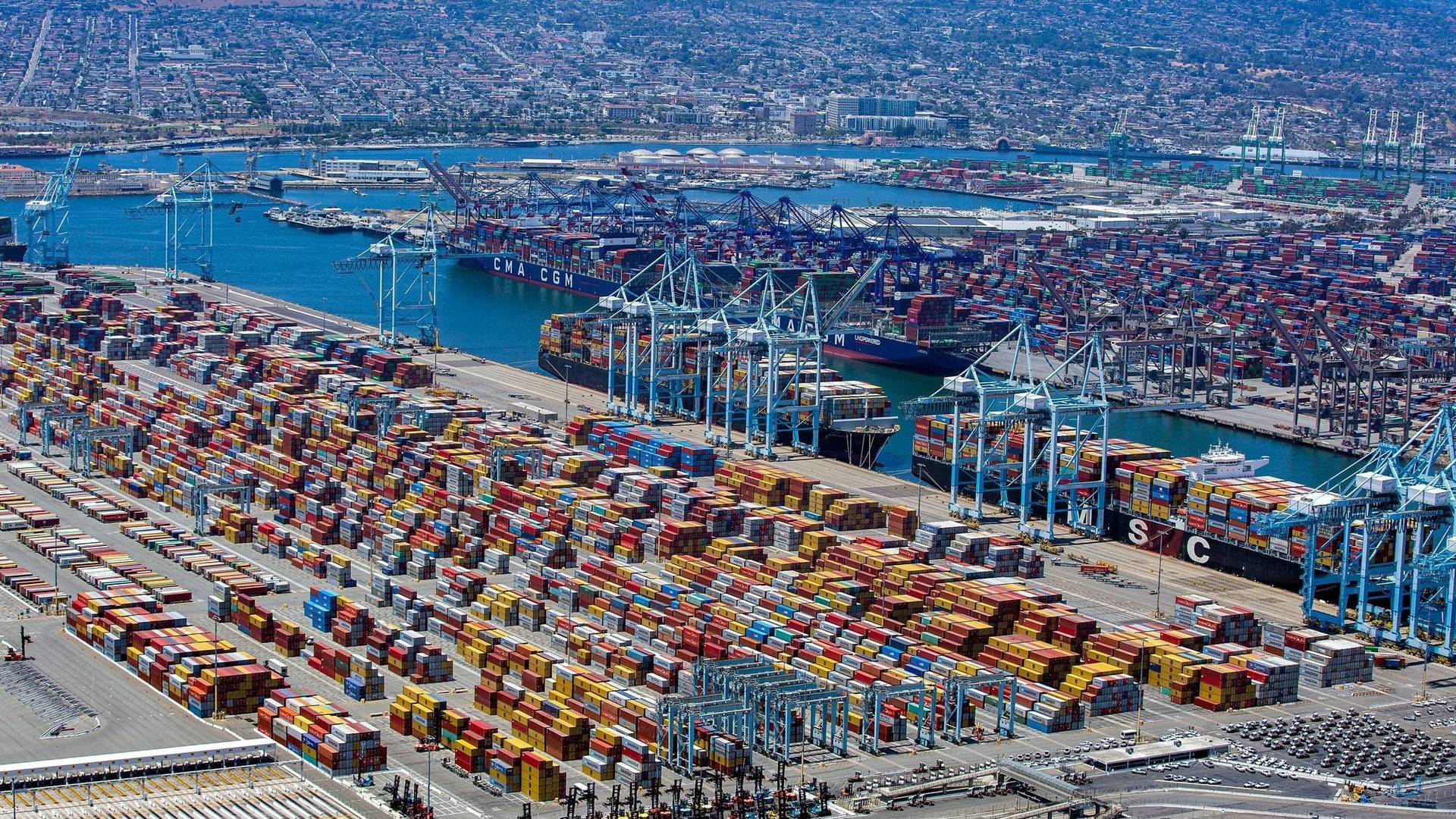
Below are the dates that follow from 6 February, the surcharges already dated for the next six weeks, and the arrival risk at Los Angeles. Shipping from China to USA is the lane where a missed window costs most, because a 40ft box to New York runs $9,303 against $3,615 for the same box to Rotterdam. If you read one table, read the book-by dates in section 3.
What the market looks like on 9 November 2026
Transpacific freight rates in November 2026 are flat at roughly double the Europe lanes, and the Pacific is where the festival squeeze will bite hardest. The Shanghai Shipping Exchange composite closed at 3,633.45 on 6 November, down 53.90 on the week, but that softness sits on the European legs. Carriers had aimed for around $4,500 per 40ft to North Europe and $5,000 to the Mediterranean on 1 November and missed both; Linerlytica reported discounted Asia–North Europe bookings at $2,700–3,400, with another increase round scheduled for 15 November. Underneath, Xeneta estimates the return to the Suez Canal has released 600,000 teu of capacity, and expects spot rates to fall around 30% across 2027.
The January rate is being set now, not in January. The freight rates after Golden Week split explains why the two halves of the market stopped moving together.
Why 6 February 2027 matters more than it looks
Chinese New Year factory closure dates 2027 begin well before the festival and end well after it, so the date that governs your shipment is the day the production line stops, not the day the holiday starts. This is the first time since 2022 that the festival has landed in the first week of February, and it is twelve days ahead of 17 February 2026. Production stops ahead of 6 February, and the restart runs slower than the festival itself: the first week back goes on maintenance, recruitment and retraining rather than output.
Ask your supplier three questions in writing: the last day they can accept a purchase order, the last day they can have goods packed and labelled, and the first day they can hand a container to a trucker. Everything else is arithmetic on those three dates.
Book-by dates: when to book before Chinese New Year 2027
Assume the cargo must be at your consignee by 26 February, on shelf for 1 March. Subtract the inland leg, the ocean transit at the upper bound, 21 days of space-holding lead time and three days of trucking and gate-in margin. The lanes land in different weeks:
| Lane | Space held by | Factory handover by | Last sailing |
|---|---|---|---|
| Ningbo or Shanghai → Los Angeles / Long Beach | 11 January 2027 | 29 January 2027 | 1 February 2027 |
| Ningbo → New York via Suez | 25 December 2026 | 12 January 2027 | 15 January 2027 |
| Ningbo → Rotterdam or Hamburg | 22 December 2026 | 9 January 2027 | 12 January 2027 |
| Shanghai → Genoa | 20 December 2026 | 7 January 2027 | 10 January 2027 |
| Shenzhen → Tema (Ghana) | 15 December 2026 | 2 January 2027 | 5 January 2027 |
The West Coast row is the tight one. Space goes in the second week of January, the goods leave the factory in the last week of January, and the factory shuts in the first week of February. A two-week production slip in December does not become a two-week arrival slip; it becomes a miss.
The surcharge dates that land on those bookings
Four charges are already dated. Hapag-Lloyd has $400 per TEU from Asia and Oceania to Tema, applied to cargo loaded on board from 6 November. CMA CGM has $400 per TEU from South China to Mozambique from 10 November, $400 per TEU from North and Central China from 15 November, and $500 per TEU from Southeast Asia to West Africa from 15 November on short-term contracts. On the Pacific side, Hapag-Lloyd's $1,000 per container general rate increase from the Indian Subcontinent, Pakistan and the Middle East to North America applies to containers gated in full from 1 December.
Those announcements carry three different date tests, and they do not all point at the same day. Loaded on board follows the vessel, so a rolled container is re-tested on the new loading date. Gated in full follows the terminal receipt, so a late gate-in jumps you into the next window even on the same ship. Booking date follows the contract, and it is the only one you control. When a peak season surcharge appears on a quotation, the useful question is which date it uses.
The Los Angeles strike file is an arrival risk
The Los Angeles Long Beach port strike file of 2026 does not change when your cargo sails; it changes when it lands. About 250 security watchmen from ILWU Local 26 have worked without a contract since July 2025, and on 7 November their employers extended talks by two more weeks. The Pacific Maritime Association estimates disruption could touch roughly 85% of Long Beach cargo and a third of Los Angeles cargo.
Pre-festival cargo lands in late January and early February, which is exactly when a week-long stoppage turns an on-time arrival into a demurrage claim. Price a second gateway such as Oakland or Seattle/Tacoma, or an all-water East Coast routing, before December rather than after the gate closes. The negotiating calendar is public on the Pacific Maritime Association site.
What to do this week
Confirm the HS classification and the Section 301 exclusion status first, because duty dwarfs freight: on a $45,000 box under a 41% stack, duty is $18,450, more than twice the entire freight side. The 178 exclusions currently run to 10 November 2026, so a January sailing needs re-checking now. Then hold West Coast space for the second week of January, get the three supplier dates in writing, and set the date in December on which you switch a late order to air freight. The Baltic Air Freight Index averaged 2,651.25 in October, up 8.2% on September and 25.9% year on year, and Hong Kong to the US East Coast moved from HK$51.84 to HK$63.02 per kg in the month to 30 October — so the escape valve is getting dearer.
FAQ
When should I ship before Chinese New Year 2027? For arrival by 26 February, hold West Coast space by 11 January and have goods leave the factory by 29 January. Europe goes in the third week of December with handover in the first week of January.
What are the carrier cut-off dates before Chinese New Year? Carriers publish vessel cut-offs, not festival cut-offs. The ones that matter are the last January sailings to the West Coast and the first fortnight of January for Europe and Africa. Add three days of gate-in margin to any published time.
Will Chinese New Year 2027 cause port congestion? The festival does not congest Chinese ports; the surge before it does. Expect terminal and trucking pressure from the last three weeks of December, then blank sailings afterwards as carriers pull capacity.
Is air freight still an option for late orders? For the last few hundred kilograms, yes, and it is already firmer: October's index was up 8.2% month on month. Book January space in the first week of January. Air cannot rescue a 40ft container.
Do Section 301 exclusions run out before my shipment lands? The 178 exclusions currently end on 10 November 2026. If a line in your shipment depends on one, confirm the status before the vessel loads rather than at entry.
Planning the festival with someone who reads the calendar
November rate indices will not tell you whether your container makes the shelf. A production handover date, a cut-off time and a surcharge date test will.
AllBestShipping books ocean, air and DDP cargo out of Shenzhen, Ningbo, Shanghai and Guangzhou through the festival build-up, and quotes the transit date and the surcharge date test beside the rate. If your production finish date is still moving, send us the vendor list and the target shelf date and we will tell you which lane can still take the cargo.