Sea Freight from China to Nigeria: FCL & LCL Shipping to Lagos (Apapa & Lekki) in 2026
China is Nigeria's largest trading partner, and nearly everything that moves between the two countries — construction materials, machinery, motorcycles, electronics, textiles, and consumer goods — travels by sea. But if you have priced a container to Lagos lately, you already know that 2026 is not a normal year for ocean freight. Carriers have pushed Asia–West Africa rates to multi-year highs, the Red Sea disruption continues to reroute vessels around the Cape of Good Hope, and Nigeria's ports are juggling a surge in volume between the legacy terminals at Apapa and the fast-growing Lekki Deep Sea Port.
This guide breaks down what sea freight from China to Nigeria actually costs in 2026, how FCL and LCL compare, which port your cargo should target, and the customs steps — FORM M, SONCAP, PAAR — that decide whether your container clears in days or weeks. Every rate in this article is an indicative market range; ocean freight moves weekly, so treat it as a planning reference and always request a written quote before you book. For a compact overview of routes, transit times, and the documents you will need, see our shipping from China to Nigeria guide.
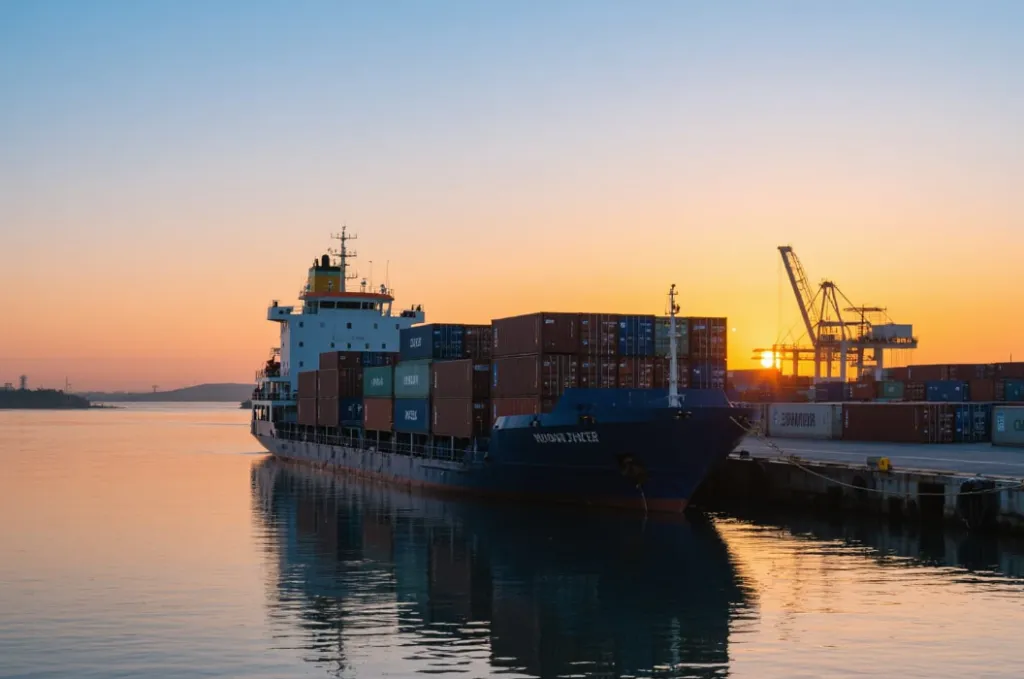
1. Why Sea Freight Dominates China–Nigeria Trade
Nigeria is Africa's most populous country and one of its largest import markets, and China has been its top source of imports for well over a decade. For most cargo, the choice of transport mode is not really a choice: sea freight carries more than 90% of the tonnage moving between China and Nigeria, because nothing else comes close on cost per cubic meter.
That dominance is easy to explain:
- Cost: Ocean freight typically costs 80–90% less than air freight for the same volume — the difference between roughly $0.25 per kg of cargo space and $6–9 per kg.
- Capacity: A single 40ft high-cube container carries about 68 CBM of cargo, which is why whole industries — furniture, tiles, appliances, motorcycle parts — are built around container shipping.
- Suitability: Most China–Nigeria trade is heavy, bulky, or price-sensitive. Air freight is reserved for urgent samples, spare parts, and high-value electronics.
The lane does have one characteristic that sets it apart from most other Africa routes: it is one of the most expensive sea freight corridors in the world right now. When MSC published its Freight All Kinds (FAK) rates for September 2026, West Africa and Nigeria were quoted at US$4,750 per 20ft container and US$6,000 per 40ft high-cube — a level that would have been unthinkable two years ago. The reasons are structural: vessels serving West Africa have been diverted around the Cape of Good Hope to avoid the Red Sea and Gulf of Aden security risk, bunker prices are elevated, and a wave of carrier blank sailings has tightened capacity. For anyone importing from China to Nigeria, understanding this rate environment — and locking in quotes early — is now a genuine competitive advantage. If you are planning shipments across the continent, our Shipping from China to Africa overview compares the main corridors and their cost profiles.
2. 2026 China–Nigeria Sea Freight Rates at a Glance
Before diving into the details, here is the TL;DR. These ranges reflect August–September 2026 market conditions on the China–Lagos corridor and assume standard cargo with no special equipment or dangerous-goods handling.
| Shipping Mode | Indicative Cost (Aug–Sep 2026) | Transit Time | Best For |
|---|---|---|---|
| LCL (Less than Container Load) | $120 – $200 per CBM | 38 – 48 days | Small loads under 13 CBM |
| FCL 20ft container | $3,900 – $5,500 per container | 28 – 38 days | 15–28 CBM of cargo, heavy goods |
| FCL 40ft / 40HQ container | $5,300 – $7,200 per container | 28 – 38 days | Large-volume shipments, 28+ CBM |
| Air freight (for comparison) | $6.00 – $9.50 per kg | 3 – 7 days | Urgent, high-value, time-critical cargo |
| Door-to-Door sea DDP | Quoted per CBM or per kg, all-in | 45 – 60 days | Importers who want one fixed landed price |
Three things to notice. First, FCL rates have roughly doubled compared with the pre-2024 baseline because of the Cape route diversion and carrier capacity discipline. Second, the spread between the cheapest and most expensive quote you receive can easily be 30–40% depending on which carrier, which transshipment hub, and which week you book. Third, the quotes themselves are usually not comparable: port-to-port, door-to-door, and DDP prices include very different scopes of work (see Section 8).
3. The Gateway Ports: Lagos (Apapa & Tin Can) vs Lekki Deep Sea Port
Almost all sea freight from China to Nigeria discharges in the Lagos area, which handles the overwhelming majority of Nigeria's containerized imports. But "Lagos" is not one port — and in 2026, choosing the right one matters more than ever.
Apapa & Tin Can Island: The Legacy Terminals
The Port of Lagos complex includes Apapa and Tin Can Island terminals, operated by concessionaires such as APM Terminals, TICT, and others. These terminals have deep roots in Nigeria's trade and offer the widest network of shipping services — most China services still call there. The trade-off is well documented: chronic congestion, truck queues that can stretch for kilometers, and berth delays that occasionally ripple into the sailing schedules themselves. Congestion at Apapa has improved since the worst years, but it remains the single most common cause of demurrage bills for importers who did not plan their documentation properly.
Lekki Deep Sea Port: Nigeria's New Deep-Water Gateway
Lekki Deep Sea Port, located inside the Lagos Free Zone about 60 km east of the old ports, opened in 2023 and has rapidly become Nigeria's strategic gateway. It is the country's first deep-water port, with a draft of 16.5 meters that allows large vessels to berth without lightering, and a design capacity of about 1.2 million TEU per year.
The port's rise has been fast:
- November 2024: COSCO, ONE, and ZIM added direct services calling Lekki, giving importers new routing options beyond the traditional Apapa calls.
- April 2026: MSC announced a weekly feeder service connecting Lekki with Lomé (Togo), with the rotation Apapa – Tincan/Lagos – Lekki – Lomé. The service began operations with the MSC Rabat IV, which arrived in Lekki on May 30, 2026 — a clear signal that carriers now treat Lekki as a core West African hub rather than an optional extra.
- 2026 onward: Lekki absorbs a growing share of China-origin volume, easing pressure on Apapa and giving importers a faster, more predictable discharge option — especially for containers moving onward by truck.
From a shipper's perspective, the practical difference is this: Lekki means newer equipment, deeper berths, and generally shorter truck turnaround, while Apapa/Tin Can offer the deepest roster of direct sailings. A good forwarder will route your cargo to whichever terminal clears it faster for your specific destination — Lekki for many Lagos-zone and Ogun-state deliveries, Apapa for cargo staying near the old industrial clusters.
4. FCL vs LCL: Which One Should You Book?
The first decision for any China–Nigeria shipment is whether to book a full container or share space. FCL (Full Container Load) means you hire the entire container; LCL (Less than Container Load) means your cargo shares a container with other importers' goods and you pay only for the space you use.
FCL Rates by Origin Port (Port-to-Port, Indicative Aug–Sep 2026)
| Origin Port (China) | 20ft (USD) | 40ft / 40HQ (USD) | Est. Transit |
|---|---|---|---|
| Shenzhen / Guangzhou | $3,900 – $5,200 | $5,300 – $6,800 | 30 – 38 days |
| Shanghai | $4,000 – $5,300 | $5,400 – $7,000 | 32 – 40 days |
| Ningbo | $4,000 – $5,400 | $5,500 – $7,100 | 32 – 40 days |
| Qingdao | $4,100 – $5,500 | $5,600 – $7,200 | 34 – 42 days |
These ranges bracket the MSC FAK reference of $4,750 (20DV) and $6,000 (40DV-HC) for West Africa/Nigeria in early September, and they will drift with the market. A 20ft container holds roughly 28 CBM, and a 40ft high-cube roughly 68 CBM; for dense, heavy goods the 20ft is usually the better buy, while light, bulky goods favor the 40HQ. For shipments over 15 CBM, FCL Shipping almost always beats LCL on per-cubic-meter landed cost — and it is safer, because your container is sealed in China and opened only at destination.
LCL: Rates and the 13–15 CBM Rule
LCL rates on the China–Lagos lane currently run $120 – $200 per CBM, with charges based on the W/M rule (1 CBM = 1,000 kg; you pay for whichever is greater) and a typical minimum chargeable volume of 1 CBM. LCL looks cheap for small parcels, but the real cost per CBM jumps once you add destination CFS (Container Freight Station) deconsolidation, documentation, and handling charges.
Here is the rule of thumb we use when advising clients:
- Under 13 CBM → LCL is usually the cheapest option.
- 13 – 15 CBM → run the full landed-cost math. Once CFS unpacking and handling fees are added at the destination, a 20ft FCL frequently ends up cheaper — and faster to clear.
- Over 15 CBM → book a 20ft FCL container.
- Over 28 CBM → move to a 40ft or 40HQ.
One more lever for LCL shippers: buyer consolidation. If you source from several factories across Guangdong, Zhejiang, or Fujian, a forwarder can collect all your orders at a Shenzhen or Guangzhou warehouse, consolidate them into a single FCL container, and save you the multiple LCL minimum charges and per-CBM destination fees. On this lane, consolidation often cuts total freight cost by 15–25% compared with shipping the same volume as several separate LCL consignments.
5. Transit Times & Sailing Routes from China
If you are quoting lead times to your own customers, be conservative. The Red Sea and Gulf of Aden security situation has been disrupting the Asia–Europe–West Africa routing for well over a year, and in August 2026 the separate Hormuz standoff entered its seventh month, keeping bunker prices and war-risk surcharges elevated. As a result, most China–West Africa services either round the Cape of Good Hope or rely on transshipment in the Gulf of Guinea or the Indian Ocean.
Typical transit times in 2026:
| Routing | Origin → Lagos/Lekki | Notes |
|---|---|---|
| Direct or near-direct (via Cape) | 28 – 38 days | Depends on the service; some calls via Durban or Pointe-Noire |
| Transshipment via Singapore / Tanjung Pelepas / Colombo | 35 – 45 days | Mother vessel to a West Africa hub (e.g., Lomé, Tema), then feeder to Lagos |
| Transshipment via Gulf of Guinea hubs (Lomé / Tema / Abidjan) | 38 – 48 days | Common for LCL and for carriers without direct Lagos calls |
Major carriers serving the lane include MSC, Maersk, CMA CGM, COSCO, and PIL, plus regional feeders. The practical advice: always ask your forwarder for the specific rotation of the vessel you are booking, not just an average. A "35-day service" can be 41 days if it transships twice. And add a 7–10 day buffer if your shipment is due to sail during peak season (September–December), when blank sailings and port congestion are most common. For time-sensitive cargo that cannot absorb that uncertainty, compare air freight and express options against the landed-cost math before you commit.
6. Nigeria Customs Clearance: Documents, Duties & the SONCAP Trap
Sea freight gets your container to Nigeria; customs gets it to your warehouse. Clearance is handled by the Nigeria Customs Service (NCS) through the NICIS II electronic platform, which generates a PAAR (Pre-Arrival Assessment Report) — the customs declaration that every consignment needs before it can be released. This is where most first-time importers hit trouble, and the requirements are stricter than in most African markets.
The Five Documents That Matter
- FORM M — Nigeria's import declaration form, opened through an authorized dealer bank before the goods are shipped. This is mandatory and non-negotiable; cargo shipped without a valid FORM M cannot be cleared through the standard process. Open it early — the process involves your bank and can take several days.
- Bill of Lading (B/L) — the ocean carrier's contract and receipt of cargo. Ensure the consignee details, description, and weights match the other documents exactly.
- Commercial invoice & packing list — must match the B/L and the FORM M declaration. Discrepancies are the #1 cause of NICIS II query holds.
- SONCAP certificate — see below; the biggest compliance trap for Chinese exports.
- PAAR — issued by NCS after the declaration is processed; your clearance agent uses it to pay duties and obtain release.
The SONCAP Requirement (Read This Twice)
SONCAP (Standards Organisation of Nigeria Conformity Assessment Program) is a mandatory pre-shipment conformity assessment for a wide range of regulated products — electronics, toys, chemicals, building materials, auto parts, and more. Under the program, your supplier must obtain a Product Certificate (PC) from an accredited certification body (or be registered under an approved scheme), and each shipment must carry a SONCAP Certificate (SC) issued before the goods leave China.
Ship without a valid SC and the consequences are painful: a penalty of 15% of the CIF value, a slow destination inspection, possible denial of entry, or even return shipping to China at your cost. This is the single most common reason Chinese exports get stuck at Nigerian ports. A competent forwarder arranges the SONCAP assessment in parallel with production — not after the vessel sails — because the inspection must happen while the goods are still in China.
Duties, VAT & Levies
Import duty in Nigeria follows the ECOWAS Common External Tariff (CET), which applies bands of roughly 5% to 35% depending on the HS Code of your product, plus VAT of 7.5% charged on the CIF value plus duty. Small additional levies (such as the 1% CISS surcharge on some goods) can add a percent or two on top.
| Product Category | Typical Duty Band | VAT (7.5%) | Planning Assumption |
|---|---|---|---|
| Machinery & industrial equipment | 5 – 10% | Yes | ~13 – 18% total tax |
| Building materials & furniture | 10 – 20% | Yes | ~18 – 28% total tax |
| Electronics & appliances | 10 – 35% | Yes | ~18 – 43% total tax |
| Textiles & footwear | 20 – 35% | Yes | ~28 – 43% total tax |
These are planning ranges, not quotes — duty classifications change and the NCS valuation rules can reassess declared values, especially for e-commerce-style shipments with low declared prices. Get the correct HS Code confirmed by your forwarder before you finalize a purchase order, and if you want the tax risk removed entirely, ask for a DDP (Delivered Duty Paid) quote, under which the forwarder clears the goods and pays all duties and VAT on your behalf for one fixed price.
7. Why Shipments Get Delayed (and How to Avoid It)
On the China–Nigeria lane, delays are rarely caused by the ocean voyage itself. They happen at the destination, and almost always for one of these five reasons:
- Document mismatches — B/L, invoice, packing list, and FORM M disagree on weights, values, or descriptions. NICIS II flags the declaration and it sits in query until corrected. Fix: a single pre-shipment document audit by your forwarder.
- SONCAP gaps — no Product Certificate, or a Certificate of Conformity issued after the vessel departed. Fix: start SONCAP when production starts, not when the ship sails.
- Late FORM M — opened after the goods are already on the water. Fix: open FORM M the moment the purchase order is confirmed.
- Port congestion at Apapa/Tin Can — truck queues and terminal congestion still spike during peak season. Fix: route through Lekki where possible, and book trucking in advance.
- Demurrage and detention — containers left beyond the free days incur $50–$100+ per day charges. Free days at Nigerian terminals are often tight (typically 5–7 days for demurrage), and the clock runs even while your paperwork is stuck. Fix: stage every document before the vessel arrives and negotiate free-time terms in the booking.
Our industry insight: The importers who clear fastest in Lagos are not the ones with the most cargo — they are the ones with the most complete paperwork. On this lane, we stage the full file (FORM M, invoice, packing list, SONCAP certificates, PAAR inputs) while the vessel is still at sea, so the moment the container lands, the declaration is already being processed. Treat documentation as part of the transit time, because for customs purposes, it is.
8. Which Shipping Option Is Right for You?
| Your Situation | Recommended Option | Why |
|---|---|---|
| Trial order, samples, under 13 CBM | LCL | Cheapest per shipment; pay only for space used |
| 13 – 15 CBM, regular restocking | Compare LCL vs 20ft FCL | Destination CFS fees often tip the math to FCL |
| 15+ CBM of regular inventory | FCL 20ft | Best per-CBM cost, sealed and secure |
| Full pallets or bulky light cargo | FCL 40HQ | Lowest per-unit cost at scale |
| Urgent restock, high-value goods | Air freight | 3–7 days versus 30+ days by sea |
| No customs team in Nigeria, want one fixed price | Door-to-door sea DDP | Forwarder handles clearance, duties, and delivery |
| Multiple suppliers in China | Consolidation → FCL | One container, one set of documents, lower total cost |
Whichever route fits your cargo, work with a forwarder who has real boots on the ground at both ends: origin warehouses in Shenzhen or Guangzhou for consolidation and SONCAP inspections, and a destination team in Lagos that clears through NICIS II every day. That combination — not the cheapest headline rate — is what actually protects your margin. Our Sea Freight from China services are built around exactly that: transparent all-in quotes, real-time tracking from factory to final delivery, and dedicated customs support for the West Africa lane.
9. FAQ: Sea Freight from China to Nigeria
How much does it cost to ship a container from China to Nigeria in 2026? Indicative August–September 2026 rates are $3,900 – $5,500 for a 20ft container and $5,300 – $7,200 for a 40ft/40HQ, depending on origin port, carrier, and week. Carrier FAK references (e.g., MSC at $4,750 for a 20DV to West Africa/Nigeria) show the market is at multi-year highs, so always request a written quote with validity dates.
What is the difference between FCL and LCL? FCL gives you the entire container, sealed in China and opened at your destination; you pay a flat rate. LCL shares container space with other shippers and charges per CBM (or per 1,000 kg, whichever is greater). FCL wins for volume over 15 CBM; LCL suits small loads under 13 CBM.
Should my cargo go to Apapa, Tin Can, or Lekki? Most services still call Apapa/Tin Can, which offer the deepest roster of sailings but more congestion. Lekki Deep Sea Port is newer, deeper, and faster for truck turnaround, and has added COSCO, ONE, ZIM, and MSC services since 2024. Let your forwarder route to whichever terminal clears fastest for your delivery address.
How long does customs clearance take in Nigeria? With complete, matching documents and a valid SONCAP certificate, clearance typically takes 5 – 10 working days; complex or queried consignments can take 2 – 4 weeks. Most delays trace back to document mismatches or missing SONCAP paperwork, not the customs system itself.
What is SONCAP and do I really need it? SONCAP is Nigeria's mandatory pre-shipment conformity assessment for regulated products (electronics, toys, building materials, auto parts, and more). Your supplier needs a Product Certificate and each shipment needs a SONCAP Certificate issued before departure. Ship without one and you face a 15% CIF penalty and long inspection delays.
Is FORM M still required for importing into Nigeria? Yes. FORM M must be opened through an authorized dealer bank before the goods are shipped, and the declaration feeds the NICIS II system that generates your PAAR. Opening it late is one of the most common — and most avoidable — causes of clearance delays.
Why are 2026 sea freight rates from China to Nigeria so high? Vessels avoid the Red Sea/Gulf of Aden routing by rounding the Cape of Good Hope, which adds days and fuel per voyage; bunker prices are elevated; and carriers have been running capacity discipline (blank sailings) into West Africa. The result is a structurally tighter, more expensive lane than the pre-2024 baseline.
Related reading: How Much Does it Cost to Ship from China to Kenya · How Long to Ship from China to Tanzania
Conclusion
Sea freight from China to Nigeria is the backbone of one of Africa's most important trade lanes — and in 2026 it demands more planning than ever. Rates are at multi-year highs, the routing map is longer than it used to be, and the customs side (FORM M, SONCAP, PAAR) punishes sloppy paperwork without mercy. The importers who win on this lane do three things consistently: they compare like-for-like quotes, they lock in FCL or LCL decisions based on the full landed cost rather than the headline rate, and they hand the documentation to a forwarder who has cleared cargo in Lagos hundreds of times. Whether you are shipping a few cubic meters of samples or a monthly program of full containers, AllBestShipping provides transparent, all-in pricing, real-time tracking, and dedicated customs support from Shenzhen to your door in Nigeria — so the only surprise is how smoothly your cargo clears.