Complete Guide to Sea Freight from China to Egypt: Costs, Transit Times, and Expert Tips
Are you an importer struggling to navigate the fluctuating ocean freight rates, unpredictable transit times, and strict customs regulations like the mandatory ACID system? Securing reliable sea freight from China to Egypt is a critical component of a successful supply chain, especially given Egypt's strategic geographic position linking Asia to Europe via the Suez Canal. The complexities of international shipping can easily lead to costly delays, hidden fees, and administrative nightmares if you don't partner with an experienced freight forwarding expert who understands the unique demands of the Middle East and North Africa (MENA) logistics landscape.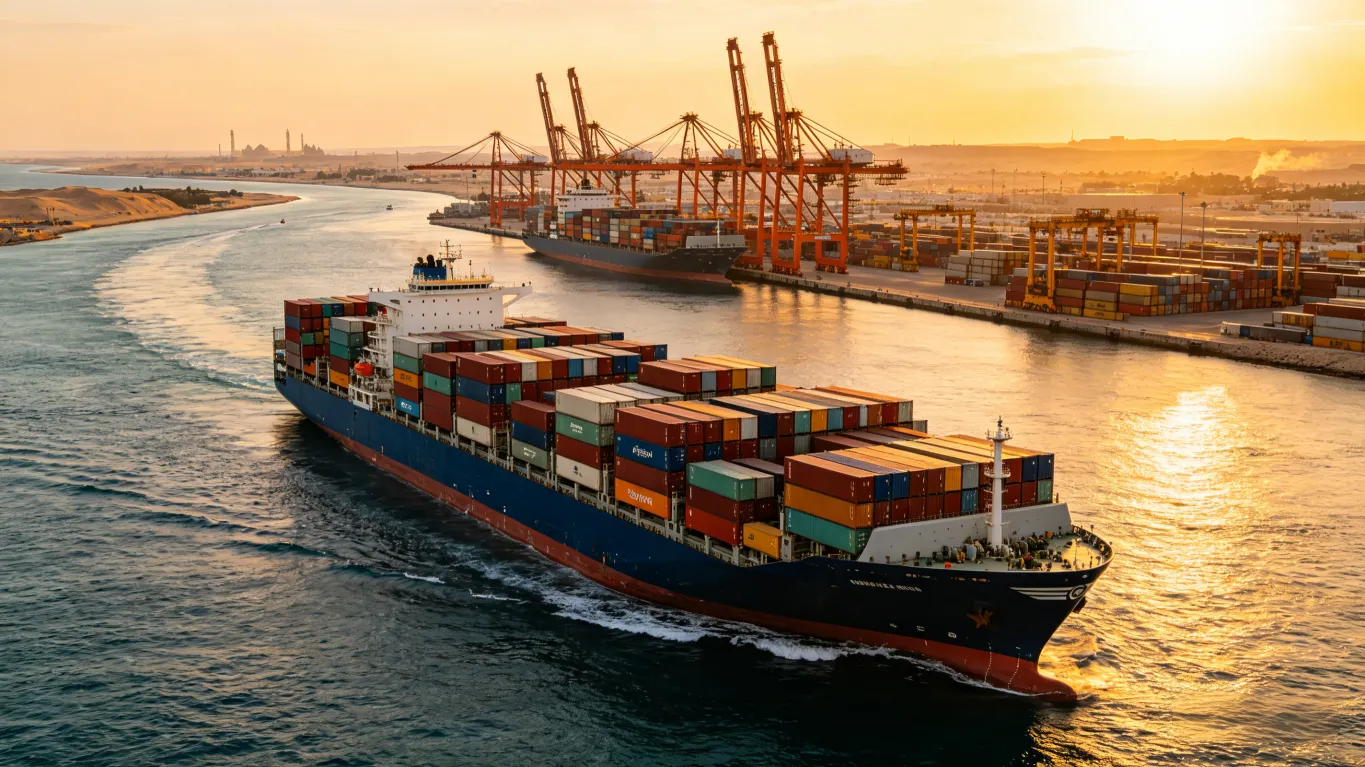
This comprehensive guide is designed to empower you with everything you need to know about shipping your goods safely and cost-effectively from China to Egypt. Drawing from our team's 10+ years of daily operational experience managing MENA trade lanes, we will cover the crucial differences between FCL and LCL shipping, break down the major origin and destination ports, and provide realistic port-to-port transit time estimates. Furthermore, we will delve into the current 2026 shipping cost breakdowns (including often-hidden fees like THC and BAF), share insider tips on reducing your overall freight expenses, and walk you step-by-step through the rigorous Egyptian customs clearance process, including the indispensable Nafeza and CargoX platforms. By the end of this guide, you will have the knowledge necessary to optimize your supply chain, avoid common pitfalls, and confidently choose the right logistics partner like AllBestShipping to handle your cargo.
2. Sea Freight Options: FCL vs. LCL
When it comes to ocean freight, making the right choice between Full Container Load (FCL) and Less than Container Load (LCL) is fundamental to balancing your shipping budget and transit time requirements. Understanding the nuances of these two primary shipping methods will allow you to make informed decisions based on the volume, value, and urgency of your cargo.
FCL (Full Container Load)
FCL is the preferred method for importers dealing with large volumes of goods. When you book an FCL shipment, you are renting an entire shipping container—typically a 20-foot (20GP), 40-foot (40GP), or 40-foot High Cube (40HQ)—exclusively for your merchandise.
The primary advantage of FCL is security and speed. Because the container is sealed at the manufacturer's facility in China and remains unopened until it reaches your warehouse in Egypt, the risk of damage, loss, or contamination from other shippers' goods is practically eliminated. Furthermore, FCL shipments generally experience faster transit times because they do not require the time-consuming consolidation and deconsolidation processes at the ports of origin and destination. From a cost perspective, if your cargo volume exceeds approximately 15 cubic meters (CBM), paying the flat rate for an entire container often becomes more economical than paying the per-CBM rate of LCL.
LCL (Less than Container Load)
For smaller shipments that do not justify the cost of an entire container, LCL is the most cost-effective solution. With LCL, your cargo shares container space with shipments from other importers heading to the same destination. You only pay for the exact volume (measured in CBM) or weight that your goods occupy, making it an excellent option for startups, small businesses, or sample orders.
However, LCL does come with trade-offs. The transit time is typically slightly longer—often adding 3 to 7 days to the overall journey—because the freight forwarder must consolidate various shipments into a single container in China and then deconsolidate them upon arrival in Egypt. Additionally, the handling involved in loading and unloading mixed cargo slightly increases the risk of minor damage. Expert Tip: When shipping LCL to Egypt, we strongly advise our clients to request palletization and shrink-wrapping from their suppliers to minimize handling risks during the deconsolidation phase at Alexandria port.
3. Major Shipping Ports (China to Egypt)
Choosing the optimal routing for your sea freight from China to Egypt involves selecting the right origin port in China and the most suitable destination port in Egypt. The decision should be based on the location of your supplier, the final destination of your goods, and the specific services offered by the shipping lines.
Top Origin Ports in China
China boasts some of the busiest and most technologically advanced ports in the world. The best port for your shipment will largely depend on where your manufacturer is located:
- Shanghai Port: The world's busiest container port, offering the most comprehensive range of shipping routes and the highest frequency of sailings to the Middle East and North Africa. Ideal for suppliers located in central and eastern China.
- Shenzhen Port: A major hub in southern China, perfect for electronics and manufactured goods coming out of the Pearl River Delta (Guangdong province).
- Ningbo-Zhoushan Port: Located close to Shanghai, Ningbo is an excellent alternative that sometimes offers less congestion and slightly lower handling fees.
- Qingdao Port: The preferred choice for heavy industry products, machinery, and agricultural goods originating from northern China.
- Guangzhou Port: Another key southern port, heavily utilized for textiles, garments, and general consumer goods.
Top Destination Ports in Egypt
Egypt's coastline is dotted with strategic ports that cater to different types of cargo and final destinations within the country:
- Alexandria Port: This is the largest and most historically significant port in Egypt, handling over 60% of the country's foreign trade. It is the default choice for general cargo, consumer goods, and industrial equipment destined for northern Egypt and the Nile Delta.
- Port Said: Situated at the northern entrance of the Suez Canal, Port Said is a critical transshipment hub. It is excellent for goods that might be redistributed or for quick access to the canal zone.
- Sokhna Port (Ain Sokhna): Located on the western coast of the Gulf of Suez, Sokhna is geographically the closest port to Cairo (about 120 km away). It has become increasingly popular for importers bringing goods directly to the capital, offering modern facilities and faster inland transit times.
- Damietta & Dekheila Ports: These serve as vital alternatives to Alexandria, often handling specialized cargo, bulk goods, and helping to alleviate congestion during peak shipping seasons.
| Origin Port in China | Destination Port in Egypt | Best Suited For | Typical Route Preference |
|---|---|---|---|
| Shanghai / Ningbo | Alexandria Port | General cargo, major import volumes | Direct sailings, most frequent |
| Shenzhen / Guangzhou | Sokhna Port | Electronics, fast access to Cairo | Fastest route to the capital |
| Qingdao | Port Said | Heavy machinery, transshipment | Strategic Suez Canal access |
| Shanghai / Shenzhen | Damietta | Specialized cargo, congestion avoidance | Alternative to Alexandria |
4. Transit Times for Sea Freight
Time is money in international trade, and having a realistic expectation of sea freight transit times is crucial for inventory management and cash flow planning. The journey from China to Egypt is a major maritime route, passing through the South China Sea, the Indian Ocean, the Red Sea, and finally reaching the Egyptian coast.
Port-to-Port Estimates
Generally, you can expect the port-to-port transit time to range between 20 to 40 days. The exact duration depends heavily on whether you book a direct sailing or a transshipment route, as well as the specific ports involved.
| Origin Port (China) | Destination Port (Egypt) | Estimated Transit Time (FCL) | Estimated Transit Time (LCL) |
|---|---|---|---|
| Shanghai | Alexandria | 24 - 28 Days | 28 - 34 Days |
| Shenzhen | Alexandria | 22 - 26 Days | 26 - 32 Days |
| Ningbo | Sokhna | 20 - 25 Days | 25 - 30 Days |
| Qingdao | Port Said | 28 - 35 Days | 32 - 40 Days |
Factors Affecting Transit Time
While the estimates above provide a solid baseline, several variables can impact the actual delivery date:
- Direct vs. Transshipment: Direct routes are faster but often more expensive. Transshipment (where the container is unloaded and reloaded onto a different vessel at an intermediate port like Jebel Ali in the UAE or Colombo in Sri Lanka) can add 5 to 10 days to the journey.
- Weather Conditions: Typhoons in the South China Sea during the late summer months or severe storms in the Indian Ocean can force vessels to reroute or delay departure.
- Port Congestion: Peak seasons (such as the weeks leading up to the Chinese New Year or major global holidays) often lead to severe congestion at both origin and destination ports, causing vessels to wait at anchorage before they can berth and unload.
- Customs Delays: Incomplete paperwork or failing to comply with Egypt's strict ACID regulations can hold up your cargo for weeks upon arrival.
You may be interested in the following related shipping routes:
- Shipping from China to UAE
- Shipping from China to Egypt
- Shipping from China to Iran
- Shipping from China to Iraq
- Shipping from China to Saudi Arabia
5. Shipping Costs & Rates in 2026
The cost of sea freight from China to Egypt is subject to extreme volatility, influenced by global economic conditions, fuel prices, carrier capacity, and geopolitical events affecting the Red Sea and Suez Canal regions. As a freight forwarding expert, I always advise clients to look beyond the basic freight rate and understand the total landed cost.
Cost Breakdown
A standard ocean freight quote consists of several components:
- Base Freight Rate: The core charge levied by the shipping line (e.g., Maersk, MSC, COSCO) for transporting the container across the ocean.
- Terminal Handling Charges (THC): Fees charged by the ports in both China and Egypt for lifting the container onto and off the vessel.
- Bunker Adjustment Factor (BAF): A surcharge that fluctuates with the global price of marine fuel.
- Peak Season Surcharge (PSS): An additional fee applied during high-demand periods when shipping space is scarce.
- Documentation Fees: Charges for issuing the Bill of Lading, export declarations, and handling the Egyptian CargoX requirements.
Below is an estimated rate guide for 2026. Please note that these are approximate market averages and can change weekly:
| Container Type / Volume | Estimated Rate (Shenzhen to Alexandria) | Estimated Rate (Shanghai to Sokhna) |
|---|---|---|
| 20ft Container (20GP) | $3,200 - $3,800 | $3,300 - $3,900 |
| 40ft Container (40GP/HQ) | $4,500 - $5,500 | $4,700 - $5,700 |
| LCL (per CBM) | $120 - $160 | $130 - $170 |
Tips to Reduce Shipping Rates
- Consolidate Shipments: If you buy from multiple suppliers in China, use a freight forwarder like AllBestShipping to consolidate the goods into a single FCL container. This is vastly cheaper than shipping multiple LCL consignments.
- Book in Advance: Secure your space at least 3-4 weeks prior to the cargo readiness date to lock in better rates and guarantee vessel space.
- Optimize Packaging: For LCL, dead space costs money. Ensure your supplier packs the goods as densely as possible to minimize the CBM.
- Choose the Right Incoterm: Negotiate FOB (Free on Board) terms with your supplier rather than EXW (Ex Works), so the supplier covers the local transport and export clearance costs in China.
6. Egypt Customs Clearance & The ACID System
Importing into Egypt involves one of the most rigorous customs clearance processes in the world. The Egyptian government has modernized its import regulations to crack down on illegal goods and ensure quality control, making strict compliance non-negotiable.
The Nafeza System & ACID (Advance Cargo Information Declaration)
In 2021, Egypt revolutionized its customs procedures by implementing the Nafeza (National Single Window for Foreign Trade Facilitation) system. The cornerstone of this system is the ACID (Advance Cargo Information Declaration) requirement.
What is ACID? It is a mandatory, 19-digit customs number that must be obtained before your goods even leave the port in China. If a vessel arrives in Egypt and your shipment does not have a valid ACID number on its documentation, the cargo will be immediately rejected and returned to China at your expense.
The CargoX Platform: The Egyptian customs authority utilizes the blockchain-based CargoX platform for the secure transfer of shipping documents. The process works as follows:
- The Egyptian importer registers on the Nafeza portal and requests an ACID number for the specific shipment.
- The importer shares the ACID number with the Chinese exporter.
- The Chinese exporter must register on the CargoX platform.
- The exporter uploads all mandatory commercial documents (with the ACID number prominently displayed) to CargoX for transmission to the Egyptian customs authorities.
Mandatory Documents
To ensure smooth customs clearance, the following documents must be flawlessly prepared and uploaded via CargoX:
- Bill of Lading (B/L): The master transport document issued by the carrier. It must clearly state the ACID number, the importer's tax ID, and the exporter's registration number.
- Commercial Invoice: Must detail the exact description of the goods, HS codes, unit prices, and total value.
- Packing List: A detailed breakdown of the weight, dimensions, and packaging type for every item in the container.
- Certificate of Origin (CO): Essential for determining import duties and proving where the goods were manufactured.
- Quality Certificates: Depending on the product category (e.g., electronics, textiles, food), you may need specific inspection certificates (like GOEIC registration) to prove compliance with Egyptian standards.
Navigating the Nafeza and CargoX systems can be incredibly daunting for first-time importers. In our experience, even a minor typo—such as a mismatched HS code on the Commercial Invoice compared to the ACID registration—can trigger the Egyptian customs system to block clearance, resulting in thousands of dollars in Demurrage and Detention charges at Alexandria port. Always ensure your supplier sends draft documents for your review before they are uploaded to the CargoX blockchain.
7. DDP Shipping from China to Egypt
For importers who want to completely bypass the headaches of freight negotiations, customs clearance, and unpredictable local taxes, DDP (Delivered Duty Paid) is the ultimate solution.
What is DDP?
DDP is an Incoterm where the seller (or the freight forwarder acting on their behalf) assumes total responsibility, risk, and cost for transporting the goods from the factory in China all the way to the buyer's specified address in Egypt. This is essentially a form of Door-to-Door Shipping that includes paying all ocean freight charges, handling the export clearance in China, managing the complex ACID/Nafeza import clearance in Egypt, and paying all applicable Egyptian import duties and Value Added Tax (VAT).
Benefits for Egyptian Importers
- Hassle-Free Process: You don't need to register on Nafeza, navigate CargoX, or deal with Egyptian customs brokers. The freight forwarder handles the entire bureaucratic burden.
- Predictable Landed Costs: With DDP, the quote you receive upfront is the final price you pay. There are no surprise demurrage fees, unexpected customs re-evaluations, or hidden terminal charges.
- Time Savings: Because experienced forwarders manage the clearance process, DDP shipments often clear customs faster, allowing you to focus on selling your products rather than chasing paperwork.
8. Why Choose AllBestShipping
When shipping from China to a highly regulated market like Egypt, your choice of freight forwarder can make or break your profit margins. AllBestShipping stands out as the premier logistics partner for the MENA region.
- Expertise in Middle East & North Africa (MENA) Routes: We possess over a decade of hands-on experience navigating the specific logistical and bureaucratic challenges of the Egyptian market. We understand the Nafeza system inside and out and ensure 100% compliance with ACID regulations.
- Competitive Pricing & Space Guarantee: Through our long-standing, strategic partnerships with tier-one ocean carriers (such as COSCO, Maersk, and Evergreen), AllBestShipping secures highly competitive freight rates and guaranteed vessel space, even during the chaotic peak seasons.
- End-to-End Service: We provide a truly seamless logistics experience. From picking up the cargo at your supplier's factory in Shenzhen, consolidating goods in our local warehouses, managing the CargoX document uploads, to executing the final truck delivery in Cairo or Alexandria, AllBestShipping is your single point of contact for the entire supply chain.
9. FAQ
What is the cheapest way to ship from China to Egypt? For commercial volumes, sea freight is undeniably the cheapest method. If your cargo is over 15 CBM, booking an FCL (Full Container Load) is the most cost-effective approach. For smaller volumes between 2 CBM and 15 CBM, LCL (Less than Container Load) ocean freight is the most economical choice, far undercutting the cost of air freight.
How long does customs clearance take in Egypt? If your documentation is perfect and your ACID number was correctly processed through CargoX prior to arrival, standard customs clearance at Egyptian ports like Alexandria or Sokhna typically takes between 3 to 7 business days. However, if there are discrepancies in your paperwork or if customs flags your cargo for physical inspection, delays can extend to several weeks.
Do I need an ACID number for all sea freight to Egypt? Yes. Under the Egyptian Nafeza system, obtaining an Advance Cargo Information Declaration (ACID) number is strictly mandatory for all commercial sea freight shipments entering the country. Failure to obtain and display this number on your shipping documents will result in the cargo being denied entry.
10. Conclusion
Mastering the logistics of sea freight from China to Egypt requires careful planning, a deep understanding of maritime routes, and strict adherence to Egyptian customs regulations like the ACID system. Whether you are optimizing your costs through FCL consolidation, selecting the fastest route into Sokhna port, or opting for the simplicity of a DDP service, the key to success lies in preparation and expert execution.
Don't let the complexities of international shipping eat into your profit margins or delay your product launches. Ready to optimize your shipping route from China to Egypt? Contact Us today for a free, no-obligation quote and let our team of seasoned logistics experts handle your cargo with precision and care.