Complete Guide to Air Shipping from China to Australia: Costs, Time & Process
The booming e-commerce market and rapid expansion of bilateral trade between China and Australia make fast, reliable logistics solutions absolutely crucial for modern businesses. In our 10+ years of managing international supply chains at AllBestShipping, we've seen firsthand how navigating complex air freight costs, stringent Australian customs, and varying transit timelines can be both overwhelming and costly if not executed correctly. This guide covers everything you need to know, from rates and times to expert operational tips based on real-world shipments we handle daily. In fact, Air shipping from China to Australia is often the single best choice for high-value or time-sensitive cargo, ensuring your supply chain remains robust and responsive to market demands.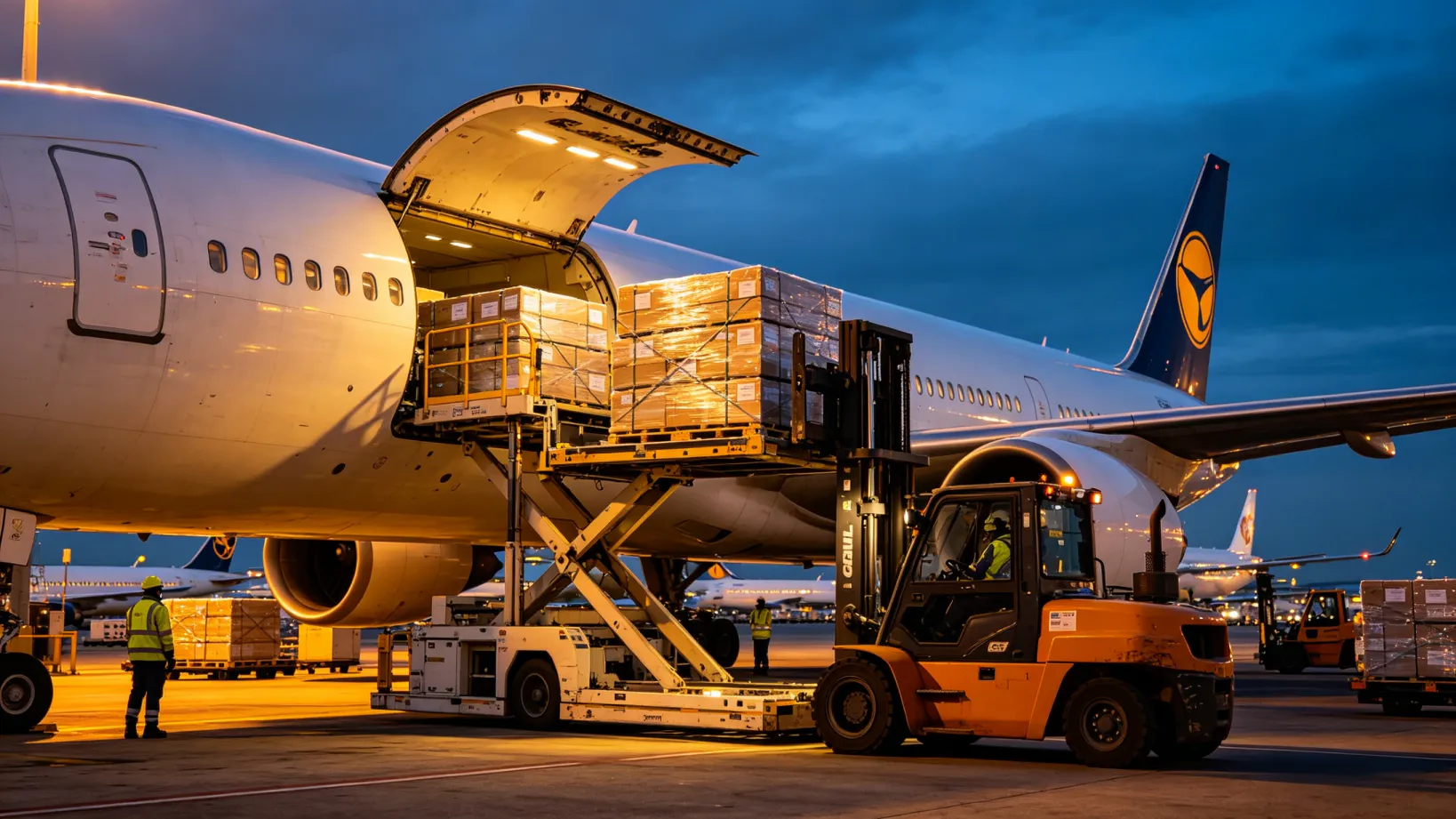
Air Freight vs. Sea Freight: When to Choose Air Shipping?
Choosing the right mode of transportation is the foundation of a successful supply chain strategy. While sea freight is traditionally the go-to for massive volumes and heavy machinery, air freight serves a critical, distinct purpose in international logistics. So, when exactly should you opt for air transport over the ocean?
Time Sensitivity and Urgency
The primary advantage of air shipping is unmatched speed. If your supply chain operates on a Just-In-Time (JIT) model, or if you are dealing with urgent inventory replenishments to meet seasonal demands, air freight is non-negotiable. For example, we frequently handle urgent electronics shipments out of Shenzhen where a 2-day ocean freight delay would mean missing a critical retail product launch in Sydney. It is also the only viable option for perishable goods, temperature-sensitive pharmaceuticals, and high-tech components that quickly lose value over a prolonged ocean voyage.
Cargo Value and Security Requirements
Air freight is inherently more secure than sea freight. The strict regulations at airport terminals, coupled with significantly less cargo handling, mean a drastic reduction in the risk of theft, damage, and loss. High-value, low-volume goods—such as luxury fashion, consumer electronics, and specialized medical equipment—are ideal candidates for Air Freight transport. The slightly higher transportation cost is easily offset by the reduced insurance premiums and minimized risk of inventory shrinkage.
Cost Comparison Thresholds
A common misconception we hear from first-time importers is that air freight is always prohibitively expensive. In reality, the cost gap narrows significantly for smaller shipments. Based on our latest pricing data, if your shipment weighs between 150 kg and 500 kg, air freight can often be remarkably competitive with Less than Container Load (LCL) sea freight—especially once you factor in all destination port charges (like CFS un-stuffing fees) and inland delivery fees in Australia. For anything below 150 kg, express courier services usually provide the most economical door-to-door solution.
How Much Does Air Shipping from China to Australia Cost?
Understanding the pricing structure of air logistics is vital for budgeting. Air freight rates from China to Australia are not static; they fluctuate based on market demand, fuel prices, and seasonal peaks.
Breakdown of Air Freight Rates
Airlines and freight forwarders utilize a tiered pricing structure based on weight brackets. The heavier your shipment, the lower the per-kilogram rate. Common pricing tiers are typically divided into:
- +45 kg
- +100 kg
- +300 kg
- +500 kg
- +1000 kg
If you are shipping 350 kg, you will secure the +300 kg rate, which is significantly cheaper per kilo than the +100 kg bracket.
Factors Affecting Your Final Costs
Your final invoice will consist of more than just the base freight rate. Several critical factors influence the bottom line:
- Fuel Surcharges (FSC) and Security Surcharges (SSC): These fluctuate frequently based on global oil prices and geopolitical events.
- Peak Seasons: The period leading up to major holidays (such as Christmas, Black Friday, and the Chinese New Year) sees a massive spike in demand, driving prices up dramatically.
- Volumetric Weight vs. Gross Weight: This is the most crucial concept in air freight pricing. Airlines charge based on the Chargeable Weight, which is the greater of the actual gross weight or the Volumetric Weight (calculated by Length x Width x Height in cm / 6000). If you are shipping light but bulky items (like pillows or foam), you will be charged for the space they take up, not just their physical weight.
Estimated Air Freight Rates Comparison
Note: Rates are subject to market fluctuations and should be used as a general benchmark.
| Shipping Method | Weight Bracket | Estimated Cost (per kg) | Service Level |
|---|---|---|---|
| Express Courier (Door-to-Door) | 10 kg - 50 kg | $7.00 - $12.00 USD | Premium, fastest, all-inclusive |
| Standard Air Freight (Port-to-Port) | 100 kg - 300 kg | $4.50 - $7.50 USD | Requires separate customs & delivery |
| Standard Air Freight (Port-to-Port) | 500 kg+ | $3.50 - $6.00 USD | Best for larger commercial loads |
Additional Fees to Watch Out For
When budgeting, ensure you account for origin and destination charges, which may include:
- Export customs clearance fees in China.
- Terminal Handling Charges (THC) at the departure and arrival airports.
- Import customs clearance in Australia.
- Final mile delivery fees (trucking from the Australian airport to your warehouse).
- Cargo insurance premiums.
Transit Times for Air Freight to Australia
Speed is the ultimate selling point of air shipping, but "fast" can mean different things depending on the exact service level you choose.
Standard Air Freight vs. Express Courier
Express Courier services (DHL, FedEx, UPS) offer a seamless, door-to-door experience. They handle everything, including customs, and can often deliver from a factory in Shenzhen to a retail store in Sydney within 3 to 5 days.
Standard Air Freight is typically a port-to-port service. While the actual flight might only take 9 to 12 hours, you must factor in the time required for cargo consolidation, export clearance in China, flight scheduling, import clearance in Australia, and final delivery. This entire process usually spans 5 to 8 days.
Direct Flights vs. Transshipment Routes
To save costs, your freight forwarder might route your cargo on an indirect flight (e.g., stopping in Singapore or Kuala Lumpur before reaching Australia). While direct flights are faster, transshipment routes can offer substantial cost savings if your delivery window allows for an extra 2 to 4 days of transit time.
Average Transit Times
| Origin City (China) | Destination City (Australia) | Direct Flight Transit Time | Transshipment Transit Time |
|---|---|---|---|
| Guangzhou (CAN) / Shenzhen (SZX) | Sydney (SYD) | 1 - 2 Days | 4 - 6 Days |
| Shanghai (PVG) | Melbourne (MEL) | 1 - 2 Days | 5 - 7 Days |
| Beijing (PEK) | Brisbane (BNE) | 2 - 3 Days | 5 - 8 Days |
| Hong Kong (HKG) | Perth (PER) | 1 - 2 Days | 4 - 6 Days |
(Note: Add 2-4 days for complete door-to-door service including customs and trucking).
You may be interested in the following related shipping routes:
- Shipping from China to Mexico
- Shipping from China to Canada
- Shipping From China to Australia
- Shipping From China to UK
- Shipping from China to US
Main Airports for Cargo Traffic
A smooth logistics operation relies on utilizing major international hubs equipped with advanced cargo handling facilities.
Top Origin Airports in China:
- Shanghai Pudong International Airport (PVG): The busiest cargo hub in China, ideal for goods manufactured in the Yangtze River Delta.
- Guangzhou Baiyun (CAN) & Shenzhen Bao'an (SZX): The twin powerhouses of the Pearl River Delta, perfect for electronics and e-commerce exports.
- Hong Kong International Airport (HKG): Offers unparalleled flexibility and fewer export restrictions, particularly for battery-powered items.
- Beijing Capital (PEK): Serves the northern manufacturing sectors.
Top Destination Airports in Australia:
- Sydney Kingsford Smith Airport (SYD): The primary gateway for the majority of Australian imports.
- Melbourne Airport (MEL): The second-largest hub, servicing the southern states.
- Brisbane Airport (BNE): Key entry point for Queensland and northern regions.
- Perth Airport (PER): Crucial for shipments destined for Western Australia, particularly mining and industrial equipment.
Navigating Customs and Duties (ChAFTA)
Australian Customs, managed by the Australian Border Force (ABF), is notoriously strict. However, the trade relationship between the two nations offers significant advantages if navigated correctly.
Overview of the China-Australia Free Trade Agreement (ChAFTA)
Enacted to boost bilateral trade, ChAFTA has eliminated tariffs on a vast majority of goods imported from China into Australia. This means that if your goods qualify, you can bypass the standard 5% customs duty that applies to many imported products.
How to Qualify for Zero Tariffs
To take advantage of ChAFTA, your goods must meet the "Rules of Origin," proving they were wholly obtained or substantially transformed in China. A common mistake we see is clients assuming a standard Certificate of Origin is sufficient. You specifically need a ChAFTA Certificate of Origin (COO) issued by an authorized Chinese body (like the CCPIT or China Customs). We strongly advise preparing this document at least 3-5 days before cargo departure; without this specific document upon arrival, the ABF will hold you liable for the standard 5% import duties.
Understanding GST (Goods and Services Tax)
While ChAFTA can eliminate customs duties, it does not exempt you from the Goods and Services Tax (GST). Australia levies a flat 10% GST on most imported goods. The GST is calculated based on the Value of the Taxable Importation (VoTI), which includes the customs value of the goods, the cost of international transport (freight), insurance, and any applicable customs duties.
Required Documents for Air Freight Clearance
Accurate documentation is the difference between a shipment that clears customs in hours and one that incurs thousands of dollars in storage fees due to delays. Ensure the following documents are flawlessly prepared:
- Commercial Invoice: A detailed bill of sale between the buyer and seller, stating the exact value, quantity, and description of the goods. This is used by customs to assess duties and taxes.
- Packing List: Details the exact physical contents, dimensions, gross weight, and net weight of every carton or pallet in the shipment.
- Air Waybill (AWB): The transport document issued by the airline (Master AWB) or the freight forwarder (House AWB). It serves as a receipt of goods, a contract of carriage, and a routing guide.
- Certificate of Origin (COO): As discussed, vital for claiming tariff exemptions under ChAFTA.
- Shipper's Letter of Instruction (SLI): A document provided by the exporter instructing the freight forwarder on how and where to handle the export shipment.
Prohibited and Restricted Items for Air Freight
Air travel is subject to intense safety regulations, and Australia has some of the strictest biosecurity laws on the planet.
Australia's Strict Biosecurity Laws
The Department of Agriculture, Fisheries and Forestry (DAFF) heavily regulates imports to protect Australia's unique environment. Any organic matter, food products, plant materials, or animal products are scrutinized and frequently undergo X-ray and physical inspection. Furthermore, if your cargo uses wooden pallets or packaging, it must be fumigated or heat-treated and clearly stamped with an ISPM-15 mark. We've seen unprepared clients face fines upwards of $2,000 AUD and lengthy storage delays simply because a wooden crate lacked a valid ISPM-15 stamp. If it fails inspection, your cargo will be treated at your expense or outright destroyed.
Dangerous Goods (DG) and Battery Restrictions
Airlines classify a wide range of everyday items as Dangerous Goods. The most common hurdle for Chinese exports is Lithium-ion batteries (found in laptops, phones, e-bikes, and toys). These must be packed, labeled, and declared according to strict IATA (International Air Transport Association) regulations. Many passenger airlines restrict them entirely (specifically UN3480 standalone batteries), meaning we must actively secure space for our clients on specialized approved freighter aircraft. Never attempt to hide batteries in your shipment; the penalties and safety risks are severe.
Common Prohibited Items
You generally cannot ship explosives, flammable liquids, toxic substances, counterfeit goods, or weapons via standard air freight. Always consult your forwarder before attempting to ship chemicals, liquids, or powders.
Step-by-Step Air Shipping Process
Understanding the workflow helps you coordinate better with your suppliers and logistics partners.
- Requesting a Quote and Booking: Provide your freight forwarder with the cargo details (weight, dimensions, commodity type, and Incoterms). The forwarder secures space with an airline.
- Cargo Pickup: The forwarder arranges for a truck to collect the goods from the Chinese supplier's factory and transports them to the origin airport's warehouse.
- Export Customs Clearance: The forwarder's Customs Clearance broker submits the necessary documentation to Chinese Customs to legally export the goods.
- Air Transit: The cargo is loaded onto the aircraft and flown to Australia.
- Import Customs Clearance: Before or upon arrival, the Australian customs broker submits the import declaration, pays the necessary GST/Duties, and secures release from the ABF and DAFF.
- Final Mile Delivery: The cargo is retrieved from the destination airport terminal and trucked to the final consignee's warehouse or storefront.
Why Choose AllBestShipping for Your Air Freight Needs?
Navigating the complexities of international air freight requires a trusted partner. At AllBestShipping, we leverage over a decade of industry expertise to provide seamless, cost-effective logistics solutions tailored to your business.
- Unbeatable Rates: Through our established, long-term partnerships with top-tier airlines, we secure priority space and highly competitive rates, even during peak seasons.
- End-to-End Visibility: We provide transparent, real-time tracking and dedicated customer support, ensuring you always know exactly where your cargo is.
- Customs Expertise: Our team of in-house customs brokers are experts in ChAFTA regulations and DAFF biosecurity compliance, guaranteeing smooth, delay-free clearance in Australia.
- Tailored Solutions: Whether you need an urgent express courier delivery or a consolidated port-to-port solution for oversized cargo, we design the route that best fits your budget and timeline.
Don't let logistics bottlenecks slow down your growth. Contact AllBestShipping today for a free, no-obligation quote and experience the difference of working with true freight forwarding professionals!
Frequently Asked Questions (FAQ)
What is the minimum weight for air freight from China to Australia? While you can ship a 1 kg package, traditional air freight (port-to-port) usually isn't cost-effective for anything under 45 kg. For shipments below 45 kg, using an express courier like DHL or FedEx is highly recommended for better pricing and faster door-to-door service.
How is volumetric weight calculated for air cargo? Airlines charge based on the space your cargo takes up if it is light but bulky. The standard formula is Length (cm) x Width (cm) x Height (cm) / 6000 = Volumetric Weight in kg. You will be billed on whichever is higher: the actual weight or the volumetric weight.
Can I track my air freight shipment in real-time? Yes. When you book with a professional forwarder like AllBestShipping, you will be provided with an Air Waybill (AWB) number, which allows you to track your cargo's flight status and customs milestones online.
Is cargo insurance necessary for air freight? Absolutely. While air freight is highly secure, turbulence, handling accidents, or unforeseen events can occur. Carrier liability is strictly limited by international conventions (usually around $20-25 USD per kg), which rarely covers the full commercial value of the goods. Comprehensive cargo insurance is a small price to pay for total peace of mind.
Conclusion
Air shipping from China to Australia offers unparalleled speed, security, and reliability for businesses looking to optimize their supply chain. While the costs are higher than ocean freight, the ability to rapidly restock inventory, capitalize on market trends, and safely transport high-value goods makes it an indispensable tool for modern trade. By understanding the pricing structures, mastering customs documentation, and leveraging free trade agreements like ChAFTA, you can significantly mitigate expenses and avoid costly delays.
Ultimately, the key to a flawless import experience lies in partnering with the right logistics experts. Let AllBestShipping handle the heavy lifting, complex paperwork, and airline negotiations so you can focus on what matters most—growing your business. Reach out to our team today to streamline your next shipment.