Comprehensive Guide to Sea Freight from China to UAE: Costs, Transit Times, and Customs
Navigating international logistics can be a daunting task for importers dealing with electronics, textiles, and construction materials. In our team's experience managing thousands of shipments across the China-Middle East corridor, we've seen how fluctuating shipping rates, unpredictable transit schedules, and complex customs procedures can make or break a supply chain. If you are looking for the most cost-effective and dependable transportation method, utilizing sea freight from China to UAE remains the undisputed powerhouse of global commerce between these two dynamic and rapidly growing markets.
In this comprehensive guide, updated for 2026, we will break down everything you need to know to master this vital trade corridor based on real-world operational insights. From detailed shipping costs and precise transit times to a thorough overview of major ports and essential customs clearance procedures, this article is designed to equip you with expert strategies. Read on to discover actionable advice that will help you optimize your logistics operations, reduce unexpected fees like Demurrage, and ensure your cargo arrives safely and on time.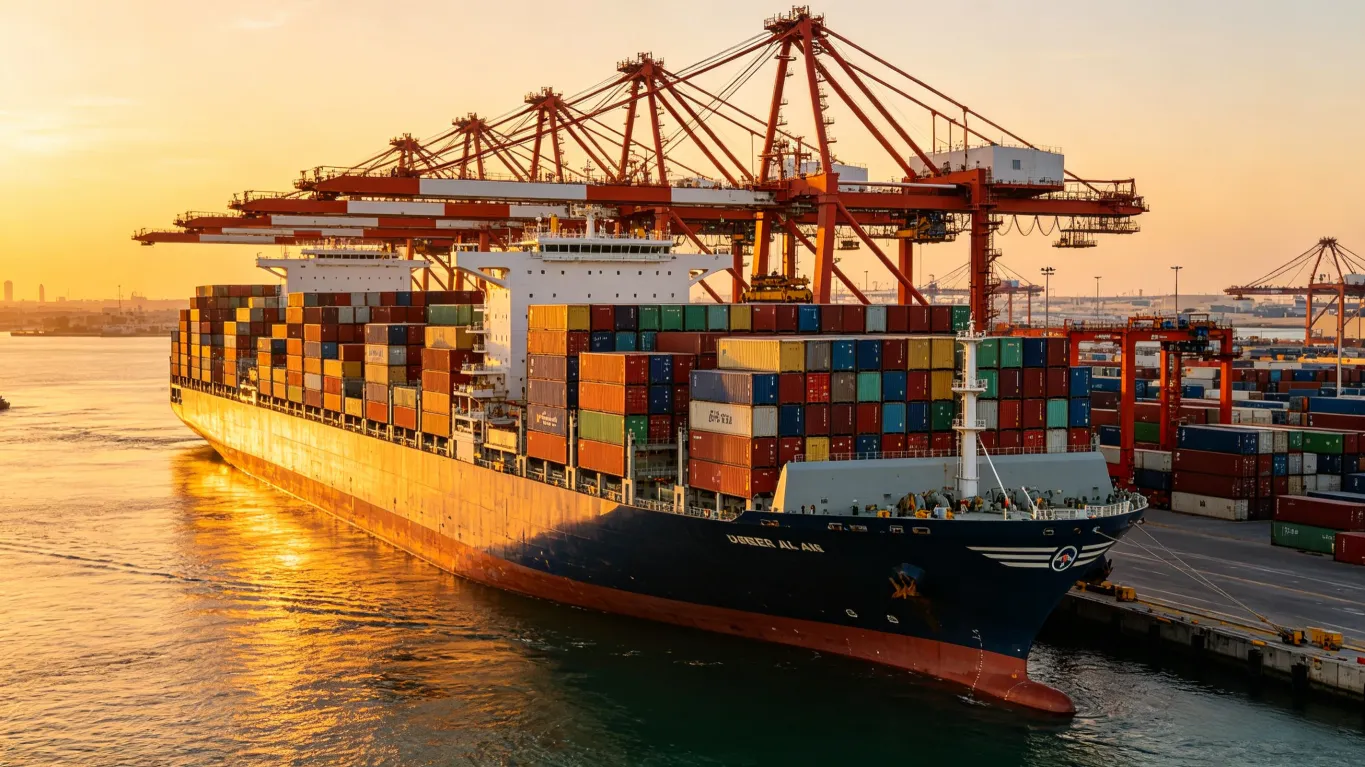
Why Choose Sea Freight from China to UAE?
When importing goods from the manufacturing powerhouse of the world to the thriving markets of the Middle East, selecting the right mode of transportation is your first major decision. Ocean freight stands out as the premier choice for a multitude of compelling reasons, particularly when dealing with commercial quantities.
Unmatched Cost-Effectiveness
The most significant advantage of ocean shipping is its unparalleled cost-efficiency. Compared to air freight, which prices shipments based on a combination of actual weight and volumetric weight, ocean transport allows you to move massive volumes of goods at a fraction of the cost. For heavy machinery, bulky furniture, or large wholesale orders of consumer electronics, the cost per unit plummets when shipped by sea. This dramatic reduction in logistics expenditure directly translates to higher profit margins for your business, allowing you to remain highly competitive in the UAE retail and wholesale markets.
Massive Capacity for All Cargo Types
Ocean shipping offers an incredible capacity that simply cannot be matched by air transport. Whether you are shipping raw materials, hazardous goods, oversized construction equipment, or standard retail products, cargo ships are designed to handle it all. Standard 20-foot and 40-foot containers provide versatile solutions for general cargo, while specialized containers like flat racks, open tops, and reefers accommodate out-of-gauge or temperature-sensitive goods. This flexibility ensures that no matter what your factory in China produces, there is a maritime solution ready to transport it to Dubai or Abu Dhabi.
A Lower Environmental Footprint
In today's globally conscious business environment, sustainability is becoming increasingly important to consumers and stakeholders alike. Ocean shipping boasts a significantly lower carbon footprint per ton of cargo transported compared to air freight. By opting for maritime transport, your company not only saves money but also contributes to greener global supply chains, a factor that is increasingly being recognized and rewarded by corporate sustainability initiatives across the UAE.
FCL vs. LCL: Which is Right for Your Shipment?
Understanding the distinction between FCL and LCL is crucial for optimizing your shipping budget and transit times. Depending on the volume of your order, choosing the correct container strategy can save you thousands of dollars.
FCL (Full Container Load)
FCL refers to an arrangement where you rent the entire space of a shipping container (typically a 20ft or 40ft unit) exclusively for your goods. You do not share this space with any other importer.
- Ideal Use Cases: FCL is the standard choice when your cargo volume exceeds roughly 15 cubic meters (CBM) or when you are shipping highly fragile, high-value, or sensitive goods that should not be handled alongside other commodities.
- Key Benefits: Because the container is sealed at the factory in China and only opened upon arrival at your warehouse or a Bonded Warehouse in the UAE, the risk of damage or theft is drastically reduced. Furthermore, FCL generally enjoys faster transit times since it bypasses the time-consuming consolidation and deconsolidation processes required at origin and destination ports. For example, a recent client shipping high-end electronics from Shenzhen to Jebel Ali shaved 4 days off their transit time simply by switching to FCL.
LCL (Less than Container Load)
LCL is the perfect solution for smaller shipments. Instead of paying for an entire container that you cannot fill, you only pay for the specific volume (measured in CBM) that your cargo occupies within a shared container.
- Ideal Use Cases: This method is highly recommended for shipments ranging from 1 CBM to 15 CBM. It is incredibly popular among small to medium-sized enterprises (SMEs) and e-commerce sellers who order smaller batches of inventory to maintain cash flow.
- Considerations: While LCL is cost-effective for small volumes, it does require additional handling. Your goods must be consolidated with other importers' cargo at a warehouse in China before loading, and then deconsolidated upon arrival in the UAE. This process can add several days to your overall transit time and introduces a slightly higher risk of handling damage.
Major Seaports in China and the UAE
The efficiency of your supply chain heavily depends on the origin and destination ports you select. Both China and the UAE boast some of the most advanced and busiest maritime infrastructure in the world.
Top Origin Ports in China
China's extensive coastline is dotted with world-class ports, each serving specific manufacturing hubs:
- Shanghai Port: The busiest container port in the world. It is the primary gateway for goods manufactured in the Yangtze River Delta and is excellent for general cargo, electronics, and textiles.
- Shenzhen and Guangzhou Ports: Located in the Pearl River Delta, these ports are the lifeblood of southern China's manufacturing sector, making them the ideal departure points for tech gadgets, consumer electronics, and light manufactured goods.
- Ningbo-Zhoushan Port: A massive deep-water port that handles a staggering volume of cargo, particularly suited for heavy machinery, raw materials, and bulky industrial products.
- Qingdao Port: Located in the north, it is a crucial hub for agricultural products, tires, and heavy industrial equipment.
Top Destination Ports in the UAE
The UAE serves as the primary logistics gateway to the entire Middle East and North Africa (MENA) region.
- Jebel Ali Port (Dubai): The undisputed crown jewel of Middle Eastern logistics. It is the largest man-made harbor in the world and the busiest port in the region. With state-of-the-art facilities and seamless integration with free trade zones, it handles the vast majority of imports from China.
- Khalifa Port (Abu Dhabi): A rapidly expanding, highly automated deep-water port. It offers incredible efficiency and is becoming an increasingly popular alternative to Jebel Ali, especially for cargo destined directly for the capital or heavy industrial zones.
- Sharjah Port (Port Khalid): While smaller than its neighbors, it offers excellent strategic value for specific regional distribution and can sometimes provide cost-saving opportunities for niche cargo.
| Port Country | Major Port Name | Key Characteristics & Specializations |
|---|---|---|
| China | Shanghai Port | Busiest globally; ideal for general cargo from central China. |
| China | Shenzhen Port | Tech and electronics hub; serves southern manufacturing. |
| China | Ningbo Port | Excellent for heavy industry, raw materials, and bulky goods. |
| UAE | Jebel Ali (Dubai) | Largest in the Middle East; premier hub for all commercial goods. |
| UAE | Khalifa Port (Abu Dhabi) | Highly automated; great for industrial cargo and capital distribution. |
Transit Times for Sea Freight from China to UAE
Time is money in international trade. While ocean transport is slower than air freight, modern container vessels offer highly reliable schedules. On average, the port-to-port transit time from major Chinese ports to the UAE ranges between 15 to 25 days.
Estimated Transit Time Table
Below is a detailed breakdown of estimated port-to-port transit times:
| Origin Port (China) | Destination Port (UAE) | Estimated Transit Time (Days) |
|---|---|---|
| Shanghai | Jebel Ali, Dubai | 18 - 22 Days |
| Shenzhen / Guangzhou | Jebel Ali, Dubai | 14 - 18 Days |
| Ningbo | Khalifa Port, Abu Dhabi | 20 - 24 Days |
| Qingdao | Jebel Ali, Dubai | 22 - 26 Days |
| Shanghai | Sharjah | 20 - 25 Days |
Note: These are estimated port-to-port times. Door-to-door delivery will require an additional 5-10 days for inland transportation, consolidation/deconsolidation, and customs clearance.
Factors Affecting Transit Times
Several variables can impact your delivery schedule:
- Direct vs. Transshipment: Direct vessels travel straight from China to the UAE and are the fastest. Transshipment routes, where cargo is unloaded and reloaded at an intermediate hub (like Singapore or Colombo), will add several days to the journey but are often cheaper.
- Port Congestion: Peak seasons (such as the weeks leading up to Chinese New Year or major UAE shopping festivals like Dubai Shopping Festival) can cause severe vessel backlogs. We consistently advise our clients to pad their schedules by 5-7 days during Q1 and Q4 to account for these bottlenecks.
- Weather Conditions: Typhoons in the South China Sea or severe weather in the Indian Ocean can force vessels to alter course or reduce speed for safety.
You may be interested in the following related shipping routes:
- Shipping from China to Egypt
- Shipping from China to Iran
- Shipping from China to Iraq
- Shipping from China to Saudi Arabia
How Much Does Sea Freight Cost from China to UAE?
Calculating the exact cost of your shipment involves multiple variables. Ocean freight rates are notoriously volatile and subject to global market dynamics.
Understanding the Cost Breakdown
A comprehensive freight quote includes several components:
- Ocean Freight Rate: The base cost charged by the shipping line to move the container across the ocean.
- Terminal Handling Charges (THC): Fees levied by the ports at both origin and destination for lifting the container on and off the vessel.
- Bunker Adjustment Factor (BAF): A floating surcharge that accounts for the fluctuating price of maritime fuel.
- Peak Season Surcharge (PSS): Additional fees applied during periods of high demand when vessel space is scarce.
- Customs Clearance Fees: Charges for the administrative work of submitting documentation to customs authorities. Keep an eye out for potential Demurrage (charges for containers sitting at the port beyond the free days) and Detention (charges for holding empty containers outside the port) fees, which can quickly wipe out profit margins if paperwork is delayed.
Estimated Freight Rates (2026 Market Averages)
Disclaimer: Freight rates fluctuate daily based on global events, such as the Red Sea rerouting impacts we've seen recently. The following table represents estimated averages for reference purposes only.
| Container / Shipment Type | Estimated Cost (USD) |
|---|---|
| 20ft Container (FCL) | $1,200 - $1,800 |
| 40ft Container (FCL) | $1,800 - $2,600 |
| 40ft High Cube (HQ) | $1,900 - $2,800 |
| LCL (Per Cubic Meter - CBM) | $60 - $120 per CBM |
Navigating Peak Seasons
To optimize your costs, it is vital to plan around peak shipping seasons. The most significant price spikes occur in the month leading up to the Chinese New Year (usually late January or February) as factories rush to export goods before shutting down. Another peak occurs from August to October as retailers globally stock up for Q4 holiday sales. Booking your shipments well in advance during these periods is essential to secure space and avoid exorbitant spot rates.
Essential Customs Clearance and Documentation
Customs clearance is often the most intimidating aspect of international shipping. Strict compliance is non-negotiable; errors in documentation can lead to severe delays, heavy Demurrage and Detention charges, or even the confiscation of goods by UAE Customs. Our team has rescued numerous shipments where a simple HS Code mismatch almost cost the importer thousands in penalties.
The Core Required Documents
To ensure a seamless import process into Dubai or Abu Dhabi, you must prepare a flawless set of shipping documents:
- Commercial Invoice: The foundational document detailing the transaction between the buyer and seller. It must clearly state the value of the goods, currency, description, and HS (Harmonized System) codes for accurate duty assessment.
- Packing List: A detailed inventory of the shipment, outlining the weight, dimensions, packaging type (cartons, pallets), and marks/numbers of every item inside the container.
- Bill of Lading (B/L): The most critical document in ocean freight. Issued by the carrier, it serves as a receipt for the cargo, a contract of carriage, and a document of title. You cannot take possession of your goods without the Bill of Lading.
- Certificate of Origin: A formal document verifying the country where the goods were manufactured. This is particularly important for trade compliance and determining specific tariff rates.
UAE Specific Customs Requirements
When importing into the UAE mainland, importers are generally subject to a standard Customs Duty of 5% on the CIF value of most commercial goods, per UAE Federal Customs Authority guidelines. Additionally, a Value Added Tax (VAT) of 5% is levied on the total import value (which includes the product value, freight, insurance, and customs duty).
Certain restricted or regulated items—such as food products, cosmetics, electronics, and medical devices—may require specific certifications from UAE authorities (like ESMA or Dubai Municipality) prior to importation. Partnering with a knowledgeable local agent is highly recommended to navigate these regulations smoothly. We always advise clients to verify their HS Codes before shipping to avoid unexpected duty assessments.
Navigating Incoterms for China-UAE Trade
Incoterms 2020 (International Commercial Terms) define the responsibilities, risks, and costs between the buyer and seller throughout the shipping journey. Choosing the right term dictates who pays for the ocean freight, insurance, and terminal charges.
- FOB (Free on Board): This is the most highly recommended term for experienced importers. The Chinese supplier is responsible for all costs and risks until the goods are loaded onto the vessel at the departure port (e.g., Shanghai). From that point onward, you control the ocean freight, allowing you to negotiate better rates with your own freight forwarder. We find that clients switching from CIF to FOB typically save 10-15% on total landing costs.
- CIF (Cost, Insurance, and Freight): The supplier handles everything up to the destination port in the UAE, including the main ocean carriage and insurance. While this seems easier, it often results in hidden markups, and you lose control over the shipping timeline and choice of carrier.
- EXW (Ex Works): The buyer assumes maximum responsibility. You must arrange for pickup directly from the factory floor in China, handle Chinese export customs, and manage the entire journey. This is only recommended for buyers with extensive logistical infrastructure in China.
- DDP (Delivered Duty Paid): The ultimate hassle-free solution. The seller (or your freight forwarder) handles the entire door-to-door process, including export clearance, ocean freight, UAE import clearance, paying all duties and taxes, and final delivery to your warehouse. DDP offers complete peace of mind and predictable landing costs, making it ideal for first-time importers or those without a dedicated logistics team.
Why Partner with AllBestShipping?
Managing the complexities of international supply chains requires a partner you can trust. AllBestShipping is your premier freight forwarding expert dedicated to the China-Middle East logistics corridor. With over a decade of hands-on experience, we provide tailored, end-to-end solutions that remove the stress from global trade.
When you choose AllBestShipping, you benefit from our unparalleled value proposition:
- Transparent, Competitive Pricing: We leverage our massive shipping volume to secure the best ocean freight rates, passing the savings directly to you with absolutely no hidden fees.
- Comprehensive DDP Solutions: We specialize in seamless door-to-door (DDP) shipping. We handle everything from factory pickup in China to final delivery in Dubai or Abu Dhabi, including all complex customs clearances and duty payments.
- Real-Time Tracking & Dedicated Support: Our advanced logistics platform keeps you updated 24/7, while our dedicated account managers provide rapid, personalized support whenever you need it.
- Unrivaled Expertise: We know the China-UAE route inside and out, ensuring your cargo bypasses common pitfalls, avoids costly delays, and arrives safely every single time.
Frequently Asked Questions (FAQ)
1. How long does it actually take to ship a container from China to Dubai? Port-to-port transit time typically ranges from 14 to 22 days, depending on the origin port in China (e.g., Shenzhen is faster than Qingdao) and whether the vessel route is direct or involves transshipment. For door-to-door delivery, you should factor in a total of 25 to 35 days to account for origin handling, customs clearance, and final truck delivery in the UAE.
2. What is the absolute cheapest shipping method from China to the UAE? For large volumes (over 15 CBM), an FCL (Full Container Load) via sea freight is the cheapest method per unit. For smaller shipments (between 1 and 15 CBM), LCL (Less than Container Load) via sea freight is the most economical choice. Air freight should only be used for urgent, high-value, or highly perishable goods due to its premium cost.
3. Do I need to pay customs duty on goods imported from China to the UAE? Yes. Unless your business is located within one of the UAE's designated Free Trade Zones (and the goods remain there), you are subject to UAE mainland customs regulations. This generally involves a 5% customs duty applied to the CIF value of the goods, plus a 5% Value Added Tax (VAT).
4. Can you handle door-to-door shipping (DDP) to the UAE? Absolutely. AllBestShipping specializes in comprehensive DDP services. We manage the pickup from your Chinese supplier, export customs, ocean freight, UAE import Customs Clearance, payment of all applicable duties and taxes, and the final truck delivery directly to your warehouse, store, or fulfillment center in the Emirates.
Conclusion
Successfully importing goods via sea freight from China to UAE is a highly lucrative endeavor when executed correctly. By understanding the critical differences between FCL and LCL, familiarizing yourself with major port hubs, anticipating transit times, and strictly adhering to UAE customs documentation requirements, you can build a resilient and highly profitable supply chain. Remember that selecting the right Incoterm, such as FOB or DDP, puts you in the driver's seat of your logistics budget.
Don't let the complexities of international shipping slow down your business growth. Partner with seasoned professionals who can navigate the turbulent waters of global trade on your behalf. Contact AllBestShipping today for a free, customized freight quote, and let our experts streamline your imports from China to the UAE!