The Ultimate Guide to Shipping from Guangzhou to Saudi Arabia (2026 Updated)
With the recent escalation of the US-Iran conflict severely disrupting critical maritime routes like the Strait of Hormuz and the Red Sea, shipping from Guangzhou to Saudi Arabia has become more volatile than ever. In our 10+ years of experience at AllBestShipping, we've seen importers face sudden vessel reroutings, surging freight rates, and added "war risk" surcharges, on top of the usual hurdles like SABER compliance. Navigating this logistical minefield requires more than just luck. By partnering with a reliable freight forwarding expert who offers stable transit times and proactive route management, you can turn these supply chain disruptions into a resilient, cost-effective competitive advantage.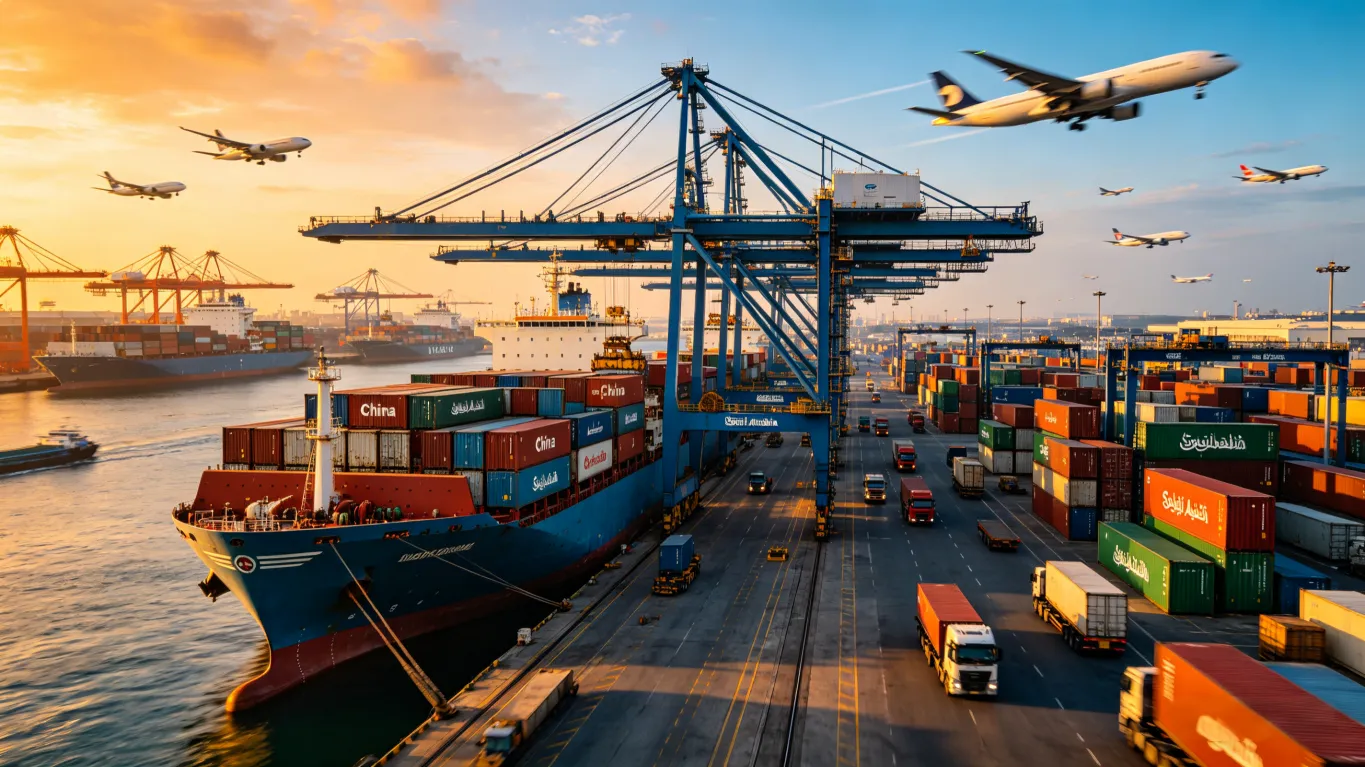
In this comprehensive guide, our team breaks down everything you need to know about transporting your cargo from the manufacturing heart of China to the dynamic markets of Saudi Arabia amid the current global shipping crisis. From choosing between air freight and sea freight to understanding the intricacies of the Saudi customs clearance process and selecting the most appropriate Incoterms 2020 for your contracts, we will equip you with the actionable insights required to optimize your routes, minimize your landed costs, and ensure your cargo arrives safely every step of the way.
Why Source and Ship from Guangzhou?
The Heart of Chinese Manufacturing
Guangzhou, the capital of Guangdong Province, stands as a global manufacturing powerhouse and a critical node in international trade. As the anchor of the Pearl River Delta, Guangzhou offers unparalleled access to a vast network of factories producing everything from high-tech electronics to fast fashion. For Saudi Arabian importers, this means a centralized hub where you can source a diverse array of products at competitive prices, backed by a robust logistics infrastructure that facilitates rapid export.
Top Wholesale Markets for Saudi Importers
When sourcing products in Guangzhou, you are tapping into specialized wholesale markets that cater to global buyers. Some of the most popular destinations for Saudi importers include:
- Baiyun World Leather Market: A massive complex offering an endless variety of leather goods, bags, and accessories that are highly sought after in the Middle East retail sector.
- Baima Fashion Market: The premier destination for clothing, apparel, and textiles, providing high-quality garments that meet the diverse fashion needs of Saudi consumers.
- Sanyuanli General Merchandise Market: Ideal for sourcing daily necessities, small commodities, and household items in bulk.
- Liwan Toy Market: A central hub for toys, children’s products, and educational materials.
- Foshan Ceramics and Furniture Markets: Located just outside Guangzhou, Foshan is the go-to destination for high-end furniture, ceramic tiles, and building materials, which are heavily imported to support Saudi Arabia's booming real estate and Vision 2030 infrastructure projects.
Major Export Goods to Saudi Arabia
Saudi Arabia represents one of the most dynamic, fast-growing consumer markets globally. The primary exports from Guangzhou to Saudi Arabia include consumer electronics (smartphones, components), machinery (industrial and agricultural equipment), textiles and apparel, construction materials (steel, cement, ceramics), and automotive parts. The high demand for these products underscores the necessity for efficient, scalable shipping solutions.
Air Freight from Guangzhou to Saudi Arabia
When to Choose Air Cargo
When speed is your absolute top priority, air freight is the undisputed champion of international logistics. While it comes at a premium compared to ocean shipping, air cargo is essential for high-value goods, urgent samples, sensitive electronics, perishable items, and seasonal fashion products that need to hit the shelves immediately. If your cargo requires a rapid turnaround to meet strict market deadlines, air freight provides the reliability and speed you need.
Major Airports and Routes
The air freight corridor between Southern China and Saudi Arabia is supported by several world-class aviation hubs.
| Origin Airport (China) | Destination Airport (Saudi Arabia) | Best For |
|---|---|---|
| Guangzhou Baiyun (CAN) | King Abdulaziz (JED) - Jeddah | General commercial cargo, fast retail restocks |
| Shenzhen Bao'an (SZX) | King Khalid (RUH) - Riyadh | High-tech electronics, capital-bound industrial goods |
| Hong Kong (HKG) | King Fahd (DMM) - Dammam | Battery-operated devices, eastern oil sector supplies |
Direct vs. Transit Flights
Importers can choose between direct and transit flights based on their budget and urgency:
- Direct Flights: Airlines like Saudi Arabian Airlines, China Southern Airlines, and Cathay Pacific offer direct routes taking approximately 9 to 11 hours. This is the fastest, albeit most expensive, option.
- Transit Flights: Carriers such as Emirates, Qatar Airways, and Turkish Airlines offer transit flights via Dubai, Doha, or Istanbul. These routes typically take 12 to 16 hours but often provide more competitive freight rates.
Understanding Air Freight Costs
Air freight costs are calculated based on the Chargeable Weight of your shipment, which is the greater of the actual gross weight or the volumetric (dimensional) weight. The industry standard formula for calculating volumetric weight is: Length (cm) x Width (cm) x Height (cm) / 6000. For example, a lightweight but bulky shipment of textiles will likely be charged based on its volume rather than its actual weight. Your shipment will be accompanied by an Air Waybill (AWB), which serves as the receipt of goods and the contract of carriage between the shipper and the airline.
Transparency Warning: Be cautious of quotes that seem too good to be true. Some forwarders might quote you based on actual weight without explaining volumetric weight, leading to a massive shock when the final invoice arrives.
Sea Freight from Guangzhou to Saudi Arabia: FCL & LCL
The Backbone of Global Trade
For the vast majority of commercial shipments, sea freight remains the most cost-effective and practical method for transporting goods from Guangzhou to Saudi Arabia. It is particularly suited for bulk shipments, heavy machinery, furniture, and large volumes of consumer goods where transit time is less critical than cost savings.
Major Seaports
The maritime route connects the bustling ports of Southern China with the strategic gateways of Saudi Arabia:
| Origin Seaport (China) | Destination Seaport (Saudi Arabia) | Primary Cargo Type |
|---|---|---|
| Guangzhou Port (Nansha) | Jeddah Islamic Port (Red Sea) | Furniture, ceramics, general consumer goods |
| Shenzhen Port (Yantian/Shekou) | Dammam Port (Arabian Gulf) | Machinery, construction materials, heavy equipment |
| Hong Kong Port | King Abdullah Port (Red Sea) | Mixed consolidated cargo, transshipments |
FCL (Full Container Load)
FCL shipping means you rent an entire 20-foot or 40-foot container exclusively for your goods. This method is highly recommended if your shipment volume exceeds 15-20 cubic meters (CBM).
- Advantages: FCL offers enhanced security since the container is sealed at the origin and only opened at the destination. It also experiences faster port handling times because there is no need to consolidate or deconsolidate the cargo with other shippers' goods.
- Container Types: Standard dry containers, high cube containers for bulky goods, and refrigerated (reefer) containers for temperature-sensitive cargo.
LCL (Less than Container Load)
If your shipment is relatively small (typically between 1 and 15 CBM) and does not justify the cost of a full container, LCL is the ideal solution.
- How it Works: Your cargo is consolidated with shipments from other importers heading to the same destination inside a single container.
- Real-world Insight: While LCL saves money on freight, it generally takes 3-7 days longer than FCL due to the time required for consolidation at the origin port and deconsolidation at the destination port. Also, be aware of higher destination terminal handling charges with LCL compared to FCL.
Whether you choose FCL or LCL, your sea freight shipment will be governed by a Bill of Lading (B/L), the most critical legal document in ocean shipping that acts as a title to the goods, a receipt, and a contract of carriage.
Transit Times & Shipping Routes Comparison
Understanding the estimated transit times is crucial for effective inventory management and supply chain planning. Below is a comparative overview of the average transit times for shipping from Guangzhou/Shenzhen to major Saudi Arabian destinations.
| Shipping Method | Route (Origin to Destination) | Estimated Transit Time | Best For |
|---|---|---|---|
| Air Freight (Direct) | CAN/SZX/HKG to JED/RUH/DMM | 3 - 5 Days (Door-to-Door) | Urgent, high-value, perishable goods |
| Air Freight (Transit) | CAN/SZX/HKG to JED/RUH/DMM | 5 - 8 Days (Door-to-Door) | Time-sensitive but budget-conscious |
| Sea Freight (FCL) | Nansha/Yantian to Jeddah (Red Sea) | 18 - 22 Days (Port-to-Port) | Large volumes, bulk cargo, machinery |
| Sea Freight (LCL) | Nansha/Yantian to Jeddah (Red Sea) | 22 - 28 Days (Port-to-Port) | Smaller shipments under 15 CBM |
| Sea Freight (FCL) | Nansha/Yantian to Dammam (Arabian Gulf) | 22 - 28 Days (Port-to-Port) | Heavy industrial goods for eastern KSA |
| Sea Freight (LCL) | Nansha/Yantian to Dammam (Arabian Gulf) | 28 - 35 Days (Port-to-Port) | Smaller industrial shipments |
Note: Transit times are estimates and can be influenced by weather conditions, port congestion, customs delays, and peak season demand.
You may be interested in the following related shipping routes:
- Shipping from China to UAE
- Shipping From China to Italy
- Shipping From China to France
- Shipping from China to Egypt
- Shipping from China to Iran
- Shipping from China to Iraq
- Shipping from China to Saudi Arabia
Understanding Shipping Costs and Surcharges
Calculating the total landed cost of your shipment involves much more than just the base freight rate. Importers must be aware of various surcharges and destination fees that can significantly impact the bottom line.
Base Freight Rates and Surcharges
The base rate is the core cost of transporting your goods via air or sea. However, carriers frequently apply additional surcharges to account for fluctuating operational costs:
- BAF (Bunker Adjustment Factor): A surcharge applied by shipping lines to compensate for fluctuations in fuel prices.
- FSC (Fuel Surcharge): The air freight equivalent of BAF, covering the volatile cost of aviation fuel.
- PSS (Peak Season Surcharge): Applied during high-demand periods, such as the weeks leading up to Chinese New Year or major global holidays, when cargo space is extremely tight.
- THC (Terminal Handling Charges): Fees collected by port authorities for the loading and discharging of containers at both the origin and destination ports.
Destination Fees and Taxes in Saudi Arabia
When your cargo arrives in Saudi Arabia, you will be subject to local charges. This includes customs duties, which vary widely depending on the HS Code of your imported goods, ranging from 0% for essential items to 15% or higher for protective tariffs. Furthermore, Saudi Arabia applies a standard Value Added Tax (VAT) of 15% on the total value of the imported goods, which includes the product cost, freight, insurance, and customs duties.
Tips to Reduce Shipping Costs
To optimize your logistics budget, consider the following strategies:
- Optimize Packaging: Reduce the volumetric weight of your cargo by minimizing empty space in your packaging.
- Ship Off-Peak: Whenever possible, avoid shipping during peak seasons to bypass PSS and secure lower base rates.
- Consolidate Shipments: Use a reliable freight forwarder to consolidate multiple smaller orders from different Guangzhou suppliers into a single FCL shipment.
- Choose the Right Incoterms: Negotiating favorable Incoterms 2020 (such as FOB instead of EXW) can shift some of the origin logistics costs to your supplier.
Saudi Arabia Customs Clearance & Regulations
Navigating the Customs Clearance process in Saudi Arabia is notoriously rigorous. The Saudi Customs Authority strictly enforces regulations to ensure product safety, quality, and compliance with Islamic principles. Failing to provide the correct documentation can result in severe delays, hefty fines, or the confiscation of your cargo.
Essential Shipping Documents
To facilitate a smooth clearance process, you must prepare a comprehensive set of documents:
- Commercial Invoice: Must be highly detailed, listing the HS codes, exact quantities, unit prices, and total value. It should be provided in both English and Arabic.
- Packing List: A detailed breakdown of the contents, weight, and dimensions of each package.
- Certificate of Origin (COO): Crucial for determining the applicable customs duties and proving the goods were manufactured in China.
- Bill of Lading (B/L) or Air Waybill (AWB): The primary transport document.
The SABER Certification System
Perhaps the most critical compliance requirement for exporting to Saudi Arabia is the SABER platform. Implemented by the Saudi Standards, Metrology and Quality Organization (SASO), SABER is an electronic system used to register and certify consumer products before they enter the Saudi market. According to Saudi Customs guidelines, non-compliance will result in immediate cargo rejection at the port.
- Product Certificate (PCo): First, you must obtain a PCo for your regulated products, proving they meet Saudi safety and quality standards. This certificate is valid for one year.
- Shipment Certificate (SCo): For every individual shipment of regulated products, you must generate an SCo through the SABER system. Customs will not release your goods without this digital certificate.
Pro-Tip from our customs team: Always register your products on SABER before your cargo leaves Guangzhou. We've seen importers face massive demurrage fees in Jeddah because they waited until the cargo arrived to start the PCo application process.
Restricted and Prohibited Items
Saudi Arabia enforces a strict ban on several categories of goods. Prohibited items include all forms of alcohol, pork products, narcotics, weapons, used clothing, and any materials (books, media) that contradict Islamic teachings. Additionally, specialized goods like telecommunications equipment require prior approval from the Communications and Information Technology Commission (CITC), and pharmaceuticals require clearance from the Saudi Food and Drug Authority (SFDA).
Why Choose AllBestShipping for Your Cargo?
When the stakes are high and the logistics are complex, partnering with a seasoned freight forwarder is not just a convenience—it is a business necessity. AllBestShipping is your premier logistics partner, offering over 10 years of senior freight forwarding experience specifically focused on the China-to-Middle East trade lane.
Unmatched Expertise and Competitive Rates
At AllBestShipping, we deeply understand the nuances of the Guangzhou manufacturing hubs and the stringent requirements of Saudi Arabian customs. Thanks to our long-standing, direct contracts with major ocean carriers (like COSCO, Maersk, and CMA CGM) and top-tier airlines (such as Emirates and Saudi Arabian Airlines), we secure highly competitive rates and guaranteed space allocations, even during peak seasons.
Comprehensive End-to-End Solutions
We don't just move boxes; we manage your entire supply chain. Our comprehensive services include:
- Door-to-Door Delivery (DDP): We handle everything from picking up the goods at your Guangzhou supplier's factory to delivering them directly to your warehouse in Riyadh, Jeddah, or Dammam, including the payment of all customs duties and taxes.
- Customs Clearance Assistance: Our expert brokers navigate the SABER system and SASO requirements on your behalf, ensuring a friction-free clearance process.
- Secure Warehousing: We offer state-of-the-art warehousing and consolidation services in Guangzhou, allowing you to bundle multiple supplier orders into a cost-effective single shipment.
Don't let logistics bottlenecks hinder your growth in the Saudi market. Partner with AllBestShipping for reliable, transparent, and highly efficient freight forwarding solutions.
Frequently Asked Questions (FAQ)
1. How long does it take to ship from Guangzhou to Saudi Arabia by sea? Typically, FCL sea freight from Guangzhou to Red Sea ports like Jeddah takes about 18 to 22 days. Shipments to Arabian Gulf ports like Dammam take slightly longer, averaging 22 to 28 days. LCL shipments generally add 3 to 7 days to these transit times due to consolidation processes.
2. What is the cheapest way to ship goods from China to Saudi Arabia? Sea freight, specifically FCL (Full Container Load), is the most cost-effective method for large volumes. If your shipment is under 15 CBM, LCL (Less than Container Load) is the cheapest option, allowing you to share container costs with other importers.
3. Do I need a SABER certificate for all types of imports? While not all products require a SABER certificate, the vast majority of consumer goods, electronics, textiles, and building materials are regulated by SASO and must be processed through the SABER platform to obtain Product and Shipment Certificates before customs clearance.
4. Can AllBestShipping handle door-to-door delivery, including customs duties? Yes! AllBestShipping specializes in DDP (Delivered Duty Paid) services. We manage the entire logistics chain from the supplier's door in Guangzhou to your final destination in Saudi Arabia, handling all freight, customs clearance, duties, and final delivery logistics.
5. How is air freight dimensional weight calculated? Airlines charge based on either the actual weight or the dimensional (volumetric) weight, whichever is higher. The standard formula is Length (cm) x Width (cm) x Height (cm) / 6000. This ensures carriers are fairly compensated for large, lightweight boxes that take up significant cargo space.
Conclusion
Successfully importing goods from China requires a deep understanding of the logistical landscape, a keen awareness of fluctuating freight costs, and strict adherence to local customs regulations. Shipping from Guangzhou to Saudi Arabia offers immense opportunities for profitability, provided you can navigate the complexities of air and sea freight, master the SABER certification process, and optimize your supply chain for speed and cost-efficiency.
A smooth, optimized logistics strategy is a massive competitive advantage in the rapidly expanding Saudi consumer market. Don't leave your international trade operations to chance. Contact AllBestShipping today to get a free, tailored quote, and let our team of experts ensure your cargo arrives safely, on time, and within your budget.